


15,49 €
Mehr erfahren.
- Herausgeber: Nick Hern Books
- Kategorie: Poesie und Drama
- Serie: NHB Classic Plays
- Sprache: Englisch
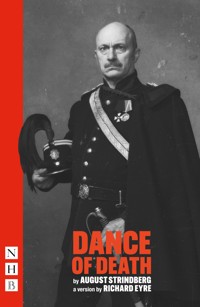
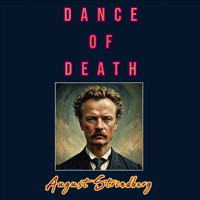
'He's a vampire. He sucks the life out of people because his own life bores him so much.' A plague rages across Europe. On a remote island, former actress Alice and army officer Captain Edgar are quarantined together – locked in a bitter, brutal and compulsive marriage. When an old friend arrives to help celebrate their wedding anniversary, it's the perfect excuse for the couple to take their games to a terrifying new level. Filled with wit and savagery, Richard Eyre's thrilling version of August Strindberg's Dance of Death is a darkly comic portrait of psychological warfare. It premiered at the Orange Tree Theatre, London, in 2026.
Das E-Book können Sie in Legimi-Apps oder einer beliebigen App lesen, die das folgende Format unterstützen:
Seitenzahl: 85
Veröffentlichungsjahr: 2026
Ähnliche





August Strindberg
DANCE OF DEATH
in a version by
Richard Eyre
NICK HERN BOOKS
London
www.nickhernbooks.co.uk
Contents
Original Production
Preface
Characters
Dance of Death
About the Authors
Copyright and Performing Rights Information
This version of Dance of Death was first performed at the Orange Tree Theatre, Richmond, on 31 January 2026. The cast was as follows:
ALICE
Lisa Dillon
EDGAR
Will Keen
KURT
Geoffrey Streatfeild
Director
Richard Eyre
Set & Costume Designer
Ashley Martin-Davis
Lighting Designer
Peter Mumford
Sound Designer
John Leonard
Choreographer
Scarlett Mackmin
Assistant Director
Freya Griffiths
Costume Supervisor
Deborah Andrews
Wigs, Hair & Make-up Consultant
Sharon Pearson
Head of Department for Wigs, Hair & Make-up
Paul Paintin
Pianist
Tom Attwood
Costume Work Placement
Ashleigh Ridding
Production Manager
David Pritchard
Production & Technical Director
Phil Bell
Senior Production Technician
Andy Owen Cook
Production Technician
Priya Virdee
Company Stage Manager
Jade Gooch
Deputy Stage Manager
Honor Klein
Assistant Stage Manager
Josette Shipp
Preface
‘If you don’t want to be lonely don’t get married’ said Chekhov, and his words could serve as an epigraph for countless plays (including his own) as well as films and novels. Marriage is the perfect subject for drama: there’s the constant obbligato in the fluctuation of feeling between man and wife and the conflicts that emerge between selflessness and selfishness, between love and work, between comradeship and isolation, between the brightness of passion and the bleakness of unrealised emotions provide the marriage drama’s actions.
I was, as in most things, backward in theatregoing: I didn’t see a play until I was sixteen. But in the early sixties I became an obsessive theatregoer and, apart from much of the Shakespeare canon, I saw many memorable plays about marriage as a form of warfare all inspired by The Dance of Death: Look Back in Anger, Hedda Gabler, Who’s Afraid of Virginia Woolf?, Alpha Beta, Filumena, Long Day’s Journey into Night and Dance of Death itself, with a mercurial performance of Edgar by Laurence Olivier. Later I directed Ibsen’s Little Eyolf which, written six years before Strindberg’s play, is a sort of godparent to all those plays.
All of us who’ve been married (in my case for fifty years) can recognise that anger is as much a binding factor as attraction. Strindberg takes marital anger to a nuclear level and the scorching mutual cruelty of Edgar and Alice probably reflects something of his own experience in his three marriages. He once wrote this to a friend: ‘I want to turn everything upside down to see what lies beneath. I believe we are so horribly regimented that no spring-cleaning is possible, everything must be burned, blown to bits, and then we can start afresh.’ Or as Edgar says in my version: ‘Rub it out and move on.’
I wrote this adaptation from a literal English translation while having the original at hand. I don’t speak Swedish but sometimes, armed with a dictionary, I would stumblingly seek out the substance of Strindberg’s original meanings. Often, looking at the layout of speeches and the rhythm of his dialogue helped me to animate the language in a way that felt as true as possible to what I inferred to be his intentions. Strindberg was extraordinarily prolific and, as the author of more than sixty plays (as well as novels and essays), it is clear that he never spent much time on revision, resulting in the occasional confusion in plot and backstory. So a little spring-cleaning was necessary.
All translations make choices and the choices we make are made according to taste, to the times we live in and how we view the world. The choices are choices of intention, of meaning and, occasionally, of expediency. I’ve made a few cuts in the dialogue and have dispensed with three characters – two maids and an old woman – who make very brief appearances. I wrote this before Covid but in the light of lockdown I decided to move the period of the play from 1900 to 1918, when the Spanish flu epidemic was raging across Europe. I hope my adaptation comes close to squaring the circle of being what Strindberg intended while seeming spontaneous to an audience of today.
I wrote this version over seven years ago at the request of two film/theatre stars. By the time I’d completed it they had moved on to a succession of more appetising projects than a play about marriage and mortality. But then Tom Littler came calling. He asked me if there was anything I’d like to do at the Orange Tree; I immediately sent him Dance of Death. He knows more about Strindberg – and has done more productions of his plays – than any director in Britain, so I was thrilled and flattered that he liked the version and wanted to present it. I’m enormously grateful to him and his excellent team – and to the cast who have contributed so much imagination and invention during rehearsals.
Richard Eyre, January 2026
Characters
EDGAR, fifty-five, captain in the Coast Artillery
ALICE, forty-five, his wife, a former actress
KURT, fifty-five, quarantine superintendent
This created before the end of rehearsals and so may differ slightly from the play as performed.
Scene One
It’s 1918 during the pandemic of Spanish flu.
A large room in a round granite fort, once a prison. Double doors with glass panels are set in an arch in the back wall. At the moment they’re open and through them can be seen battlements and a gun emplacement. Beyond that the sea, dark and still. On each side of the doors there is a small window. There’s a large door in another wall which leads to the rest of the house – the kitchen, hall and front door – and there’s a smaller door to a bedroom in the other wall. There’s a stove in one corner of the room.
By the door a hatstand is hung with military gear – a sword and revolver and a Sam Browne belt. On the other side of the door hangs a barometer. The furniture consists of a card table, two chairs, an armchair and a chaise longue draped with a chenille cloth.
There’s a writing desk with a teleprinter machine on it, a sideboard covered with family photos and a tray with a whisky decanter and a water carafe. An upright piano stands against the wall.
Above the piano is a large framed photograph of Alice in the role of Cleopatra with two laurel wreaths hanging either side of it.
It’s a mild autumn evening. Sunset. The sound of waves crashing against a wall.
In one chair of the card table is a middle-aged man, dressed in a worn army uniform with riding boots. He has a toothbrush moustache and his head is shaven almost to the scalp. He looks tired and bored and fiddles with an unlit cigar. He’s EDGAR, an army captain.
His wife, ALICE, sits in the other chair. She’s about ten years younger than her husband, good-looking and stylish. She’s wearing a turban, like an Ingres odalisque. She looks tired and expectant and is motionless.
EDGAR. Why don’t you play something?
ALICE. What shall I play?
EDGAR. Whatever you like.
ALICE. You don’t like what I like.
EDGAR. You don’t like what I like.
ALICE. Do you want the doors open?
EDGAR. If you do.
ALICE. Leave them.
Pause.
Why aren’t you smoking?
EDGAR. The tobacco’s too strong.
ALICE. Then why don’t you smoke something less strong, you say it’s your only pleasure.
EDGAR. What is ‘pleasure’?
ALICE. How would I know?
EDGAR. What’s for supper?
ALICE. Ask Kristine.
EDGAR. Mackerel’ll be in season soon, it’s autumn, isn’t it?
ALICE. It’s autumn.
EDGAR. In spite of the chill of autumn – inside and out – it would be a pleasure to taste a grilled mackerel with a crisp slice of lemon and a cold glass of white burgundy.
ALICE. Very eloquent.
EDGAR. Do we have we any burgundy in the wine cellar?
ALICE. I wasn’t aware that we had a wine cellar.
EDGAR. Why would you be? We have to stock up.
ALICE. What for?
EDGAR. Our silver wedding.
ALICE. You mean have a party?
EDGAR. Naturally.
ALICE. It would be more natural to hide our misery than celebrate it.
EDGAR. Oh Alice dear, we’ve had some good times. Now and then. We must make the most of our brief lives because we’ll be in our graves all too soon and there’s nothing more to life than that.
ALICE. Are you sure?
EDGAR. I am. Nothing will remain of us but a barrowful of shit to spread on the garden.
ALICE. All those fights just to end up as compost.
EDGAR. Well, that’s life and you can’t blame me for it.
ALICE (shaking her head). All those fights…
Pause.
Did the post come?
EDGAR. Yes.
ALICE. Was the butcher’s bill in it?
EDGAR. Yes.
ALICE. How much was it for?
He pulls papers out of his pocket and puts his glasses on his nose, but takes them off almost instantly.
EDGAR. You read it, I can’t see properly.
ALICE. Old age.
EDGAR. Me?
ALICE. Well, not me, obviously.
He grunts and hands her the bill.
Can you pay this?
EDGAR. Later.
ALICE. In a year’s time when they’ve got rid of you and we’re living on your miserable pension. Then you’ll get ill again.
EDGAR. I’ve never been ill, just out of sorts on one occasion. I’ll live another twenty years. In spite of the epidemic.
ALICE. That’s not what the doctor thinks.
EDGAR. The doctor…
ALICE. Well, who else is an expert on illness?
EDGAR. I’ve never been ill and I never will be. I’ll die with my boots on.
ALICE. The doctor’s having a party tonight.
EDGAR. Nobody is supposed to socialise.
ALICE. They do what they want.
EDGAR. We weren’t invited because we don’t hobnob with the doctor and we don’t hobnob with the doctor because we have no wish to, because I despise him and his wife. They’re scum.
ALICE. You say that about everyone.
EDGAR. Because they’re all scum.
ALICE. Except you.




