


Erhalten Sie Zugang zu diesem und mehr als 300000 Büchern ab EUR 5,99 monatlich.
- Herausgeber: THP Ireland
- Kategorie: Gesellschafts- und Liebesromane
- Sprache: Englisch
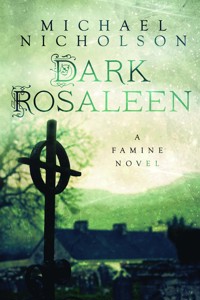
Dark Rosaleen is a story of love, murder and betrayal, of a failed rebellion and a national scandal. Sir William McCauley was appointed Director of the Famine Relief Programme at a time when hunger raged across Ireland and antipathy towards the plight of the Irish infused the politics of Britain. Kathryn, William's daughter, was forced to join her father, and felt no sympathy until the very scale of the tragedy became all too obvious. Joining the underground, she preached insurrection, stole food for the starving and became the lover of the leader of the rebellion. Known as Dark Rosaleen, the heroine of banned nationalist poem, she was branded both traitor and cause celebré. This is her story.
Sie lesen das E-Book in den Legimi-Apps auf:
Seitenzahl: 455
Veröffentlichungsjahr: 2015
Das E-Book (TTS) können Sie hören im Abo „Legimi Premium” in Legimi-Apps auf:
Ähnliche




















ACKNOWLEDGMENTS
I am indebted to my lifetime friend Robin O’Connor for his patient labouring through the first proofs. To Billy Patterson, a meticulous and humorous second filter; to John Conway of University College Cork and Senan Seclan and his eye for the smallest error; to Dr Paul Rouse of University College Dublin for checking the historical accuracy; and to Ronan Colgan who had the good sense to commission Dark Rosaleen.
I was inspired by two of Ireland’s greatest writers of the famine, Liam Flaherty and Walter Macken. I am indebted to the historians, among them Cecil Woodham-Smith, Christine Kinealy, Tim Pat Coogan and Treveylan’s biographers Jennifer Hart and Robin Haines. First-person accounts written at the time include Gerald Keegan’s Famine Diary, Asenath Nicholson’s Annals of the Famine in Ireland, Robert Whyte’s Famine Ship Diary and the writings of the Quaker James Hake Tuke.
CONTENTS
Title
Acknowledgments
Author’s Note
Chapter One
Chapter Two
Chapter Three
Chapter Four
Chapter Five
Chapter Six
Chapter Seven
Chapter Eight
Chapter Nine
Chapter Ten
Chapter Eleven
Chapter Twelve
Chapter Thirteen
Chapter Fourteen
Chapter Fifteen
Chapter Sixteen
Chapter Seventeen
Chapter Eighteen
Historical Notes
About the Author
Copyright
AUTHOR’S NOTE
This novel tells the story of the Irish potato famine of 1845, ‘the Great Hunger’, out of which came the militant rebels who fought to free Ireland from English rule and the man who gave rise to the Fenians. Nothing in these pages, not the people, nor the life they lived, is wholly fictional. Almost all of what I have written happened in real life.
In order to turn history into a novel, an author is obliged to dramatise, to put words into mouths that might never have been spoken, to lay blame that perhaps was not wholly deserved. But little here is exaggerated. There is no need. The truth is appalling enough. If you find descriptions of people, events and their outcome hard to believe, then go to the history books and be convinced.
Sebec Lake
Maine
12 August 1934
It is recorded in the register of the coroner’s office in the County of Limerick that my mother drowned escaping the English in 1848. She was a fine English lady and, at that time, would have been twenty-four years of age. It is also written that the authorities waited a month or more for the sea to return her body but it did not.
I am an old man and her only child and before I die I wish to correct those records in Ireland. For unless I do, the lie will forever remain the truth.
The English did not kill my mother, nor did the sea swallow her up. She is buried on the coast of Maine in a grave I helped dig myself.
Even now, I can hear her story in a voice as clear and as close as when she first told it, speaking in her fine language of a land of savagery and sadness, of a people who suffered for their patience and died from their hunger.
And I cried as a child, although I could not know why. I knew nothing then of hunger, or suffering or dying. Nor even anger.
CHAPTER ONE
The coals were white hot. The face of the child was ringed by flames. Soon it would be engulfed by fire, soon it would die, soon it would be ash. She could do nothing but sit and watch. It was a small gaunt face, cursed by innocence, its eyes full of melancholy. Its image scorched her.
The tip of the flames touched his face but his eyes stared resolutely back. She looked for a name and a place but she dared not reach out, the heat too fierce. It troubled her, she who cared nothing for distant calamities that befell others. Why now was she suffocating? Why now this something she had never felt before, this guilt? What was one death among so many?
Until this moment she had been consumed by her own self-pity, wretched at her father’s selfish ultimatum, furious at his imposition dressed up as duty. Did she care that Irish peasants were hungry because they had lost their potatoes? Why should she waste a moment’s thought on brutes too lazy to feed their litters, too drunk to dig for their own food? How dare they disrupt her life so suddenly and so completely, forcing her headlong into a hostile land she despised, that filthy country of saints and savages they called Ireland?
He had told her so casually. The government, he said, was to provide aid to the Irish and he had been given the authority as Relief Commissioner to oversee its distribution. Soon he must leave for Ireland, and she was obliged to go with him.
The flames licked at her fingers. The heat scorched the skin of her forehead but still she could not move away. Sweat soaked the hair around her temples, the salt from her tears stung her cheeks and stung again as they eased into her cracked lips. Yet she remained close, compelled to share something in those final moments.
She waited for the flames to cremate the last of the image and in that waiting, as a hot poultice slowly draws out pain, so the fire gradually evaporated her anger. She was subdued. She felt only sadness, grief and something more, something she had never before known in all her young and very privileged life. She felt uncertain and afraid.
Kate Macaulay’s life that day changed as abruptly as the weather. The warm, bright early October morning sun had surrendered to a grey afternoon and by the time it was dark, the barometer had dipped further. The wind, stirred from the east and blowing unhindered from the Urals, swept across the North Sea to the Anglian Fens and froze all of Lincolnshire. It shook the house, piled snow against its walls and windows and forced smoke back down the chimneys, blackening the mantelpieces and spreading soot across the rugs.
She had become more furious by the hour. She had argued with her father at breakfast, at lunch and again at dinner. She had refused to eat and, in an attempt to offend him more, had barely touched her supper. Now she was hungry and defeated. She had tried every trick she knew but the cajolery that had won him over so often in the past had failed her. He was deaf to it and instead, addressing her as if he was speaking to one of his junior staff, reminded her of her duty, his duty and the duty of the government, so that it seemed to her that all of England was a slave to duty and that all pleasures and recreation, most especially her own, were to be entirely forfeited in the Queen’s service.
To quieten and comfort her, he promised that they would not be away from England long and that he expected his work would be over before next year’s summer ended. Then they would return to Lincolnshire or to their house in London, whatever suited her. He would retire from government service and they would travel north together to cousins at their Northumberland estate and perhaps go further still into the Highlands for the shooting. To dry her tears he told her that Irish society was almost as interesting as English society, with country estates as vast and as sumptuous as any she had known. She could have her own mare and she would not want for company. There were many of her own sort there.
Kate was accustomed to being soothed by promises. She had never had to wait long for something she wanted but he was offering nothing she did not already have. She would not be bargained with. She would not be pacified, refusing to believe his promises even though she had never known him break one. Her friends were here in Lincolnshire and London and she was in no mood to seek out new ones for her father’s or even Queen Victoria’s convenience.
She had fought him all day but she had not won a single concession, not even the compromise of a further few months’ stay so that she might enjoy her Christmas and New Year in England. He cared nothing that she would miss the Belvoir Hunt weekend with Colonel Arden-Walker, who had been so generous and so attentive since the last. She would have to send her apologies to the Earl of March for not attending his Goodwood Ball and to Lord Abercrombie, whose night of fancy dress and charades at London’s Ritz so glamorously and entertainingly welcomed in the New Year.
Her year’s social calendar had been painstakingly planned. There was never a weekend when she was not the centre of somebody’s attention, never an evening in the London season that was not filled by one or other of her many adoring young suitors. Now, without warning or apology, it was all to be cancelled. She was being forced to leave behind people who were both dear and necessary to her simply because of something despicable far away. The prospect appalled her and all day she cried tears that for once she had no way of stopping.
In one final attempt that evening she had screamed at her father deliberately in front of the servants, demanding her independence, threatening to leave the house and never return. She was twenty-two years old and she would not let him re-arrange her life. She was not a minor, obliged to do his bidding. She could leave him as she pleased, go wherever she wanted with whoever she chose, even marry if that was her whim. The law was the law and that was what the law allowed. The servants took refuge in the kitchen. They had cosseted her since she was a child and knew well enough her moods and contrariness. But they had never seen her in such a state before and they were all agreed that when her father left for Ireland, he would have no choice but to leave her behind to do as she pleased. They were wrong.
Sir William Macaulay was a long and faithful servant of the Crown. He had served with distinction as Commissariat General of the British Army, had seen action in the Peninsular Campaign, had been with Wellington at Waterloo and had been knighted for devotion to duty during the Canadian Rebellion. As the man in charge of army supplies he was a devoted cheesepare, ready to save a penny wherever a penny could be saved. It made him ideally suited to oversee the distribution of aid to the starving Irish.
He was about to embark on the last great challenge of his career and was concerned with more urgent matters than his young daughter’s hysterical obstinacy. He was a gentle and patient man and loved her more intensely than he had ever had the courage to show. Her tears and tantrums had been painful and made him relive a part of his life that still haunted him, memories that he had for so long been trying to erase, memories of the wife he loved, of the day she had given birth to Kate and that final, fateful day when she had left them both. Even now, all these years on, he could not remember that time without his fists tightening, the muscles of his jaw hardening and a pain in his chest so severe it left him breathless. And he cursed the God that made her go.
That day, he had returned from London after an interview in Whitehall with the austere, pious and powerful Sir Charles Trevelyan, Secretary to the Treasury. Despite a title that suggested he was of a lesser order, he controlled all government expenditure. He was a young and handsome man of rigid integrity, a devout evangelical, impatient, blunt, arrogant, uncompromising. He considered himself to be always on the right side of a question and many of those who dared cross him found their careers blighted soon afterwards. As guardian of the nation’s coffers, his guiding principle was balancing humanity with practical economics. It was he who would steer the course of Ireland now.
He sat upright at his desk and, as was his practice, made no effort to acknowledge the presence of the man he had summoned. He made no gesture towards the chair opposite him, so Sir William stood to attention, as he had done all his military life in the presence of superiors.
Trevelyan spoke, as ever, to the point.
‘I waste no time on courtesies, Sir William. I am familiar with your record of public service and know you are more than capable of the employment I am about to charge you with. I break no confidences when I tell you that Prime Minister Peel is alarmed by events in Ireland. It would appear that this year’s potato crop has failed there as it has in England, Scotland and almost every country in Northern Europe. We understand the disease comes from America but it cannot be identified. What we do know is that it is more thoroughly destructive than anything before. You may have read of this?’
‘Yes, Sir Charles. I have read much about it. It is a serious matter.’
‘Serious indeed. Unlike the peasantry in England, the Irish are entirely dependent on their potatoes. It is their entire diet. Monday to Sunday, January to December, they eat nothing else. Without potatoes they starve.’
‘So it appears, sir.’
‘Yes Sir William, it is exactly as it appears. For that reason and with commendably swift decision, the Prime Minister has authorised a Commission to oversee relief and the distribution of food in the affected provinces. You, Sir William, will head it. There is to be no delay. He expects you to sail to Ireland within the week. Your headquarters will be in Cork.’
‘Must it be so soon, sir? A week is no time at all for me to settle my own affairs. To be away for so long without preparation— ’
‘You assume too much. It need not be long. The Prime Minister believes the worst will be over by the summer. It may or may not be. God alone will decide. But be assured of this. We will do what is necessary but no more than that. The Irish peasants are perverse and prefer to beg than borrow; they would rather eat free English food than labour for their own. It would be unjust and unwise to pamper them when our own people are pleading for assistance and I do not intend to transfer famine from one country to another. You understand?’
‘I fully understand, sir. It makes very practical sense.’
‘And one last thing, Sir William, before you go. As I understand it, you no longer have a wife but you have a daughter?’
‘I do, sir. Her name is Kathryn.’
‘Then the Prime Minister would have you take her too. She will need to accompany you on the official functions that, as the Queen’s representative, you will be expected to attend.’
Kate counted the twelve slow chimes of the clock on the landing outside her bedroom door. The house was silent. The wind had dropped. The last of the servants had gone to their attic beds and, in his bedroom, her father had stopped the soft coughing that always ended his day. She looked down at the remains of the fire. The image of the child had been consumed and all that was left was a wedge of paper ash. She watched as bit by bit it was drawn up the chimney to be broken into tiny flakes and scattered across the rooftops on that white winter’s night.
She was exhausted. Her tantrums had won her nothing. On the rug at her feet were the few remaining pages of the Illustrated London News. Her father had slid it under her door, hoping she might be tempted to read something of the land she was about to sail to and the tragedy she was about to witness. In her fury she had stamped on it, ripped it apart, thrown its pages into the flames and stirred the coals to make it burn faster. But she could not touch the drawing of the boy, thin and almost naked, standing defiantly by the bodies of his mother and sisters. His face held her until the fire had finally devoured him.
The room was cold. She shivered but it was not from the chill. Again she felt the same sensation, a surging fear that, despite herself and her shrill threats of defiance, she too was about to become a casualty of Ireland’s Great Hunger.
CHAPTER TWO
Sky and earth were one black sprawling mess. It was raining the first day when they landed in Ireland and it had been raining ever since. Kate had now been in Cork for a month and seven days and she had not yet seen a blue sky or the tip of a mountain or an expanse of sea. It was like living under a vast, dripping shadow, everything saturated by clouds that hung low, still and moody. People told her it might stay that way all winter. They said it cheerily, as if that was how they preferred it to be, curtained off, captive.
She felt so captured. What a perfect prison this Ireland was to her and she was condemned to live in it for as long as its people were hungry. Or perhaps longer. However absurd it seemed to her, the notion kept repeating itself, the fearful conviction that she was about to become entangled in the misery of this land, that its suffering would make her its prisoner.
For those first five weeks, she had stayed within the house and, for most of the time, within her own rooms. To venture out into the gardens, to inspect the stables and yards would be to admit an interest and she was determined to show none. She ignored the daily respectful formalities from the staff and the curtsies of the chambermaids. She kept silent but, to her outrage, her father was too busily involved in his new task to notice. It was the arrival of the mare he had promised that finally ended her stubborn resistance.
She rode her most afternoons but she could not go far. Her father had pencilled a perimeter on a map of the countryside surrounding Cork and warned her that if she crossed it, he would have her ride with an armed escort. Drenched in Ireland’s autumn, she longed for a dry breeze and a clear horizon. On every ride she searched for higher ground, thinking that if she could climb the tracks that wound up through the mists, she would break through and find blue sky and a little warmth. But the paths were too narrow or strewn with too many boulders and the mare stumbled too often. The sun was always beyond her.
One day, ignoring her father’s orders for the first time, she rode along the banks of Lough Mahon, past Monkstown and Ringaskiddy, searching for a horizon, to see the land fade into nothingness the way it did in the Lincolnshire Fens as the dykes ran the length of the sea. But here, as she stood by the mare’s side, the air was so heavy and the light so grey that she could not see the river’s mouth at Roche’s Point, which they said was only a mile across the water.
High in her saddle, how safely distanced she felt from those who passed below her on the tracks. How poised and perfect she felt herself to be in her trim riding habit as she cantered through their villages. Men dropped their heads in respect, women were careful not to catch her eye and dirty, half-naked children hid behind their mothers’ skirts. And always they were silent, as if to be heard speaking within earshot of her was an insolence. How she loathed the smell of them, the dirt of their bodies, the decay of their lives, their squat mud-and-branch hovels humped together, littered with the rotting debris of human waste.
‘It’s natural Kate, hungry or not, it’s what they prefer. Cuddling their pigs comes as naturally as hugging their wives. Not that they do that often. They show such little love that I wonder they have so many children. Such filthy hags too. God knows what gives them the passion.’
Kate laughed. She had not laughed since she had left England and had been ready to believe she might not again until she returned there. The wind had turned abruptly, it was a warm and sunny winter’s day and she had company. Edward Ogilvie was with her, with her father’s permission. They had ridden all morning, crossing the river at Inishannon, following its meandering course until it met the sea.
She kicked her mare, reined hard and followed him down the steep side of a hill with the sea on either side of them. He pointed to a lighthouse, far off in the distance, painted in red and white stripes, which he said stood on the Old Head of Kinsale. They dismounted, he unfurled a horse blanket and they sat and picnicked on poached salmon and cold beef. She watched a distant rain cloud scudding across the water like a rippling cloth. The breeze was fresh, bringing with it the smell of salt and seaweed. She breathed it in and was happy and thanked her new companion for it.
Edward Ogilvie was young and heavy limbed, a powerfully built young man. The seams of his jacket and breeches were stretched, barely able to contain the muscles within. Long, unkempt ginger hair touched his collar and matched the sideburns he had trimmed to hide the red blotches on his cheeks, birthmarks that were his greatest aggravation.
He was known by his tenants as a ‘Half-Sir,’ he being the son of the landowner, Lord Kinley, whose estate began at Cork and stretched more than fifty miles west towards Bantry Bay. Lord Kinley was an Irish Protestant who had left Ireland on his twenty-sixth birthday and, forty years on, had yet to return, preferring to lavish his income on the splendid, if expensive, aristocratic rituals England alone provided. The estate had since been run by a succession of managers, men whose ability was rated by the amount of rent they collected. But none matched the young Edward, who, in the ten years of his management, had multiplied his father’s income twice over and, as such, was respected by those of his own rank, who did their best to copy him.
They knew him as a great horseman, hunter and renowned boxer. In Dublin on his twenty-first birthday, he had won a hundred guineas in one fight and that same night, for a wager of half as much again, drank three bottles of whiskey without seeming to take a breath. When things went well for him and he was among his own peers, he was considered a likeable fellow. But among the ranks below, among the thousands of tenants and labourers on the estate, he was feared and loathed. He was a bully with a vicious and barely controllable temper. Anger was always his first refuge.
On his father’s land he had no time for rules that were not of his own making, nor any law that did not place the landlord’s interests paramount. Nor would he countenance any discussion about a tenant’s rights, as they were considered to have none. Those who disagreed suffered his own justice at the end of a bullwhip, which he used often, accurately and with terrible effect. From its stock to its tip, it was eight feet long and tied to its end were six small chamois leather pouches loaded with buckshot. Edward Ogilvie’s bullwhip was law and there were many men, women and even children whose bodies were scarred defying it.
Following the customary exchange of letters of introduction, he had presented himself to Sir William offering to act as Kate’s riding escort. She readily accepted, relieved to listen to another’s conversation after months of her own company. She found him no more or less dull than the dozens of his kind she had known in Lincolnshire and London. She had heard nothing of his cruelty because there was no one to tell her of it except those who had suffered, and they were ever silent.
He had tempted her with a thimbleful of whiskey. It was new to her and she could feel it swirling and rising through her body. She was content to lay back on the thick horse blanket and listen to the surf breaking on the beach below. His chin shone with beef fat.
‘You’ll discover, Kate, that there are three Ps to the Irish problem: population, priests and potatoes. If we could rid ourselves of them all, and empty this cursed land, we could make it worth a living. Leave it to them and it will remain a stinking bog and a hive of Popish mischief.’
‘Edward, why are they so dependent on the potato? Father says they are hungry because of the blight but the crops have been ruined in England and Scotland and France too, I’m told. Why is it so bad here?’
He bit into his beef and wiped the grease from his lips.
‘The Irish are always hungry. They’re always screaming that there’s a famine here, a famine there, just so they can scramble for free handouts. It comes natural to them because they are scoundrels and wasters and always after something for nothing. Let me tell you, Kate, it’s not our food they need but a little order, not more English corn but a few more English Fusiliers.’
‘They seem to expect charity as if it was a right,’ she said.
‘And we farmers have none. Nor should we. We own the land and these peasants must pay us to live on it. That’s the rub, Kate. They will always find excuses not to. They’ll blame their favourite saint or not enough rain for their barley or too much rain for their oats. Then they plead poverty. But I make them pay their gale even if it’s with a pike up their backsides.’
‘What is a gale, Edward?’
‘It’s what we call the rent they owe us. They’re supposed to pay it every six months but few of them can ever make it. The trick is to leave it hanging, let them owe it, leave it in arrears. That way they are in continual debt. It’s called the hanging gale and it means I can throw them out whenever I like and there’s not a magistrate who can defy me. That’s the law. Pay the gale or get out. That’s the landlord’s right, a sacred right to deal with our property as we choose.’
Kate turned onto her stomach and looked out to the sweep of country across the bay. The clouds made a sudden opening for the sun. The sky was brightening and in the clean sharp light she could see how neat and tidy the land was, the slowly rising hills, their smooth humps dipping into gentle valleys and, here and there, sprawling bundles of woodland. The slopes had been crafted into terraces by labouring hands over many centuries, line upon line of them, like a vast regiment of graves, the potato mounds, now putrefied by the blight. Yet the land looked lovely in its every shade of green and brown, with rocks scattered across it, bleached by the sun and salt air. It was all so rich and lush, so properly tied together.
Ogilvie took another swig of whiskey.
‘You ask why the peasant loves his potato. It’s because it gives him so much spare time. That’s why it is called the lazy crop. He banks them up in spring and then has all summer to drink and sire another child or two. What he needs is more labour to tire him and send him back to his cabin panting. Then we might see more industry and fewer babies.’
He laughed loudly at his wit again. Saliva dribbled from his lips, glistened on his chin, fell and settled on his waistcoat. He pulled himself across the blanket, closer to Kate. She could smell the drink and the meat on his breath and she turned her head away towards the sea. In the curve of the bay she could see a small boat, a fisherman standing at its centre, so stiff and still he might have been a mast. She waited for him to move, to throw a net or pull an anchor but he stood as if he had been frozen rigid.
She did not speak and hoped the silence would create space between them. She felt uneasy. She was not used to such familiarity. He touched her arm.
‘You have wondrous hair, Kate. In this light it’s the colour of this autumn. And eyes so blue, I wonder if you haven’t a little bit of Irish yourself. But it’s a determined chin you have and I’ll wager you’ve a touch of English arrogance when it’s called for. You’re damned pretty with it.’
She did not reply. He took her hand. His was wet and warm with sweat and grease.
‘I reckon the man who marries you, Kate, will spend half his time in heaven and the other in hell and it would be a damned fool who didn’t find that more than a fair division.’
The whiskey was draining from her. The ease and contentment had gone and she was angry that he had put an end to it so abruptly, so crudely. She was suddenly aware of the lighthouse and its lamp glinting pale orange behind its glass.
‘We must go,’ she said. ‘It’ll be dark very soon.’
He hesitated for a moment, then stood and, still holding her hand, pulled her to her feet.
‘You have a man’s grip, Kate. And a man’s head too I think.’
She moved away from him. ‘But a woman’s heart,’ she replied. ‘And I think that makes a powerful mix.’
He cleared his throat and spat out the phlegm. ‘And a dangerous one too, Kate.’
He rolled up the blanket and followed her to the horses. He touched her again, resting his hand on her shoulder.
‘I know very little of you yet but it’s comforting to have you on our side. You’ll make a fine ally. Mind you, you’d make a damned desperate enemy.’
They mounted and trotted back the way they came, the sea either side of them. She undid the ribbon that tied her hair and let it fall to the wind. She had not met a man like him, whose sheer size was so oppressive and threatening and who spoke with so little sympathy.
‘Why do you talk of enemies and allies, Edward?’
‘Because that’s how it is becoming. Your father is here to feed them with corn but that’s only the start. Trouble will follow.’
‘Does my father know this?’
‘Your father may not know it yet. Relief Commissioners do not ask questions of men like me, men who know this land and the scum who scrounge off it. But tell your father …’ He paused as if he was uncertain to continue. Then, ‘Tell him he will need more than a few padlocks on his warehouses to keep his corn safe. Soon he will be asking for a battalion of Redcoats.’
For the next hour they cantered easily, retracing their tracks along the river bank, staying with the fields until they came upon a stream that bypassed the little town of Bandon. There Ogilvie turned north towards a neighbouring landlord’s lodge perched on the top of Coughlin Peak. There he had arranged a surprise dinner party for his new friend, the most attractive daughter of Ireland’s Relief Commissioner. He had a plan and this was his set piece.
He reasoned that as Sir William was a stranger to Ireland and its many problems, he would need advice and guidance. Discretely offered, the Commissioner would be grateful and there was advantage to be had in such an exchange of favours. He knew, as all the landlords did, that if the hunger lasted through the winter, as it most certainly would, all but a few tenants would be unable to pay their gale. Those that could not would be forced to abandon their farms and soon their holdings would be overgrown with gorse and bramble. Yet without their rents, the estate’s income would suffer and that could not be allowed to happen. It would be a poor manager who let a potato blight reduce the value of his land. Men might die but men could be replaced. But let ten shillings drop on the price of an acre though and it might take ten years to raise it back again. A landowner had a duty to protect the integrity of his land by whatever means; that was the law of property.
So another source of revenue had to be found and Ogilvie knew what that was. Those like him, who had seen famines come and go, knew that whenever cheap or free grain was on offer, there was always a profit in it for someone. And no one would be nearer to that profit than the man who had the ear of the Relief Commissioner. There was much to be gained in this new association. A profit and perhaps a marriage too. His father had been wise to send his letter of introduction to Sir William. It was a clever manoeuvre and he would make the most of it.
They saw the torches long before they saw the men carrying them. The procession of flames was a giant snake winding its way, dipping and weaving, through the lanes. Then Kate saw the riders at the front. Ogilvie was suddenly excited, shouting at her, ‘It’s a tumbling gang. I didn’t know they were already evicting here. What luck, Kate, what luck.’
She stood in her stirrups to see better. ‘Who are they, Edward? What are they doing? Who are they evicting?’
‘We are tumbling their homes, Kate, pulling them down. It’s our day of reckoning. Remember what I said? They pay their rent or they get out.’
‘They are your men with the torches?’
‘No, not mine. My bailiff employs them. Ruffians mostly, with plenty of muscle and not afraid to hurt or get hurt. We sometimes have convicts sent from your own English prisons and good hard men they are too. Come Kate, we’ll follow them. It’ll be good sport. You’ll not have witnessed this before.’
Never had she seen anything more frightening. The torches of oiled peat gave those who carried them the look of men gone mad, wild men, their faces distorted by drink and the pleasant prospect of violence, so sinister they could have been the Devil’s own army. Shillelaghs of hardened thorn tree were stuck in their belts. Some carried slings and pouches full of pebbles, others held pikes of pointed steel. Behind them came two huge grey horses already harnessed, as if they had just that moment been taken from the plough.
Then in the dip she saw why they had come and she was afraid.
‘Edward, let us go now,’ she whispered to him. She turned but he grabbed her reins.
‘No, Kate, not yet. You’ll never forgive me if I let you miss this. You’ll see it on your father’s behalf so you can tell him how we administer justice on our land.’
The man and his wife were together at the door of a low cottage made of mud bricks and straw thatch. He had his arm around her and Kate could see the curve of a child in her belly. Their home had been whitewashed clean. There were plants still flowering by the door and more below the single, shuttered window. At the side was an apple tree stunted by age, festooned by washing still drying. It was the neatest little home she had yet seen.
The leading horseman dismounted and with two ruffians by his side went and spoke to the couple. Kate could not hear but she saw the horseman raise his arm and the man shake his head in reply. The woman then fell sobbing at her husband’s feet.
It did not take long. Iron hooks tethered to ropes were thrown over the thatch, the harnesses hitched and the horses whipped. They reared as men struck their hind legs with sticks to make them move. As they strained forward, the roof collapsed and the cottage seemed to explode. Men came running forward, towing parcels of flaming peat, which they swung onto the straw. Then everything was ablaze. An old sow came running out, squealing, smothered in fire. The horses reared again.
In the light of the flames Kate saw children in a ditch nearby. Only their heads showed, their faces smeared in tears and soot and twisted in fear. Above them, coloured orange by the fire, their mother now lay still, her arms curled around the legs of their father. The pig on fire ran in circles and the father moved to save it but there was a shot and it fell dead. The man with the gun laughed, danced around it and from the smoke came the sickly sweet smell of burning blood.
It was over quickly. The men mounted their horses, the plough horses were led away and the tumbling gang stood still, warming themselves by the fires. Great bundles of flaming thatch soared into the black sky as the last of the mud walls collapsed in a heap of suffocating smoke. An order was shouted, the men turned and shuffled away back down the lane the way they had come.
Ogilvie let go of Kate’s bridle. He was grinning. ‘It’s all over and a more efficient tumbling you’re not likely to see, Kate. And don’t look so glum. They’ll survive. They always do. They’ll be off on the road come morning, begging, stealing, selling their children for sixpence. They’ll manage to live or they’ll manage to die and there’s not a lot of negotiation in between. This is justice as we know it, Kate. The way it’s always been. We win or they do. To prosper we have to put down those who wish to defy us.’
He saw her face in the firelight and did not wait for a reply. Instead he turned his horse and trotted off towards the column of men. Reluctantly, she pulled her reins to follow. She looked back. The man, husband of the woman, father of the children, was now on his own, standing as straight as a ramrod, shrouded in blue and brown smoke, the pig smouldering at his feet. He looked back at her. There was defiance in his face but no fear, no fear at all, not even anger. And she could not understand why.
She hesitated, wondering if there was something to be said, some gesture to be made, some little charity to be offered. There was money in her purse, a silk scarf around her neck, rings on her fingers. She waited, not knowing what to expect from him. Then she kicked hard into the mare’s belly and rode as fast as she could towards the high dark shadow that was Coughlin Peak.
CHAPTER THREE
Six months had now passed since Kate had come to Ireland and the events of every day had been written into her diary, each new page more despairing than the last. Her father had promised they would return to England in the New Year, by summer, he said, at the very latest. Trevelyan had told him so and he wanted to believe it. But the calamity that was now beginning to engulf him told him otherwise. He now lived, week by week, in fear of the future.
The roads began to fill with the wretched, the hungry, the evicted. From the bogs of Erin to the mud cabins of Mayo, they tramped from village to village, from town to town and back again, searching for food and charity. Both were scarce. The lanes and tracks were crowded with searching, scavenging bands of hostile wanderers. They squatted in ditches or built shelters in shallow trenches roofed over with sticks and turf, to brave the winter’s rain and cold. And they waited.
As the lush fields of summer green turned brown and the trees and hedgerows became their naked winter selves, she remembered the early days when villagers would step aside as she rode past and men would bring a forefinger to their foreheads in a salute of respect. Now they shook their fists and women shrieked their curses.
Soon she stopped her riding excursions and used the cold winds as an excuse to stay indoors. Her mare remained in the stable, unseen by her, cared for only by the yard boy. Why should she ride? There was no adventure now in the lanes and mountain paths, no excitement at the sight of the sea. How foreign it was again and how foreign it promised to remain. That thought tormented her. There were times, alone in her room, when she felt as if her hands were tied to some shackle on the floor, times sitting by candlelight when the walls crept closer, tighter, threatening to envelop and crush her.
There were nights when she could not sleep and nights when she would not. In her dreams images tormented her like a spinning carousel in her mind. Often she saw the ink drawing of the ragged boy, his eyes direct and as resolute as she first remembered him in the burning grate of her Lincolnshire home. She would reach out to save him and when their fingers were almost touching, the flames would burn her and she would wake trembling, holding her hand as if it was on fire. In another, she was surrounded by the shrieking women, grabbing at her, pulling her from her horse and stamping her into mud. She relived the night of the tumbling, marching with the gang, swinging her flaming peat into that neat and whitewashed home as the pig danced on fire and the pregnant mother clung to the man who had no anger in his face. And she would wake up almost retching with the stench of baked blood.
She told no one of her nightmares nor the guilt that drenched her. There was no one she could talk to. Who was there to listen? All within her father’s house appeared to accept the inevitability of the tragedy that was unfolding, as if nothing could be changed by interfering. Yet she did interfere. It was unexpected, unprepared, and it came at the most unlikely time and place.
Christmas was ten days away and Sir William’s house was full of holly, tinsel and festive bustle. The kitchen was busy with new sounds and smells. There were never-ending visits at the tradesmen’s doors and the cook had been allowed to employ two extra girls to help. The under-gardener was digging out the root vegetables and the head gardener brought up the orchard’s fruit, stored since the autumn in the darkest, coldest corner of the cellar. Having washed and polished them, he displayed them in pyramids on the sideboards in the dining room. The tree in the hall stood ten feet tall, so tall the silver angel’s wand grazed the ceiling. Messengers delivered party invitations embossed in gold leaf and the Mayor of Cork, a butcher himself, sent Sir William his largest turkey with a note pinned to its breast, reminding the cook that it weighed twenty-five pounds gutted and would need at least twelve hours turning.
Christmas in England had always been the season of indulgences, of endless nights partying, of crowded, glamorous balls, of dancing and parading in the arms of admiring young suitors. Christmas here was so crudely out of place. It was as if the clock had stopped and the house was in limbo and nothing happening inside its walls bore any relevance to what was happening beyond its front door. Never had a Christmas seemed so unnecessary, even vulgar. Perhaps it was this feeling that unsettled her that particular evening and gave her the spirit to do what she did.
Every week on a Friday, her father held a dinner in the long, narrow, beech-panelled dining room. It was his favourite room. From the window of his house in Montenotte, he could see the lights of lower Cork, Blackrock Castle and below it the ships busy in the harbour. It gave the impression of contented, orderly prosperity and it pleased him. He invited his senior staff to wine and dine, to end the week’s work and plan the next. At the lower end of the table sat his own locally recruited agents who were organising the distribution of the British Government’s relief supplies. Next to them were the civil servants from Whitehall who kept a tally of the cost of it. At the top table, either side of Sir William, sat the Protestant clergymen who did their best to dictate who should get aid and who should not, men of the cloth notorious for their hatred of the Catholic peasantry. The Reverend Doctor Greville Martineau, of Huguenot stock, was their senior and most uncompromising leader.
Dr Martineau blamed the Irish Catholic poor for their own wretchedness. As he considered their poverty and starvation were self-inflicted, he saw no Christian reason to help. Nor did he believe that what he was witnessing was simply an agricultural accident. For him it was a visitation of God, divine intervention, and therefore irreversible. He preached that the peasant’s decline from starvation to death was of God’s making, severe and complete and it had a single purpose: to cleanse the land of its papist evil and reduce its population of wrongdoers. He would quote passages of the Bible to endorse all he said and it comforted those who listened.
Kate was obliged to attend her father’s Friday dinners to provide attraction and light conversation. For those few hours she was expected to distract these men from the labours of their working week and entertain them by being frivolous, witty and amusing until the cigars and brandies were brought to the table. That was the signal for her to rise, for her hand to be kissed a dozen times by as many lips and for her to depart the company so that government business and merry chit-chat could commence.
That evening was the last of the weekly dinners before Christmas and was more convivial than usual, aided by Sir William’s many helpings of Yuletide Amontillado. He was in good humour, pleased with the team of helpers and advisers he had so quickly put together. They had an immense task ahead, supervising the import of grain, establishing the depots to store it, making them secure and sending it out to where it was most needed. Whenever he felt harassed by bureaucratic bungling he would console himself that such things were inevitable because nothing on this scale had ever been attempted before. There simply was not the means to cope with the rapid spread of the distress and if food was not reaching the starving quickly enough it was simply because Ireland’s roads were not fit for wagons to travel on.
He had written his first progress report to Sir Charles Trevelyan, stating that he expected the worst would be over by the summer. He did not believe it himself, nor did any of his staff, but that was what Sir Charles wanted to hear.
Midway through dinner, as they were feasting on roast leg of lamb, ham hock and every variety of winter vegetable and before Moran the butler arrived with the decanter of port and the cigar box, the conversation unexpectedly and to the dismay of many turned too soon to the famine. It had never been Kate’s intention to speak her thoughts so publicly and certainly never in the company of these men. Had it not been for Dr Martineau, she might never have done so.
She was listening to the youngest and newest of her father’s relief agents, the slim and fair-haired Captain John Shelley. He had taken voluntary leave of his regiment purposely to help in the relief effort and had sailed from Liverpool on the same ship as Kate and her father.
To the older men who would prefer not to hear he said, ‘Is it not possible to persuade the landlords to postpone payment of the gale until people can harvest next year’s potato crop? They might then be able to buy a little food to tide them over.’
Primed with claret, his listeners jeered and thumped the table.
‘Without rents,’ they shouted, ‘where is the landlord’s income? If the tenants fall another year in arrears how could they ever expect to catch up on their debt? Why should landowners, and especially the Church, forfeit even a penny of their income for what is after all a natural, even a divine, catastrophe?’
Captain Shelley said, ‘But surely more can be done to alleviate the effects of the famine. People are dying from hunger, yet there is food in the markets. I’ve seen it. The Church is doing so little when there is so much it could do. Let us provide at least some ration of Exchequer money to see them through the winter.’
In the babble of protest, Dr Martineau held up his hand, clearly angry that someone so young, so English and knowing so little of the situation had dared question both Church and government policy.
‘We will excuse your young nonsense, Captain,’ he said. ‘You still have much to learn about our country and its people. But you must believe that all that can be done is being done. Do more and we will destroy what little spirit remains in these people to cope for themselves. Remember that God rewards the industrious and never forget that these Catholics are the architects of their misery. They are getting no less punishment than they deserve and far more charity than they have a right to. If food is scarce it must be made to last a longer time. It is the only criteria by which consumption can be controlled. I recommend, young man, that you take the time to read a few chapters of that great economist Malthus and his dictum that if the land cannot support the people then the people must perish. So leave well alone and let matters take their course. As Malthus so wisely observed, life and death must balance. A problem such as this is best solved nature’s way.’
The diners were pleased with that. They nodded and murmured their assent and raised their glasses to toast the Reverend’s wise words. The shy Captain Shelley, seeming to regret his impetuosity, bowed his head and said nothing more.
Kate then heard herself speak, her words echoing as if she was at the end of a very long and narrow corridor, words almost stifled by the rage inside her.
‘And by natural means we must assume, Dr Martineau, that you are advocating death by starvation, death by disease. Entire families evicted from their homes and left to freeze to death in the ditches.’
Sir William choked on his wine. ‘Kathryn, you will please remember who you are and whose company you are in.’
But Martineau held up his hand once more and spoke to the wall above Sir William’s head as if he was addressing a congregation.
‘No! Sir William. Forgive me but we are among the young and impressionable and it would be entirely wrong and even dangerous for Miss Kathryn to be encouraged by Captain’s Shelley’s false illusions. We have a duty to enlighten them both.’
He turned his chair to Kate so that her father might not see the menace in his eyes. Already he knew of her riding excursions alone into the countryside and what she was witnessing on the roads and in the villages. His Church was a network of spies and informants, ministers and vergers and all those who could be relied on to listen and watch for any suspicion of treason to God or government and report it directly to him. He lowered his voice as if he wanted only her to hear.
‘The greater evil we have to contend with, young lady, is not the physical evil of the famine but the moral evil of the selfish, perverse and turbulent nature of the Irish themselves. We are not God but the servants of God. We cannot divine a solution. Only He, in his mercy, can do that. But the law is man-made and the law demands that rents are paid and the landlords quite properly, within that law, must use whatever force is necessary to evict those who will not or cannot pay.’
He leant nearer. She could smell eau de cologne and saw he had dabbed face powder on his cheeks to hide the mass of blue veins. A gold crucifix swung like a pendulum across his purple vest. It was hypnotic. His nearness suffocated her. She asked him in almost a whisper, ‘Even if it means they must live in holes in the ground and eat rats?’
Martineau smiled. His voice now was soft and comforting, almost seductive. ‘Kathryn, it is possible to hear this tale of sorrow too often. Nothing changes in Ireland, nor will it in our lifetime. It is the old habitual mass of want, the fixed tide of distress that never ebbs. The Catholic peasant is always hungry, whether the potato fails or not, and the rogues are famous for offering a multitude of reasons why. What is important, my dear, is that they should not be deprived of knowing that they are suffering from an application of God’s providence and I trust their priests are making that very clear to them.’
Then, so abruptly it startled her, he turned and, raising his voice, addressed the table guests again.




