


10,79 €
Mehr erfahren.
- Herausgeber: And Other Stories
- Kategorie: Gesellschafts- und Liebesromane
- Sprache: Englisch
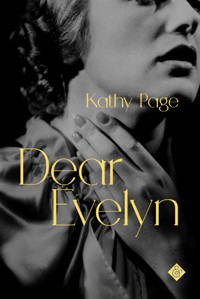
Born between the wars in a working-class South London street, Harry Miles is a sensitive and capable boy who attends school on a scholarship and grows into a thoughtful young man. Full of energy and literary ambition, he visits Battersea Library in search of New Writing: instead, however, he discovers Evelyn, a magnetic and independent-minded woman from a narrow, terraced street not far from his own.This is a love story, albeit an unconventional one, about two people who shape each other as they, their marriage and their country change. From London before the sexual revolution to the lewd frescos of Pompeii, from the acrid devastation of Churchill's North African campaign to the cloying bounty of new-built suburbs, Dear Evelyn is a novel of contrasts, whose portrait of a seventy-year marriage unfolds in tender, spare, and excruciating episodes.
Das E-Book können Sie in Legimi-Apps oder einer beliebigen App lesen, die das folgende Format unterstützen:
Seitenzahl: 450
Veröffentlichungsjahr: 2018
Ähnliche
















Praise for Kathy Page
‘Page’s writing … is lit with an immediate sense of period, summoning images which are by turns softly painterly, sharply filmic or as murky as those first television images of the moon landing.’
Times Literary Supplement
‘Her fiction is sensuous and verdant, grafting lyrical prose onto stories and situations that appear almost as legends … Page recalls Angela Carter … employing fable and myth, along with Gothic elements and moments of horror, to jar her reader out of a settled complacency.’
National Post
‘I can’t remember the last time I was so compelled, impressed and unsettled by the emotional world of a novel.’
Sarah Waters on The Story of My Face
‘Kathy Page is a massive talent: wise, smart, very funny and very humane.’
Barbara Gowdy
‘Kathy Page embraces and illuminates the unknown, the creepy, the odd, the other and the rest of us. Her unforgettable prose is moody, shape-shifting, provocative and always as compelling as a strong light at the end of a road you hesitate to walk down … but will.’
Amy Bloom
‘I really love the attention to a language that drives itself straight into me as a reader and holds me there, alive and waiting for the next word. It’s thrilling for me to experience … terrific.’
Peter Levitt
Praise for Alphabet
‘Page captures the oppressiveness of the closed institution, the violence that always seethes beneath the surface … compelling.’
Times Literary Supplement
‘Alphabet is not just highly readable, but one of the strongest, most eloquent, most tightly constructed novels of the year… Out of material that would have been at home in the blackest of black comedies she has fashioned a fable about redemptive love. She has celebrated, with rare deftness, the resilience of the human heart.’
Sunday Telegraph
‘Sometimes novelists go too far – and sometimes they manage to demonstrate that too far is the place they needed to go.’
Time Out
‘Page throws mixed-up hope into a world where only fantasies and delusions dare to grow. When I got to the end of Alphabet, I found myself longing for more.’
Globe and Mail
‘A moving novel about knowledge, self-awareness and the power of words, set in the purgatory of prison. This young man’s life demands our attention and refuses to let go … powerful … simply an epiphany.’
Kirkus
‘Gritty and illuminating … fascinating from the first page.’
Publishers Weekly
‘An emotional read without sentimentality or easy, pat answers. Recommended.’
Library Journal
First published in the United Kingdom in 2018 by And Other Stories Sheffield – London – New Yorkwww.andotherstories.org
Copyright © Kathy Page 2018
All rights reserved. No part of this book may be reproduced or transmitted in any form without the prior written permission of the publisher. The right of Kathy Page to be identified as author of this work has been asserted in accordance with Section 77 of the Copyright, Designs and Patents Act 1988.
Excerpts fromThe Waste Landby TS Eliot used with the permission of Faber and Faber Ltd.
ISBN: 978-1-911508-28-1 eBook ISBN: 978-1-911508-29-8
Editors: John Metcalf and Tara Tobler; Proofreader: Sarah Terry; Typesetting and eBook:Tetragon, London; Cover Design: Ronaldo Alves
A catalogue record for this book is available from the British Library.
And Other Stories is supported by public funding from Arts Council England.
Contents
A Kind of MusicBite on ThisDesperate GloryWhatever the Poets May SayWater, Water, EverywhereBascombeBloody NothingA Kind of MusicBlueBest GirlAnother ManHouse Garden HouseSo GoodSoundsChatterleyInchesBlueHotel ParisCloudDo Not ResuscitateAll the WorldTo Make Much of TimeHotel ParisAcknowledgementsA Kind of Music
Bite On This
‘Bite on this,’ Mavis said, and gave Adeline a half-moon of leather on a string that tied around the wrist: her own invention, she said. Adeline knelt, legs wide, arms thrown over the edge of the double bed, the top of her belly pressing into it. Mavis had rolled back the rug and put down newspaper topped with clean sheeting. Same on the bed. Bleach in the washing water. Cleanliness. Keep visitors away. She had boiled everything sterile, scrubbed her hands three times. ‘Bite,’ she said, ‘not long now.’
The second baby was supposed to come easier, but this little bugger had started off facing out. To bring it round, Mavis had made Adeline crawl up and down the tiled passageway on her hands and knees, time after time, then stand and lean on the end of the bed. Two days. Very little rest. But be grateful it isn’t a breech. And be grateful she isn’t at York Road: a filthy place, and half the mothers there come out in coffins. And no high-and-mighty doctor charging you the earth. Mavis cost fifteen shillings, however long it took.
Adeline groaned, bit down hard, and when the worst had passed, she spat the leather thing out and a bit of one of her back teeth went with it. She didn’t care.
‘On your side on the bed, if you don’t want to tear,’ Mavis said.
‘No,’ Adeline told her as the pain obliterated all remaining thought, and forced a grunt out between her clenched teeth. Spit oozed out over the leather thing and ran down her chin, but Mavis got her up on the bed before the next one. A good thing. Her legs were shaking so much she might have sat on it.
‘I’ll be damned!’ Mavis said, minutes later. The cord wound three times round the baby’s neck – no wonder he was slow to emerge. She slipped her finger under one of the fleshy loops and tugged it free.
Male, unremarkable, Mavis wrote on the record. Father, Albert Edward Miles, lathe operator. Mother, Adeline Miles. They didn’t have a boy’s name picked, so Mavis recommended Harry: ‘Can be a Henry or a Harold. Works for a king, a ditch-digger or anything in between. Everyone likes a Harry.’ Albert’s grandfather had been the Henry sort so he was happy with that; Adeline was too tired to care.
Albert took a spade and buried the afterbirth in the square of yard out back, near the outhouse. Put in a tomato plant on top of that, Mavis advised him, though there was not enough light there for anything but the toughest weeds to grow. She brewed tea and waited two hours in case of bleeding and then he paid her the balance owing and a shilling tip for a good job done.
Adeline’s baby sister Josephine, seven years younger, was married, too. When Adeline turned weepy and couldn’t pull herself back together she came over, got her out of bed and brought her downstairs to sit in the small back room, its windows fogged with the steam from soup-bones boiling.
‘Come now, let’s count your blessings,’ she said. And there were plenty. Adeline was alive, hardly torn, full of milk. She had a healthy baby, despite the business with the cord, so thank goodness Mavis knew her business … She had a roof over her head and a younger sister who’d taken her first, George – almost four now – off her hands, and three more sisters who might do the same. A good crop of aunts. One uncle. Still had her mother. She had all that luck, and more. Good food. A husband in skilled work, who didn’t drink to excess – a fair, decent man who never hit her and never would.
It was a blessing to have any kind of husband, Josephine pointed out; the war had swallowed so many of them up. She and Adeline the only two sisters married out of five. Adeline and Albert were both fortunate: he to have been spared the trenches, she to be the one he selected, despite that she was twenty-seven and rather quiet. She could add, multiply and divide in her head. She spelled well, and wrote neatly, worked hard, showed no signs of religion, gave herself no airs, did not crimp her hair, or spend her time romancing. Albert Edward appreciated all that, and told her so.
It was the first time anyone had ever expressed an opinion about who Adeline was, so she didn’t disagree. He talked too much for her comfort, but that was a small thing. He wanted a better kind of life and studied how to get it. He was in favour of rational choice. Far better, he said, to have one or two children with full stomachs than six wraiths in one bedroom, half fed, always sick, and most of them ending up in tiny graves. Don’t you agree, Adeline? Of course it made sense, though at the same time, wasn’t it wrong to go against nature? Wrong, certainly, to talk so much about it? We must understand each other, he said. Was that what men and women did? Josephine’s Will never asked her opinion. Hardly spoke.
And surely it was better to have your children live, and grow up to work in an office or even teach. Yes. But she wished he would spare her the details of the means they’d use to limit their family’s size. And did they have to be so strict on the number? Education was the key, and knowledge, power. Yes. Also, Albert said, there was strength in the understanding of numbers. Compound interest, especially. They saved every week. Though in respect of Harry, numbers had let them down.
‘I don’t understand what went wrong,’ he said when they realised she was expecting. ‘I’ve been very careful.’ He had everything written in a penny notebook: her monthlies, when he’d let himself go. ‘Day eight. Well before your egg would be released,’ he said, bringing their doings in the darkness of the bedroom right there onto the kitchen table, where they surely did not belong; still, the egg part put her in mind of chickens, and she laughed.
‘Well, I didn’t mean to be laying.’ Truth was, they’d done the same as the Catholics did. Plenty of them seemed to be making mistakes too. Perhaps some things couldn’t be controlled, and maybe it was better that way, but she didn’t say any of that because she had married him, for better or for worse.
‘We’ve money saved. But as for the future –’
The future was what made Adeline weep, though for the life of her she couldn’t say why.
‘Cheer up now, dear,’ Albert said, while she was still weepy and good for nothing. They sat in the room off the kitchen, finishing up the shepherd’s pie Josie had brought. ‘I promise you won’t have to go through it again.’
And hearing that, Adeline, so very lucky as she knew she was, wept even harder, right into the food she was lucky to have.
‘So how’s he going to make sure of that?’ Josephine asked when Albert had gone to stand on the back step for his smoke. ‘Is he going to wear a “raincoat” in bed, now?’ Josie giggled and Adeline coloured right up.
‘We tried one of those,’ she whispered, leaned close. ‘Smelled like matches. Awful.’ She was too shy to mention the nasty look of the thing, The Paragon Sheath it was called, washed and powdered, in its box. Cost two and six. Surely, Albert had said, this was a thing that could be, would be, must be improved upon?
‘I don’t know what he’s planning, and I don’t want to. I hope he don’t send me to that clinic that’s opened up, I’d die.’
‘Will doesn’t go in for any of that. Best just use a bit of self-control and take what comes.’
Harry woke. He had a very persistent cry, would not be lulled. So she gathered him up, fed him, and wept some more.
Stop it, stop it, she told herself, rubbing her sleeve over her face. Count your darn blessings: Alive, healthy baby. Good milk. Helpful sisters. Mum to mind him when I go back to work. Kitchen, sitting room, running water, convenience out back, rent paid on the dot. Food. Good husband. Better life.
‘I wish you didn’t tell your sister such intimate things,’ Albert told her when he came into bed. He spoke very low because Harry lay between them.
‘Oh, but I’ve got to talk to someone,’ she said, ‘or I’ll go off my rocker like cousin Nellie did.’
‘Maybe it could be someone more discreet,’ Albert said. And there again was luck: another man might have forbidden it outright, or struck her, or both.
But what would they do now in bed? Make sure to pull the kettle off before it boiled every single time? Stuff herself with some stinking sponge? Would he just leave her alone? No chance of a daughter, ever? Too much care and calculation surely took the pleasure out of things, the surprise out of life.
It helped to talk, to talk to someone not so rational and reasonable as Albert. And it was better to talk to Harry than to talk to empty air. To count the blessings aloud, numbering them, as she unpinned his nappy, scooped out and emptied its liner, chucked the stinking things into the enamel bucket, wiped him clean and fit him up with fresh muslin and towelling.
‘So we’re both lucky buggers,’ she concluded, pushing the pin through the layers. ‘One day, I’ll stop blubbering like this, and that’ll be better still. You’re a good listener. You’ll be good to your wife. You’ll know what she wants.’ The blue-grey eyes fastened on her face. He had a thoughtful expression, she decided. Understanding. Didn’t judge. And so, while she could have left him asleep in his box when she popped out for ten minutes, she carried him with her to the shops, telling him on the way how she would cook a bit of beef, and then, when they got there, how no, it was too dear and they’d have neck of mutton instead. She set him on the table while she cooked, on the floor while she did the washing and hung it out. She told him exactly what she was doing even though he could see for himself.
At the end of the fortnight Josephine brought George back. He seemed taller and thinner. ‘Eating us out of house and home,’ she said. ‘Al was too damn right about keeping a family small! Besides, I’ve been throwing up. Must be expecting again.’
‘Now, if your brother doesn’t behave,’ Adeline told Harry, ‘if he’s rough or forgets you, or does the slightest wrong thing, scream. I know you will. And George, if you watch him well, then soon you’ll get to feed him a rusk, and I’ll buy you a string of liquorice.’
Two strong boys. George, Albert’s favourite; Harry, hers. These were likely all the children she would have. Her luck.
Count your blessings, Adeline reminded herself many nights, awake, in the small bedroom with its two bedside tables and small closet, her body longing for something she had no words for. Two healthy boys. Rent paid. A decent man. She clenched her teeth, and a memory flooded her mouth, of leather, of how she kept the sound of the birth pains inside.
Desperate Glory
Harry had a window seat at the front of the classroom. Morning sun fell across his desk, picking out its fine coating of chalk dust, the marks of his fingers. Stray tendrils of Virginia creeper, a deep scarlet, framed the wooden sash window, the top arch of which was made from four pieces, the careful joints just visible through white paint. He could see the railway lines running to Clapham Junction, the sports fields, fence, trees and buildings beyond. To his right sat Gorsely, behind him, Fitzgerald. He had a close-up view of the new teacher, Mr Whitehorse: of the gravelly texture of his skin and the jagged white line that ran from his cheekbone to the corner of his lip.
‘Miles,’ Whitehorse said as he marked Harry present, ‘do you know what your name signifies?’
‘A measure of distance, sir?’
The class tittered. They did not yet know what to expect.
‘Where’s your Latin?’ Whitehorse continued. ‘Mīles, mīlitis: a foot soldier.’
Whitehorse, tall, gaunt and stooping, asymmetrical in almost every respect, was already known as Dark. He straightened his back somewhat, and looked slowly around the class. It took them a moment to realise that only one eye, the left, moved. ‘Since we are talking of war,’ he continued, ‘I’ll take the opportunity to let you all know that the rumour is correct. I wear a glass eye. I lost my real eye in what is called the Great War.’ He indicated his right eye, in case they were not sure. Beneath it, the white scar. ‘Lost is a euphemism, from the Greek. Who knows what that is?’
No one replied. He did not explain, but continued: ‘Shrapnel impaled my eye, and the nerve behind. Pain seared through me. I passed out, then woke still in agony on my back in the mud … Yet I was lucky. We should remember that one hundred and seventy men from this school died during those four years, including a former headmaster and both of his sons. They were of course very brave. However, I sincerely hope you all avoid such a fate.’ He inhaled sharply, looked around the room. The boys at their desks sat perfectly still.
‘The guns are silent now,’ Whitehorse continued, softly, ‘and in this class we shall study verse of various kinds. The poetry of love, the poetry of the land, and the poetry of the soul. I hope to avoid the poetry of war. We shall take verses apart and put them back together again, speak them, write them; you will learn poetry so that you have it in you forever, beating like a second heart … I wonder, what was the last poem you read and liked? Armstrong? Godwin? Bowles?’
The silence became unbearable and Harry raised his hand.
‘I liked “The Lady of Shalott”, sir,’ he said.
Whitehorse stiffened, fixed him with his single, seeing, sky-blue eye, and then a second later, turned his head so that the unseeing one appeared to look as well.
‘Miles, I must ask, did you also enjoy “The Charge of the Light Brigade”? One of the most dishonest poems ever to be written:
Theirs not to make reply,
Theirs not to reason why,
Theirs but to do and die.
Into the valley of Death
Rode the six hundred.’
Transfixed, Harry shook his head. Whitehorse leaned closer towards him. The white of his real eye was veined red, but that of his glass eye was pure, somewhat bluish white.
‘Yet you’ll admit they’re similar? Content: death. Form: a relentless rhythm and an equally relentless rhyme: Lie, rye, sky, by, loom, room, bloom, plume. Is that your taste, then?’
He knew he must say something, thought of the Lady, half sick of shadows. How she left the web, left the loom, made three paces through the room, and looked out at the world. The mirror crack’d from side to side. That was what he liked.
‘What did the Lady do wrong, sir, to get the curse laid on her?’ he asked. Snorts of laughter erupted behind him, inexplicable to a sisterless boy. Whitehorse let out a long breath, his shoulders relaxing as he did so.
‘A good question, Miles,’ he said. ‘Though I can’t answer it.’
It was Harry’s second year at the school. He’d been awarded a scholarship to cover most of the fees. They had bought the uniform second-hand: cap, boater and blazer with Pour Bien Desirer and the portcullis sewn in gold on the breast pocket. Each evening his mother sponged and pressed the uniform while he slept, and each morning she rose early to pack lunches for him and his father and brother. Then it was a half an hour’s walk between two worlds.
His father had accompanied him the first day. It was straight all the way once they reached Earlsfield Road; as the hill picked up, the shops thinned out and the terraces grew progressively bigger, until they detached themselves from each other at the top, where they sported stained glass, carved gables, and attic rooms for the maids. The road ran close to the railway, past Spencer Park, where the roof of the Royal Victoria Patriotic Building became visible above the trees, and on to the Roundhouse and Battersea Rise. The school gates, right next to the railway line, were unassuming. But through them you could see a gatehouse and a tree-lined path. The school had an ancient charter and had moved out from the city fifty years ago into a steep, red-brick building with a tower, arched windows and a courtyard, a warren of a place surrounded by gardens and huge, perfect playing fields.
A sixty-pounder from the Great War, given in recognition of the school’s sacrifice, was parked in the grounds in front of the main entrance. The day began with prayers in the dark wooden chapel, and the Officers’ Training Corps was all but obligatory. Boys had the use of a library and a swimming pool and ate their lunches at long tables in a room flooded with light; they learned Latin, calculus and physics, literature, modern languages, mathematics, rugby and rowing.
‘You’ll not get this chance again. Pay attention and speak up, but be polite,’ Harry’s father said at the gate. His hand glanced heavily from his son’s shoulder, as if to push him on and in, then he strode away, already late for his job at the United Metal Works.
Albert Miles had started out on the lathe, moved up to setting the machines. He knew his numbers, enjoyed reckoning and brought it to every aspect of his life – even laid out his allotment garden with exact measurements and calculated yields in advance. From their early years he’d drilled both sons in mental arithmetic. At Harry’s age, his older brother, George, was a natural whose lightning calculations became a party piece. But George was also drawn to roaming the commons, shooting neighbours’ cats with his pellet gun, and begging rides on motorbikes. He didn’t apply himself.
Harry did not have the same gift, but found a kind of satisfaction in numbers. They were a means to an end. He excelled in the London County Council Scholarship Exam because he badly wanted to and it was clear to him that what they were looking for was obedience to the task, to the given facts and rules. You must take the time to understand exactly what was required, write the calculation in neat, well-aligned columns without errors, then state the correct answer in a well-constructed sentence free of spelling or punctuation mistakes: They travelled seven thousand miles in six months. They consumed fifteen apples per family per week. The journey lasted four days, three hours and ten minutes. Answers must be underlined, using a ruler. No smudging.
Parsing sentences started out in a similar vein, but the bare sense that arose from the relationship of one part to another was only the beginning of what the words might say to you, of where the thread of meaning might lead. Harry half hated and half loved words, held them in a kind of squeamish fascination because of their very slipperiness, because they could take you anywhere at all, including somewhere you did not wish to go, and because his father trusted only facts – and, despite the lack of application, preferred George: George this, George that, George the other, who had now talked his way into a half-decent job in the Gramophone Works and was in everyone’s good books again.
‘Writing out the poet’s words, you retrace the path of his thoughts with your hand,’ Whitehorse informed the class. They copied the third part of ‘The Lady of Shalott’ into their notebooks, then used coloured pencils to underline the rhymes and half rhymes, and to indicate the stressed and unstressed syllables with a pattern of crosses and dashes. Meanwhile, Whitehorse speculated aloud: perhaps the curse was connected with art, and what it was to be an artist. The Lady of Shalott could only experience the world through the mirror, and express it in her work at the loom. She could not weave and love – she could not be fully of the world, yet yearned to be, and that was why she must die …
Whitehorse paced back and forth in front of the blackboard, his dusty gown billowing out behind him. He stopped, faced them, and lurched towards the impossible questions they could all sense were on the way. Must art involve some kind of sacrifice? Did it compete with human affections? Wentworth? Proctor? The room froze. He continued around it, studying each boy. The living eye, Harry noticed, swam with complicated feeling, while the glass one merely gleamed.
‘I really don’t know, sir,’ he said quietly, when his turn came. And then, for several minutes, they worked in silence until the bell rang.
‘Art, of course, is part of what I shall call the poetry of the soul, and that is an excellent place for us to begin … ’ Whyte’s Treasury of Verse in English, bound in red and embossed in gold, lay on his desk, and Whitehorse bent over it, flicking through its whisper-thin pages. Beyond their classroom, the school was all movement. ‘Blake … later. Read “The Windhover”, page 402,’ Whitehorse announced as they fled, through Mr Barker’s and Mr Chamberlain’s rooms to the courtyard stairs.
‘He has a wooden leg, too. And one of his balls is shot off!’ Smart said, as they plunged down the rickety iron stairway. The son of the school bursar, he often had inside information. ‘The man’s shell-shocked to all hell. Flies off the handle. Battersea Grammar let him go. When Old Denton kicked the bucket in the holidays, they had to act fast and he comes cheap.’ They crossed the courtyard as fast as they could without running. ‘But really, it’s all your fault, soldier-boy,’ Smart told him as they pushed through the double doors. Harry shrugged, grinned.
‘What does your name signify?’ said Teddy Davis, exaggerating Whitehorse’s crisp enunciation and booming tone.
‘My friend at Battersea says Dark goes wild if you quote that bit from Brooke about a foreign field.’ Smart was a very solid boy, and now he moved closer to Harry, so that their arms and shoulders collided: the hint of a threat.
‘So do it, Harry,’ Smart continued, as they approached the chemistry lab. His voice slowed, quietened: ‘Unless you’re too scared. Give us some effing fireworks, and we’ll forgive you for putting us through the lady’s curse.’
‘No,’ Harry said simply, pushing past him into the gassy tang of the lab. ‘Do it yourself, if that’s what you want.’
Not that he actually liked Whitehorse. But he disliked Smart, knew how this could go, and wouldn’t turn on an underdog; his instincts went the other way. He was thirteen, constantly hungry, growing so fast that his shins hurt in bed at night. He was starting to notice girls, to feel the power they secretly wielded. He understood that men had a duty to provide, and that he would have to work hard, but because of the school it was possible that he might give orders or sit at a desk and so earn more for his efforts. Who and what would he become? His knowledge of the ways of the world expanded with every breath he took – but even so he could not know that a new war would begin in just six years’ time. He, despite his adolescent cynicism, despite being in love, would have to be part of it. Reginald Smart and Teddy Davis would die before they reached twenty-two, and the older Davis, Alexander, would leave his left leg and a good part of his mind in Italy.
Whitehorse soon earned other nicknames: Whitearse, and Workhorse. By Christmas, they had transcribed, analysed and memorised over thirty poems of the soul. They returned in January to rugby fields a foot deep in snow of purest, almost purple white, and criss-crossed with fox and bird tracks. The railway line had been cleared, and as Whitehorse welcomed them back and declared that their new subject would be ‘the poetry of the land and the sea’, a long, dark train threaded itself through the surrounding whiteness, belching steam as it headed for the junction.
The room was so cold that they could see their breath. Carson, stammering, delivered John Clare’s ‘Emmonsail’s Heath in Winter’, page 201, and then Wright sniffed relentlessly through all ten pages of ‘January’. No one, said Whitehorse at the end of it, would deny the shorter poem – its ‘crimpled’ leaves and ‘oddling crow’, the sheer liveliness and pleasure in it. But the endless rhyming couplets of ‘January’, he thought, would teach them something about the ear’s need for variation, though there were still jewels to be found, and certainly a feeling lingered in the poem’s wake – how would they describe that feeling?
‘Sad,’ Harry said.
‘Sir,’ Smart asked – he seemed to have grown a head taller in the past few months and looked too big for his desk – ‘sir, it says here that Clare was in an asylum!’
True, Whitehorse admitted: a crisis. Nervous collapse. From memory, he quoted ‘I Am’, which was not in the book. It described the poet’s desperate state of mind: The vast shipwreck of my life’s esteems was, Whitehorse said, a masterful phrase. ‘Feeling,’ he continued, ‘is one of the things poets do for us. As we saw last term, they travel to the farthest reaches of the soul’s possibilities, and record the journey, something of as great a value to those who have not made the same journey, as it is to those who have. Intense emotion, Smart, may seem like madness to those who do not share it.’
Davis glared back at him from the desk next to Smart, whose heavy features gathered into a fleshy knot.
Withering and keen, John Clare had called winter. The cast-iron radiator beneath the window was barely warm, but Harry sat close enough to press his left leg against it, absorbing all its heat. He had come to enjoy the poetry class more than anything except for games. He liked chemistry too, and there was a similarity: explosions, transformations. You never knew where the lesson would go, what would happen, how you might feel, what you might discover or be forced, suddenly, to think about.
Another train passed, its whistle hooting mournfully, like some huge mechanical owl. The railway, Whitehorse told them, had changed everything. It ran along what had once been a field’s edge and the boundary of a mediaeval estate, and set the boundaries of the school’s current property. Just forty years ago the streets they walked to come to school had been open fields. The old landscape and the people who had tended it persisted in the names of places and streets: Lavender Hill. Southfields. Earlsfield. Osiers Road. And the rural life of Northamptonshire that John Clare had depicted so lovingly over a century ago was changing even as he wrote, and that, surely was why the poem seemed to ache with nostalgia, a word derived from Greek words for pain and a longing for home … Harry, looking out at the snow, thought suddenly of his father, in summertime, bringing home, along with the usual vegetables, a bunch of red and purple dahlias that he’d grown on their allotment by the cemetery. The way his mother’s face opened up as she set them in the jar.
They considered ‘The Lake Isle of Innisfree’, page 405, and ‘Composed upon Westminster Bridge’, page 399.
Humankind, Whitehorse said, should not be separated from the natural world. A pastoral vision was something they carried inside them, in what Yeats had called thedeep heart’s core, and it was part of the poet’s task to keep that vision alive.
Old fart’s bore, someone wrote on a scrap of paper. The back of the class shook with laughter, but Harry screwed the note up and shoved it into his inkwell then had to surreptitiously dry his fingers on his trouser leg when Whitehorse invited him to read.
It was the last poem in the book, page 539, on the left side: four verses, twelve lines in all. Harry ran his eyes over it, drew breath.
It was hot, and a train stopped unexpectedly. That was all: the name of the place, a man coughing. Heat, haycocks, plants and birds: it was a poem in which nothing happened. And yet as he read, the words remade the room. There was a silence when he finished, in which he at least felt the heat and heard the birds.
‘What did you think of it?’ Whitehorse asked.
He’d noticed that the sentences either stopped before the lines’ ends, or ran over them, so that you did not so much notice the rhymes, which in any case came only alternately, and in the final stanza seemed somehow to relax. He’d noticed that, and more, too much to say.
‘Different, sir,’ he said.
Whitehorse gave an almost imperceptible nod, then switched his attention to the class in general, swivelling his head this way and that in that slightly exaggerated way of his to which they were all now oblivious. ‘This writer, I believe, will turn out to be one of the twentieth century’s most important poets,’ he said.
‘But sir!’ Davis spoke without raising his hand. ‘I beg to differ, sir. I much prefer Rupert Brooke, “The Old Vicarage, Grantchester”, page 520. It brings tears to my eyes, sir.’
‘And,’ Smart chimed in, ‘what about “The Soldier”, sir, page 526. “Some corner of a foreign field / That is forever England.” That’s very fine, wouldn’t you agree, sir?’
Harry did not quite know why his heart thudded so hard in his chest. Whitehorse, his fingers tented on his oak desk, looked down at them for a long moment. Then up.
‘I am glad you like something, Smart,’ he said. ‘You and Davis will each take three pages to compare and contrast “The Old Vicarage, Grantchester”, with “Lob”, also by Edward Thomas: two very different poems about our country. By next Tuesday.’
He continued, his voice tightening: ‘As it happens, I once ate a very good supper with Thomas and Brooke, in Gloucestershire. And not long after that, we were all overseas. Brooke died en route, and Thomas’s heart was stopped by a shell in Arras. But what men endured before their deaths matters more, and if you seek to understand war, avoid platitudes. Read Sassoon. Read Owen, read especially ‘Dulce et Decorum Est’:
Bent double, like old beggars under sacks,
Knock-kneed, coughing like hags, we cursed through sludge,
Till on the haunting flares we turned our backs,
And towards our distant rest began to trudge –
‘No, it’s not in our book. And it was not my plan to recite it today, but you, Davis and you, Smart, have raised the matter, perhaps intentionally – and I find myself unable to stop. And perhaps war can be construed as a place, a hellish one. One that it is far better to read about than to visit. One that should be described honestly, especially to young men. And so I’ll continue, even though it may be unwise:
Men marched asleep. Many had lost their boots,
But limped on, blood-shod. All went lame; all blind;
Drunk with fatigue; deaf even to the hoots
Of gas-shells dropping softly behind.
Gas! GAS! Quick, boys! – An ecstasy of fumbling
Fitting the clumsy helmets just in time,
But someone still was yelling out and stumbling
And flound’ring like a man in fire or lime,
Dim through the misty panes and thick green light,
As under a green sea, I saw him drowning.
In all my dreams before my helpless sight,
He plunges at me, guttering, choking, drowning.’
Whitehorse’s voice was harsh. The lines came in gasps. He struggled for his breath as if he too had been gassed.
Standing before the class, he screwed his eyes shut as he continued, his hands on the desk, his arms rigid:
‘If in some smothering dreams, you too could pace
Behind the wagon that we flung him in
And watch the white eyes writhing in his face,
His hanging face, like a devil’s sick of sin;
If you could hear, at every jolt, the blood
Come gargling from the froth-corrupted lungs,
Obscene as cancer, bitter as the cud
Of vile, incurable sores on innocent tongues, –
My friend, you would not tell with such high zest
To children ardent for some desperate glory,
The old Lie: Dulce et decorum est
Pro patria mori.’
No one breathed.
‘We’ll stop there,’ Whitehorse said, opening his eyes just before the bell rang. Harry, the last to leave the room, turned at the door and looked back. But he dared not ask whether Whitehorse was all right.
‘I’m not writing any blasted essay for any bloody lunatic teacher. If he’s still raving fifteen years after the end of the frigging war, the man must be a grade one coward!’
‘You’re not in a position to know that, Smart,’ Harry said, not thinking, and Smart’s fist crashed into his cheek, knocked him back into the cloakroom wall, his head narrowly missing the coat hooks.
‘What position are you in, then?’ Smart asked. Harry launched himself forwards and Smart crashed into the floor, his head clipping the corner of a bench on the way down. Blood gushed from the wound; as they watched, his eyelids fluttered, then closed. His heart racing, Harry pressed a scarf onto the wound while Gorsely ran to fetch Nurse. The rest of the group vanished. When Nurse came, Harry rushed to the toilet and heaved.
Dr Devine, the First Master, did not care who began it or why. ‘I see you have a scholarship. Well, ask yourself, do I deserve to be here?’
The strap bit, ten strokes, inflaming every nerve in his hand, flooding his entire body with the effort of bearing the pain. The thing that mattered most was not to wet yourself and it was better to tell your parents before the note came in the post. Besides, he had a black eye.
‘If you want to leave, say so. We put up ten shillings for that uniform,’ his father told him before silence settled over the supper table like snow. Directly across, George, whose constant sparring had taught him how to fight, caught Harry’s eye and winked.
Suppose I had to? Harry asked himself later, sleepless in the dark. Suppose I killed someone? Thou shalt not, the Bible said. Yet soldiers must. And according to Whitehorse, his name meant soldier. The last war had ended not long before he was born. His father’s occupation had saved him from service, but there were two uncles he’d met only in pre-embarkation photographs, and another who came back seemingly intact, but a few years later emigrated to Canada, and lost touch. There was ‘Sarge’ Hedges, a man with only half a right arm, who worked at the station paper shop, deftly pushing things across the counter with his ‘right hook’ and counting change with his left. There were tramps, who knocked on doors to offer themselves for work, then later in the day hung around the Sailor Prince and the Halfway House hoping someone would buy them a drink. Many of them had been in the war. The more you looked, the more you saw: those who limped, did not stand straight, stood too straight, who kept a stump hidden from view. And now there was Whitehorse, who, the very next day, apologised for talking to them about the war; who, when Smart reappeared with a thick bandage around his head, made no mention of the essays and did not make the class read Thomas’s long poem, even though it was in the book. Instead they read ‘Sea-Fever’ and ‘Cargoes’, then week-by-week and place-by-place moved towards Easter, when daffodils bloomed on the commons, and birds dipped past the windows, bearing twigs in their beaks.
In the third term, Whitehorse spoke about love: it was wrong, he said, to think of this topic as beyond their reach. Love was the only thing, in the end, that mattered. It came in many forms. It flowed between man and woman, between mother and child, between brothers, sisters and comrades, between friends and associates of all kinds. Love was affection, chivalry, yearning, compassion, sacrifice, admiration, companionship, desire. It was sometimes romantic, sometimes sexual, sometimes platonic; it was sometimes reciprocated and sometimes not, it was simple and complicated at the same time. Its expression demanded the use of assonance, dissonance, the patterning of syllables and stress, caesurae, metre, rhyme; it expressed itself in ballads, sonnets, blank verse, in countless songs.
Form, he had often said, was a vessel that contained, carried, but also embodied thought and feeling. It was paradoxical that love, a wild thing, had often been expressed in the stricter, more intricate verse forms. Their study of the poetry of love would begin with Shakespeare’s sonnets. He took some time to explain: the proposition, the development, the volta or turn, the rhyme schemes and metres favoured by Petrarchan sonneteers, how Shakespeare had moved to three quatrains and a couplet, as opposed to an octave and a sestet, and had shifted the volta to the very end, to ring out forcefully in the couplet there.
Whyte’s Treasury included fifteen out of the hundred and fifty-four, almost enough for one each to study and present to the class. The sixteenth member of the class could take a sonnet by Elizabeth Barrett Browning, a woman writer quite as good as any man. Questions?
‘Sir,’ Davis’ voice broke awkwardly between one word and the next, ‘what is meant here by a youth?’
‘A young man,’ Whitehorse told him. ‘Quite possibly, some say, the Earl of Pembroke, a patron of the arts at the time.’
‘I don’t understand. Why was Shakespeare writing love poems to, to –’
Impossible to know, Whitehorse said. Other sonnets in the sequence were addressed to a Dark Lady, and historians also loved to speculate as to her identity. Shakespeare was an actor and a dramatist, used to adopting a persona, to taking on roles. He would prefer them not to get caught up in the specifics of the person addressed, but to consider the sentiments expressed and the literary context, against which Shakespeare was perhaps rebelling. Later, they’d move on to Andrew Marvell, John Donne, Shelley …
‘I bet they were all nances. I bet he’s bent himself. Stands to reason. He shouldn’t make us read crap like this,’ Davis protested.
‘Too difficult?’ Harry asked, as he passed him on the stairs, knowing he was pushing it, wanting to.
He read Sonnet 116 that same evening, sitting on the back step. He noticed the image of the ship, the many iterations of what love was not, puzzled over the remover to remove. He was excited by the poem’s extremity. It seemed to him that choosing to make a commitment even to the edge of doom would in some way that he could not begin to explain enlarge a person. ‘If this be error and upon me proved, / I never writ, nor no man ever loved’: the drama of these adamant words thrilled him to the point that when he spoke them aloud, as if they were his, hairs rose on his arms. But how, in that room, with Smart two desks away, could he say any of this?
He never did.
‘Boys,’ Whitehorse told them towards the end of the next class, after a lengthy discussion of sonnets twelve, the clock, and eighteen, the summer’s day, ‘Boys, I have to let you know that I am not prepared to modify my curriculum in response to ill-considered parental opinions, and so must leave you unexpectedly.’ His one-eyed gaze lingered momentarily on Davis and Smart. ‘A pity. The First Master will take this class until the end of term. And I thank you for your kind attention. I believe we have learned something together this year, and now I must wish you all goodbye, Godspeed, and good luck.’
The class chorused their goodbyes and clattered out of the room, but Harry sat on by his window in a pool of spring sunshine, unable to leave, to move at all.
‘Miles,’ Whitehorse said, ‘come here.’ So he rose, took a few steps and stood, acutely aware of gravity, next to the oak desk.
‘You have an ear for verse. I would have put you forward for the Reader’s Prize, but under the circumstances I’ve not been asked to nominate. So – ’ Whitehorse reached down for his briefcase, extracted a slim volume, bound in blue cloth. ‘I hope you will enjoy Thomas’s collected poems.’ Harry gulped for air, unable to staunch the tears.
‘Sorry, sir!’
Whitehorse put a hand on his shoulder, and left it there.
‘Why should you be sorry?’ he said. ‘It’s good to feel things. Though the day must go on. Here – ’ He offered a tobacco-smelling handkerchief, and steered Harry towards the door that led to the outer stairs.
‘Will you find another teaching post?’ Harry asked, as they began the descent.
‘Don’t trouble yourself. Something will turn up,’ Whitehorse said. ‘Do you know Shelgate Road?’ he asked conversationally. ‘About half a mile, Clapham way? Thomas grew up there, at number sixty-one. Walked the same streets as you when he was a boy.’
What did he mean by connecting them in that way? Harry wondered then, and periodically afterwards – concluding only in middle age that his teacher had very likely meant no more than to be friendly and matter-of-fact.
A brief handshake at the bottom of the staircase, and then they parted. Harry never saw the man again. But he kept the book: To Harold Miles, for outstanding work. With all good wishes, David Stanley Whitehorse, his teacher had written on the flyleaf in the careful copperplate he had learned long before the war, when he was himself a boy.
Whatever the Poets May Say
Across the hallway, the librarian had decorated the Ladies’ Reading Room with vases of tulips and ferns, but the chairs there were hard and the tables wobbled when you leaned on them. Evelyn preferred the other room, where the panelling was in oak and the light fell softly from the gallery above, and everything exuded an aura of solidity and permanence.
She had started Rebecca only to see whether it was worth carrying home. Now she found it hard to put down, despite the fact that she was more than half irritated with the girl telling the story, who did not stand up for herself and constantly complained to the reader, even about her own good fortune. This girl was living in Monte Carlo, of all places – a seaside resort that Evelyn could only imagine, its white buildings clustered around the foothills of a mountain, and the surrounding sea an intense ultramarine, the colour of longing itself … Yachts jostled in the marina, and along the front were grand hotels, casinos, theatres, cafés with orchestras and awnings, marble pavements, palm trees. The vehicles were spotless, the women elegant, the men clad in cream linen suits. Jazz orchestras played all the latest dances. There were no headlines about Hitler and Mussolini, no long speeches, or ominous warnings on the radio – absolutely nothing to worry about. This nameless girl, blind to her own luck, had been hired as companion to an older woman (hardly heavy work!) and was staying with her in a hotel called the Côte d’Azur. She’d met a rich, sophisticated older man who (heaven knew why!) was showing interest in her: you would think she might enjoy at least some of this? But no. I am glad it cannot happen twice, the fever of first love, the nameless girl wrote, complaining again, for it is a fever, and a burden, too, whatever the poets may say.
Why should love be a fever and a burden? Evelyn looked up, momentarily meeting the hungry eyes of the tweedy-looking man opposite her. She turned slightly to avoid his gaze. Why not exciting, or satisfying? And why should anyone believe a woman who did everything wrong, who, clearly desperate for attention, had no sense of her own dignity and put up with rudeness and bad behaviour? In this she reminded Evelyn of her mother, who allowed all and sundry – including Evelyn, but especially Evelyn’s father – to take advantage of her. She forgave him repeatedly, gave him money to waste, new starts, last chances; to Evelyn, she said, I can’t help it, sweetheart, I’ve made my bed, but I hope you choose better than I have. Could you do worse than a man who forgets to hand over his wages, and has to have his soiled trousers pulled off him when he comes home singing in the middle of the night? A man who stinks of drink, urine, and menthol, and wants you to sit on his knee while he tells you that you are his favourite girl? Who coughs right over the dinner table? And if this is what love does, if it turns you into a fool and a drudge to be used and trampled on, then she would have absolutely nothing to do with it, nothing at all.
Still avoiding the man’s gaze, yet aware of it, she returned to the book. Despite its heroine’s faults, the story had something to it. What did Maxim de Winter see in the girl? Was it her very brokenness, her weakness, her stupidity that attracted him? There were men like that: tyrannical, bullying types, and Evelyn planned to avoid them, too.
There was no hurry to be married. On the other hand, it got you away from home. Perhaps she would stay single, and live on her own in a flat, though it might be lonely and was hard to imagine. Clearly the unlikely pair in the book had ended up together. Something terrible had happened but they were still being waited on hand and foot, albeit in lesser hotels; naturally she wanted to know what momentous thing had occurred, so she read on, skipping some of the girl’s ramblings and putting aside thoughts of her mother, who would have supper ready for half past six. Evelyn was not expected to help. Her mother worked until four, charring, then came home and did for herself, an expression that made Evelyn want to run screaming from the house. I’m used to it, dear, her mother said, I like to spoil you.
So Evelyn read on, perfectly poised in her chair, her bag by her feet, her elbows on the desk, taking care not to crumple the light jacket she wore. At the end of the sixth chapter, in which Maxim de Winter delivered his boorish marriage proposal, hunger ambushed her. She closed the book and made her way down the flights of red marble steps to the terrazzo floor and out through the reference library, which she liked for its coat of arms with the golden bees, and the clock and the curved glass ceiling that made it seem like a railway station – as if everyone studying in that room, their heads wearily bent over school or trade text books was actually going somewhere else: Monte Carlo, perhaps.
Traffic choked Lavender Hill. A collision between a cyclist and a motorcar had brought his tram to a standstill and Harry, already late, half ran towards the library. He normally used the main entrance but that day, for no better reason than to get away from the main road a moment sooner, he turned into Altenburg Gardens and arrived at the reference library entrance just as Evelyn, leaving the double doors to swing shut behind her, stepped out. She paused for a moment at the top of the three semicircular steps, framed by the white stone and the carved motto above, non mihi, non tibi, sed nobis, which later he would translate for her: not for me, not for you, but for us. Intended in the civic sense, he would jokingly explain.
She had the type of figure he liked best: full, yet not heavy. She held herself straight and proud despite carrying several books pressed close to her body with one arm, and a small leather bag in the other. Her hair, an intense brown, softly waved, fell to her shoulders. It set off a clear complexion, framed large, dark eyes and subtly rouged lips – not a rosebud, but the opening flower itself. She took the steps as if they belonged absolutely to her, as, suddenly, did he: was it his gaze, the sheer intensity of the attraction he felt, that made her drop one of her books at the bottom of the steps, or did she stumble slightly on the rougher brickwork there? In any case a book slid free and landed splayed open halfway between the two of them and he stopped and bent to pick it up, noting its author, du Maurier. He brushed the bright yellow jacket clean with his sleeve.
‘Is it good?’ he asked as he handed it to her. He heard his own voice as from a distance.
‘I’ll find out when I read it,’ she told him. ‘Thank you.’




