


141,99 €
Mehr erfahren.
- Herausgeber: John Wiley & Sons
- Kategorie: Wissenschaft und neue Technologien
- Sprache: Englisch
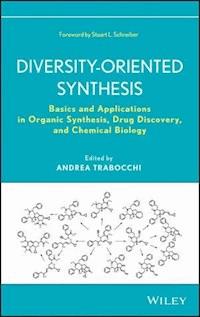
Discover an enhanced synthetic approach to developing and screening chemical compound libraries Diversity-oriented synthesis is a new paradigm for developing large collections of structurally diverse small molecules as probes to investigate biological pathways. This book presents the most effective methods in diversity-oriented synthesis for creating small molecule collections. It offers tested and proven strategies for developing diversity-oriented synthetic libraries and screening methods for identifying ligands. Lastly, it explores some promising new applications based on diversity-oriented synthesis that have the potential to dramatically advance studies in drug discovery and chemical biology. Diversity-Oriented Synthesis begins with an introductory chapter that explores the basics, including a discussion of the relationship between diversity-oriented synthesis and classic combinatorial chemistry. Divided into four parts, the book: * Offers key chemical methods for the generation of small molecules using diversity-oriented principles, including peptidomimetics and macrocycles * Expands on the concept of diversity-oriented synthesis by describing chemical libraries * Provides modern approaches to screening diversity-oriented synthetic libraries, including high-throughput and high-content screening, small molecule microarrays, and smart screening assays * Presents the applications of diversity-oriented synthetic libraries and small molecules in drug discovery and chemical biology, reporting the results of key studies and forecasting the role of diversity-oriented synthesis in future biomedical research This book has been written and edited by leading international experts in organic synthesis and its applications. Their contributions are based on a thorough review of the current literature as well as their own firsthand experience developing synthetic methods and applications. Clearly written and extensively referenced, Diversity-Oriented Synthesis introduces novices to this highly promising field of research and serves as a springboard for experts to advance their own research studies and develop new applications.
Sie lesen das E-Book in den Legimi-Apps auf:
Seitenzahl: 877
Veröffentlichungsjahr: 2013
Ähnliche



















CONTENTS
Cover
Title Page
Copyright
Contributors
Foreword
Preface
Abbreviations
Chapter 1: The Basics of Diversity-Oriented Synthesis
1.1 INTRODUCTION
1.2 WHAT IS DIVERSITY-ORIENTED SYNTHESIS?
1.3 SMALL MOLECULES AND BIOLOGY
1.4 COMPARING DOS, TOS, AND COMBINATORIAL CHEMISTRY: FOCUSED LIBRARY SYNTHESIS
1.5 MOLECULAR DIVERSITY
1.6 MOLECULAR DIVERSITY AND CHEMICAL SPACE
1.7 SYNTHETIC STRATEGIES FOR CREATING MOLECULAR DIVERSITY
1.8 REAGENT-BASED APPROACHES TO DIVERSITY GENERATION
1.9 SUBSTRATE-BASED APPROACH TO SKELETAL DIVERSITY GENERATION
1.10 OTHER BUILD/COUPLE/PAIR EXAMPLES
1.11 CONCLUDING REMARKS
REFERENCES
PART I: CHEMICAL METHODOLOGY IN DIVERSITY-ORIENTED SYNTHESIS
Chapter 2: Strategic Applications of Multicomponent Reactions in Diversity-Oriented Synthesis
2.1 INTRODUCTION
2.2 MCR PRODUCTS FOR HTS
2.3 MCRs AS STARTING POINTS FOR DOS
2.4 CONCLUSIONS
REFERENCES
Chapter 3: Cycloaddition reactions in Diversity-Oriented Synthesis
3.1 INTRODUCTION
3.2 [4 + 2] CYCLOADDITION REACTIONS
3.3 1,3-DIPOLAR CYCLOADDITION REACTIONS
3.4 MISCELLANEOUS CYCLOADDITIONS
3.5 CONCLUSIONS
REFERENCES
Chapter 4: Phosphine Organocatalysis as a Platform for Diversity-Oriented Synthesis
4.1 INTRODUCTION
4.2 DOS USING PHOSPHINE ORGANOCATALYSIS
4.3 SKELETAL DIVERSITY BASED ON A PHOSPHINE CATALYSIS/COMBINATORIAL SCAFFOLDING STRATEGY
4.4 A DOS LIBRARY BASED ON PHOSPHINE ORGANOCATALYSIS: BIOLOGICAL SCREENING, ANALOG SYNTHESIS, AND STRUCTURE–ACTIVITY RELATIONSHIP ANALYSIS
4.5 CONCLUSIONS
REFERENCES
Chapter 5: Domino Reactions in Library Synthesis
5.1 INTRODUCTION
5.2 PERICYCLIC DOMINO REACTIONS
5.3 ANIONIC DOMINO REACTIONS
5.4 TRANSITION-METAL-MEDIATED DOMINO REACTIONS
5.5 RADICAL DOMINO REACTIONS
5.6 CONCLUSIONS
REFERENCES
Chapter 6: Diversity-Oriented Synthesis of Amino Acid–Derived Scaffolds and Peptidomimetics: a Perspective
6.1 INTRODUCTION
6.2 DEFINITION AND CLASSIFICATION OF PEPTIDOMIMETICS
6.3 EARLY COMBINATORIAL APPROACHES TO PEPTIDOMIMETIC SCAFFOLDS
6.4 AMINO ACID–DERIVED SCAFFOLDS
6.5 MACROCYCLIC PEPTIDOMIMETIC SCAFFOLDS
6.6 CONCLUSIONS
REFERENCES
Chapter 7: Solid-Phase Synthesis Enabling Chemical Diversity
7.1 INTRODUCTION
7.2 SKELETAL DIVERSITY
7.3 STEREOCHEMICAL DIVERSITY
7.4 APPENDAGE DIVERSITY
7.5 BUILD/COUPLE/PAIR STRATEGY
7.6 SCAFFOLD HOPPING
7.7 CONCLUSIONS
REFERENCES
Chapter 8: Macrocycles as Templates for Diversity Generation in Drug Discovery
8.1 INTRODUCTION
8.2 CHALLENGES ASSOCIATED WITH MACROCYCLES
8.3 MACROCYCLIC PEPTIDES
8.4 PEPTIDOMIMETIC MACROCYCLES
8.5 DIVERSITY-ORIENTED STRATEGIES BASED ON NONPEPTIDIC NATURAL PRODUCT SCAFFOLDS
8.6 CONCLUSIONS
REFERENCES AND NOTES
PART II: CHEMICAL LIBRARIES AND DIVERSITY-ORIENTED SYNTHESIS
Chapter 9: Diversity-Oriented Synthesis of Natural Product–Like Libraries
9.1 INTRODUCTION
9.2 LIBRARIES INSPIRED BY NATURAL PRODUCT SCAFFOLDS
9.3 FOLDING PATHWAYS IN THE SYNTHESIS OF NATURAL PRODUCT–LIKE LIBRARIES
9.4 BRANCHING PATHWAYS IN THE SYNTHESIS OF NATURAL PRODUCT–LIKE LIBRARIES
9.5 OLIGOMER-BASED APPROACHES TO NATURAL PRODUCT–LIKE LIBRARIES
9.6 SUMMARY
REFERENCES
Chapter 10: Chemoinformatic Characterization of the Chemical Space and Molecular Diversity of Compound Libraries
10.1 INTRODUCTION
10.2 CONCEPT OF CHEMICAL SPACE
10.3 GENERAL ASPECTS OF CHEMOINFORMATIC METHODS TO ANALYZE THE CHEMICAL SPACE
10.4 CHEMOINFORMATIC-BASED ANALYSIS OF LIBRARIES USING DIFFERENT REPRESENTATIONS
10.5 RECENT TRENDS IN COMPUTATIONAL APPROACHES TO CHARACTERIZE COMPOUND LIBRARIES
10.6 CONCLUDING REMARKS
REFERENCES
Chapter 11: DNA-encoded Chemical Libraries
11.1 INTRODUCTION
11.2 DNA-ENCODED CHEMICAL LIBRARIES
11.3 SELECTION AND DECODING
11.4 DRUG DISCOVERY BY DNA-ENCODED CHEMICAL LIBRARIES
11.5 DNA-ENCODED CHEMICAL LIBRARIES: PROSPECTS AND OUTLOOK
11.6 CONCLUSIONS
REFERENCES
PART III: SCREENING METHODS AND LEAD IDENTIFICATION
Chapter 12: Experimental Approaches to Rapid Identification, Profiling, and Characterization of Specific Biological Effects of DOS Compounds
12.1 INTRODUCTION
12.2 BASIC PRINCIPLES OF HTS
12.3 COMMON ASSAY METHODS AND TECHNIQUES
12.4 FUTURE PERSPECTIVES
REFERENCES
Chapter 13: Small-Molecule Microarrays
13.1 INTRODUCTION
13.2 CHEMICAL LIBRARY DESIGN AND SYNTHESIS
13.3 FABRICATION OF SMMs
13.4 APPLICATIONS OF SMM
13.5 SUMMARY AND OUTLOOK
REFERENCES
Chapter 14: Yeast as a model in high-throughput screening of small-molecule libraries
14.1 INTRODUCTION
14.2 CHEMICAL GENETICS AND S. cerevisiae
14.3 CHEMICAL GENOMICS AND S. cerevisiae
14.4 CONCLUSIONS: THE ROUTE OF DRUG DISCOVERY WITH THE BUDDING YEAST
REFERENCES
Chapter 15: Virtual Screening Methods
15.1 INTRODUCTION
15.2 BASIC VIRTUAL SCREENING CONCEPTS
15.3 MOLECULAR SIMILARITY IN VIRTUAL SCREENING
15.4 SPECTRUM OF VIRTUAL SCREENING APPROACHES
15.5 DOCKING
15.6 SIMILARITY SEARCHING
15.7 COMPOUND CLASSIFICATION
15.8 MACHINE LEARNING
15.9 CONCLUSIONS
REFERENCES
Chapter 16: Structure–Activity Relationship Data Analysis: Activity Landscapes and Activity Cliffs
16.1 INTRODUCTION
16.2 NUMERICAL SAR ANALYSIS FUNCTIONS
16.3 PRINCIPLES AND INTRINSIC LIMITATIONS OF ACTIVITY LANDSCAPE DESIGN
16.4 ACTIVITY LANDSCAPE REPRESENTATIONS
16.5 DEFINING AND IDENTIFYING ACTIVITY CLIFFS
16.6 ACTIVITY CLIFF SURVEY
16.7 ACTIVITY CLIFFS AND SAR INFORMATION
16.8 CONCLUDING REMARKS
REFERENCES
PART IV: APPLICATIONS IN CHEMICAL BIOLOGY AND DRUG DISCOVERY
Chapter 17: Diversity-Oriented Synthesis and Drug Development: Facilitating the Discovery of Novel Probes and Therapeutics
17.1 INTRODUCTION
17.2 CASE STUDY 1: INHIBITION OF CYTOKINE-INDUCED β-CELL APOPTOSIS
17.3 CASE STUDY 2: IDENTIFICATION OF ANTIMALARIALS
17.4 CASE STUDY 3: TARGETING PROTEIN–PROTEIN AND PROTEIN–DNA INTERACTIONS
17.5 CONCLUSIONS
REFERENCES
Chapter 18: DOS-Derived Small-Molecule Probes in Chemical Biology
18.1 INTRODUCTION
18.2 DOS-DERIVED SMALL-MOLECULE PROBES
18.3 DEVELOPING SMALL-MOLECULE PROBES OF COMPLEX BIOLOGICAL PATHWAYS
18.4 EXPANDING THE COLLECTION OF IMPORTANT BIOLOGICAL PROBES
18.5 DEVELOPING PROBES FOR THERAPEUTICALLY DESIRABLE PHENOTYPES
18.6 NATURAL PRODUCT–INSPIRED SMALL-MOLECULE PROBES DEVELOPED FROM DOS AND BIOLOGY-ORIENTED SYNTHESIS
18.7 SUMMARY AND OUTLOOK
REFERENCES
Index
Copyright © 2013 John Wiley & Sons, Inc. All rights reserved.
Published by John Wiley & Sons, Inc., Hoboken, New Jersey. Published simultaneously in Canada.
No part of this publication may be reproduced, stored in a retrieval system, or transmitted in any form or by any means, electronic, mechanical, photocopying, recording, scanning, or otherwise, except as permitted under Section 107 or 108 of the 1976 United States Copyright Act, without either the prior written permission of the Publisher, or authorization through payment of the appropriate per-copy fee to the Copyright Clearance Center, Inc., 222 Rosewood Drive, Danvers, MA 01923, (978) 750-8400, fax (978) 750-4470, or on the web at www.copyright.com. Requests to the Publisher for permission should be addressed to the Permissions Department, JohnWiley & Sons, Inc., 111 River Street, Hoboken, NJ 07030, (201) 748-6011, fax (201) 748-6008, or online at http://www.wiley.com/go/permission.
Limit of Liability/Disclaimer of Warranty: While the publisher and author have used their best efforts in preparing this book, they make no representations or warranties with respect to the accuracy or completeness of the contents of this book and specifically disclaim any implied warranties of merchantability or fitness for a particular purpose. No warranty may be created or extended by sales representatives or written sales materials. The advice and strategies contained herein may not be suitable for your situation. You should consult with a professional where appropriate. Neither the publisher nor author shall be liable for any loss of profit or any other commercial damages, including but not limited to special, incidental, consequential, or other damages.
For general information on our other products and services or for technical support, please contact our Customer Care Department within the United States at (800) 762-2974, outside the United States at (317) 572-3993 or fax (317) 572-4002.
Wiley also publishes its books in a variety of electronic formats. Some content that appears in print may not be available in electronic formats. For more information about Wiley products, visit our web site at www.wiley.com.
Library of Congress Cataloging-in-Publication Data
Diversity-oriented synthesis : basics and applications in organic synthesis, drug discovery, and chemical biology / edited by Andrea Trabocchi, University of Florence, Sesto Fiorentino, Florence, Italy.
pages cm Includes bibliographical references and index. ISBN 978-1-118-14565-4 (hardback) 1. Organic compounds-Synthesis. 2. Drug development. 3. Biosynthesis. I. Trabocchi, Andrea. QD262.D58 2013 547′.2-dc23 2012048231
CONTRIBUTORS
Jürgen Bajorath, Rheinische Friedrich-Wilhelms-Universität, Department of Life Science Informatics, B-IT, LIMES Program Unit Chemical Biology and Medicinal Chemistry, Dahlmannstrasse 2, D-53113, Bonn, Germany
Naděžda Cankařová, Palacký University, Department of Organic Chemistry, Faculty of Science, 17. Listopadu 12, 771 46, Olomouc, Czech Republic
Duccio Cavalieri, Fondazione Edmund Mach, Research and Innovation Centre, Via E. Mach 1, 38010 S. Michele all’Adige, Trento, Italy
Eamon Comer, Broad Institute of Harvard and MIT, Chemical Biology Platform, 7 Cambridge Center, Cambridge, MA 02142
Sivaraman Dandapani, Broad Institute of Harvard and MIT, Chemical Biology Platform, 7 Cambridge Center, Cambridge, MA 02142
Carlotta De Filippo, Fondazione Edmund Mach, Research and Innovation Centre, Via E. Mach 1, 38010 S. Michele all’Adige, Trento, Italy
Mark Dow, University of Leeds, School of Chemistry and Astbury Centre for Structural Molecular Biology, Leeds, LS2 9JT, United Kingdom
Lingyan Du, Duke University, Department of Chemistry, 124 Science Drive, Box 90346, 2102 French Family Science Center, Durham, NC 27708
Jeremy R. Duvall, Broad Institute of Harvard and MIT, Chemical Biology Platform, 7 Cambridge Center, Cambridge, MA 02142
Warren R. J. D. Galloway, University of Cambridge Department of Chemistry, Lensfield Road, Cambridge, CB2 1EW, United Kingdom
John R. Goodell, University of Pittsburgh, Center for Chemical Methodologies and Library Development, Department of Chemistry, Parkman Avenue, Pittsburgh, PA 15260
Susanne Heynen-Genel, Sanford-Burnham Medical Research Institute, Conrad Prebys Center for Chemical Genomics, 10901 North Torrey Pines Road, La Jolla, CA 92037
Nicholas Hill, Duke University, Department of Chemistry, 124 Science Drive, Box 90346, 2102 French Family Science Center, Durham, NC 27708
John M. Knapp, University of California, Department of Chemistry, One Shields Avenue, Davis, CA 95616
Viktor Krchňák, University of Notre Dame, Department of Chemistry and Biochemistry, 251 Nieuwland Science Center, Notre Dame, IN 46556
Mark J. Kurth, University of California, Department of Chemistry, One Shields Avenue, Davis, CA 95616
Ohyun Kwon, University of California--Los Angeles, Department of Chemistry and Biochemistry, 607 Charles E. Young Drive East, Los Angeles, CA 90095-1569
Matthew G. LaPorte, University of Pittsburgh, Center for Chemical Methodologies and Library Development, Department of Chemistry, Parkman Avenue CSC 658, Pittsburgh, PA 15260
Luca Mannocci, Philochem AG, Libernstrasse 3, CH-8112, Otelfingen, Switzerland
Francesco Marchetti, University of Leeds, School of Chemistry and Astbury Centre for Structural Molecular Biology, Leeds, LS2 9JT, United Kingdom
Eric Marsault, Institut de Pharmacologie de Sherbrooke, Université de Sherbrooke, 3001 12e av nord, Sherbrooke, QC J1H 5N4, Canada
José Luis Medina-Franco, Torrey Pines Institute for Molecular Studies, Port St. Lucie, FL 34987
Giovanni Muncipinto, Broad Institute of Harvard and MIT, Chemical Biology Platform, 7 Cambridge Center, Cambridge, MA 02142
Adam Nelson, University of Leeds, School of Chemistry and Astbury Centre for Structural Molecular Biology, Leeds, LS2 9JT, United Kingdom
Kieron M. G. O’Connell, University of Cambridge, Department of Chemistry, Lensfield Road, Cambridge, CB2 1EW, United Kingdom
Stuart L. Schreiber, Howard Hughes Medical Institute, Broad Institute, Cambridge, MA 02142
Eduard A. Sergienko, Sanford-Burnham Medical Research Institute, Conrad Prebys Center for Chemical Genomics, 10901 North Torrey Pines Road, La Jolla, CA 92037
Jared T. Shaw, University of California, Department of Chemistry, One Shields Avenue, Davis, CA 95616
David R. Spring, University of Cambridge, Department of Chemistry, Lensfield Road, Cambridge, CB2 1EW, United Kingdom
Irene Stefanini, Fondazione Edmund Mach, Research and Innovation Centre, Via E. Mach 1, 38010 S. Michele all’Adige, Trento, Italy
Hongyan Sun, Department of Biology and Chemistry, City University of Hong Kong, 83 Tat Chee Avenue, Kowloon, Hong Kong, P. R. China
Andrea Trabocchi, University of Florence, Department of Chemistry “Ugo Schiff”, Via della Lastruccia 13, I-50019 Sesto Fiorentino, Florence, Italy
Sammi Tsegay, University of Pittsburgh, Center for Chemical Methodologies and Library Development, Department of Chemistry, Parkman Avenue, Pittsburgh, PA 15260
Qiu Wang, Duke University, Department of Chemistry, 124 Science Drive, Box 90346, 2102 French Family Science Center, Durham, NC 27708
Zhiming Wang, School of Petrochemical Engineering, Changzhou University, No. 1 Gehu Road, Changzhou, Jiangsu, 213164, P. R. China
Peter Wipf, University of Pittsburgh, Center for Chemical Methodologies and Library Development, Department of Chemistry, Parkman Avenue, Pittsburgh, PA 15260
Ashkaan Younai, University of California, Department of Chemistry, One Shields Avenue, Davis, CA 95616
FOREWORD
The gap between insights into human disease and therapeutics that arise from these insights is closing, but it cannot close fast enough. Society has patiently invested in science. But its expectation of scientists—that we mitigate suffering from disease—must be met if we expect to receive its support in the future.
Advances in human biology are revealing novel insights into the cause of disease and requirements for the maintenance of disease. But the therapeutic targets that are arising, such as transcription factors and RNA molecules, do not fit conveniently into what we believe is currently achievable in drug discovery. Overcoming this belief is the twenty-first century challenge for organic chemistry, organic synthesis, and chemical biology. If we can do so, drug discovery and human health will be transformed.
The insights provided in Diversity-Oriented Synthesis: Basics and Applications in Organic Synthesis, Drug Discovery, and Chemical Biology leave me feeling optimistic. I can sense the fearlessness and audacity of the authors as they undertake the impossible. The three-dimensional world of biological macromolecules is now interfaced with the three-dimensional world of small molecules to a far greater degree. Therapeutic targets are now seeing the full force of modern organic chemistry. Using simple concepts exploited by nature’s synthesis of naturally occurring small molecules, small molecules with the physical properties required of drugs yet with the topographic properties needed for achieving the impossible are now accessible. Bravo!
Stuart L. Schreiber
Broad Institute and Harvard UniversityCambridge, MassachusettsOctober 2012
PREFACE
Since the early reports by Stuart L. Schreiber, diversity-oriented synthesis (DOS) has become a new paradigm for developing large collections of structurally diverse small molecules as probes to investigate biological pathways and to provide a larger array of the chemical space in drug discovery issues. The principles of DOS have evolved from the concept of generating structurally diverse compounds from a divergent approach consisting of a complexity-generating reaction followed by cyclization steps and appendage diversity, to the development of different cyclic structures through the build/couple/pair approach. The concept of expanding the molecular complexity to explore the chemical space more thoroughly produced new advances in generating chemical libraries. Moreover, technology advances followed the need of automation in this field, thus producing high-tech instrumentation for library development and compound management, as well as improving high-throughput screening facilities. The possibility of creating new highly diverse and complex molecular platforms and the achievement of hundreds to thousands to millions of compounds is producing significant advances in chemical biology and drug discovery. This is due primarily to improvement in the quality of chemical libraries, which are more stereochemically rich and structurally complex. Moreover, advances in bioinformatics and systems biology are enabling an interdisciplinary setting between chemistry and biology in advancing the knowledge about the functions of biological systems and the correlation between genes and function. Finally, drug discovery is also taking advantage of DOS concepts in several medicinal chemistry programs, which in the near future will produce advances in both target and ligand discovery.
The book has been conceived in four parts, encompassing synthetic methods to achieve small-molecule collections according to DOS principles, strategies to develop DOS libraries, screening methods for ligand identification, and selected significant applications of small molecules in drug discovery and chemical biology.
The first chapter deals with the basics of diversity-oriented synthesis, including definitions of molecular diversity and chemical space, discussing how DOS relates to classic combinatorial chemistry and showing significant approaches that have been developed for expanding the chemical diversity, including the well-known build/couple/pair concept introduced by Schreiber.
Part I encompasses key chemical methods addressing the generation of small molecules according to DOS principles and also important classes of molecules generated through DOS approaches, including peptidomimetics and macrocycles. Accordingly, important topics for accessing complexity and diversity have been taken into account. Chapter 2 reports the application of multicomponent reactions as a powerful tool to introduce chemical diversity and multifunctional building blocks in a DOS approach. Chapter 3 covers the use of cycloaddition reactions in the fields of DOS as a key approach to provide cyclic and heterocyclic compounds with a high degree of structural complexity and skeletal diversity. Phosphine organocatalysis is described in Chapter 4 as a valid approach encompassing catalytic methods in the DOS area, and stimulating examples with a wide array of building blocks are reported, together with some applications in chemical biology. Chapter 5 introduces the role of domino reactions in DOS as a concept devoted to the generation of small molecules in few synthetic steps, taking advantage of pericyclic, anionic, radical, or transition metal--mediated domino processes. Finally, solid-phase methods are reported in Chapter 7 to present the use of this important technique in generating large collections of small molecules according to DOS principles. The application of DOS to achieve specific classes of compounds is exemplified in Chapters 6 and 8, where the generation of peptidomimetics and macrocyclic structures, respectively, are reported.
In Part II the concept of diversity-oriented synthesis is expanded to describe chemical libraries and how these two elements are related. Chapter 9 presents a synthesis of chemical libraries inspired by natural products as a key platform in addressing both chemical diversity and molecular complexity. Chapter 10 deals with chemoinformatic methods of analyzing the chemical space, and several methods for representing small-molecule libraries are outlined. Chapter 11 reports the approach of DNA-encoded chemical libraries as an innovative technology addressing the need of huge libraries for drug discovery issues and the requirement of a fast deconvolution method.
Part III is dedicated to modern approaches for screening DOS libraries, including the basics of high-throughput and high-content screening (Chapter 12), small-molecule microarrays (Chapter 13), and the use of yeast as a model in smart screening assays encompassing chemical genetics and chemical genomics (Chapter 14). In silico methods are described in Chapters 15 and 16, which are connected to the chemoinformatic concepts reported in Chapter 10, and they present, respectively, the virtual screening of chemical libraries and the concepts of activity landscapes and activity cliffs as powerful methods for the analysis of structure--activity relationship data.
Finally, Part IV presents significant applications of DOS libraries and small molecules in the fields of drug discovery (Chapter 17) and chemical biology (Chapter 18), reporting selected key studies in these research areas, and giving a picture of the prominent role of diversity-oriented synthesis in present and future biomedical research.
I express my thanks to the authors who contributed the careful and detailed reviews presented in this book. These presentations should interest not only those readers who currently work in the field of diversity-oriented synthesis, but also those who are considering this approach in the fields of drug discovery and chemical biology. I hope that these chapters will stimulate further advances in this rapidly developing field.
Also, I would like to thank my mentor, professor Antonio Guarna, for kind support during the development of this book, and throughout my career in research.
Andrea Trabocchi
Florence, ItalyOctober 2012
ABBREVIATIONS
μwMicrowave irradiation1,3-DNB1,3-Dinitrobenzene3CRThree-component reaction3DThree-dimensional4CRFour-component reactionAcOHAcetic acidAcONH4Ammonium acetateADActivating domainAD-mixAsymmetric dihydroxylation-mixADMEAbsorption, distribution, metabolism, and eliminationAIBN2,2′-Azobis(isobutyronitrile)AIDSAcquired immunodeficiency syndromeAIVAvian influenza virusAllAllylALPHAAmplified luminescent proximity homogeneous assayATPAdenosin triphosphateB/C/PBuild/couple/pairBCL-2β-Cell lymphoma 2BDBinding domainBEMP2-t-Butylimino-2-diethylamino-1,3-dimethylperhydro-1,3,2-diazaphosphorineBIOSBiology-oriented synthesisBMMSGBipartite matching molecular series graphBnBenzylBoct-ButoxycarbonylBredereck’s reagentt-Butoxybis(dimethyamino)methaneBRETBioluminescence resonance energy transferBRo5“Beyond the rule of 5”BsBrosylBTPPt-Butyliminotri(pyrrolidino)phosphoraneBtsBenzothiazole-2-sulfonylBzBenzoylcAMPCyclic adenosine monophosphateCAPComplementary ambiphile pairingCASChemical Abstracts ServiceCCCommercial compoundsCdc42Cell division cycle 42CDK1Cyclin-dependent kinase 1CHOChinese hamster ovary cellsCMCross metathesisCMLD-BUCenter for Chemical Methodology for Library Development at Boston UniversityCNGChemical neighborhood graphCNSCentral nervous systemCODCyclooctadieneCOX-1Cyclooxigenase-1CpCyclopentadienylCPCCGConrad Prebys Center for Chemical GenomicsCuAACCopper-catalyzed azide--alkyne cycloadditionCXCR4CXC chemokine receptor 4DaDaltonDABCO1,4-Diazabicyclo[2.2.2]octaneDADDual activity differenceDAmPDecreased abundance by mRNA perturbationDBU1,8-Diazabicyclo[5.4.0]undec-7-eneDCCN,N′-DicyclohexylcarbodiimideDCE1,2-DichloroethaneDCMDichloromethaneDDQ2,3-Dichloro-5,6-dicyano-1,4-benzoquinoneDdzα,α-Dimethyl-3,5-dimethoxybenzyloxycarbonylDEADDiethyl azodicarboxylateDess--Martin periodinane1,1,1-Triacetyloxy-1,1-dihydro-1,2-benziodoxol-3(1H)-oneDH-PHDbl homology/pleckstrin homologyDHFRDihydrofolate reductase(DHQD)PHALHydroquinidine 1,4-phthalazinediyl dietherDIADDiisopropyl azodicarboxylateDICN,N′-DiisopropylcarbodiimideDIPEAN,N-DiisopropylethylamineDKPDiketopiperazineDMADDimethylacetylenedicarboxylateDMAPN,N-DimethylaminopyridineDMEDimethoxyethaneDMEDAN,N-dimethylethylenediamineDMFN,N-DimethylformamideDMSdimethylsulfideDMSODimethyl sulfoxideDMT4,4′-DimethoxytritylDNADeoxyribonucleic acidDNMTDNA methyltransferaseDOPA3,4-DihydroxyphenylalanineDOSDiversity-oriented synthesisDPCDNA-programmed chemistry platformDPPADiphenylphosphoryl azideDPPPDiphenylphosphinopropanedrDiastereomeric ratioDRCSDelimited reference chemical spacesDSCDifferential scanning calorimetryDTPADiethylenetriamine pentaacetic acidDTSDNA-templated synthesisDTTDithiothreitolECEndothelial cellECL3Extracellular loopEDCI1-Ethyl-3-(3-dimethylaminopropyl)carbodiimideEGFPEnhanced green fluorescent proteinELSDEvaporative light scattering detectionEREndoplasmic reticulumERKExtracellular signal-regulated kinaseESACEncoded self-assembling chemical librariesESRElectron spin resonanceF-SPEFluorous solid-phase extractionFACSFluorescence-activated sorting instrumentFBDDFragment-based drug discoveryFGIFunctional group interconversionFIFluorescence intensityFKBPFK506-binding proteinFmocFluorenylmethyloxycarbonylFOSFunction-oriented synthesisFPFluorescence polarizationFRETFluorescence resonance energy transferFTaseFarnesyltransferaseGBPGlycan-binding proteinGEFGuanine nucleotide exchange factorGFPGreen fluorescent proteinGGTaseGeranylgeranyltransferaseGliGlial transcription factorGluGlutamic acidGLUTGlucose transportersGNFGenomics Institute of the Novartis Research FoundationGPCRsG-protein-coupled receptorsGrb2Growth factor receptor-bound protein 2Grubbs IBenzylidene--bis(tricyclohexylphosphine) dichlororuthenium; bis(tricyclohexylphosphine) benzylidine ruthenium(IV) dichlorideGrubbs II[1,3-Bis(2,4,6-trimethylphenyl)-2-imidazolidinylidene] dichloro(phenylmethylene)(tricyclohexylphosphine) rutheniumGSISGlucose-stimulated insulin secretionGSKGlaxoSmithKlineGSTGlutathione S-transferaseGST-PBDGST fusion protein of the p21-binding domain of PAK1GTPaseGuanine triphosphataseHAHemagglutininHaMHeck-aza-MichaelHATUN,N,N ′,N ′-Tetramethyl-O-(7-azabenzotriazol-1-yl)uronium hexafluorophosphateHBAHydrogen-bond acceptorsHBDHydrogen-bond donorsHCSHigh-content screeningHCVHepatitis C virusHDACHistone deacetylaseHhHedgehogHIPHaploinsufficiency profilingHIVHuman immunodeficiency virusHMDShexamethyldisilazideHMG-CoA3-Hydroxy-3-methylglutaryl coenzyme AHMPTHexamethylphosphorus triamidehMSCHuman mesenchymal stem cellHOPHomozygous profilingHoveyda--Grubbs II[1,3-Bis(2,4,6-trimethylphenyl)-2-imidazolidinylidene]dichloro(o-isopropoxyphenylmethylene)rutheniumHPLCHigh-performance liquid chromatographyHPNCCHereditary nonpolyposis colorectal cancerHscHeat shock cognate proteinHspHeat shock proteinHTSHigh-throughput screeningICCBHarvard Medical School’s Institute for Chemistry and Cell BiologyIDPCRInteraction-dependent PCRIEDDAInverse electron-demand aza-Diels--AlderIFNγInterferon-gammaILInterleukinIMACImmobilized metal ion affinity chromatographyIMDAIntramolecular Diels--AlderINCIntramolecular nitrone cycloadditionINOCIntramolecular nitrile-oxide cycloadditionISACIdentification of structure-based activity cliffsITCIsothermal titration calorimetryKEGGKyoto encyclopedia of genes and genomesLALewis acidLBVSLigand-based virtual screeningLC-MSLiquid chromatography--mass spectrometryLDALithium diisopropylamideLFLethal factorLiRIfLigand--receptor interaction fingerprintLODLimit of detectionLOLSLibraries from librariesLUMOLowest unoccupied molecular orbitalMACCSMolecular access systemMALDIMatrix-assisted laser desorption/ionizationMAPKMitogen-activated protein kinaseMBPMaltose-binding proteinMCAPMulticomponent assembly processmCPBA3-Chloroperoxybenzoic acidMCRMulticomponent reactionMCSLMultiple-core structure libraryMDRMultidrug resistanceMeCNAcetonitrileMENDModular enhancement of nature’s diversityMEQIMolecular equivalent indicesMGDMouse genome databasemHTSMechanistic HTSMiBMulticomponent macrocyclizationMIC50Minimum inhibitory concentration to inhibit the growth of 50% of the organismsMIP1αMacrophage inflammatory protein 1-alphaMLPCNMolecular Libraries Production Center NetworkMLSMRMolecular libraries small-molecule repositoryMMPMatrix metalloproteaseMMSMatching molecular seriesMOAMechanism of actionMQNsMolecular quantum numbersmRNAMessenger ribonucleic acidMRSAMethicillin-resistant Staphylococcus aureusMSMolecular sievesMSPMulticopy suppression profilingMSSAMethicillin-susceptible Staphylococcus aureusMTAD4-Methyl-1,2,4-triazoline-3,5-dioneMWMolecular weightN-WASPNeuronal Wiskott--Aldrich syndrome proteinNADHNicotinamide adenine dinucleotideNADPHNicotinamide adenine dinucleotide phosphateNBSN-BromosuccinimideNCINational Cancer InstituteNCSN-ChlorosuccinimideNFATNuclear factor of activated T-cellsNF-κBNuclear factor κBNGFNerve growth factorNGSNext-generation sequencingNMDARN-methyl-d-aspartate glutamate receptorNMO4-Methylmorpholine-N-oxideNMPN-Methyl-2-pyrrolidoneNMRNuclear magnetic resonanceNOeNuclear Overhauser effectNPNatural productsNs-ClNitrobenzenesulfonyl chlorideNSGNetwork-like similarity graphOAcAcetateO.D.Optical densityonOvernightORFOpen reading frameOTfTrifuoromethanesulfonate or triflateOTIPSTriisopropylsilyloxyOXYPHOSOxidative phosphorylationPAGEPolyacrylamide gel electrophoresisPAK1P21-activated kinase 1PCAPrincipal components analysisPCPPlanar cell polarityPCRPolymerase chain reactionPDACPancreatic ductal adenocarcinomaPGProtecting groupPIP2Phosphatidylinositol 4,5-bisphosphatePKPharmacokineticsPLGAPoly(lactic acid)--poly(glycolic acid) copolymerPMBp-MethoxybenzylPMIPrincipal moment of inertiaPNAPeptide nucleic acidPPIsProtein--protein interactionsPPTSPyridinium p-toluenesulfonatePSPolystyrenePtc1Patched receptor protein 1PyPyridinePyBOP(Benzotriazol-1-yloxy)tripyrrolidinophosphonium hexafluorophosphatePyBrOPBromotripyrrolidinophosphonium hexafluorophosphatePZQPraziquantel core structureQCQuality controlqHTSQuantitative high-throughput screeningQMQuinone methideQSARQuantitative structure--activity relationshipQSPRQuantitative structure--property relationshipQUINAP1-(2-Diphenylphosphino-1-naphthyl)isoquinolineR&DResearch and developmentRabGGTaseRab geranylgeranyltransferaseRANKReceptor activator of NF-κBRANKLReceptor of NF-κB ligandRasRat sarcomaRBNumber of rotatable bondsRCMRing-closing metathesisRhoRas-homologousRNARibonucleic acidRNAiRibonucleic acid interferenceROMRing-opening metathesisrtRoom temperatureRuAACRuthenium-catalyzed azide--alkyne cycloadditionRWGResonant waveguide gratingS/BSignal-to-background ratioS/NSignal-to-noise ratioSAGSmo agonistSALIStructure--activity landscape indexSAMSelf-assembled monolayerSARStructure--activity relationshipSASStructure--activity similaritySBMRISanford--Burnham Medical Research InstituteSBVSStructure-based virtual screeningscFvSingle-chain variable fragmentSEShannon entropySGDSaccharomyces genome databaseSH2Sarcoma homology 2 (protein domain)ShhSonic hedgehog proteinS log POctanol/water partition coefficientSmALIStructure multiple-activity landscape indexSmASStructure multiple-activity similarity mapsSMMSmall-molecule microarraySmoSmoothened receptorSMRSmall-molecule repositorySNArAromatic nucleophilic substitutionSOMsSelf-organizing mapsSPESolid-phase extractionSPRSurface plasmon resonance (also Structure--property relationship)SPSSplit--pool (or split-and-pool) synthesisSPTSimilarity-potency treeSrcSarcomaSSARStereostructure--activity relationshipsSSEScaled Shannon entropySTREStress response elementSuSuccinimideSV40Simian virus 40SVMSupport vector machineTATail-anchored proteinTACO-1Tryptophan-aspartate containing coat protein 1TADTriple activity differenceTAgLarge T antigenTBAFTetrabutylammonium fluorideTBDMSt-ButyldimethylsilylTBPB1-(1-2-methylbenzyl)-1,4-bipiperidin-4-yl)-1H benzo[d]imidazol-2(3H)-oneTBSt-ButylsilylTCMTraditional Chinese medicineTESTriethylsilaneTFATrifluoroacetic acidTFMSATrifluoromethanesulfonic acidTGDTyped graph distanceTGNtrans-Golgi networkTHFTetrahydrofuranTIPSTriisopropylsilylTIPSOTfTriisopropylsilyl trifluoromethanesulfonateTLCThin-layer chromatographyTMOFTrimethyl orthoformateTMSTrimethylsilylTMSOKPotassium trimethylsilanolateTMSOTfTrimethylsilyl trifluoromethanesulfonateTNFαTumor necrosis factor-alphaTOSTarget-oriented synthesisTPSATopological polar surface areaTR-FRETTime-resolved fluorescence resonance energy transferTRAPTartrate-resistant acid phosphataseTRFTime-resolved fluorescenceTRHThyrotropin-releasing hormoneTrkATyrosine receptor kinase ATrkCTyrosine receptor kinase CTsp-ToluenesulfonylTSTransition stateTsOHp-Toluenesulfonic acidUDCUgi/de-Boc/cyclizeUMAMUgi/Michael/aza-MichaelUPCMLDUniversity of Pittsburgh Center for Chemical Methodologies and Library DevelopmentVCA domainVerprolin homology cofilin homology acidic domainVEGFR2Vascular endothelial growth factor receptor-2VSVirtual screeningVSGVariant surface glycoproteinVSVGVesicular stomatitis virus glycoproteinY2HYeast two-hybridY3HYeast three-hybridyRYoctoReactor technology1
THE BASICS OF DIVERSITY-ORIENTED SYNTHESIS
Kieron M. G. O’Connell, Warren R. J. D. Galloway and David R. Spring
1.1 INTRODUCTION
In this chapter, the underlying ideas behind diversity-oriented synthesis are introduced. The relationship between diversity-oriented synthesis and combinatorial chemistry is discussed, and the rationale behind the use of diversity-oriented synthesis as a tool for the discovery of biologically active molecules is explained. Common synthetic strategies for the efficient generation of structurally diverse compound collections are then introduced. In the second part of the chapter we discuss recent examples of diversity-oriented syntheses, with examples taken from our own research and from the wider community. These examples seek to illustrate the imaginative ways in which the various synthetic strategies have been implemented and to represent the current state of the art in diversity-oriented synthesis.
Lesen Sie weiter in der vollständigen Ausgabe!
Lesen Sie weiter in der vollständigen Ausgabe!
Lesen Sie weiter in der vollständigen Ausgabe!
Lesen Sie weiter in der vollständigen Ausgabe!
Lesen Sie weiter in der vollständigen Ausgabe!
Lesen Sie weiter in der vollständigen Ausgabe!
Lesen Sie weiter in der vollständigen Ausgabe!
Lesen Sie weiter in der vollständigen Ausgabe!
Lesen Sie weiter in der vollständigen Ausgabe!
Lesen Sie weiter in der vollständigen Ausgabe!
Lesen Sie weiter in der vollständigen Ausgabe!
Lesen Sie weiter in der vollständigen Ausgabe!
Lesen Sie weiter in der vollständigen Ausgabe!
Lesen Sie weiter in der vollständigen Ausgabe!
Lesen Sie weiter in der vollständigen Ausgabe!
Lesen Sie weiter in der vollständigen Ausgabe!
Lesen Sie weiter in der vollständigen Ausgabe!
Lesen Sie weiter in der vollständigen Ausgabe!
Lesen Sie weiter in der vollständigen Ausgabe!
Lesen Sie weiter in der vollständigen Ausgabe!
Lesen Sie weiter in der vollständigen Ausgabe!
Lesen Sie weiter in der vollständigen Ausgabe!




