www.amberbooks.co.uk
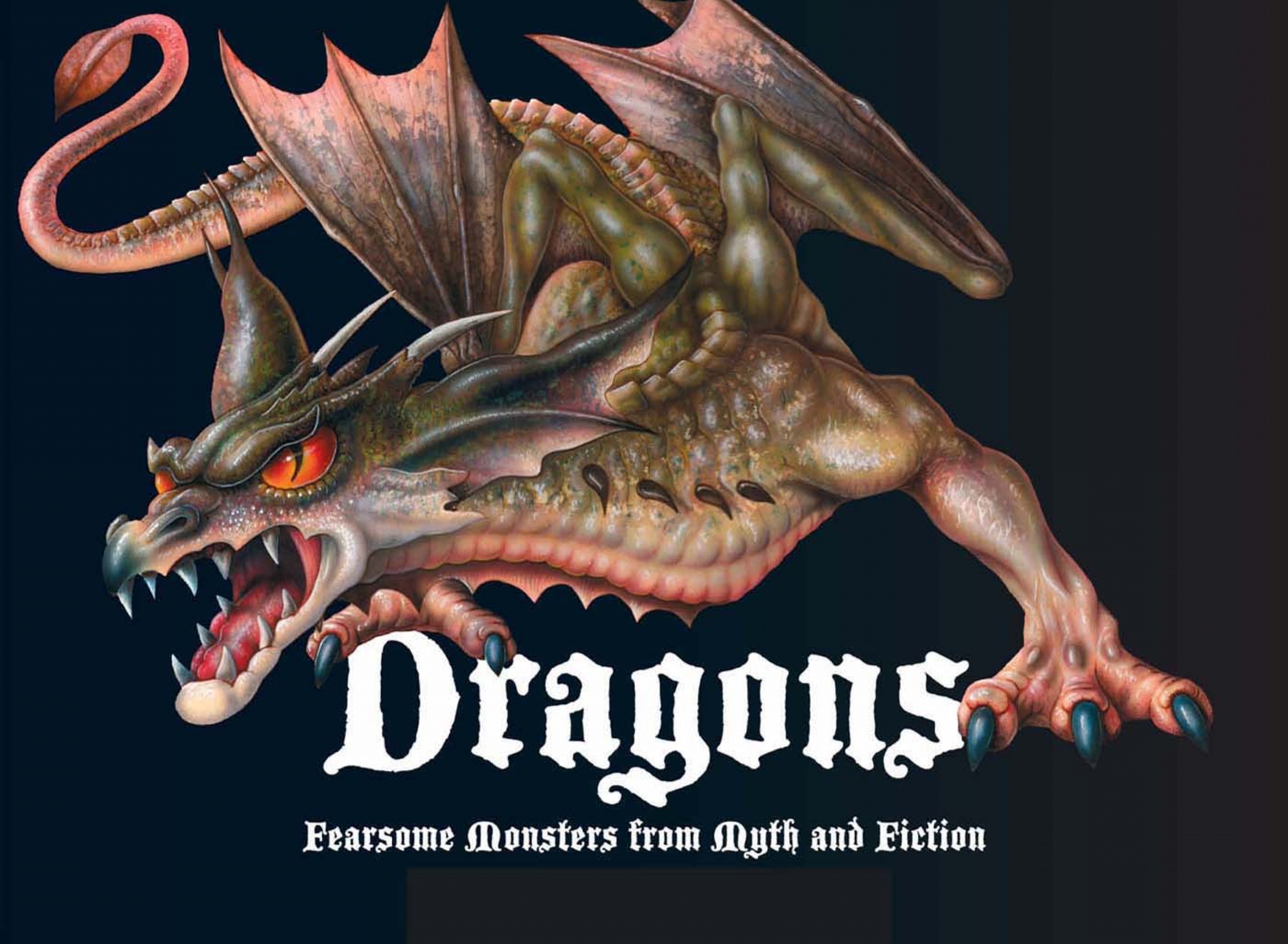
DRAGONS
FEARSOME MONSTERS FROM MYTH AND FICTION
GERRIE MCCALL
This digital edition first published in 2012
Published by
Amber Books Ltd
United House
North Road
London N7 9DP
United Kingdom
Website: www.amberbooks.co.uk
Instagram: amberbooksltd
Facebook: amberbooks
Twitter: @amberbooks
Copyright © 2012 Amber Books Ltd
ISBN: 978 1 908696 84 7
PICTURE CREDITS
All illustrations © Amber Books Ltd
All rights reserved. With the exception of quoting brief passages for the purpose of reviewno part of this publication may be reproduced without prior written permission from thepublisher. The information in this book is true and complete to the best of ourknowledge. All recommendations are made without any guarantee on the part of theauthor or publisher, who also disclaim any liability incurred in connection with the use ofthis data or specific details.
Contents
Introduction
6
Ancient Legends
Beowulf ’s Dragon
8
Gorynych
10
Krak’s Dragon
12
Knucker
14
Orochi
16
St. George and the Dragon
18
Wyvern
20
Mythological Dragons
Apalala
22
Fafnir
24
Futs-Lung
26
Hatuibwari
28
Jawzahr
30
Ladon
32
Ryujin
34
Shen-Lung
36
Media Dragons
Glaurung
38
Hungarian Horntail
40
Luckdragon
42
Norwegian Ridgeback
44
Smaug
46
Index
48
6
INTRODUCTION
Introduction
D
ragon encounters have been reported throughout the world. Many experts
dismiss dragons as entirely mythical, explaining them away with claims that
belief in dragons is a case of mistaken identity. These experts theorize that the
discovery of dinosaur fossils led to the invention of the
dragon. People gazing upon dinosaur bones for
the first time must have imagined an
animal fabulous enough to deserve such
bones and came up with the dragon.
However, many credible eyewitnesses
describe contact with dragons.
Marco Polo encountered them
during his travels and Leonardo da
Vinci drew pictures of them. Legend
says that Alexander the Great was
the son of a dragon. Even Chinese and
Japanese emperors of the past believed
they were descendants of dragons.
Dragons of the world are as varied as the cultures to which
they belong. Dragons are awesome creatures with or
without wings. Depending on their country of
origin, a dragon can play the role of guardian,
nuisance, creator, or destroyer. There are the
benevolent dragons of Asia who demand respect and
offerings, as well as the deadly fire-breathers of Europe who demand
human sacrifices. Generally, dragons are revered in the East and feared in the West.
One reason why dragons hold the imagination is because so many of them breathe fire. In fact, they are the only creature with the ability to shoot flames. This is just one of the dragon’s fascinating traits that allow it to live on in legend across the globe. In a world where it seems everything has been researched and cataloged thoroughly, the dragon remains refreshingly elusive. Lack of scholarship in this area leaves the field of dragon study wide open for new discoveries, whether they be in ancient accounts or in face-to-face meetings with the wondrous beasts.
8
ANCIENT LEGENDS
Beowulf ’s Dragon
TAILThe barbed tailshaped like anarrowhead can beused as a weapon inbattle. In flight, thetail operates like a rudder,balancing the dragon andallowing it to execute skillfulaerial maneuvers.
EYESAdapted to see in the dimlight of caves, the dragon’seyes are well suited forwatching over its hoard ofplundered treasure.
WINGSBatlike wings attached to thetorso by robust muscles liftthe dragon in flight. Thebones within the wingstructure are hollow to reducetheir weight.
JAWSIts fiery breath lights the skies. Chain mailprovides no defense against its crushing jaws andpoisonous fangs. A reservoir of venom is locatedin the upper jaw.
BODYThe dragon’s enormous body isblackened by the soot of its ownflames. Its blue-green scales glowwith inner fire.
BEOWULF’S DRAGON 9
C
oiled in a cavern beneath a gray rock there is a terrifyingdragon—a fire drake measuring 50 feet (15 m) long. Thedragon guards a lair filled with piles of priceless treasure. Its
heavy body blocks daylight from reaching the armor, goblets, jewels,coins, and golden swords it hoards deep in the cave. When a thief stealsa golden cup from its lair, the dragon rampages through the countryside,
burning everything it sees. The firedrake breathes flames that light upthe sky, terrifying villagers andburning every home in Geatland.Beowulf, King of the Geats, armedwith a magic sword, leads an armyinto battle to face the dragon.
ACTUAL SIZE
BEOWULF STRIKES THE DRAGON WITH HIS SWORD, but the blow glances off the beast’s
terrible hide. Beowulf is engulfed in dragon flames, a sight so terrifying that his army
flees. Only the faithful Wiglaf remains to help. Beowulf breaks off the blade of his magicsword in the dragon’s head. Bitten on the neck by the dragon, Beowulf is soaked in his ownblood but continues fighting. Wiglaf stabs the dragon in a vulnerable place and Beowulfslashes it through the middle, cutting the monster in two and ending its life.
Where in the world?
Geatland, a region in the south ofSweden, is where Beowulf met themighty dragon in battle. Geatland’sdeep forests provided the idealhabitat for a fire drake.
SWEDEN
Did you know?
• Beowulf dies from his battle wounds. The dragon’s treasure is removed from the cave and buriedwith Beowulf. All the pieces of the dragon’s corpse are thrown into the sea.
• The dragon’s flames are so intense that they burn Wiglaf ’s shield down to its handle. Woodenshields, such as the one Wiglaf used, are a poor choice when doing battle with a fire drake.
• Beowulf carries an iron shield bearing the image of a dragon.
• A dragon’s lightweight bones are tougher than reinforced concrete.
• Smoke rising from the mouth of a cave is usually a tell-tale sign that a dragon resides within.
• The dragon is the largest-known flying creature.
10
ANCIENT LEGENDS
Gorynych
BODYThe scaly body produces a reek of sulfur thathangs around Gorynych like a sinister cloud.
HEADSThree fanged, fire-spitting















![Tintenherz [Tintenwelt-Reihe, Band 1 (Ungekürzt)] - Cornelia Funke - Hörbuch](https://legimifiles.blob.core.windows.net/images/2830629ec0fd3fd8c1f122134ba4a884/w200_u90.jpg)