


8,39 €
Mehr erfahren.
- Herausgeber: Periscope
- Kategorie: Gesellschafts- und Liebesromane
- Sprache: Englisch
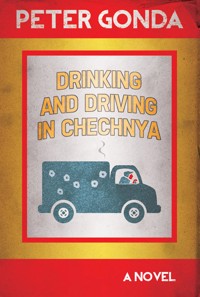
It is the mid-1990s, and ordinary Russians are reeling from the collapse of the Soviet Union. Old habits clash with new money, and war rages between Russia and the breakaway Chechen republic. Leonid, a hard-luck lorry driver, lives with his senile, military-veteran father in Moscow and ferries shipments of illicit goods all over Russia for his Mafiya bosses. He nurses a single wish: to leave behind the country of his birth, for which he feels nothing but disdain, and immigrate to the United States - the land where dreams come true. During a haul to the Caucasus with a cargo of vodka intended for parched soldiers on the front line of the campaign against Chechnya, Leonid and his dim-witted sidekick take a wrong turn. They wind up in the centre of the Chechen capital Grozny, at the height of one of the cruellest bombardments of the twentieth century. What follows will shock Leonid into a confrontation with reality, which has always played out just beyond his averted gaze. His well-honed cynicism will be tested to the utmost, along with the survival skills he has accumulated over the years. Destined to become a cult classic, this short, biting debut is also a heartfelt contemplation of how we engage with our worst instincts and - sometimes - rise above them. Leonid is a hard nut with a soft centre, and however amoral his behaviour, even he cannot fail to be moved by the events he witnesses, which will change him beyond recognition.
Das E-Book können Sie in Legimi-Apps oder einer beliebigen App lesen, die das folgende Format unterstützen:
Veröffentlichungsjahr: 2015
Ähnliche



















www.periscopebooks.co.uk
Drinking and Driving in Chechnya
First published in Great Britain in 2015 by
Periscope
An imprint of Garnet Publishing Limited
8 Southern Court, South Street
Reading RG1 4QS
www.periscopebooks.co.uk
www.facebook.com/periscopebooks
www.twitter.com/periscopebooks
www.instagram.com/periscope_books
www.pinterest.com/periscope
1 2 3 4 5 6 7 8 9 10
Copyright © Peter Gonda, 2015
The right of Peter Gonda to be identified as the author of this work has been asserted by him in accordance with the Copyright, Designs and Patents Act of 1988.
All rights reserved. No part of this publication may be reproduced, stored in or introduced into a retrieval system or transmitted in any form or by any means (electronic, mechanical, photocopying, recording or otherwise) without the prior written permission of the publisher, except for the quotation of brief passages in reviews.
ISBN 9781859641071
A CIP catalogue record for this book is available from the British Library.
This book has been typeset using Periscope UK, a font created specially for this imprint.
Typeset bySamantha Barden
Jacket design by James Nunn: www.jamesnunn.co.uk
Printed and bound in the UK by TJ International
Prologue
What is this fucking guy staring at? Does he know something? What could he possibly know? A short pause, then the anger came rushing back. You don’t know much of anything, do you, my backwoods comrade? Get back to your shack, then, I’ve work to do here!
Such were the thoughts that so preoccupied Leonid that he overflowed the jerrycan, splashing petrol onto his boots. He heard the spillage, yet kept his eyes locked onto the curious face of the filling station’s owner for several moments longer. He only looked down and readjusted the nozzle after spilling enough to properly immolate himself. Of course, he was smoking, too.
‘Only a Muscovite would waste so much petrol! I knew it!’
Leonid just stared at him. I thought I told you to fuck off!
‘So where are you off to?’ the proprietor continued, moving closer. ‘The only Muscovites I see around here these days are in uniform.’
Leonid finally deigned to answer the rube: ‘We’re trying to catch up with the 103rd Armoured Division. Have they been this way?’
‘How could I miss them! Such a rumbling … You’re with the army too? I suppose you’re not going to pay me either, right? You’ll … what did he say … requisition. Yes?’
Leonid was about to interject, but the old man was already beside himself.
‘You bastards are worse than the Mafiya by a factor of three! At least they don’t pour my fuel into the soil and expect it to come out of my pocket!’
He turned and was headed halfway back to the shop (where a bottle of vodka awaited him beneath the register) before Leonid bothered to assuage his concerns. ‘Relax, old man. Calm yourself. Of course we will pay. Now tell me, how long ago was it that the 103rd came through here?’
‘They were here about a day, day and a half ago.’
Leonid walked around to the front of the truck and rapped against the fogged-over passenger-side window. Receiving no response, he jerked open the door violently. Out tumbled Spaska, his forever-benighted partner. Spaska remained unconscious, splayed out on the wet ground, as Leonid grabbed a jerrycan and let loose two splashing gulps of petrol over Spaska’s head. He had little respect for those who could not hold their drink. Sometimes, he had to admit, he had little respect for himself as well.
‘Crazy, these Muscovites!’ This time the proprietor made it all the way inside the shop and found his cherished bottle.
Spaska finally came to. He pulled himself up off the ground, adjusted his bleary eyes, shook the dampness from his long hair and found his Zippo and a cigarette. He prepared to light up, but Leonid gently crushed the smoke against Spaska’s face with the palm of his hand – although not before picturing him doing the herky-jerky all ablaze. Losing Spaska might be problematic with regard to the journey ahead. It is certain that Spaska must end in such fashion … but why not put it off if one can … He does sometimes prove himself useful.
‘What the fuck, man!?’ Spaska sputtered.
‘Load the petrol in the back. Hurry up. We’re at least a day behind them.’
‘So what? We’ll catch them when we catch them.’
‘We have the choice to either catch them here and now or later, and at the front. Tell me, Spaska, which sounds preferable?’
‘I’ll load the back.’
Leonid surveyed the dreary Russian countryside. The Caucasus Mountains were a persistent mirage, far off in the distance – just the way he liked them. The last delivery had seen them lost up there. A bad place, he’d decided, to be lost in, and he’d been lost in enough places to be able to judge the difference. Hamburg, for example, was not a bad place to lose oneself in. Even if you spoke no German and ended up far from the Reeperbahn in some deserted residential area with no bars to speak of, not such a bad place. Especially if you had a pretty girl by your side. (But no, now he was thinking of her again; Leonid forced reality back in and ended the dream.)
In the Caucasus, however, even when you knew where you were and where you were going, somehow you were still always lost. Perhaps it hadn’t always been that way. Maybe the war had had a damning effect on the region. Leonid couldn’t know, he’d never been there before the war. Why would he have been? There was no money to be made up there back then. Not like now.
Spaska struggled to fit the last of the jerrycans into a large metal container bolted to the truck’s floor. Outside of the container, all the remaining space was occupied from floor to ceiling with unmarked white cases, without an inch to spare in any direction. Inside the cases was the vodka.
The owner of the filling station, having fortified himself with a glassful of similar product, came back out to make damn well sure these two paid their bill in full, spillage included.
‘Hey, old man, come here and help.’
Together with the proprietor, Spaska finally managed to squeeze the last can in next to the others. He pulled out another smoke, offered one to the old man and lit them both. Yet he did not burst into flame. Leonid remarked on this with some amusement. You can only cheat death so many times, my little Spaska.
‘Why are you two hoarding petrol? Is there something I should know?’
Spaska laughed. ‘Don’t go raising your prices so soon. We have to prepare for our return. You may be the last station before Chechnya.’
Tell him everything, Spaska! Everything!
‘Ahhh. And why such thick metal for your container?’
‘Idiot!’ Spaska hit the owner’s forehead with his palm. ‘If a bullet were to reach those cans, where would we be then, me and Leo, huh?’
Spaska had the habit of mimicking Leonid’s manner of speech and syntax whenever he felt he was in a position to lord it over another, an occasion that seldom presented itself – and usually out in the countryside, at that. Still, it irritated Leonid to no end.
‘Leo, did you hear what this bumpkin just asked me?’
‘Yes, yes, I did. The very same question you yourself asked me the first time I brought you on a run! Now pay that hick and get in the fucking truck!’’ As he said this, Leonid threw his cigarette at Spaska, hitting his coat. Again, no explosion. Now he was infuriated, but managed to calm himself by recalling an old Russian insult usually reserved for women: Long in hair, short in brains.
Barrelling down the two-lane motorway at full speed, Leonid took another swig of vodka.
‘Nostrovya!’ Spaska called out, before taking a hit off his own bottle. They each held one. Why not, when the stuff was free-flowing! Leonid felt better now than at the filling station. He’d had at least ten ounces, and even Spaska’s constant irritating salutations could not penetrate the cloudy comfort that enveloped him – that elusive cloud, which existed only ever for brief episodes.
It had been roughly nine hours since they had pulled out of the filling station. Leonid was trying to calculate the amount of time it would take the beat-up old truck, going at full throttle, to overtake an armoured division with a lead of no less than thirty hours. He scratched his balls pensively. They were not going to catch up before reaching the front, he told himself.
Unsatisfied with this initial, pessimistic conclusion, he revised some of the variables with greater precision, most of these falling on the convoy’s side of the equation, and took another swig to conquer his prevailing defeatist attitude. He recalculated again, until the problem stood in his mind more like this: how long will it takeme, driving at top speed, to overtake aRussianarmoured division with a thirty-hour head start on itsreluctantway to the field of battle?
The answer came quickly enough. Seventy-three minutes later, they spotted a grey and white camouflaged truck pulling a heavy-artillery cannon over a rise about a quarter of a kilometre ahead.
How like a toy it seems. Dragged over a mound by the hand of a child.
Leonid and Spaska exchanged grins, clinked bottles and each took a long pull. It was time for work.
Leonid raced wildly into the oncoming lane beside the column, honking the horn for attention. Spaska, brandishing his bottle, leaned far out the window, joyously pouring the precious fluid onto the muddied asphalt below, implying the massive quantities stocked within the truck. He cried out to the soldiers, shouting nationalistic, anti-Muslim, pro-alcoholism tripe: ‘Vodka for everyone, comrades!’
And: ‘We’ll drink to the death of all Chechen scum!’
And: ‘Mother Russia shall prevail against these fucking Muslims!’
And so on, and so forth. Spaska shouted the slogans that almost five months’ worth of bloody uphill battle had caused the soldiers’ leaders to somehow stop reiterating. No longer was anyone left to prop these boys up. Their predecessors had been sacrificed, and soon, they knew, they would be too. As the vodka truck progressed up the line, a marked difference could be noted in the previously gloomy-faced soldiers. They began to look relieved. A shaft of light had broken through the grey.
Yes, they knew, dimly, perhaps, but they knew what kind of hell they were approaching, and the closer they got to it the more their thirst called out to them. That call for vodka, the ‘little water’, that thing without which nothing on this planet can survive … it was now within their reach, and their faces, all of them, brightened.
Upon witnessing this hugely spiritual moment, seeing hope enter these men’s eyes, truck after tank after truck after tank, Leonid’s countenance brightened too. Even if only for an instant, but it did brighten. It always brightened when the smell of currency overwhelmed his olfaction. For he knew, at such moments, that he was closing in on the dream.
Parked on the motorway’s shoulder at the head of the column entire, Leonid and Spaska made brisk business. The soldiers were queued up as far as the eye could see – a sea of drunks all the way to the horizon.
Some unfortunates, who had already exhausted their pay during a pre-clash blowout, ran urgently up and down the queue in search of someone, anyone, willing to lend a few kopeks. It didn’t matter much, however: the truck was emptied in under an hour, with several dozens of boys still waiting. Still wanting.
A general, two-star, approached Leonid. Everything in his manner betrayed his own wants. ‘Surely there’s more!’
Leonid loathed army brass; his father had made Captain and had never let Leonid forget it. Leonid, as a result, hadn’t. ‘No, that’s the last of it.’
‘Another truck …?’
Leonid shook his head limply.
‘That’s right. No more vodka! No more!’ Spaska yelled out into the crowd from the back of the truck.
‘Shut up, you idiot!’ the general hissed. ‘You’re going to cause a riot!’
Then the general turned again to Leonid and implored: ‘Don’t you have a reserve stash? Something?’
‘Ahh, the special reserves. I know now, of what you speak. But it’s very expensive for these bottles. Fifteen US dollars per.’
‘Are you mad!?’
‘For you, only ten dollars.’
‘And how about if I just confiscate your truck and everything in it!’
‘Comrade, my connections would be very upset.’
The general reddened. ‘Fuck your connections! Do you know who I am? Who are these “connections”, tell me!’
Calmly, Leonid produced a notebook and pen from his coat and chuckled. ‘Well, you know, connections … everybody has them. Now please, give me your name. Perhaps my connections will recognize your connections. Please, go on.’
Amongst the soldiers now, small altercations were erupting between the haves and have-nots. This was not lost on the general. ‘Alright, alright! Ten dollars. Here’s twenty. Quickly now, pass me two bottles.’
‘The once-great, once-feared Red Army!’ Leonid yelled as he pulled away from the column. ‘If the Chechens only knew …’
Spaska laughed beside him. ‘Who says they don’t?’
‘Did you put aside a case like I told you?’
‘Of course.’ Spaska pulled it out from underneath his seat. He opened two bottles and handed one to Leonid. ‘Nostrovya!’
‘Nostrovya!’ Leonid called back. He was in good spirits now. He had his back to the war. He had the money. He felt safe. In that moment, he even looked at Spaska with some affection. He had lived to see another day, and he had profited.
What his higher-ups had failed to divulge to him – to them, after all, he was nothing more than an errand boy – was the ironic source of the hijacked vodka. It had been part and parcel of a government-subsidized allotment earmarked for a military base outside Georgia. They were selling army vodka back to the army, and at premium prices, too.
Back in Moscow, the bigshots might have had a good laugh over the change-up they had pulled, but the little guys, the men like Leonid who did their bidding, had no idea they were engaged in raping their own country. They were simply worker ants under the thumb of these new Russians.
What Leonid could not have known then, and would not discover until some months later, was that he, with his deliveries, was nothing more than a pawn. And pawns are easily – and frequently – sacrificed.
BOOK ONE Russia
And you, Russia of mine – are not you also speeding like a troika which naught can overtake? Is not the road smoking beneath your wheels, and the spectators, struck with the portent, halting to wonder whether you be not a thunderbolt launched from heaven? What does this awe-inspiring progress of yours foretell? What is the unknown force which lies within your mysterious steeds? Surely the winds themselves must abide in their manes, and every vein in their bodies be an ear stretched to catch the celestial message which bids them, with iron-girded breasts, and hooves which barely touch the earth as they gallop, fly forward on a mission of God? Whither then are you speeding, O Russia of mine? Whither? Answer me!
From Dead Souls (1842), by Nikolai Gogol
Translated from the Russian by D. J. Hogarth
One
Leonid opened the door clumsily to the squalid flat he shared with his father. The television was running; slumped in the chair before it was the old man, snoring. Good, thought his son.
Leonid stumbled inside and clapped his hands loudly together. His father did not stir. He then went straight to the kitchen and yanked down the oven door with a crash, putting a finger to his lips to shush himself and peering back into the front room. His father slept on. Leonid took note of the unfinished bottle and the loaf of black bread on his father’s TV tray, and staggered over to them. Hovering above his father with a sneer, he took a swig of the vodka to freshen himself up a bit and followed it with some fortifying bread to coat and protect his stomach lining. He pointed an accusatory finger at his dear old papa, but made no vocal accusations.
Then he remembered.
You are lucky I still have business with the appliance, old man!
Leonid went back into the kitchen and collapsed beside the open oven. Another swig and he threw himself into it, head and arms. He began to shake the thing violently, as though something was stuck inside it; his feet found no traction on the linoleum floor, and he skidded about helplessly. An encrusted pan fell off the stovetop and bounced off his back. Leonid continued shaking, ever more ferociously, until something unsnapped.
‘Aha! You son of a bitch! I got you!’
‘What the hell are you doing!? Go suicide elsewhere! Jump in the river! You interrupt my programme, filthy pig!’ called the old man from his chair, glaring at his son’s ass.
Startled, Leonid withdrew his head from the oven and looked at his father with caution. ‘It’s just a rat. Don’t worry, I’ve strangled the dirty breath out of him. Go back to your show now.’
‘It’s all rats now! Rats and pigs!’ He turned back to the television.
Leonid remained frozen in that awkward position, waiting. A few moments passed and then suddenly, as though a ‘pause’ button had been pressed and released, the snoring recommenced. Carefully, he brought his arms out. In his hands, he held the false metal backing he had jerry-rigged to the interior of the oven. He laid it gently against a cupboard and reached into the lining of his coat, to a secret pocket, pulling out wads of various currencies that he threw onto the door of the oven. Leaning back inside, he stacked the booty neatly in a space between the original inner back wall and the false backing. Then he snapped the faux wall back into place. Leonid was exhausted and sweaty. The job all done, and being already so close to a horizontal surface, he splayed himself out on the cold kitchen floor and soon joined his father in a symphony of sinus music.
They never used the oven, Leo and his father, didn’t even know any recipes that called for one. They were strictly stovetop cooks. Oven-cooked meals had been his mother’s domain. Leonid only realized this years after her demise, when the money began to pile up and he needed a hiding place. It came to him on a night two years back when he was preparing a shchi for them both: the money would be safe back there. Not from the thieves or hoodlums who dominated much of Moscow of late, not even from the police. No, there it would be safe from the old man.
Shakily, Leonid made his way towards The Royal Majestic Tea Lounge, the main hangout for the organization that employed him. It was one of the largest organizations of its kind in all of Russia, and had far-reaching arms with dealings in Colombia, Israel, Nigeria, Australia, most of Europe and even in the United States itself. They had gone global well before ‘globalization’ became such a common byword in the language of business. To be sure, they’d laid down their contacts while the Iron Curtain was still up. At least that’s what Leo read in the papers, not without some sense of pride. But what he actually knew of this Mafiya of which he was a part was very, very little. He knew only about the dealings he was involved in directly, and even then he only knew his own role, not the whole play.
The question of veracity in the newspapers’ claims of existing Mafiya connections in the US interested Leo profoundly. His great dream – unoriginal though it was – was to live in America. Every rouble, dollar and mark he had socked away in his father’s oven was to be saved towards that goal. He, unlike his peers, wore no expensive jewellery, did not dress extravagantly, drove no Mercedes and never, ever threw money away on women. He saved and saved. His only vice: drink. His only virtue: frugality.
The club was nearly empty at this early hour, and Leonid spotted his boss easily. As he approached Miki, who was seated in his usual booth at the Royal Majestic, all this was running through his brain. He was here to report on the last foray into Chechnya, but could think only about America.
‘So you made it back in one piece yet again! What did I tell you, these Chechens are as harmless as babies. Have a seat.’
‘Good to see you, Miki.’
‘So tell me, it went well? No problems?’
‘There was an old Communist, a general. He tried to start some bullshit with me …’
‘So how did it end?’
‘Not well … for him! His men nearly mutinied when they realized we didn’t have enough for everyone. Let’s just say he became distracted.’
‘Ha! Sometimes, only some of the time, I become nostalgic for my days in the army.’
Leonid ignored this. The implosion of his head seemed, to him, imminent.
‘What’s wrong? You look jaundiced! Maybe it’s time for a drink, eh?’ With this, Miki signalled the waiter.
‘No, please. I really overdid it this last time. You know how nervous it makes me, going there. I think I’ve developed an ulcer. And driving with that fucking idiot Spaska doesn’t help, either!’
‘Listen, I keep telling you, you’re a truck driver, Spaska’s a truck driver. It’s not as if we have hundreds like you.’ The waiter, having arrived with a bottle of iced Finlandia, began to fill two glasses liberally. Leonid watched as the viscous liquid slid down the slope of his glass and slowly collected at the bottom. Then he pushed it away.
‘A beer, then. Surely you won’t refuse a beer!’
Leonid gave him the nod: yes.
‘Bring us two Baltika Extras as well. No glasses.’
From his jacket pocket, Miki produced a bottle of pills and slid it across the table to Leo. ‘Drink your medicine and take two of those with it.’
‘What are they?’
‘Old trick. Vitamins. Just eat them.’
Leonid examined one of the pills. ‘How did they get the vitamins into this little thing? We were told to eat our potatoes for vitamins, or occasionally an orange or an apple.’
‘They’re vitamin B12 pills, from the West. You eat two of these a day and you’ll never have to look at a potato again. Now swallow them down with some vodka.’
Leonid obeyed and then made to pass the pills back, but Miki lifted his hands.
‘Keep them. You need them more than me, And they’re not easy to come by.’
Leonid thanked him.
‘Just remember, take two every night before bed. You’ll never have problems with hangovers again.’
‘Still … Miki … Can’t you find me something other than this Chechnya run? I think Spaska finally has it down. He can take a new guy out with him, and …’
Leo, Leo, please, stop. You were just complaining about him to me only a minute ago.’
Leonid drank a mouthful of vodka after all. ‘I exaggerate too much, that’s my problem. I tell you, he’s ready. Miki, remember what I asked you? About America?’
‘Impossible, Leo. Impossible.’
‘But I just read in the paper …’
‘How many times have I told you? How many!? The papers are all bullshit! They’re state-controlled, just as they were before. It’s the same gang of lying Communists! I wouldn’t trust their weather reports! We are a small group of businessmen. How should we have operations in America? Do you think I would send shipments into a shithole like Chechnya if I had dealings with Americans? Last time I’m repeating this: in America, nothing! Zero!’
Leonid drank dejectedly from his glass and finished it just as the beers arrived. He had no more arguments. Miki regarded him sympathetically.
‘How’s the war hero? How’s your father?’
Leonid drained a third of the Baltika before answering: ‘Still an asshole.’
‘Leo, Leo, Leo. I’ll tell you what, take some time, two weeks. Take care of yourself. When you’re better rested, I have a very important shipment that only you can do. Take care of this for me, and I promise I’ll find you something more comfortable. What do you think?’
‘That would be tremendous. Thank you, Miki.’
‘But understand! This is the last time I will do such a favour. That E55 business was already too much. Two times is too much, eh?’
Leonid got the drift, sure enough. He’d held out his hand before. One more time and it was likely to be chopped off.
‘Of course. I understand. Thank you.’
‘In the future, try to move slower, you’ll go further. If you run, people will laugh.’
Leonid nodded. The proverb was one used with great frequency by his grandfather in reference to his own son’s ambitions. Here it meant something else entirely, but it reminded Leo once again that he was more his grandfather’s son than his father’s. He rose to leave.
‘Leo, aren’t you forgetting something?’
‘Oh, of course.’ Leonid pulled a thick bundle out from his coat’s secret pocket and handed it over.
Miki tore off the plastic and fondled the two piles of currency. One American, the other German. The roubles Leonid and Spaska could keep a percentage of, but the hard currency was always Miki’s.
To his knowledge, anyhow.
The favour of which Miki had spoken, Leonid’s initiation into the organization, had taken place somewhere between Dresden and Prague – ’twixt the Devil and the deep blue sea. The E55, that stretch of motorway linking these two cities, and specifically the Czech side, was known to drivers throughout Europe for one thing only – sex. A dark nickname began to spread amongst truck drivers, perhaps the E55’s most frequent users: ‘The Highway of Cheap Love’. It was, in fact, a major motorway converted into the world’s largest whorehouse. For miles, one ran the gauntlet of cheap sex.
The girls themselves were mostly refugees from the Balkans or the Caucasus, poor Eastern European women looking Westward but falling just short. Or abductees. Take your pick. They all had one thing in common: they were not there by choice. Known as ‘Natashas’, they were as good as slaves.
Leonid had been state-trained as a truck driver and mechanic. Then the state crumbled. Spare parts for trucks began to run out, and afterward the petrol stopped flowing, but there was hardly anything left to transport by then anyway, save the vodka. Always the vodka.
After all this, Leonid – along with the vast majority of his former fellow Soviets – started to fret. He began to scramble for work, and three days later he was in a full-blown panic. After the dissolution of the USSR, Leonid – who had grown up with the spectre of complete nuclear devastation – saw himself as being not unlike the survivor of a nuclear holocaust. Better to have been vaporized. Anything but this. The survivors, he thought, were the ones who got it in the ass.
And then, just as all seemed lost, the men arrived. They came to him, not vice versa. He had tried to find them, to find anyone who could aid his cause, but the harder he looked, the more cleverly did they hide themselves. The more he asked after them, the less he heard back. But they had heard everything; they had an ear to the ground. An ear, in fact, to rival those of many intelligence agencies the whole world wide. They heard that in Moscow, there was a truck driver and mechanic, a stout, burly bastard with a bug up his ass, who was in the grip of financial desperation. He fit a very specific bill. And so they came, and no sooner had they come then he was off to that stretch of guilty asphalt between Dresden and Prague.
Leonid shot out of bed, awakened by a loud noise. His father, he was sure. Many months earlier, his father, during a late-night sojourn to the toilet, had tilted a little too far to the right while urinating and had fallen sideways into the tub, smacking his head against the tiles. Leonid had found him lying there awkwardly, one foot dangling over the rim of the toilet, dangerously close to the yellowed waterline. His father remained still.
Leonid had left him there, going instead to sit in the kitchen in front of a vodka bottle. He poured out a tall one, having already pronounced himself an orphan. I’ll call the morgue tomorrow. He’ll hold until then. It’s funny how many people encounter death in the loo. His mind followed this idea of toilet fatalities in Russia, and he wondered if the situation was the same in America. Then he imagined what a thing an American toilet must be, an American bathroom. How sparkling white the porcelain. He saw pink and blue tiles and shiny golden fixtures, and on the sides of the mirrors, glowing white bulbs, the kind starlets always had for doing their make-up before a Broadway show.
A strange, low moan had entered his reverie just then, and his mind had flashed on a bathtub overflowing with red water. His mother’s scarred and nearly lifeless face appeared before him. And the long, deep gashes that ran from wrist to elbow.
His father’s moaning turned to grunting, and Leonid lost the image. He returned to the toilet. His father’s arms and legs moved crab-like in the struggle to stand upright.
‘What are you fucking looking at! Come here and grab my arm, oaf!’
‘What’s the big rush? I’m coming.’
Leo had reached in, taken an arm and hoisted him up. His father stood, seething, right foot ankle-deep in the toilet bowl, warmed by his own piss. Leonid flushed and the bowl emptied, but his father was still there. Poor plumbing, he thought.
Now, once again, Leonid made his way down the hallway, his hopes heightening as he approached the kitchen. He daydreamed about dressing the fresh corpse in women’s clothing and propping it up on a bench at the bus stop across the street for all the neighbours to see and mock. He reached for the door to the toilet and opened it. Alas, it was empty.
Next, Leo checked his father’s room. Opening the door just a crack, he heard the disappointing sound of snoring. He returned to the kitchen, all his hopes dashed, and opened a bottle. It was 5 am. He pondered the sharp noise that had awoken him, but could not account for it. These phantom sounds had been plaguing him in recent weeks. Leo took a long pull of the bottle, and recapped it.
Back in bed he drifted off quickly, wishing he were an orphan.
Every so often when Leonid was in town, he would get together with a friend of his, an old truck-driving acquaintance named Piotr, and take him out to a restaurant. Piotr was not doing nearly as well for himself and his family as Leonid was, and in fact was in awe of him. When they met, Leonid tended – uncharacteristically – to go on and on, speaking of his big plans and of how he would soon escape to America. He simply thought of Piotr as a friend who would do as friends do, care about him and support his dreams. Between them lay no walls, no barbed wire, no minefields, no bullshit.




