


73,99 €
Mehr erfahren.
- Herausgeber: John Wiley & Sons
- Kategorie: Wissenschaft und neue Technologien
- Sprache: Englisch
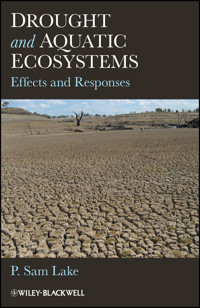
Droughts are a major hazard to both natural and human-dominated environments and those, especially of long duration and high intensity, can be highly damaging and leave long-lasting effects. This book describes the climatic conditions that give rise to droughts, and their various forms and chief attributes. Past droughts are described including those that had severe impacts on human societies. As a disturbance, droughts can be thought of as "ramps" in that they usually build slowly and take time to become evident. As precipitation is reduced, flows from catchments into aquatic systems decline. As water declines in water bodies, ecological processes are changed and the biota can be drastically reduced, though species and populations may survive by using refuges. Recovery from drought varies in both rates and in degrees of completeness and may be a function of both refuge availability and connectivity. For the first time, this book reviews the available rather scattered literature on the impacts of drought on the flora, fauna and ecological processes of aquatic ecosystems ranging from small ponds to lakes and from streams to estuaries. The effects of drought on the biota of standing waters and flowing waters and of temporary waters and perennial systems are described and compared. In addition, the ways in which human activity can exacerbate droughts are outlined. In many parts of the world especially in the mid latitudes, global warming may result in increases in the duration and intensity of droughts. Drought and Aquatic Ecosystems is essential reading for freshwater ecologists, water resource managers and advanced students.
Sie lesen das E-Book in den Legimi-Apps auf:
Seitenzahl: 769
Veröffentlichungsjahr: 2011
Ähnliche



















Contents
Cover
Title Page
Copyright
Dedication
Acknowledgements
Chapter 1: Introduction: the nature of droughts
1.1 The social and economic damage of drought
1.2 Major characteristics of drought
1.3 The formation of droughts
1.4 El Niño Southern Oscillation (ENSO) and drought
1.5 Other important oscillations creating drought
1.6 Drought in Australia
Chapter 2: Types of drought and their assessment
2.1 Drought Monitoring and Indices
2.2 Meteorological Drought
2.3 Hydrological Drought
Chapter 3: The perturbation of hydrological drought
3.1 Refuges and Drought
3.2 Traits and Adaptations to Drought
3.3 The Nature of Studies on Drought in Aquatic Ecosystems
Chapter 4: Droughts of the past: dendrochronology and lake sediments
4.1 Indicators of Past Droughts
4.2 Impacts of Past Drought on Lakes
4.3 Droughts of the Holocene
Chapter 5: Water bodies, catchments and the abiotic effects of drought
5.1 Water Body Types
5.2 Aquatic Ecosystems, their Catchments and Drought
5.3 Drought and Effects on Catchments
5.4 Riparian Zones and Drought
5.5 Sequence of Changes in Water Bodies with Drying
5.6 Changes in Water Quality with Drought in Lentic Systems
5.7 Drought in Connected Lakes
5.8 Drought and Water Quality in Flowing Waters
5.9 Drought and Benthic Sediments
5.10 The Breaking of Drought – Re-wetting and the Return of Flows
5.11 Concluding Remarks
5.12 The Next Chapters
Chapter 6: Drought and temporary waters
6.1 Drought and the Biota of Temporary Waters
6.2 Fauna of Temporary Standing Waters and Drought
6.3 Insights from Experimental Studies of Drought in Temporary Waters
6.4 The Biota of Temporary Streams and Drought
6.5 Drying and Recovery in Temporary Wetlands and Streams
6.6 Conclusions
Chapter 7: Drought, floodplain rivers and wetland complexes
7.1 Drought and Floodplain Systems
7.2 Drought and the Biota of Floodplain Systems
7.3 Floodplain Rivers, Fish and Drought
7.4 Drought, Fish Assemblages and Floodplain Rivers
7.5 Summary
7.6 Large Wetland Complexes with Seasonal Flooding
7.7 Amphibious and Terrestrial Vertebrates
Chapter 8: Drought and perennial waters: plants and invertebrates
8.1 Drought and lentic systems
8.2 Phytoplankton in Lakes
8.3 Zooplankton
8.4 Macrophytes of Lentic Systems
8.5 Benthic Littoral Fauna
8.6 Drought in Perennial Lotic Systems
8.7 Stream Invertebrates and Drought
8.8 Stream Macroinvertebrates, Droughts and Human Activities
8.9 Drought, Invertebrates and Streams at a Large Spatial Extent
8.10 Summary: Drought and Stream Benthos
8.11 General Conclusions
Chapter 9: Drought and fish of standing and flowing waters
9.1 Drought and Fish of Permanent Lentic Systems
9.2 Drought and Fluvial Fish
9.3 Dealing with the Stresses of Drought
9.4 The Impacts of Drought on Lotic Fish
9.5 Impacts of Drought on Fish Populations and Assemblages and Subsequent Recovery
9.6 Assemblage Composition and Structure and Drought
9.7 Genetics, Fluvial Fish and Drought
9.8 Summary and Conclusions
Chapter 10: Estuaries and drought
10.1 Drought and Abiotic Variables in Estuaries
10.2 Drought, Salinity and Estuarine Macrophytes
10.3 Estuarine Invertebrates and Drought
10.4 Drought and Estuarine Fish
10.5 Drought and Changes in Faunal Biomass and Trophic Organization
10.6 Summary
Chapter 11: Human-induced exacerbation of drought effects on aquatic ecosystems
11.1 Human activities on catchments and Drought
11.2 Human-Induced Exacerbation of Drought Effects within Water Bodies
11.3 Climate Change and Drought
Chapter 12: Conclusions
12.1 Large-Scale, Long-Term Ramp Disturbances
12.2 Meteorological, Hydrological and Groundwater Droughts – A Sequence in Time and Severity
12.3 Recognizing the Importance of Past Droughts
12.4 Ecological Effects of Drought
12.5 Recovery from Drought – A Neglected Field
12.6 The Future: Studying Drought and Human Interactions
References
Color Plates
Index
This edition first published 2011 © 2011 by P. Sam Lake
Blackwell Publishing was acquired by John Wiley & Sons in February 2007. Blackwell's publishing program has been merged with Wiley's global Scientific, Technical and Medical business to form Wiley-Blackwell.
Registered office: John Wiley & Sons Ltd, The Atrium, Southern Gate, Chichester, West Sussex, PO19 8SQ, UK
Editorial offices: 9600 Garsington Road, Oxford, OX4 2DQ, UK
The Atrium, Southern Gate, Chichester, West Sussex, PO19 8SQ, UK
111 River Street, Hoboken, NJ 07030-5774, USA
For details of our global editorial offices, for customer services and for information about how to apply for permission to reuse the copyright material in this book please see our website at www.wiley.com/wiley-blackwell.
The right of the author to be identified as the author of this work has been asserted in accordance with the Copyright, Designs and Patents Act 1988.
All rights reserved. No part of this publication may be reproduced, stored in a retrieval system, or transmitted, in any form or by any means, electronic, mechanical, photocopying, recording or otherwise, except as permitted by the UK Copyright, Designs and Patents Act 1988, without the prior permission of the publisher.
Wiley also publishes its books in a variety of electronic formats. Some content that appears in print may not be available in electronic books.
Designations used by companies to distinguish their products are often claimed as trademarks. All brand names and product names used in this book are trade names, service marks, trademarks or registered trademarks of their respective owners. The publisher is not associated with any product or vendor mentioned in this book.
This publication is designed to provide accurate and authoritative information in regard to the subject matter covered. It is sold on the understanding that the publisher is not engaged in rendering professional services. If professional advice or other expert assistance is required, the services of a competent professional should be sought.
Library of Congress Cataloguing-in-Publication Data
Lake, P. Sam,
Drought and Aquatic Ecosystems: Effects and Responses / P. Sam Lake.
p. cm.
Includes bibliographical references and index.
ISBN 978-1-4051-8560-8 (cloth)
1. Biotic communities. I. Title.
QH541.M574 2011
577.8'2–dc22
2011000108
A catalogue record for this book is available from the British Library.
This book is published in the following electronic formats: ePDF 9781444341782; Wiley Online
Library 9781444341812; ePub 9781444341799; MobiPocket 9781444341805.
For Marilyn, Katherine and Jessica
Acknowledgements
I wish to thank Land and Water Australia (now abolished) for a Senior Fellowship and the Commonwealth Environment Research Facilities (CERF) of the Australian Federal Government for a Senior Research Fellowship, both of which substantially supported me in the tasks of reading the literature and writing this book. Further invaluable support came from the School of Biological Sciences, Monash University.
I am greatly indebted to Professor Andrew Boulton of East Fremantle for reading all of the draft chapters and offering wise, helpful, critical and sometimes trenchant comments, as well as helping to shape and improve some of the figures. Patrick Baker of Monash University provided much-needed and helpful criticism of the first four chapters. Both provided new leads and alerted me to new material, as well as having many discussions with me on drought, its ecological impacts and its poor management.
For encouraging me to pursue research on drought in aquatic systems, I wish to thank the late Professor Peter Cullen when he was Director of the Cooperative Research Centre for Freshwater Ecology. I am also very grateful for comments and discussions to Nick Bond, Rob Hale, Danny Spring, Gillis Horner, Ralph Mac Nally, Ross Thompson, Hania Lada, Greg Horrocks and Shaun Cunningham of Monash University, Paul Reich and Dave Crook of the Victorian Department of Sustainability and Environment, Paul Humphries of Charles Sturt University, Michael Douglas of Charles Darwin University, Barbara Downes of the University of Melbourne, Darren Baldwin of the Murray-Darling Research Centre, Fran Sheldon of Griffith University, Dr. Dale McNeil of SARDI in Adelaide, Athol McLachlan of the Isle of Mull, Scotland, Mary Power of the University of California, Berkeley, and Margaret Palmer of the University of Maryland.
For great help in dealing with computer problems and in critically evaluating and producing the figures, I wish to thank Tom Daniel and Matthew Johnson of Monash University.
I am very grateful for the help that I received from the Docdel unit of the Main Library, Monash University, and from the staff of the Hargrave Library. With arranging the various permutations of semi-retirement and providing office space for the past four years, I wish to thank Anne Fletcher and Jodie Weller of the School of Biological Sciences, Monash University.
For initially encouraging me to embark on the task of writing this book and for continued and cheerful support, I wish to thank Alan Crowden, and for continued support and assistance, I am very grateful to Ward Cooper of Wiley-Blackwell.
Chapter 1
Introduction: The Nature of Droughts
Living in Australia, a land of ‘droughts and flooding rains’ and the most drought-prone continent in the world, it is not surprising that, like many Australians, I have an acute awareness of the perils of drought. Drought comes with images of crops wilting, livestock being destroyed, dust storms, bushfires, dry farm dams, empty reservoirs, dying trees and drastic restrictions on water use. As a freshwater ecologist, I have become only too aware of the damaging and lasting effects of drought on freshwater systems. Projects planned and premised on the availability of sufficient water have been compromised, if not halted. Thus, drought has moved from being a matter of concern for me to becoming a hazard to research, and it has now grown to become a major research interest of mine. This interest has been heightened by the realization that of the two major flow-generated hazards to freshwater ecosystems – floods and droughts – our ecological understanding of floods is much more comprehensive and deeper than our understanding of droughts (Giller, 1996; Lake, 2000, 2003, 2007).
The literature on the ecology of drought and freshwater systems is limited in quantity in comparison with that on floods and other disturbances (e.g. pollution). It is also very scattered across different types of publications, is uneven in quality, and some of it is quite difficult to access (Lake et al., 2008). Following the international conference on the ‘Role of Drought in the Ecology of Aquatic Systems’ in Albury, Australia in 2001 (Humphries & Baldwin, 2003), I read much of the literature on drought and freshwater ecosystems and produced an interim report (Lake, 2008). This present book is the culmination of this extended research effort.
Drought is a ubiquitous climatic hazard. It is a recurring climatic phenomenon and its frequency, duration, intensity, severity and spatial extent all vary with locality and with time at any one location. As a hazard, it is determined relative to the prevailing normal conditions of a locality. Thus, partly because of this variation, it has been difficult to find a universal definition of drought; indeed, ‘a universal definition is an unrealistic expectation’ (Wilhite, 2000). This lack of generality makes the effects of drought difficult to evaluate and compare among localities and regions across the world.
The numerous definitions of drought can be split into two forms: those that define it as a natural climatic phenomenon and those that define it as a hazard to human activities (especially agriculture). The latter type of definition is understandably much more common. Examples of drought definitions focused on human impacts include:
‘a deficiency of rainfall from expected or normal that, when extended over a season or longer period of time is insufficient to meet the demands of human activities’ (Tannehill, 1947);‘drought is a persistent and abnormal moisture deficiency having adverse impacts on vegetation, animals, or people’ (National Drought Policy Commission (USA), 2000);‘a drought is a prolonged, abnormally dry period when there is not enough water for users’ normal needs' (Bureau of Meteorology, Australian Government, 2006).This type of definition leads to an imprecise determination of drought, as it depends on the nature of human activities that are judged to be impaired by drought. However, it is nevertheless perfectly understandable, as the declaration of drought at a locality can have serious economic and social implications.
In looking at the effects of drought on freshwater ecosystems, it is above all necessary to define drought as a natural phenomenon, whilst recognizing the many interactions between human activities and drought. Following Druyan (1996b), drought can be defined as ‘an extended period – a season, a year or several years – of deficient rainfall relative to the statistical multiyear mean for a region’. It should be noted that ‘rainfall’ is usually the major form of precipitation, but other forms such as snow, and even fog, can be important. This definition relies on the availability of lengthy data sets (25–30 years) to determine the ‘multiyear mean’. Furthermore, the determination of the ‘multiyear mean’ may be incorrect when there is a long-term trend in the climate – a move away from the assumption of no significant change in long-term mean values or stationarity (Milly et al., 2008).
In this work, I will be regarding drought as a phenomenon affecting ecosystems and their constituents rather than one affecting human activities. Defining drought this way must, however, recognize that human activities can either create conditions that increase the likelihood of drought or may exacerbate natural drought. For example, the clearing of vegetation may render land more prone to drought (Glantz, 1994), and extraction of water for human use from waterways can exacerbate the low flow conditions generated by natural drought (Bond et al., 2008). Thus, there will be many instances in which the drought affecting biota and ecosystems will be exacerbated by humanity's use of water and land.
Drought must be distinguished from aridity. Aridity occurs where it is normal for rainfall to be below a low threshold for a long and indeterminate duration, whereas drought occurs when rainfall is below a low threshold for a fixed duration (Coughlan, 1985). In arid areas, provided there is a good long-term rainfall record, it is possible to distinguish drought when it occurs in spite of the prevailing regime of low rainfall. Aridity in a region means that there is an overall negative water balance due to the potential evapotranspiration of water exceeding that supplied by precipitation, with precipitation being low, usually less than 20 cm per year (Druyan, 1996a) and highly variable. At some times in arid regions, precipitation may exceed potential evapotranspiration, but in the long run there is a continual deficit in precipitation. In drought, precipitation is less than potential evapotranspiration for an extended period, but not permanently. Again, the assumption of stationarity is challenged if extended droughts are part of the onset of a drying phase, a climate change or a move toward aridity.
As stressed in Wilhite (2000) and Wilhite et al. (2007), drought is a very complex phenomenon and it remains a poorly understood climatic hazard. (2005) Bryant (2005) ranked 31 different natural hazards, ranging from drought to rockfalls, in terms of nine hazard characteristics: degree of severity; length of event; area extent; loss of life; economic loss; social effect; long-term impact; suddenness; and occurrence of associated hazards. Drought scored the most severe on all characteristics except for the last two, and it is the most severe natural hazard in terms of duration, spatial extent and impact.
Surprisingly, drought did not score as severe in terms of the occurrence of associated hazards. Droughts in many parts of the world, from North America to Indonesia, can be associated with severe and very extensive bushfires. In drier areas, severe dust storms, such as in the Great Plains of the USA in the 1930s (Worster, 1979) or in eastern Australia, are produced during drought. Most other natural hazards are of short duration, of limited spatial extent, and are due to an excess of forces (e.g. cyclones) or of material (e.g. floods). However, drought is an unusual hazard as it is generated by a deficit; out of 31 different types of natural hazard, it only shares this critical characteristic with subsidence (Bryant, 2005).
1.1 The social and economic damage of drought
The range of impacts of drought on human economic and social activities is immense. This is perfectly understandable, as water is essential for life and for the sustainable operation of natural and human-dominated ecosystems, both aquatic and terrestrial. Drought can reduce agricultural production, with direct losses of both crops and livestock, as well as causing the cessation of both cultivation and livestock population maintenance. Land may be lost to future production by dust storms, loss of vegetation and erosion. Forest production may be damaged both by severe water stress to trees and by severe and extensive bushfires. Water restrictions may reduce energy production (e.g. hydro-electricity), industrial production and the availability of clean water for human consumption. Water loss in rivers may even limit water transport; for example, in the 1987–1988 drought in the USA, barge traffic on the Mississippi river was limited by the low depths of the channel (Riebsame et al., 1991). Economic losses can be incurred across a range of activities from agricultural and industrial to tourism and recreation. In addition, costs during drought may rise sharply, as reflected in food prices, water prices for industry, agriculture and human consumption, and in costs for drought relief to farmers and rural communities.
Drought is a natural hazard that humans cannot modify meteorologically. However, with forethought it may be possible to modify some of its impacts on natural ecosystems and on human society. Drought ‘has both a natural and social dimension’ (Wilhite & Buchanan-Smith, 2005); the human responses to deal with drought may vary from being hasty and reactive to being well-planned and proactive.
These responses are encompassed in the concept of vulnerability. The four essential components of vulnerability to drought are: capacity to predict drought; effective monitoring of drought with the capacity to provide early warning of drought attributes (e.g. extent, severity); effective mitigation and preparedness; and a readiness in society for the need to have a coordinated strategy to deal with drought. Various societies in different regions have different levels of vulnerability to drought, and thus there are ‘drought-vulnerable’ and ‘drought-resilient’ societies (Wilhite & Buchanan-Smith, 2005). While there are many drought-vulnerable societies, there are very few examples of drought-resilient societies, though in some regions, such as the USA and Australia, resilience at the societal level is improving (Wilhite, 2003; Wilhite et al., 2007).
In the south-west of what is now the USA, the Anasazi people in the Four Corners region developed a complex society, starting about 650 AD, based on the cultivation of maize supported by extensive and intricate systems of water harvesting, that lasted until the 13th century (Diamond, 2005; Benson et al., 2007). Two severe and lengthy droughts (megadroughts – droughts lasting longer than 10 years: Woodhouse & Overpeck, 1998) in the middle 12th and late 13th centuries greatly reduced maize yields, causing the abandonment of settlements (Diamond, 2005; Benson et al., 2006, 2007). To the hazard of extended drought, Anasazi society had a high vulnerability and a very low resilience – little capacity to recover.
In drought-vulnerable societies, drought may be linked with famine, disease and social upheaval – both now, as in the Sahel region of Africa (Dai et al., 2004a), and in the past. In the case of colonial India, the two severe droughts of 1876–1879 and 1896–1902 are estimated to have killed 12.2 to 29.3 million people, and in China the death toll was estimated to be 19.5–30 million people (Davis, 2001). Indeed, the failure of the monsoon in 1876–79 that caused drought over much of Asia caused a famine that ‘is the worst ever to afflict the human species. The death toll cannot be ascertained, but certainly it exceeded 20 million’ (Hidore, 1996).
The high death toll from the two late Victorian droughts in India was no doubt linked to the great increase in drought vulnerability in rural India due to the commodification of village agriculture by Britain. A switch to growing crops for export swept away traditional and local means of storage and support to contend with drought (Davis, 2001). Indeed, the catastrophic impacts of drought on societies high in drought vulnerability and low in preparedness in India and China at that time (Davis, 2001), and in the ‘Dustbowl’ in the 1930s in the USA (Worster, 1979) can be seen as significant historical events that had major effects on the futures of the affected societies.
Economic losses, mainly through reduction of agricultural production, can be immense; droughts are costly. For example, the drought years of 1980 and 1988 in the USA are estimated to have cost $48.8 billion and $61.6 billion (2006 dollars) respectively (Riebsame et al., 1991; Cook et al., 2007), while the very severe drought of 2002–03 in Australia (Nicholls, 2004) is estimated to have cost $A7.4 billion in lost agricultural production (Australian Bureau of Statistics, 2004).
As droughts usually cover a large spatial extent and are invariably of considerable duration, they slowly produce ecological, economic and social deficiencies. These deficiencies, such as high mortality of biota (plant and animal, natural and domestic) and the poor condition and health of organisms, including humans, do not allow a rapid recovery once a drought breaks; there may be a long lag in recovery.
In human societies, the damaging social and economic effects can persist for a long time. For example, if drought gives rise to famine, children may become seriously malnourished and the effects of malnutrition on health and mental well-being may be lifelong (Bryant, 2005). The replenishment of seed for crops and of livestock numbers from remnant survivors are also lengthy and costly processes. Moreover fire, dust storms and overgrazing may severely damage pastures and croplands and even prevent full recovery (Bryant, 2005).
1.2 Major characteristics of drought
As suggested by Tannehill (1947), when he labelled droughts ‘creeping disasters’, it can be difficult to detect the beginning of a drought, as the deficiency of moisture in a region takes time to emerge (e.g. Changnon, 1987). As drought is a form of disturbance that steadily builds in (2000) strength, Lake (2000, 2003) suggested that it constitutes a ramp type of disturbance, which steadily builds in severity with time. For the same reason, it can also be difficult to detect the end of a drought as it gradually fades away (inverse ramp). However, if the drought is linked with an El Niño event, it may be broken by severe flooding (Whetton, 1997) – a pulse disturbance.
As a form of disturbance – a hazard – droughts are distinctive in not causing major geomorphological changes or damaging or destroying human structures. However, droughts may cause some smaller geomorphological changes, such as those due to accompanying dust storms with consequent wind erosion and deposition of soil and sand, exemplified by the ‘Dustbowl’ drought in the USA (Worster, 1979). Droughts are distinctive in occurring over large areas. They differ from floods in usually being drawn-out ramp disturbances rather than rapid pulses, and in being a type of disturbance from which ecological recovery can be a long, drawn-out process.
Most droughts consist of abnormal extended periods of hot and dry weather that inexorably deplete water availability across regions. Such droughts may also have long spells of dry winds, dust storms and wildfires. In some regions, notably those parts of the world that have severe winters, there may be winter droughts (e.g. McGowan et al., 2005; Werner & Rothhaupt, 2008), in which poor seasonal precipitation and freezing conditions greatly reduce runoff, reducing flows in downstream rivers and depleting levels and volumes in lakes. Such winter droughts may then lead on to severe supra-seasonal droughts.
Droughts have four major characteristics (Bonacci, 1993; Wilhite, 2000; see Figure 1.1):
Intensity or magnitude;
Duration;
Severity (water deficiency); and
Spatial extent.
Figure 1.1 Depiction of the characteristics of drought as illustrated by hydrological drought with severity (s) (cumulative water deficit), duration (d) and intensity (i), which is severity divided by duration.
Other important characteristics include probability of recurrence and time of initiation and termination (Yevjevich, 1967).
Intensity refers to the average water deficiency (i.e. severity/duration) and is a measure of the degree of reduction in expected precipitation (or river flow) during the drought.
Duration refers to the length of the drought and is entirely dependent for its determination on the thresholds used to define the onset and the end of drought. The duration of a drought is strongly correlated with the severity. Depending on the indices used to detect drought, it usually takes 2–3 months as a minimum for drought to become established.
Severity refers to the cumulative deficiency in precipitation or in water (Bonacci, 1993).
Spatial extent refers to the area covered by and in mapping the areas, such as in the continually updated US Drought Monitor (Svoboda et al., 2002). The areas are delineated in terms of drought intensity, from Do (abnormally dry) to D4 (exceptional) (see Figure 1.2).
Figure 1.2 An example of the output from the Drought Monitor, showing the extent and severity of drought in central and southern USA on October 9, 2007. (See the colour version of this figure in Plate 1.2.)
Large-scale droughts of long duration can have within them regional droughts of shorter duration (Stahle et al., 2007). Droughts occur in some regions more than others; for example, both severe annual droughts and pluvials (high rainfall events) in the USA ‘occur more frequently in the central United States’ (Kangas & Brown, 2007).
1.3 The formation of droughts
Droughts develop almost imperceptibly and insidiously and, depending on the drought indicator used, it usually takes at least three months of abnormally low rainfall to detect a drought. The almost imperceptible onset of drought is sensitively recounted by Barry Lopez: ‘In the years we have been here I have trained myself to listen to the river, not in the belief that I could understand what it said, but only from one day to the next know its fate . . . It was in this way that I learned before anyone else of the coming drought. Day after day as the river fell by imperceptible increments its song changed.’ (Lopez, 1990)
Droughts may gradually finish with the return of normal rainfall. However, they can also end with heavy rains such as those of tropical storms (e.g. Churchell & Batzer, 2006) or with sudden and very damaging floods (Whetton, 1997), such as the floods that ended the 1982–83 drought in south-eastern Australia and the recent floods (2010) that abruptly ended the long drought in southern Australia.
Droughts arise from a lack of precipitation that is due to the development of stationary or slow-moving weather systems – a subsidence of moisture-depleted, high-pressure air over a region. The development of slow-moving high-pressure systems has been proposed to occur due to two different basic causes – changes in solar activity and sea surface temperature fluctuations.
For a considerable time, droughts were thought to arise from sunspot activity (e.g. Tannehill, 1947). Sunspots are due to intense magnetic activity on the sun reducing convectional activity and causing cooling of the area affected. Sunspot activity is correlated with solar activity and, during periods of high activity, the production of cosmogenic isotopes (e.g. 14C and 10Be) decreases. Changes in the concentrations of these isotopes in lake sediments (e.g. Yu & Ito, 1999) and in the polar icecaps (e.g. Ogurtsov, 2007) may be used to detect changes in solar activity. Low levels of these isotopes from high solar activity are held possibly to indicate drought (Hodell et al., 2001).
Mensing et al. 2004), in analyzing pollen from cores taken from Pyramid Lake, Nevada, detected prolonged droughts going back 7,600 years. They found that the periods of prolonged droughts coincided with periods of reduced drift ice activity in the north Atlantic Ocean (Bond et al., 2001). These periods of reduced drift ice activity were correlated with periods of increasing solar activity as revealed by reduced levels of cosmogenic isotopes (Bond et al., 2001). In contrast, high levels of the cosmogenic isotope 14C correlated with low solar activity have been linked with drought and dry periods in the northern Great Plains of the USA (Yu & Ito, 1999).
Whether solar forcing is a major force producing drought appears debatable. It is worth noting that the changes in 0.1–0.25 % of total radiation in solar forcing (Crowley, 2000) may appear to be slight, but so are the oceanic sea surface temperature changes associated with El Niño/La Niña events (Cook et al., 2007).
Although droughts have been suggested to be caused by various forces, including sunspot activity (Tannehill, 1947) and solar forcing (Hodell et al., 2001), recent studies suggest that the primary cause for severe droughts is small fluctuations in sea surface temperatures over a large area. These fluctuations, linked with changes in air pressure, alter winds carrying moisture onto land. A major driving force for marked fluctuations of long duration in sea surface temperatures, air pressure and onshore moisture-laden winds is the oceanic oscillation of the El Niño/Southern Oscillation (ENSO) system. As this system was the first such oscillatory system to be unravelled, it is worth a brief account of the history of the discovery of the system and its behaviour.
1.4 El Niño Southern Oscillation (ENSO) and drought
A powerful, worldwide and persistent creator of droughts and floods resides in the El Niño-Southern Oscillation (ENSO) phenomenon that produces the El Niño and La Niña events. ENSO is a major climatic event, creating not only year-to-year climate variability (Gergis et al., 2006) but also extreme events or indeed disasters – floods and droughts (e.g. Dilley & Heyman, 1995; Bouma et al., 1997; Davis, 2001). This phenomenon is now relatively well understood (e.g. Allan et al., 1996; Cane, 2005) and is clearly a very powerful force driving the world's climate.
The identification of ENSO, and coming to understand how it operates and the nature and spread of its effects, is a fascinating story involving many investigators in many parts of the world (Allan et al., 1996; Davis, 2001). As recounted by Davis (2001), in seeking to explain droughts in India and China in the late 19th century, meteorologists initially placed a strong reliance on sunspots, solar activity and air pressure. In 1897, the Swedish meteorologist Hugo Hildebransson described an inverse relationship in mean air pressure between Iceland and the Azores and recognized that this was connected to rainfall. This relationship is now known as the North Atlantic Oscillation (NAO). He also recognized two other oscillations – one between Siberia to India and one across the Pacific from Buenos Aires to Sydney.
Aware of this discovery, Sir Gilbert Walker, director-general of observatories in the India Meteorological Office (1904–1924), embarked on a programme involving many Indian clerks to identify, through a multitude of hand-calculated regressions, patterns of air pressure and rainfall relationships from a mountain of data collected around the world. In 1924, he identified three systems of long-distance atmospheric oscillation – the Southern Oscillation (SO) across the Pacific, the North Atlantic Oscillation (NAO) and the North Pacific Oscillation (now called the PDO). The Southern Oscillation involved an air pressure oscillation linked with rainfall between India, Indonesia and Australia in the west, and the Pacific including Samoa, Hawaii, South America and California in the east. Elaborate equations were used to calculate summer and winter SOI values (Allan et al., 1996). However, no clear mechanism was identified to account for the Southern Oscillation. Progressively, the SOI was refined and simplified, so that now the SOI refers to mean sea level pressure differences between Darwin and Tahiti.
In the late 1950s and 1960s, the Dutch meteorologist Hendrik Berlage linked the SOI with sea surface temperatures (SST) and related an increase in SST in the tropical eastern Pacific to El Niño events, producing drought in Australia and floods in western South America. From this, Jacob Bjerknes, in a key paper in 1969, linked the low pressure and warm pool of the western Pacific (WPWP) with the cold water and high air pressures of the eastern Pacific. Sea level winds (easterly Trades) flow from the high pressure system to the low pressure WPWP. As they flow, these winds are heated and gain moisture so that the moisture-laden air rises, releasing heat and rain. This upper level air then moves eastward across the Pacific to descend in the eastern Pacific. Bjerknes called this circulation the Walker circulation. The winds from the east Pacific cause the WPWP to gain more warm water and to increase in level up to 40–60 cm above the east Pacific (Wyrtki, 1977). This is a positive feedback – the Bjerknes feedback. When the south-east trade winds fail, the warm water of the WPWP expands eastward and the upwelling of cold water off Peru weakens. This is reflected in the SOI as pressures decline in the east Pacific and rise across the west Pacific, centred on Australia and Indonesia.
Thus, what happens in an El Niño event was deduced, but the mechanisms producing the phenomenon remained uncertain.
In the 1970s, Klaus Wyrtki (1976, 1977) examined the oceanography of El Nino events. In the Pacific, as in many large bodies of water, there is stratification, with a warm layer of surface water separated from a cooler much deeper layer by a boundary layer called the thermocline. Wyrtki posited that the easterly trade winds build up the waters of the WPWP, deepening the thermocline. An El Niño event was marked by a relaxation of the trade winds, or even a pulse of westerly winds, and consequently the thermocline would decrease in depth and the accumulated water of the WPWP would move eastward across the Pacific. Near South America, this warm water mass would suppress the Humboldt Current upwelling.
In turn, the warm water off South America serves to further weaken trade winds. The winds and the SSTs are closely linked in phase, but it is the delayed changes in the depth of the thermocline altering the heat content of the WPWP that serves to create the oscillation (Cane, 2005). ENSO was so named by Rasmusson and Carpenter in 1982. Furthermore, Wyrtki (1976) explained why as an El Niño event ceases: there may be an overshoot of conditions to generate a colder WPWP and a return of the Humboldt Current upwelling, producing La Niña events (Philander, 1985).
From the work of Walker and others, it was realized that droughts across the world were linked in time, but the mechanism was unknown. Bjerknes proposed that forces arising in ENSO events in the tropical Pacific were transmitted away to interact with other climate systems. These connections he called teleconnections, a term originally coined by Ångström (1935). Teleconnections, for example, exist between ENSO and Indian droughts (Whetton & Rutherfurd, 1994) due to the failure of the Asian monsoon (Wahl & Morrill, 2010; Cook et al., 2010a, 2010b), and between ENSO and the North Pacific Oscillation, affecting North China rainfall (Whetton & Rutherfurd, 1994), and they serve to create floods and droughts in many parts of the world.
The tropical region of the Pacific Ocean, with its considerable length, the Humboldt Current upwelling in the east and the warm pool of water in the west, appears to be a very suitable area for an oscillator with the great strength of ENSO to be generated and, through teleconnections, to exert extreme events on sub-tropical and temperate regions. In terms of generating severe droughts of long duration in North America, southern Europe and south-west Asia, the Pacific has been described as ‘the perfect ocean for drought’ (Hoerling & Kumar, 2003).
El Niño and La Niña events are closely linked to the Southern Oscillation. When the Southern Oscillation Index (SOI) is positive, La Niña events occur; when it is negative, El Nino events occur. Equatorial sea surface temperature (SSTs) in the Pacific are used to indicate ENSO events.
There are three major Niño regions: Niño 1+ 2 (0–10°S, 80–90°W), Niño 3 (5°N–5°S, 90–150°W), Niño 4 (5°N–5°S, 160–150°W) with a fourth Niño 3+4 (5°N–5°S, 120–170°W) being added in 1997 (Trenberth, 1997). Initially, the onset of El Niño events was detected by rises in SSTs in Niño 1+2, but Hanley et al. (2003) found that SSTs in this region were rather unreliable. Both Allan et al. (1996) and Hanley et al. (2003) suggested SST readings from Niño 3 were more sensitive and reliable, and today this region ‘remains the primary area for climate model prediction of ENSO, (Gergis et al., 2006).
When SOI has high positive values (La Niña) and SSTs are lower than normal in Niño 3, major flooding may occur in Australia, Indonesia, India, southern Africa and north-eastern South America, and droughts may occur in east and north-western Africa, Spain, southern North and South America (Ropeleweski & Halpert, 1989; Whetton & Rutherfurd, 1994; Allan et al., 1996; see Figure 1.3a). When SOI values are strongly negative (El Niño), with high sea surface temperatures in Niño 3 (Figure 1.3b), drought may occur in Australia, Indonesia, Oceania, central China, northern India, northern South America, Central America and southern Africa, while floods may occur in southern North and South America, southern Europe, east Africa, central and southern China (Ropeleweski & Halpert, 1987; Whetton & Rutherfurd, 1994; Allan et al., 1996). El Niño events may be terminated by the rapid onset of La Niña, sometimes with severe flooding (Whetton, 1997). Clearly, not all droughts in the world are primarily caused by ENSO events, but it is also very evident that ENSO events, with the linked teleconnections, are responsible for many of the severe and damaging droughts.
Figure 1.3 (a) Map of the world, indicating regions liable to incur drought conditions with an El Niño event. (b) Map of the world, indicating regions liable to incur drought conditions with a La Niña event. (Adapted from Allan et al., 1996. (See the colour version of this figure in Plate 1.3.)
The age of ENSO is uncertain; biological adaptations to high rainfall variability suggest that ‘ENSO has been operating and affecting Australia for millennia' (Nicholls, 1989b). Evidence from lake deposits from Ecuador suggest that ENSO is at least 11,000 years old (Moy et al., 2002), and evidence from fossil coral from northern Indonesia (Hughen et al., 1999) and from peat sediments covering 45,000 years from Lynch's Crater in north Queensland (Turney et al., 2004) suggests that ENSO was active in the last glacial-interglacial period. Cane (2005) contends that ENSO ‘has been a feature of earth's climate for at least 130,000 years'. Such a time span would presumably be sufficient for biota to develop adaptations to deal with the extremes of ENSO cycle, as suggested by Nicholls (1989b).
The strength of the ENSO cycle has fluctuated in time with data, suggesting that ENSO events were absent or at least very weak in the early Holocene (10,000–7,000 years BP (before present)) (Moy et al., 2002). Donders et al. (2007), in analyzing palynological data across many sites in eastern Australia, have produced strong evidence for an increase from 5,000 to 3,500 years BP in ENSO activity to current levels. In an analysis of ENSO signals from the present back to 1525, (2006) Gergis & Fowler (2006) identified 37 major El Niño events, including nine extreme events, four of which occurred in the 20th century, and 46 major La Niña events, including 12 extreme events, five of which occurred in the 16th to mid-17th centuries. As it appears that recent ENSO variability is strong and increasing in the 20th–21st centuries, there is cause for concern. Whether this increase is induced by climate change is quite uncertain (Cane, 2005).
El Niño events cause major changes in rainfall and, consequently, in surface runoff and streamflow – floods or droughts, depending on the region. An El Niño signal causing low streamflow and drought occurs in eastern Australia (e.g. Simpson et al., 1993; Chiew et al., 1998; Chiew & McMahon, 2002). Rainfall and streamflow both have lag correlations with the SOI (Chiew & McMahon, 2002). Links between low streamflow and ENSO events have been reported for India (Ganges) (Whitaker et al., 2001), New Zealand, Nepal (Shrestha & Kostaschuk, 2005), north-east South America, central America, and to a lesser extent northern (e.g. Nile River) (Eltahir, 1996) and south-eastern Africa (Chiew & McMahon, 2002) (see Figure 1.3A). The occurrence of La Niña events is associated with low flows and droughts in south-western North America (Cayan et al., 1999; Cook et al., 2007), southern South America, Spain and north-east Africa, southern India and central coastal China (Allan et al., 1996) (see Figure 1.3B).
In summary, it is very evident that El Niño and La Niña events exert a powerful influence in generating drought conditions around the world.
Droughts linked to ENSO events can occur in mid- and south-western North America. A closely observed drought was the Dustbowl drought (1931–1939) that devastated the southern parts of the Great Plains in the states of Texas, New Mexico, Colorado, Oklahoma and Kansas (Figure 1.4). This severe drought, which temporally consisted of four droughts (Riebsame et al., 1991), was driven by below-average sea surface temperatures (SSTs) in the tropical eastern Pacific (Schubert et al., 2004; Seager et al., 2005; Cook et al., 2007). Such temperature changes are small, being only 0.1–0.4 °C colder than normal (Cook et al., 2007).
Figure 1.4 The spatial extent and severity of the Dustbowl drought in 1934, with regions in drought depicted by the Palmer Drought Severity Index PDSI (in red with negative values) and wet regions (positive PDSI and in blue). (Drawn using data from Cook, E.R., 2000.) (See the colour version of this figure in Plate 1.4.)
The train of events creating and maintaining drought, like the Dustbowl drought, appears to follow a sequence (Seager et al., 2005; Cook et al., 2007). The small sea-surface temperature changes cause the tropical troposphere (lower portion of the atmosphere) to cool, which subsequently causes the subtropical jet streams that flow from west to east to move poleward. This results in causing the weather systems which normally bring rain to the Great Plains to move poleward, which in turn causes moisture-deficient air in the upper troposphere to descend on the Great Plains. As long as this condition persists, there will be reduced rainfall.
Such droughts in North America are linked with La Niña events, in which there is abnormal cooling of the eastern Pacific Ocean. Persistent droughts, such as the extended drought of the 1950s, and the recent 1999–2002 drought, have been regarded as being due to a persistent ‘La Niña-like state' (Seager et al., 2005; Seager, 2007; Herweijer et al., 2007; Herweijer & Seager, 2008). Indeed, extending this idea, Herweijer and Seager (2008) have suggested that ‘the global pattern of persistent drought appears to be a low-frequency version of interannual ENSO-forced variability'.
Within some drought-affected regions, such as the Great Plains, there is a further phenomenon that may serve to maintain the drought. A coupling between the land and the atmosphere may develop whereby, as precipitation declines, soil moisture and evapotranspiration also decline and thus less moisture goes back into the atmosphere to generate precipitation, which consequently declines even more. Oglesby (1991), Forman et al. (2001) and Schubert et al. (2004, 2008) have suggested that this phenomenon is important in maintaining the extended droughts of the Great Plains, and Koster et al. (2004) have suggested that such land-atmosphere coupling reducing available moisture may occur in ‘hot spots' in the Great Plains, central India and the Sahel (Dai et al., 2004a; Foley et al., 2003). Such a factor exacerbating drought is indicated by the research by Cook et al. (2008) on the Dustbowl drought. Climate model runs driven by east Pacific sea surface temperature data of the Dustbowl drought resulted in a simulated drought weaker than that observed in reality. However, the addition of data estimating the dust aerosol load increased the intensity and spatial extent of the drought to observed levels (Cook et al., 2008).
1.5 Other important oscillations creating drought
While a major and extended research effort has gone into the discovery and unravelling of the mechanisms of the El Niño/La Niña oscillation, other oscillations have been discovered and have been found to be tied with the creation of drying conditions and drought.
The issue of clearly identifying the climatic factors generating prolonged droughts over North America seems not to be fully resolved. In addition to the concept that ‘La Niña-like states' with cool sea surface temperatures in the east Pacific is a major generator of droughts, it is likely that two low-frequency oscillations in sea surface temperatures are also influential in drought generation. These oscillations, linked as teleconnections, are the Atlantic Multidecadal Oscillation (AMO) (Kerr, 2001) and the Pacific Decadal Oscillation (PDO) (Mantua et al., 1997), with the AMO being an oscillation in sea surface temperatures of the north Atlantic Ocean with a recurrence interval of 70–80 years and the PDO being an oscillation in SST in the Pacific Ocean with a recurrence interval of 50–70 years.
It is proposed that both of these oscillations are correlated with hydrologic variability and the occurrence of severe droughts in western USA (McCabe et al., 2004; Hidalgo, 2004). The AMO has been linked with droughts in central and eastern North America (Enfield et al., 2001) and in western Africa (Shanahan et al., 2009). In the latter location, the AMO in its current phase (30 years) has weakened the West African monsoon to possibly produce the severe and continuing ‘Sahel Drought' (Foley et al, 2003; Dai et al., 2004a; Held et al., 2005).
Linked with the Atlantic Multidecadal Oscillation is the North Atlantic Oscillation (NAO), which operates with a periodicity of 5–10 years (Stenseth et al., 2003). This oscillation is indicated by changes in sea level air pressure between the Azores and Iceland, and it is particularly active in winter. Changes in the oscillation result in major changes in wind speeds, and correspondingly in temperatures and precipitation (Hurrell et al., 2003). Positive NAO index (NAOI) values (high pressure in the Azores) results in wet winters, with strong westerly moisture-laden winds over northern Europe but decreased precipitation in southern Europe. Negative NAOI values lead to weakened westerlies and cold, dry winters over northern Europe and increased precipitation over southern Europe (Hurrell et al., 2003; Yiou & Nogaj, 2004).
Accordingly, extended periods of negative NAOI values are linked with dryness and droughts over northern Europe, and extended positive NAOI values are linked with drought in Mediterranean Europe (Hurrell et al., 2003; Straille et al., 2003). Severe drought and extremely low river flows in northern Europe are linked with negative NAOI values, and in southern Europe hydrological droughts occur when winters are dominated by a positive NAO phase (Shorthouse & Arnell, 1997; Pociask-Karteczka, 2006).
There is an oscillating sea surface temperature gradient between Indonesia and central Indian Ocean called the Indian Ocean Dipole (IOD) (Saji et al., 1999). This oscillation is indicated by changes in sea surface temperatures between the tropical western Indian Ocean (50–70°E, 10°S–10°N) and the tropical south-eastern Indian Ocean (90–110°E, 10°S to equator) (Saji et al., 1999; Saji & Yamagata, 2003). In a ‘normal' year, south-east trade winds blow from Indonesia into the oceanic tropical convergence zone, delivering rain to India and Sri Lanka. However, the dipole oscillation is in the positive phase when there is cooling in the tropical eastern Indian Ocean off Indonesia, and a warming of the waters of the north-eastern waters of the Indian Ocean off western India (Saji et al., 1999). Under these conditions, Indonesia and south-western Australia undergo drying and may be in drought. The drying may spread to central and eastern Australia, even exacerbating the effects of an ENSO-created drought (Nicholls, 1989a; Dosdrowsky & Chambers, 2001; England et al., 2006; Barros & Bowden, 2008).
Both around the Arctic and Antarctica, there are annular modes (Thompson & Wallace, 2000), named the Northern Annual Mode (NAM) and the Southern Annual Mode (SAM) respectively. These are large systems that have a strong influence on temperate and subtropical weather systems, as they modulate the circumpolar westerly systems and strongly influence the strength and number of rain-bearing frontal systems moving from sub-Arctic or sub-Antarctic regions into temperate zones. In recent years, the SAM has appeared to become stronger and has been moving polewards. This strengthening may be related to the long-term decline in winter frontal systems and rainfall across southern Australia (Nicholls, 2010). In exerting a strong influence on rainfall in temperate and sub-tropical zones, SAM and NAM may thus interact with phenomena such as the NAO and ENSO to induce drying and droughts.
Droughts being induced by these dynamic oscillations and modes may vary in their severity and in the ways of formation. This is illustrated by research on three strong Australian droughts (Verdon-Kidd & Kiem, 2009). The ‘Federation' drought (≈1895–1902) appears to have been primarily caused by ENSO and the PDO (IPO); the ‘World War II' drought appears to have been multi-causal, with contributions from the IOD, SAM and PDO (IPO); and the major contribution to the recent ‘Big Dry' drought has come from the SAM, along with ENSO (Verdon-Kidd & Kiem, 2009).
Through access to more accurate and comprehensive meteorological data concerning droughts, and through the rapid development of more and more sophisticated modelling, it appears that we are now gaining a more precise understanding of the mechanism(s) that may create, maintain and terminate droughts.
1.6 Drought in Australia
Being in the mid-latitudes, the flattest of the continents and relatively close to the warm pool of the western Pacific (WPWP) – the western dipole of the ENSO phenomenon – it is not surprising that the major part of Australia is arid and that the continent as a whole is drought-prone (Lindesay, 2003). For 82 of the 150 years from 1860, when reliable records began, until 2010, Australia has had severe droughts (McKernan, 2005; Bureau of Meteorology, 2006).
Most droughts, especially those affecting eastern Australia, arise from El Niño events (Allan et al., 1996). In recent years, there has been considerable concern at the decline in rainfall in south-western Western Australia (Allan & Haylock, 1993) and with the possible influence of Indian Ocean conditions in influencing rainfall (and drought) (Nicholls, 1989a; Drosdowsky & Chambers, 2001).
Drought has been a force moulding the patterns of land use and abuse in Australia since European settlement, but this has not been fully recognized by historians (with some exceptions, e.g. Griffiths 2005 and McKernan 2005). Indeed, shortly after the establishment of the first European settlement in Port Jackson (Sydney) in 1788, there was a severe El Niño drought from 1791 to 1793 (Nicholls, 1988; Stahle et al., 1998b; Gergis et al., 2006) which may account for the penal colony suffering a major setback and severe hardship.
As argued by Heathcote (1969, 1988, 2000), the reality of living in a drought-prone continent has taken a long time to be fully accepted by European settlers. If anything, it appears that Australia as a nation has been locked into the ‘hydro-illogical' cycle of drought described by Wilhite (1992); (See Figure 1.5). In this cycle, drought arises and there is alarm, but when the drought breaks, activities return to the pre-drought state without any anticipatory and pro-active measures to contend with the next drought and with a firm belief in the existence of wet and dry cycles.
Figure 1.5 The ‘hydro-illogical cycle’ indicating the social reactions to drought. (Redrawn from Figure 2 in Chapter 1 of Wilhite, 2000.)
Both Keating (1992) and McKernan (2005) contend that it was the severe 1982–83 drought that effectively made dealing with drought a central part of Australia's politics and economy. Belatedly, planning for drought and adapting to climate change have become key political and management issues (Connell, 2007). Australia has had a considerable number of major droughts, including the Centennial drought (1888) (Nicholls, 1997), the Federation drought (1895–1903), the droughts of the two World Wars (1911–16, 1939–45) and the drought of 1982–83 (Keating, 1992; McKernan, 2005).
With drought, severe bushfires tend to occur, such as Black Friday of 1939 and Ash Wednesday of 1983 (Keating, 1992). Most, but not all, droughts are linked with ENSO events (Nicholls, 1985; Whetton, 1997). In drought, river flows have been very low. For example, in the recent drought, the Murray River only received an inflow of 770 GL in 2006–2007, compared with an average annual inflow of 5,400 GL (Cai & Cowan, 2008).
The recent drought (1997–2010) was both severe and long and ‘unprecedented in the historical records' (Timbal & Jones, 2008). It was much more severe than the long droughts of 1939–45 and 1946–49 (Watkins, 2005) and the Federation Drought. Nicholls (2004) noted that during this drought, in 2002, temperatures (and evaporation levels) were very high, which suggested that the nature of Australian droughts may be changing, being exacerbated by the enhanced greenhouse effect. This suggestion is supported by Karoly et al. (2003), Watkins (2005) and Timbal & Jones (2008).
Chapter 2
Types of Drought and their Assessment
There are five recognized forms of drought: meteorological or climatological; hydrological; agricultural; ecological; and socioeconomic drought or operational drought (Tate & Gustard, 2000; Wilhite, 2000; Heim, 2002; NDMC, 2005).
Meteorological drought occurs when there is a deficit between the actual amount of precipitation received and the amount that may normally be expected for an extended duration. It is dependent in its determination on rainfall falling below threshold levels that are determined from long-term rainfall records. This form of drought is regionally specific and, given the need for long-term records to define it, it may be difficult to define in regions with highly variable rainfall (such as arid areas) or in regions with insufficient long-term rainfall data. Meteorological drought is the primary form of drought that leads on to the other four –hydrological, agricultural, ecological and socioeconomic. It is usually perceived as a shortage of rainfall, but it also includes precipitation by snow and even possibly fog, as for example in the case of tropical cloud forests. Snow may accumulate as snowpack and ice, and drought can become evident when the flows from spring thaw are abnormally low due to a poor snowpack.
Lesen Sie weiter in der vollständigen Ausgabe!
Lesen Sie weiter in der vollständigen Ausgabe!
Lesen Sie weiter in der vollständigen Ausgabe!
Lesen Sie weiter in der vollständigen Ausgabe!
Lesen Sie weiter in der vollständigen Ausgabe!
Lesen Sie weiter in der vollständigen Ausgabe!
Lesen Sie weiter in der vollständigen Ausgabe!
Lesen Sie weiter in der vollständigen Ausgabe!
Lesen Sie weiter in der vollständigen Ausgabe!
Lesen Sie weiter in der vollständigen Ausgabe!
Lesen Sie weiter in der vollständigen Ausgabe!
Lesen Sie weiter in der vollständigen Ausgabe!
Lesen Sie weiter in der vollständigen Ausgabe!




