


5,99 €
Mehr erfahren.
- Herausgeber: Dancing Lemur Press LLC
- Kategorie: Gesellschafts- und Liebesromane
- Sprache: Englisch
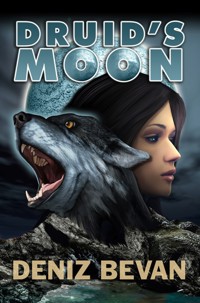
Beauty to his Beast…
Lyne Vanlith, an archaeologist who seeks a logical explanation to any mystery, discovers an ancient Druidic curse on her first dig. When the signs foretold by the curse descend on her, Lyne can’t find a reasonable interpretation.
And that’s even before a Beast rescues her from a monstrous sea-creature. She drops a grateful kiss on the snout of the Beast, who transforms into a man, Frederick Cunnick, Baron of Lansladron. Lyne is meant to be Beauty to his Beast—and break the curse forever.
Now both spellkeeper and monster are targeting Lyne. She must take up her legendary role, to defeat the curse and save Frederick—and herself. Instead of logic, for the first time, Lyne must trust her heart.
Das E-Book können Sie in Legimi-Apps oder einer beliebigen App lesen, die das folgende Format unterstützen:
Seitenzahl: 271
Veröffentlichungsjahr: 2022
Ähnliche




















By Deniz Bevan
“Once the action started it didn’t stop but kept me turning pages. Recommended for those who love a blend of romance, fantasy and action rolled together in an archeological setting.” - Sandra Cox, author
“…the entire sequence of events that leads to the finale was a thrilling joyride.” – Rain ‘n’ Books reviews
“A re-telling of Beauty And The Beast with werewolves, witches & a sea monster with a slow-brewing romance. The quieter moments were my favourites.” - Jorie Loves a Story reviews
“Ms. Bevan weaves a rich tale of mystery, passion, and true evil whirling through the depths of a quaint seaside village.” - Michael Di Gesu, author
“It's both a sweet romance and a fast-paced adventure that keeps readers on the edge of their seats.” – Sherry Ellis, author
“The heart of the story is a very horrific and violent re-telling of Beauty and the Beast but it is tempered by the deft hand Bevan has at preventing those bits from becoming an over-reach… The quieter moments were my favourites.” - Jorie Loves a Story reviews
Copyright 2022 by Deniz Bevan
Published by Dancing Lemur Press, L.L.C.
P.O. Box 383, Pikeville, North Carolina, 27863-0383
http://www.dancinglemurpressllc.com/
ISBN 9781939844873
All rights reserved. No part of this publication may be reproduced, transmitted, or stored in a retrieval system in any form–either mechanically, electronically, photocopy, recording, or other–except for short quotations in printed reviews, without the permission of the publisher.
This book is a work of fiction. Any resemblance to actual events or persons, living or dead, is coincidental.
Cover design by C.R.W.
Library of Congress Cataloging-in-Publication Data
Names: Bevan, Deniz, 1979- author.
Title: Druid's moon / Deniz Bevan.
Description: Pikeville, North Carolina: Dancing Lemur Press, L.L.C., 2022.
| Summary: "Beauty to his Beast... Lyne Vanlith, an archaeologist who
seeks a logical explanation to any mystery, discovers an ancient Druidic
curse on her first dig. When the signs foretold by the curse descend on
her, Lyne can't find a reasonable interpretation. And that's even before
a Beast rescues her from a monstrous sea-creature. She drops a grateful
kiss on the snout of the Beast, who transforms into a man, Frederick
Cunnick, Baron of Lansladron. Lyne is meant to be Beauty to his
Beast-and break the curse forever. Now both spellkeeper and monster are
targeting Lyne. She must take up her legendary role, to defeat the curse
and save Frederick-and herself. Instead of logic, for the first time,
Lyne must trust her heart"-- Provided by publisher.
Identifiers: LCCN 2021048995 (print) | LCCN 2021048996 (ebook) | ISBN
9781939844866 (paperback) | ISBN 9781939844873 (ebook)
Subjects: LCSH: Women archaeologists--Fiction. | Druids and
druidism--Fiction. | Magic--Fiction. | LCGFT: Fantasy fiction. | Romance
fiction. | Novels.
Classification: LCC PR9199.4.B487 D78 2022 (print) | LCC PR9199.4.B487
(ebook) | DDC 813/.6--dc23
LC record available at https://lccn.loc.gov/2021048995
LC ebook record available at https://lccn.loc.gov/2021048996
For Beste and Simla, my first readers
Table of Contents
Chapter 1
Chapter 2
Chapter 3
Chapter 4
Chapter 5
Chapter 6
Chapter 7
Chapter 8
Chapter 9
Chapter 10
Chapter 11
Chapter 12
Chapter 13
Chapter 14
Chapter 15
Chapter 16
Chapter 17
Chapter 18
Chapter 19
Chapter 20
Chapter 21
Chapter 22
Chapter 23
Chapter 24
Chapter 25
Chapter 26
Chapter 27
Chapter 28
Chapter 29
Epilogue
About the Author
Beast brought forth by man’s blood,
The mound-keeper repays the sacrifice
But shall sense the wind
Three prongs bear proof of Beauty,
Three signs of anger at her coming:
The tide that rises across her feet,
The earth that crumbles beneath her step,
And the rising breath that renders her efforts worthless.
By this wind shall ye know the anger of the cagèd Beast.
Unless Beast be freed and Octopus fall;
Yet no-hope rules lest Beauty calls.
Now the time has come for Beauty to call.
Chapter 1
“‘The Curse of the Octopus,’” Lyne read, translating the Middle English script. Octopus had to be wrong, for a start.
A sudden gust of wind across the mouth of the cave riffled the sheet in her hand. She held the paper closer, angled towards the grey afternoon light filtering through from outside, and reread the first line, this time aloud.
“Octopus? Are you certain of that?” Professor Meadwell, her PhD supervisor, gave her one of his trademark try-harder-lowly-student looks from over the top of his glasses.
From the moment she’d been accepted to his team on a dig at Afanc Cave in Cornwall, Lyne had secretly hoped for an exciting, mysterious find, or at least an object that might earn her a co-writing credit on the professor’s paper. But the manuscript that turned up in the first week of excavations was not quite the type of puzzle she had allowed herself to daydream about.
She’d rather not consult the dictionary—or ask the professor’s advice—so soon and moved on to the next two lines. “Beast brought forth by man’s blood / the mound-keeper repays the sacrifice but shall sense the wind.”
A thrill went through her at the words. There was violence inherent in their tone, even if she had no idea what the phrases meant. Images came to mind of warriors raising a cairn, robed men circling a low mound, a gleam of yellow eyes in the dark under the ground. The breeze fluttered the corners of the paper. Rain clouds gathered, and the evening light grew shadowy and dim.
Professor Meadwell slipped the sheet from her grasp and stepped across to the trestle table, lighting one of the battery-powered lamps. Lyne hurried after him, boots clomping on the uneven stone floor.
The rest of the team worked outside, tiny figures in the distance, kneeling on grass and mud. As the student with the highest qualifications in Celtic studies among the professor’s assistants that spring, Lyne had been given her choice of location on the site. After a test pit unearthed some intriguing pottery sherds and a dagger handle, she’d chosen to excavate by the northern boundary, overlooking the formal gardens of Cockerell Manor. Yesterday, she’d barely started work near the old well when she uncovered the crumbling manuscript, suspiciously close to the surface. The team had all gathered when they saw her race back to the cave to alert the professor and gather up the protective covering and other tools.
The lack of other objects in the soil around the scroll, whether directly beneath it or even a few contexts down, had baffled both her and the professor. There wasn’t so much as a lead case that might once have held the lone parchment. Lyne had discovered it unrolled, but the creases lining the page showed it had been tightly curled for a long time before someone buried it flat.
After hours of careful digging and brushwork, they’d wrapped up the manuscript and sent it for testing at the nearest conservation centre.
“We’ll have to wait for the tests, of course, but I believe this manuscript predates our excavations thus far,” the professor said, speaking slowly, as though reluctant to make such a claim for the mystery manuscript so early in their study of the artefact.
Lyne had taken high-resolution photos of the original vellum from every angle. That afternoon she’d received permission to put off her other assigned tasks, to remain in the makeshift office and storeroom set up in the entrance to Afanc Cave and begin work on a translation from the printout of the clearest image. If only her mind could be as nimble as her fingers.
“If this is an authentic document,” the professor added, “we must determine how it came to be so near the surface, unprotected.”
They excavated on land owned by the wealthy Cockerell family. Afanc Cave was a known Druidic site, but the Cockerell family had never permitted an excavation before. One of Lady Cockerell’s first demands had included the erection of a fence, to delineate the limits of where the professor and his team were permitted to pass. No one could get in without a pass and the alarm code. They’d even sealed the cave opening, adding a set of wooden doors.
Besides, who’d break in just to bury a fake ancient curse? If there was any chance that the manuscript was genuine, Lyne wanted to be part of the investigation from first to last. She cudgelled her brains, aiming to be the first to work out a practical theory for the manuscript’s location.
She climbed onto a stool and pushed aside laptops and cameras, sample boxes and contact charts, clearing space on the table for the printout. The rising wind rattled the sheet, and she slapped a hand over it to keep it from blowing away. Professor Meadwell cast a scowl at the half-open doors. But Lyne glanced back, towards the narrower opening that led deeper into the caverns. The wind seemed to have come from there.
“Blasted weather.” The professor slammed the doors shut and returned to stand beside her. “There seems to be a mark here,” he said, his finger creating a shadow on the page. “If we take it as the letter ‘e’, then it changes the meaning.”
“Instead of ‘wind’, then—” She stopped, but the professor didn’t offer an alternate translation. He could easily read the Middle English without her. Despite the high-resolution image, the faded ink was hard to make out, especially with the professor hovering, questioning her every interpretation with a raised brow. “Perhaps it’s ‘wave’,” she offered. “This cave is on the coast, after all.”
“Read on,” Professor Meadwell commanded.
Slowly, tracing each line with a hovering finger, she read the rest of the inscription aloud, trying to remember everything she’d ever studied about Celtic legends and Norman tales at McGill University and in her online extra credit courses. The last line was the hardest to decipher and the nearest she got was “unless Beast be freed and Octopus fall / Yet no-hope rules lest Beauty calls.”
“What does that mean?” She’d promised herself never to act uncertain in front of the professor—the highest authority on Celtic scholarship in Europe—and hurried on with a suggestion. “If it refers to a woman who falls in love with the beast and—”
“I hardly think it’s as fanciful as that,” the professor snapped. “We’re dealing with Druids, Miss Vanlith. The educated class. Not old wives’ and fireside tales.”
A damp breeze came up from the caverns and, thwarted by the closed doors, wafted round to them. Lyne’s shoulders shivered, but she held herself still at once.
“Yes, sir.” Professor Meadwell was right. No point in inventing stories. Once they had a solid date for the original vellum, she could work out the real meaning of the curse—or whatever it was—and what connection, if any, it might contain to older Celtic lore. Then she could impress him with her deductions. “I’m sure there’s a logical explanation.”
Yet her mind continued to dwell on the image of the glowing eyes of a creature trapped under the earth.
Chapter 2
Lyne drew her head down as far as she could into the collar of her raincoat and shifted her grocery bag to hang on her wrist, leaving both hands free to wrestle with her umbrella. A gust of wind pushed at her shoulders. Swirling upwards, it ripped out one of the prongs of the umbrella, and the whole thing turned inside out. She clutched at the wet and slippery handle with both hands, even as the wind tugged her down to the street corner.
She tossed the broken umbrella in the nearest bin and shoved her hands deep into the pockets of her raincoat, looking ahead to home and a hot bath.
The grey skies had lowered on her the minute she’d stepped out her door that morning. They’d reached the last week of the wettest April England had seen in over a century; it had been even wetter here in the town of Trewissick-on-Sea in Cornwall.
All day she and the latest intern, Peter, a master’s student, had huddled with the professor in the cave, cleaning and labelling potsherds until their hands grew numb. No one else had even shown up for work. Despite the solid rock surrounding them, and even with the newly erected doors in place, the damp still fingered its way in. The rock walls had been as slippery as if the sea itself seeped upwards through the cliffs.
All around Cornwall, flood warnings had been issued, and every morning the papers reported the same story: all the rain in the last month still hadn’t filled the reservoirs emptied by a long drought. The ground was too hard and the water simply washed away, swelling the rivers and leading to—
Floods.
She’d stepped into one directly outside her flat, where the road curved sharply along the harbour wall. She made a face as she edged forward, careful not to slosh the dirty water that rose right up to the rim of her wellies. The puddle covered the lower half of the street, as grey and forbidding as the Moria lake in The Lord of the Rings.
She made it to the front door and jammed her key in the lock, scrambling over the threshold as if a hungry creature waited to snatch her in its tentacles and drag her down into the depths of the dark waters.
She shrugged off her wet coat in the dim hallway and unlocked the door of her ground-floor flat, only to be greeted by an inch of water all around.
So much for a hot bath. She slumped against the doorjamb with a groan. Her hair lay plastered to her cheeks in cold clumps. She’d be lucky if she could find even one sweater in her closet that wasn’t damp right through.
“The whole street’s hilla-ridden,” Mrs. Glick said from behind in her thick Cornish accent. She peered over Lyne’s shoulder and clucked her tongue. “We’ll have to move ’ee to th’ upstairs room.”
Left a childless widow some years before, Mrs. Glick had taken the eminently sensible step of converting her rambling old house into flats. She lived in the other downstairs apartment and came out to investigate every time the front door opened and closed.
Lyne made a vague sound of agreement. Wading across the room, she dumped her groceries on the coffee table, flexing her wrist and fingers at the relief of finally letting go of the soggy plastic.
Her landlady surveyed the damage from the doorway, one hand twisting and untwisting the string of beads around her neck. “If ’tidn’ one thing, ’tis another.” She shook her head ruefully at the damage to her furniture. “I dessay ’n will cost a pretty penny to put ’n right.”
“I’m sorry,” Lyne said, and Mrs. Glick’s wrinkles creased in laughter.
“Not ’ee’s fault, midear. Now come along.” Suddenly brisk, she let go of her beads and headed up the stairs. “I’ll show you ’ee’s new room, and then ’ee might pop into mine for a bit. Time enough to deal with the insurance men once the waters’ve gone down. I’ll make some good strong tea.” She chuckled again. “Fancy taking the blame for the weather!”
* * *
Mrs. Glick had insisted on cooking for her, so Lyne offered to do the washing up afterwards, but her landlady waved her off. “I’ve a girl comes in for that. No need to wear ourselves out.” With another laugh, she added, “’Ee’s too learnt and I’m too old.”
Mrs. Glick’s accent became easier to understand, Lyne discovered, once you’d spent a couple of hours in her company.
“Mrs. Glick, do you know any local legends?” she asked, accepting a mug of dark, sweet tea, and following her landlady out into the floral-patterned sitting room. This side of the house was set further back from the road and had escaped the floodwaters that lapped across the floor of her own erstwhile flat.
Mrs. Glick took the question as an excuse to launch into a winding folktale, complete with twists and turns and a slew of characters all with the same name. The story became harder to follow than ever, but Lyne put on an awe-filled expression and laughed in what she hoped were the right places.
As the tale wound down, Lyne ventured to ask what was really on her mind. “Are there any tales about an octopus?”
“A what?” Mrs. Glick looked like she was about to let off another cackle of laughter, then stopped short. The change that came over her features was frighteningly quick. “Why does ’ee ask?” she whispered, brows lowering over her eyes as her gaze darted to the window. Through a crack in the dark drapes, Lyne could see the light of the streetlamp, flickering as if reflecting off the puddle outside. A wooden carriage clock on the mantelpiece bonged an off-key count of seven.
Mrs. Glick obviously knew an intriguing story, but something kept her from telling it.
She’d have to tread carefully, start with the manuscript; no one could be concerned about something that ancient. “A couple of weeks ago, I found—”
“You’m meddling far too much.” Mrs. Glick grabbed Lyne’s arms so quickly, tea sloshed over the rim of the cup. “The Council will have to hear about this.”
“But we’ve already got the permits—”
“Not that Council.”
A drop of tea rolled down towards her charm bracelet, and Lyne itched with the urge to wipe it away, but Mrs. Glick tightened her grip and pushed her face up close.
“Listen,” she hissed. “Keep on with the old coins and the bits of pottery.” She’d lost her accent entirely. Her pupils were wide in her milky green eyes, like a cat’s in darkness. “Forget about legends—and don’t disturb any old bones. The waters are rising.”
“Do you mean the flood outside?” The old woman’s bony hands were warm, hot even, on Lyne’s skin. She thought of the third line of the manuscript: “Three prongs bear proof of Beauty, three signs of anger at her coming: the tide that rises across her feet...”
“Do I—” Mrs. Glick’s voice resumed its normal pitch and she sat back. “Yes, I reckon so. ’Ee’s goin’ to think me daft. All this tale-telling.” She gave Lyne a wobbly smile and patted her hand without seeming to notice it was wet. “Finished, ’ave ’ee?” She took the cup from Lyne and hoisted herself off the sofa with a groan.
As Mrs. Glick bustled off to the kitchen, Lyne stepped quietly over to the window and peered out through the gap in the curtains. The lamp outside cast a yellow gleam on the pool of water.
She pressed her nose to the pane, looking down the garden path to where the water still lapped at the foot of the front steps. In the dark, the house seemed marooned on an island in the middle of a lake, though she knew the other side of the street was dry. It was only a shallow puddle that barely covered half the road. Nothing moved in the darkness outside, not even a breeze to ripple the surface of the water.
What was Mrs. Glick frightened of?
Chapter 3
The Beast stirred from a long sleep.
Hunger and thirst ruled his waking. He snuffled round the rocks surrounding his bed. A leftover bone from last night’s sheep poked out from the matted grass and hay. He crunched it with his back teeth and rose up on all fours. A shivering stretch of each back leg, and all trace of sleep slipped away.
He bounded down the corridor, then slid to a halt at the first corner. Snout lifted to catch each breeze that drifted around the caverns, he scented for movement, for news.
The new smells—ink and metal—were still there. Faint and far above, but unmistakeable.
The Man part of him, suppressed while hunting and lost during sleep, flickered awake at the back of his mind. It had been over a month since he’d first isolated the scents, when the archaeologists arrived on the cliffside and cleared the cave’s entrance.
The Beast did not emerge from the cave, save only in darkest night. Hidden from all eyes, except at the last, in the instant when he latched on to his prey. He hunted sheep and goats, and when the anger rose in him, threatened unwary hikers who’d lingered too long after sunset. The Man receded and faded, barely a memory. The Beast prowled at will, but returned each dawn with his prey, eager to please his mistress.
He crawled on through the caverns, stopping now and then to mark a stretch of wall as he neared the upper reaches. A vision came to him of a long-ago story about a minotaur: turning and turning in endless labyrinths, never finding daylight. The Beast squeezed past a long-disused alcove, scenting first and moving after. A sharp, powdery smell hit his nose an instant before he put his paw down on something cold and piercing. Metal dug into his fur and burnt his skin.
His first—beastly—instinct was to fling the offending article as far away as he could, but the Man part of him roused and objected. The rusty iron might be useful. He closed his paw around it and resumed his prowls in search of water.
Goaded now by the Man, he sought a pool other than the damp puddles he usually drank from. He emerged through a crack in the cliffside, searching for reflected moonlight or starlight. Anything that might show him his transformed face.
The earthy smell of sheep came across the meadow. He crouched, creeping stealthily forward. But the Man was still strong; he would not hunt yet, but watch. Two sheep stood by a pool, one with its head down, drinking.
The Beast ran straight at them. Startled, they turned tail, bleating as they scuppered. The Man stilled the Beast’s rage, forced him to stop, to look down into the pool.
He was all Beast on the outside, covered in dark grey fur, with padded paws and feet tipped with dangerous claws. His was not the sort of face that could ever again mingle among men. The snout and flaring nostrils, the twitching hairy ears, the long whiskers, none gave any indication that a man lurked within. A man aware enough to calculate the time that had passed: five years, seven months, and a day.
Smells assailed him on the wind. Seafoam, salt spray, and fear. Two hikers on the cliff top. He’d not descended so far into beasthood yet as to eat man’s flesh himself. But his mistress waited.
The Man sought control, wrenching the Beast’s gaze out over nothingness, over the sea.
Hunger growled deep in his belly. The Beast snuffed the air. The sheep had not gone far and watched him, warily.
Five years.
He raised his head and howled. The sheep scampered away. The scent of fear sharpened.
He dropped low, and the iron nail in his paw scratched at his fur.
Man and Beast moved as one and drove the point of the nail into his paw as far as he could stand it. All thoughts focused on the pain, like lightning streaking down a metal pole, and as the Man concentrated, the Beast receded. The Man, more awake now than ever before, repeated in thought, over and over, the truths of his humanity.
“I am Frederick Elyan Cunnick, second son of the Baron of Lansladron. I was born on the twentieth of April. I was a twin. My brother died without honour and so, in my twenty-seventh year, I was taken by the witch of Cockerell. I was cursed into Beast form and given over to the service of the Mistress.”
Chapter 4
Peter took one look at her when she arrived the next morning and burst into laughter. Lyne rolled her eyes and continued into the cave, where Professor Meadwell was bent over the table, peering at a tablet with a penlight. He glanced up, returned to his work, then looked up again. “Are you ill, Miss Vanlith?”
“No, just cold.” Right, maybe the third sweater under her raincoat was a bit much. Especially for a Canadian. Though when she’d stepped out of the house into the morning drizzle, she wished she had a fur coat, not to mention a fur hat. And gloves.
Mrs. Glick hadn’t mentioned legends again the rest of the night while supervising Lyne’s move upstairs, and Lyne hadn’t pressed her on the mysterious Council. As soon as she’d brought up the last of her books and Mrs. Glick wished her good night, she’d Googled every combination she could of Cornish legends and a Council, along with the words of the manuscript.
Nothing had come up.
Except about floods, but that was a pointless search. Floods happened all the time, everywhere. The flood—and the quakes—referred to in the first lines of the incantation were probably metaphors for something else.
She lay awake long past midnight, dwelling on the words. Her new attic room still featured the original rope-sash windows, and the wind that swooped past the eaves whined through the cracks in the window frame and reached icy fingers towards her bed.
The test results had dated the parchment to between 800 and 950 AD and the ink to between 1200 and 1400 AD. The document was no hoax, and yet the double dating was both rare and infinitely stranger than the fraud Professor Meadwell had anticipated. He’d no explanation for why they’d found it so near the surface, in the damp ground around the well’s foundations.
She tossed and turned under her covers and pulled them up around her ears before finally warming enough to sleep.
The temperature had dropped another five degrees by morning. She thought about the day’s work ahead on the damp, cold ground, and shivered inside all her layers.
“You’re exaggerating, Miss Vanlith,” Professor Meadwell said. “How do you expect to work all bundled up?”
She shrugged off her coat and two of the sweaters, stuffed them into her cubbyhole, and took up her tools. No one else minded the damp as much. A couple hours’ digging would warm her up.
Peter sidled over as she drove her spade into the dirt in a newly delineated grid up the hill from the cave. He’d been there a week now and gotten friendlier with each passing day. He was from Finland; she’d known other Finns, back at McGill, and they’d been cheerful and witty. Peter was a complete contrast, loud and brash. There was a certain charm to him though; smiles always creased his gentle features, and his silvery blond hair fell into his eyes so that she almost couldn’t help wanting to reach out and brush it back.
Almost. She wasn’t here to get involved with anyone, only to finish her thesis and network with visiting professors, angling for post-graduate work, preferably at Oxford or Cambridge. Guys her age—who’d be competing for the same positions—held no part in her plans.
“You’re not dressed like a mountain climber anymore,” Peter said, resting a hand next to hers on the handle of her shovel. “Very nice combination,” he added, looking up and down at her jeans, oversize sweater, and riding boots; what she thought of as her Kate Middleton-in-Wales outfit. Except the Duchess had handlers to keep away unwanted advances.
She did her best to ignore him. Turning aside, she dug in once more. Her spade struck a rock, and her nerves jangled all the way up her arm. She raised her head to snap at Peter, as if it was his fault—didn’t he have work of his own?—but the earth trembled under her feet, and she fell against his chest instead.
His arms came around her at once, but he wasn’t any more surefooted than she. She pushed away and braced the spade into the ground, holding on as if to the mast of a ship. The ground rumbled and shook, with no balance or rhythm.
Far down the path she could make out Professor Meadwell and two interns at the entrance to the cave. She might be safer there under the arch of rock instead of out in the open, but she took one step and slipped and slid, righting herself only by digging the shovel deeper in.
Peter had his arms wide, riding the quake like a skateboard, a look of half-fear, half-exhilaration on his face. “Look!” he called. “I’m—”
The earth threw him up and he fell flat on his back. Lyne tightened her grip on the shovel and, once she confirmed that Peter was unhurt, laughed under her breath at his injured expression.
The trembling eased off as suddenly as it had come. Peter scrambled to his feet, tugging hand over hand at her shovel’s handle. Lyne was unsteady herself, knees weak with the effort of holding on, yet had no interest in letting Peter try to comfort her. Leaving him with the spade, she picked her way across the crumbled ground to the cave, stopping each time she thought she felt an aftershock. Probably just her legs, unable to keep her steady, like a sailor just off a ship.
The professor was on his cell phone. “Thank you, that’s what I suspected.” He hung up and ordered the interns to begin cleaning up outside. “I’ll need your assistance in here, Miss Vanlith.”
There was an odd note to his voice when he addressed her. He must have expected her to run to the cave at the first sign of the quake.
She should have done exactly that, she realised, as she entered. The room was a mess; the metal shelves they’d erected before starting excavations in complete disarray. Half the artefacts had been swept off the table and two scroll-work jugs—uncovered only yesterday—lay cracked in two on the ground. The handle of one broke off in her fingers even as she lifted it. She might have saved something, at least, if she’d rushed over.
Yet she couldn’t have left. Her hands had been rooted to the handle of the spade as if grounded there by lightning. Only after Peter fell had she been able to relax her grip. As if the ground wanted her and rejected him.
She rolled her eyes at her own ridiculous notions and followed Professor Meadwell to the middle of the room, still holding the jug and handle.
“I rang the university,” the professor said, kneeling among the smashed pots at the foot of the table. “To report the quake and the damage. They were rather confused by my message.” He stood and peered at her over the tops of his glasses. “Apparently, there was no earthquake anywhere in Cornwall today.”
* * *
Lyne and Professor Meadwell worked from end to end, meeting again at the shelving in the middle of the wall, then tackled the mess on the table.
In the end, it turned out that besides the two jugs, only a handful of finds had been irretrievably cracked, flecking apart at the edges as she picked them up. She set them aside in a box of their own; she’d long ago adopted the professor’s habit of not throwing anything aside, no matter how crumblike. “Mighty oaks from little acorns grow,” he’d often repeated since her first class with him back in her undergrad days, when he was a visiting professor at McGill. She had practically memorised his story about his first archaeological expedition—involving a broken clay pipe and the discovery of a manuscript referring to Merlyn and Uther Pendragon—since he used it on every intern who came through the Afanc Cave site.
She couldn’t keep her gaze from straying to the back of the cave as she worked. For all that the caverns appeared empty, the entrance and the tunnel beyond were obviously manmade. When she’d first arrived, she’d held a vain hope of uncovering wall paintings, like the recent finds up in Nottinghamshire, not seen by anyone for hundreds of years. Now, silly superstitions or not, she began to doubt whether they should delve any deeper.
At lunch, she sat apart from the others, sandwich in one hand and phone in the other, pretending she was too preoccupied to see Peter beckoning her to sit beside him on a nearby hillock. Two of them—Peter and an intern up from London—had already posted about the quake on social media. Peter’s read, “Who felt the earth tremble? That was me, thanks.” He’d even added a hashtag: litafag.




