


Erhalten Sie Zugang zu diesem und mehr als 300000 Büchern ab EUR 5,99 monatlich.
- Herausgeber: Istros Books
- Kategorie: Gesellschafts- und Liebesromane
- Sprache: Englisch
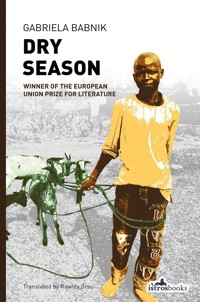
Gabriela Babnik's novel Dry Season breaks the mold of what we usually expect from a writer from a small, Central European nation. With a global perspective, Babnik takes on the themes of racism, the role of women in modern society and the loneliness of the human condition. Dry Season is a record of an unusual love affair. Anna is a 62-year-old designer from Central Europe and Ismael is a 27-year-old African who was brought up on the street, where he was often the victim of abuse. What unites them is the loneliness of their bodies, a tragic childhood and the dry season, or 'Harmattan', during which neither nature nor love is able to flourish. She soon realizes that the emptiness between them is not really caused by their skin colour and age difference, but predominantly by her belonging to the Western culture in which she has lost or abandoned all the preordained roles of daughter, wife and mother. Sex does not outstrip the loneliness and repressed secrets from the past surface into a world she sees as much crueller and, at the same time, more innocent than her own. Cleverly written as an alternating narrative of both sides in the relationship, the novel is interlaced with magic realism and accurately perceived fragments of African political reality.
Sie lesen das E-Book in den Legimi-Apps auf:
Seitenzahl: 491
Veröffentlichungsjahr: 2015
Das E-Book (TTS) können Sie hören im Abo „Legimi Premium” in Legimi-Apps auf:
Ähnliche




















GABRIELA BABNIK
DRY SEASON
Translated from theSlovene by Rawley Grau
An idea hungers for your body.
An alert, hot to dissemble and share.
Les Murray‘Life Cycle of Ideas’, from Subhuman Redneck Poems
For my girls, who are asleep as Iwrite this.
First published in 2015 by
Istros Books (in collaboration with Beletrina Academic Press)
London, United Kingdom
www.istrosbooks.com
Originally published in Slovene as Sušna doba by Beletrina Academic Press
© Gabriela Babnik, 2015
The right of Gabriela Babnik to be identified as the author of this work has been asserted in accordance with the Copyright, Designs and Patents Act, 1988.The italicized passages in the text indicate borrowings from such writers as Ben Okri, Salman Rushdie, Ken Bugul, Chris Abani, Wole Soyinka, Helon Habila, and Reinaldo Arenas, among others.
Translation © Rawley Grau, 2015
Edited by Stephen Watts
Cover design and typesetting: Davor Pukljak | www.frontispis.hr
ISBN: 978-1-908236-265 (printed edition)
ISBN: 978-1-908236-760 (eBook edition)
This Book is part of the EU co-funded project “Stories that can Change the World” in partnership with Beletrina Academic Press | www.beletrina.si
The European Commission support for the production of this publication does not constitute an endorsement of the contents which reflects the views only of the authors, and the Commission cannot be held responsible for any use which may be made of the information contained therein.
Chapter 1
You cannot know how much achicken weighs until you pick it up and shake it.
(African proverb)
We were lying on the bed and had not let the sun into the room, but even if we had turned on a light, I don’t know if anything would have changed – if I’d have become what I was or he what he was. I moved nearer to him. I moved as near to him as possible. To his raspy breathing and warm skin. He was unusually warm. He had said in total seriousness, which gave his words added charm, that he had the heart of a buffalo. I had harnessed him, this buffalo, and now it would be hard to ever let him go. My bones wouldn’t let me. I know I write as if from the previous century, but I am from the previous century. I was born not long after the Second World War. I read somewhere that’s not the way to start a novel. I mean saying ‘I was born in such-and-such a place’, but let me do it anyway. Let me be forgiven for lying in bed without the light on next to this young man whose face looked like it had been drawn on. Eyes, forehead, nose – as if cut out of cardboard and pasted there.
He slept with his lids half-open and I found myself wanting to close them. There were also things about him I just knew, from a distance. I could have predicted them. Like when we were going to the hotel. While I was bent over my bag searching for my wallet, he looked away. Or on the avenue in the middle of the day, when I wanted to take his arm, it was better not to, even though I had done it just a little while before. It was better that he just walk beside me, with his slim, slender car mechanic’s body – although... although he must have already done many things in his life; you could see it in his veins, not only the veins on his arms but especially at his temples, big powerful veins, veins like electrical cables, veins like steel, like salt, like water, invincible veins, and I, next to him, was carrying my yellow bag printed with garden flowers, which later, somewhere halfway along the way, I let out of my hands. In the hotel, when we had leaned back on the plastic chairs, when our bodies had rested, he said the bag was what made him notice me. From across the avenue. Rivers were flowing between us – cars, people, street vendors, women with and without bundles on their heads, children with old and less old faces, but even so he spotted me on his retina. He was squinting his eyes, as he did now, except now they were almost completely open. Though now he was no longer looking anywhere, at least not in my direction. I imagine him looking inwards, at that buffalo heart of his and the hot blood flowing in waves through his body.
That’s probably why he was rasping in his sleep like that. In total seriousness. As if he hadn’t slept for an eternity, as if he could barely wait for someone to invite him into bed. I suppose I sensed that even from across the avenue. And when we were finally standing face to face, he said, ‘You were looking at me.’
I remember it clearly, him using the formal vous with me. Then I said the same thing, only with the familiar tu: ‘I noticed you were looking at me.’
‘So what do we do now?’ he laughed. I said nothing, with that yellow printed bag of mine, since it would have been too stupid to say something and look away. That’s also when I realized it would be hard to bear not looking. At that tall, slender body. But I suppose I’ve already said that, so now I need to say something else, to lay my cards on the table. When I looked away from him, I imagined him slipping his big dark hand, which reflected the sun and everything else too, beneath my sweat-soaked T-shirt and lifting those breasts that for a century had been sagging to either side. ‘I will help you carry your bag,’ he added, as I slowly turned my eyes back to him.
I laughed back. After I barely escaped death crossing the street, you wanted to carry my bag for me? Only that and nothing else? No, not that I didn’t know how such things are done on this continent – no kissing on the street, no holding hands, least of all between two people of the opposite sex, no intimacy at all in public – but to carry my bag, when what I had in mind was a finger in the mouth, a hand on the belly, was simply too much. I shook my head – what else could I do? Even as I child, whenever I really wanted something, I shook my head. ‘No need. I’ll manage.’ Of course the subtitles said the direct opposite and I think he even deciphered that. From across the street, beneath the sun. Later, as we walked side by side, slowly, lightly, like two cotton flowers in swirls of dust, he took my bag all the same.
We went to a nearby hotel. Where else should we have gone? A woman like me and a man like him. Standing up, he was two heads taller than me. But I’m used to tall men from home. For me that’s not a problem. Maybe it bothered other people. That a sixty-two-year-old woman and a twenty-seven-year-old man were strolling along side by side. Maybe it bothered the receptionist at the hotel. That when I put my hand in my bag our elbows accidentally touched, and then our shoulders. I saw it; it was written on her face. Here’s another woman who’s come for a safari. Except that here, in this faded hotel, I don’t see any clouds, let alone grass or lions in the grass. Just a dark, narrow hallway and stairs that lead to a room. When you open the door, on the left is a bed and, next to the bed, a night table with a tawdry shine; a little to the side, a fridge with a vase of plastic flowers on top. Also, let’s say, two chairs, on which we sat down timidly, maybe me a little more than him. I bent my legs a little, a pose I’d later assume more than once in Africa; he, meanwhile, went to the fridge and took out a bottle of water. I was pretending to look at the window, the curtains on the window, heavy curtains that reached to the floor and somehow jarred with what was happening outside, all that sunlight and those exaggerated gestures and inviting smiles from the street vendors, and trying not to think about the things that might happen between us. I suppose I was afraid, yes, afraid of the words from his mouth. That he would suddenly turn away from the fridge, the bottle of cold water still in his hands, and say, ‘Lie down and spread your legs’ or ‘C’mon, let me fuck you, ’cause that’s why you brought me to this hotel, isn’t it?’ Words like that I wouldn’t know how to respond to.
‘Are you cold?’ My shoulders flinched, but I would have probably flinched no matter what he said. And because the question was followed by silence, I looked over at my bag and only then realized I had put it on the floor by the bed when I entered the room. As if he understood the quick turn of my head, as if he understood more than I ever would, he walked back toward the bed, and I thought he was going to sit on it and thus summon me to finally do what we’d come there to do, but he just bent down, picked up the bag from the floor and, as if it was nothing, as if those plastic flowers and that somewhat shabby rug and that silk bedspread were nothing, handed it to me. I held it to my breast as if holding a child. ‘If you are cold, can I give you my shirt?’
I shook my head. I don’t know if he understood me, since the very next moment, in a quick yank, he pulled the thin fabric over his head and stood there like that before me. All I remember is his fur, that thick dark fur, spreading up from his genitals to his belly and almost to his neck. It had never really occurred to me that black men could be hairy, at least not this much.
In this scene, this mute, timid, almost palpitating scene of expectation, in which anything could happen and anything be denied, a third person would have been helpful. But since none was around and since the moment was lasting too long, I leaned over to him and accepted the sweaty T-shirt with two fingers.
‘Please don’t use vous with me.’
‘No?’
Again I shook my head. Surely by now he understood what I meant. My son used to break out laughing. Especially when he was little. Years later he told me that all through his childhood he thought his mother had a mane. A lion’s mane, if you can imagine. And maybe this mane was also why the young black man was stroking my face with his hand. His big warm hand, checking to see if that forehead, those hollows for the eyes, and that nose weren’t just pasted on me. Cut out of cardboard and pasted there. I wanted to tell him that my son was the same age he was so it would be better if he used tu with me, but I found myself, when he turned away from my face, went over to the window and closed the heavy velvet curtains, preferring to stare at his backside. I suppose Madonna needed fifty years to get buttocks like that; I probably won’t manage that even in the next life.
‘The hotel’s not too bad,’ I said, to finally say something. ‘Only the way the receptionist was looking at us...’
He waved his arm as if to say, stop right there, it’s not worth continuing. And when he moved nearer the bed, when his shadow was again thickening over mine, I realized he reminded me of someone. Someone who was no more, but who through him, through those jeans hanging off his backside, through his long fingers, was again inhabiting me. Ever since I left home, scrubbed the floor, fluffed the pillows, pushed the chairs in around the table, and locked the garden door, he had been with me. So this encounter, or rather, this looking at each other in the street, did not happen because I was carrying a yellow bag and he was wearing his warm, too warm, skin and his inside-out buffalo heart, but because we had in fact been pasted together all this time. It was only here, in this landscape without clouds, without tall grass or lions in the grass, that we could unpaste ourselves and stand on opposite sides of the street. Maybe I’m crazy but I believe in such things. But if I am crazy, then the face of this man who carried my bag for me to a nearby hotel, who, after drinking water from the fridge, took off his T-shirt, and then closed the curtains and fell asleep, does not exist at all, and so neither do I.
* * *
Malik wanted us to rob the woman. He pointed her out to me at the market; I mean her yellow bag. When it came to this sort of thing we did not need to talk. Eye contact and a gesture or two were enough. Then like polecats we followed the silhouette, which stopped a little here, a little there, until we came to an open area and all became clear. Malik was always the one in front; I, more often than not, was watching his back. If things were going wrong, I would make somebody trip or try to draw attention to myself. But with this woman, I mean her yellow bag, I knew it would not be easy. She seemed like she was made of cotton and if Malik bumped into her with that heavy body of his, she would just collapse. I did not have the feeling she’d scream or anything like that. But I could imagine her just dropping on the sidewalk and starting to cry. And I hate stuff like that. Malik once told me I was a pussy. He pounded his chest and called me names. ‘You must to be bastard. If you are no bastard, dey will crush you. Dis here is Ouagadougou, dude. Dis here is no your bush.’
Malik’s blather was a lot of nonsense. I had been living in this city long enough to feel like I was born here. Other people my age on the street, I would tell them it happened under a bridge; what bridge I don’t remember exactly, but it was definitely here, in the city. So Malik was more of a bushman than me. But back in the market it was not about that.
Then, I wanted to tell him I really did not feel so much like nicking that woman’s bag, and besides, I thought she was a little too white, a little too soft, like those pillows you see on TV in some white lady’s fucking bedroom or living room – men and women sit on them like they’re dreaming, like that is all they know, all they can think of, and of course they think all us other people also live like them; meanwhile, we other people are only dreaming their dreams – and I was still tired from the night before. I really did not feel so much like running two to four miles in the hot sun, which is what the usual robbery required. Last night, for example, it did not make any sense. And we lost the motorbike too. Malik got stoned before it all started so I doubt he could even see where he was going. Otherwise he probably would not have tried it with that white woman. Her hands were shaking, her eyes went all marbly, like she was going to kick it any minute. I think what scared her most were Malik’s pink lips and the pink blotches on his face, like a star had exploded there. Maybe I’ll talk about his skin disease some other time, but not now; now I have to say something else too: that the white woman – an American, Belgian, Flemish woman, how should I know? – wasn’t there by herself; a black dude was standing next to her. And because of him, that fucker, I told Malik, do not stop the bike, but that is exactly what he did. He rammed it into the dirt, got off and walked over to them, like it was nothing. Like he just wanted to ask for a light. And before they could count to three they had knives at their bellies. We took the dude’s trousers off and frisked his arse, but he didn’t have anything there, not even a thousand francs.
The people walking by looked away like it was none of their business – when the same thing happens to them, no one will give a shit either – and bam, that’s when I got the feeling things would not turn out good for us, that something smelled funny. But last night I let Malik go through with it all the same. And the way he went through it was we ended up with no motorbike and no dough; all we got off the dude was his passport, which we really could not do anything with. All we could do was wait two or three days and then put it into circulation.
And now the same thing could happen here. There’s nothing in that woman’s yellow bag but tissues, a bottle of warm water, and a credit card. And somewhere in the background waits Dude No. 2. A little scrawnier and with his thing dangling, but still a black dude who can run, who wants to run, even with his trousers undone. Because last night, when people were strolling past, the dude with the passport and no dough decided to risk it. The Flemish woman almost passed away, and I can just see her laying into him back at the hotel. Saying what a bastard he is, the biggest arsehole alive. The point being that when he was running off to get help with his trousers undone, I could have sunk my knife into her belly. I did feel her up a little, I admit. Beneath her top, behind her bra, to see if she was hiding anything. But she wasn’t. And the one from the market, too, who is right now in front of us, she has probably done it too. Stuck fifteen, twenty thousand francs behind her bra, but those things of hers are in their last days – kaput is what Malik would call them. His old man once told him, a woman goes through two periods of life: a phase of growth and a phase of decline. But I think he must have read that somewhere; he didn’t come up with it himself. His old man was not an albino and even read things. Sometimes at night he would sit on the terrace and if he wasn’t reading he would listen to jazz. ‘Kind of Blue’ and that sort of bollocks. However you look at it, Malik’s old man was not so stupid. I think he even knew what Malik and I were up to, but he never said anything. Well, once he said we were going through that sort of phase and should make the most of life.
Make the most, man. I would rather make the most of that old lady from the market. I tell you, she should have stayed in her hotel and this would not be happening to us. I wouldn’t have to run in the hot sun and Malik wouldn’t be giving me signals to make a move already or he will rip my head off.
I turned to look at her one more time across the avenue. She may have been in the decline phase but she still had decent calves, nicely shaped, somewhat muscular thighs, and her arse did not sag. She was showing it off in a pair of dark three-quarter trousers. White ladies, from what I have been able to see of them, are always doing things like that. Wearing something that knocks you sideways. A low-cut top with a dark-red lacy bra underneath, or a little chain around the ankle. Because of the yellow bag it was not erect yet, which would really have been too much, to have to sneak into some filthy toilet and wank off over somebody like that, but in the end I could not rob her anyway. All the time it was going through my head that after we grabbed that thing off her she would just sit on the ground and start crying. And I hate crying women, like I hate marbles in the eyes and shaky hands. With all their gold rings and credit cards, the only thing they have left is fear. That alone is sometimes enough to make me want to put holes in them. They go out, leave everything at the hotel, take some black dude with them just in case, a local if possible, who just happens to stuff his passport in his pocket, although not necessarily by chance since only Allah knows how much he went through to get that document, which I don’t blame him for at all, and then they watch to see which corner somebody’s going to jump out of. But it was noon and the market was crowded, like it only gets at noon, and that changed everything. So I shook my head one more time to Malik. Yesterday we lost the motorbike and now it’s going to be our heads. And when I get a feeling, or should I say a jab, near a chamber of my heart, that is another sure sign. But Malik did not understand. Like he never understood what ‘Kind of Blue’ was all about. Night after night he would sit with his old man on the terrace but all he would think about was naked chicks and how he was going to stop doing small jobs and start doing big ones.
When the jab was punching me from behind my ribs, so strong I almost blacked out, I made up my mind. I would walk over to the woman and try to start a conversation. Carry your bag, Madame? Are you hot, Madame? Shall we go to the hotel, Madame? They love that sort of sweet stuff. I think Malik’s old man knows that too, how to approach white ladies. I think he must have brought back ‘Kind of Blue’ from over there. For a few months he was on a waiting list for a visa and would hang around the airport in Ouaga, until finally he hid in a wooden crate. After a few days of crouching in the dark without water he realized it was sheer rubbish, as he told me with his legs stretched out and his arms dug in somewhere behind his neck, me nodding the whole time like I knew about it, like I had spent countless heat waves crouched on a scant square metre, so he climbed out and turned himself in to the authorities. Deportation was followed by sitting on the terrace. But that too, how I got on with Malik’s old man, I will talk about some other time. Now the question was how to get that yellow bag in my hands. Nicely. Because knives at the belly is fucked up. I do not want to do that anymore. I have got to give it up, Malik’s titties or not. Let him make the most of them if he wants, I have a new day dawning; I don’t know what or how exactly, maybe I will train as a tailor; I’ve been invited, but I will see. First I need to take care of this marbly-eyed white woman in front of me. To get her over from the other side of the street and then lightly, invisibly, brush against her. If she smells good, I will get myself invited to her hotel – if she does not talk too much. But I do not think she will talk too much.
* * *
How did I know how old he was? Well, I didn’t. I didn’t have a clue who I was dealing with or what he wanted from me. Especially not after he fell asleep. I don’t think he knew either. These people can be unpredictable. Just when you think you understand them they do something unexpected. The cab driver at the airport, for example, instead of driving me to the market took me to meet his family. When I hinted that I had to pee, he waited for me by the road, as if from then on he would be my comforter, lover, and bodyguard. That’s also more or less how he introduced me to his family later, despite meeting me for the first and last time only that day. When I asked where I could wash my hands and pointed to the right, he nodded; when I pointed to the left, he nodded again. For him, there was water in the sky and water beneath the earth. He probably saw cloudy water even in me, which is why, after lots of persuading, fifteen cups of oversweet tea, and endless handshaking – how is your family? how are your children? how is your house? – he ended up dropping me in front of some building named after Gaddafi. Then I lugged my bag past insane drivers stirring up clouds of dust – I had arrived in Ouagadougou right at the start of the dry season, which the tourist brochure said was the best time to visit sub-Saharan Africa; the rainy season meant impassable roads, mosquitoes, regular power outages, and so on – past vendors selling butchered meat on which swarms of flies were grazing, big dark flies with green bellies; past troops of children who were trying to attract attention with empty, rusted tomato-paste tins – eventually I realized the tins were not so much functional but were mainly status symbols – past tall, slender women with dark, shiny skin, who sliced vegetables on their open palms.
Somewhere about halfway to the market, beneath a row of acacia trees, I leaned against the edge of a roadside wall with my bag and lit a cigarette. As I puffed out smoke I realized this was that opposite thing I had desired. To leave the silence I’d been cocooned in the past few months; to leave my relationship with my son, which had destroyed, no, not destroyed, but crumbled something in me. He was about the same age as the young man I would meet a few hours after that cigarette. And last but not least, I desired also, or especially, to leave my relationship with my aged father.
I called him that, though he wasn’t in fact my real father. He and my mother, who also wasn’t my real mother, adopted me when I was about three and a half. One afternoon when they were fed up with waiting, or rather my father was, since my mother was always a calm, quiet, too quiet, woman – when he was fed up with putting it in her soft, white, too white, body with no result. And so they came. Not all that far, really. I was sitting with my legs stretched out in the middle of a big, only half-whitewashed room in the orphanage. Shoeless, in a sort of baggy dress, which in fact had been sewn from remnants of the cloth they used to cover the potatoes in the cellar to keep them from sprouting. I’m not entirely sure what happened to the potatoes later; they probably ended up raw and blackened, with all their attendant outgrowths, in our stomachs, and so clothed us on the inside too. And in fact I don’t remember their faces either, which gazed at me expectantly. I could say that her face was kinder, more promising, than his. But I only see this now, from a distance. Back then I suppose I was lucky that they even crossed the threshold of the orphanage, that they even wanted me. Nobody asked if I wanted them. That’s how times were back then and that’s how it happened.
As I leaned on the wall by the road, at least ten people offered me a lift to the market, but I shook my head at each one in turn. Even before I’d finished my cigarette, one woman, a huge, dark-skinned woman with a great dome of batik cloth on her head, rolled down the car window and with two fingers let me know that what I was doing wasn’t good. That it did not set a good example. I don’t know if I can describe her gesture effectively, but it certainly had an effect on me. My first reaction was to turn red; then I realized I’d have to get used to a man nodding yes when you ask if the bathroom is on the left and doing the same when you point to the right, and I would also have to get used to non-privacy. I suppose that’s what I wanted. I suppose I wanted to cleanse myself of the blue light that filtered into my workroom from the garden. The cushioned chair, the table in the corner, and the view through the window. A static sight where only the birds changed; eventually it started getting on my nerves. When the situation became hopeless, or maybe only seemed hopeless to me, if hopelessness is like deafness, I tore the wallpaper off the walls – black-and-white, aquamarine, violet wallpaper – shut the pillows away in cupboards, and threw my sketches in the wastebasket. At a certain point I couldn’t draw anymore; I couldn’t create the botanical motifs my customers were demanding. With a little exaggeration you could say I had stopped believing in art, or that the miles and miles of sumptuous fabric, the cashmere and silk on which I drew my stylized images of plants, had softened my skin.
Sometimes at night I dreamed I had cocooned myself in plant roots and couldn’t breathe. When at last I opened my eyes, no one was there in the morning to bring me a glass of water. I had been alone for such a long time it seemed entirely normal. Alone, that is, if I don’t count my son, who was cocooned in a world of his own, or my father, who had started bringing women home after my mother’s death. Not that he hadn’t done it before, but now it was definitely official.
I don’t know if it’s the right moment to reveal this, but my father isn’t the only one to blame for my leaving; mainly, it’s my son. Somewhere along the way I saw it was unhealthy; I mean a mother and her nearly thirty-year-old son living in the same house together. Everywhere you hear people railing against homosexual couples, but no one talks about the chauvinistic and racist relations in traditional families. What would supporters of the conservative camp say about my father’s behaviour toward my mother? He took all the money she earned sewing undergarments and scattered it to the winds. Later she had to ask him to give her something for nylons! What would they say about my son, who for several weeks sat in his room burning photographs from his childhood in a metal jug. When the photos ran out, he started in on my exquisite printed pillows. The tree leaf prints from different species burned like nobody’s business. Even later, after he was admitted to the mental hospital and given electro shock therapy, the black mark was still on the ceiling. I didn’t repaint; I didn’t want to touch anything anymore. His shirts, too, I left hanging in the wardrobe. Maybe he’ll return one day and want to find his things just as he left them.
The only thing I did after he left was to occasionally play a CD of his on the CD player. But that gloomy environmental music scared away the birds in the garden. So then I would just lay my head on the worktable and fall asleep. My customers, who’d been calling like mad, eventually stopped.
When my father rang the doorbell one afternoon, saying he wanted to introduce me to his new lady friend, who simply adored my stuff and would love it if I could decorate her flat for her – with silk throw pillows on the sofas, pink printed wallpaper, bedspreads in fiery shades – I knew things had reached the end. That I had to do something, go somewhere. For a moment or two I kept looking back and forth from the computer to the garden through the window, but then things inside me started crumbling, like the dust on African roads during the dry season. The last time I visited him, my son didn’t recognize me. I had brought him a carton of cigarettes and some mango juice. I hoped that after strolling through the park we’d light cigarettes and, like in the old days, in those black-and-white films we watched on Sunday afternoons, with all that elegance and all those women in high heels holding crystal tumblers of whisky, in which the crackling of the ice was barely audible – I suppose these symbolic objects were meant to proclaim their self-confidence, their independence, comparable at times to the self-confidence of men – I hoped we would share a few minutes of silence. But nothing like that happened. He looked through me, like the cab driver did when I asked him left or right. Maybe he was thinking about the water in the sky and beneath the earth, was maybe thinking too about the water that flows through our bodies, through his, especially. If nothing else, he must at least have felt his own body, physical pressure, pain.
My father, for example, did not want to visit him. He said it was all my fault. After everything he had done to us, to my mother especially, he had the nerve to utter such filth. So when his new lady friend was spinning around the house, sighing how wonderful, what fiery colours, what a wonderful investment I would be, and when finally they went out into the garden to look at the place of my inspiration, and even more the place of my loneliness, I locked the garden door behind them. I crept up to the door, as if creeping up behind someone’s back, and with an almost thievish smile on my face turned the key in the lock. At first they didn’t understand what had happened to them; what they felt later doesn’t matter one way or another. Had I given them the chance, they would have probably pressed their faces to the windowpane and with two fingers, like that dark-skinned woman with the head cloth, let me know that what I was doing wasn’t good. That it did not set a good example. That they would deal with me when they got out. But as I said, I don’t know what happened later. Then I just turned off the computer, fluffed the remaining pillows, scrubbed the counter a little too, and left. I locked the door and left.
* * *
There’s a scene from film noir which my father never questioned. The woman, her blouse quickly discarded, is sitting on his lap. Her naked arms embrace his neck; she is kissing him; then he pushes her away and goes to the window. Out of the corner of his eye he still tracks her skin and the scent that emanates from her skin, but for him it’s already too late. A few months ago he would still have forgiven her. A few months ago he would not have uttered that sentence: Il y abien d’autres choses que toi dans la monde. But for her part, she is sure she has done nothing wrong, that things can be fixed. She does not understand the loneliness that engulfed him when she showed him the doctor’s report.
He has always been alone, he said, but this was a completely new loneliness. More bitter, more painful than before; a loneliness that was like being abandoned.
She slowly got up from the chair and crossed her arms over her breasts. Wearing only her skirt, she was cold, although she knew the chill came not from the room but from inside her. At the same time, she also knew how trite this scene was – her at one end of the room, him at the other. In fact, the only view from the window was the roof of another house, so there was nothing for him to see but himself. There are plenty of other things in this world besides you. Where did he get that sentence anyway? Did he really think they were in some movie? But her hair was not platinum blonde, just ordinary hair held in place by a gold-plated barrette, and his were not the powerful loins of a movie actor, from which he might make a child for her.
But all the same, she asked him again to forgive her. Maybe the doctor made a mistake; maybe nothing he wrote in the report was true. Maybe she isn’t empty inside; maybe he’s the one who’s empty, although she could not say this to him now, undressed as she was, with her exposed shoulders and breasts, her pink nipples erect from the cold; she felt herself becoming even a little embarrassed, that she had put herself in an impossible position, all the more impossible because at this very moment he was gazing out the window and thinking lofty thoughts. Something, she supposed, about how a person is always lonely, alienated, cast into the world. But if you are guaranteed offspring, if you know that this here and now is not all there is, then, presumably, things might be a little easier.
‘What if we adopt?’ she asked, although she’d been thinking about asking something else. Like, was it true that men don’t think of themselves as frivolous, or afraid of loneliness, let alone afraid of losing love? But this was exactly what was happening to him. He was afraid. She could tell by how he pushed her away, stood up, and went to the window. But now, from a distance, she also understood that, mainly, he was blackmailing her. Because they wouldn’t have children, because she could not give him children, he would extract certain privileges for himself. Women. Going out at night to films. And, again, women, and especially her consent, that he could have them whenever he needed. And money, too. What she earned from sewing undergarments would go straight in his pocket.
But all this she could still bear if, in the scene, he would turn and look at her. And kiss her naked breasts and tell her they didn’t have to be so lonely, they could adopt a child.
Instead, he only stepped away from the window, bent over – a painful, unnatural bow, by which he was trying to conceal his hesitation, that despite everything he desired her milk-fragrant skin, her fine hair, which never grew past her shoulders, her slightly pink nipples – and then picked the blouse up from the floor all the same. He told her to get dressed and go make him tea in the kitchen. He spoke French, but in the late afternoons he still had his cup of tea. Sitting on the bench by the table, he still stared blankly in front of himself and wondered how he could overcome alienation. How does he explain to a woman who’s been fighting body and soul for what she ultimately saw as the only good – how does he explain to her that he does not believe it’s possible to eliminate dissonance in the realm of the empirical? What was she trying to say with that unbuttoned blouse? That everything would be different if they made love? That that was how they could reclaim their dignity?
‘There’s a three-year-old girl in the orphanage. I’ve already chosen a name for her. Ana. We’ll call her Ana.’
He lifted his face. He lifted it as if lifting it for the first time. Her skin really did seem mixed with water. Now he was already sorry for that sentence, though not for anything else. But since he had said it in a different language, she had not understood. There would always be an insurmountable barrier of loneliness between them. At first he thought they would overcome it by having a child, but he changed his mind when, in that skirt and blouse, she handed him the doctor’s report. All he had expected from her, nothing more and nothing less, was offspring. And a little lightness too. Like this tea and the plucked sprig of cherry blossom on the table. So far everything seemed fine, if only there wasn’t that obsessive look in her eye. That she had to hold on to him at any cost, that she would consent even to other women, would give him all the money she earned, would learn French, and, if he wanted her to, would perform that scene in the film where the man pushes the woman away when she tries to embrace him. Deftly, with a practiced motion, she slips out of her blouse and stands behind his back. Together they gaze at the roof of the neighbouring house. Because there is nothing for them to see, they are gazing mainly at themselves. The man thinks about the fact that, because she has consented to his meeting other women and taking them to evening films, he remains alone with himself and with the world, he has learned to experience himself and the world, and he knows what has been taken and what has been given; she, meanwhile, thinks about the sentence he said in French. Where did he get it anyway? Did he really think they were in some movie?
Suddenly, he leaned across the table; the darkened, half-cooled surface of the tea lurched and threatened to spill over the rim. ‘Ana’s a nice name. If you want, we’ll call her Ana.’
* * *
Despite all that happened between us, my son knew that the doors to the mysterious and unpredictable realms in the depths of my thoughts, overspread with gardens of strange and dread-inducing flowers and plants, were closed to him. This forbidden territory was at most the target of certain adverts for soap and detergent, and maybe detective novels and colourful newspaper supplements. I sometimes noticed him watching me from under his brows or from the side, trying to catch a glimmer of this oily female domain. Or when we’d be strolling in town and meet one of my girlfriends, he’d scrutinize her as if searching for a clue. Only once did he ask if I agreed with that Lars von Trier movie. The one where the woman loves her orgasm more than her son.
I wanted to stroke his hair, but he was too old for such things. We were both too old. I knew the scene he was thinking about: a few moments earlier the camera shows us a penis going in. It is big and wet. It goes into the woman and her scream is drowned out by music. Then a few shots later, a boy jumps out of a window. He moves a chair next to the window and falls into the snowflakes. Somewhere in the air a teddy bear is flapping all by itself. She, meanwhile, has her mouth open in pleasure; the man on top of her knows nothing.
That’s the sort of film my son would watch locked in his room, and that’s why he went crazy, I think.
But this sleeping man in front of me was from another time. He had a god drawn on his face. I wanted to say that earlier but it slipped my mind. As I was walking toward him from the other side of the avenue, I felt a strong desire for him to touch the secret territory inside me. Ever since I gave birth, almost thirty years ago, I knew I had to put it aside for a while. I mean, touching the silky surface of blades of grass with my palm or licking honey slowly from a metal spoon and then looking at my face in it. For a while I was about to surrender to this spell, but when my mother died and then the man my mother so strongly believed in left me, I could not shut myself away inside myself and let the plant roots grow over my face. My father, from the very start, in fact from the moment I came back to Ljubljana, made it all very clear. Do your work, print your botanical designs, or we’ll disown you. Glue the gold leaf onto the cupboards, or we’ll take your son away. So when it was time for me to let myself give in, I wasn’t allowed to. And now, when I could, I was haunted by the feeling that it was too late.
‘Are you sleeping?’ he said, and shifted his god-like body. He was from a golden age, when lovers did not hold hands and hardly ever ran their fingers through each other’s hair.
‘No, I can’t sleep.’
I wanted to say, ‘I don’t know how to sleep like you,’ but there was no point; he wouldn’t understand. A random stranger I had been lying in bed with for an afternoon and a night without anything happening between us.
As I was again depositing my bag on the floor, on the rug, which so many feet, mostly bare feet, had walked over, which gave off the smell of journey, of nakedness, of things left unsaid, it occurred to me that this appendage was all I had left from my former life. Outside it was pouring night, dripping stars, and somewhere in the other world my son was watching yet another crazy movie. This time from his own life.
I gazed at his silence, and then at his big hands with their beautifully shaped nails, somewhat strange for a boy from the street who had already done so many things, but which, all the same, were shoved into his jeans. This is that barren, stony realm, which probably only men possess. Or am I just being old-fashioned?
‘I am cold,’ he said, pointing his chin to just below his waist, as if trying to interrupt my train of thought.
‘So you’re warming your hands?’
‘Yes, but it is also a habit.’ I always imagined that when men stick their hands down their trousers it means protection and, of course, they’re making sure the thing’s still there. My son never did this, at least not in my presence. Our lack of concord, too, was part of it. When something was going on with him, he concealed it; when something was going on with me, I had to show him. To teach him. But I thought another woman would have to teach him everything about the birds and the bees. Another woman, just as I was that other woman for this young man in front of me. ‘A lot of men do it,’ he added lazily, and smiled at me, revealing his upper gum. ‘You have seen footballers do it, haven’t you?’
I was confused – confused by him suddenly using the familiar tu. Would he now start repeating again those vulgar words? Spread your legs, c’mon, let me fuck you. Although... although... he never said them the first time. A lot of women – I’ve seen it in those adverts for soap and detergent, read it even in those detective novels and colourful newspaper supplements – have a desire, no, not desire, obsessive craving, for a rapist. The dread that some man might take their body by force, violate them in some shadowy hotel room, especially if he is handsome and young and dark-complexioned and they are old and withered and fair-complexioned, can become a mantra, an invocation. Oh God, if he really does do something like that, my life will be over. I will open my mouth the way she did, with that moist, gleaming thing inside her, as her child fell into the snowflakes. And the chair by the window remained empty.
‘Sure. So?’
‘That is where we are most sensitive – down there.’ Again I looked at my bag on the floor. All my women friends, once they had met my son, once they had noticed his somewhat wilted, startled appearance, began eyeing me with suspicion. They saw me as a different person, not the Ana they knew. I was still Ana who wore high leather boots in winter and snakeskin flats in summer, Ana who made soft pillows with botanical designs and wallpaper in fiery colours, all those things because she couldn’t tame her mysterious and unpredictable garden, but all the same, I was a different Ana. Ana the traitress. Ana, her son’s inventor, who looked so strong when she gave birth to him. Ana, who after the birth was just like those divas who slurp whisky barefoot on stage and defy the entire world. But later this same Ana’s child went bad on her. ‘Did you know that when hyenas attack they always go for the testicles first?’
And since I didn’t want to see myself or my entire life from some new perspective, I quickly shot back: ‘If they attack a male animal. But what if it’s female?’
‘You women do not feel pain when you get a shock down there?’ he said, and now wasn’t smiling anymore, wasn’t showing his gums. He leaned a little toward my half of the bed and I thought maybe he wanted to touch that secret territory after all.
‘I wouldn’t know. It’s never happened to me. Although in my opinion a vagina is more meant to be gently opened and touched.’
The language we were speaking was not his language. He gave an impression of being some nonchalant brigand who thinks he’s fully in charge, but there, in a chamber of his heart, he was even more vulnerable than my son. ‘Yes, that’s true. It is more closed.’
Now it was my turn to laugh, to show my gums. ‘Do you know what this conversation is?’ And because it didn’t look like he knew, knew anything at all at that moment, I said, a little too brashly, certainly, for that hotel room and for my years: ‘Do you know that just now we’ve been making love?’
All my watercolours together did not possess half the tenderness of his question: ‘You mean with the tongue?’
I wanted him to run his hands through the forest of my hair, wanted to feel that marvellous, dreamlike moment of closeness between a man and a woman, wanted at least for him to open the curtains, the heavy velvet curtains that had made the night even darker, but he did something else entirely.
* * *
It got on my fucking nerves the way she was always talking to somebody, always looking at that bag of hers, which as I predicted had nothing in it. Just some T-shirts, blouses, shorts, and a pair of high-heeled shoes. I guess she must have sewn her wallet and passport under her skin. Really. I searched the whole thing when she was asleep, when we were both officially asleep, and there was nothing there. Maybe she left the important stuff in some other hotel, but then why didn’t she leave the photo there too? A6 format. I know that sort of thing. I can show you my ID from when I worked at the copy shop, until they fired me. But I will not go into that now. Now what matters is what I saw in the photo: a high forehead with long stringy hair hanging down, narrow shoulders like a woman’s, the start of a belly – even though the dude could not have been more than twenty-five or twenty-six, my age in other words. Plus, he had her eyebrows and those big thighs, in red corduroys. So a relative then, a cousin or something. If it was her son, I don’t know what she is doing in bed with me all this time.
I got out of bed and indicated to her with a slight nod that she should follow me. At first she just stared, at my back maybe, or my backside. She was probably thinking it was high time we did it. I was thinking too, mainly that I should do something funny, something unexpected, like pick her up and carry her into the bathroom. That woman needed a serious cleansing treatment. All that dust and dirt. And now she was talking too; that drove me crazy more than anything. Maybe with wussy boy from the picture. He looked like he had just crawled out his mama’s arse. His sort is the worst. Smoking hash, getting into trouble, then putting on some angel face. On the street they would strip him and slap him around, then hang him upside down in the sun for a few hours.
Eventually she got up, but instead of following me she went over to her bag, unzipped it, and looked in the side pocket. I knew she was checking to see if the photo was still there. Then she took out a shower sponge and went into the bathroom.
‘Are we going to have a shower together?’ she said, looking a little surprised, though I could tell she liked the idea. I was about to say ‘yah, together’ but changed my mind.
‘You get wet first, then I will scrub you. If you want...’
I do not know. At first I used vous with her; then I started using tu. But after spending the night together, after ogling her thighs and going through her bag, I guess I could do that too. And besides, I did not dislike her. Despite all the dust, which in the harmattan season can fill your mouth and nose and ears and literally turn you into a mummy, she still smelled of something sweet. But here again, I cannot remember what. It’s like she was taking my memory away.
‘Because somewhere you heard that we white people scrub ourselves like this?...’ She showed me with her fingers. It meant as gently as possible. And basically I agreed, though I had no idea how white people took showers. I had never seen them do it, at least not close up and certainly not in a bathroom like this, with walls covered in ceramic tiles. I tell you, that was a five-star hotel.
‘Turn around,’ I blurted, a little too fast and too loud, which made her turn around right away, without hesitating. ‘And get undressed.’ Now that was not so easy. She hunched forward slightly, as if hiding something, as if trying to shield something on her body. Her belly, her backside, I don’t know, maybe her privates. Then I started to whistle. From sheer embarrassment. I sucked in my cheeks and made a kind of warble.
‘It’s taboo to whistle at night. You might summon up the spirits...’
‘How do you know that?’
‘Somebody told me.’
I looked at her naked back in the mirror. It was slightly curved, the spine shaped like an S, which told me that when she is alone, when everything disappears around her, when there are no sounds for her to listen to, no faces for her to touch, what pain she must suffer. The top of her back was painted with spots that were strangely grafted into her skin; below, nothing. Just a lot of pink. ‘What do you have here?’ I said, and from simple consideration put my finger on the glass. ‘These spots, I mean...’
‘Freckles,’ she said. ‘They’re just freckles. Nothing to be afraid of. You can touch them. They come from the sun, if you have sensitive skin.’
That one in the picture had skin the same as hers. His arms, too, were full of freckles. At first I thought they were hair. But again, I could not tell her this or she would find out why I followed her into the hotel in the first place, why I closed the curtains, and especially why now I wanted to wash her.
I shut my eyes, as if to gain time. And when I opened my eyelids she had the sponge in her hand and was holding it out to me. The expression on her face, or maybe just the way her hair was slightly tousled after she pulled her T-shirt over her head, reminded me of my Auntie. She was married to a Nigerian, a short, black-skinned dude who was always saying scheisse. He promised to bring her some day to that country where mostly they say scheisse and generally shit on everything, except their chocolate and gold watches, but in the end he just stayed there and completely forgot he was ever married to my Auntie and was supposed to make a baby for her. Because if he had made a baby for her then my Auntie would not have rubbed lotion on my body every night. When she pulled me out of the plastic basin, which was painted blue so I could pretend I was swimming in the sea, in the Atlantic almost, I would lick my lips and stare at her dark, ringed nipples. We were both of us naked to the waist – I forgot to mention that. Me and my Auntie, I mean. And when I dropped my towel on the ground, I had an erection. My Auntie smiled, shook her head, and rubbed lotion on my penis.
‘I think you need to take your shorts off too if you are going to take a shower,’ I said. I was still avoiding her eyes.
‘And my panties?’
‘Yah, well, I do not know, I think...’
I started feeling hot, like I was plugged into 220 volts, or like somebody had hung me upside down in the sun. If my skin was white, as white as hers or her son’s, I would probably not get freckles but blisters. As it was, my eyes merely bulged out of their sockets.
‘God, you’re adorable,’ she said, and laughed my Auntie’s laugh. ‘Do you really think I’m going to let you wash me?’
It was like that one in her bag was laughing at me too. Like he curled his lips and then suddenly turned around and stuck his arse in my face. Fuck. I would slice it off him if I could. And I would also slice off those delicate shoulders, those thighs and that belly stuffed with European shit – Coca-Cola, chewing gum, hamburgers and I do not know what else. Because that photo does not tell you the entire story; if you don’t know about such things you would not even notice that the dude has a problem. But I knew about them and my dick swelled up. She was not even undressed but there it was already. ‘Your son is a queerboy, isn’t he?’ I blurted out in a moment of inspiration.
I thought she would say something different. Like ‘go fuck yourself’ or ‘you have got to be kidding’. When she admitted it right away, I was stunned. I just stood in that bathroom, pressed against the ceramic tiles, and tried to keep my eyes focused on her back. If at that moment I had taken the sponge she held out to me and started massaging her sensitive skin with tender strokes – she’s the one who said it was sensitive – then this thing now would not be happening to us. Basically, for the first time in the entire history of my short life, I would have touched white skin. And if I had touched her on the back I would have touched something else too. But now it all turned to scheisse. I will probably never eat chocolate with seventy per cent cocoa or wear a gold watch, at least not in the country where that Nigerian who forgot about my Auntie works up and down from one end to the other. More than once I heard her crying at night behind that gauzy sheet. When she realized my eyes were open, that I was listening, she said, go to sleep, Ismael, go to sleep, it has nothing to do with you. But if it had nothing to do with me, then how did I end up now with this woman in a five-star hotel?
‘Well, what did you think? That I would have a nap, give you a massage, then magnanimously stick it in you? And do not give me that shit that black men have no feelings, that we all live in tribal communities...’
I would have kept going if she had not just sat down on the floor, right on the ceramic tiles. Her back wasn’t in the mirror anymore, not even her half-tousled hair, let alone those stars sprinkled across her back. If I took a step or two away, I would still have seen them sparkling. But I stood very close, so close I had no choice but to sit on the floor too. I wrapped my legs and arms around her belly from behind. She did not move; she did not show that she knew where such an embrace would lead. I pressed my legs a little harder, held her waist a little tighter, and listened to see if maybe she had stopped breathing. And since I still did not hear anything, I thought it best if I held my breath in too. That’s sort of how it was with us. Complicated, I tell you.
* * *




