


6,99 €
Mehr erfahren.
- Herausgeber: THP Ireland
- Kategorie: Fantasy und Science-Fiction
- Sprache: Englisch
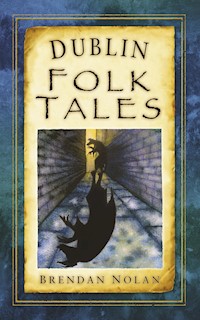
Have you heard the story of 'Bang Bang' Dudley, who roamed the streets of Dublin shooting anyone who caught his eye? Or of 'Lugs' Brannigan, the city's most famous detective? Do you know who the real Molly Malone was, or the story of Marsh's Library, or how the devil himself came to the Hellfire Club? These and many more accounts of Dubliners and Dublin City fill this book, as told by Brendan Nolan, a professional storyteller who has been recording these tales for decades. These are the stories of real Dublin, the stories that are passed from generation to generation and which give this city its unique character. To know Dublin is to know these characters, these stories, and the legends which have grown up around them.
Das E-Book können Sie in Legimi-Apps oder einer beliebigen App lesen, die das folgende Format unterstützen:
Veröffentlichungsjahr: 2011
Ähnliche
















For Rory and Kevin; sons and brothers both.
CONTENTS
Title Page
Dedication
Acknowledgements
Introduction
1 The Pig-woman of Dublin
2 Sack-’em-Ups
3 Blood Field
4 Two Mammies and a Pope
5 The Ha’penny Bridge
6 Billy-in-the-Bowl
7 Matt Talbot’s Bed
8 Archbishop O’Hurley becomes a Ghost
9 Sheridan Le Fanu’s Ghosts of Chapelizod
10 Revd Jackson Dead in the Dock for a Day
11 St Valentine
12 Molly Malone
13 Wakes and Headless Coachmen
14 Shoes
15 Bang Bang
16 Robbing the Guests
17 Wigs Away
18 Honeymoons
19 Television Thieves
20 The Dolocher
21 The Ajax Dog
22 Little John in Dublin
23 Ireland’s Eye Tragedy
24 Dead Cat Bounce
25 Phoenix Park, North Strand Bombing
26 Marsh’s Library and the Runaway Teenager
27 Fits Man
28 Holy Coal
29 Lugs Brannigan
30 Christmas Cooking
31 The Hellfire Club
Copyright
ACKNOWLEDGEMENTS
Thanks to Jack Lynch, master storyteller; Mike Savage; Alan Fitzpatrick; Greg Kenny; David Spain; John Byrne; Jimmy Hickey and Marian Butler, for their help and encouragement; not forgetting my researchers Rita, Rachel, Josh, Holly and Leo.
INTRODUCTION
It is very hard to be a storyteller in Dublin for everyone has a story to tell if you will but listen.
It is not long since Dublin was more of a large town than a city. Most people will know something about the background of any story you choose to tell. Even if they do not know someone in a story, they will know his sister-in-law’s friend from down the road, or perhaps their cousin played football against him fourteen years ago come February next. And they lost by one goal in extra time. And they are still blaming the referee for defeat. So, if you are adding colour to a story you must be careful to disguise the characters very well.
Stories are never told the same way twice. The core of the story remains the same but the teller adapts the story for the listener instead of reciting an ancient tale as if it was written in stone, with not a pebble out of place or of a different hue to the original.
Mostly, storytelling is about telling a story well so that both listener and teller create the story together. The role of the storyteller is that of entertainer, historian, philosopher, healer and soothsayer all rolled into one. If you tell a story well, it becomes a real and living tale even if the characters lived thousands of years ago. I have told old stories about real people, only to have someone come to me afterwards to whisper a question asking if I was really talking about Peter, or Paul, or maybe even Mary, when I called the character Dermot. Very few ever identify the real person, and I never, ever confirm anything, for I will tell the story somewhere else to another audience. Next time, I will change it again in some little way.
I tell stories in live settings, to audiences ranging from just two to many hundreds of people, stretching away into the darkness of a theatre, conference hall or festival. I tell stories on radio, online on my website www.brendannolan.ie and in books.
This collection of stories are written, so in that sense, I cannot change them for you when next you read them; but if you happen to re-tell them, you are free to play with the details of the story, so long as you stay true to the core of the tale. For that is the pact between teller and listener: the teller tells true.
In this collection, you have the story of the Pig-woman of Dublin and how she endowed a hospital despite mad rumours about her features, you have the story of the grave robbers stealing bodies for re-sale, the story of the Blood Field linking a battle from a thousand years ago to very real hauntings of today and the story of two Mammies and a Pope about the time the Pope came to Dublin to tell his stories to a million people at a time.
Characters abound in these tales and you will recognise in the older ones the antecedents of today’s street chancers and charmers. We hear how two tinkers bested a toll taker on Ha’penny Bridge and how the legless Billy-in-the-Bowl seduced his victims so he could rob and kill them. You will read also of the neighbour of Blessed Matt Talbot, who sold bits of the dead man’s bed until there was no more to be had and then produced an unending supply of relics for sale. A seventeenth-century archbishop returns as a ghost after he is publicly hanged and another clergyman is left sitting in the dock for a day after he died because he expired before the judge could sentence him to death. We try to understand how a man could successfully propose marriage to the wrong woman on St Valentine’s Day and we wonder just who Molly Malone really was. Wakes and headless coachmen and the quaint customs of honeymooners are all here, including the tragic story of the newlyweds who appeared on the street the following morning to violently attack one another with their new matching hatchets. How a boy negotiated a new pair of shoes after losing one shoe in the river is told here for the first time. Dublin characters Bang Bang, an adult child who shot everyone he met with a large key, and Detective Lugs Brannigan who did his best not to be shot by real crooks with real guns are both here. There is the story of the landlady who actively robbed from her guests while charging them for overnight accommodation and the tale of the television thieves that were unmasked by their dog is told along with the story of the phantom dog of St Patrick’s Cathedral. How a married man came to be wearing a green wig while pursuing his girlfriend down Temple Bar is included as is the routing of post office thieves at Christmas by a loaded mother with a gun. The story of Marsh’s Library and the runaway teenager is told here, as is the legend of the Holy Coal and the miracle of the woman that walked after years in bed. They say that Little John of Sherwood Forest was hanged in Dublin and we recount that story so you may make up your own mind. You can wonder at the soundness of the verdict in the case that became known as the Ireland’s Eye Tragedy and you can wonder at the strange lives of cats in Dead Cat Bounce. Stories from real Dubliners caught up in the Phoenix Park and North Strand bombings are included as is the story of the man that had a few fits too many in the local baker’s shop. Another cat appears in the story of Dublin’s Hellfire Club, only this time he is the devil. Or, so they say!
You must make up your own mind, for as always, the devil is in the detail of a story well told.
1
THE PIG-WOMANOF DUBLIN
It is hard to shake a story off when people believe it to be true. They tell others, who tell others, and so on, until the whole world gets to hear it. It happened to one lady in Dublin. No matter what she did or said, it became common belief that, while she was born unblemished in form and from fine stock, she bore the head of a pig.
Dr Steevens’ Hospital used to be a major city hospital that catered for the needs of the local population living out along the roads to the west. It was located beside Heuston station and a short distance from Phoenix Park, the Zoological Gardens and the Hibernian Military School. It was a busy place at its height and stories are often told about places where people gather.
It was believed that the mother of its founder had given birth to a baby girl that bore a pig’s head. It was also known that the hospital’s benefactor was that afflicted child, grown to womanhood and a life of seclusion within the hospital. At least, local folklore said it was so.
Small children heard this story from larger children who heard them from older children and from young adults. And if a parent or grandparent was asked for provenance they would nod and say, ‘So I have heard.’ Such a generational imprimatur was powerful and resulted in the place being avoided at all costs. Not an easy choice if you faced a medical emergency in the days of rudimentary medical care when surgeons still opened stolen cadavers to learn how the body worked.
Who wanted to say the stories were not true? For who would wish to encounter a human being with a pig’s head on a dark Dublin street when weak lamps flickered and shadows danced in between? How would you reason your way out of harm with such a creature? You might run away in daylight, but at night, who was to say what could happen if you stumbled in flight or if the stranger proved to be swifter of foot?
Folk tales and stories travelled from place to place and between the seventeenth and nineteenth centuries a rumour spread across Europe that a number of girls in different places had been born with a normal body but with the head of a swine. That each was of a wealthy family added wonder to the tale. The belief is said to have begun with the story of a pig-faced bride who was offered a choice: to appear to be ugly to her new husband and beautiful to everyone else, or ugly to others and beautiful to her husband. Witchcraft was said to have been involved in the physical appearance of the woman.
She chose to appear best to her husband because he had chosen her while she was afflicted with porcine features, not for her wealth or standing, but for her intrinsic beauty. In time, it being such a heart-warming story, the witchcraft element fell away and the story was presented as triumph over adversity and as good receiving its reward. It was only a short step from a folk tale of witchcraft to a definite narrative about specific individuals.
Typically, the affected child would grow up with some of the characteristics of a pig. She would eat from a trough (which would be made of silver, however, to show there was a difference between her and a real pig) and she would speak with a grunting sound. She would stand to inherit a large fortune, but her parents would be concerned for her wellbeing, following their death. They would try to make arrangements to find a man willing to marry her and to care for her in their stead or they would use their fortune to endow a hospital on condition that the hospital take care of her for the remainder of her unmarried life.
In Dublin, this story settled on the unwilling person of the philanthropist Griselda Steevens who lived in the second half of the seventeenth century and the first half of the eighteenth century. Her twin brother Richard was a doctor who pre-deceased Griselda by some thirty years. The family was wealthy with an income assured from various non-medical interests. Richard’s will stipulated that on the death of his twin, the family income was to be used to provide a hospital for the poor of Dublin.
Although Dr Steevens’ will stated that work on the hospital would not begin until Griselda’s death, she ordered that work commence before her death in 1720, keeping back only sufficient funds for her own keeping. Her sole condition was that she would be granted apartments in the hospital in which to live out her days.
Despite being a philanthropist and almsgiver to the poor and needy, Griselda became the focus of the pig-woman story. A gargoyle above the entrance of the hospital was offered as material proof of the story. It peered down, it was solemnly stated, not to protect the hospital from malevolent fortune, but to remind all that refusing alms to a street person was not wise if you wanted your own family to remain healthy.
Griselda’s mother was said to have answered the door to a beggar woman while pregnant with the twins. According to Dublin lore, which closely matched the European stories, the pregnant mother told the beggar woman who was seeking help for her children to go away from her door. More specifically, she was reported to have said the woman should take away her litter of pigs from her door. This shocking demand was rewarded with a curse, placed on her by the poor woman, that the child in her womb would be born a pig. The result was that Griselda was born with the face and head of a pig, as a punishment to her mother. Somehow or another, the second child in her womb escaped this curse.
In fact, Griselda did indeed have a medical condition which manifested itself as she grew older. She was said to have had suffered from a disorder of the eyes, that caused her to wear a veil while in daylight to protect her eyes from strong light. She wore the veil even when passing through the gardens of the hospital she had funded. Her sartorial style reinforced the belief that she was so ugly she could not bear that anyone might gaze upon her.
The unfortunate Griselda, aware of such reports, began sitting on an open balcony to allow passers-by to see her perfectly normal face, albeit with a distressing condition of the eyes to contend with. Failing to counter the persistent story, Griselda commissioned a portrait of herself in her finery and had it hung in the main hall of the hospital to show she was a perfectly normal being, complete in all relevant parts. Even so, most people preferred a portrait hanging in a neighbouring pub which showed Griselda with a pig’s head. That there were similar portraits of pig-women hanging in other European cities made no difference to the Dublin story. Griselda passed away on 18 March 1746, at the fine age of ninety-three but the story of her supposed affliction remains on the streets of Dublin to this day.
In 1865, more than a hundred years later, the story was strong enough for Sheridan Le Fanu to use it in his novel Uncle Silas, the story of Maud Ruthyn, a wealthy heiress who lives in a secluded house. Numerous men desire to marry her to secure her money. Nothing unusual in that for a novel device, but the book includes a Bretagne ballad, believed to be the work of Le Fanu himself, about a pig-faced woman, told to Maud by her governess Madame de la Rougierre.
This lady was neither pig nor maid,
And so she was not of human mould;
Not of the living nor the dead.
Her left hand and foot were warm to touch;
Her right as cold as a corpse’s flesh!
And she would sing like a funeral bell, with a ding-dong tune.
The pigs were afraid, and viewed her aloof;
And women feared her and stood afar.
She could do without sleep for a year and a day;
She could sleep like a corpse, for a month and more.
No one knew how this lady fed—
On acorns or on flesh.
Some say that she’s one of the swine-possessed,
That swam over the sea of Gennesaret.
A mongrel body and demon soul.
Some say she’s the wife of the Wandering Jew,
And broke the law for the sake of pork;
And a swinish face for a token doth bear,
That her shame is now, and her punishment coming.
Le Fanu spent the first eleven years of his life, from about 1815, living in the Hibernian Military School in the nearby Phoenix Park where his father was a minister of religion. The family and their son would certainly have known of the story of Griselda Steevens. Le Fanu published the Evening Mail, much read by the moneyed classes of Dublin. He was one of the earliest writers of Irish Gothic horror stories and recognised an intriguing story when he heard one.
Le Fanu was not alone in perpetuating the legend of the pig-faced woman of Dublin. Medical students at Dr Steevens’ Hospital in the early nineteenth century were shown a silver feeding trough, alleged to have belonged to Griselda Steevens. Even if they were displayed as students’ high jinks and pranks, it shows that belief in the story persisted in the institution formed by a philanthropist who went to a great deal of effort to prove the story of her appearance to be a false one.
Debunkers of the folk tale say there is no contemporary evidence to suggest that story was prevalent during Griselda’s lifetime: yet a folk tale endures into modern times that there lived a pig-woman in Dr Steeven’s hospital and it was Griselda. For a good story is a good story, true or no.
2
SACK-’EM-UPS
It’s hard to imagine that when you die someone may want to come along and steal your body so that surgeons in a hospital can cut you open to see how a human body functions. Such was the case in Dublin up to the nineteenth century, when medical schools were in constant need of bodies for both students and medical staff to study. Dubliners called the body-snatchers Sack-’em-Ups.
The 1752 Murder Act stipulated that only corpses of executed murderers could be used for dissection. However, the thirst for knowledge meant that the supply of bodies of hanged criminals could not meet the demand. Before the invention of refrigeration, bodies decayed very quickly and became unsuitable for study. As a result, the medical profession turned to body-snatchers to supply corpses fresh enough to be examined. Such was the demand across the two islands that Dublin bodies were often exported to Britain, as swiftly as possible.
The offence was treated only as a misdemeanour and the penalty for being caught was not onerous. High return at low risk meant that many people took up the trade of grave robber across Britain and Ireland. Such was the case until the Anatomy Act of 1832 changed the gravity of the crime while also leading to a wider selection of potential sources. The act gave physicians, surgeons and students legal access to corpses that were unclaimed after death, in particular those who died in prison or the workhouse. But the practice of grave robbing continued in Dublin, for some time.
In 1842, five watch towers were erected in Glasnevin cemetery and bloodhounds were used to patrol the cemetery at night to deter the theft of newly buried bodies. On the other side of the city, Malachi Horan, the storyteller, related an account of how a mother’s body was stolen on her first night in the ground, in Saggart. Her adult son was so upset at what he saw as his failure to guard her body that he neither ate, drank nor slept for three days or nights, after which he expired himself. His neighbours were so angry at the needless suffering of the son and the theft of his mother’s body that they mounted an armed guard on his grave through the nights that followed. It was the practice of the Sack-’em-Ups to pay local informants for news of fresh internments. No doubt, they soon heard of their pending good fortune in extracting two bodies from one grave.
The watchers’ patience and diligence were rewarded when the Sack-’em-Ups began to dig in darkness in the silent Saggart graveyard. The watching men, once they were sure of their target, fired a volley into the shadowy Sack-’em-Ups. One was shot dead and fell among the graves.
He was discovered to be a medical student and son of the famous Surgeon Colles of Dr Steevens’ Hospital. Colles was a professor of anatomy, surgery and physiology, but whether he was aware of the activities of his student son, we do not know. In a strange twist to the story, Colles is said to have been the only man knowledgeable enough to save the boxer Dan Donnelly’s arm from amputation following injuries sustained in a street fight with some sailors when Donnelly protected a woman they were attacking in a side street. Donnelly, in turn, was to be a victim of the Sack-’em-Ups himself when he died and was interred.
To this day, Dr Steevens’ hospital is known to Dubliners as the ‘Butchers’ Hospital’. It’s an appellation that is not so much a comment on the quality of its medical care as an old description of its staff and their practices. The hospital lies not far from the Bully’s Acre at Kilmainham. The site was a communal burial ground and was easily accessed.
Heinous as their crimes were, grave robbers or Sack-’em-Ups were not murderers, though they dealt in death. Some people called them Resurrectionists because they hauled out the bodies from the grave and re-integrated them into society; even if the dead person’s participation was not as active as it been prior to their demise.
There was no financial charge levied to be buried in Bully’s Acre. Many of the city’s poor were buried there, though no one seems to know how many bodies were interred there for few records were kept but there were many and they were the poorest of the people. During the cholera epidemic of 1832, thousands of people’s remains were buried, as expeditiously as possible, in Bully’s Acre. The burial ground at Kilmainham was a prime target of the Sack-’em-Ups. They would come with wooden shovels, ropes and hooks to haul the recently dead from the ground, out to the road, and onto a horse and cart for taking away to a no-questions-asked medical client. Their horses were shod with leather to quieten their step in the dead of night. For if the crime was a misdemeanour in the eyes of the law it was a scurrilous act to the bereaved who would act decisively against any grave robbers they could find.
In Irish winters a heavy cotamore coat that reached the ankles was worn by those that worked outdoors. Attached to it was a cape and beneath the coat were corduroy or moleskin breeches above grey stockings. The Sack-’em-Ups were dressed thus when they entered the burial grounds in search of new cadavers; their very appearance creating fear in any beholders foolish enough to be out in the darkness of a graveyard when body-snatchers were on the move.
Mostly they worked on information supplied by informants; but if the thieves failed to find a suitable body they could take away teeth from the dead, as an alternative reward for effort. A set of good teeth could command a pound at a time when there were four farthings to a penny and 240 pennies to a pound. Many items that the poor purchased were priced at a farthing, so a set of teeth could be a valuable item, whatever about their new owner being aware of their provenance.
To retrieve entire bodies, the Sack-’em-Ups dug at the head of a fresh grave to get at the new body. They quietened their handiwork by using a wooden spade that made less noise than its metal equivalent if any loose stones were struck. The removed soil was stacked on body-size sacks laid out on the ground in as neat a manner as darkness and weather conditions allowed.
When they reached the coffin, the thieves broke open part of the casket to expose the upper body and head of the dead person. A small person slithered down to put a rope or hook around the neck of the corpse and it was unceremoniously dragged out into the world once more. Once the body was secured above ground, the soil was tipped back into the excavation. The site was made to look as undisturbed as was possible so that the theft might not be discovered for as long as possible.
However, public and private resentment came to a head when the body of boxer Dan Donnelly was stolen from Bully’s Acre. Crowds took to the streets in anger when the news spread. Donnelly was a native of Townsend Street in the docks area of Dublin. Born in 1788, he was the ninth child of seventeen, in a time when families were large and times were hard. Dan worked as a wandering carpenter early in his adult life. But it was as a bare-knuckle boxer that he achieved fame and a degree of fortune before his death at the age of thirty-two years, in February 1820.
Boxing bouts had no time limits at the time, so that two men fought to exhaustion or victory before cheering onlookers. Donnelly’s most famous victory was against George Cooper, the heavy-weight champion of Britain, whom he beat on the Curragh of Kildare. But fame is fleeting. It is said that drinking copious amounts of cold water after a later fight killed Donnelly in the end. By then, he had failed as a pub owner several times and was broke once more.
Thousands of people turned out for his funeral and internment at Bully’s Acre. The cemetery was claimed, rightly or wrongly, to contain the grave of Brian Boru, the High King of Ireland. Donnelly was no sooner buried than his body was stolen by the Sack-’em-Ups and sold to a Dublin surgeon named Hall. But Hall was not to be in possession of the body of the people’s champion for long.
It was soon established which surgeon had paid cash on delivery for the body of Dan Donnelly, the people’s champion. Tense discussions took place between Donnelly’s followers and Hall over the body. Accepting that the remains must be returned, Hall negotiated the removal of the right arm from the body and the attached shoulder blade in order to study the muscle structure. When this was agreed, the body was re-buried in the Kilmainham graveyard with due reverence, where it lay undisturbed from then on.




