


Erhalten Sie Zugang zu diesem und mehr als 300000 Büchern ab EUR 5,99 monatlich.
- Herausgeber: Musaicum Books
- Kategorie: Gesellschafts- und Liebesromane
- Sprache: Englisch
In 'Eight Cousins & Rose in Bloom' by Louisa May Alcott, readers are transported to a charming and wholesome world where the protagonist, Rose, navigates the challenges and joys of adolescence. Alcott's narrative effortlessly blends humor, moral lessons, and heartwarming moments, making it a delightful read for both young adults and older readers. Set in the literary context of the 19th century, the book captures the essence of Victorian literature with its focus on family values, self-discovery, and coming-of-age themes. Alcott's eloquent writing style and vivid descriptions bring the characters and settings to life, captivating the reader from the very first page. Louisa May Alcott, best known for her classic novel 'Little Women,' drew inspiration from her own experiences and beliefs when writing 'Eight Cousins & Rose in Bloom.' As a committed advocate for women's rights and social reform, Alcott infused her work with progressive ideals and strong female protagonists. Her unique perspective and compassionate storytelling continue to resonate with readers today, making her a timeless literary figure. I highly recommend 'Eight Cousins & Rose in Bloom' to readers who appreciate thought-provoking literature with a heartwarming touch. Alcott's insightful portrayal of family dynamics, friendship, and personal growth makes this book a must-read for anyone looking for a moving and inspiring story. In this enriched edition, we have carefully created added value for your reading experience: - A comprehensive Introduction outlines these selected works' unifying features, themes, or stylistic evolutions. - The Author Biography highlights personal milestones and literary influences that shape the entire body of writing. - A Historical Context section situates the works in their broader era—social currents, cultural trends, and key events that underpin their creation. - A concise Synopsis (Selection) offers an accessible overview of the included texts, helping readers navigate plotlines and main ideas without revealing critical twists. - A unified Analysis examines recurring motifs and stylistic hallmarks across the collection, tying the stories together while spotlighting the different work's strengths. - Reflection questions inspire deeper contemplation of the author's overarching message, inviting readers to draw connections among different texts and relate them to modern contexts. - Lastly, our hand‐picked Memorable Quotes distill pivotal lines and turning points, serving as touchstones for the collection's central themes.
Sie lesen das E-Book in den Legimi-Apps auf:
Seitenzahl: 874
Veröffentlichungsjahr: 2017
Das E-Book (TTS) können Sie hören im Abo „Legimi Premium” in Legimi-Apps auf:
Ähnliche





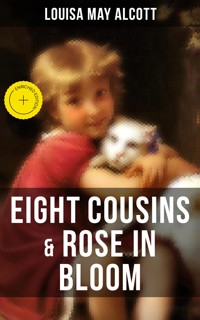
EIGHT COUSINS & ROSE IN BLOOM
Published by
Books
Table of Contents
Introduction
This collection brings together two companion novels by Louisa May Alcott: Eight Cousins; or, The Aunt-Hill and Rose in Bloom: A Sequel to Eight Cousins. Presented as a continuous reading experience, these full-length works trace the growth of a single heroine within an affectionate, bustling family circle. The purpose of gathering them is to offer readers the arc Alcott designed—a movement from early adolescence to young adulthood—within one volume, making the sequence and its thematic echoes clear. Together they represent Alcott’s domestic fiction for young readers, a genre she helped to define in nineteenth-century America, and they stand as a focused study of character, community, and conscience.
Alcott is widely recognized for her enduring contribution to American literature, especially through Little Women and its sequels. The Rose books, composed soon after, reflect her continuing interest in the moral education of youth and the everyday drama of home life. They refine many of her established concerns—industry, kindness, prudence, and self-respect—while presenting a new domestic setting and a fresh constellation of relations. The books reward first-time readers and returning admirers alike, offering a vivid example of Alcott’s gift for crafting narratives that entertain, instruct, and invite reflection without sacrificing warmth or humor.
Eight Cousins opens with Rose Campbell, a recently orphaned girl, arriving at the home informally known as the Aunt-Hill. There, several aunts preside over a large family clan, and Rose meets her seven lively boy cousins. Placed under the guardianship of her uncle Alec, a physician, she begins a course of sensible care and practical education. The novel follows Rose’s early steps toward health, good judgment, and friendship, emphasizing how affection and guidance can help a young person establish sound habits. The episodes remain close to the premises of family life and youthful discovery, avoiding grand adventures in favor of everyday trials and successes.
Rose in Bloom continues Rose’s story as she enters young womanhood and assumes a more independent place in family and society. Returning to the familiar circle of aunts and cousins, she faces the ordinary, pressing questions of adult life: how to employ time and means wisely, how to use influence well, and how to keep faith with earlier ideals. The sequel explores the challenges and opportunities that accompany maturity, maintaining a domestic canvas while expanding the social horizon. It remains true to the initial premise—character formed in community—while presenting new tests of patience, purpose, and discernment.
Across both novels, Alcott develops unifying themes rooted in growth, responsibility, and affection. She stresses the value of education that engages the whole person: mind trained by reading and observation, body strengthened by fresh air and exercise, and conscience formed by daily acts of fairness and generosity. The books promote steadiness over display, usefulness over novelty, and mutual care over solitary ambition. Yet the didactic elements are balanced by play, wit, and an appreciation for youthful high spirits. The result is an ethical vision that is hospitable and practical, grounded in small choices that gradually shape a life.
The novels also consider the social expectations placed upon girls and boys in their time, presenting alternatives to narrow standards. Rose learns to measure herself by capability and kindness rather than fashion or flattery, and the boys are encouraged to connect energy with purpose. Questions of work, charity, and class appear through friendships that cross household boundaries, most notably in Rose’s bond with Phebe, a diligent young worker in the family’s orbit. Alcott does not suspend social realities, but she insists that loyalty, respect, and shared effort can open paths to personal dignity and communal flourishing.
Stylistically, Alcott’s hallmarks are evident: brisk, episodic chapters; a conversational narrator who nudges without scolding; and an ensemble cast animated by lively dialogue. Domestic interiors, schoolroom moments, and occasional outings furnish settings that highlight character rather than spectacle. Humor arises from mischief, misunderstandings, and the affectionate teasing of relatives who know each other well. While the tone is gently instructive, the novels value spontaneity and pleasure, encouraging readers to see morality not as a burden but as a source of freedom, contentment, and genuine companionship.
In terms of genre, this collection represents Alcott’s work in the novel form, specifically domestic fiction written for young readers and their families. Unlike collections that mix poems, essays, or letters, this volume is unified by narrative prose that follows a single heroine over time. The coherence of character and setting allows Alcott to return to questions first posed in youth and answer them in early adulthood, achieving a continuity that stand-alone tales cannot provide. Readers encounter not fragments but a sustained story that illustrates how principles tested in childhood can inform choices in the years that follow.
First issued in the 1870s—Eight Cousins in 1875 and Rose in Bloom in 1876—the novels belong to a fertile phase of Alcott’s career, when she was elaborating a body of juvenile fiction that spoke directly to contemporary households. Their publication in close succession underscores the author’s commitment to portraying development across phases of life. Read together, they reveal deliberate sequencing: the first volume establishes a household, its habits, and its hopes; the second revisits that circle to consider how those early investments bear fruit under new circumstances and pressures.
The lasting significance of these works rests in their humane portrayal of adolescence and early adulthood. Alcott offers a model of guardianship that fosters autonomy, an account of kinship that makes room for difference, and a picture of success measured by integrity rather than display. The novels also preserve details of nineteenth-century American domestic culture—festivals, studies, routines—that provide context without overwhelming the story. For generations of readers, they have offered encouragement to cultivate steadiness, empathy, and a sense of responsibility toward others while finding joy in honest work and honest play.
Bringing Eight Cousins and Rose in Bloom together clarifies Alcott’s experiment in serial character-building outside the better-known March family books. Rose Campbell’s journey forms a complementary strand in the author’s oeuvre, demonstrating how similar principles may unfold within a different family structure and set of personalities. The continuity illuminates Alcott’s method: establish a moral vocabulary in youth, return to it later, and ask what remains, what changes, and why. This arrangement invites readers to trace patterns across both novels and to appreciate the author’s patient, cumulative approach to storytelling.
Readers approaching this collection will find accessible narratives that reward reflection without requiring specialized knowledge. The language is clear, the plots are grounded in everyday life, and the moral questions emerge naturally from familiar situations. At the same time, the books gain depth when read with attention to historical context—especially the period’s ideas about health, education, and gender roles. Taken together, these novels display Louisa May Alcott’s enduring strengths: sympathy for the young, confidence in the power of family and friendship, and a belief that character, steadily cultivated, can indeed come into bloom.
Author Biography
Louisa May Alcott (1832–1888) was an American author whose fiction helped shape the emerging field of literature for young readers in the nineteenth century. Writing from New England during and after the U.S. Civil War, she brought together moral reflection, brisk plotting, and a pragmatic understanding of work and social responsibility. While she is widely associated with domestic narratives that center on growth and character, her range included sketches and essays grounded in lived experience. The novels Eight Cousins; or, The Aunt-Hill and its sequel, Rose in Bloom, exemplify her focus on education, health, and ethical independence, themes that continue to engage readers across generations.
Alcott’s education was eclectic, shaped by New England classrooms, extensive reading, and direct exposure to the intellectual life of Concord, Massachusetts. She encountered the Transcendentalist emphasis on self-culture, conscience, and the moral uses of literature, taking cues from the writings and example of figures such as Ralph Waldo Emerson and Henry David Thoreau. Informal study in languages, history, and natural observation, paired with practical work, gave her writing both bookish breadth and tactile immediacy. Encounters with lecturers, reformers, and local naturalists reinforced habits of journal-keeping and close description. This combination of autodidactic rigor and public influence prepared her to write convincingly about character.
Alcott began publishing stories and poems in newspapers and magazines in the 1850s, testing popular tastes while refining a clear, candid prose style. During the U.S. Civil War she volunteered as a nurse in a Washington, D.C., hospital, an experience she transformed into Hospital Sketches, a collection that mingles observation, humor, and critique of chaotic systems. The book established her public voice as sympathetic yet unsentimental, attentive to ordinary dignity and to the strains placed on individuals by large events. That stance would inform her subsequent fiction for young readers, where the pressures of illness, work, and responsibility are treated honestly.
Her wider fame arrived with Little Women, which reshaped expectations for American juvenile fiction by valuing everyday striving over melodramatic extravagance. The success enabled sustained work for the press and the book market, where she developed cycles that follow young protagonists into maturity. Within this broad project, she experimented with settings, occupations, and moral tests that reflect contemporary debates over education, dress, and the social uses of wealth. Eight Cousins, appearing in the mid-1870s, concentrates these concerns in a domestic milieu structured by guardianship, experiment, and affection, placing healthful living and purposeful study at its center.
Eight Cousins and its sequel, Rose in Bloom, outline a pedagogy of freedom under guidance. In the first, a ward’s circle of cousins and elders models an extended community that prizes robust health, practical skills, and equitable relations between girls and boys; the narrative affirms reforms such as sensible clothing and exercise without sermonizing. The sequel, set as the heroine steps into adult responsibilities, weighs philanthropy, industry, and prudent pleasure against glittering but shallow alternatives. Throughout both novels, Alcott treats education as a lifelong practice, linking economic independence with ethical self-possession. Readers and reviewers have long noted their brisk humor and steady moral clarity.
Alcott’s public commitments were consistent with the moral program of her fiction. She supported abolition and later endorsed women’s suffrage, viewing civic participation and self-reliance as mutually reinforcing. Her portrayals of work, charity, and self-discipline—central to Eight Cousins and Rose in Bloom—present reform not as abstract doctrine but as daily habit. Professionally, she treated authorship as labor, producing for periodicals and books to sustain herself and those close to her. The disciplined schedule this required sharpened her sense of time, thrift, and purpose in the lives of young characters, and it helped align her stories with the realities of a changing nation.
Through the late 1870s and 1880s, Alcott balanced popular demand with recurring health problems, continuing to publish fiction and essays while managing correspondence with a broad readership. She died in 1888, leaving a body of work that remains widely read and frequently adapted. Her legacy in children’s and young adult literature rests on a frank respect for young minds and on narratives that tie liberty to responsibility. Eight Cousins and Rose in Bloom, in particular, continue to inform conversations about gender expectations, education, and the ethics of wealth. They endure as approachable, spirited studies of how character is built in community.
Historical Context
Louisa May Alcott wrote Eight Cousins (1875) and Rose in Bloom (1876) after the success of Little Women (1868–69) had established her as a leading American author for young readers. Composed in the post–Civil War decades, these novels reflect the concerns of Reconstruction-era New England and the early Gilded Age. Alcott’s audience included a rising middle class eager for morally serious yet entertaining domestic fiction. Set largely around Boston, the books trace a girl’s passage from orphaned ward to socially engaged young woman. Their didactic aims are explicit but leavened by humor, family affection, and an insistence on education, health, and ethical self-command.
The novels emerged while the United States navigated Reconstruction (1865–1877) and rapid industrial growth. These upheavals intensified debates about citizenship, class formation, and the duties of wealth. Boston, a port and intellectual center, housed professional and mercantile families whose fortunes reflected national expansion and global trade. Alcott sets Rose amid an extended clan typical of New England respectability, letting readers observe domestic governance, business anxieties, and generational friction. The texts repeatedly contrast prudent enterprise and service with conspicuous leisure. Their mild satire of fashionable society and insistence on useful occupation reveal an ethic shaped by antebellum republican ideals adapted to Gilded Age realities.
Alcott’s Transcendentalist upbringing powerfully informed the series. Her father, A. Bronson Alcott, was a reformist educator, and the family’s Concord circle included Ralph Waldo Emerson and Henry David Thoreau. Earlier experiments such as the Fruitlands community (1843–44) and conversations on self-culture fostered habits of simplicity, introspection, and moral striving. In Eight Cousins and Rose in Bloom, this heritage appears in the elevation of character over status, the critique of idle consumerism, and the promotion of experience-based learning. The novels avoid theological dogma, yet they transmit a distinctly New England faith in self-improvement, conscience, and benevolence rooted in Transcendentalist and liberal religious currents.
Women’s rights activism provides an essential backdrop. Mid-nineteenth-century Married Women’s Property Acts in many states, including Massachusetts (with key reforms beginning in the 1840s–50s), expanded wives’ control over earnings and inheritances. National suffrage organizations—the National Woman Suffrage Association and the American Woman Suffrage Association—were founded in 1869. Alcott herself advocated for women’s civic participation and, in 1879, became the first woman to register to vote in Concord’s school committee elections after Massachusetts permitted limited school suffrage. The novels’ emphasis on a young woman’s education, prudence with wealth, and freedom to choose marriage or philanthropic work mirrors these incremental legal and political gains.
Educational reform shaped both plot and pedagogy. Nineteenth-century New England, influenced by Horace Mann and other common-school advocates, promoted schooling as a route to republican virtue. Concurrently, a movement for physical culture—calisthenics, open air, and gymnastics—gained ground in schools and women’s seminaries. Eight Cousins foregrounds a guardian who reorganizes a girl’s studies around health, practical skills, and moral judgment rather than rote accomplishments. The extended family becomes a laboratory for coeducation in manners and mind, reflecting period debates over curricula, the place of modern languages and science, and the value of supervised leisure as part of responsible upbringing.
Health reform is everywhere in Eight Cousins. Mid-century Americans disputed the merits of regular medicine, homeopathy, hydropathy, and various patent remedies, while new hygienic ideas spread through newspapers and lectures. Dress reform advocates criticized tightlacing and heavy garments that impeded breathing and movement. Alcott, familiar with reformist circles and medical practices through experience and reading, dramatizes a physician-guardian who prescribes fresh air, sensible clothing, moderation, and exercise. These choices echo contemporary campaigns for temperance in diet and the “rational dress” movement, anticipating later public-health emphases on prevention, hygiene, and balanced living for the middle-class household.
Temperance activism gives Rose in Bloom much of its moral energy. The Woman’s Christian Temperance Union formed in 1874, organizing women nationwide to combat alcohol’s social harms through persuasion, pledges, and political advocacy. Cities like Boston hosted clubs and entertainments where drinking marked fashionable masculinity, and newspapers frequently reported on intemperance and debt among young men. Alcott situates her heroine within this contested social world, contrasting convivial indulgence with disciplined self-respect. The narrative’s warnings align with temperance literature of the era, yet it privileges reform through affection and example rather than punitive melodrama, thereby suiting the expectations of family readers.
Philanthropy and civic responsibility had distinct postwar trajectories. After 1865, relief for veterans, widows, and orphans expanded, while voluntary associations professionalized charity through organizations, fairs, and visiting societies. Women’s benevolent work—sewing circles, hospital aid, educational sponsorships—became respectable avenues for leadership. Rose’s preparation for adulthood includes learning to give wisely, to distinguish display from service, and to use leisure for public good. This reflects a broader moral economy in which wealth called for stewardship. The novels valorize philanthropy not as mere charity but as character formation, aligning with Protestant reform traditions prominent in Boston and beyond.
Industrialization and consumer culture altered daily life. Department stores, mass-produced clothing, illustrated magazines, and urban amusements offered new avenues for identity and display. Middle-class Americans debated the moral effects of shopping and spectacle, worrying that fashionable entertainments could erode diligence and domestic affection. In both novels, social outings, dances, and purchases are measured against ideals of simplicity and purpose. Alcott’s criticism is gentle but pointed, steering readers toward restraint and thoughtful consumption. The books thus register the tensions of the early Gilded Age—novel pleasures beckoning a youthful elite, countered by inherited republican and reformist scruples.
Family law and guardianship practices contextualize Rose’s situation as an orphaned heiress. Nineteenth-century courts commonly appointed male relatives as guardians of minors’ estates, with female kin taking on day-to-day care. Such arrangements reflected legal assumptions about paternal authority and the public/private division of labor. The Aunt-Hill—an affectionate portrait of widowed or married aunts—captures women’s central role in domestic moral education, even when formal legal control rested with men. The novels stage debates over supervision, propriety, and chaperonage that were widespread in middle-class households, especially when a young woman’s inheritance magnified social pressures and expectations.
The series also participates in conversations about class and work. As the United States shifted from agrarian republican ideals to corporate capitalism, elites experimented with new codes of masculine achievement: professional expertise, scientific curiosity, or disciplined commerce. Alcott contrasts idleness with vocation, advising privileged youth to seek useful, honest labor. The cousins’ varied talents and ambitions allow the narrative to test professions and temperaments without descending into caricature. This emphasis echoes contemporary conduct literature, which urged prosperous families to cultivate competence and public spirit, lest inherited wealth foster dependency and moral drift.
Scientific enthusiasm during the period informs character formation. Popular science lectures, mechanics’ institutes, and periodicals spread accessible knowledge of physiology, botany, physics, and natural history. Many New England households kept cabinets of curiosities and subscribed to magazines that translated European discoveries for lay audiences. Within this climate, the novels treat study as pleasurable and socially beneficial. Interests in anatomy, natural observation, or experimental tinkering are cast as antidotes to frivolity, consistent with a postbellum faith that disciplined inquiry would sustain national progress and provide respectable outlets for youthful energy.
Mobility and global awareness expanded through railroads and steamships in the mid-nineteenth century. New England families increasingly traveled for business, health, or education, and physicians circulated ideas across Atlantic networks. In Eight Cousins, the guardian’s medical expertise and experience abroad exemplify this mobility and cosmopolitanism. Imported fashions, foreign travel, and the allure of “European” polish appear as temptations or opportunities within the story world. Alcott registers the era’s fascination with international styles while urging a characteristically New England balance between cosmopolitan curiosity and fidelity to local obligations.
The literary marketplace of the 1870s favored domestic narratives that combined instruction with lively incident. Boston’s Roberts Brothers published Alcott’s major juvenile works, marketing them to families who valued readable morality. Eight Cousins and Rose in Bloom adapt conventions of the family saga—birthdays, holidays, mishaps, reforms—into serial ethical lessons without heavy doctrinalism. Alcott’s earlier forays into sensational fiction sharpened her pacing and dialogue, but here she channels suspense toward social questions: How should one spend money, time, and affection? The result aligns with a national appetite for fiction that tutored sentiment while acknowledging modern temptations.
Alcott’s Civil War experience deepened her attention to bodily vulnerability and care. In 1862 she served as a nurse in a Union hospital near Washington, D.C., and her Hospital Sketches (1863) reported candidly on medical practice, suffering, and courage. Although the Cousins novels avoid battlefield themes, they inherit a practical respect for health, cleanliness, and stoicism. The physician-guardian’s emphasis on prevention and regimen resonates with lessons drawn from wartime hospitals and home-front nursing, filtered through a tone appropriate for young readers. This connection helps explain the books’ unusual confidence in combining domesticity with medical instruction.
Religious culture undergirds the collection without sectarian insistence. In Boston and Concord, Unitarian and liberal Protestant currents emphasized moral reason, benevolence, and self-culture. Alcott’s family moved in circles that embraced abolitionism, educational reform, and women’s advancement as outworkings of conscience. In the novels, prayer and churchgoing are present but understated; the central authority is an ethical code of sympathy, discipline, and service. This orientation allowed Alcott to address a broad readership amid denominational diversity, translating New England moralism into a flexible program for modern household life.
Contemporary readers received the novels as wholesome, clever portraits of youth confronting modernity. They were frequently reprinted, and their characters entered the broader Alcott universe cherished by families and schools. Twentieth- and twenty-first-century critics have revisited them to analyze Gilded Age gender norms, the politics of health, and the temperance narrative’s cultural work. Scholars note the texts’ negotiation between female autonomy and domestic ideals, and their portrayal of wealth as a trust. Classroom and scholarly uses often emphasize how Alcott transforms reformist discourse into scenes of everyday choice, inviting young readers to practice civic virtue at home and in society. The collection operates as commentary on its historical moment by translating Reconstruction-era debates—about women’s agency, health practices, class duty, and consumption—into intimate, readable plots. Eight Cousins frames the educational and bodily reforms suited to a protected girl’s entrance into society; Rose in Bloom tests those ideals against postwar urban temptations and philanthropic opportunities. Later audiences have alternately prized the books’ moral clarity and interrogated their limits, reading them as artifacts of New England liberalism and as enduring meditations on how privilege can be turned toward public good.
Synopsis (Selection)
Eight Cousins; or, The Aunt-Hill
When recently orphaned Rose Campbell comes to live among her seven aunts and lively boy cousins, she falls under the unconventional guardianship of her doctor-uncle. Through experiments in healthful living, practical study, and outdoor play, Rose learns to balance independence, kindness, and social duty while reshaping family expectations for girls. The tone blends cozy domestic comedy with clear moral instruction, emphasizing education, reform-minded habits, and the sustaining warmth of kinship.
Rose in Bloom: A Sequel to Eight Cousins
Returning home as a young woman, Rose enters society and must decide how to use her fortune, affections, and influence without losing the principles she was taught. As cousins and friends face ambition, temptation, and setbacks, she tests generosity and resolve through work, philanthropy, and carefully considered attachments. The sequel deepens the first book’s themes with a more reflective, reformist tone—highlighting temperance, responsibility, and women’s agency—while preserving Alcott’s humor, sentiment, and clear-eyed guidance.
EIGHT COUSINS & ROSE IN BLOOM
Eight Cousins; or, The Aunt-Hill
Preface
The Author is quite aware of the defects of this little story, many of which were unavoidable, as it first appeared serially. But, as Uncle Alec's experiment was intended to amuse the young folks, rather than suggest educational improvements for the consideration of the elders, she trusts that these shortcomings will be overlooked by the friends of the Eight Cousins, and she will try to make amends in a second volume, which shall attempt to show The Rose in Bloom.
L.M.A.
Chapter 1—Two Girls
Rose sat all alone in the big best parlor, with her little handkerchief laid ready to catch the first tear, for she was thinking of her troubles, and a shower was expected. She had retired to this room as a good place in which to be miserable; for it was dark and still, full of ancient furniture, sombre curtains, and hung all around with portraits of solemn old gentlemen in wigs, severe-nosed ladies in top-heavy caps, and staring children in little bob-tailed coats or short-waisted frocks. It was an excellent place for woe; and the fitful spring rain that pattered on the window-pane seemed to sob, "Cry away: I'm with you."
Rose really did have some cause to be sad; for she had no mother, and had lately lost her father also, which left her no home but this with her great-aunts. She had been with them only a week, and, though the dear old ladies had tried their best to make her happy, they had not succeeded very well, for she was unlike any child they had ever seen, and they felt very much as if they had the care of a low-spirited butterfly.
They had given her the freedom of the house, and for a day or two she had amused herself roaming all over it, for it was a capital old mansion, and was full of all manner of odd nooks, charming rooms, and mysterious passages. Windows broke out in unexpected places, little balconies overhung the garden most romantically, and there was a long upper hall full of curiosities from all parts of the world; for the Campbells had been sea-captains for generations.
Aunt Plenty had even allowed Rose to rummage in her great china closet a spicy retreat, rich in all the "goodies" that children love; but Rose seemed to care little for these toothsome temptations; and when that hope failed, Aunt Plenty gave up in despair.
Gentle Aunt Peace had tried all sorts of pretty needle-work, and planned a doll's wardrobe that would have won the heart of even an older child. But Rose took little interest in pink satin hats and tiny hose, though she sewed dutifully till her aunt caught her wiping tears away with the train of a wedding-dress, and that discovery put an end to the sewing society.
Then both old ladies put their heads together and picked out the model child of the neighbourhood to come and play with their niece. But Ariadne Blish was the worst failure of all, for Rose could not bear the sight of her, and said she was so like a wax doll she longed to give her a pinch and see if she would squeak. So prim little Ariadne was sent home, and the exhausted aunties left Rose to her own devices for a day or two.
Bad weather and a cold kept her in-doors, and she spent most of her time in the library where her father's books were stored. Here she read a great deal, cried a little, and dreamed many of the innocent bright dreams in which imaginative children find such comfort and delight. This suited her better than anything else, but it was not good for her, and she grew pale, heavy-eyed and listless, though Aunt Plenty gave her iron enough to make a cooking-stove, and Aunt Peace petted her like a poodle.
Seeing this, the poor aunties racked their brains for a new amusement and determined to venture a bold stroke, though not very hopeful of its success. They said nothing to Rose about their plan for this Saturday afternoon, but let her alone till the time came for the grand surprise, little dreaming that the odd child would find pleasure for herself in a most unexpected quarter.
Before she had time to squeeze out a single tear a sound broke the stillness, making her prick up her ears. It was only the soft twitter of a bird, but it seemed to be a peculiarly gifted bird, for while she listened the soft twitter changed to a lively whistle, then a trill, a coo, a chirp, and ended in a musical mixture of all the notes, as if the bird burst out laughing. Rose laughed also, and, forgetting her woes, jumped up, saying eagerly,
"It is a mocking-bird. Where is it?"
Running down the long hall, she peeped out at both doors, but saw nothing feathered except a draggle-tailed chicken under a burdock leaf. She listened again, and the sound seemed to be in the house. Away she went, much excited by the chase, and following the changeful song, it led her to the china-closet door.
"In there? How funny!" she said. But when she entered, not a bird appeared except the everlastingly kissing swallows on the Canton china that lined the shelves. All of a sudden Rose's face brightened, and, softly opening the slide, she peered into the kitchen. But the music had stopped, and all she saw was a girl in a blue apron scrubbing the hearth. Rose stared about her for a minute, and then asked abruptly,
"Did you hear that mocking-bird?"
"I should call it a phebe-bird," answered the girl, looking up with a twinkle in her black eyes.
"Where did it go?"
"It is here still."
"Where?"
"In my throat. Do you want to hear it?"
"Oh, yes! I'll come in." And Rose crept through the slide to the wide shelf on the other side, being too hurried and puzzled to go round by the door.
The girl wiped her hands, crossed her feet on the little island of carpet where she was stranded in a sea of soap-suds, and then, sure enough, out of her slender throat came the swallow's twitter, the robin's whistle, the blue-jay's call, the thrush's song, the wood-dove's coo, and many another familiar note, all ending as before with the musical ecstacy of a bobolink singing and swinging among the meadow grass on a bright June day.
Rose was so astonished that she nearly fell off her perch, and when the little concert was over clapped her hands delightedly.
"Oh, it was lovely! Who taught you?"
"The birds," answered the girl, with a smile, as she fell to work again.
"It is very wonderful! I can sing, but nothing half so fine as that. What is your name, please?"
"Phebe Moore."
"I've heard of phebe-birds; but I don't believe the real ones could do that," laughed Rose, adding, as she watched with interest the scattering of dabs of soft soap over the bricks, "May I stay and see you work? It is very lonely in the parlor."
"Yes, indeed, if you want to," answered Phebe, wringing out her cloth in a capable sort of way that impressed Rose very much.
"It must be fun to swash the water round and dig out the soap. I'd love to do it, only aunt wouldn't like it, I suppose," said Rose, quite taken with the new employment.
"You'd soon get tired, so you'd better keep tidy and look on."
"I suppose you help your mother a good deal?"
"I haven't got any folks."
"Why, where do you live, then?"
"I'm going to live here, I hope. Debby wants some one to help round, and I've come to try for a week."
"I hope you will stay, for it is very dull," said Rose, who had taken a sudden fancy to this girl, who sung like a bird and worked like a woman.
"Hope I shall; for I'm fifteen now, and old enough to earn my own living. You have come to stay a spell, haven't you?" asked Phebe, looking up at her guest and wondering how life could be dull to a girl who wore a silk frock, a daintily frilled apron, a pretty locket, and had her hair tied up with a velvet snood.
"Yes, I shall stay till my uncle comes. He is my guardian now, and I don't know what he will do with me. Have you a guardian?"
"My sakes, no! I was left on the poor-house steps a little mite of a baby, and Miss Rogers took a liking to me, so I've been there ever since. But she is dead now, and I take care of myself."
"How interesting! It is like Arabella Montgomery in the 'Gypsy's Child.' Did you ever read that sweet story?" asked Rose, who was fond of tales of found-lings, and had read many.
"I don't have any books to read, and all the spare time I get I run off into the woods; that rests me better than stories," answered Phebe, as she finished one job and began on another.
Rose watched her as she got out a great pan of beans to look over, and wondered how it would seem to have life all work and no play. Presently Phebe seemed to think it was her turn to ask questions, and said, wistfully,
"You've had lots of schooling, I suppose?"
"Oh, dear me, yes! I've been at boarding school nearly a year, and I'm almost dead with lessons. The more I got, the more Miss Power gave me, and I was so miserable that I 'most cried my eyes out. Papa never gave me hard things to do, and he always taught me so pleasantly I loved to study. Oh, we were so happy and so fond of one another! But now he is gone, and I am left all alone."
The tear that would not come when Rose sat waiting for it came now of its own accord two of them in fact and rolled down her cheeks, telling the tale of love and sorrow better than any words could do it.
For a minute there was no sound in the kitchen but the little daughter's sobbing and the sympathetic patter of the rain. Phebe stopped rattling her beans from one pan to another, and her eyes were full of pity as they rested on the curly head bent down on Rose's knee, for she saw that the heart under the pretty locket ached with its loss, and the dainty apron was used to dry sadder tears than any she had ever shed.
Somehow, she felt more contented with her brown calico gown and blue-checked pinafore; envy changed to compassion; and if she had dared she would have gone and hugged her afflicted guest.
Fearing that might not be considered proper, she said, in her cheery voice,
"I'm sure you ain't all alone with such a lot of folks belonging to you, and all so rich and clever. You'll be petted to pieces, Debby says, because you are the only girl in the family."
Phebe's last words made Rose smile in spite of her tears, and she looked out from behind her apron with an April face, saying in a tone of comic distress,
"That's one of my troubles! I've got six aunts, and they all want me, and I don't know any of them very well. Papa named this place the Aunt-hill, and now I see why."
Phebe laughed with her as she said encouragingly,
"Everyone calls it so, and it's a real good name, for all the Mrs. Campbells live handy by, and keep coming up to see the old ladies."
"I could stand the aunts, but there are dozens of cousins, dreadful boys all of them, and I detest boys! Some of them came to see me last Wednesday, but I was lying down, and when auntie came to call me I went under the quilt and pretended to be asleep. I shall have to see them some time, but I do dread it so." And Rose gave a shudder, for, having lived alone with her invalid father, she knew nothing of boys, and considered them a species of wild animal.
"Oh! I guess you'll like 'em. I've seen 'em flying round when they come over from the Point, sometimes in their boats and sometimes on horseback. If you like boats and horses, you'll enjoy yourself first-rate."
"But I don't! I'm afraid of horses, and boats make me ill, and I hate boys!" And poor Rose wrung her hands at the awful prospect before her. One of these horrors alone she could have borne, but all together were too much for her, and she began to think of a speedy return to the detested school.
Phebe laughed at her woe till the beans danced in the pan, but tried to comfort her by suggesting a means of relief.
"Perhaps your uncle will take you away where there ain't any boys. Debby says he is a real kind man, and always bring heaps of nice things when he comes."
"Yes, but you see that is another trouble, for I don't know Uncle Alec at all. He hardly ever came to see us, though he sent me pretty things very often. Now I belong to him, and shall have to mind him, till I am eighteen. I may not like him a bit, and I fret about it all the time."
"Well, I wouldn't borrow trouble, but have a real good time. I'm sure I should think I was in clover if I had folks and money, and nothing to do but enjoy myself," began Phebe, but got no further, for a sudden rush and tumble outside made them both jump.
"It's thunder," said Phebe.
"It's a circus!" cried Rose, who from her elevated perch had caught glimpses of a gay cart of some sort and several ponies with flying manes and tails.
The sound died away, and the girls were about to continue their confidences when old Debby appeared, looking rather cross and sleepy after her nap.
"You are wanted in the parlor, Miss Rose."
"Has anybody come?"
"Little girls shouldn't ask questions, but do as they are bid," was all Debby would answer.
"I do hope it isn't Aunt Myra; she always scares me out of my wits asking how my cough is, and groaning over me as if I was going to die," said Rose, preparing to retire the way she came, for the slide, being cut for the admission of bouncing Christmas turkeys and puddings, was plenty large enough for a slender girl.
"Guess you'll wish it was Aunt Myra when you see who has come. Don't never let me catch you coming into my kitchen that way again, or I'll shut you up in the big b'iler," growled Debby, who thought it her duty to snub children on all occasions.
Chapter 2—The Clan
Rose scrambled into the china-closet as rapidly as possible, and there refreshed herself by making faces at Debby, while she settled her plumage and screwed up her courage. Then she crept softly down the hall and peeped into the parlor. No one appeared, and all was so still she felt sure the company was upstairs. So she skipped boldly through the half-open folding-doors, to behold on the other side a sight that nearly took her breath away.
Seven boys stood in a row all ages, all sizes, all yellow-haired and blue-eyed, all in full Scotch costume, and all smiling, nodding, and saying as with one voice, "How are you, cousin?"
Rose gave a little gasp, and looked wildly about her as if ready to fly, for fear magnified the seven and the room seemed full of boys. Before she could run, however, the tallest lad stepped out of the line, saying pleasantly,
"Don't be frightened. This is the Clan come to welcome you; and I'm the chief, Archie, at your service."
He held out his hand as he spoke, and Rose timidly put her own into a brown paw, which closed over the white morsel and held it as the chief continued his introductions.
"We came in full rig, for we always turn out in style on grand occasions. Hope you like it. Now I'll tell you who these chaps are, and then we shall be all right. This big one is Prince Charlie, Aunt Clara's boy. She has but one, so he is an extra good one. This old fellow is Mac, the bookworm, called Worm for short. This sweet creature is Steve the Dandy. Look at his gloves and top-knot, if you please. They are Aunt Jane's lads, and a precious pair you'd better believe. These are the Brats, my brothers, Geordie and Will, and Jamie the Baby. Now, my men, step out and show your manners."
At this command, to Rose's great dismay, six more hands were offered, and it was evident that she was expected to shake them all. It was a trying moment to the bashful child; but, remembering that they were her kinsmen come to welcome her, she tried her best to return the greeting cordially.
This impressive ceremony being over, the Clan broke ranks, and both rooms instantly appeared to be pervaded with boys. Rose hastily retired to the shelter of a big chair and sat there watching the invaders and wondering when her aunt would come and rescue her.
As if bound to do their duty manfully, yet rather oppressed by it, each lad paused beside her chair in his wanderings, made a brief remark, received a still briefer answer, and then sheered off with a relieved expression.
Archie came first, and, leaning over the chair-back, observed in a paternal tone,
"I'm glad you've come, cousin, and I hope you'll find the Aunt-hill pretty jolly."
"I think I shall."
Mac shook his hair out of his eyes, stumbled over a stool, and asked abruptly,
"Did you bring any books with you?"
"Four boxes full. They are in the library."
Mac vanished from the room, and Steve, striking an attitude which displayed his costume effectively, said with an affable smile,
"We were sorry not to see you last Wednesday. I hope your cold is better."
"Yes, thank you." And a smile began to dimple about Rose's mouth, as she remembered her retreat under the bed-cover.
Feeling that he had been received with distinguished marks of attention, Steve strolled away with his topknot higher than ever, and Prince Charlie pranced across the room, saying in a free and easy tone,
"Mamma sent her love and hopes you will be well enough to come over for a day next week. It must be desperately dull here for a little thing like you."
"I'm thirteen and a half, though I do look small," cried Rose, forgetting her shyness in indignation at this insult to her newly acquired teens.
"Beg pardon, ma'am; never should have guessed it." And Charlie went off with a laugh, glad to have struck a spark out of his meek cousin.
Geordie and Will came together, two sturdy eleven and twelve year olders, and, fixing their round blue eyes on Rose, fired off a question apiece, as if it was a shooting match and she the target.
"Did you bring your monkey?"
"No; he is dead."
"Are you going to have a boat?"
"I hope not."
Here the two, with a right-about-face movement, abruptly marched away, and little Jamie demanded with childish frankness,
"Did you bring me anything nice?"
"Yes, lots of candy," answered Rose, whereupon Jamie ascended into her lap with a sounding kiss and the announcement that he liked her very much.
This proceeding rather startled Rose, for the other lads looked and laughed, and in her confusion she said hastily to the young usurper,
"Did you see the circus go by?"
"When? Where?" cried all the boys in great excitement at once.
"Just before you came. At least I thought it was a circus, for I saw a red and black sort of cart and ever so many little ponies, and—"
She got no farther, for a general shout made her pause suddenly, as Archie explained the joke by saying in the middle of his laugh,
"It was our new dog-cart and the Shetland ponies. You'll never hear the last of your circus, cousin."
"But there were so many, and they went so fast, and the cart was so very red," began Rose, trying to explain her mistake.
"Come and see them all!" cried the Prince. And before she knew what was happening, she was borne away to the barn and tumultuously introduced to three shaggy ponies and the gay new dog-cart.
She had never visited these regions before, and had her doubts as to the propriety of her being there now, but when she suggested that "Auntie might not like it," there was a general cry of,
"She told us to amuse you, and we can do it ever so much better out here than poking round in the house."
"I'm afraid I shall get cold without my sacque," began Rose, who wanted to stay, but felt rather out of her element.
"No, you won't! We'll fix you," cried the lads, as one clapped his cap on her head, another tied a rough jacket round her neck by the sleeves, a third neatly smothered her in a carriage blanket, and a fourth threw open the door of the old barouche that stood there, saying with a flourish,
"Step in, ma'am, and make yourself comfortable while we show you some fun."
So Rose sat in state enjoying herself very much, for the lads proceeded to dance a Highland Fling with a spirit and skill that made her clap her hands and laugh as she had not done for weeks.
"How is that, my lassie?" asked the Prince, coming up all flushed and breathless when the ballet was over.
"It was splendid! I never went to the theatre but once, and the dancing was not half so pretty as this. What clever boys you must be!" said Rose, smiling upon her kinsmen like a little queen upon her subjects.
"Ah, we're a fine lot, and that is only the beginning of our larks. We haven't got the pipes here or we'd,
'Sing for you, play for you
A dulcy melody,'"
answered Charlie, looking much elated at her praise.
"I did not know we were Scotch; papa never said anything about it, or seemed to care about Scotland, except to have me sing the old ballads," said Rose, beginning to feel as if she had left America behind her somewhere.
"Neither did we till lately. We've been reading Scott's novels, and all of a sudden we remembered that our grandfather was a Scotchman. So we hunted up the old stories, got a bagpipe, put on our plaids, and went in, heart and soul, for the glory of the Clan. We've been at it some time now, and it's great fun. Our people like it, and I think we are a pretty canny set."
Archie said this from the other coach-step, where he had perched, while the rest climbed up before and behind to join in the chat as they rested.
"I'm Fitzjames and he's Roderick Dhu, and we'll give you the broadsword combat some day. It's a great thing, you'd better believe," added the Prince.
"Yes, and you should hear Steve play the pipes. He makes 'em skirl like a good one," cried Will from the box, eager to air the accomplishments of his race.
"Mac's the fellow to hunt up the old stories and tell us how to dress right, and pick out rousing bits for us to speak and sing," put in Geordie, saying a good word for the absent Worm.
"And what do you and Will do?" asked Rose of Jamie, who sat beside her as if bound to keep her in sight till the promised gift had been handed over.
"Oh, I'm the little foot-page, and do errands, and Will and Geordie are the troops when we march, and the stags when we hunt, and the traitors when we want to cut any heads off."
"They are very obliging, I'm sure," said Rose, whereat the "utility men" beamed with modest pride and resolved to enact Wallace and Montrose as soon as possible for their cousin's special benefit.
"Let's have a game of tag," cried the Prince, swinging himself up to a beam with a sounding slap on Stevie's shoulder.
Regardless of his gloves, Dandy tore after him, and the rest swarmed in every direction as if bent on breaking their necks and dislocating their joints as rapidly as possible.
It was a new and astonishing spectacle to Rose, fresh from a prim boarding-school, and she watched the active lads with breathless interest, thinking their antics far superior to those of Mops, the dear departed monkey.
Will had just covered himself with glory by pitching off a high loft head first and coming up all right, when Phebe appeared with a cloak, hood, and rubbers, also a message from Aunt Plenty that "Miss Rose was to come in directly."
"All right; we'll bring her!" answered Archie, issuing some mysterious order, which was so promptly obeyed that, before Rose could get out of the carriage, the boys had caught hold of the pole and rattled her out of the barn, round the oval and up to the front door with a cheer that brought two caps to an upper window, and caused Debby to cry aloud from the back porch,
"Them harum-scarum boys will certainly be the death of that delicate little creter!"
But the "delicate little creter" seemed all the better for her trip, and ran up the steps looking rosy, gay, and dishevelled, to be received with lamentation by Aunt Plenty, who begged her to go and lie down at once.
"Oh, please don't! We have come to tea with our cousin, and we'll be as good as gold if you'll let us stay, auntie," clamoured the boys, who not only approved of "our cousin" but had no mind to lose their tea, for Aunt Plenty's name but feebly expressed her bountiful nature.
"Well, dears, you can; only be quiet, and let Rose go and take her iron and be made tidy, and then we will see what we can find for supper," said the old lady as she trotted away, followed by a volley of directions for the approaching feast.
"Marmalade for me, auntie."
"Plenty of plum-cake, please."
"Tell Debby to trot out the baked pears."
"I'm your man for lemon-pie, ma'am."
"Do have fritters; Rose will like 'em."
"She'd rather have tarts, I know."
When Rose came down, fifteen minutes later, with every curl smoothed and her most beruffled apron on, she found the boys loafing about the long hall, and paused on the half-way landing to take an observation, for till now she had not really examined her new-found cousins.
There was a strong family resemblance among them, though some of the yellow heads were darker than others, some of the cheeks brown instead of rosy, and the ages varied all the way from sixteen-year-old Archie to Jamie, who was ten years younger. None of them were especially comely but the Prince, yet all were hearty, happy-looking lads, and Rose decided that boys were not as dreadful as she had expected to find them.
They were all so characteristically employed that she could not help smiling as she looked. Archie and Charlie, evidently great cronies, were pacing up and down, shoulder to shoulder, whistling "Bonnie Dundee"; Mac was reading in a corner, with his book close to his near-sighted eyes; Dandy was arranging his hair before the oval glass in the hat-stand; Geordie and Will investigating the internal economy of the moon-faced clock; and Jamie lay kicking up his heels on the mat at the foot of the stairs, bent on demanding his sweeties the instant Rose appeared.
She guessed his intention, and forestalled his demand by dropping a handful of sugar-plums down upon him.
At his cry of rapture the other lads looked up and smiled involuntarily, for the little kinswoman standing there above was a winsome sight with her shy, soft eyes, bright hair, and laughing face. The black frock reminded them of her loss, and filled the boyish hearts with a kindly desire to be good to "our cousin," who had no longer any home but this.
"There she is, as fine as you please," cried Steve, kissing his hand to her.
"Come on, Missy; tea is ready," added the Prince encouragingly.
"I shall take her in." And Archie offered his arm with great dignity, an honour that made Rose turn as red as a cherry and long to run upstairs again.
It was a merry supper, and the two elder boys added much to the fun by tormenting the rest with dark hints of some interesting event which was about to occur. Something uncommonly fine, they declared it was, but enveloped in the deepest mystery for the present.
"Did I ever see it?" asked Jamie.
"Not to remember it; but Mac and Steve have, and liked it immensely," answered Archie, thereby causing the two mentioned to neglect Debby's delectable fritters for several minutes, while they cudgelled their brains.
"Who will have it first?" asked Will, with his mouth full of marmalade.
"Aunt Plenty, I guess."
"When will she have it?" demanded Geordie, bouncing in his seat with impatience.
"Sometime on Monday."
"Heart alive! what is the boy talking about?" cried the old lady from behind the tall urn, which left little to be seen but the topmost bow of her cap.
"Doesn't auntie know?" asked a chorus of voices.
"No; and that's the best of the joke, for she is desperately fond of it."
"What colour is it?" asked Rose, joining in the fun.
"Blue and brown."
"Is it good to eat?" asked Jamie.
"Some people think so, but I shouldn't like to try it," answered Charlie, laughing so he split his tea.
"Who does it belong to?" put in Steve.
Archie and the Prince stared at one another rather blankly for a minute, then Archie answered with a twinkle of the eye that made Charlie explode again,
"To Grandfather Campbell."
This was a poser, and they gave up the puzzle, though Jamie confided to Rose that he did not think he could live till Monday without knowing what this remarkable thing was.
Soon after tea the Clan departed, singing "All the blue bonnets are over the border," at the tops of their voices.
"Well, dear, how do you like your cousins?" asked Aunt Plenty, as the last pony frisked round the corner and the din died away.
"Pretty well, ma'am; but I like Phebe better." An answer which caused Aunt Plenty to hold up her hands in despair and trot away to tell sister Peace that she never should understand that child, and it was a mercy Alec was coming soon to take the responsibility off their hands.
Fatigued by the unusual exertions of the afternoon, Rose curled herself up in the sofa corner to rest and think about the great mystery, little guessing that she was to know it first of all.
Right in the middle of her meditations she fell asleep and dreamed she was at home again in her own little bed. She seemed to wake and see her father bending over her; to hear him say, "My little Rose"; to answer, "Yes, papa"; and then to feel him take her in his arms and kiss her tenderly. So sweet, so real was the dream, that she started up with a cry of joy to find herself in the arms of a brown, bearded man, who held her close, and whispered in a voice so like her father's that she clung to him involuntarily,
"This is my little girl, and I am Uncle Alec."
Chapter 3—Uncles
When Rose woke next morning, she was not sure whether she had dreamed what occurred the night before, or it had actually happened. So she hopped up and dressed, although it was an hour earlier than she usually rose, for she could not sleep any more, being possessed with a strong desire to slip down and see if the big portmanteau and packing cases were really in the hall. She seemed to remember tumbling over them when she went to bed, for the aunts had sent her off very punctually, because they wanted their pet nephew all to themselves.
The sun was shining, and Rose opened her window to let in the soft May air fresh from the sea. As she leaned over her little balcony, watching an early bird get the worm, and wondering how she should like Uncle Alec, she saw a man leap the garden wall and come whistling up the path. At first she thought it was some trespasser, but a second look showed her that it was her uncle returning from an early dip into the sea. She had hardly dared to look at him the night before, because whenever she tried to do so she always found a pair of keen blue eyes looking at her. Now she could take a good stare at him as he lingered along, looking about him as if glad to see the old place again.
A brown, breezy man, in a blue jacket, with no hat on the curly head, which he shook now and then like a water dog; broad-shouldered, alert in his motions, and with a general air of strength and stability about him which pleased Rose, though she could not explain the feeling of comfort it gave her. She had just said to herself, with a sense of relief, "I guess I shall like him, though he looks as if he made people mind," when he lifted his eyes to examine the budding horse-chestnut overhead, and saw the eager face peering down at him. He waved his hand to her, nodded, and called out in a bluff, cheery voice,
"You are on deck early, little niece."
"I got up to see if you had really come, uncle."
"Did you? Well, come down here and make sure of it."
"I'm not allowed to go out before breakfast, sir."
"Oh, indeed!" with a shrug. "Then I'll come aboard and salute," he added; and, to Rose's great amazement, Uncle Alec went up one of the pillars of the back piazza hand over hand, stepped across the roof, and swung himself into her balcony, saying, as he landed on the wide balustrade: "Have you any doubts about me now, ma'am?"
Rose was so taken aback, she could only answer with a smile as she went to meet him.
"How does my girl do this morning?" he asked, taking the little cold hand she gave him in both his big warm ones.
"Pretty well, thank you, sir."
"Ah, but it should be very well. Why isn't it?"
"I always wake up with a headache, and feel tired."
"Don't you sleep well?"
"I lie awake a long time, and then I dream, and my sleep does not seem to rest me much."
"What do you do all day?"
"Oh, I read, and sew a little, and take naps, and sit with auntie."
"No running about out of doors, or house-work, or riding, hey?"
"Aunt Plenty says I'm not strong enough for much exercise. I drive out with her sometimes, but I don't care for it."
"I'm not surprised at that," said Uncle Alec, half to himself, adding, in his quick way: "Who have you had to play with?"
"No one but Ariadne Blish, and she was such a goose I couldn't bear her. The boys came yesterday, and seemed rather nice; but, of course, I couldn't play with them."
"Why not?"
"I'm too old to play with boys."
"Not a bit of it; that's just what you need, for you've been molly-coddled too much. They are good lads, and you'll be mixed up with them more or less for years to come, so you may as well be friends and playmates at once. I will look you up some girls also, if I can find a sensible one who is not spoilt by her nonsensical education."




