


Erhalten Sie Zugang zu diesem und mehr als 300000 Büchern ab EUR 5,99 monatlich.
- Herausgeber: Tilted Axis Press
- Kategorie: Gesellschafts- und Liebesromane
- Sprache: Englisch
A Vietnamese woman living in Paris travels back to Sài Gòn for her estranged mother's funeral. Her brother had recently built a new house and staged a grotesquely lavish ceremony for their mother to inaugurate what was rumoured to be the first elevator in a private home in the country. But shortly after the ceremony, in the middle of the night, their mother dies after mysteriously falling down the elevator shaft. Following the funeral, the daughter becomes increasingly fascinated with her family's history, and begins to investigate and track an enigmatic figure, Paul Polotski, who emerges from her mother's notebook. Like an amateur sleuth, she trails Polotski through the streets of Paris, sneaking behind him as he goes about his usual routines; meanwhile, she researches her mother's past—zigzagging across France and Asia—trying to find clues to the spiralling, deepening questions her mother left behind unanswered—and perhaps unanswerable.
Sie lesen das E-Book in den Legimi-Apps auf:
Seitenzahl: 275
Veröffentlichungsjahr: 2024
Das E-Book (TTS) können Sie hören im Abo „Legimi Premium” in Legimi-Apps auf:
Ähnliche



















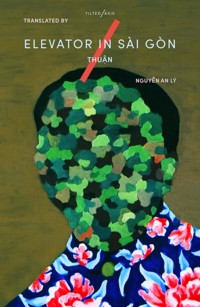
Elevator in Sài Gòn
Praise for Elevator in Sài Gòn
Elevator in Sài Gòn
Title Page
1
2
3
4
5
6
7
8
9
10
11
12
13
14
15
16
17
18
19
20
21
22
23
24
25
26
27
28
29
30
Acknowledgments
Copyright
About Tilted Axis Press
1
3
5
7
8
9
10
11
12
13
14
15
17
18
19
20
21
22
23
24
25
26
27
28
29
30
31
32
33
34
35
36
37
38
39
40
41
42
43
44
45
46
47
48
49
50
51
52
53
54
55
56
57
58
59
60
61
62
63
64
65
66
67
68
69
70
71
72
73
74
75
76
77
78
79
80
81
82
83
84
85
86
87
88
89
90
91
92
93
94
95
97
98
99
100
101
102
103
104
105
106
107
109
110
111
112
113
114
115
116
117
118
119
120
121
122
123
124
125
126
127
128
129
130
131
133
134
135
137
138
139
140
141
143
144
145
146
147
148
149
150
151
152
153
154
155
156
157
159
160
161
162
163
164
165
166
167
168
169
170
171
172
173
174
175
177
178
179
180
181
182
183
184
185
186
187
188
189
190
191
193
194
195
196
197
199
201
Guide
Cover
Table of Contents
Start of Content
Praise for Elevator in Sài Gòn
‘Thuận’s prose, at once expansive and claustrophobic, haunts without weighing the reader down. Across Hanoi, Saigon, Paris, Pyongyang, and Seoul, our narrator attempts to force a sense of clarity into her past, but colonialism blurs history and scripts the very fabric of existence, trapping our narrator in a seemingly endless search. Thrilling, tragic, and at times hilarious, Elevator in Sài Gòn is a postcolonial ghost story, a political satire, and a romance that will linger in the psyche long after the final descent of the elevator.’
—Sheung-King, author of You Are Eating an Orange. You Are Naked. and Batshit Seven
‘At its heart, a book about the weight of the past and the unknowability of others, even the ones we love.’
—Kirkus Reviews
‘Thuận draws ingeniously on the pacing and tropes of detective fiction to craft a layered tale of family secrets. Readers will be rapt.’
—Publishers Weekly (starred review)
‘Elevator in Sài Gòn is a literal and structural exquisite corpse, capturing Vietnam’s eventful period from 1954 to 2004. Mimicking an elevator’s movement, the novel heightens our yearning for romance and mystery, while unflinchingly exposing such narrative shaft. Channeling Marguerite Duras and Patrick Modiano, the book also offers a dead-on tour of a society cunningly leaping from one ideological mode to the next.’
—Thúy Đinh, NPR
Elevator in Sài Gòn
(Thang máy Sài Gòn)
1
Sài Gòn
My mother died on a night of torrential rain. A night of unseasonal rain in 2004. In such a freak accident that our language probably had no word to name it. Mai, my brother, my only brother, had just constructed for himself yet another multi-storey house, this time with a home elevator, said to be the very first in the whole country. Such a momentous event called for celebration, so he bought my mother a plane ticket to Sài Gòn. Only after her inaugural push of the elevator button — he insisted — only after her round from the ground floor to the top and back, could his guests avail themselves of the device. Among said guests even were members of the press, print as well as TV. Such events always followed a predictable script, but I still spent the evening after my mother’s funeral watching a sixty-minute DVD and flipping through a hundreds-strong album of photos of the inauguration, and then another sixty-minute DVD and another hundreds-strong album of that day’s funeral, which I had attended from start to finish.
I’d realised at a very young age that my mother had always been something of a stand-out, whether alone or in the middle of a crowd, at a party committee meeting or one for the local civil unit, as a recipient of a certificate of merit or bestower of a prize; and now, on the family altar, she was a stand-out among the dead, her dead, her parents and in-laws and elder siblings. And her husband. My brother had taken care to put their portraits side by side, nestling behind a vase of red roses; but they still looked like two strangers who’d never signed a marriage form, never lived together for two decades, never birthed two children (my brother Mai and me) who gave them two grandchildren (Mai’s daughter Ngọc and my own son Mike). That evening, I tried and tried to evoke a family scene from our former life, but in vain; I could picture my mother’s face clearly, but had to refer again and again to my father’s portrait, wreathed by red roses and thick incense smoke. He had died ten years earlier.
We had dinner together, my brother and I and the two children. Mai said, ‘Those inspectors from the German elevator company looked into every corner they could but couldn’t pinpoint the cause of the accident. The elevator worked perfectly well during the inauguration, perfectly well for the next three days, and perfectly well after the accident, so they simply couldn’t comprehend how the car could have stayed stationary down below, oblivious to her call, when mother fell into the shaft, all the way from the top to the ground floor. And I can’t comprehend what on earth mother could have been doing on the top floor at such an hour, in such rain, for such a long time.’
He gazed at me intensely as he said this. I felt like what he meant to say was that it wasn’t the rainy season, not even close, but what he said next was, ‘As I recall, I’d been lying on the sofa since early in the evening. I watched a beauty contest and then fell asleep, Ngọc was at her mother’s, the help had all gone home for the night, and even if the live-in housekeeper went upstairs to clean she would have retired to her room by nine, she always does. And she said as much to the inspectors when they interrogated her, which was confirmed by the fact that the elevator was on the ground floor, where her room is. So, the sequence of events is as follows: mother took the elevator to the top floor before nine, then the housekeeper took it to return to the ground floor, then at around 2 a.m. mother called the elevator to go down, the doors opened, and she walked into a car which wasn’t there. The accident happened at 2 a.m. The coroner had confirmed that the time of death was 2 a.m. So what could mother have been doing from 9 p.m. to 2 a.m. on the top floor?’
I said nothing. I too was baffled as to what my mother could possibly do on the top floor from 9 p.m. to 2 a.m. What can you do on a top floor from 9 p.m. to 2 a.m.? What is there to do on a top floor from 9 p.m. to 2 a.m.?
‘Madame fell from the top floor to the ground floor, the body was a wreck, only her face was intact.’ That’s all the housekeeper had to say to me about the accident. Presumably she didn’t know much else because, as per the coroner’s conclusion, the accident had occurred at 2 a.m. when everybody was fast asleep. But 2 a.m. or whichever a.m., there was no changing the fact: my mother was gone. And I couldn’t help but visualise the way she’d fallen from the top floor to the ground floor, in that dark tunnel-like space. And I suspected that during the fall, she had tried her best to keep her face upwards, and wrap her arms around her head to protect her face, at the price of a more drawn-out death, the terrible pain of which her brain would have tasted for several minutes before the end.
According to the housekeeper, moreover, the wreckedness of my mother’s body had required the tailors and funeral house staff to work for three days non-stop, while the make-up artist only needed a little over an hour. When I finally got in, her face was already properly made up, powdered and mascaraed, the way she never was in daily life. Her body, clothed in a black brocade áo dài and surrounded with red roses, lay in a glass coffin, air-conned and odour-controlled, housed in the funeral wing of a famous international hospital. Only when everything had been done to perfection did my brother let the guests in, from whose number I was not excepted. To tell the truth, my protests were only perfunctory. I wasn’t eager to behold a wreck of a body, my mother’s or anyone else’s. My imagination was at least more lenient. But maybe that’s why, seeing her in her glass coffin, wholly intact, with the brocade dress and the red roses, the powder and the mascara, I was struck by the impression that she was only playing dead, and I didn’t shed a tear. And tears would be incongruous in that oh so clean and elegant funeral house, amid the attentive and beaming staff, after crossing a door above which a sign, in both Vietnamese and English, advised that the esteemed guests please refrain from making noise.
My brother Mai was the sole orchestrator of mother’s funeral. Most of the guests were his business partners, sleek in black, hauling giant funeral wreaths, their cars blocking the cemetery gate. The brass band wearing eight identical white suits, looking like eight brothers. A dozen young men flashing cameras, perhaps hired for the occasion, perhaps press. Another dozen young men walking around talking into radios, perhaps my brother’s men, perhaps security guards from the local ward. An impressive plot of land, bounded by a thick wall on all four sides, a gravestone already erected, green granite, flanked by two hundred-year-old cypresses, and in the very middle of it all a censer as tall as a person. The glass coffin set in front of the censer, head to the east, feet to the west. The slanting rays of morning sun. The leisurely drift of clouds. The roses burning scarlet. ‘Amazing Grace’. Beyond the transparent glass, bathed in the pure, pure sunlight, my mother was an extraordinary vision haloed by the mystery of death.
My brother Mai and I stood facing the coffin, hands joined in prayer, faces grim and serious, heads slightly bowed. My brother in black áo dài and pants, I in black áo dài and pants, cut and colour and material the same as my mother’s, made by the same distinguished Sài Gòn tailor. I had dressed early in the morning, my brother had taken one glance my way and reached for his phone. The make-up team with their tools materialised after only fifteen minutes, and my face was perfectly made-up, powdered, and mascaraed, the way I never am in daily life. My brother cast a second glance my way and again reached for his phone. His men came back after only fifteen minutes with a black hat, in a black box, perhaps ready-made, perhaps bespoke, but fitting my head to a tee. Little Ngọc and Mike were also at the funeral, standing behind me and my brother, wearing smaller versions of our same attire. The distinguished Sài Gòn tailor, busy with the adults’ clothes, must have instructed his sub-tailors so that the outfits for the whole family, both the living and the dead, would be of the same cut, same colour, same material. Everything was so prompt and exact, you would think a whole team of assistants was waiting on my brother, ready to leap into action every time he reached for his phone.
When a considerable crowd had assembled, a camera crew of three slowly made their entrance. The burliest, also the youngest, was shouldering a large camera, its lens already open, emitting a constant stream of whirring sounds. The trio seemed to have just returned from a round of the cemetery for establishing shots, and now were ready for the main sequence. The shortest, also the oldest, looked the quintessential secretary, notebook and phone ever at the ready, looking up from time to time to exchange a few words with the third, obviously the leader, a tall and slender man with a Rhett Butler moustache, a fedora, and a pipe. The leader pointed at the coffin, and the young cameraman made a beeline for it, thrust his camera at my mother’s face for minutes on end, then zoomed out for a full-body take, and then recorded what else I didn’t know, since my head was fixed in a slight bow. Someone, who turned out to be the short secretary, took my hand and gestured at me to bow my head still lower so that he could whisper in my ear that it was my turn now, which meant the camera would next focus on my face. I was still trying to register this information when the secretary explained that I would have to remain unblinking for minutes on end, so that I wouldn’t look asleep in the pictures, and that I would have to be especially careful because the black hat cast a shadow that extended to my upper lip. I nodded silently. It was my first time facing a camera, and a professional camera at that. I imagined that the short secretary had to make a round, or rounds, to whisper into the ears of anybody the camera deemed worthy to focus on. Of course, some would get the idea right away while others would be clueless, and he would have to repeat the directions, discreetly, given the general solemnity. He might have to repeat something a hundred times. A production secretary’s job is no piece of cake, it turns out.
The sun was still gentle, the clouds still drifting, and the roses still exuding their head-spinning fragrance when ‘Amazing Grace’ segued to ‘Requiem’ and it was time to lower the coffin. After five minutes of music, my brother read a short eulogy along the lines of: our family is thankful for your presence and consideration, our beloved mother has led a simple life and would wish for a tranquil departure, grief is best kept in the heart, sorrows should not be overdone. His speech concluded in absolute silence on the part of the attendants (you could even hear the camera’s whirring), perhaps partly due to his own heavy hints, but I enjoyed imagining that it was mainly because the guests were still in awe of the vision of my mother in her glass coffin. Without any instruction they had set their giant wreaths down in a corner and stood in neat rows, hands joined in prayer, faces grim and serious, heads slightly bowed, waiting for my brother’s speech to conclude before they filed forwards to admire mother one last time. Accompanied by the sound of the bugle, they each circled the gaping grave, paused a short while, threw a red rose and a handful of dirt into the grave, then turned to shake my brother’s hand and mine, all in silence, heads still slightly bowed until they returned to their place. All gestures and expressions were done to perfection, suggesting plenty of opportunities to practice.
My brother shook everyone’s hand and said thank you, and I also shook their hands and said thank you. My brother nodded, and I also nodded. My brother greeted someone as a Miss, and I did the same, or a Mrs., and I followed suit, or a Mr., and I dittoed. In short, I parroted everything he did. His speech was the only time I was left on my own, looking from my mother in the glass coffin to the red roses, from the freshly dug earth to the fire ant hill by a cypress tree, all the while with my head still slightly bowed, face still grim and serious, hands still joined in prayer. The twenty minutes swiftly passed, and my black hat was still fast on my head. So it was not that hard after all, all it took was some concentration. Even little Ngọc and Mike could do it. When I watched the sixty-minute video and looked at the hundreds of photos afterwards, I realised that the children, standing behind my brother and me, had parroted everything we did. The adults’ gestures and expressions suggested plenty of opportunities to practice. The children’s too were done to perfection, suggesting the same. As if all these people had gathered here today not to facilitate my mother’s funeral, headed by my brother and me, but to play out a movie script, with the cast list as follows:
My brother Mai as the Elder Son
Me as the Youngest Daughter
Little Ngọc and Mike as the Grandchildren by
Son and Daughter
The funeral guests as the Funeral Guests
A dozen young men as Cameramen-cum-Members
with cameras of the Press
A dozen young men as Security Guards of the Local
with radios Ward-cum-Mai’s Men
and, obviously,
Our mother as the Deceased
If my mother’s funeral was a veritable work of cinematic art (some later went as far as saying it was on par with the best Hollywood productions), the highest praise must go to my brother Mai as the producer-cum-director. But the second praise, and not any lesser, I venture to say belongs to my mother. My mother and no one else, my mother who had chosen terrible pain so that her face would remain intact. Can you imagine if her face had been as wrecked as her body? Even the most expensive powder and mascara would have been in vain, the most seasoned make-up artists would have thrown in their towels, a wooden coffin would have been the only option, and a black brocade áo dài and red roses wouldn’t have been called for. And in that case, no amount of divine intervention could have turned the guests into such gracious and devoted actors, because their setting of the giant wreaths in the appropriate place without any instruction was itself a thing to be marvelled at. The quiet, elegant, organised funeral would have been replaced by a noisy, rowdy, disorganised affair. Perhaps my mother’s very presence, so exquisite and refined in her glass coffin, as commanding as that of a silver-screen veteran, had inspired the others to be the best actors they could be. The result being that everybody’s gestures and expressions were as perfect as if they’d really had plenty of opportunities to practice. When I watched the sixty-minute DVD and looked at the hundreds of photos, I was surprised to see what talented actors they all were. I was surprised, too, to see myself in the pictures. As if a woman my age, with an appearance similar to mine, had been invited to take my place. That woman was perfectly made-up, powdered, and mascaraed, the way I had never been. That woman was meticulously dressed up in a black áo dài, black pants, black hat, things I had never worn. That woman was capable of not blinking for minutes on end and displaying remarkable confidence before the camera. That woman was not me.
Suddenly I had a hunch that upon finding my mother’s body, a wreck in a pool of blood, my brother had been no less impressed to find her face still intact. The dozen years building his career in Sài Gòn had given him ample opportunities to put various scripts into production (of which the elevator inauguration was on the modest side) and turned him into a shrewd director. He must have cast aside whatever emotion in his heart and immediately sketched in his head a script worthy of the opportunity presented to him. How promptly and exactly he must have acted, to commission a large glass coffin and have it shipped all the way from Singapore to Sài Gòn. And all in seven days, surely a record.
2
Sài Gòn
An actual dead person playing the role of the deceased? Many a director had got a real policeman playing a policeman, a real girl of the street playing such a girl, a real MD playing a doctor, a real invalid playing a patient, a real Frenchman playing a Frenchman…but a real dead person playing the deceased, that’s something unheard of in the whole history of Hollywood. In certain, otherwise unremarkable, cinematic traditions, paradoxically, this feat is already achieved; case in point: the People’s Republic of Korea. The total number of movies released in a year might be underwhelming, but since the death of Kim Il Sung, cinematic works revolving around the funeral of the Great Leader must number dozens. And they are not amateur flicks at all, but truly ambitious productions in which each participant performs to the best of their ability: fists thumping chests, knees giving way, faces distorted in mourning, hair dishevelled… A whole sea of people whose gestures and expressions are done to perfection, as if they’ve had plenty of opportunities to practice. And orchestras playing identical magnificent elegies, TV hosts making identical poignant speeches, secretaries of communist parties heaping on identical praise… But the most vivid, most convincing role has to be the one performed by the deceased himself: the late Chairman Kim Il Sung, his head propped up on a high pillow, angled slightly to the left to hide the large swelling in the nape of his neck, a brilliant red flag draping his body, the body of a Chairman who at eighty-two was still blessed with rosy cheeks, taut skin, and plump lips, the same face that’s depicted on thirty-five thousand life-size statues dotting every corner of the People’s Republic. On this day, the face is even more royal and awe-inspiring, haloed by the mystery of death.
In early July 1994, the Normal University of Hà Nội sent their condolences to the Normal University of Pyongyang and received, a week later, a ninety-minute video of the funeral of the Great Leader, which they screened two months later, at a National Day party on September 2, for the enjoyment of the whole staff and faculty. My mother, by then retired, was also invited. I imagine how from the front row, having downed a half-glass of sour-and-sweet Thăng Long wine, my mother had watched the whole movie in a strangely pleasant lightheadedness. Surrounded by the sobbing of her former colleagues at the on-screen glass coffin ploughing a sea of kerchief-clutching, thigh-striking, screaming people, my mother was the only one to grasp the extraordinariness of our comrades the Korean directors’ innovation: let the dead play the dead. Perhaps that very moment had sowed the seed for my mother’s dream of her own final performance. I remember how, for a whole month, my mother would gush to anyone who would listen about the one-in-a-million funeral of Chairman Kim, about the glass coffin that must have measured eight metres a side, glorious in the morning sun or shimmering amid tens of thousands of candles; and of course about the radiant visage of Chairman Kim. This dead face is so exquisite, no living person could dream of competing with it. The kind of exquisiteness that made twenty million of the living strike their thighs and scream their desire to die along with their beloved. How extraordinary! was my mother’s favourite comment about it, a refrain that never lost any of its elation.
But her elation didn’t always fall on receptive ears. Our country was then beginning to fall under the sweep of the global South Korean wave. People either knitted their brows at, or walked away from, my mother’s enthusiasm for the North Korean funeral. Now that she was retired and wielded power no more, she could no longer thrust her finger at her listener’s face, commanding them to sit still while the lady department head or vice secretary of the party committee was speechifying. But that didn’t stop her. ‘How extraordinary!’ kept bursting forth from her lips. For a whole month, she was a Chairman Kim super-fan.
A veritable epiphany it was, but disappointment followed hot on its heels. After a month had passed my mother realised that an extraordinary dream is likely doomed to stay in the realm of dreams; in the whole People’s Republic of Korea, Kim Il Sung alone was bestowed the honour of an actual dead person playing the deceased. That disappointment, or should we say ennui, descended on my mother the year she turned sixty, and for the next ten years it refused to leave. At sixty-nine, in 2004, for some reason she accepted my brother’s invitation to come and inaugurate his elevator in Sài Gòn. It was only the second time she had visited the city. The first time, two decades earlier, was when she attended a conference of educators of the Southern provinces as a delegate from the Hà Nội Department of Education. That was in the early eighties, when the municipal guesthouse staff still thought napkins and toilet paper were interchangeable, so the sojourn didn’t impress her much. But now, twenty years later, after a few days at my brother’s house, a few times riding his home elevator, a few trips in his Mercedes, a few dinners at five-star hotels, and a few nights being charmed by American movies, my mother’s impression of Sài Gòn had done an about-face and her dream of that final performance once again stirred in her heart, its North Korean spectacle now understandably replaced by Hollywood glamour. The elevator inauguration may have followed a modest script in my brother’s book, but in my mother’s, it was another life-altering epiphany. In the sixty-minute video, in the hundreds-strong photo albums, now and again I caught her eyes widening at a glittering necklace, her hands hesitating around knives and forks, her ears pricking up at female guests checking out one another’s Louis Vuittons. And now and then I caught her humbled glances flickering down to her polyester áo dài from Hàng Đào Street with their embroidered dragons and phoenixes, her faux-leather heels from the People’s Republic of China with their heavy, stiff form, her turtle shell bangle from the Hà Nội Department Store with its varnish of old-person snobbery. It was true she played the part of the graceful and self-assured lady from the capital as best she could, but I could tell turbulent thoughts swirled in her head while champagne foamed down stemmed glasses, while cameras flashed like summer stars, while four of Mai’s men hauled a gigantic cake inside, while all around her people were wishing each other a few more billions of income, a few more title deeds to hold, a few more countries to visit.
3
Paris
I looked around the room one last time before turning off the light. The sparse room contained only the sets of plastic desks and chairs and the wall-mounted blackboard, likely also plastic, which I had come to know intimately. The last copy exercise remained on that blackboard, a short extract from a long poem that had flashed into my mind during my sprint here earlier from the Métro station in the heavy rain:
I still look for you through the pure
afternoon of Monday through the pure
lips inviting to stay through the pure
clouds over Hồ Tây through the pure
home where we play through the pure
day so fresh and gay through the pure
shoes of May so pure
for you
I closed the door and climbed the wooden stairs. Today’s Vietnamese class had just concluded. My students were two elderly ladies who’d persisted since day one. All that was left of the original cohort. I hadn’t wanted to assign them some exercise from the textbook today, but couldn’t think of anything else except that long-forgotten poem. We finished copying the passage, then idly sat and stared at one another. One of them suggested translating it into French. I agreed. So for the following half hour, while my students each wrestled with their own doorstop of a Vietnamese-French dictionary, I let my mind wander back to the time I first discovered this poem, how I’d marvelled at the utter simplicity of art. Those were my days as a newcomer to France, fresh off the boat, when a daily visit to the job centre for overseas students meant a daily lesson in disappointment. Those were also the days I first tried my hand at writing short stories, when a nightly session typing away at the computer seemed a never-ending pursuit of that obscure object of desire.
A few doors down from the craft shop, there was a small awning over the pavement. I’d wanted to run straight from the classroom to the Métro station, but the road was too slippery from the still-pouring rain. It was just past eight, but downtown Paris was already deserted. A man’s voice drifted over from the apartment behind me: ‘Maria, I’m so sorry, from the bottom of my heart!’ Then a short strain of music, then a woman’s: ‘Octavio, you can’t imagine how miserable I was during those days without you!’ And then some more music, then the sound of what seemed the combined sobbing of a man and a woman. I glanced up at the building across the street; the windows on the first and second floors were flickering with reflected TV screens, in front of which silhouettes sat transfixed. On the very first day of class, one student had kindly advised me that the most popular movies are shown on Monday nights, so it was best I switch class to another day of the week. I shook my head no, and after two lessons he vanished without a trace. That night I looked up the TV schedules and was aghast: Mondays are when the television, already the dominant form of entertainment seven days a week, triumphs most definitively: it’s when the broadcast companies bring out their biggest guns and the TV potatoes are simply spoilt for choice. After this discovery, I warmed significantly to the students who showed up on Monday nights. They at least were not easy prey for the almighty TV. But their ranks grew thinner each week. At the beginning of September, I had to beg and plead so that Madame Wang would not cancel the Monday class altogether. I felt like if I let that happen, I too would have succumbed to the all-conquering TV.
My Vietnamese class came into being two years ago when Madame Wang realised that the basement under her craft shop was lying unused, the same shop where I worked as her assistant several days a week. Rent was murderously high, and the Asian knick-knacks craze was beginning to wane. An invariably fair person, Madame Wang made it clear on the first day: shop or class, a day off meant a day’s pay deducted, a half-day off the same.




