


Erhalten Sie Zugang zu diesem und mehr als 300000 Büchern ab EUR 5,99 monatlich.
- Herausgeber: Story Machine
- Kategorie: Poesie und Drama
- Sprache: Englisch
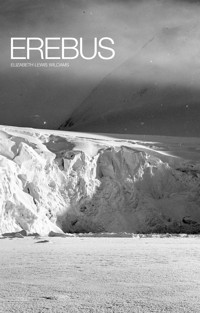
In 1958, geophysicist A. G. Lewis travelled to the Antarctic to investigate the landscapes and skies of that vast and icy continent. Now Elizabeth Lewis Williams traces her father's journeys, from the Peninsula to Mt Erebus. They are real, imagined, and artistic journeys, exploring communication across time and space, and experiments in scientific and poetic measure. Erebus transports us to an Antarctic of paradox. A land where perpetual daylight balances months of austral darkness. A land of encounters with the unknown, and with mortality – but where camaraderie and faith are the only defence against catastrophe. At its heart, Erebus is a visit to the frozen underworld, and an exploration of how we find a place for ourselves in this vast and often unforgiving world we call home.
Sie lesen das E-Book in den Legimi-Apps auf:
Seitenzahl: 63
Veröffentlichungsjahr: 2022
Das E-Book (TTS) können Sie hören im Abo „Legimi Premium” in Legimi-Apps auf:
Ähnliche
















‘A beautifully musical meditation on time, place and dwelling.’
Jacob Polley
‘In precise, luminous language, Elizabeth Lewis Williams has written an Antarctic symphony-in-verse. She perfectly captures the daily struggles of living on the continent, pitched against its epic grandeur, revealing the many personae of Antarctica.’
Jean McNeil
‘Brilliant. There is a glittering quality to Erebus. It is full of wonders, from the sublime to the down-to-earth.’
Moniza Alvi
The text of Erebus is copyright © Elizabeth Lewis Williams, 2022
Images copyright Estate of A.G. Lewis, BAS Archives Ref. 2015/24
Print ISBN: 9781912665259
Ebook ISBN: 9781912665266
Published by Story Machine
130 Silver Road, Norwich, NR3 4TG;
www.storymachines.co.uk
Elizabeth Lewis Williams has asserted her right under Section 77 of the Copyright, Designs and Patents Act 1988 to be identified as the author of this work.
All rights reserved. No part of this publication may be reproduced, stored in a retrieval system, or transmitted in any form or by any means, graphic, electronic, recorded, mechanical, or otherwise, without the prior written permission of the publisher or copyright holder.
This publication is sold subject to the condition that it shall not, by way of trade or otherwise, be lent, re-sold, hired out or otherwise circulated without the publisher’s prior consent in any form of binding or cover other than that in which it is published and without a similar condition including this condition being imposed on the subsequent purchaser.
Set in Garamond.
Printed and bound in the UK by Seacourt Ltd.
Story Machine is committed to planet positive publishing. Our world is better off for every single book we print.
Erebus
Elizabeth Lewis Williams
ForIan, Max, Eleanor, and Sophiewith all my love
Preface
In October 1958 my father left Southampton on board the RRS Shackleton as an assistant scientific officer bound for the Antarctic. He had a rare heart condition, had been regularly withdrawn from school by his parents and, when he left, he possessed no official qualifications (though he had a letter from one of his headteachers testifying to his ability and excellent ‘moral character’.) He ended his time in Antarctica in 1965 as scientific leader at Scott Base, and on Tuesday 10th March 1970 was awarded a Polar Medal. On February 9th 1996, five months before my wedding, he died from a heart attack whilst clearing a pathway through the snow at home.
This collection began as a personal response to his then unpublished book Years on Ice which we, his children, did not know about until after his early death. The poems make up a kind of dialogue with the words he left behind, here and in letters to his parents, and in half-remembered stories. In the aftermath of loss, and the birth of my children, they were an attempt to speak back to someone who could no longer answer, to address my unreliable memory, and to recover the old Antarctic hero of my childhood. The poems also eventually provided me with a way of introducing my father to his grandchildren.
Those early poems remained unpublished, and when I came back to them years later, their dependence on my father’s words was clear; they lacked a felt sense of place. And here was a problem: how could I create on the page that remote, icy, fabled continent without an Antarctic experience of my own on which to draw?
I made contact with Ieuan Hopkins, the head archivist at the British Antarctic Survey (BAS), and took him a small book of black and white negatives which had been left out of the collection of my father’s belongings which my mother had passed on. He helped me to scan the negatives onto the computer. At once it was like looking through my father’s eyes at a black and white world of ice, and mountains - penguins, of course - and frozen sea. The Antarctic is an utterly fascinating environment, in the old sense of the word. It cast its spell, even from the opposite side of the globe, through cellulose and light and a computer screen.
This collection of poems tracks not just my father’s Antarctic experiences, but my own Antarctic journeys - through the archives, through memory (other people’s as well as my own), and the topographies of poetic form. The final poem ‘Erebus’ is a retelling of my father’s ultimately successful attempt to climb Mt. Erebus, the largest volcano in the Antarctic. It draws together these strands, with the ascent of the mountain taking place alongside a descent into the underworld (or subconscious) and the historical edging towards the continent by Captain James Cook and his crew.
The Antarctic archive, like the continent itself, is compelling. A room full of brown boxes on rolling stacks; piles of maps and framed pictures; a bust of Sir Vivian Fuchs; a densely coded computer system - it might not, at first glance, look like much. But what a treasure! The base and field reports, along with accompanying photographic material, accounts, maps and accumulated data, make up a unique record of establishing a base (twenty, in fact) in an extreme environment, of living and working there, conducting scientific research, making prolonged journeys into the field, mapping the unknown. It is the primary, contemporaneous, record of activities created by the individuals who were undertaking them - and not just of famous explorers and well-known scientists, but of ordinary, unsung, people living and working in an extraordinary environment, documenting not just a century of science, but exposing what it means to be human. The ‘Met Obs’ poems are, in part, a tribute to those men.
Their words, as well as my father’s, appear occasionally in the following poems. These different voices are italicised, and identified in the list of Dramatis Personae (p.vi).
The photographs in this book are all my father’s, held in the archive, along with more than 19,000 other photographs taken by men who spent time in the Antarctic. Ieuan refers to the photographic record as a kind of ‘dark archive’, dark not because things are hidden, but because some things are not categorised. Photographs at BAS are catalogued according to place, scientific activity, ship, particular people - clear, objective labels making the pictures easy to locate within the system. But how do you file an emotional record? It is accessible, nonetheless, even without an objective heading. Type the name of a particular ship into the search engine, and results show clusters of photographs: the departure from Southampton, for example, the initiation ceremony which took place when crossing the Equator, the first iceberg – a collective record of moments of significance.
Ice itself is an archive. 90% of the world’s ice is located in Antarctica, and ice cores extracted from the heart of the continent hold a record of climatic conditions on earth over a period of 800,000 years. The age of the ice, and the fact that it acts as a preservative, can lead to an uncanny sense of the coexistence of past and present.
Ice is also a paradoxical substance - a danger and a preservative. Trekking across the ice, explorers face constant dangers, not just from low temperatures but from the ice terrain itself, yet to survive a winter, with no accommodation and little food, the six men of Scott’s Northern Party dug themselves into the ice and made it their home. Ice meltwaters power the ocean dynamics which sustain our climate, but if too much of this ice melts, the effect on the rest of the world will be catastrophic.




