



1,99 €
Mehr erfahren.
- Herausgeber: Quickie Classics
- Kategorie: Geisteswissenschaft
- Sprache: Englisch
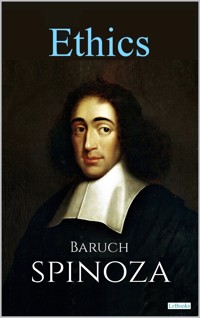
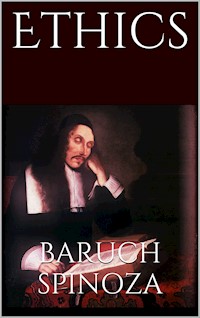
Ethics (Complete Edition) advances Spinoza's geometric system through definitions, axioms, propositions, and scholia, unveiling a strict monism: one infinite substance, God or Nature, whose attributes—especially thought and extension—express all that is. From this follow modal dependence, mind–body parallelism, conatus, a taxonomy of the affects, and the passage from bondage to freedom culminating in the intellectual love of God. Composed in Euclidean rigor and framed by the Appendix to Part I and later prefaces, it stands within seventeenth‑century rationalism as a radical reply to Descartes and sectarian theology. Born in Amsterdam's Portuguese Jewish community and later placed under cherem, Spinoza lived as an independent lens grinder, corresponding with leading savants. His drive for clarity, civic peace, and freedom of philosophizing—announced in the Theologico‑Political Treatise—led him to ground ethics in metaphysical necessity and to write in careful Latin amid censorship. Refusing a Heidelberg chair and publishing the Ethics only posthumously in the Opera Posthuma, he pursued truth over reputation to the end. Readers of philosophy, theology, and the sciences will find an exacting but luminous guide to nature, mind, and virtue; the complete text rewards patience with a disciplined conception of freedom rooted in understanding. Quickie Classics summarizes timeless works with precision, preserving the author's voice and keeping the prose clear, fast, and readable—distilled, never diluted. Enriched Edition extras: Introduction · Synopsis · Historical Context · Author Biography · Brief Analysis · 4 Reflection Q&As · Editorial Footnotes.
Das E-Book können Sie in Legimi-Apps oder einer beliebigen App lesen, die das folgende Format unterstützen:
Veröffentlichungsjahr: 2026
Ähnliche
![Spinoza: En busca de la verdad y la felicidad [Cómic] - Baruch Spinoza - E-Book](https://legimifiles.blob.core.windows.net/images/d95d38d6d892e4076cc45aeceb0c250e/w200_u90.jpg)












Ethics (Summarized Edition)
Table of Contents
Introduction
Spinoza’s Ethics confronts the paradox that true freedom arises not from choice but from understanding necessity. Composed as a rigorous system, this work invites readers into a world where metaphysics, psychology, and ethics are inseparable, built step by step as if the structure of reason could mirror the structure of reality. The result is not a story but an argument that gradually discloses how human beings fit within a single, lawful order. While austere on the surface, the book rewards patience with a steady illumination: it shows how clarity of thought can transform a life, tempering emotion, guiding action, and redefining what it means to be free.
Ethics is a philosophical treatise of early modern rationalism, composed in the seventeenth-century Dutch Republic and published posthumously in 1677. Its pages adopt a geometric method, arranging definitions, axioms, propositions, and demonstrations to secure certainty by deduction rather than rhetoric. The intellectual climate was one of scientific discovery and theological controversy, and Spinoza’s project belongs to that moment’s bold attempt to rebuild knowledge on clear foundations. There is no narrative setting; instead, the work situates the reader within a conceptual landscape shaped by logic and experience, where each proof depends on what came before and the cumulative order is itself a central argument.
Reading Ethics feels like studying a theorem that also speaks to your life. The core text advances with spare, formal propositions, but Spinoza regularly interrupts with explanatory notes that expand, contextualize, or defend what the proofs assert. The voice is impersonal, avoiding appeals to authority, yet the tone can be quietly humane, especially when analyzing the everyday power of emotions and the limits of imagination. The pace encourages slow attention, returning you to definitions and earlier steps. It is demanding but not forbidding, and the complete work yields a rhythm in which logical clarity and reflective insight gradually reinforce each other.
At the foundation stands a metaphysics that seeks a single, coherent account of reality. Spinoza argues for one infinite substance that expresses itself through infinitely many attributes, of which human beings know thought and extension, and he treats finite things as modes within that substance’s necessary order. This framework dissolves mind–body dualism in favor of a strict correspondence between mental and physical states, and it understands causation as universal and lawlike. Rather than shrinking human significance, such determinism reframes it, insisting that to know how things must be is the precondition for acting with power, coherence, and responsibility.
From this basis, Spinoza develops an account of knowledge and affect that links clarity with freedom. He distinguishes between confused perceptions, rational understanding, and a more direct insight that unifies particulars, and he explains how our striving to persevere shapes every emotion. Much of human life, he says, is lived in bondage to inadequate ideas that render us passive; ethical progress consists in forming adequate ideas that transform passions into actions. Virtue becomes a name for increased power to act, and joy accompanies heightened understanding. The book maps a path from everyday entanglement toward a stable equilibrium grounded in lucid awareness.
For contemporary readers, Ethics remains strikingly modern in both method and outlook. Its naturalism offers a way to think about meaning without appealing to supernatural intervention, while its emphasis on lawlike order harmonizes with scientific inquiry. Its analysis of emotion anticipates later psychological insights, inviting readers to observe how beliefs shape moods and conduct. In a pluralistic world, Spinoza’s identification of the divine with the lawful whole can encourage tolerance and humility, even as it demands intellectual rigor. The book adds an alternative vision of freedom and responsibility that speaks to debates about autonomy, ecology, resilience, and the cultivation of shared understanding.
Approached patiently, the complete work unfolds in five movements from metaphysics to psychology and practical ethics, each relying on the precision of what precedes it. Readers new to the geometric method may benefit from pausing at the definitions and returning to key propositions as later arguments build on them. The aim is not to accumulate doctrines but to reorganize perception, so that understanding becomes an active power. By the end, the promise is less a revelation than a discipline: a way of seeing that steadies the mind, enlarges sympathy, and anchors freedom in knowledge, making Ethics a durable companion for reflective life.
Synopsis
Baruch Spinoza’s Ethics (Complete Edition) is a posthumously published treatise (1677) composed in Latin and organized in the geometric manner, with definitions, axioms, and propositions followed by demonstrations, scholia, and corollaries. Across five parts, it advances a unified metaphysical, epistemological, psychological, and ethical doctrine. The work aims to show how reality’s necessary structure grounds human knowledge and conduct, replacing appeals to authority or tradition with strict argument. Rather than offering episodic reflections, it proceeds stepwise, building each claim on earlier ones. The argumentative sequence guides the reader from first principles about being and causation to an account of the emotions and the conditions of human freedom.
Part I investigates God, understood not theologically but metaphysically as the one substance possessing infinite attributes. Spinoza argues that such a substance exists necessarily and is the immanent cause of all things, which follow from its nature with the same necessity as geometric truths. What humans ordinarily call natural events are modes—finite expressions—of this single substance. He denies that the world is ruled by purposes or intentions, holding that explanations in terms of final causes reflect human imagination rather than genuine knowledge. The appendix to this part diagnoses common prejudices about nature, tracing superstition to the tendency to project ends onto causes.
Within this metaphysical framework, Spinoza distinguishes between attributes, which express the essence of substance, and modes, which are particular, dependent ways substance is. The relation between substance and modes is necessary, not contingent; nothing could be otherwise than it is, given the total order of nature. From this determinism he redefines freedom, not as indifference of choice, but as acting from the necessity of one’s own nature. This groundwork sets the stage for his treatment of mind and body, since thought and extension are two attributes through which the same reality is understood, and human beings are modes under both.
Part II develops a theory of the human mind as the idea of the human body, aligning every mode of thought with a mode of extension without making either cause the other. This parallelism rejects interaction in favor of coordinated orders. Spinoza distinguishes kinds of cognition: imagination, which relies on sensory traces and is prone to error; reason, which grasps common notions and necessary relations; and a higher, intuitive knowledge that sees things as following from the essence of God or nature. Adequate ideas, chiefly available through reason and intuition, confer clarity and power, whereas inadequate ideas leave us passive and confused.
Part III turns to the affects, offering a systematic psychology rooted in conatus, the striving by which each thing perseveres in its being. Emotions such as joy, sadness, and desire are explained as variations in this striving caused by internal and external conditions. Spinoza classifies affects as active when they follow from adequate ideas, and passive when they arise from inadequate ones. He analyzes complex emotions—love, hate, hope, fear, remorse—as composite states understandable through their causes. Moral evaluations are recast as relative to our nature and power, so that good and bad signify what increases or diminishes our capacity to act.
Part IV examines human bondage, the condition in which people are governed by passions more than by understanding. Because humans are part of nature’s order, their power is limited and often overborne by external causes. Nevertheless, reason prescribes ways of life that align our interests, favoring cooperation, mutual aid, and the cultivation of stable relationships. Virtue is identified with the potency of acting according to reason, and it proves compatible with seeking one’s genuine advantage. Spinoza clarifies how laws, institutions, and shared norms can support rational living, not by suppressing desire, but by channeling it toward peace, security, and common benefit.
Part V presents methods for moderating and transforming the passions. Chief among these are forming adequate ideas, understanding the necessary order of causes, and separating affects from the confused images that intensify them. Through reflective attention to our emotions and their origins, passive states diminish and active affects emerge. The mind can view things sub specie aeternitatis, under the aspect of eternity, which reorganizes priorities and stabilizes conduct. Spinoza emphasizes practice: ordering thoughts, recalling common notions, and using reason to counter volatile affects. The result is not withdrawal from life, but a more consistent power to act from one’s own nature.
Building on the earlier parts, the final arguments connect knowledge, activity, and a distinctive kind of joy linked to understanding. As adequate ideas increase, the mind participates more fully in an eternal order, and certain enduring affects replace transient agitation. Spinoza outlines how the highest form of cognition yields a steadfast love directed at the whole of nature, reshaping ethical life without dependence on reward or punishment. While the demonstrations are tightly argued, their practical thrust is clear: insight into necessity can coexist with personal commitment and care for others, and it offers a durable orientation amid the fluctuations of fortune.
Ethics endures as a landmark of early modern philosophy, uniting metaphysics, science, and moral psychology in a single system. Its naturalistic approach rejects appeals to miracle or teleology, inviting readers to understand themselves as integral parts of nature. By deriving ethical guidance from an account of cognition and affect, it links human flourishing to knowledge rather than command. The book’s influence on Enlightenment thought, secular ethics, and later philosophy has been extensive. Even apart from agreement with its theses, its geometric clarity and insistence on explanation over exhortation provide a lasting model for thinking about freedom, emotion, and community.




