


80,99 €
Mehr erfahren.
- Herausgeber: John Wiley & Sons
- Kategorie: Wissenschaft und neue Technologien
- Sprache: Englisch
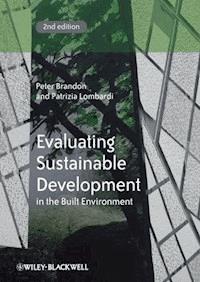
The first edition was extremely well received, providing an introduction and insight to this important topic in a comprehensive yet easy to read form. It was chosen to be issued to the representatives of the organizations from the G8 and G20 countries attending the University Summit held in Turin in 2009 which addressed the issue of how education and research can assist sustainable development. The second edition, completely updated to reflect the significant advances and new insights that have been made since publication of the first edition, focuses on two main issues: * Facilitating a dialogue between all stakeholders so that the complexity of the problem can be exposed, structured and communicated * Understanding how to assess progress in sustainable development It continues to provide coherent guidance on the techniques that can be used to assess sustainable development in a rigorous manner. The approach is introduced using illustrations and case studies, together with follow-up references. It remains the ideal starting point for those trying to get a handle on the subject and for those who wish to examine a structured and systematic approach to the evaluation of sustainable development in the built environment.
Sie lesen das E-Book in den Legimi-Apps auf:
Seitenzahl: 499
Veröffentlichungsjahr: 2010
Ähnliche



















EVALUATING SUSTAINABLEDEVELOPMENTin the Built Environment
This leading book is about one of the greatest challenges faced by human kind. Sustainable development impacts on everyone and all need to take ownership of, and get involved with, the concept. Universities are strongly engaged in this process, as recognised by both the Hokkaido and Turin G8 Summit Declarations. This book represents a reference point in the field, for both students and lecturers. It is clearly written and it illustrates evaluation approaches to, and frameworks for decision-making for, sustainable development. The book was selected to be circulated to the over 150 delegates who attended the G8 countries’ Turin University Summit on this important subject.
Professor Francesco Profumo – Rector of Politecnico di Torino,Italy, Chair of the 2009 G8 University Summit
This book addresses a key aspect of sustainable development. It asks what framework is required to answer the question ‘have we made progress?’ and it also suggests the mechanisms and methods which might be used in the assessment of such progress. The first edition of the book has been well received and this revision updates the reader and suggests in more detail how it might work in practice. It is an enormous issue and the authors have provided a very clear introduction to this complex subject. The book is fast becoming a standard text in the field and has an international readership. Practitioners, academics, students and universities will find it extremely useful in developing their thinking.
Professor Martin Hall – Vice Chancellor of the University of Salford, UK.
This edition first published 2011
© 2005 Blackwell Publishing Ltd
© 2011 Peter Brandon and Patrizia Lombardi
Blackwell Publishing was acquired by John Wiley & Sons in February 2007. Blackwell’s publishing programme has been merged with Wiley’s global Scientific, Technical, and Medical business to form Wiley-Blackwell.
First edition published 2005
Second edition published 2011
Registered office
John Wiley & Sons Ltd, The Atrium, Southern Gate, Chichester, West Sussex, PO19 8SQ, United Kingdom
Editorial office
9600 Garsington Road, Oxford, OX4 2DQ, United Kingdom
2121 State Avenue, Ames, Iowa 50014-8300, USA
For details of our global editorial offices, for customer services and for information about how to apply for permission to reuse the copyright material in this book please see our website at www.wiley.com/wiley-blackwell.
The right of the author to be identified as the author of this work has been asserted in accordance with the Copyright, Designs and Patents Act 1988.
All rights reserved. No part of this publication may be reproduced, stored in a retrieval system, or transmitted, in any form or by any means, electronic, mechanical, photocopying, recording or otherwise, except as permitted by the UK Copyright, Designs and Patents Act 1988, without the prior permission of the publisher.
Wiley also publishes its books in a variety of electronic formats. Some content that appears in print may not be available in electronic books.
Designations used by companies to distinguish their products are often claimed as trademarks. All brand names and product names used in this book are trade names, service marks, trademarks or registered trademarks of their respective owners. The publisher is not associated with any product or vendor mentioned in this book. This publication is designed to provide accurate and authoritative information in regard to the subject matter covered. It is sold on the understanding that the publisher is not engaged in rendering professional services. If professional advice or other expert assistance is required, the services of a competent professional should be sought.
Library of Congress Cataloging-in-Publication Data
Brandon, P. S. (Peter S.)Evaluating sustainable development in the built environment / Peter S. Brandon and Patrizia Lombardi. – 2nd ed.
p. cm.
Includes bibliographical references and index.
ISBN 978-1-4051-9258-3 (alk. paper)
1. Urban ecology (Sociology) 2. City planning–Environmental aspects. 3. Sustainable architecture. 4. Sustainable development. I. Lombardi, P. L. (Patrizia L.) II. Title.
HT241.B73 2010
307.76–dc22
2010029191
A catalogue record for this book is available from the British Library.
Contents
About the Authors
Preface
Acknowledgements
1 Setting the Context for EvaluatingSustainable Development
The environmental perspective
The international policy debates
Extension of the debate
The impact of the built environment
The current response of the built environment community
Sustainability: a definition
Seeking a shared set of values
Striving for a common frameworkand classification system
The characteristics of assessment and measurementfor sustainable development
Management and intervention for sustainable development
Implementing management decisions
Summary
2 Time and Sustainability
Innovation and stability
Perceptions of sustainable development
Critical failure points
Time in evaluation
Future aversion
Clever or wise?
Practical assessment of ‘time’
The luxury of the ‘time’ horizon
3 Approaches to Evaluation
The Natural Step
The concept of community capital
The ecological footprint
Monetary (capital) approach
The driving force-state-response model
Issues or theme-based frameworks
Accounting frameworks
Frameworks of assessment methods’ tool kits
Summary and conclusions
4 Indicators and Measures
Why evaluate?
Traditional versus sustainable development indicators
Generic and specific questions
International indicators
Aggregated indicators
Discussion
Summary
5 Assessment Methods
A directory of assessment methods
An outline summary of the main assessment methods, toolsand procedures in use
Summary and conclusions
6 A Proposed Framework for EvaluatingSustainable Development
The need for a holistic and integrated framework
The theoretical underpinning of the framework
The built environment explained by the modalities
The 15 modalities for understanding sustainabledevelopment in the built environment
Development of the multi-modal frameworkfor decision-making
Key questions for examining sustainable developmentwithin each modality
Synthesis of results
Summary
7 The Framework as a Structuring Tool: Case Studies
Case study 1: selection of a municipal wastetreatment system
Case study 2: evaluation of sustainable redevelopmentscenarios for an urban area
Case study 3: ‘multi-stakeholder’ urban regenerationdecision-making
Case study 4: social reporting of Modena City strategic plan
Summary and conclusion
8 Towards Management Systems and Protocols
Who manages?
The planning framework
Management in a learning organisation
Soft system methodology
Wicked problems
Process protocols
A possible approach
The Vancouver study
The conclusions of the Vancouver study
Follow through on the Vancouver study
Resilience
9 Education and Research
A research agenda
In conclusion
Appendix A: The Philosophy of the ‘Cosmonomic Idea of Reality’
References
Websites
Bibliography
Index
About the Authors
Professor Peter S. Brandon OBE was a pro-vice chancellor for research and postgraduate studies at the University of Salford and the director of the University Think Lab and is now a professor emeritus in the School of the Built Environment. He has played a major role in the development of research in the UK and internationally, and when head of the present School of the Built Environment at Salford, he led the school to the highest ratings for research in the UK, a position they have held ever since. He has written widely on a number of topics, including building economics, construction management, construction information technology and sustainable development. He has over 30 books to his credit as author, co-author or editor, and has published over 150 papers in more than 30 countries.
Professor Patrizia Lombardi from the City and Housing Department at the Politecnico di Torino is a leading expert in the use of environmental assessment methods and an established figure in the field of evaluating sustainable development and has been active in the field for over 20 years. She has coordinated or served as lead partner in several pan-European projects on topics related to sustainable urban development, including the BEQUEST network, the INTELCITY Roadmap, the INTELCITIES integrated project, the SURPrISE (Sustainable Urban Renewal Programs In Southern Europe) Interreg III C, the ISAAC (Integrated e-Services for Advanced Access to Heritage in Cultural Tourist Destinations) project and PERFECTION (Performance Indicators for Health, Comfort and Safety of the Indoor Environment). She is the editor or co-author of about 10 books on sustainability evaluation and is the author of over 100 papers in specialised textbooks and international scientific journals.
Preface
Five years is a long time in the development of an emerging subject, especially when it seems the whole world is now interested in its content. Since the first edition, the concept of sustainable development has risen in the human consciousness and is beginning to change behaviour around the globe. It is being driven by the concern about climate change and the impact this will have on human settlements. Individuals, governments, institutions and agencies are making their own contributions to change the rate of global warming or at least to mitigate its consequences. The situation is considered to be extremely serious and every ‘foresight’ type exercise has placed ‘sustainable development’ at the top of its agenda. In 2008, the US National Academy of Engineers identified 13 ‘grand challenges’ for engineering and of these 5 were directly related to climate change and all of the remainder were related to human survival.
In fact, human survival is at the root of the whole debate on sustainable development. The planet will look after itself and, indeed, it has for millions of years. It is life forms, sustained by the planet, which suffer as the surface is altered and changed by the natural evolution of planets and cosmic systems. It is estimated that 97% of all species that have lived on earth are now extinct. However, the human species is a relative latecomer to life on earth and is the first to begin to exercise conscious mediation of the planet’s subsystems. In previous millennia, ‘nature’ would have controlled human growth and its chance of survival. As Derickson (2006) suggests ‘We are not dumb enough to survive, but are we clever enough?’ In other words, if nature took its course then natural selection would take place and it is probable that the earth’s population of humans might well diminish. The current massive interest in what is often described as ‘the most important issue to ever have faced mankind’ is largely concerned with the human race attempting to prove it can be sufficiently clever to adapt to a change in climate which threatens a very significant proportion of the population. The question is still whether we can do it.
However, climate is not the only feature of sustainable development, important though it is. Within the subject is also the quality of life enjoyed by current and future generations. Survival is the most important factor but even without this threat there appears to be a moral duty not to impair the life of future generations by the actions we take today. Once we move into the quality-of-life dimension, the subject becomes exceptionally complicated. It is one reason why there are so many definitions of sustainable development. All aspects of life are interrelated and a decision in one area has impacts elsewhere, often without our knowledge. It is one of the reasons why we face climatic problems. Our decisions, particularly with regard to technology supporting economic development have resulted in consequences which were not foreseen. The subject becomes so complicated that simple definitions always appear inadequate in time (see Chapter 1). Perceptions change, needs change, the technological infrastructure changes, our scientific knowledge changes and what future generations of humans will require is impossible to predict. However, we believe we can avoid creating an environment which destroys the capacity for future generations to respond positively to change; otherwise, the subject would be pointless.
The last 30 years have seen a plethora of measures, indicators and evaluations which attempt to make some assessment of what is happening to our planet and the actions of human beings upon it. The origins of this book lie in trying to get a grasp on what we mean by ‘sustainable development’. The authors felt, in their research, that if they could measure it then they would be forced to define it, otherwise how would we know what to measure? In addition, the measure would allow us to discover whether we were making progress or not. However, the complexity of the problem makes an exhaustive measure impossible. Whatever we do, it will be partial. That is not to say it will not be useful and provide potentially new insights. It will and it does. It can only be part of a recognition that our tools and our ‘cleverness’ are often helpful but inadequate for the task as defined by most commentators.
So, how do we address this problem? At the heart of the issue is the interdependence between events, activities and processes. To address this, it is important to ask ‘why’ these events occur and where their behavioural relationship lies. This leads to a much more fundamental investigation of the problem and engages philosophy. Philosophy is ‘the academic discipline concerned with the nature and significance or ordinary and scientific beliefs, investigating the intelligibility of concepts by means of rational argument concerning their presuppositions, implications and inter-relationships’ (Collins English Dictionary, 2000). It should shed light on the key issues and how they emerge and evolve over time. It recognises that its work is almost never complete but it guides and directs our thinking towards solutions which are appropriate for the time, including our response to future events.
Like all emerging subjects for study there is a period of transition from the original concept to an established structure upon which knowledge can build. This structure needs to be robust yet flexible enough to accommodate new thinking. In Chapter 6, we have put forward a secularised view of one philosopher, Herman Dooyeweerd, as a possible basis for this structure. The background material for Dooyeweerd’s work is complex but rich and at an application level the authors and others have found it intuitive and enlightening particularly with regard to interrelationships between all the aspects of the cosmos which impinge on sustainable development.
This book will focus on two main issues. These are, firstly, how do we create a structure of knowledge and thinking which will allow us to develop a vocabulary which all participants in sustainable development can own and to which they will feel able to contribute and, secondly, how do we assess progress in sustainable development? The first is important because it enables a dialogue to take place between all the stakeholders in such a way that the complexity of the problem can be exposed, structured and communicated in order to gain confidence from all the parties. The second is important because unless we can evaluate what contributes to sustainability it will be very difficult to know whether a sustainable environment has been created.
These are fundamental and important issues. Implied in the structuring is not only a recognition that many people are engaged but also that they come from a variety of backgrounds, disciplines and levels of commitment which all provide a different ‘filter’ for the individual or group to view the problems or issue through. For them to come to agreement requires a structure which they can all understand and to which they can contribute their particular view. It also requires mutual respect and a desire to come to a solution that may involve compromise. It involves education because all need to understand the position of the others and it needs a language, which is not exclusive, but which includes all participants wherever possible. In terms of technique, it requires a confidence that the techniques for evaluation are fair and transparent so that the inputs and outputs are not favouring one particular view or, if they are, that all parties are aware of this limitation. There are very few, if any, techniques that are completely neutral in their advice.
This book is an explanation of some of these concepts and it attempts to provide an approach that can be built on and evolve over the ensuing years. There is a fast-developing subject known as ‘sustainability science’ which has been described by the Harvard University Centre for International Development as seeking to ‘advance basic understanding of the dynamics of human–environment systems; to facilitate the design, implementation and evaluation of practical interventions that promote sustainability in particular places and contexts; and to improve linkages between relevant research and innovation communities on the one hand and relevant policy and management communities on the other’. Others have focused more on the practical application and have defined it as ‘use-inspired basic research that seeks to learn about the interactions among humans (including their cultural, political, economic, and demographic characteristics), their technologies and the environment’ (Burns & Weaver, 2008). Note that it is the dynamics of the human/technology interface which is central. One without the other will not result in a satisfactory understanding of the problem.
This subject is emerging and evolving as the subject matter becomes more of an established domain of study. Our understanding of what we mean by the term, and how it will be viewed, will change, but this book attempts to provide a contribution towards a structure and approach which will endure these evolving concepts and processes and provide a platform which allows the subject to grow and develop in a consistent and coherent way.
Peter S. Brandon and Patrizia Lombardi
Acknowledgements
The authors acknowledge the important contribution made to this book by a number of individuals, including:
The members of the BEQUEST European Network (sponsored by the European Commission and led by Professor Steve Curwell of the University of Salford), who have debated many of these issues over the past 12 years. Their work has provided a useful source of information for many aspects of this book and we value the critique that they have provided of many of the ideas presented. In particular, we would like to thank Steve Curwell and Mark Deakin (of Napier University, Edinburgh) who have critically analysed and interpreted the results of the assessment methods survey reported in Chapter 5.
Hanneke van Dijk, who has played a very important role in bringing this volume to print. Her patience, particularly in the later stages, was exemplary and we appreciate the task she undertook in conforming to the publisher's requirements.
Dr Andrew Basden, who provided guidance on the work of Herman Dooyeweerd and enabled us to create the structure proposed in Chapter 6.
Our respective families, who suffered from the time demands but provided support throughout.
The sections “Monetary (capital) approach” (part of), “The driving force–state–response model”, “Issues or theme-based frameworks” (part of) and “Accounting frameworks” (part of) in Chapter 3 and “Aggregated indicators” (part of) in Chapter 4 are reproduced with permission from Indicators of Sustainable Development: Guidelines and Methodologies © United Nations, 2007.
1
Setting the Context for Evaluating Sustainable Development
The environmental perspective
The subject of sustainable development is one of the key research and policy issues as we enter the early years of the twenty-first century. This book takes the broad view, but the world focus at the time of writing appears to be the concerns on climate change and on pollution levels threatening the survival of the human species. The importance of this focus can be seen by the high regard that the global community places on these problems. At the Rio conference in 1992, 100 heads of states attended, representing 179 governments that committed themselves to an agenda for addressing the perceived problem. In 2002, 109 governments were represented at the Rio + 10 conference in Johannesburg and vowed to continue the focus on what they considered to be an important area. More recently, the Kyoto Protocol regarding carbon emissions has been ratified by most of the countries of the world and the Copenhagen World Summit on climate change has committed itself to an accord to prevent the rise in global temperature going beyond a further 2°C (although this was not made legally binding). This is the maximum that experts feel the world can accommodate without major catastrophe, although many will still suffer. Over the past 5 years the European Union has committed a substantial proportion of its research and development monies to sustainability issues and the majority of governments that have a national research programme have also committed funds to the cause. So why the interest and why is it at, or near, the top of global policy for research and development?
With all new ideas, there is a long gestation period before they are taken up as policy or identified as a key issue for researchers to address. There is little doubt that the current interest in sustainable development has come from the pressure groups and particularly those associated with the green movement who saw the depletion of non-renewable resources (and particularly energy stocks), the pollution of the air and water and the breakdown of social conscience through globalisation as leading to the demise of mankind and the balance of nature (the ecosystem), which presently sustains living creatures. They considered that there was a moral imperative to take the long-term view and to consider the impact of decisions taken now on generations that would follow. It is true to say that within this general thrust there was, and probably will be, a variety of opinions on such matters as the extent of the damage being done to the environment, the responsibility for the current situation and the manner in which it can be remedied.
Lesen Sie weiter in der vollständigen Ausgabe!
Lesen Sie weiter in der vollständigen Ausgabe!
Lesen Sie weiter in der vollständigen Ausgabe!
Lesen Sie weiter in der vollständigen Ausgabe!
Lesen Sie weiter in der vollständigen Ausgabe!
Lesen Sie weiter in der vollständigen Ausgabe!
Lesen Sie weiter in der vollständigen Ausgabe!
Lesen Sie weiter in der vollständigen Ausgabe!
Lesen Sie weiter in der vollständigen Ausgabe!
Lesen Sie weiter in der vollständigen Ausgabe!
Lesen Sie weiter in der vollständigen Ausgabe!
Lesen Sie weiter in der vollständigen Ausgabe!




