


120,99 €
Mehr erfahren.
- Herausgeber: John Wiley & Sons
- Kategorie: Wissenschaft und neue Technologien
- Sprache: Englisch
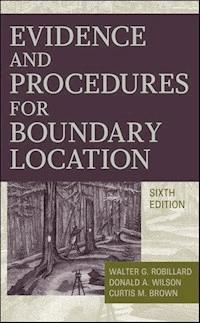
Professional surveyors and many civil engineers must understand the laws of boundaries and the evidence necessary for efficient and accurate boundary determination. This new edition of the preeminent text/reference on the subject is brought completely up to date, with new material on the use of technology in surveying and its legal ramifications, the use of forensic investigative techniques in the discovery of obscured evidence, new case law examples throughout, and new exhibits help illustrate the concepts presented.
Sie lesen das E-Book in den Legimi-Apps auf:
Seitenzahl: 1541
Veröffentlichungsjahr: 2011
Ähnliche


















Contents
Cover
Title Page
Copyright
Preface
1: Introduction
1-1 Scope of the Book
1-2 Definitions of Surveys and Surveyors
1-3 Activities of Boundary Surveyor
1-4 Surveyor in Society
1-5 Current Need for Surveyors
1-6 Future Needs for Surveyors
1-7 Land Data Systems
1-8 Global Positioning Systems
2: Definition, Scope, and Nature of Evidence
2-1 Historical Concept of Evidence
2-2 Surveyor’s Role in Evidence
2-3 Scope
2-4 Importance and Necessity of Being Impartial
2-5 Arrangement of Subject Matter
2-6 Kinds of Evidence
2-7 Evidence, Conclusions, and Proof
2-8 Classifications of Evidence
2-9 Types of Evidence Gathered and Considered by Surveyors
2-10 Scope
2-11 The Law of Evidence
2-12 Burden of Proof
2-13 Degree (Quantum) of Proof of Evidence
2-14 Preponderance of Evidence
2-15 Clear and Convincing
2-16 Beyond a Reasonable Doubt
2-17 Relevancy and Materiality
2-18 Admissibility, Relevancy, and Conclusiveness of Evidence
2-19 Admissibility of Evidence
2-20 Inferences as Substitute for Evidence
2-21 Extrinsic Evidence: When Used
2-22 Judging Effect or Value of Evidence
2-23 Judicial Notice as a Substitute for Evidence
2-24 Weight of New and Old Evidence
2-25 Scope
2-26 Understanding the Law as It Relates to Boundaries and Evidence
2-27 Duties of Surveyors in Finding Evidence
3: Words as Evidence
3-1 Value of Written and Spoken Words
3-2 Writings as Indispensable Evidence
3-3 Identification of Property Descriptions
3-4 Conclusiveness of Written Words of a Deed
3-5 Rules for Interpretation of Writings
3-6 Deeds Construed as a Whole
3-7 Reference Calls for Other Writings or Plats
3-8 Contrasting Plats and Writings as Evidence
3-9 Field Notes as Written Evidence
3-10 Extrinsic Evidence of Ambiguities in Writings
3-11 Practical Location and Descriptions
3-12 Patent Ambiguities
3-13 Ancient Survey Plats and Documents
3-14 Interpreting Words in Conveyances
3-15 Evidence That Determines Intent of a Conveyance
3-16 Evidence of Intent of Senior, Equal, or Junior Rights
3-17 Value of Spoken Evidence (Words)
3-18 Summary
4: Evidence and Technology
4-1 Introduction
4-2 Principles to Be Applied to Modern Technology
4-3 Applying Technology to Evidence
4-4 Original Corners Control
4-5 Original Survey Controls
4-6 Standards of Creation Control Retracements
4-7 Errors in Original Surveys
4-8 Effect of Standards
4-9 Original Corners Based on Found Evidence and Not New Measurements
4-10 Original Evidence Superior to Modern Measurements
4-11 Technology and Setting Lost Corners
4-12 Coordinates and Corners
4-13 Corners Control Over Lines
4-14 Two Points [Corners] Define a Line
4-15 Using Modern Technology Wisely
4-16 Conclusion
5: Other Types or Species of Evidence
5-1 Evidence of a Survey
5-2 Retracements and Evidence
5-3 Historic Private Surveys
5-4 Intent of a Survey
5-5 Value of Monuments as Evidence
5-6 Evidence of Monuments
5-7 Control of Original Monuments
5-8 Monuments as Indispensable Evidence
5-9 Sufficiency, Amount, and Kind of Evidence to Prove Original Corner Monuments
5-10 Physical Characteristics of Monuments
5-11 Disturbed Evidence
5-12 Evidence of Witness Objects
5-13 Evidence Used to Identify Trees
5-14 Trees and Their Characteristics
5-15 Chain of History of Corners and Monuments
5-16 Surveyors’ Records on Monument Location
5-17 Witness Evidence to Prove Corners and Their Monuments
5-18 Summary of Competent Parol Evidence
5-19 Passing Calls and/or Topo Calls
5-20 Possession Evidence
5-21 Common Report, Reputation, and Hearsay
5-22 Evidence of Fences to Prove Boundaries
5-23 Summary
6: Calculations and Measurements as Evidence
6-1 Introduction
6-2 Types of Measurements
6-3 Distance
6-4 Standardization of Measuring Devices
6-5 Units of Length
6-6 Historical Determination of Distance
6-7 Early Determination of Bearing References
6-8 Direction
6-9 Reckoning
6-10 Methods of Observing Directions
6-11 Historical Application of Measurements
6-12 Survey Computations
6-13 Consistency of Significant Figures
6-14 Significant Numbers in Angular Measurements
6-15 Meridian Determination from Celestial Observations
6-16 Photographs as Evidence
6-17 Photogrammetric Measurements
6-18 Availability of Photographs
6-19 Precision and Accuracy
6-20 Classification of Errors
6-21 Theoretical Uncertainty Analysis (TU)
6-22 Errors in Taped Distances
6-23 Errors in Observed Directions
6-24 Reliability of Meridian Observations
6-25 Measurement Evidence to Prove the Proximity of Corners and Their Monuments
6-26 Evidence of Measurement
6-27 Errors in Position of Corners and Lines
6-28 Errors in Traversing
6-29 Uncertainties in Area
6-30 Purpose of Survey Specifications
6-31 Adaptability of Existing Standards
6-32 Uncertainty Expression
6-33 Theoretical Uncertainty
6-34 Value of Property
6-35 Specifications for Location of Property Boundaries
6-36 Size of Properties for Each Class
6-37 Closures
6-38 Adjustment
6-39 Monuments
6-40 Computations
7: Plats as Evidence
7-1 Introduction
7-2 Definition of a Survey Plat
7-3 Types of Plats
7-4 Purpose of Survey Plats
7-5 Features of Plats
7-6 Drawings
7-7 Title of Plat
7-8 Symbols
7-9 Scale
7-10 Indicating Direction
7-11 Basis of Bearings
7-12 Elevation Datum
7-13 Dimensional Data
7-14 Monuments
7-15 Cultural Improvements
7-16 Title Identity
PLATS OF SURVEY RESULTS
7-17 Effect of Plat Showing Survey Results
7-18 Plats with Omitted Information
7-19 Plats of Title Surveys for Title Associations
7-20 Surveyor’s Certificates
7-21 Contents of Plats
ORIGINAL PLATS
7-22 Purpose
7-23 Laws Regulating Platting
7-24 Compilation Plats
7-25 Official Plats
7-26 Private Plats
7-27 Assessor’s and Tax Plats
7-28 Plats as Evidence
7-29 Conflicts between Plat and Field Notes
7-30 Summary
8: Evidence of Water Boundaries
8-1 Introduction
8-2 Determination of Public Title Interest
8-3 Boundaries of Public Trust Waters
8-4 Evidence and Procedures for Tidal Boundaries
8-5 Typical Tidal Datum Determination
8-6 Tidal Waters under Law Departing from Civil and Anglo/American Common Law
8-7 Boundaries of Nontidal Waters: Definitions
8-8 Types of Evidence
8-9 Geomorphological Features
8-10 Changes in Composition of the Soil
8-11 Botanical Evidence
8-12 Hydrological Evidence
8-13 Typical Determination of Ordinary High Water Mark
8-14 Boundaries of Nonpublic Trust Waters
8-15 Changes in Water Boundaries
9: Using Historical Knowledge as Evidence
9-1 Purpose and Scope
9-2 Planned and Indiscriminate Land Conveyancing
9-3 Civilization and Land Ownership: Precolonial Surveys
9-4 Measurement
9-5 Biblical References to Land Surveying
9-6 From the Greeks
9-7 Sovereignty and Ownership
9-8 Feudal Land System
9-9 Livery of Seisin
9-10 Statute of Frauds
9-11 Early Property Surveys in the New World
9-12 Concept of Area
9-13 Concept of Title
SURVEY SYSTEMS OF THE EAST AND SOUTH
9-14 Origin of Title
9-15 Surveys in the Early States
9-16 Subdivision of Ohio Lands
9-17 Prior Land Grants in Louisiana Territory
HISTORY OF PROPERTY OWNERSHIP IN SOUTHWEST
9-18 Lands of Spanish Origin
9-19 Seniority of Titles
9-20 Rights Included with Spanish and Mexican Grants
9-21 Minerals
9-22 Spanish Water Laws
9-23 Road Beds
9-24 Early Settlements
9-25 Ordenanza de Intendentes
9-26 Mexican Land Grants
9-27 Empressario System
9-28 Suits Against the Sovereign
9-29 Instructions to Surveyors
9-30 Survey of Spanish and Mexican Grants
9-31 Gradient Boundary
9-32 Effect of Native Americans
9-33 Early California History
9-34 Resurvey of Land Grants of the Public Domain
9-35 Units of Measurements or Length
9-36 Summary
9-37 The Public Domain or GLO
9-38 Ordinance of 1785
9-39 Prior Surveys
9-40 Geographer of United States
9-41 Beginning Survey of Seven Ranges
9-42 Survey of Seven Ranges
9-43 Ordinance of 1796
9-44 Act of May 10, 1800
9-45 Act of February 11, 1805
9-46 Principal Meridians and Baselines
9-47 Surveyor General
9-48 Instructions to Deputies
9-49 Tiffin’s Instructions
9-50 Later Instructions
9-51 Reorganization of Land Office
9-52 1947 Surveying Instructions
9-53 Manual of 1973
9-54 Rectangular System Protraction Program
9-55 Summary of Public Land Surveys
9-56 Timber Culture Act
9-57 Classification of National Forest Lands
9-58 Land Acquired by Homesteading
9-59 Obtaining Small Tracts within Public Domain
9-60 Land Ownership in Hawaii
9-61 Lands in Alaska
9-62 Court Reports
9-63 Necessity of Legal History
10: Recording and Preserving Evidence
10-1 Scope and Purpose
10-2 Vanishing Evidence
10-3 Degree of Proof Needed
10-4 Perpetuation of Evidence
10-5 Authority to Perpetuate
10-6 Responsibility for Perpetuating Evidence
10-7 Oaths and Witness Evidence
10-8 Identifying Marks on Lines and Monuments
10-9 Recording Documents
10-10 Private Survey Records
10-11 Use of Aerial and Terrestrial Photographs to Preserve Evidence
10-12 Daily Use of Photographs
10-13 Preservation of Evidence
10-14 Video Presentations
10-15 Preservation by State Plane Coordinates
11: Procedures for Locating Boundaries Described by Words
11-1 Introduction
11-2 Boundaries Defined by Written Documents
11-3 Arrangement of Subject Matter and Systematic Procedures in Conducting the Survey
NATURE OF LOCATION SURVEYS
11-4 Definition of Terms and Surveyor’s Functions
11-5 Legal Authority for Regulating Boundary Surveys
11-6 Boundary Surveyor’s Authority
11-7 Fact Finding and Conclusions
CONTACT WITH CLIENTS
11-8 Initial Contact with Client
11-9 Initial Conference with Client
11-10 Contracts with Clients
11.11 Agreements and Disagreements with Clients
RESEARCH OF RECORDS AND DOCUMENTS
11-12 Research Responsibilities
11-13 Documents Used for Boundary Surveys
11-14 Ownership and Location of Land
11-15 Location of Easements
FIELDWORK
11-16 Planning for Fieldwork
11-17 Field Evidence
11-18 Search for Monuments
11-19 Uncalled-For Monuments
11-20 Importance of Possession
11-21 Testimony
11-22 Measurements
11-23 Uncertainty of Position Caused by Measurements
11-24 Permissible Uncertainty of Measurements
11-25 Preservation of Recovered Evidence
11-26 Field Notes
11-27 Assembling Data
COMPILATION OF EVIDENCE
11-28 Computations
11-29 Platting
11-30 Conclusions
PRESENTATION OF RESULTS
11-31 Final Report and Conference with the Client
11-32 Completing the Survey
11-33 Forms of Surveying Results
11-34 Surveyor’s Report
12: Original Surveys and Related Platting Laws
12-1 Contents
12-2 Regulation of Original Surveys
12-3 Original Boundaries
12-4 Former Presurveying Practices
12-5 Objective Platting Laws
12-6 Certainty of Land Location
12-7 Features of Platting Law
12-8 Platting Laws
12-9 Planning Boards
12-10 Considerations of Title
12-11 Title Guarantee
12-12 Boundary Survey
12-13 Requirements for Corner Monumentation
12-14 Density of Monuments
12-15 Use of Coordinates in Subdivisions
12-16 Certification of Survey
12-17 Dedications
12-18 Setbacks
12-19 Recordation
12-20 Examination by Authority
12-21 Presurveys without Recording
12-22 Summary
13: Unwritten Transfers of Land Ownership
13-1 Introduction
13-2 General Concept of Unwritten Conveyances or Rights
13-3 Unwritten Conveyances and Government
13-4 Unwritten Title Supersedes Written Title
13-5 Written Title
ESTOPPEL
13-6 Introduction
13-7 Estoppel by Conduct
UNWRITTEN AGREEMENT
13-8 Unwritten Agreement
13-9 Elements of Unwritten Agreement
13-10 Described Line Known
13-11 Property Line in Dispute
13-12 Adjoining Owners Must Agree
13-13 Practical Location
13-14 Possession Following Agreement
13-15 Recognition and Acquiescence
UNWRITTEN DEDICATION
13-16 Dedication: General
13-17 Dedication and Easement
13-18 Elements of Common-Law Dedications
13-19 Statutory Dedication
13-20 Donor of Dedication
13-21 Location and Description of Dedication
13-22 Expressed Intent to Dedicate
13-23 Implied Intent to Dedicate
13-24 Acceptance of Dedication
13-25 Revoking Offer
13-26 Purpose of Dedication
13-27 Effect of Dedication
13-28 Dedication by Plat
13-29 Prescription
13-30 Adverse Possession
13-31 Historical Concepts of Adverse Possession
13-32 Statutory Character of Adverse Actions
13-33 Burden of Proof
13-34 Character of Title Acquired
13-35 Prescriptive Title
13-36 Effect of Survey on Adverse Rights
13-37 Against Whom Adverse Rights Do Not Run
13-38 Elements of Adverse Rights
13-39 Actual Possession
13-40 Open and Notorious Possession
13-41 Claim of Title
13-42 Continuous Possession
13-43 Hostile Possession
13-44 Exclusive Possession
13-45 Statute of Limitations of Possession
13-46 Color of Title
13-47 Taxes
13-48 Good Faith
13-49 Actual Possession versus Constructive Possession
13-50 Difficulty of Determining Unwritten Rights
13-51 Duties to Unwritten Title Transfers
13-52 Role of the Surveyor in Unwritten Rights
14: Guarantees of Title and Location
14-1 Scope
14-2 Registration of Titles versus Registration of Ownership
14-3 Aids to Title and Location Guarantee
14-4 Title and Possession Guarantees
14-5 Warranty Deed
14-6 Patents
14-7 Chain of Title
14-8 Abstract of Title
14-9 Abstract Companies
14-10 Sources of Abstract Information
14-11 Typical Abstract of Title
14-12 Effect of Abstract of Title
14-13 Abstract and Attorney’s Opinions
14-14 Title Insurance Policy
14-15 Wording of Title Policies
14-16 Title and Location Insurance Policy
14-17 Location Guarantee
14-18 Corrective Instruments
14-19 Torrens Principle of Title Registration
14-20 Characteristics of the Torrens System
14-21 Advantages and Disadvantages of Torrens
14-22 Land Registry in Illinois
14-23 Land Courts
14-24 Massachusetts Land Court
14-25 The Hawaii Land Court
15: Using and Understanding Words in Boundary Descriptions
15-1 Introduction
15-2 Graphic and Written Descriptions
15-3 Subdivision Descriptions
15-4 Metes-and-Bounds Descriptions
15-5 Bounds Descriptions
15-6 Proportionate Conveyances
15-7 Area Described as Being on One Side of a Described Line
15-8 Strip Conveyances
15-9 Area Conveyances
15-10 Linear Conveyances
15-11 Indispensable Parts of a Description
15-12 Objectives When Describing Land
15-13 Sufficiency of Descriptions
15-14 Title Identity
15-15 Senior Rights
15-16 Effect of Loss of Evidence on Location
15-17 Ambiguity
15-18 Mathematical and Legal Correctness and Closure
15-19 Description Based on a Survey
15-20 Desirable Qualities of a Scrivener
15-21 Changing Description Wordings
15-22 Technique of Writing
15-23 Parts of a Description
15-24 Caption
15-25 Body of Description
15-26 Qualifying (Habendum) Clauses
15-27 Senior Rights and Calls for Adjoining Parcels
15-28 Intent of a Description
15-29 Call for a Survey
15-30 Call for Monuments
15-31 Lines
15-32 Straight Lines
15-33 Straight Lines Defined by Monuments
15-34 Straight Lines Defined by Dimension from a Point
15-35 Basis of Bearings for Direction
15-36 Changing the Basis of Bearings
15-37 Azimuth
15-38 Deflection Angles
15-39 Straight Lines Defined by Coordinates
15-40 Directional Calls
15-41 Lines Defined by Geometric Relationships
15-42 Area
15-43 Beginning Point and Ending Point
15-44 Distance of Described Line from Starting Point
15-45 Circular Curved Lines
15-46 Spiral Curve
15-47 Irregular Curves
15-48 Forms Used to Indicate Superior Call
15-49 Strip Conveyances and Stationing
15-50 Abbreviations in Descriptions and Punctuation
15-51 Easements
15-52 Exceptions in Descriptions
15-53 Whole Descriptions
15-54 Whole Descriptions by Referral
15-55 True Metes-and-Bounds Descriptions
15-56 Bounds Form
15-57 Exception Form
15-58 Monument Calls
15-59 Use of Coordinates in Descriptions
15-60 Checklist for Descriptions
15-61 Summary
16: Professional Liability
16-1 Introduction
16-2 Discovery Rule
16-3 Privity of Contract
16-4 Standard of Care
16-5 Negligence versus Breach of Contract
16-6 Expressed and Implied Guarantees
16-7 Trespass Damages
16-8 Avoiding Liability
16-9 Elements of Liability
16-10 Damages
16-11 Liability of an Abstractor
17: Professional Stature
17-1 Contents
17-2 Definition of Profession or Professional
17-3 Attaining Professional Stature
17-4 Attributes of a Profession
17-5 Superior Education in a Field of Knowledge
17-6 Position of Trust
17-7 Gaining Eminence
17-8 Independent Judgment and Liability
17-9 Services to Those Unable to Pay
17-10 Fees
17-11 Ethics
17-12 Surveyor’s Obligations to the Public
17-13 Obligations in Monumenting Boundaries
17-14 Provoking Litigation
17-15 Aiding Unauthorized Surveying Practice
17-16 Qualifications of Surveyors
17-17 Surveyors of Questionable Capabilities
17-18 Surveyor’s Obligations to the Client
17-19 Surveyor’s Obligations to Other Surveyors and the Profession
17-20 Professional Reputation
17-21 Employment
17-22 Discovered Errors
17-23 Review of Another’s Work
17-24 Discredit to the Profession
17-25 Fees
17-26 Advertising
17-27 Ethical and Professional Standards
17-28 Professional Standing of Surveyors
18: The Surveyor in Court
18-1 Introduction
18-2 Pretrial Discovery
18-3 Initial Court Appearance
18-4 Duties of a Surveyor in Court
18-5 Conduct on the Stand
18-6 Object of Litigation
18-7 Surveyor–Attorney Relationship
18-8 Court Trials
18-9 Pretrials
18-10 Types of Court Trials
18-11 Oath, Questions, and Answers
18-12 Direct Examination and Cross-Examination
18-13 Direct and Leading Questions
18-14 Hearsay
18-15 The Jury
18-16 Witnesses
18-17 Lay Witness
18-18 Expert Witness
18-19 Appointment of Expert Witnesses
18-20 Duties of Expert Witnesses
18-21 Opinion Evidence
18-22 Hypothetical Questions
18-23 Cause and Effect
18-24 Textbooks and Treatises
18-25 Use of Photographs
18-26 Power to Compel Expert to Testify
18-27 Cross-Examination of Expert Witness
18-28 Expert Witness Fees
18-29 Amount of Expert Witness Fee Is Subject to Cross-Examination
18-30 Discovery by Interrogatories, Depositions, Admissions, or Production of Documents
18-31 Survey Must Be Done by Surveyor
18-32 Preparation for Testimony
18-33 View of Site by the Court
19: The Surveyor, The Law, and Evidence: A Professional Relationship
19-1 Bryan v Beckley, 16 Ky. 91 (1809)
19-2 Cherry v. Slade, 7 N.C. 3 Mur. 82 (1819)
19-3 Stewart v. Carleton, 31 Mich. 270 (1875)
19-4 Diehl v. Zanger, 39 Mich. 601 (1878)
19-5 Cragin v. Powell, 128 U.S. 691 (1888)
19-6 United States v. Doyle, 468 F.2d 633 (1972)
19-7 Rivers v. Lozeau, 539 So. 2d 1147, Fla. App. 14 Fla. L. Weekly 523 (1989)
19-8 Epilogue
Appendix A: The Surveyor’s Report
Appendix B: Wooden Evidence
CHARCOAL IDENTIFICATION
IDENTIFICATION OF OAK WOODS
THE INFALLIBLE TEST FOR HARDWOOD OR SOFTWOOD
RING COUNT OF DECAYED WOOD MADE EASIER THROUGH FREEZING
Appendix C: The [Quasi-]Judicial Function of Surveyors
RECOVERING LOST CORNERS
EXTINCT CORNERS
THE FACTS OF POSSESSION
FIXING LINES BY ACQUIESCENCE
THE DUTY OF THE SURVEYOR
MEANDER LINES
IRREGULAR WATERCOURSES
MEANDER LINES AND RIPARIAN RIGHTS
QUASIJUDICIAL CAPACITY OF SURVEYORS
Appendix D: Geodaesia
Appendix E: Land Acts That Created The Public Lands
1785
1796
1805
AN ORDINANCE FOR ASCERTAINING THE MODE OF DISPOSING THE LANDS IN THE WESTERN TERRITORY (PASSED MAY 20, 1785)
RESOLUTION OF MAY 12, 1786
LAND ACT OF MAY 18, 1796
ACT OF FEBRUARY 11, 1805, 2 STAT. 313
Index
This book is printed on acid-free paper.
Copyright © 2011 by John Wiley & Sons, Inc. All rights reserved
Published by John Wiley & Sons, Inc., Hoboken, New Jersey. Published simultaneously in Canada.
No part of this publication may be reproduced, stored in a retrieval system, or transmitted in any form or by any means, electronic, mechanical, photocopying, recording, scanning, or otherwise, except as permitted under Section 107 or 108 of the 1976 United States Copyright Act, without either the prior written permission of the Publisher, or authorization through payment of the appropriate per-copy fee to the Copyright Clearance Center, 222 Rosewood Drive, Danvers, MA 01923, (978) 750-8400, fax (978) 646-8600, or on the Web at www.copyright.com. Requests to the Publisher for permission should be addressed to the Permissions Department, John Wiley & Sons, Inc., 111 River Street, Hoboken, NJ 07030, (201) 748-6011, fax (201) 748-6008, or online at www.wiley.com/go/permissions.
Limit of Liability/Disclaimer of Warranty: While the publisher and the author have used their best efforts in preparing this book, they make no representations or warranties with respect to the accuracy or completeness of the contents of this book and specifically disclaim any implied warranties of merchantability or fitness for a particular purpose. No warranty may be created or extended by sales representatives or written sales materials. The advice and strategies contained herein may not be suitable for your situation. You should consult with a professional where appropriate. Neither the publisher nor the author shall be liable for any loss of profit or any other commercial damages, including but not limited to special, incidental, consequential, or other damages.
For general information about our other products and services, please contact our Customer Care Department within the United States at (800) 762-2974, outside the United States at (317) 572-3993 or fax (317) 572-4002.
Wiley also publishes its books in a variety of electronic formats. Some content that appears in print may not be available in electronic books. For more information about Wiley products, visit our Web site at www.wiley.com.
Library of Congress Cataloging-in-Publication Data:
Robillard, Walter G. (Walter George), 1930- Evidence and procedures for boundary location / Walter G. Robillard, Donald A. Wilson, Curtis M. Brown. – 6th ed. p. cm. Earlier editions under Curtis M. Brown. Includes index. ISBN 978-0-470-40478-2 (cloth); ISBN 978-0-470-90157-1 (ebk); ISBN 978-0-470-90159-5 (ebk); ISBN 978-0-470-90160-1 (ebk); ISBN 978-0-470-95005-0 (ebk); ISBN 978-0-470-95170-5 (ebk); ISBN 978-0-470-95194-1 (ebk) 1. Boundaries (Estates)–United States. I. Wilson, Donald A., 1941- II. Brown, Curtis M. (Curtis Maitland), 1908- Evidence and procedures for boundary location. III. Title. KF639.B73 2011 346.7304′32–dc22 2010031095
Preface
Seldom do professors require that students read introductions to their textbooks. Over 50 years ago, one of our college professors patterned his entire final examination on the introduction to the textbook we used in his class. The indignation of the students of “having to read” the introduction could be heard across the campus of Syracuse University.
Yet, the introduction or preface should set the tone of the book.
The technical aspects of surveying are becoming more complex, and colleges and universities are having difficulties finding time in already-crowded class schedules to add new courses. As our careers have progressed throughout the years, we have, either by necessity or by demand, created a special area of surveying that is seldom included in courses of studies of those colleges that teach surveying programs—that is, the legal area of surveying.
No longer do young surveyors commence at the bottom of the professional ladder and learn by doing. Today, the trend is toward college-trained individuals filling the ranks of the professional surveyors and, as such, the “hands-on” experience that has made this book so popular is being denied to the students. The technical aspects of surveying are developing more rapidly than are either the legal aspects or the business aspects of the profession. As each of us becomes older, we are cognizant of the fact that we are not immortal. We have asked ourselves the question, “Who will step into our positions, as we stepped in and assumed the position that was vacated by the late Curt Brown?” The answer is, “We don’t know.” We hope some young surveyor will come forth and take up the banner of the well-rounded surveyor of tomorrow—one who possesses the love of the law and sees that technology is but a tool of the surveyor and not a god that must be bowed before and adored before the “altar of technology.”
Walt Robillard Atlanta, Georgia Don Wilson Newfields, New Hampshire
1
INTRODUCTION
1-1 Scope of the Book
In writing any book, authors should have a goal or philosophy as to what it is they wish to accomplish. We have such a philosophy: It is our desire to help the student and the practicing surveyor, as well as those aspiring young people who wish to enter the surveying profession, appreciate some of what we feel are the finer aspects of surveying, that is, the legal aspects as well as that area of the law that relates to and encompasses evidence in all of its aspects.
This is a book about survey evidence and, as such, it is not a book on “how to survey” but what to do with your survey when it is completed and what your clients can expect from your survey. Many consider the surveyor as the individual standing behind a transit or theodolite turning angles or collecting data for a new road or measuring for a new subdivision. This book will have a double focus: First, it is aimed at those students who wish to enter the surveying profession and at those surveyors who locate boundary lines and land parcels or utilize evidence in searching for and locating the footsteps of the earlier surveyors who originally created the parcels or property.
Lesen Sie weiter in der vollständigen Ausgabe!
Lesen Sie weiter in der vollständigen Ausgabe!
Lesen Sie weiter in der vollständigen Ausgabe!
Lesen Sie weiter in der vollständigen Ausgabe!
Lesen Sie weiter in der vollständigen Ausgabe!
Lesen Sie weiter in der vollständigen Ausgabe!
Lesen Sie weiter in der vollständigen Ausgabe!
Lesen Sie weiter in der vollständigen Ausgabe!
Lesen Sie weiter in der vollständigen Ausgabe!
Lesen Sie weiter in der vollständigen Ausgabe!
Lesen Sie weiter in der vollständigen Ausgabe!
Lesen Sie weiter in der vollständigen Ausgabe!
Lesen Sie weiter in der vollständigen Ausgabe!
Lesen Sie weiter in der vollständigen Ausgabe!
Lesen Sie weiter in der vollständigen Ausgabe!
Lesen Sie weiter in der vollständigen Ausgabe!
Lesen Sie weiter in der vollständigen Ausgabe!
Lesen Sie weiter in der vollständigen Ausgabe!
Lesen Sie weiter in der vollständigen Ausgabe!
Lesen Sie weiter in der vollständigen Ausgabe!
Lesen Sie weiter in der vollständigen Ausgabe!
Lesen Sie weiter in der vollständigen Ausgabe!
Lesen Sie weiter in der vollständigen Ausgabe!
Lesen Sie weiter in der vollständigen Ausgabe!




