


Erhalten Sie Zugang zu diesem und mehr als 300000 Büchern ab EUR 5,99 monatlich.
- Herausgeber: Vaso Roto Ediciones
- Kategorie: Poesie und Drama
- Serie: Poesía
- Sprache: Spanisch
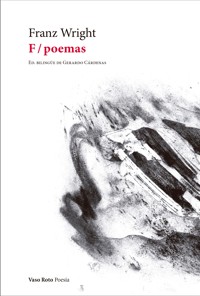
Un poemario sobre la conciencia de la propia muerte muy clarividente y libre de drama. Mientras consideraba su mortalidad, Franz Wright encontró una nueva euforia y claridad en la página, entregando para nuestro examen el "yo" defectuoso pero arrodillado en gratitud en el que se había convertido. Desde «Entries of the Cell», el largo poema central que detalla la soledad del alma soltera, hasta breves poemas narrativos en prosa y letras tradicionales, Wright se deleita en el poder compensatorio del lenguaje, observando los faros diurnos que siguen a un coche fúnebre, o el viento, «bendiciendo uno por uno los capullos sin luz del regreso inadvertido del melocotonero doblado hacia atrás».
Sie lesen das E-Book in den Legimi-Apps auf:
Seitenzahl: 131
Veröffentlichungsjahr: 2023
Das E-Book (TTS) können Sie hören im Abo „Legimi Premium” in Legimi-Apps auf:
Ähnliche













Primera edición: octubre, 2022
Título original: F: POEMS by Franz Wright
© 2013 by Franz Wright
© de la traducción: Gerardo Cárdenas, 2022
This translation published by arrangement with Alfred A. Knopf, an imprint of The Knopf Doubleday Group, a division of Penguin Random House, LLC.
© Vaso Roto Ediciones, 2022
ESPAÑA
C/ Alcalá 85, 7° izda.
28009 Madrid
www.vasoroto.com
Grabado de cubierta: Víctor Ramírez
Queda rigurosamente prohibida, sin la autorización de los titulares del copyright, bajo las sanciones establecidas por las leyes, la reproducción total o parcial de esta obra por cualquier medio o procedimiento.
Impreso y gestionado por Bibliomanager
ISBN: 978-84-125921-0-8
eISBN: 978-84-196931-6-7
BIC: DCF
Depósito Legal: M-22948-2022
Franz Wright
F / poemas
Traducción de Gerardo Cárdenas
For Elizabeth, with infinite love.And for our friends Lydia and Coraforever young.
Para Elizabeth, con amor infinito.Y para nuestras amigas Lydia y Corasiempre jóvenes.
The Hacs have arranged to rear every year a few child martyrs… raggedy, wretched, hopeless kids … whom hey subject to atrocious mistreatment and evident injustices, inventing reasons and deceptive complications based on lies, for everything, in an atmosphere of terror and mystery. In this way they have brought up great artists, poets.
HENRI MICHAUX, “in the land of the hacs”(based on richard ellmann’s translation)
Los Hacs han tomado medidas para criar cada año a unos cuantos niños mártires… niños harapientos, desdichados, desesperanzados… a los que someten a atroces maltratos y evidentes injusticias, inventando razones y complicaciones engañosas basadas en mentiras para todo, en una atmósfera de terror y misterio. De esta manera han educado a grandes artistas, poetas.
HENRI MICHAUX, en Entre los Hacs1(basado en la traducción de Richard Ellmann)
1N. del T.: Wright usa la traducción al inglés del libro Ailleurs. En otros lugares, que fue traducido al español por Julia Escobar, Alianza Editorial, Madrid, 1983.
Índice
Four in the morning
Cuatro de la mañana
I
I
Elderly couple
Pareja de ancianos
Through
Harto
Leave me hidden
Déjame oculto
I dreamed I met William Burroughs
Soñé que conocía a William Burroughs
Roadside Grave: Winter, Mass
Tumba junto al camino: Invierno, Mass
Fatalville, Ark
Fatalville, Ark
Homecoming
Regreso a casa
The composer
El compositor
Stay
Estadía
Four semi-dreamt poems
Cuatro poemas medio soñados
Whispered ceremony
Susurrada ceremonia
Post card 2
Postal 2
Lamp
Lámpara
One
Uno
Crumpled-up note blowing away
Nota arrugada volando al viento
II
II
Entries of the cell
Apuntes de la celda
III
III
Dedication
Dedicatoria
Learning to read
Aprendiendo a leer
Panhandler
Mendigo
Rose opening
Rosa abriéndose
Medicine cabinet
Gabinete de medicinas
Spell
Hechizo
Home sought
Se busca hogar
Recurring awakening
Recurrente despertar
To
Para
Dawn moon over calvary
Luna del alba sobre el calvario
Screamed lullaby
Vociferada canción de cuna
Peach tree
Árbol de durazno
The party at the end
Fin de fiesta
Rain in Waltham
Lluvia en Waltham
Nativity
Natividad
Three basho haibun
Tres haibun de basho
The poem
El poema
Notes and acknowledgments
Notas y reconocimientos
A note about the author
Apuntes sobre Franz Wright
Four in the morning
Wind from the stars.
The world is uneasily happy—
everything will be forgotten.
The bird I’ve never seen
sang its brainless head off;
same voice, same hour, until
I woke and closed my eyes.
There it stood again:
wood’s edge, and depression’s
deepening
shade inviting me in
saying
No one is here.
No one was there
to be ashamed of me.
Cuatro de la mañana
Viento de las estrellas.
El mundo está incómodamente feliz,
todo será olvidado.
El pájaro que nunca he visto
cantó hasta descerebrarse;
misma voz, misma hora, hasta que
desperté y cerré los ojos.
Ahí estaba otra vez:
al filo del bosque, y la sombra
creciente
de la depresión invitándome a entrar
diciéndome
No hay nadie aquí.
No había nadie ahí
que se avergonzase de mí.
I
I
Elderly couple
Those last two weeks of August before we too are married, before we recognize another soul in town, we meet them walking here at evening, nod, and smile hello. Until we don’t awhile, then never again. Small rabbits tensely watch us pass from the long uncut grass between headstones where they believe they are safe. They have gone to school with stones to learn patience and motionlessness. Rapidly graying, dissolving into one substance with the dusk, they are so still they tremble. They are troubled by a fear whose source they have no way of comprehending, combined with the equally incomprehensible delight of children playing hide-and- seek as it gets dark, sooner, enormously, with every passing day, and they become aware in waves of being older than a person they were only yesterday. While the trees swaying soundlessly high overhead, the breeze and first visible stars seem, if anything, younger. Mothers stand in yellow kitchen windows pretending to listen to fathers quietly, inconsequentially droning on behind them in the deepening evening, even when they are the voices of men no longer alive. They say things like “Any day above ground is a good day …” And what would they have known about that? The mothers stand completely still, they will never turn around. Standing with his back to a tree, barely breathing, a boy wonders if he is going to be the one abruptly struck down from above, swiftly carried aloft over the first soft lights of town by huge wings, never to be seen again, and decides that he probably won’t, and for a minute is perfectly happy.
Mt. Feake Cemetery, 1999
Pareja de ancianos
Esas dos últimas semanas de agosto antes de que nos casemos, antes de que reconozcamos a otra alma del pueblo, nos los encontramos caminando por ahí en la tarde, los saludamos con una inclinación de cabeza y una sonrisa. Hasta que ya no por un tiempo, y luego nunca más. Pequeños conejos tensamente nos miran pasar desde el alto césped sin podar entre lápidas donde creen que estarán a salvo. Han ido a la escuela con piedras para aprender paciencia e inmovilidad. Encaneciéndose rápidamente, disolviéndose en una sola sustancia con el ocaso, están tan quietos que tiemblan. Los inquieta un miedo cuya fuente no tienen manera de entender, combinado con el igualmente incomprensible gozo de los niños que juegan a las escondidillas hasta que oscurece, antes de tiempo, enormemente, con cada día que pasa, y se vuelven conscientes por oleadas de ser más viejos que la persona que fueron apenas ayer. En tanto los árboles se mecen silenciosamente muy por encima de ellos, la brisa y las primeras estrellas parecen, si acaso, más jóvenes. Las madres de pie en amarillas ventanas de las cocinas fingiendo que escuchan a los padres silenciosamente, inconsecuentemente monótonos a sus espaldas en la creciente oscuridad, aun siendo las voces de hombres que ya no están vivos. Dicen cosas como: «cualquier día sobre tierra es un buen día…». Y ¿ellos qué sabrían al respecto? Las madres permanecen de pie completamente quietas, ya nunca se darán la vuelta. De pie, reposada su espalda contra un árbol, apenas respirando, un niño se pregunta si será él quien abruptamente sea derribado desde las alturas, rápidamente alzado por enormes alas sobre las primeras tenues luces del pueblo, para nunca más ser visto, y decide que probablemente no lo será, y por un minuto es perfectamente feliz.
Cementerio de Mt. Feake, 1999
Through
Once upon the eternally recurring dark before the dawn, flashing its green neon NO VACANCY sign repeatedly down the unsightseeing one-lane unraveling etcetera highway. Forever. Can Tucson be far behind? Mile- wide highway of crushed emerald polished to an adamantine coolness, noontime and moontime, one unmoving cloud in its depths, continuing straight ahead toward the line where the blue abyss of Arizona falls away (just trying to think positive). Then you suddenly woke at the wheel, took the next exit, stood at my door, and not a moment too soon. I am sick of being chained to this chair and told what to write, much of it outrageous lies! Once, I feel sure of it, when death had no vacancy you came and stayed in me. Or did I come and stay in you, the last word long set down, unfinished? Through.
Harto
Érase una vez la eternamente recurrente oscuridad antes del amanecer, parpadeando repetidamente su letrero de neón verde NO HAY CUPO por la trunca carretera sin vistas de un solo carril etcétera. Por siempre. ¿Será que Tucson queda más lejos? Carretera de una milla de ancho de esmeralda machacada pulida hasta una frescura adamantina, mediodía y tiempo de luna, una nube inmóvil en sus profundidades, continuando de frente hacia la línea en la que el abismo azul de Arizona declina (sólo tratando de pensar positivamente). De pronto despiertas al volante, tomas la siguiente salida, te paras frente a mi puerta, y no demasiado pronto. ¡Me enferma seguir encadenado a esta silla y que me digan qué escribir, en su mayoría atroces mentiras! Una vez, estoy seguro de ello, cuando la muerte ya no tenía habitaciones, viniste y te quedaste en mí. ¿O fui yo y me quedé en ti, la última palabra largamente escrita, incompleta? Harto.
Leave me hidden
I was having trouble deciding
which to watch: Night
of the Living Bloggers, or
Attack of the Neck-Brace People.
In the end I just went for a walk.
In the woods I stopped wondering why
of all trees
this one: my hand
pressed to fissures
and ridges of
bark’s hugely magnified
fingerprint, forehead
resting against it
finally, feeling
distinctly
a heartbeat, vast, silently
booming there deep in
my hidden leaves, blessed
motherworld, personal
underworld, thank you
thank you.
Déjame oculto
Me estaba costando trabajo decidir
qué mirar: La noche
de los blogueros vivientes, o
El ataque de la gente de cuello ortopédico.
Al final salí a dar una caminata.
En el bosque me detuve a preguntarme por qué
de todos los árboles
éste: mi mano
puesta sobre las fisuras
y crestas
de la inmensamente magnificada
huella dactilar de la corteza, mi frente
descansando sobre ella
finalmente sintiéndola
hasta el extremo
un latido, vasto, retumbando
silenciosamente ahí en lo profundo
de mis hojas ocultas, bendito
mundo maternal, submundo
personal, gracias
gracias.
I dreamed I met William Burroughs
I met William Burroughs in a dream.
It was some sort of bohemian farmhouse,
and he was enthroned, small and skeletal,
in a truly gigantic red armchair.
When I asked him how he was, he replied,
Well, you know what they say—for best results
always mock and frighten lobster before boiling.
Franz—I like that name, Franz. Childe Franz
to the dark tower something or other … Hey,
got a smoke? And quit worrying so much:
they can’t help themselves, they’re like abused dogs
and they’re going to react to affection and kindness
with uncontrollable savagery. Just tell them,
You’re out of my mind, pal. You’re out
of my mind. Either that or, I’m out of yours.
That’ll keep them brain-chained to their trees.
Soñé que conocía a William Burroughs
Conocí a William Burroughs en un sueño.
Era una especie de granja bohemia,
y estaba entronizado, pequeño y esquelético,
en un sillón rojo realmente gigantesco.
Cuando le pregunté cómo estaba, replicó,
Bueno, ya sabes lo que dicen –para mejores resultados
asuste y búrlese siempre de la langosta antes de hervirla.
Franz –me gusta ese nombre, Franz, Niño2 Franz
a la torre oscura o algo por el estilo… Hey,
¿tienes un cigarrillo? Y ya no te preocupes tanto:
no tienen remedio, son como perros abusados
y van a reaccionar con salvajismo incontrolable
ante la bondad y el afecto. Sólo diles,
Te has largado de mi mente, amigo. Te has largado
de mi mente. Eso, o me he largado de las suyas.
Esto los mantendrá con el cerebro encadenado a sus árboles.
2N. del T.: Wright utiliza el apelativo Childe, una forma arcaica de «Niño», que solía usarse para referirse a un niño de origen noble.
Roadside Grave: Winter, Mass
In the white is a name.
In the three worlds
it stands. Wind
sounds, a world of one
color.
Name spoken,
once,
across a darkening field;
name being stitched,
very small, in white thread
in white cloth.
Tumba junto al camino: Invierno, Mass3
Sobre lo blanco hay un nombre.
En los tres mundos
destaca. Sonidos
de viento, un mundo de un
color.
Nombre dicho,
una vez,
al otro lado de un campo que se oscurece;
nombre cosiéndose,
muy pequeño, con hilo blanco
sobre tela blanca.
3N. del T.: En el original, Wright escribe «Mass», abreviación coloquial del estado de Massachusetts, donde el poeta vivió los últimos años de su vida, y donde murió en 2015.
Fatalville, Ark
To you this world’s the other world. The first transparent leaves wind- blown to spreading green flames—how strange everything looks all at once, my room looks different, and I am afraid of it. You’ll never guess why the universe just turned into somebody’s name, the morning light a look of love: a single double-nostriled blast (40 mg per). A single white rose glows on the tabletop, filling the room with the distant and close to inaudible voices singing from its whorled earlike depths, the connection nearly lost … What can you do but walk toward it? I cross the room for several years staying one step ahead of the avalanche and resisting attempting, at each star-filled canyon’s ledge, flight. I reach the bed at last and lie down, like you entertaining no need whatsoever to open my eyes, to move my hand, or pronounce another word, ever. Let someone else give it a try, and they will, too. My friend I never met, I think you would agree: the deans are never going to let that cow go. I don’t wonder how many more of them there are these days, all those masters of the art in their early twenties, just like John Keats and Hart Crane! We don’t have to think about it anymore. The poet will come, no matter what they do.
Fatalville, Ark4
Para ti, este mundo es el otro mundo. Las primeras hojas translúcidas sopladas por el viento en verdes llamas propagadas. Qué raro se ve todo de pronto, mi cuarto se ve distinto, y le tengo miedo. Nunca adivinarás por qué el universo se acaba de convertir en el nombre de alguien, la luz de la mañana en una mirada de amor: una sola ráfaga por ambas ventanas de la nariz (40 miligramos por cada una). Una solitaria rosa blanca brilla sobre la mesa, llenando el cuarto con voces distantes y casi inaudibles que cantan desde sus profundidades retorcidas como una oreja, la conexión casi perdida… ¿Qué más puedes hacer sino caminar hacia ella? Atravieso el cuarto por varios años manteniéndome un paso por delante de la avalancha, resistiendo el intentar, ante cada saliente del abismo, la huida. Al fin alcanzo la cama y me recuesto, como tú sin necesidad en absoluto de abrir mis ojos, de mover mi mano, o de pronunciar otra palabra, jamás. Que alguien más lo intente, y lo intentarán también. Amigo mío que nunca conocí, creo que estarías de acuerdo: los decanos nunca dejarán que se vaya esa vaca. No me pregunto cuántos más de ellos quedarán estos días, ¡todos esos maestros del arte en sus veintes, así como John Keats o Hart Crane! No tenemos que pensar más en ello. El poeta llegará, hagan lo que hagan.
4




