


Erhalten Sie Zugang zu diesem und mehr als 300000 Büchern ab EUR 5,99 monatlich.
- Herausgeber: Polygon
- Kategorie: Poesie und Drama
- Sprache: Englisch
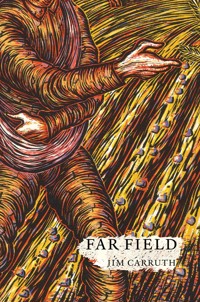
Far Field is the third and final book in The Auchensale Trilogy, a series of poetry cycles capturing the changing rural landscape of the West of Scotland. Following on from its predecessors Black Cart and Bale Fire, the book consists of three cycles bound together by footers. A number of poems in the early part of the book are in response to paintings by the Glasgow Boys particularly those painted during their time spent in agricultural communities. Many of the poems are highly personal with a number about family members. These include a series of elegies for his late father. It also focuses on the present day looking to the challenges ahead for the family farm and that passing baton to the next generation.
Sie lesen das E-Book in den Legimi-Apps auf:
Seitenzahl: 53
Veröffentlichungsjahr: 2023
Das E-Book (TTS) können Sie hören im Abo „Legimi Premium” in Legimi-Apps auf:
Ähnliche
















FAR FIELD
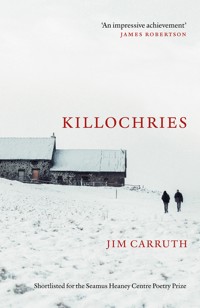
Born in Johnstone in 1963, Jim Carruth grew up on his family’s farm in Renfrewshire. His first collection Bovine Pastoral (2004) was the first of a sequence of five chapbooks that captured the experiences of those working in the rural landscape. His work has attracted both praise and awards, including the McLellan Poetry Competition, the McCash Poetry Prize and the Callum Macdonald Memorial Award. In 2009, he was awarded a Robert Louis Stevenson Fellowship. He has collaborated with sculptor Andy Scott on several projects over the years, most notably The Kelpies, and in 2014, he was appointed as the Poet Laureate for Glasgow. In 2015, his verse novella Killochries was shortlisted for the Saltire Society Scottish Poetry Book of the Year, the Seamus Heaney Centre for Poetry Prize and the Fenton Aldeburgh Prize. Far Field is the final part of The Auchensale Trilogy following on from Black Cart (2017) and Bale Fire (2019).
‘Far Field is the stunning culmination of a hugely ambitious trilogy celebrating Carruth’s love for a rural landscape and its people. In essence, think of A Scots Quair as enduring song. I cannot think of any other collection which so intimately and sensitively documents a beloved corner of a beloved country and the folk who farmed there, through all their seasons and weathers.’
JOHN GLENDAY
‘In deeply moving poems, as fierce as they are tender, Carruth honours a way of life that is threatened or already lost. His vivid language immerses us in the daily work of caring for animals, fields, family and neighbours. Every line is as honed as the landscape, evoking the harrowing, relentless aspects of farming as well as the meaning and beauty to be found in everyday routines. Endurance is threaded through the collection as is love and the potential for regeneration.’
JANE CLARKE
‘Far Field completes Jim Carruth’s marvellous trilogy that began with Black Cart and Bale Fire. I am in awe of his verbal power and the author’s fidelity to love, loss, and community. This is a book of land and landscapes, and the gift of being alive to them.’
DAVID MORLEY
First published in paperback in Great Britain in 2023 byPolygon, an imprint of Birlinn Ltd.
Birlinn Ltd
West Newington House
10 Newington Road
Edinburgh EH9 1QS
www.polygonbooks.co.uk
Copyright © Jim Carruth, 2023
ISBN 978 1 84697 636 0
EBOOK ISBN 978 1 78885 578 5
The moral right of Jim Carruth to be identified as theauthor of this work has been asserted inaccordance with the Copyright, Designsand Patents Act, 1988.
British Library Cataloguing-in-Publication DataA catalogue record for this book is available onrequest from the British Library.
The publisher gratefully acknowledges investment fromCreative Scotland towards the publication of this book.
Typeset in Verdigris mvb by The Foundry, EdinburghPrinted and bound in Great Britain by Clays Ltd, Elcograf S.p.A.
For Lorna, David, Hannah and Paul
CONTENTS
Author’s note
1. LANDSCAPE WITH CATTLE
Landscape with Cattle
A Hind’s Daughter
Straw
By Heart
Schoolmates
Barefoot Days
Milk Tank
The Basics
Playing the Milkmaid in the Hameau de la Reine
Flow
Trawlerman
Anatomical Model of the Cow
Days of Whitewash
Shearing
Scythe
The Hedgecutter
Days Left Till Harvest
Harvest Epilogue
Harvest Wake
The Hireling’s Lullaby
2. Earthstruck
Earthstruck
A Rough Sonnet from the Blacksmith’s Son
The Gamekeeper’s Daughter
Tenderness
You Smell of the Farm
At First Sight
A Good Judge of Horse Flesh
Missing the Harvest Dance
Leviathan
Every Man his Own Cattle Doctor
Casting a Cow, Ringing a Bull
Four Millimetres
Warning Signs
The Shepherd’s Loss
Robertson’s First Wake
MacIntyre’s Big Horse
Preparing the Ground
Migration
Gone Out
My Father’s Soil
3. STEPPING STONES
Stepping Stones
The Course of the Locher Water
Traveller
Old Boots
Without an Epiphany from the Belly of a Whale
Market Talk
Long Way Round
Viewpoint
Bringing in the Cows
My Wife’s Whistle
My Brother’s Cloud
My Father’s Hands
Gene Pool
Atrial Fibrillation
Roe
Aeolian Harp
Preparing the Pipe
Vespers
Milk Fever
Planting Aspen Saplings
Acknowledgements
AUTHOR’S NOTE
The footers in the first section trace a journey across the body of a cow. The footers in the second section are the main buildings in the family farm providing the physical definition of home. The footers in the final section are the many different spellings of the family name. As many of the descendants in the past were illiterate farm workers this has led to the variety seen today.
A number of poems in the first part of the book have been inspired by the work of the Glasgow Boys in the late nineteenth century. Early in their careers, some of the artists focussed on working ‘en plein air’ within rural communities trying to capture a more naturalistic response to those who worked there. The following works have been used as starting points to poems in the collection:
Landscape with Cattle
Joseph Crawhall
A Hind’s Daughter
James Guthrie
Boy with a Straw
James Guthrie
Schoolmates
James Guthrie
The Milkmaid
George Henry
Sheep Shearing
James Guthrie
The Hedgecutter
George Henry
Gypsy Fires are Burning forDaylight’s Past and Gone
James Guthrie
The Gamekeeper’s Daughter
E.A. Walton
‘Playing the Milkmaid in the Hameau de la Reine’: Marie Antionette used to amuse herself and her friends by portraying a milkmaid in her own rustic landscape created by architect Richard Mique.
‘Four millimetres’ describes the regular TB testing of cattle.
‘My Wife’s Whistle’: Wellees is the name of my brother-in-law’s farm.
gifts
from my father
the lyric rhythm
of furrow
from my mother
the fertile depth
of soil
LANDSCAPE WITHCATTLE
Okay, I like cows
GEORGE BAILEY
Landscape with Cattle
On these flooded flatlands perspective is key
as is the journey my eye has taken
from the distant horizon set by the sea.
Its ripple seen in the middle distance
in the ridge line of the red-roofed cottage
and in the foreground’s straight-backed cattle.
These white beasts have grown to fill my view.
Standing in shallow water, offering up reflections,
I find the deep calm of their cud chewing
cannot easily be conveyed, nor its stark contrast
with a day’s busyness: flit and twist of swallows




