


29,99 €
Mehr erfahren.
- Herausgeber: John Wiley & Sons
- Kategorie: Wissenschaft und neue Technologien
- Serie: The Geological Field Guide Series
- Sprache: Englisch
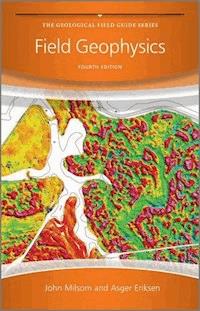
This handy pocket-sized field guide provides practical information and assistance to anyone engaged in small-scale surveys on the ground. Fully revised and updated throughout, the Fourth Edition includes comprehensive updates on the use of GPR and GPS and new sections on surface wave seismics and towed array systems. This has become the standard text in this area for use in the field and the experience of the two authors will ensure the book retains its place as one of the most popular handbooks in applied geophysics.
- Fully revised and updated to incorporate new developments in the field;
- Focus on quality control of the acquisition of data and basic field interpretation;
- User-friendly, accessible writing style;
- Includes updates on Ground Penetrating Radar and the use of GPS;
- New section on surface wave methods.
Additional material available on the companion website at www.wiley.com/go/milsom/geophysics4e
Sie lesen das E-Book in den Legimi-Apps auf:
Seitenzahl: 433
Veröffentlichungsjahr: 2011
Ähnliche


















The Geological Field Guide Series
Barnes, J.W. and Lisle, R.J. (2004) Basic Geological Mapping, 4th edn. ISBN: 978-0-470-84986-6, 5th edn publishing (2011). ISBN: 978-0-470-68634-8
Fry, N. (1991) The Field Description of Metamorphic Rocks. ISBN: 978-0-471-93221-5
McClay, K.R. (1991) The Mapping of Geological Structures. ISBN: 978-0-471-93243-7
Milsom, J. and Eriksen, A. (2011) Field Geophysics, 4th edn. ISBN: 978-0-470-74984-5
Tucker, M.E. (2011) Sedimentary Rocks in the Field, 4th edn. ISBN: 978-0-470-68916-5
Contents
Series Page
Title Page
Copyright Page
PREFACE TO THE FIRST EDITION
PREFACE TO THE SECOND EDITION
PREFACE TO THE THIRD EDITION
PREFACE TO THE FOURTH EDITION
1 INTRODUCTION
1.1 What Geophysics Measures
1.2 Fields
1.3 Geophysical Survey Design
1.4 Geophysical Fieldwork
1.5 Geophysical Data
1.6 Bases and Base Networks
1.7 Real-Time Profiling
2 GRAVITY METHOD
2.1 Physical Basis of the Gravity Method
2.2 Gravity Meters
2.3 Gravity Reductions
2.4 Gravity Surveys
2.5 Field Interpretation
3 MAGNETIC METHOD
3.1 Magnetic Properties
3.2 The Magnetic Field of the Earth
3.3 Magnetic Instruments
3.4 Magnetic Surveys
3.5 Simple Magnetic Interpretation
4 RADIOMETRIC SURVEYS
4.1 Natural Radiation
4.2 Radiation Detectors
4.3 Radiometric Surveys
5 ELECTRIC CURRENT METHODS: GENERAL CONSIDERATIONS
5.1 Resistivity and Conductivity
5.2 Varying Currents
6 RESISTIVITY METHODS
6.1 DC Survey Fundamentals
6.2 DC Practicalities
6.3 Resistivity Profiling
6.4 Resistivity Depth-Sounding
6.5 Electrical Resistivity Imaging (ERI)
6.6 Capacitive Coupling
7 SP AND IP
7.1 SP Surveys
7.2 Polarisation Fundamentals
7.3 Time-Domain IP Surveys
7.4 Frequency-Domain Surveys
7.5 IP Data
8 ELECTROMAGNETIC METHODS
8.1 Two-Coil CW Systems
8.2 CWEM Conductivity Mapping
8.3 Fixed-Source Methods
8.4 Transient Electromagnetics
9 REMOTE-SOURCE ELECTROMAGNETICS
9.1 Natural Electromagnetic Radiation
9.2 Controlled-Source Audio-Magnetotellurics (CSAMT)
10 GROUND PENETRATING RADAR
10.1 Radar Fundamentals
10.2 GPR Surveys
10.3 Data Processing
11 SEISMIC METHODS: GENERAL CONSIDERATIONS
11.1 Seismic Waves
11.2 Seismic Sources
11.3 Detection of Seismic Waves
11.4 Recording Seismic Signals
12 SEISMIC REFLECTION
12.1 Reflection Theory
12.2 Reflection Surveys
13 SEISMIC REFRACTION
13.1 Refraction Surveys
13.2 Interpretation
13.3 Limitations of the Refraction Method
14 SEISMIC SURFACE WAVE METHODS
14.1 Surface Wave Surveys
14.2 Data Processing
14.3 Limitations of the Method
15 MAPS, MAPPING AND GPS
15.1 Maps and Mapping
15.2 SATELLITE NAVIGATION
Appendix: Terrain Corrections for Hammer Zones B to M
Index
This edition first published 2011, © 2011 by John Wiley & Sons Ltd
Wiley-Blackwell is an imprint of John Wiley & Sons, formed by the merger of Wiley’s global Scientific, Technical and Medical business with Blackwell Publishing.
Registered office: John Wiley & Sons Ltd, The Atrium, Southern Gate, Chichester, West Sussex, PO19 8SQ, UK
Other Editorial Offices:
9600 Garsington Road, Oxford, OX4 2DQ, UK
111 River Street, Hoboken, NJ 07030-5774, USA
For details of our global editorial offices, for customer services and for information about how to apply for permission to reuse the copyright material in this book please see our website at www.wiley.com/wiley-blackwell
The right of the author to be identified as the author of this work has been asserted in accordance with the Copyright, Designs and Patents Act 1988.
All rights reserved. No part of this publication may be reproduced, stored in a retrieval system, or transmitted, in any form or by any means, electronic, mechanical, photocopying, recording or otherwise, except as permitted by the UK Copyright, Designs and Patents Act 1988, without the prior permission of the publisher.
Wiley also publishes its books in a variety of electronic formats. Some content that appears in print may not be available in electronic books.
Designations used by companies to distinguish their products are often claimed as trademarks. All brand names and product names used in this book are trade names, service marks, trademarks or registered trademarks of their respective owners. The publisher is not associated with any product or vendor mentioned in this book. This publication is designed to provide accurate and authoritative information in regard to the subject matter covered. It is sold on the understanding that the publisher is not engaged in rendering professional services. If professional advice or other expert assistance is required, the services of a competent professional should be sought.
Library of Congress Cataloging-in-Publication Data
Milsom, John, 1939-
Field geophysics. – 4th ed./John Milsom, Asger Eriksen.
p. cm.
Includes bibliographical references and index.
ISBN 978-0-470-74984-5 (pbk.)
1. Prospecting–Geophysical methods. I. Eriksen, Asger. II. Title.
TN269.M53 2011
622′.15–dc22
2010033328
PREFACE TO THE FIRST EDITION
The purpose of this book is to help anyone involved in small-scale geophysical surveys. It is not a textbook in the traditional sense, in that it is designed for use in the field and concerns itself with practical matters – with theory taking second place. Where theory determines field practice, it is stated, not developed or justified. For example, no attempt is made to explain why four-electrode resistivity works where two-electrode surveys do not.
The book does not deal with marine, airborne or downhole geophysics, nor with deep seismic reflection work. In part this is dictated by the space available, but also by the fact that such surveys are usually carried out by quite large field crews, at least some of whom, it is to be hoped, are both experienced and willing to spread the benefit of that experience more widely.
Where appropriate, some attention is given to jargon. A field observer needs not only to know what to do but also the right words to use, and right in this context means the words which will be understood by others in the same line of business, if not by the compilers of standard dictionaries.
A word of apology is necessary. The field observer is sometimes referred to as ‘he’. This is unfortunately realistic, as ‘she’ is still all too rare, but is not intended to indicate that ‘she’ is either unknown or unwelcome in the geophysical world. It is hoped that all geophysical field workers, whether male or female and whether geophysicists, geologists or unspecialized field hands, will find something useful in this book.
Finally, a word of thanks. Paul Hayston of BP Minerals and Tim Langdale-Smith of Terronics read early drafts of the text and made numerous invaluable suggestions. To them, to Janet Baker, who drew many of the sketches, and to the companies which provided data and illustrations, I am extremely grateful.
PREFACE TO THE SECOND EDITION
Since the first edition of this book was published in 1989, there have been some changes in the world of field geophysics, not least in its frequent appearance in television coverage of arthaeological ‘digs’. In this work, and in surveys of contaminated ground and landfill sites (the archaeological treasure houses of the future), very large numbers of readings are taken at very small spacings and writing down the results could absorb a major part of the entire time in the field. Automatic data logging has therefore become much more important and is being make ever easier as personal computers become smaller and more powerful. New field techniques have been developed and image processing methods are now routinely used to handle the large volumes of data. Comments made in the first edition on the need to record information about the survey area as well as geophysical data have equal, and perhaps even more, force in these instances, but it is obviously usually not practical or appropriate to make individual notes relating to individual readings.
The increase in the number of geophysical surveys directed at the very shallow subsurface (1–5 m) has also led to the increasing use of noncontacting (electromagnetic) methods of conductivity mapping. Moreover, the increased computing power now at every geophysicist’s disposal has introduced inversion methods into the interpretation of conventional direct current resistivity soundings and has required corresponding modifications to field operations. It is hoped that these changes are adequately covered in this new edition. a further development has been the much wider availability of ground penetrating radar systems and a recent and fairly rapid fall in their cost. A chapter has been added to cover this relatively new method.
Much else has remained unchanged, and advances in airborne techniques have actually inhibited research into improving ground-based instrumentation for mineral exploration. Automatic and self-levelling gravity meters are becoming more widely available, but are still fairly uncommon. Magnetometers more sensitive than the conventional proton precession or fluxgate instruments are widely advertised, but in most circumstances provide more precision than can be readily used, except in the measurement of field gradients.
VLF methods are enjoying something of a revival in exploration for fracture aquifers in basement rocks, and the importance of ease of use is being recognized by manufacturers. Instruments for induced polarization and time-domain electromagnetic surveys also continue to be improved, but their basic principles remain unchanged. More use is being made of reflected seismic waves, partly because of the formerly undreamed of processing power now available in portable field seismographs, but refraction still dominates seismic studies of the shallow subsurface.
Inevitably, not all the methods currently in use could be covered in the space available. Seismo-electrical methods, in which the source pulses are mechanical and the signal pulses are electrical, are beginning to make their presence felt and may demand a place in textbooks in the future. Few case histories have yet been published. Magnetotelluric methods have a much longer history and continue to be developed, in conjunction with developments in the use of controlled (CSAMT) rather than natural sources, but many general purpose geophysicists will go through their entire careers without being involved in one such survey.
Despite the considerable rewriting, and the slight increase in size (for which I am immensely grateful to the new publishers), the aim of the book remains the same. Like its predecessor it is not a textbook in the conventional sense, but aims to provide practical information and assistance to anyone engaged in small-scale surveys on the ground. In helping me towards this objective, I am grateful particularly to Paul Hayston (RTZ) for introducing me to mineral exploration in a new and exciting area, to Asgeir Eriksen of Geophysical Services International (UK) for keeping me in touch with the realities of engineering and ground-water geophysics, and to my students for reminding me every year of where the worst problems lie. I am also grateful to all those who have given their permission for illustrations to be reproduced (including my daughter, Kate, whose view of field geophysics is shown in Fig. 5.1), and most especially to my wife, Pam, for retyping the original text and for putting up with this all over again.
John Milsom
PREFACE TO THE THIRD EDITION
In the decade and a half since the preparation of the first edition of this handbook there have been few fundamental changes in the methods used in small-scale ground geophysical surveys. There have, however, been radical changes in instrumentation, and far-reaching developments in applications.
The use of geophysics in mineral exploration has declined, both in absolute terms (along with the world-wide decline in the mining industry itself), and relative to other uses. What is loosely termed environmental, engineering or industrial geophysics has taken up much of the slack. Sadly, the search for unexploded ordnance (UXO) is also assuming ever-increasing importance as more and more parts of the world become littered with the detritus of military training and military operations (the much more lethal search for landmines which, unlike UXO, are deliberately designed to escape detection, also uses geophysical methods but is emphatically not covered in this book).
Archaeological usage is also increasing, although still inhibited in many cases by the relatively high cost of the equipment.
In instrumentation, the automation of reading and data storage, which was only just becoming significant in the late 1980s, has proceeded apace. Virtually all the new instruments coming on to the market incorporate data loggers and many include devices (such as automatic levelling) to make operations quicker and easier. This, and the fact that virtually every field crew now goes into the field equipped with at least one laptop PC, has had two main, and contrasting, consequences. On the one hand, the need for specialist skills in the field personnel actually operating the instruments has been reduced, and this is leading to a general decline in the quality of field notes. On the other hand, much more can now be done in the field by way of processing and data display, and even interpretation. The change is exemplified by ground radar units, which provide users with visual (even though distorted) pictures of the subsurface while the survey is actually under way. Interestingly, the trend towards instruments that provide effectively continuous coverage as they are dragged or carried along lines has led to the emergence in ground surveys of errors that have long plagued airborne surveys but have now been largely eliminated there. Comments made in the first edition on the need to record information about the survey area as well as geophysical data have equal, and perhaps even more, force in these instances, but it is obviously usually neither practical nor appropriate to make individual notes relating to individual readings.
The increase in the number of geophysical surveys directed at the very shallow subsurface (1–5 m) has also led to the increasing use of electromagnetic methods of conductivity mapping and the development of noncontacting electrical methods which use capacitative rather than inductive coupling. A chapter section has been added to cover this latter, relatively new, method. Other new sections deal with GPS navigation, which has become immensely more useful to geophysicists since the removal of ‘selective availability’ and with audio-magnetotellurics (AMT), largely considered in the context of controlled sources (CSAMT) that mimic the natural signals but provide greater consistency.
There has also been a slight change in the notes and bibliography. Providing references to individual papers is a problem in a book of this size, and I have actually reduced the number of such references, confining myself to older papers containing some fundamental discussion, and to papers that are the sources of illustrations used. I have also eliminated the section on manufacturers’ literature, not because this literature is any less voluminous or important, but because it is now largely available through the Internet. A number of key URLs are therefore given.
Despite the considerable rewriting, and the slight increase in size (for which I am again immensely grateful to the publishers), the aim of the book remains unchanged. Like its predecessors, it is not a textbook in the conventional sense, but aims to provide practical information and assistance to anyone engaged in small-scale surveys on the ground. In helping me towards achieving this objective, I am grateful particularly to Chris Leech of Geomatrix for involving me in some of his training and demonstration surveys, to Asgeir Eriksen of Geophysical Services International (UK) for keeping me in touch with the realities of engineering and groundwater geophysics, and to my students for incisive and uninhibited criticisms of earlier editions. I am also grateful to all those who have given their permission for illustrations to be reproduced (including my daughter, Kate, whose view of field geophysics is shown in Figure 5.1), and most especially to my wife, Pam, for exhaustive (and exhausting) proofreading and for putting up with this for a third time.
PREFACE TO THE FOURTH EDITION
Becoming a co-author of this established handbook on Field Geophysics has been a fascinating exercise, since the changes in emphasis over the years have reflected my own experience. In my company, we moved our main focus from mineral exploration to engineering, environmental and archaeological geophysics in 1993, and have found the wide range of applications in the built environment to be challenging and remarkably satisfying. New routine uses of applied geophysics (e.g. in ballast scanning of railway trackbed) are continually being brought to market. As this new edition goes to press, large productivity gains are being achieved in data collection by using towed array systems, and the potential of remotely monitored, fixed installation geophysical systems to measure changes in material properties is being demonstrated. These are portents of further exciting innovations and developments. There has never been a better time to be involved in applied geophysics.
With the increasing use of geophysical data to provide evidence of change in existing infrastructure and to reduce the in-ground risk when developing new structures, there has come an increased necessity for high levels of professionalism in the collection, management and reporting of geophysical data. The benefits of the growth in data volumes provided by modern data collection systems can only be realised if strict fieldwork procedures are followed. It is no simple task to monitor the quality of data from multi-instrument platforms whilst ensuring both that the positional control meets design specifications and that everything is being kept dry in the pouring rain. Today’s field geophysicist has to be a client-friendly, weather-impervious and patient manager of electronics systems, with an eye for detail.
In this edition, new sections on geophysical survey design, procedures, data quality control and limits of detection have been added to emphasise the importance of the fieldwork stage in delivering reliable information to end users. Updates to the resistivity and ground-penetrating radar sections have been made to reflect recent developments. A new chapter on surface wave seismics has been added, partly to increase awareness of this now-active area.
One reason for the decline in the use of small-scale geophysics in mineral exploration has been that the increasing accuracy in three dimensions of GPS positioning, and the parallel reduction in minimum reading times for some instruments, has given airborne data a previously unobtainable quality. Where small-scale geophysics has expanded, in archaeology, site investigation, other forms of engineering and hydrological investigations and the search for unexploded ordnance (UXO), GPS has also had an impact. Field crews have not only been jpgted with a whole range of new tools that will (supposedly) make their lives easier, but have been pointed towards whole new libraries of things that they need to know. In recognition of this fact, a new Chapter 15 is included, to deal with mapping problems and with GPS.
Reluctantly, we have omitted almost all of the sections that, in previous editions, dealt with the geophysical uses of military Very Low Frequency (VLF) radio-wave transmissions. It seems that the military no longer need them. Many transmitters have already been decommissioned, and in many parts of the world it is now impossible to receive adequate signals from even one source, let alone the two, at widely different azimuths, that are required for coverage to be satisfactory. The VLF band is therefore discussed only in the context of broad-band natural and controlled-source magnetotellurics.
Technology has also produced some changes in the book itself. “Field Geophysics” is designed to be taken into the field and used there. As long as the required information is available elsewhere, there therefore seems little point in including a bibliography in the printed edition that would, necessarily, be severely restricted by the space available, and would, inevitably, be listing material unlikely to be available in the field. It is now possible to provide readers with an associated on-line bibliography that is much more comprehensive, and much more searchable, than could ever be possible in print, and this is the route that we have taken. The result will be found on www.wiley.com/go/milsom/geophysics4e. Even there, we have abandoned the referencing of other websites, since these so frequently change or vanish. An internet search engine is all that the reader will need to locate manufacturers’ manuals and applications sheets, to find out about the latest IGRFs or IGFs, or to source SRTM and ASTER topographic grids.
It has been a privilege and a great pleasure to work as a second author with John Milsom on this edition of the handbook.
Asger Eriksen
1
INTRODUCTION
1.1 What Geophysics Measures
Applied or exploration geophysics can be defined as mapping the subsurface through the remote measurement of its physical properties. The discipline dates back to ancient times but only since the advent of modern-day instrumentation has its use become widespread. The development of geophysical techniques and equipment during the early to middle parts of the twentieth century was driven by oil and mineral exploration, for targets that could be several kilometres deep. Many of the instruments used today in archaeological, environmental and engineering surveys owe their development to this kind of geophysics, but have been adapted to investigations of the near-surface, in the range of 0.5–100m.
The success of any geophysical method relies on there being a measurable contrast between the physical properties of the target and the surrounding medium. The properties utilised are, typically, density, elasticity, magnetic susceptibility, electrical conductivity and radioactivity (Table 1.1). Whether a physical contrast is in practice measurable is inextricably linked to the physics of the problem, the design of the geophysical survey and the selection of suitable equipment. Not all equipment is fit for purpose. Often a combination of methods provides the best means of solving a complex problem, and sometimes a target that does not provide a measurable physical contrast can be detected indirectly by its association with conditions or materials that do. One of the aims of this handbook is to give the field observer an appreciation of the notional detectability of targets and the influence of burial setting, survey design, equipment selection and operating procedures on actual detectability.
Lesen Sie weiter in der vollständigen Ausgabe!
Lesen Sie weiter in der vollständigen Ausgabe!
Lesen Sie weiter in der vollständigen Ausgabe!
Lesen Sie weiter in der vollständigen Ausgabe!
Lesen Sie weiter in der vollständigen Ausgabe!
Lesen Sie weiter in der vollständigen Ausgabe!
Lesen Sie weiter in der vollständigen Ausgabe!
Lesen Sie weiter in der vollständigen Ausgabe!
Lesen Sie weiter in der vollständigen Ausgabe!
Lesen Sie weiter in der vollständigen Ausgabe!
Lesen Sie weiter in der vollständigen Ausgabe!
Lesen Sie weiter in der vollständigen Ausgabe!
Lesen Sie weiter in der vollständigen Ausgabe!
Lesen Sie weiter in der vollständigen Ausgabe!
Lesen Sie weiter in der vollständigen Ausgabe!
Lesen Sie weiter in der vollständigen Ausgabe!




