


10,49 €
Mehr erfahren.
- Herausgeber: Elliott & Thompson
- Kategorie: Bildung
- Sprache: Englisch
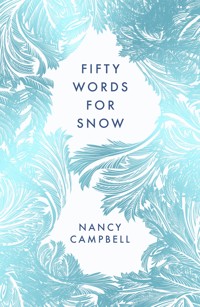
Waterstones Non fiction Book of the Month November 2021 'A delightful compendium that brings together language, culture and adventure through frozen landscapes as it shares the meanings behind 50 words for snow, gathered from around the globe.' The Herald Snow. Every language has its own words for the magical, mesmerising flakes that fall from the sky. In this exquisite exploration, writer and Arctic traveller Nancy Campbell digs deep into the meanings of fifty words for snow. In Japanese we encounter yuki-onna – a 'snow woman' who drifts through the frosted land. In Icelandic it is hundslappadrífa – 'snowflakes as big as a dog's paw' – that softly blanket the streets. And in Māori we meet Huka-rere – 'one of the children of rain and wind'. From mountain tops and frozen seas to city parks and desert hills, each of these linguistic snow crystals offers a whole world of myth and story – the perfect winter gift. ___ 'Absolutely exquisite. This little book is a work of art. It is impossible to imagine the reader who will not love it.' Horatio Clare, author of The Light in the Dark 'This stunning book made me want to pack all my woolies, candles, ample firewood and enough books for a year – and head to as northerly a location as I could find.' Kerri ní Dochartaigh, Caught By the River 'Sparkles and dazzles with new meanings and old magic. You'll never see snow in the same way again.' Matt Gaw, author of Under the Stars
Das E-Book können Sie in Legimi-Apps oder einer beliebigen App lesen, die das folgende Format unterstützen:
Seitenzahl: 175
Veröffentlichungsjahr: 2020
Ähnliche




















‘A glittering cloud of Inupiaq, Icelandic, compound Māori, Finnish, Scots, Thai, Hebrew, American Sign Language – this book is a miraculous snow bank of niveous names and knowledge as delicate and multifaceted as the flakes it celebrates.’
– Dan Richards, author of Climbing Days
Nancy Campbell is a poet and non-fiction writer described as ‘deft, dangerous and dazzling’ by the former Poet Laureate, Carol Ann Duffy. Her work has engaged with the polar environment since a winter spent as Artist in Residence at the most northern museum in the world on Upernavik in Greenland in 2010. Her books include The Library of Ice: Readings in a Cold Climate, Disko Bay and How to Say ‘I Love You’ in Greenlandic. She was appointed Canal Laureate by The Poetry Society in 2018, writing poems for installation across the UK waterways from London Docklands to the River Severn, and received the Ness Award from the Royal Geographical Society in 2020.
for Annawho lost all her wordsthen began to find them again
Even snow knows it’s unclean. Each flake makes its own geometry around dust, where everything begins.
— Traci Brimhall, ‘Dear Eros’
Contents
Prologue
1. Seaŋáš, Sámi
2. Yuki-onna, Japanese
3. Immiaq, Greenlandic
4. Smoor, Scots
5. Hīma, Thai
6. Kunstschnee, German
7. Onaabani Giizis / Popogami Giizis, Ojibwemowin
8. Sheleg, Hebrew
9. Sastrugi, Russian
10. Hundslappadrífa, Icelandic
11. Sheen, Kashmiri
12. Cheotnun, Korean
13. Penitentes, Spanish
14. Cīruļputenis, Latvian
15. Unatsi, Cherokee
16. Theluji, Swahili
17. Avalanche, French
18. Tykky, Finnish
19. Barfānī chītā, Urdu
20. Snemand, Danish
21. Mávro chióni, Greek
22. Neviera, Italian
23. Xuě qiú, Chinese
24. Snöängel, Swedish
25. Gangs, Tibetan
26. Calóg shneachta, Irish
27. Huka-rere, Māori
28. Snowboarding, American Sign Language
29. Kava, Faroese
30. Kardelen, Turkish
31. Omuzira, Luganda
32. Fokksnø, Norwegian
33. Sniegas, Lithuanian
34. Sira, Tundra Nenets
35. Taccuqt, Tamazight
36. Himá, Sanskrit
37. Qasa, Quechua
38. Barado, Amharic
39. Ttutqiksribvik, Inupiaq
40. Ais i pundaun olsem kapok, Tok Pisin
41. Hagelslag, Dutch
42. Eira, Welsh
43. Itztlacoliuhqui, Nahuatl
44. Pana, Inuktitut
45. Jäätee, Estonian
46. Sparrow batch, Newfoundland English
47. Hau kea, Hawaiian
48. Virgen de las Nieves, Spanish
49. Zud, Mongolian
50. Suncups, English
Acknowledgements
References
Prologue
A few winters ago I rented a former Salvation Army meeting house in the north of Iceland for a few months. Since the snows of Siglufjörður don’t usually melt until April, I soon learned how the inhabitants of this small fishing town distinguish themselves from their neighbours in Ólafsfjörður, another small fishing town beyond the mountains. Folk in Ólafsfjörður do not clear the snow from the paths leading to their homes. In Siglufjörður the sweeping of snow is a social duty. I lived alone, and it was some distance from my front door to the road; the snow lay in waist-high drifts, and kept falling. I’d gone to Iceland to write about snow, but I found that snow had other ideas – it wanted me to do some physical labour. In his poem ‘Digging’, Seamus Heaney describes how his trade differs from that of his ancestors: ‘I’ve no spade to follow men like them,’ he writes, using instead a ‘squat pen’. Now I had to put down my pen and borrow a shovel from my elderly neighbour Kristján. Then, of course, I cleared his path too.
Sometimes the drifts were so deep, the white-outs so dense, that Siglufjörður seemed composed entirely of snow. I felt like Marcovaldo, the hero of Italo Calvino’s novel of the same name, who
learned to pile the snow into a compact little wall. If he went on making little walls like that, he could build some streets for himself alone; only he would know where those streets led, and everybody else would be lost there . . . But perhaps by now all the houses had turned to snow, inside and out; a whole city of snow with monuments and spires and trees, a city that could be unmade by shovel and remade in a different way.
Calvino captures how snow makes a familiar place strange; how it can seem to rewrite reality, concealing, clothing, cleansing or suspending the landscape for a time. It muffles. It shrouds. Like the sheet a magician lays over their assistant before taking out the saw – when it is whisked away, the miracle is not that anything has changed, but rather that everything has stayed the same.
When I first went north of the Arctic Circle in Greenland a decade ago to research glacial ice, I was seeking to escape the distractions of a capital city. I needed white noise. Although my work entails filling pages with words, I have always loved the empty margins the most. There is much poignant art and literature about polar purity and silence, but the longer I spent among the snow, the more I suspected such tropes are born of luxury and distance. It is a view that overwrites the peopled landscape, ignores the tracks of sleds and snowmobiles that cross it, the busy burrows and root systems beneath it. As time passed and I looked more closely, I realised snow does not always appear white. As I listened more carefully, I realised that snow was not silent. I spoke to those who worked with snow, from Inuit hunters to Scottish hill farmers, and noticed that their traditional knowledge was often enshrined in highly differentiated vocabularies.
Fifty Words for Snow is a journey to discover snow in cultures around the world through different languages. The climate is a prism through which to view the human world – just as language can be. It is possible to see back into the distant past and trace the historical movement of people through a single unit of meaning: in Europe, for example, many words (snow, snee, nieve, etc.) stem from the same root, the ancient Latin nix and Greek nipha – the initial s comes and goes, without concealing the close connection. Inevitably, a book about climate also looks forward, considering what we miss, as every winter in many countries we see fewer and fewer snowflakes, and some years now, none at all. Just as the ecosystem is changing, so are the languages that describe it and the way they are understood. When I began to learn Greenlandic in 2010 I discovered the fallacy of the many ‘Eskimo words for snow’, a popular concept that was dismissed by linguists in the 1980s (see the references for further reading on this myth). More pertinently, that same year Greenlandic was added to the UNESCO Atlas of the World’s Languages in Danger. While many of the languages in this book, such as Spanish and Urdu, can be heard spoken around the globe, others, such as the Inupiaq dialect of Wales, Alaska, are remembered mainly by elders in relatively small communities.
I started to write this book in September 2019 amid debates about Brexit and the climate crisis, while attending Fridays for Future marches in Germany. I finished it six months later, a week before gathering with other masked and silent Black Lives Matter protestors in the UK. The process of tracing a single theme across many languages new to me seemed a powerful way to overcome the borders that were going up around the world. Even under lockdown in a pandemic, it was still possible to voyage around the world through dictionaries. Ironically, one of the first entries I researched concerned the photograph of boys in a snowball fight taken by Robert Capa in war-torn Hankou (modern-day Wuhan) in 1938. Within weeks, the location had become infamous for the outbreak of COVID-19. Meanwhile, I was spending a lot of time in hospitals for another reason. As I began to compile a list of words for snow, my partner suffered a major stroke. My work accompanied me on those anxious autumn months in the ward, to a backdrop of medical equipment hissing and beeping, rather than the soft, reassuring sounds of snowfall. Eventually it became apparent that Anna’s stroke had induced severe aphasia; with spring, as some of her words began to return, in fragmentary and often puzzling forms, I grew to appreciate the complexity of language loss anew. The issue of vanishing vocabularies, all too easy to romanticise, was revealed to be heartbreaking – but I appreciated all the more the power that the ability to access even a single word can bring.
The point ‘where everything begins’ – this is how Traci Brimhall describes the impurity at the heart of the snowflake in her poem about penitentes quoted in the epigraph. A snow crystal is part of the endless cycle of the water molecule: from its six-cornered solid state it becomes liquid and then gas, and thus a snowflake that falls on the glaciers of the Rwenzori peaks in Africa might melt and evaporate and later freeze again and fall in the apple orchards of Kashmir, and melt again and fall fifty times and more. Just so, a single unit of meaning – one word for snow – offers an approach to new places, a clear path of understanding to travel forwards along. For language allows us, like Marcovaldo, to unmake our cities and dream them differently.
1.
Seaŋáš
granulated snow
(Sámi)
She picks up her sharpest flint and scratches a few lines in the rock face. One strong horizontal stroke, and another below it, then four long horizontals and, getting into it now, a bit of cross-hatching to fill the space between the others. The flint arcs, almost as if her hand had slipped, and she follows that with a series of staccato chips, each powered with the same flick of her wrist she uses on her drum. Over 14,000 years and at least one ice age later, these confident lines on the wall of a Welsh cave still unmistakably show the image of a beast with magnificent antlers. When the whole world’s climate was colder, reindeer roamed across southern Europe and were known in New Mexico, according to the cave drawings left behind by Stone Age tribes and the Clovis people. The flints that drew the animals would also be turned on them.
Today reindeer are creatures of the polar north, living in areas such as Guovdageaidnu in Norway, where snow covers the ground for more than half the year. All through the long winters, during which temperatures can reach as low as minus 30° Celsius, the reindeer graze on the high plateau. They dig down through the snow using their hooves or antlers to find lichens to eat. In spring, lush grasses begin to emerge from the deep snowdrifts on the coast, and it is time for the reindeer to start their great annual migration north to summer feeding grounds by the sea. They are guided by the Sámi people, who have long subsisted in this harsh climate as fishers, trappers and reindeer herders. The spring weather and depth of snow decide when herders begin to move and how fast. They know that cold, crisp ground provides ideal conditions to move their animals swiftly across the plains to the coast. They will often drive the reindeer through the night, waiting for the evening frost to form a light crust on the snow, or skavvi, after the sun has thawed the surface during the day. They will rest when the afternoon sun causes soavli, or slushy snow. While they are on the move, the reindeer – or at least their traces – are visible on the snow, so that animals might be found again if they go wandering or join other herds.
The Sámi language reflects the herders’ intimate relationship with their environment. The rich terminology for snow and ice includes words to describe the way snow falls, where it lies, its depth, density and temperature. One of the most significant types of snow for the Sámi is seaŋáš, or loose granulated snow, which forms at the bottom of the snowpack from January to April, a little like ‘depth hoar’ in the international snow classification. Snow takes on seaŋáš consistency during a cold winter, and it improves grazing conditions: it is easy for reindeer to dig through seaŋáš to the lichen growing beneath. Since seaŋáš melts rapidly, it also provides a vital clean water supply for the travellers. It’s not surprising that some Sámi terms for snow relate to its influence on the lives of reindeer, such as the unwelcome state of moarri, which is ‘the kind of travel surface where frozen snow or ice breaks and cuts the legs of animals’. But while there are around one hundred Sámi terms for snow, the words relating to reindeer are estimated at over a thousand. And yet, to find out what the woman in the cave knew of the reindeer, we have little choice but to let the picture speak.
2.
Yuki-onna
snow woman
(Japanese:雪女)
Taoist philosophy suggests that when there’s an abundance of any natural matter, a life will come forth from it: the river will create its own fish when the water is deep enough and the forest will produce birds when the trees are dense enough. And so it follows that a woman may be generated in the heart of a snowdrift.
Nowhere in the world are the drifts as profound as in the mountains of Japan. In the remote highlands of the Japanese Alps, a series of three high mountain ranges – the Hida, Kiso and Akaishi – that bisect the main island of Honshu, the annual snowfall can be as great as 40 metres. The world record for the deepest snow was measured further west, on the slopes of Mount Ibuki in 1927, although it is hard to verify such records when so few of the planet’s snowiest peaks are equipped with snow gauges or even accessible to meteorologists and other mortals.
Yet sometimes a mysterious figure can be seen, emerging from a disorienting white-out on the Honshu hills. The yuki-onna is among a class of supernatural monsters, spirits and demons (yōkai) whose alluring appearance belies their profound menace. The first yuki-onna was encountered by a poet in medieval times, her name formed from the words for snow (yuki雪) and woman (onna女). Thousands of sightings have been recorded since, but one constant characteristic is a similarity to snow: her skin is cold; her hair is silver; she dresses in white. She drifts through the hills, her beauty all the more fascinating because it is so fleeting. Many tales of the yuki-onna dwell on her swift disappearance – in one story she transforms into a flurry of snowflakes in a puff of wind; in another, she melts away having been persuaded by her lover to take a bath, leaving behind only a few brittle icicles floating in the water.
In these tales, the yuki-onna’s desire for human lovers is usually satisfied, but her stay in the mortal world is thwarted by the folly of the people she encounters. One story, about a yuki-onna who had a relationship with a woodcutter for many years, was told to the writer Lafcadio Hearn by a neighbour in the district of Musashino. The story was published in the last of Hearn’s many books on Japanese culture in 1904, the year he died.
One evening, two woodcutters were coming home from the forest when they were caught in a snowstorm. The wide river they crossed daily was impassable, but luckily old Mosaku and Minokichi, his young apprentice, found shelter in a ferryman’s hut. The two men slept, despite the wind blowing outside and the snow beating on the window, but Minokichi was woken in the night by a flutter of snowflakes entering the room. The door seemed to have blown open. By the snow-light (yuki-akari) he was amazed to see a woman dressed in white, bending over Mosaku and blowing upon his face – her breath was like white smoke. But the old man did not stir.
The yuki-onna glided towards Minokichi, and stooped low and then lower over him, until their eyes met and her face almost touched his. She was very beautiful, but the light in her eyes made him afraid. After staring at him for a long while, she said, ‘I thought I was going to kill you, the same as that old man, but I will not because you are young and handsome. You must not tell anyone about this incident, Minokichi, even your mother. If you tell anyone about me, I will kill you.’
Minokichi was astonished that she knew his name, and promised he would keep the secret. She turned from him, and left the shelter. Then he sprang up and looked out the door, but he could no longer see the woman nor any tracks in the snow. He called to Mosaku, and was fearful because the old man did not answer. He reached out to touch his body, and found it was cold.
It took Minokichi a year to recover from that terrible night. He picked up his trade again, and went to the forest alone every day. While walking home one afternoon he met a beautiful young woman named O-yuki, and within weeks they were married. Their life together was happy and blessed with ten children, but O-yuki did not seem to age. One evening, when the children were asleep, Minokichi looked at his wife as she sat sewing by a paper lamp. He was moved to tell her about the day he saw Yuki-onna. ‘When I see you with the light on your face, I am reminded of a strange thing that happened to me when I was eighteen. I met the most beautiful woman, she was so very like you . . .’
Before he could say more O-yuki stood up and screamed, ‘That woman was me! I told you that I would kill you if you ever told anyone about that night. But I’ll let you live because of our children. You’d better take very good care of them, or I will treat you as you deserve . . .’
And so the Yuki-onna spared Minokichi’s life a second time, but she shed her own human form. After hissing her last words to her partner of so many years, she transformed into a bright white mist – and swiftly spiralled up into the roof-beams, and vanished.
Are all human encounters with the elements so ill-fated? Is it possible to keep our most profound dealings with nature a secret? Will the snows stay forever, or will winter turn to spring? Whether the yuki-onna is a malevolent ghost stealing lonely lives in the wilderness or a supernatural beauty living in disguise among humans, she affirms the transformative qualities of snow.
Today a 90-km road winds through the Japanese Alps southwest of Nagano, known as the Yuki-no-Otani or ‘Snow Corridor’. The pass is cleared daily in winter, so that travellers can speed along in coaches and cars, steering between snow walls that reach up to 20 metres high. Thanks to the Yuki-no-Otani there is no longer any risk that people will be trapped in the hills or forced to stay overnight in rickety riverside shelters. Yet the reason this dramatic mountain pass seduces so many travellers is not the comparative safety and accessibility of the route, but the mystery of the miles of deep snow on either side, through which – against almost impossible odds – it carves its way. Some drivers may even long to wander off the track to explore the unmarked snow, in search of their own beautiful yōkai and the satisfaction of as yet unknown desires.
3.
Immiaq
melted ice or snow; beer
(Greenlandic)
A few hours into a long-haul flight between North America and Europe the passenger who has a window seat and clear skies can fall into a trance at the snow-covered gneiss mountains vanishing towards the horizon. Zoom out to the map view, where the whole of Greenland is visible from Cape Farewell in the south to Kaffeklubben Island in the north, and the country looks like a giant teardrop rolling from the temperate zones towards the Arctic Ocean. It may be the world’s largest island, but most of the surface is uninhabitable. The central region is engulfed by centuries of snowfall, which has compressed to form an ice sheet thousands of metres deep. From this dense mass of ice pitted with blue melt pools, outlet glaciers creep towards the coast. There, with a great roar, they calve into the fjords and the icebergs drift out to sea. The margin where sea and land meet is also covered with a shifting layer of ice that forms gradually in winter and melts away again in spring.




