


Erhalten Sie Zugang zu diesem und mehr als 300000 Büchern ab EUR 5,99 monatlich.
- Herausgeber: Cinnamon Press
- Kategorie: Gesellschafts- und Liebesromane
- Sprache: Englisch
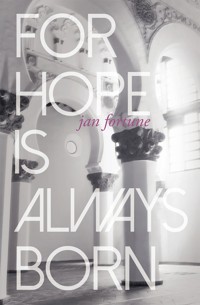
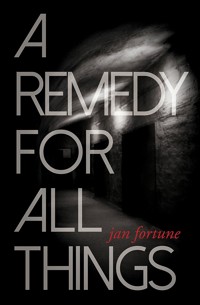
What is the connection between the tenth century Moorish princess, Casilda, and a young Jewish woman, Miriam, completing a Masters degree in contemporary Toledo? What links both to the Spanish singer, Casilda Faertes and to her mother, another Miriam, born in Budapest and raised in Nice? Spanning a thousand years and bringing together the stories of three generations of women in North-east England, Budapest and Spain, For Hope is Always Born, follows on from This is the End of the Story and A Remedy for All Things to ask huge questions about identity and the nature of love and loss.
Sie lesen das E-Book in den Legimi-Apps auf:
Seitenzahl: 216
Veröffentlichungsjahr: 2019
Das E-Book (TTS) können Sie hören im Abo „Legimi Premium” in Legimi-Apps auf:
Ähnliche














Contents
Copyright
Disclaimer
Dedications
Epigraph
Dramatis Personae
Part I
Softly
Miriam Virág
Does Your Mother Know?
Miriam Virág
Go My Way
Miriam Virág
If You Could Read My Mind
Miriam Virág
Song for a Winter’s Night
Miriam Virág
The Circle is Small
Miriam Virág
I’m Not Supposed to Care
Miriam Virág
I Want to Hear It from You
Part II
I’m Not Saying
Crossing Over: Chapter 1
For Lovin’ Me
Crossing Over: Chapter 2
Ribbon of Darkness
Crossing Over: Chapter 3
Sundown
Crossing Over: Chapter 4
A Tree Too Weak to Stand
Crossing Over: Chapter 5
Race Among the Ruins
Crossing Over: Chapter 6
Changes
Crossing Over: Chapter 7
Never too Close
Crossing Over: Chapter 8
Did She Mention My Name?
Crossing Over: Chapter 9
Fine as Fine Can Be
Acknowledgments
About This Book
Guide
Contents
Start of Content
FOR HOPE IS ALWAYS BORN
PART THREE OF THE CASILDA TRILOGY
JAN FORTUNE
Published by Liquorice Fish Books, an imprint of Cinnamon Press
www.cinnamonpress.com
The right of Jan Fortune to be identified as author of this work has been asserted by her in accordance with the Copyright, Designs and Patent Act, 1988. © 2019 Jan Fortune. ISBN 978-1-78864-098-5
British Library Cataloguing in Publication Data. A CIP record for this book can be obtained from the British Library.
All rights reserved. No part of this publication may be reproduced, stored in a retrieval system, or transmitted in any form or by any means, electronic, mechanical, photocopying, recording or otherwise without the prior written permission of the publishers. This book may not be lent, hired out, resold or otherwise disposed of by way of trade in any form of binding or cover other than that in which it is published, without the prior consent of the publishers.
Designed and typeset by Cinnamon Press. Cover design and cover photograph by Adam Craig © Adam Craig.
Cinnamon Press is represented by Inpress and by the Books Council of Wales.
The publisher gratefully acknowledges the support of the Books Council of Wales.
Disclaimer
This is a work of fiction. Names, characters, places, events and incidents are either drawn from the author’s imagination or used fictitiously. Any resemblance to actual persons, living or dead, or to actual events is coincidental.
To Casilda, for becoming a different story.
To Tamsyn & Finn, who know the power of love and hope.
And to Adam, always.
When life itself seems lunatic, who knows where madness lies? Perhaps to be too practical is madness. To surrender dreams — this may be madness. … — and maddest of all: to see life as it is, and not as it should be.
…
For hope is always born at the same time as love.
― Miguel de Cervantes, Don Quixote
Dramatis Personae
Whilst this is not an exhaustive list of characters it highlights those who reappear or have particular significance throughout the Casilda Trilogy.
From This is the End of the Story
Catherine McManus b.1961
known as Cassie, she is later called Kitty by her husband and finally adopts her full name, Catherine. Her friend, Miriam, believes her to be the reincarnation of St Casilda.
Miriam Jacobs b.1961
Catherine’s best friend who believes that she and Cassie have lived several lives together, most significantly as St Casilda and Ben Haddaj.
Casilda (11th century)
Moorish princess of Toledo who became a Christian saint, healer and hermit (historical figure though highly mythologised).
Ben Haddaj (11th century)
A putative Muslim prince of Zaragoza who may have returned to his ancestral religion of Judaism (quasi-historical though largely legend).
Judith Jacobs b.1929
Miriam Jacobs’ mother.
Sarah Jacobs b.1956
Miriam Jacob’s sister.
The Hamsa
The talisman pendant, a hand of Miriam has travelled through centuries. It appears in this book in 1990 in Toledo, given to Catherine in odd circumstances.
From A Remedy for All Things
Selene Solweig Virág b.1927
like Catherine, possibly an incarnation of St Casilda.
Sándor Virág b.1902
Selene’s father.
Marie Virág née Spire b.1903
Selene’s mother, aunt to Judith Jacobs.
Hélène Spire b.1905
Judith Jacobs’ mother, aunt to Selene.
Attila József 1905-1937
Hungarian poet who committed suicide on December 3, 1937 (historical figure. The outline of his life, character & poetry is historically researched, but the events he is involved in within the novel are fictionalised, including being a possible incarnation of Ben Haddaj).
Miriam Virág b.1955
Selene’s daughter, who Selene believes is fathered by Attila József, despite the poet having died in 1937.
Simon Garrett b. 1963
Catherine’s partner, possibly an incarnation of Ben Haddaj.
The Hamsa
The talisman pendant, a hand of Miriam has travelled through centuries. It appears in this book in 1924, given to Marie Spire (who becomes Marie Virág) on her 21st birthday during a family trip to Toledo.
From For Hope is Always Born
Miriam McManus b.1994
Catherine and Simon’s daughter, possibly an incarnation of St Casilda (so present-day Miriam may be the ‘historical’ Casilda).
Casilda Feartes b.1988
Selene’s granddaughter and Miriam Virág’s daughter, possibly an incarnation of Ben Haddaj (so present-day Casilda may be the ‘quasi-historical Ben Haddaj).
Simon Garrett b. 1963
Catherine’s partner & Miriam McManus’ father, possibly an incarnation of Ben Haddaj.
Miriam Virág b.1955
Selene’s daughter & Casilda Feartes’ mother.
Casilda (11th century)
Moorish princess of Toledo who became a Christian saint, healer and hermit (historical figure though highly mythologised) and in this book the central character of Miriam McManus’ novella, Crossing Over.
Nathan Garrett b. 1958
Simon’s brother and Miriam McManus’ uncle.
Eliška Baroch b.1960
Simon’s colleague in Prague who marries his brother, Nathan & is Miriam McManus’ aunt.
Rafael Faertes b.1952
Miriam Virág’s partner and Casilda Faertes’ father, who she does not meet.
Isak Löwenthal b.1956
Miriam Virág’s later partner and Casilda Faertes’ stepfather.
Saoirse Jacobs Ó Murcháinb.1988
Sarah Jacobs’ daughter and Miriam Jacob’s niece. Also Casilda Faertes’ third cousin.
Beatriz
A mountain lion and companion to St Casilda.
The Hamsa
The talisman pendant, a hand of Miriam has travelled through centuries. It appears in this book in the early 11th century in a cave near Briviesca.
PART I
SOFTLY
October 5 2017
In the pre-dawn darkness, Casilda watches the woman approach, pale skin, fair hair spilling around her face, a smile that suggests she is lost in thought. Watching the woman, Casilda feels a jolt, energy deep in her gut. The woman walks past Taberna El Botero, past her, towards the cathedral.
Casilda, she whispers, not knowing why she is saying her name aloud to a passing stranger. I’m your Ben Haddaj, the line runs in her head. I will save you at last, my enchanted girl.
Walking past the cathedral in a loose white dress flecked with embroidery, palest blue like the halo around the sun, the woman reminds her of the girls who come each year for confirmation at Corpus Christi, the whole city decked in flowers. This woman is not much taller, just as slight. She moves further away, turns a corner towards the Museo De La España Mágica. Casilda turns away to continue towards the Sinagoga de Santa Maria Blanca.
Her steps are slower, muscles quiver as she breathes, but the air continues to warm and the street looks the same: the swordmakers on the corner, the window full of damascene. She shakes herself, continues on her path.
This is the beginning and end of the story, she says to herself, turning into the Synagogue.
I was born into a myth of Moorish Iberia, a fragmentary story of a Muslim princess who became a saint and her unrequited lover who disappeared from history and legend while returning to the faith of his Jewish ancestors.
Saint Casilda died a thousand years ago. In some of the stories she was over a hundred years old, in others she was still young. She was cured of an unnatural flow of blood, but perhaps only for a little time.
Twenty-three years ago, my mother, who might have been Casilda in another life, gave birth to me in a flow of blood —
In the Synagogue, Casilda Faertes sets up instruments in the central aisle. There are no tourists yet and the space is cool, the rows of piers and arcades throw faint shadows and the pinecone details around the horseshoe arches look real. She gazes up, towards the central clam-shell-topped arch, the walls whiter than white, and closes her eyes against the sudden stab of pain in her left temple, rubs away the scent of oranges, notices that behind the pungency there is the faintest tang of roses.
She watches the woman’s blood circle down the shower drain, tang of iron on the tongue. It’s a cold night, she says to her, the same woman she passed earlier near the taberna, who steps onto the cool cobalt tiles of the tiny bathroom, wet, shaking, but no longer bleeding. She wraps the thin body in a white towel, covers the towel with a white woollen shawl.
Get under the blankets. I’ll make you some mint tea.
The woman removes a little hand of Miriam that hangs on a silk cord around her neck and places it on the bedside table of dark wood inlaid with mother of pearl before lying down.
She watches the woman drift into sleep, mint tea cooling on the table.
Casilda?
Casilda shakes herself, blinks into Miguel’s face. He stands over her, frowning.
Are you okay?
She shakes herself. Sorry, yes, I’m fine. I thought for a moment I had a migraine looming, but it’s lifted.
She has an image of the woman she saw this morning. Did she see her or imagine her? Hardly anyone is on the street at 6.30 in the morning, in October, before sunrise. She can still smell roses, far off, but sweet.
Miguel smiles. I love performing here, he says.
Me too. Not that Quereb’s made any progress with Braulio Rodríguez Plaza.
Too much money involved, Miguel says, nodding. Plaza isn’t going to give a Synagogue back to Jews when it’s such an earner as a museum for the Catholic cChurch.
They can keep the money. Having the name back would be a gesture in the right direction.
Ibn Shushan Synagogue, formerly known as Santa Maria la Blanca.
Yes. I suppose at least we’ve got the festival. Half a millennium went by without any being celebrated here.
Hmm, Sukkot in Toledo, a natty little two day affair to replace a religious festival of a week, largely concentrating on food and drink to bring in the tourists. We’re just colluding with the spectacle, aren’t we? Quaint music to accompany voyeurs gawping at a culture relegated to a relic.
You sound like my mother, Casilda says. I play music because I love it. I sing because I have to. And if the audience think I’m a quaint little zoo-piece, that’s their loss. I’m keeping something alive and moving tradition into the present.
Touché and well put, Miguel says, grinning.
Speaking of playing music, what time are the others arriving?
Miguel glances at his watch. Zach should be here soon. Bechor won’t be out of bed yet. Wind instruments take all the pneuma out of you, you know, especially when there are women wanting to check out how versatile those lips are.
Casilda laughs. Fair point. Well, Zach can try out the acoustics. I’m in awe of his playing. But Bechor better not be too late, we only have until opening time.
Mm, he’s really something, Miguel agrees. And having a finger-picking wonder playing with us can’t do any harm, eh? Zach makes me want to visit New York.
Did I hear my name? Zach enters with an entourage of assistants carrying an array of cases. Laouto, cittern, archilaud, viol, guitar, he intones, as though reciting a litany. No Bechor yet? I thought I was late. He turns around, taking in the building. Gotta, love this place, he says.
Yes, Casilda agrees. Mudéjar architecture. Built under Castilian Christians by Islamic architects for a Jewish congregation. How often is that going to happen? And you are late, she adds, smiling, but you still beat Bechor to it. This is his idea of torture, being up before the sun.
Not true, Bechor argues, arms full of slim cases concealing wooden flute, clarinet, kaval and bansuri.
Miguel helps Bechor deposit the instruments safely and they shake hands, throw arms around one another, each slapping the other’s back before Bechor turns to do the same to Zach.
Enough with the camaraderie, Casilda quips. Let’s rehearse.
Love this nyckelharpa, Zach comments as they arrange themselves. Baltic, isn’t it?
It is. My mother had a lover who played one. A Swedish musician and writer. He taught me while he was living with us.
You’re still in touch?
Yes. So is my mother, though as friends now. He’s an extraordinary artist.
And while I’m asking nosy questions, I keep wondering about your name … it’s not …
Jewish? No. Santa Casilda of Toledo. The Muslim princess of this city. She travelled north to a holy well to be cured of a continual flow of blood as a young woman, an adolescent probably. And converted to Christianity.
Your mother is Christian?
No, Jewish, but not Spanish. She was born in Hungary, but grew up in Nice. My mother was fascinated by the story of Santa Casilda. She heard it when she first came to Spain in the ’70s. Casilda’s the patron of Toledo and my mother lived here for a while. The story stuck with her and she ran into it again later. Santa Casilda died in a sanctuary outside Briviesca, near where my mother settled in Burgos.
And your father? Faertes doesn’t sound Hungarian.
I never met him, but he gave me the surname, or rather my mother thought it would be easier for me to have a Spanish surname. Apparently he was from one of those families forcibly converted to Catholicism so long ago that they’d forgotten they ever were Sephardim until it became more popular to dig for our ancestors. So that’s me.
Zach nods. Quite right, enough digging. Let’s play.
Softly, Casilda says, three hours later. We need to go out softly.
Miguel and Bechor nod.
Just the voice, maybe, Zach adds. At the end, the last notes they hear should be just your voice.
Yes, Miguel agrees. That would be exactly the tone.
Okay, let’s do the last verse, just that. Percussion should fade out first, Miguel, then nyckelharpa and cittern. Bechor, keep the bansuri going till the end of the verse, then I’ll reprise the last two lines, just voice, very softly. Yes?
Across the city, a young woman in a white dress, embroidered with palest blue says, Softly.
Pardon? The man who looks up is fifteen years her senior, thin and with a face that smiles easily.
Did I say that out loud, Mateo? She laughs. Must be ready for breakfast or perhaps it’s brunch now, and getting light-headed. I was remembering a song my mother liked. Simon used to play it.
Your father?
She nods.
I could take you to get something to eat. A thank you for coming in on your day off, and so early. You could tell me more.
That’s kind, but I promised to meet a friend. I’ve been helping her edit her dissertation. She is not sure why she feels the need to lie to Mateo.
He nods in his turn.
She stands and begins to head for the narrow door to the museum, but turns back. Do you ever get the feeling you’re being watched?
Watched? Mateo frowns.
Not like a paranoid feeling. More… that someone has seen you, really seen into you, just for a moment. That someone has taken you in and not found you wanting…
Sounds like love, Mateo says wistfully. I see you, if that’s what you mean.
Oh. I mean… I… it was on the street early this morning… just fleeting… an odd feeling for hardly a moment…
Ah. I’m not sure I’ve felt that, but…
I’d better…
Yes, Mateo says. Yes. Have a good brunch with your friend.
MIRIAM VIRÁG
My darling Casilda,
Some of this you will know, some may be new, but I’ve often wanted to set it all down for you and now seems to be the right moment. I come from a line of long-lived women. Grand-maman was eighty-eight when she died, her sister, my great-aunt Hélène, eight-three and her daughter, my mother’s cousin, Judith, lived to be eighty-nine. But I will be the exception. I am not complaining. My first death certificate was written when I was four years old and here I am, sixty-three, with a good life to look back on. By the time you read this, I won’t be here to answer your questions, but I hope this diary will fill in some gaps.
I came to Spain the year Picasso died. Batista and Casals died the same year and, in December, ETA killed Blanco with a bomb in Madrid. The establishment kept its own hands bloodied the following spring, garrotting Salvador Puig. What was I thinking running away to a strange country racked with violence and upheaval? Not about politics. Not then.
All I wanted was to put distance between myself and Grand-maman. We’d been quarrelling for as long as I could remember but, for all my railing against her archaic rules and snobbery, I loved her. And admired her, hugging her story close, telling myself how brave she was.
She left Budapest with nothing. No possessions. No daughter. Only me, a scrawny four year old recovering from scarlet fever. On the journey she told me everything would be new in Paris, even my name. I was no longer Miriam, but Hélène Spire. She showed me a piece of paper I couldn’t read, though I’d just learnt to write ‘Miriam’ in a shaky hand. When I cried, she told me I could still pretend to be Miriam.
We travelled by train to Paris and walked across the city, Grand-maman carrying our tiny shared bag and often carrying me as well.
In Paris we have a home, she told me over and over on the journey. We have a beautiful gallery on a steep street near Sacré Coeur, a white church that looks like a story-book cake. In Paris you’ll learn to dance, just like your maman when she was a little girl.
In Paris, we trudged for hours until we stood outside a gallery on a steep street and Grand-maman wept. She wept quietly, but her body shook, filling me with terror. And then she straightened her back and said, No, there is no going back. And we turned and plodded away.
I can’t remember how we finally found our way to Nice. It was 1960 and Grand-maman seemed impossibly old, but she was only fifty-seven and soon found a job in a prestigious art gallery on Rue Droite. We had a small apartment on a narrow street, Rue Colonna d’Istria, and I learnt to dance and paint, learnt to love stories, to speak German and French as well as Hungarian and to entertain the stream of visitors to the gallery on Rue Droite. Later, Grand-maman had her own small gallery, further along Rue Droite, on the corner of Rue de la Loge: Atelier Galerie Selene.
I admired how successful she was, how graceful and at ease with the artists. But in private she was always sad. And why shouldn’t she be? My grandfather had died in the forced labour service and she and my mother barely made it through the War, starving and sick in a ghetto in Budapest. And then my mother, a single parent, took part in the 1956 uprising and was arrested. I have no memory of my mother and she told no-one who my father was. All she left behind was a scrap of a poem by Attila József and a tiny damascene hamsa. It belonged first to Grand-maman, a gift on her twenty-first birthday during a family trip to Toledo in 1924. She gave it to my mother on her eighteenth birthday.
The hamsa was already old before it was bought for Grand-maman in Toledo. When I was small she would tell me its story and leave it by my bed at night. She had a way of intoning the words that, when I was four or five I scarcely understood, but was comforted by nonetheless. A bedtime litany, though we were not a religious household.
The man who sold it to my mother in Toledo told her that the symbol had been used for hundreds of years, thousands even, Grand-maman always began. This one, he said, is the most rare in my collection, so old I cannot date it, perhaps it has been passed from hand to hand for a thousand years. It is such fine work.
Damascene was practised by the ancient Egyptians, Greeks and Romans, but it was the Syrians of Damascus who perfected it, long before the birth of Christ. The Moors brought it here, to Toledo, and later the Japanese adopted it from Damascus via the Silk Road.
There are forerunners back in the mists of myth: in ancient Mesopotamia it was used to keep the wearer safe. There are Mesopotamian amulets of the open right hand in museums. They called it Qāt Ištar or Inana. It was especially potent for women. And in ancient Egypt they wore a hand with only two fingers and a thumb, the hand of Mano Pantea, the All-goddess, it could represent Isis and Osiris and their child, Horus. There were hamsas in Carthage, dedicated to the supreme goddess, Tanit, used to ward off the evil eye.
The Berbers and Moors brought it here: the hand of Fatima, daughter of Muhammad, a powerful symbol of blessing and protection. And soon it became the hand of Miriam, borrowed from Islam by the Sephardic and Mizrahi Jews, each of the fingers representing the five senses with which to praise God. It appears in Kabbalah as the letter shin, the first letter of Shaddai, a name of God.
The technique is skilful and difficult. Gold and silver threads are embedded into metal such as black steel, piece by piece. This one, as I said, is the rarest and most intricate hamsa I’ve ever found. I’ll be sorry to see it go. I’ve refused to sell it more than once, but I feel in my bones it is ready to go with you, the jeweller told my mother.
And so it came to me when I was twenty-one and I gave it to my darling Selene when she was eighteen. And one day it will be yours.
But I left before there was any chance of gift-giving. I left as soon as she told me.
Now that my own daughter is a young woman and I’m older than Grand-maman was when she left Hungary, I have more sympathy for what she did, but then…
She told me how the doctor who’d seen me while I was sick with scarlet fever had a son who worked for the prison services. He suggested that he could help us get out of the country. Grand-maman could take me to Paris, give me a proper home in her own country. He convinced her that, as a foreign national, she would be allowed to leave, but it would be impossible to travel with a Hungarian child. He had the solution; he could get new papers for me as long as I had officially been wiped from the records. Only then, he said, could he arrange for a new identity.
So Grand-maman went along with a terrible plan to tell my mother that I had died of scarlet fever so that the doctor would issue a fake death certificate and we could escape. Of course, he didn’t tell Grand-maman what would happen to my mother, that her death sentence would no longer be commuted to life imprisonment if she was not the mother of a living child. Instead, he told her that his son, the prison guard, would let my mother know that we were safe, that he was sure there would soon be pardons and my mother would be able to join us in the not too distant future.
And Grand-maman wrote the letter to Maman informing her that I was dead.
It was my mother’s death sentence.
I came to Spain the year I found out that my grandmother had, however unwittingly, killed my mother.
DOES YOUR MOTHER KNOW?
October 8 2017
July 16, 1977
We climbed to Draco’s rock today. It reminded me of the last time we intended to visit before dawn. If we saw the sun rise over the peak then the slab would move aside for us and we would enter the hidden caves inside the hill.
Of course, Miriam had an episode before we even reached Kirkleatham; the unnatural absence creeping across her face as the fit took her into unconsciousness. I ran to the little row of cottages behind the church and beat on the first door until someone came.
Miriam’s mother was incandescent.
Today we made it to the rock without incident, so no wrath from Miriam’s mother. Miriam recited the story of Casilda of Toledo as we walked. She was convinced that she saw a Moorish scout about to abduct me in every passer-by and cried at the idea that some boy at school might ask me out. But the worst moment was when she kissed me then said, My mother knows everything.




