


Erhalten Sie Zugang zu diesem und mehr als 300000 Büchern ab EUR 5,99 monatlich.
- Herausgeber: Cinnamon Press
- Kategorie: Gesellschafts- und Liebesromane
- Sprache: Englisch
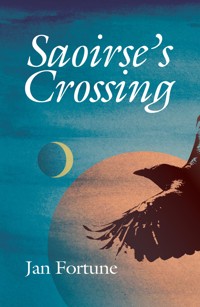
Saoirse grows up hearing the extraordinary stories of family members who died before her birth or in early childhood. Her aunt Miriam, who believed she had lived across a thousand years to be with her lover in each generation, the Moorish Princess Casilda. Her grandmother, Daireann. more than a healer and wise woman, and her father, Oisín, an alchemist and magician. But who is Saoirse? I was Casilda's mother more than a thousand years ago, she tells her mother, Sarah. Tucked away under a mountain in Roscommon in Oisín's family home, Saoirse meets Faolán, a local boy lost in their garden maze. As they play out stories from myth, Faolán's loyalty and love grows, but Saoirse craves adventure and is not easily won. As their paths diverge, one momentous event threatens everything, leading Saoirse into a maze from which she might never emerge and taking Faolán on a quest on which their lives depend. Spanning back into the mists of pre-history; travelling from Roscommon to Paris, Prague to Brittany, Budapest to Nice, Zaragoza to Tromsø, and bringing together Celtic mythology from Ireland and Brittany, Saoirse's Crossing asks questions of identity as contemporary as they are ancient, exploring the lengths we will go to for love.
Sie lesen das E-Book in den Legimi-Apps auf:
Seitenzahl: 276
Veröffentlichungsjahr: 2022
Das E-Book (TTS) können Sie hören im Abo „Legimi Premium” in Legimi-Apps auf:
Ähnliche














Contents
Title page
Copyright
Acknowledgements
Half title page
Dedication
Prologue
Alchemist’s Daughter, Alchemist’s Mother
Part 1: The Maze
Saoirse
Faolán
Saoirse
Sarah
Saoirse
Faolán
Saoirse
Sarah
Saoirse
Faolán
Saoirse
Sarah
Saoirse
Part 2: New Moon to New Moon
June 21 Casilda and Miriam
June 22–25 Beatriz
June 26–28 Painter in the dark
June 29–July 1 Elek
July 2–4 Oisín
July 5 Miriam
July 6–9 Hugo I
July 10 Hugo II
July 11–13 Daireann
July 14 Marie
July 15–18 Maker of the Hand
July 19 Catherine
Part 3: The Otherworld
July 21 The Fool
July 21 Waxing Crescent
July 22–25 The High Priestess
July 25 Swelling Crescent
July 26–28 The Magician
July 28 First Quarter
July 29–August 1 The Wheel of Fortune
August 1 Waxing Gibbous
August 2–4 The Moon
August 4 Full Moon
August 5 The Tower
August 5 Waning Gibbous
August 9 Justice
August 9 Disseminating Moon
August 10 Judgement
August 10 Last Quarter
August 11–13 The Hermit
August 13 Waning Crescent
August 14 Death
August 14 Balsamic Moon
August 15–18 The Hanged Man
August 18 Invisible Crescent
August 19 The Empress
Epilogue
The Forest Lovers—New Moon
Saoirse’s Crossing
Jan Fortune
Published by Liquorice Fish Books an imprint of Cinnamon Press, Office 49019, PO Box 15113, Birmingham, B2 2NJ
www.cinnamonpress.com
The right of Jan Fortune to be identified as author of this work has been asserted by her in accordance with the Copyright, Designs and Patent Act, 1988. © 2021 Jan Fortune.
Print Edition ISBN 978-1-911540-12-0
Ebook Edition ISBN 978-1-911540-16-8
British Library Cataloguing in Publication Data. A CIP record for this book can be obtained from the British Library.
All rights reserved. No part of this publication may be reproduced, stored in a retrieval system, or transmitted in any form or by any means, electronic, mechanical, photocopying, recording or otherwise without the prior written permission of the publishers. This book may not be lent, hired out, resold or otherwise disposed of by way of trade in any form of binding or cover other than that in which it is published, without the prior consent of the publishers.
Designed and typeset by Liquorice Fish Books..
Liquorice Fish Books is represented by Inpress.
The author is grateful for the support of Arts Council England in the writing of this novel.
Acknowledgements
This is a work of fiction. Names, characters, places, events and incidents are either drawn from the author’s imagination or used fictitiously. Any resemblance to actual persons, living or dead, or to actual events is coincidental except when citing historical incidents.
Quotations from and allusions to Don Quixote by Miguel de Cervantes are from the Gutenberg Project edition, translated by John Ormsby.
The poem fragment:
Al-‘ūdu qud tarannam
Bi-abdā’i talhīn
Wa ŝaqqod al-mad ā nib
Riyād al-basātîn
[The lute began to resound with the most beautiful melodies, and the brooks flowed gaily through the flower gardens.] is from Hispano-Arabic Poetry; an Anthology, translated by James T Monroe, Gorgias Press.
A huge thanks to the many people who have assisted with the journey of this book: to my family for their constant support, to the writing groups who have attended courses I’ve taught in my home and online and listened to early drafts, to Anne Clarke for her meticulous copy editing and astute suggestions, to Adam Craig, for listening to drafts, feedback and being endlessly supportive, and to James and Evie Harpur, Merrily Harpur and Patrick Harpur for the wonderful month spent at the real Reagh, writing the beginning of this novel, a place of extraordinary quiet and inspiration.
Saoirse’s Crossing
to Nina, with love & admiration
and to Adam, always
Prologue
Alchemist’s Daughter, Alchemist’s Mother
You know the story as well as me.
Once there was a Moorish princess, Casilda. She was the daughter of Alamun, the king of Toledo, and a Berber girl who died in childbirth. She had long golden hair, green eyes, pale skin. She wore only white or the palest blue, almost white, like the halo of sky around the sun. Her brother, Ahmed, filled their father’s dungeons with captive Christian knights, but Casilda hated to think of their suffering and each night she visited them, taking them food, and learnt their stories.
Casilda was often sick, haemorrhaging for long periods, and one of the stories she heard was about a healing well in the Christian kingdom of Burgos, beside a remote cave near Briviesca.
One day Ahmed brought home a man who was allegedly the Prince of Zaragoza, but he may not have been who he seemed. Perhaps Ben Haddaj was a vizier or an advisor. He was a Muslim ally, but the religion of his ancestors was elsewhere and he was in love with Casilda.
There was an incident so slight, so small, that no-one except Casilda and Ben Haddaj knew exactly what had taken place. Perhaps he had given her an amulet. Perhaps he offered words from the faith that was calling her. But in offering healing and recognising her belief, he sacrificed his chance of being with her in that life. It was a tiny act that united them for centuries and yet it overturned their worlds.
Ben Haddaj left Spain to make a pilgrimage to Jerusalem, to find the faith of his ancestors. He never returned but was lost in a shipwreck, calling to Casilda and to his God—Shir hama-alos… Out of the depths I call to You, O Lord…—Hear, O Israel! The LORD is our God, the LORD is one! You shall love the LORD your God with all your heart and with all your soul and with all your might…
Casilda left Toledo to seek healing. She was baptised in the castle at Burgos but refused to take either servants or provisions as she travelled into the countryside beyond Briviesca and towards Salinillas de Bureba, up into the caves in the hills. She insisted that her longtime nursemaid, who had mothered her since she was born, return to Toledo and went on alone.
At the well of San Vicente, she was healed and became a healer herself, and a hermit, eventually proclaimed a saint. Some of the stories say she lived to be over a hundred. Others say she died young. All the stories say she was loved by the local people and even by the mountain lions.
A thousand years later, in a small town in north-east England a girl called Miriam told her friend, Cassie, Once there was a Moorish princess, Casilda, daughter of the king of Toledo and a Berber girl who died in childbirth. She had long golden hair, green eyes, pale skin. She wore only white or the palest blue, almost white, like the halo of sky around the sun.
Cassie’s thick plaits were fair, not golden, her eyes grey. These were signs of enchantment, Miriam insisted. Cassie saw only the story that Miriam told her; belief was her gift.
I’m your Ben Haddaj, Miriam would say. I’m supposed to save you, my enchanted girl.
It was a story that a lonely girl told to a friend. It was a story that unravelled after an incident so slight, so small, that no-one except Cassie and Miriam understood how it had spun them apart, a tiny betrayal that overturned their world.
This is the end of the story, Cassie thought.
So she stopped calling herself Cassie and took back her whole name, Catherine, and went on with life. She put away Miriam’s story that once she had been a Moorish princess, Casilda. That once Miriam had been the elusive Ben Haddaj who had loved her through a thousand years and many incarnations.
Later, Catherine lost a baby before he was born and afterwards her marriage failed, but she found love again and became a writer.
But in Budapest, Catherine began to have strange dreams. In the dreams she was not herself. She was Selene Virág, a young woman imprisoned after the Hungarian Uprising. On the wall, a list of dates was chalked with a chipping of crumbled stone, the last one—Friday 6 November 1959. She huddled into Selene’s threadbare blanket and fell into a fitful sleep, dreaming of another day in Selene’s life—
Catherine became obsessed with discovering more about Selene and what had become of her and, as she did so, Selene began to dream the life Catherine was living in November 1993. And, as the two become increasingly entangled, Catherine, who was supposed to be in Budapest to write a book about the poet Attila József, discovered that Selene believed József was the father of her daughter, Miriam, despite the fact that the child was born eighteen years after József had killed himself.
So Catherine’s life changed again. Was Selene another incarnation of Casilda? Is that why they were dreaming one another’s lives? And József? Was he another incarnation of Ben Haddaj? And what about Simon, Catherine’s new partner, could he also be Ben Haddaj?
By this time, Miriam wsn’t around to claim that she had once been Ben Haddaj.
You see, your Aunt Miriam had died four years earlier.
What I can tell you is that Selene was real and she was also a relative of ours. Her mother, Marie, was my great-aunt and Selene was my mam’s cousin. Your bubbeh named your Aunt Miriam after her lost cousin’s little girl.
Later, Catherine called her little girl Miriam too. Perhaps she is the next incarnation of Casilda. Perhaps she has found her own Ben Haddaj and…
Sarah smiles. You’ve fallen asleep, she whispers, standing to leave her daughter’s bedside.
No I haven’t. I heard the whole story. Saoirse yawns and snuggles deeper beneath the blankets. If your sister was Ben Haddaj, who were you?
Oh, I think I’m just me. Miriam wasn’t like other people.
And who am I?
Sarah strokes her daughter’s head. The same questions each time she retells the story. I don’t know, my love. Perhaps you are brand new.
No, I think I’m very old, older than Casilda. Saoirse sits up straight. I was Casilda’s mother more than a thousand years ago. The first Casilda, not the one in our story.
Really? Sarah looks flustered. Well, perhaps you were. But now you need to sleep.
Daddy was a magician and an alchemist, Saoirse adds. He was an old soul too, but I wish he could have stayed with us longer.
So do I, love. So do I. Now go to sleep or we’ll never know what the morning will bring.
But Saoirse is already asleep and Sarah tiptoes to the living room, where the peat is still smouldering in the fire. She sits for a long time, thinking about her sister, Miriam, and her husband, Oisín, who both died so young.
Part 1: The Maze
Saoirse
They were the first people I spoke to after I died or, at least, the first that heard me speak to them.
I’d sat at the back of the bookshop, feeling disoriented and hungry. I had a yearning for cake, but tried not to think about it. It was probably the shock, I told myself. I tried to concentrate on the reading instead—the story of an eleventh century princess turned mystic and hermit, who’d lived with a lion called Beatriz and died young. A healer and an alchemist of the soul. I knew Casilda from my mother’s bedtime stories, but was fascinated to learn about Beatriz.
Afterwards, I bought a copy of the book and queued to have it signed, surprised that the author knew how to pronounce my name when I spelled it out: SAOIRSE.
Sursha, she said.
I knew who she and her partner were, of course. The writer was Miriam McManus, the daughter of my Aunt Miriam’s closest friend, Catherine, and named for my aunt. The other was Casilda, apparently a distant relative of mine, a third cousin perhaps. Our great-grandmothers had been sisters, Marie and Hélène. Her grandmother had married a Hungarian she’d met at Art School in Paris and they’d gone back to Budapest to escape the Nazi occupation. A disastrous move. Her husband died in a forced labour camp while Marie and her daughter, Selene, almost starved during the War. Later, Selene took part in the ’56 Uprising and was imprisoned. Marie, broken and desperate, was tricked into signing a fake death certificate for Selene’s little girl, another Miriam, with the promise that they would be given new papers to get out of Hungary. What she didn’t know was that if Selene was no longer a mother her sentence of execution would no longer be commuted to imprisonment. Marie got away and brought Miriam up in Nice until her 18th birthday, but when Miriam learnt the part her grandmother had played in her mother’s execution she ran away to Spain, where Casilda was born.
I took Miriam McManus and Casilda to a café and bought coffees and pastries.
I’ve a terrible sweet tooth, I said, grinning and handing out plates of sugar-glazed almond and apple confections. I couldn’t resist these. It was true, but only recently. I’d never cared about sweet things when I was alive.
I decided to tell them I’d found the little silver amulet in a shop in Budapest, which was also true, but not in a way I could explain. Perhaps I underestimated their capacity for belief, but I was uncertain of how to make sense of what had just happened to me, so I told them about being in Budapest a year earlier.
That’s when the dreams started… I told them. This part was true, I thought, feeling uneasy. And I had this idea, I went on.
I smiled at my third cousin, who looked, if not quite my mirror image, certainly very like me, we might be taken for sisters.
Your mam left home before your gran had chance to pass on the hand of Miriam that belonged to her mother, I continued, so it got passed on to our branch of the family instead, to my gran. But then it got lost and… I stopped suddenly, noticing that Miriam was wearing a damascene hamsa, exactly like the missing one I’d seen in photos and heard about so often. Oh, it’s… I peered more closely at the hamsa Miriam was wearing. Is that…?
Miriam nodded. It’s a long story, but at some point your Aunt Miriam gave it to my mother, Catherine, and…
Gran never said. Did she know?
Yes, but not at first. My mother offered to return it to your gran, but Judith wanted her to keep it.
Because it always finds its way back to the true incarnation of Santa Casilda?
Miriam and Casilda glanced at each other.
Yes, Casilda said. And, confusingly, it’s Miriam who is Casilda… the original one that is… I just happen to have the name because my mother was fascinated by the story when she moved to Spain.
I nodded. My mam told me the story over and over, how Aunt Miriam was convinced that Cassie, your mam Catherine, had once been Santa Casilda and that Aunt Miriam had been a prince the love with her, Ben Haddaj.
Anyway, while I was in Budapest I had this strong feeling I should do something about the missing hamsa, but I had no idea what. Then one day I was in the Orthodox Synagogue, which is exquisite by the way, and they have this little shop and I found this.
I rummaged through my copious bag, thinking about what had actually happened—how I’d returned to Budapest so suddenly after what had happened at Samhain. I’d been thinking about the hamsa since the first visit. The ones in the Orthodox Synagogue weren’t damascene, but they were beautiful and… I pulled the tiny box from the bag—
It’s not Toledan damascene and I realise your grandmother would have worshipped at the Great Synagogue rather than the Orthodox, but it’s from somewhere she’d have known and it’s so lovely. I just had this idea that I should bring it for you, even though I didn’t know how I’d find you.
I handed the box to Casilda, who sat straight, breathing hard. Thank you, she whispered.
Inside the box was a tiny silver hamsa with fine filigree fingers and a bright blue and red opal at its centre. On the back, a Star of David was stamped into the silver.
It’s exquisite, Casilda said, unclasping the chain to put it on.
Beautiful, Miriam added.
We wept and Casilda told me about her mother dying and how Miri had pulled her through the terrible depression afterwards. They hugged me and made me promise to keep in touch.
I didn’t mention that I’d died in Budapest and wasn’t sure how long I might have in this world.
I thought about the young man in the shop, who’d been telling me where the pendants were made and how some used fragments of broken plates more than a hundred years old.
Remnants, I’d said.
He smiled, but then I noticed his pupils dilate and the colour drained from his face. I heard my own voice, a long way off, say ‘Oh’ before I crumpled to the floor.
When I opened my eyes the room was the same, yet not the same.
A young man was showing a tiny hand of Miriam to a small, fair-haired woman. He looked like the young man of a moment ago, yet there was something different…
This one has a Star of David stamped on the back and an opal where the eye would be, he was saying.
It’s lovely, the pale young woman agreed, but I always wear this one.
She fingered a damascene hamsa and I realised that I knew her, though we’d never met. Buy the silver one for your daughter’s lover, I said, but Catherine didn’t seem to hear me.
Perhaps for your child, the young man said.
Catherine startled at that and put a protective hand on her belly.
I didn’t think it showed.
A hunch, he said, smiling.
This one belonged to a friend, Catherine went on, indicating the hand at her throat. She was called Miriam. My partner’s Jewish too, though he… She trailed away, began again. I feel superstitious about buying something for an unborn child, she said.
She was quiet and the young man waited, dark eyes looking past her. He didn’t seem to see me.
I lost a baby before this one, Catherine added.
I could see why my Aunt Miriam had loved her—Catherine, who might once have been a hermit and saint, an alchemist of the soul… There was something guileless about her.
You will lose this baby too, I said softly, but there will be another, you will have your own Miriam.
She bought the silver hamsa and lost it immediately, though she didn’t notice me take it. Soon Simon would join her and she would lose her unborn son and forget about the pendant, but I had it safely, to deliver to her daughter, twenty-five years and seconds away.
I ate cake with Miriam and Casilda, thinking about the body I’d left on the floor of the tiny shop of the Orthodox Synagogue and how, now that I was dead, I realised I had never felt so physical, so hungry, so alive.
Faolán
The cries were coming from the maze. Saoirse stood at the entrance at the side of the cricket pavilion, listening. A boy. But there was no boy at the nearest house, a bungalow half a mile down the track, nor at the two houses a mile beyond that. Jim lived alone and Pat and Norah’s children were long grown-up. Perhaps they had a grandson visiting, Saoirse thought. Perhaps Pat was in there with him, trimming the thick yew and hawthorn hedges of the maze. But the cries didn’t sound like play.
They were becoming more urgent.
Saoirse smiled and entered the maze. In the stories it’s always the girl being saved, she thought. This was better.
She paused by the next bend in the dark green, yellow-tipped yew, to listen to where the cries were coming from and turned right, shaking her head. It was at least twenty minutes before the cries sounded close enough to touch. She hadn’t called out to let the boy know that help was coming. It felt more dramatic this way.
She began to walk more carefully, avoiding twigs that might snap beneath her feet. She passed by Pat’s old scythe hung in the branches, holding her breath before she rounded the last bend, hissing in her most menacing voice, Who dares to broach the maze of Reagh? No one lives to steal the hazel of knowledge.
The cries stopped.
If that’s Miogach Mac Colgáin, don’t think you can keep me in your enchanted rath.
The voice was high, not yet broken, about her own age, Saoirse guessed.
Do you mean me ill or are your intentions pure? the voice asked.
Saoirse smiled, joining in with the story. Pure, by my own lights, she replied. But I am no son of the dead King of Lochlann. The hospitality I offer is lemonade and cake.
Then why did you leave me so long without food and why have your walls become scratching fingers of yew? I am pinned to the earth! How shall I sever the invisible bonds that tie me here? Must I sing the dord-fbiann and wait for death? Will no one on Sliabh Bawn hear me and come to my aid?
The mountain is deaf, brave warrior, but I am no Miogach. I too am a warrior of the wild ones, the Fianna, a banfhéinní come to rescue you.
Then welcome, sister. Truth in our hearts, Strength in our arms, Honesty in our speech.
Saoirse stepped from behind the last hedge separating her from the boy and bowed deeply. Welcome brother. Truth in our hearts, Strength in our arms, Honesty in our speech.
The boy was only a little taller than herself, dark-rust hair and freckles, a jumper the colour of the hawthorn leaves behind him.
He smiled. I’m Faolán, he said.
Like Faolán mac Fionn?
The same.
And can you shape-shift?
Of course. Faolán pulled himself taller.
But not find your way out of a maze?
I was enchanted, he retorted quickly, grinning.
Hmm. Well, undoubtedly we are Fianna sister and brother. I’m Saoirse Miriam Bodhmall Jacobs Ó Murcháin.
Saoirse paused to savour Faolán’s expression. He was clearly impressed. She thought she might like him, even if all his howling had interrupted the painting she was doing.
And you’ve got lemonade?
She nodded. Made today. And Sarah’s cake.
Is that your sister? he asked, keeping up with her rapid pace as she led him out of the maze.
My mother.
Don’t you call her Mamaí?
Saoirse shook her head.
Is all this yours? he asked as they emerged.
Saoirse nodded again. All you survey, she pronounced theatrically. House, the studio, well it’s an old cricket pavilion, but Sarah uses it to paint in and it’s a good place to dance, and the maze you’ve just escaped from. She paused to wave a hand across her territory. And over there our Druid grove, fairy fort, two streams and three acres. Pat’s donkeys live in the bottom field. They keep the thistles down.
Saoirse
I want food. I’ve got a longing for cake and meat, though I never ate either when I was alive. The dead are hungry. Bring me slabs of beef dripping with blood. Bring me mountains of cake running with honey.
The truth is, I’ve been hungry for years. It was no-one’s fault. Sarah loved me and took care of me but after Daddy… of course, all childhoods are miserable and some are miraculous, and mine was both, often in the same breath.
But I had Faolán, loyal as a wolf.
I had found him in our maze and he promised to protect me.
I’ll rescue you from anyone, he’d said, even God himself.
Just as Faolán mac Fionn had for his father, Fionn mac Cumhaill.
Where are you Faolán? I wish you were with me but I can’t wish you dead. I don’t want you feeling his ravenous hunger that never satiates.
I tell myself I’d be happy to see him one more time but I know it’s a lie. I may feel more alive now but I’m not happy. I’m not miserable either, just consumed by yearnings. I think that’s why I eat and eat, want and want, but I’m never full. Is it because I died in Budapest? Hungarians are always melancholic. No, that’s a story I’m telling myself.
I’ve seen and spoken to people since it happened. Some of them see and hear me as though I’m like them, others have no idea I’m there. But I can’t get back to Reagh, to Faolán, to Sarah. Perhaps I actually would be happy to see Faolán one more time. What I really want is to be able to change that moment, the legacy of my father’s weak heart, but that’s not going to happen. I need to lower my expectations. If only I could return to the place that matters to me more than anywhere else. If only things had been different when I left.
I was not there for my funeral. By the time I returned to my body in Budapest there were men lifting me onto a gurney to take me to a chapel of rest. So cold. I followed my body back to Dublin, but could not get off the plane, could not plant my feet on my native earth.
Would it have been too much to hear what they said about me, too much to watch their grief? I know I was loved, that I will be missed. But I’m hungry for the comfort of their grief. I hate to think of them suffering but I want the assurance that they long for me.
If only I could change my future. It seems, instead, I can change the future of others. I saw Catherine, my Aunt Miriam’s beloved Cassie, and brought back the tiny hand of Miriam to give to her daughter’s lover. I listened to the retold story of Santa Casilda at Miriam’s book launch and found myself a thousand years ago, at a mountain cave, sitting beside a lion called Beatriz, watching a pale girl lower herself into the water of a spring, her mask of pain dissolving. Santa Casilda was healed but she still died young.
I also died young and fear I might never be healed.
Sarah
On one side is radiance, on the other the abyss. A beam of sunlight falls at the edge of the lower field and I run towards it, motes of light playing on blades of grass, grass still fresh with dew, leaves breathing out, filling me with their green goodness, till I laugh out loud, even with the tears still running down my face. My laughter rises to meet the calls of birds, blackbirds and finches. A bird lifts from a branch. A brambling? It’s too white underneath to be a chaffinch, it’s breast more orange than red. The air is alive with the buzz of insects, more midges as I head towards the stream, bees fat and laden, wasps hanging in the air before zooming away. This glade is ordinary and magical; light and foliage, bird calls and insect industry, grass and a little breeze that skitters past, inviting me to follow it, to the edge of the field, where roots cling and the earth falls away into the stream, its water low so that I can see mud. I want to fall beneath, into the abyss, so much deeper than this stream. I want a great river, churning its rapids, singing a song of oblivion, of the deep pull down and down to where there is only water so deep that the rapids are silenced, and down to mud, wet and enclosing, filling my lungs with words that cannot be written, only breathed; words of liquid earth, dodhéanta, dólás, luainiú.
I open the urn and wait for the wind to die down so that the grey-white powder won’t blow back onto me, making me breathe my daughter in. I pause, wondering again if I should have invited Faolán, but I need to be alone. His grief at the funeral was so powerful. Dólás. His desolation, luainiú, unspeakable, dodhéanta. I kneel on the bank and pour in half of my daughter’s remains, too coarse to be called ‘ash’, more large-grained gritty sand, but paler.
I watch the particles mix with the muddy water, then stand and screw the lid back onto the ugly plastic urn that Saoirse would have railed against. Plastic! When are we going to stop suffocating the world with plastic?
In the maze I move towards the hazel tree without even thinking about the way. The first time I came into the maze I brought a huge ball of string, golden string, and tied it to the post by the entrance. It ran out before I got to the hazel but I couldn’t bare bear to stop. It was May and I picked hawthorn blossoms at each turning so I could track my way back to where the string had run out.
That day, I sat beneath the hazel on an old raincoat with my journal, a box of coloured pens and three Tarot cards: past, present, future. Ace of Wands; Judgement; the World. I closed my eyes till I saw colours: green that turned to orange that became the brightest red. I drew a mandala in the journal: red, orange, green.
Now I can find the hazel with no string, no dropped hawthorn flowers. I kneel at the base of the tree under bright, downy leaves and the beginning of buds that will be nuts later in the year.
I open the urn again and reach in with both hands. The grains are rough with tiny shards among the coarse pieces. I scoop, pouring my daughter onto the ground where new hazel shoots are growing beneath the parent tree, my tears becoming howls. I rock, chanting ‘no’, my hands in the earth and ashes and leaves. Mud, tears and cremated bones streaking my face. I stand and take a smaller handful, trailing the grit behind me as I walk from the maze, till I’ve scooped the last granule from the plastic box.
In the cottage three Tarot cards lie on the table where I did not leave them. I pull the curtains closed and light candles over the mantle and on the table, put a match to the kindling and peat in the hearth. It’s mid-July and I’m cold. I turn the cards over: past, present, future. Ace of Wands; Judgement; the World.
Saoirse
Yew is so dark, its green almost black at the roots of the leaves, olive-green at the tips.
Never go into the maze after dusk. I have heard this since the day we arrived. Now I’m in the dark in the maze and the yew hedges I’ve known since I was nine have closed around me. Their many-fingered arms rustle around me. It’s July but the ground is damp and chills me. Stars pour down thin, cold light, ice crystals shining distant and dim, the rind of a moon hardly glimmering.
All month I’ve found myself in different places. I’ve seen the past lives of others and even brought them comfort. I was told I would find my way through the forest but now I can’t find my way through this maze that I’ve known since I was nine years old.
If I could find the hazel. Are the hedges straight or curved? The oblong section nearest the studio turns follows a regular pattern, but the larger part convolutes, lines becoming curves, blind turns leading nowhere. Right or left? Two choices but a million permutations. A long-eared owl calls, his voice like a child’s kazoo. I turn and peer through the hedge, a line of woodland. The stars, why haven’t I thought to look to the stars? The trees beyond the maze are to the south. I must be on the house-side, the outer edge. If I turn to the west and follow the curve I’ll come to the central twist, to the hazel.
The dark is thicker, the greenery blacker. Never go into the maze after dusk. How have I come here?
I remember Faolán, lost in the maze on the day I enchanted him. A breeze shudders the hedge and it leers across my path, a million fingers, ancient and thorny, grasping. No one will come to find me. Is this how I will spend eternity? Trapped in a maze that I once loved, disoriented, tormented by the monotony of yew and prickly hawthorn? Curved lines, straight lines, the same blocked vision, the same narrow view of the sky forever.
I scream into the night and begin to cry, howling like a banshee. Taibhse feargach.
Why are you holding me here?
You wanted to come home, a voice, a low green voice scratches.




