


9,49 €
Mehr erfahren.
- Herausgeber: Europa Edizioni
- Kategorie: Gesellschafts- und Liebesromane
- Sprache: Englisch
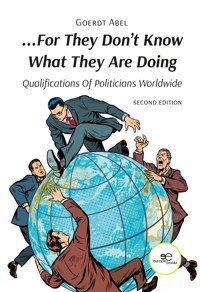
Why do so many of our political leaders seem unfit to govern, and why do we keep electing them anyway?
In this timely and provocative book, political author and world historian Dr. Goerdt Abel takes readers on a sweeping global and historical journey to examine how deeply flawed individuals often rise to the top of political power. From emperors and monarchs to modern populists and autocrats, Abel uncovers recurring patterns of incompetence, vanity, and moral failure that have led to war, economic collapse, and widespread suffering.
Drawing from his personal experience as a business leader during the reunification of Germany and decades of study in political history, Abel critiques current systems of governance in both democratic and authoritarian regimes. He argues that in nearly every country, political office requires fewer qualifications than even basic professions like nursing, teaching, or taxi driving.
What emerges is a forceful call for change: the introduction of formal qualification standards for political leadership, rooted in competence, ethical conduct, and long-term thinking. Through historical analysis, institutional critique, and pragmatic policy proposals, …For They Don’t Know What They Are Doing challenges readers to rethink who gets to lead—and why it matters.
Essential reading for anyone interested in politics, leadership, history, or the future of democracy, this book will spark debate, provoke introspection, and inspire reform.
Das E-Book können Sie in Legimi-Apps oder einer beliebigen App lesen, die das folgende Format unterstützen:
Veröffentlichungsjahr: 2025
Ähnliche



















Goerdt Abel
“...For They Don’t Know What They Are Doing”.
Qualifications Of Politicians Worldwide
Second Edition
© 2025 Europe Books | London
www.europebooks.co.uk – [email protected]
First edition: March 2024
ISBN 9791256972005
Second Edition: October 2025
“…For They Don’t Know What They Are Doing”.
Qualifications Of Politicians Worldwide
I gladly dedicate this book to my mother Hildegard, who gave me the ability to accept life’s circumstances, to my father Wilhelm, who awakened my spirit, to my late wife Maria, who so happily accompanied me for more than 50 years of life, and to my children Margell and Godard, who have already given me back more than I could give them
I would like to express my heartfelt gratitude to my late wife, Maria Abel, née Flener, whose unwavering encouragement inspired me to write. I also extend my thanks to my current partner, Elfriede Ita, née Paumgarten, for her positive support and advice during many long evenings dedicated to this book.
I am especially appreciative of my children, Margell and Godard, who offered valuable suggestions for various chapters. A special acknowledgment goes to Dorothea Lange, née Nolde, for her critical oversight and curation of this work; without her countless hours of dedication, this book would not have come to fruition.
My circle of friends has been instrumental in the creation of this book, contributing insights and constructive criticism. I would like to specifically mention Clare and James Kirkman, to whom I owe the chapter on British Prime Ministers; Juan Luiz Alvarez, currently Minister of Tourism in Guanajuato, Mexico, who shared his expertise on the executive role and provided fascinating insights into his beautiful country; and the esteemed Ambassador of Switzerland, Markus Peter, who deepened my understanding of this haven of democracy.
Additionally, I am grateful to Ross Esson, a friend from South Africa, for offering a unique perspective on his country through his management consultancy experience; Mag. Markus Figl, District Head in Vienna, for connecting me with valuable contacts in Austrian academia; and Dr. Gudrun Biffl, who assisted me in conceptualizing and identifying politicians.
Finally, I would like to acknowledge Eric Shawn for his invaluable work as a developmental editor, whose insights greatly enhanced the quality of this book. I am thankful to all my friends who have continually encouraged me to pursue this endeavor.
I. FOREWORD
Most of the time in life you don’t exactly know when something started. My wife Maria and I had been spending the summer mostly in Vienna for several years, and it was in 2019. With a group of former students, now friends, we met for dinner at a Heuriger or in a restaurant and usually discussed political issues. So, we politicised as usual and got stuck on the topic of “qualifications of politicians”. Our conclusion: for almost every profession today, a clear and constantly sharpening qualification is necessary.
Nevertheless, this does not seem to apply to “politicians”.
Voilà, there we had our topic and thought we should delve into it, especially when you look at the ever increasing political crises in most –even developed– countries. This led to the attempt to take up this question and bring it closer to a wider circle of interested people in a published book form. We hope that the book will stimulate reflection and perhaps point to possible solutions for the 8 billion people worldwide who currently live in over 194 countries (as of the beginning of 2022) and speak approximately 6,500 to 7,000 languages.
On average, people today have a better education and much more education than ever before. The book “Sapiens” by Yuval Noah Harari, in which he describes the development of “Homo Sapiens” (also known as “human being”) up to the present day, sheds light on this topic in detail. This book does not claim to appeal to readers who cling to entrenched and assumed ideas and a defined deterministic view of the world –be it for ideological or religious reasons. If there is interest in a discussion, the author welcomes a lively exchange, as it is only through discussion and respect for other opinions that we can evolve and then hope to recognize catastrophic mistakes of the past and avoid them during ongoing developments.1
I.A. Evolution of The Species Homo Sapiens
Thanks to recent research findings and their publication in relevant literature, we have a better idea of the development of mankind since approximately two million years ago. Findings and scientific knowledge make it possible to determine dates more precisely. It becomes clearer how our ancestors not only developed physically but also gradually learned to master their environment, including the use of new nutritional options and adaptation to climatic changes.
In particular, the reactions to multiple climatic changes led to migratory movements –unimaginable for us today– until the entire globe was conquered by Homo Sapiens as a habitat. In the meantime, we know that there were several species of the genus “Homo”. These include Homo Rudolfensis (East Africa), Homo Erectus (East Asia) and Homo Neanderthalensis (Europe and West Asia), all of which are now extinct. Only Homo Sapiens remained (see footnote 1).
However, little is known about the evolution of social behavior. The relevant research is largely based on assumptions and speculations - sometimes also on comparisons with animal species that are close relatives to us (such as apes), but also many other animals (such as wolves) that show a firmly established pack behavior. It is obvious that people came together in groups because they could hardly survive as loners.
This means that behavioral patterns developed - mostly biologically determined - and are still valid today. It is only on the basis of the knowledge gained from the past 10 to 12 thousand years of earth’s history (as the assumed beginning of a more developed agricultural era) that scientists today have extensively researched how social coexistence may have developed within and outside the respective groups. Of course, we must not ignore natural selection processes, because random factors such as health, accidents and genetically determined variations in life expectancy must be taken into account. These include external circumstances such as nutritional possibilities or habits, social conditions such as disputes and wars between certain groups and the care of offspring, the elderly, the sick and the weak.
In order to successfully survive in both small and large groups, individuals needed to maintain a certain order in their behavior toward one another, which influenced the social structure across all ages—children, adults, and the elderly.
The relationship between the sexes and the interactions between the presumably blurred and fluidly composed groups must also be taken into account. At that time, too, the need for “leadership” arose to regulate behavior towards one another. In this context, we have to rely on speculation as to what the selection processes and the associated rules of conduct probably looked like. Evidence from excavations suggests that social orders developed very early. As writings gradually developed, some documents could be deciphered for the most part, so it has become much easier to recognize, describe, interpret and compare the social behavior of ancestors from around 5,000 years ago with today’s approaches.
Let me try to show you some recognizable patterns of social behavior before and after the development of writing from the almost infinite literature available.
The first advanced civilizations are well known, and we can easily look back to those in Mesopotamia between the Euphrates and Tigris, in Egypt and China, and somewhat later in Mexico and South America. What they all have in common is that they were located in the most fertile parts of the world easily accessible by humans. The prerequisites were easy access to unlimited supplies of freshwater, e.g. river systems, large lakes or, in the case of the Mayas, underground water systems (cenotes). Also essential were favorable weather conditions, which humans could withstand in both the summer and the winter.
The possibility of several harvests annually was also added, which resulted in a sharp rise in population and the necessity of organizing cohabitation based on specific standards to guarantee the most fruitful coexistence.
I.B. Leadership, Dominance, Differentiation, Truth, Falsification
When it comes to the qualification of politicians, one immediately realizes the underlying requirements and the complexity of the topic. It is a question of the capacity to lead, which has been analyzed many times and is often referred to today with the English term “leadership”. The anglicization of the term is certainly also related to the fact that the term “leadership” has such a one-sided negative connotation in the German-speaking world due to the National Socialist and fascist era in the first half of the 20th century.
There are widespread perceptions and opinions that people who strive for leadership not only in the political arena but also in other areas of society, are primarily concerned with gaining and maintaining power. In other words, it is often about the desire to be able to determine the actions of other people. The basic idea of leadership in the political sphere is to serve “the common good of all”. The leader is typically unaware of this basic idea or it is subordinated in favor of their own interests, the family, the party or another group. In our democratic societies, it is usually the interests of a party to which one belongs. This means that, by definition, only the group interest of this party is important and attempts are made to enforce it at the expense of all other groups.
Through the development of constitutions, attempts have been made to mitigate this weakness of our communities to enable positive coexistence for all those involved in society. In the last two centuries since the founding of the United States of America and the French Revolution, we have managed to make great progress. Unfortunately, this is not evident when it comes to the issue of “qualifications of those politically responsible”. Previous solutions, such as grassroots elections on the Internet or within parties, elections at party conferences, and selection procedures among a group of parliamentarians and others, do not seem to bring sufficient improvement. We know approval rates at party conferences of almost 100 %, especially in single-party systems.
Unfortunately, this does not only apply to dictatorial forms of society from the right or left but also to democratically organized states, e.g. Austria. At the party conference of the Austrian People’s Party in 2022, the only candidate Karl Nehammer was elected ÖVP chairman and candidate for chancellor by around 500 delegates with 100% of the votes. There have already been similar results in the CSU (Christian Social Union in Bavaria, Germany). However, this is especially true for socialist or communist-led countries, such as the former GDR and the former Soviet Union, Cuba and many others. However, they seldom dared to state 100 %, results of 96 to 99 % were more typical. The NSDAP (National Socialist German Labour Party) and other right-wing parties around the world manipulated elections in the same way.2
It is difficult to differentiate the issue and to distinguish truth, lies and falsification. It is not helpful that the media (tabloid press, but also all other media such as radio, television, social media, oral radio etc.) have no interest in reporting independently and neutrally. Instead, they openly, and unfortunately sometimes covertly, serve the goal of gaining and maintaining power. This attitude is particularly evident in dictatorially orientated political movements, not only in the last century but throughout almost the entire history of mankind. Regrettably, this is also true today in systems with a democratic orientation. This is not a general condemnation of the media, as there are fortunately also examples of objective reporting, or where this is not the case, at least a clear statement of which opinion is being represented.
I.C. Historical Retrospective
Before the development of writing, we are reliant on oral traditions, which may be interesting but do not stand up to objective scrutiny. I will therefore briefly discuss the development of writing systems. According to “Meyers Großes Handlexikon”3, writing is defined as a “system of graphic signs that reproduce linguistic elements”. Initially, this relationship is only present to a limited extent; it is often more of a thought (picture) script. Writing, as a system of word syllables, probably first developed among the Sumerians around 3100 BC, as well as among the Egyptians, Hittites and Chinese.
The development of the alphabet, on the other hand, goes back to the Phoenicians and was then presumably further developed by the Greeks through the expansion of the vocal system. For this reason, there are only indirect references to the time before that, partly from books in which traditional stories and descriptions were incorporated, such as the Bible, the sacred book of the Maya (Popul Vuh), Greek, Roman and Germanic legends and other records from various cultures around the world (Japan, China, India, African countries). Without the development of the various writing systems, we would have been able to make very little progress in the theory of knowledge and the foundations for this book would have been meagre.
To a large extent, these narratives are based on patriarchal systems. In most cases, fathers are in the foreground, with a few exceptions that emphasize the role of mothers. Few descriptions exist that deal with interactions within families or between family members. All of these written traditions show us that it was mostly leaders who represented a religious message that prevailed, e.g. Buddha, Moses, Christ, Mohammed or, more recently, Joseph Smith Jessop. These personalities were revered as prophets or because of other alleged superhuman qualities. The findings were usually presented as supernatural messages. It is rarely described how and why these people were able to reach their special positions. Natural phenomena were sometimes used, as were alleged apparitions of gods and god-like persons.
In most cases, these were personalities who came from privileged tribes/groups, but sometimes they also came from very humble backgrounds or families.
It seems as if the glorified leaders stood out from the normal population by means of physical characteristics, e.g. size (both particularly large or small), strength, speed and longevity. They were also characterized by better mental and emotional abilities, good eyesight, hearing, smell, and social skills such as empathy, understanding other people’s motives and charity. Negative traits seem to predominate, such as a lack of compassion, brutality, callousness, complete self-orientation and narcissism. Not to be forgotten are the more intellectual abilities and quick comprehension of complex interrelationships in nature and interpersonal relationships.
In some older cultures, values of equality also appear to have been important, presumably especially where individual success was based on successful cooperation, such as in hunting or similar activities that benefited the community. However, leaders were also helped by emphasizing the differences between people. These could be defined by gender, age and/or physical and mental abilities. This then led to extreme demarcations through castes, nobility, priests, the unfree and even slaves and other more subtle forms of dependency. It should also be mentioned here that many of the so-called prophets themselves did not appear with the respective mission or function.
The very complex thought structures behind most religions were often only created gradually over centuries after the death of the leaders. Obviously, the focus was on expanding and maintaining the power of the leading groups in the respective religious communities. This realization is important, as the purpose of my book is to put the selection of leaders on a more rational basis in the future.
Knowledge of previous selection procedures should serve to replace them with better methods. Adequate selection procedures should be more effective than those used in the development of Homo Sapiens to date. They should ensure that the “common good” is more in the foreground. It would help if we could avoid the catastrophic dictators we have had to endure time and again in the history of mankind and are still experiencing today. This would largely or completely prevent the huge damage they have caused to humanity and the planet.
I realize that this is a very lofty and ambitious claim. However, it seems to me that it is high time we devoted ourselves intensively to this topic. If reading my book contributes to this, I will consider it a great success. 4
1 Juval Noah Harari, Sapiens: A Brief History of Humankind, Vintage (part of Penguin) Vauxhall Bridge Road, London SW1V2SA, 2011.
2 14th May 2022 in Graz at the ÖVP party congress (Kleine Zeitung Steiermark).
3 Meyers großes Handlexikon, Herausgeber: Bibliographisches Institut, Buch Nr. 004267, p. 770.
4 Joseph Smith Jessop, founder of the Church of Christ, is also regarded as the founder of the “holy last three days of the communion of Christ” as well as a prophet in many other Mormon churches.
II. ANCIENT ADVANCED CULTURES
As fascinating and entertaining as traditional legends from the prewriting era may be, it is more pertinent to focus our exploration on periods for which we possess verifiable written records. These records provide a clearer lens through which we can examine the development of complex societies. Among the ancient cultures that have left a significant mark on history, Egypt stands out as one of the most comprehensible and influential.
II.A. Egypt
Egypt’s cultural evolution is intricately tied to its unique geographical location, which has shaped its history for millennia. Situated along the banks of the Nile River, Egypt’s development was largely insulated from significant external influences during its formative years. This relative isolation allowed us to observe the evolution of social structures almost as if under a scientific microscope. However, the origins of its first kings remain shrouded in mystery; we lack concrete explanations for how these early rulers came to wield such absolute power.
Historically, we have scrutinized the mechanisms by which power was maintained and expanded within ruling families. Yet, we have often overlooked the critical question of how certain individuals achieved positions of prominence in the first place. For instance, the term “Egypt” itself, derived from the Greek Aigyptos, has replaced the original Egyptian name “Kemet,” meaning “black land,” which referred to the fertile soil enriched by the annual flooding of the Nile. In contrast, the desert surrounding this life-giving river was known as the “Red Land,” a term that also inspired the name “Red Sea.”
Stretching over 1,100 kilometres from the first cataract at Aswan to the Nile Delta, the Nile Valley is the world’s largest river oasis. For over 5,000 years, its inhabitants have depended on the annual inundation of the Nile for sustenance, as the river nurtures not just people but also animals and plants.
Bordered by the Mediterranean Sea to the north and the Red Sea to the east, Egypt encompasses about one million square kilometres. However, only 38,000 square kilometres—less than 4% of its total area—are arable, comparable to the land area of the Netherlands, which supports around 17 million people.
In 2020, Egypt’s population soared to approximately 102 million, with over 20 million residing in Cairo alone. Given its limited agricultural land, Egypt experiences one of the world’s highest population densities, rivaling regions such as the Rhine-Meuse-Scheldt delta in Europe and the delta of the Ganges in Bangladesh. The social development of Egyptians can be understood through the lens of agricultural constraints inherent to this unique oasis environment. The fertile5 soil, while conducive to agriculture, becomes marshy and overgrown after the floods, complicating farming efforts.
Sustainable agriculture required cooperative efforts. As individual farms, castles, or palatial complexes proved impractical, inhabitants banded together to construct dykes and canals, organize water management, and redistribute fields annually after the floods receded. This collective effort led to the formation of larger units known as district communities, eventually resulting in the establishment of 42 nomes—22 in Upper Egypt and 20 in Lower Egypt. At the helm of each nome was a nomarch, yet the criteria for their selection remain largely ambiguous.
As time progressed, the annual irrigation facilitated the unification of these petty states into two large empires: Upper and Lower Egypt. Upper Egypt retained a predominantly nomadic structure, characterized by modest harvests and a lifestyle centred around herding cattle and sheep. In contrast, Lower Egypt, with its fertile delta, became a hub for permanent settlements, largely shielded from external threats by natural barriers like marshes and coastal defenses.
Today, some historians attribute Upper Egypt’s success to its nomadic lifestyle, suggesting that such a background fostered greater ambition and a willingness to assert power. Conversely, the relative security of delta farmers may have bred complacency. However, this interpretation, while plausible, should not be generalized, as historical narratives often resist simple explanations. Ultimately, Upper Egypt’s influence grew, leading to its eventual domination over Lower Egypt.
When a unified Egyptian state emerged, the leadership was predominantly drawn from Upper Egyptians, who provided kings and nobility, becoming the custodians of culture during the celebrated “Pyramid Period.” For over two and a half millennia, Egypt endured through both prosperous and tumultuous times under a succession of rulers known as pharaohs, a term derived from the Egyptian phrase meaning “the great house.” The pharaohs were venerated as divine representatives on earth, believed to be the reincarnations of the falcon god Horus, which solidified their authority.
Possessing unlimited power, pharaohs were the sole proprietors of the land, controlling all natural resources and the spoils of war. They ruled from ascension until death, with the eldest son born to the principal wife typically succeeding the throne. This dynastic continuity was crucial for maintaining stability, as pharaohs were responsible for the welfare of the nation and the preservation of ma’at, the ancient Egyptian concept of truth and cosmic order. They enacted laws, oversaw the economy, and commanded the military.
The Egyptians held a profound belief in life after death, which influenced their entire existence. Much of their lives were dedicated to constructing elaborate tombs and contemplating the afterlife. The pharaoh dictated ambitious building projects for temples and pyramids, reflecting the culture’s deep-seated values. This governance model led to the establishment of a strict hierarchical order that permeated Egyptian society.
Former nomarchs transitioned into roles as scribes and administrators under the pharaoh’s authority, overseeing officials, craftsmen, and farmers.
The status of women in ancient Egypt is a subject of considerable debate. Compared to later classical antiquity, women often enjoyed more rights and social standing. While the general population practiced monogamy, polygamy was common among royalty and higher officials.
Menes, the first king to adopt the title “pharaoh,” succeeded in uniting Upper and Lower Egypt under a double crown around 2900 BC after a protracted period of conflict. His capital, Memphis, located just south of modern Cairo, became the political and cultural heart of the Old Kingdom. Under Menes’ leadership, Egypt emerged as a formidable power, prioritizing the protection of its river oasis over aggressive expansion.
The development of hieroglyphic writing during this time represents one of the most significant advancements in Egyptian civilization. This writing system, distinct from those of Mesopotamia, relied on pictorial symbols derived from everyday life, enabling the documentation of history and culture. Without this breakthrough, our understanding of Egypt’s rich history would be severely limited.
The era following Menes is categorized into 30 dynasties. The first six dynasties are known as the “Old Kingdom,” while the “Middle Kingdom” spans the 11th to 13th dynasties, and the “New Kingdom” includes the 18th to 20th dynasties. The subsequent “Late Period” encompasses the 21st to the 30th dynasty, with the interludes referred to as the “First” and “Second Intermediate Periods.” The influence of the pharaoh remained dominant, allowing him to diminish the nobility’s power, with key administrative and priestly roles largely reserved for the royal family.
Egypt’s administrative success was paramount to its longevity. A well-organized bureaucracy was essential for utilizing the labour force effectively and for managing resources efficiently. Accurate predictions of the Nile’s seasonal flooding and sophisticated irrigation systems were critical for maximizing agricultural output. Future civil servants received extensive training in specialized schools, undergoing rigorous examinations to ascend to higher ranks based on merit.
The invention of writing, emerging between the First and Second Dynasties, catalyzed Egypt’s evolution into an advanced civilization. The characters, rooted in the domestic sphere, provided a means for recording and reflecting upon societal developments. Without this groundbreaking advancement, our exploration of one of the earliest civilizations would be profoundly limited.
While the governance of Egypt as an absolute monarchy proved relatively stable until the reign of Pharaoh Halloka around 1100 BC, the transfer of power following a king’s death was often fraught with uncertainty. Historical records do not reveal a consistent pattern regarding how new rulers asserted their authority, especially when they were not the eldest sons. The complexities of succession underscore the intricate nature of power dynamics within ancient Egypt.
With the death of Ramses XI in 1085 BC, a pivotal era came to an end. Egypt, which had enjoyed nearly 2,000 years of unity, fractured once more, marking the conclusion of the “New Kingdom.” Ramses XI’s vizier, Heribor, a man of dubious origins who had risen through the military ranks, united the secular and spiritual powers by declaring himself the supreme priest. However, his control was limited mainly to Upper Egypt, as Smendes had simultaneously claimed power in Lower Egypt.
This division of Egypt persisted for approximately 450 years, during which time Libyan tribes infiltrated Lower Egypt’s leadership structures and administration. These nomadic cattle breeders adapted to Egyptian culture, customs, and language, eventually becoming influential leaders in their own right.
The subsequent 23rd and 24th dynasties saw further fragmentation as Upper Egypt faced invasions from Ethiopian forces. The 25th Dynasty (751 to 656 BC) brought additional strife, with Assyrian campaigns successfully raiding and devastating cities like Memphis and Thebes. A brief period of relative calm emerged during the 26th Dynasty, but by the end of this era, Persian forces invaded through Sinai, establishing control for about 200 years.
Despite repeated attempts to overthrow foreign rule throughout the 27th to 30th Dynasties, the Egyptians remained largely unsuccessful. It was only with the arrival of Alexander the Great that Egypt found liberation from Persian occupation. Welcomed by the populace, Alexander showed respect for Egyptian culture, allowing him to establish Alexandria, which would become one of the Mediterranean’s most pivotal cities.
Greek, or more accurately Macedonian, dominance persisted for 300 years until 30 AD, when Egypt fell under Roman control and became a province of the Roman Empire.
It is important to investigate other highly developed Near Eastern civilizations as we move our attention away from Egypt. Today, this region is better known as Western Asia. Each of these cultures adds to the fascinating variety of human history with its own contributions and complexities.
5 Emil Nack, Ägypten und der Vordere Orient im Altertum, Verlag Carl Ueberreuter, Wien, 1962 and 1977.




