


93,99 €
Mehr erfahren.
- Herausgeber: John Wiley & Sons
- Kategorie: Wissenschaft und neue Technologien
- Sprache: Englisch
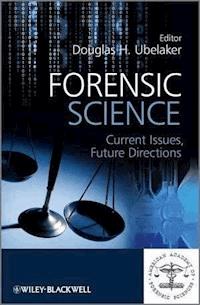
FORENSIC SCIENCE
Forensic Science: Current Issues, Future Directions presents a comprehensive, international discussion of key issues within the forensic sciences. Written by accomplished and respected specialists in distinct areas of the forensic sciences, this volume examines central issues within each discipline, provides perspective on current debate and explores current and proposed research initiatives.
The forensic sciences represent dynamic and evolving fields, presenting new challenges to a rapidly expanding cohort of international practitioners. This book acquaints readers with the complex issues involved and how they are being addressed. The academic treatment by experts in the fields ensures comprehensive and thorough understanding of these issues and paves the way for future research and progress.
- Draws on the knowledge and expertise of the prestigious American Academy of Forensic Sciences
- Written by key experts in the diverse disciplines of forensic science
- An international approach
- Each chapter carefully integrated throughout with key themes and issues covered in detail
- Includes discussion of future directions of forensic science as a discipline
Sie lesen das E-Book in den Legimi-Apps auf:
Seitenzahl: 846
Veröffentlichungsjahr: 2012
Ähnliche



















Contents
Cover
Title Page
Copyright
List of contributors
Acknowledgements
Chapter 1: Introduction
Reference
Chapter 2: General Forensics – No One Else Starts Until We Finish
2.1 Introduction
2.2 Medicolegal Death Investigation
2.3 Crime Scene Investigation
2.4 Forensic Nursing
References
Further Reading
Chapter 3: Criminalistics: the Bedrock of Forensic Science
3.1 Introduction
3.2 Managing Forensic Services for Quality Performance
3.3 Illicit Drugs
3.4 Forensic DNA Analysis: a Primer
3.5 Fire Scene Investigation and Laboratory Analysis of Fire Debris
3.6 Trace Evidence
Acknowledgments
References
Further Reading
Chapter 4: Forensic Pathology – the Roles of Molecular Diagnostics and Radiology at Autopsy
4.1 Molecular Testing and the Forensic Autopsy
4.2 Incorporating Radiologic Imaging into Medicolegal Death Investigations
References
Chapter 5: The Places We Will Go: Paths Forward in Forensic Anthropology
5.1 Introduction
5.2 The History of Forensic Anthropology
5.3 Forensic Anthropological Practice
5.4 Current Challenges and Research in Forensic Anthropology
5.5 International Perspectives on Forensic Anthropology
5.6 Future Goals in Forensic Anthropology
Acknowledgements
References
Further Reading
Chapter 6: Forensic Toxicology: Scope, Challenges, Future Directions and Needs
6.1 Introduction
6.2 Toxicology and the NAS Report
6.3 Research Priorities and Resource Needs for the Future of Forensic Toxicology
Summary
References
Further Reading
Chapter 7: Odontology – Dentistry's Contribution to Truth and Justice
7.1 The Discipline
7.2 Historical Background
7.3 Key Issues in Odontology
7.4 Bitemarks
7.5 Disaster Victim Identification
7.6 Aging
7.7 The International Perspective
7.8 Research Objectives and Barriers
7.9 Current State of Research
7.10 The Future of Forensic Odontology
References
Chapter 8: Forensic Psychiatry and Forensic Psychology
8.1 History of Psychiatry in the United States
8.2 History of psychology in the United States
8.3 History of the Section on Psychiatry and Behavioral Sciences in AAFS
8.4 Areas of Legal Importance for Psychiatric and Psychological Testimony
8.5 International Perspectives
8.6 Future Directions and Research
References
Further Reading
Chapter 9: Forensic Document Examination
9.1 The Field of Forensic Document Examination
9.2 Principles of Identification
9.3 Forensic Examinations and Comparisons
9.4 Forensic Document Examination Past to Present
9.5 Key Issues
9.6 Forensic Document Examination Internationally
9.7 Research
Acknowledgments
References
Further Reading
Chapter 10: Digital Evolution: History, Challenges and Future Directions for the Digital and Multimedia Sciences Section
10.1 Introduction to Digital and Multimedia Forensics
10.2 Definition of Digital and Multimedia Sciences
10.3 History of Digital and Multimedia Sciences
10.4 A Brief History of AAFS Section
10.5 Key Issues
10.6 International Perspectives
10.7 Research and Future Directions
References
List of relevant legal cases
Further Reading
Chapter 11: Global Thinking and Methodologies in Evidence-based Forensic Engineering Science
11.1 Introduction
11.2 The Growth of Forensic Engineering
11.3 Methodology
11.4 Education and Qualifications
11.5 Forensic Engineering in a Changing World
11.6 International Perspectives on Forensic Engineering
Summary
Acknowledgements
References
Chapter 12: Jurisprudence
12.1 Introduction
12.2 The Jurisprudence Section of the Academy
12.3 Forensic Science in Court: Current Issues, Current Problems
12.4 Likely Directions to Improve the Jurisprudence of Science
12.5 Conclusion
References
Chapter 13: Global Forensic Science and the Search for the Dead and Missing from Armed Conflict: the Perspective of the International Committee of the Red Cross
13.1 Introduction
13.2 The International Committee of the Red Cross
13.3 The Dead and Missing from Armed Conflict
13.4 A Brief History: from Katyn to the Balkans
13.5 A Global Agreement on Best Practices: the 2003 International Conference on The Missing and Their Families
13.6 Roles and Responsibilities of Forensic Practitioners Participating in Humanitarian Operations
13.7 Health and Safety Issues
13.8 Responding to Constraints
13.9 The Identification of Human Remains
13.10 Community and Family Involvement in a Recovery and/or Identification Process
13.11 Emerging Trends and Opportunities in Humanitarian Forensic Sciences
13.12 Conclusion
References
Further Reading
Chapter 14: Forensic Systems and Forensic Research: an International Perspective
14.1 Introduction
14.2 What is the Ideal System?
14.3 Why Research is Often Absent
14.4 The Importance of Research and Cooperation
14.5 Conclusions
References
Chapter 15: Summary and Conclusions
15.1 Introduction
15.2 General Forensics
15.3 Criminalistics
15.4 Forensic Pathology
15.5 Forensic Anthropology
15.6 Forensic Toxicology
15.7 Odontology
15.8 Forensic Psychiatry and Forensic Psychology
15.9 Forensic Document Examination
15.10 Digital and Multimedia Sciences
15.11 Engineering Sciences
15.12 Jurisprudence
15.13 International Humanitarian Applications
15.14 International Forensic Systems and Forensic Research
15.15 History
15.16 Training
15.17 Evidence Issues in Forensic Science
15.18 Technology
15.19 Scientific Working Groups
15.20 Research
15.21 Awards
15.22 Global Forensic Science
References
Index
This edition first published 2013, © 2013 by John Wiley & Sons, Ltd
Blackwell Publishing was acquired by John Wiley & Sons in February 2007. Blackwell's publishing program has been merged with Wiley's global Scientific, Technical and Medical business to form Wiley-Blackwell.
Registered office: John Wiley & Sons Ltd, The Atrium, Southern Gate, Chichester, West Sussex, PO19 8SQ, UK
Editorial offices: 9600 Garsington Road, Oxford, OX4 2DQ, UK
The Atrium, Southern Gate, Chichester, West Sussex, PO19 8SQ, UK
111 River Street, Hoboken, NJ 07030-5774, USA
For details of our global editorial offices, for customer services and for information about how to apply for permission to reuse the copyright material in this book please see our website at www.wiley.com/wiley-blackwell
The right of the author to be identified as the author of this work has been asserted in accordance with the Copyright, Designs and Patents Act 1988.
All rights reserved. No part of this publication may be reproduced, stored in a retrieval system, or transmitted, in any form or by any means, electronic, mechanical, photocopying, recording or otherwise, except as permitted by the UK Copyright, Designs and Patents Act 1988, without the prior permission of the publisher.
Wiley also publishes its books in a variety of electronic formats. Some content that appears in print may not be available in electronic books.
Designations used by companies to distinguish their products are often claimed as trademarks. All brand names and product names used in this book are trade names, service marks, trademarks or registered trademarks of their respective owners. The publisher is not associated with any product or vendor mentioned in this book. This publication is designed to provide accurate and authoritative information in regard to the subject matter covered. It is sold on the understanding that the publisher is not engaged in rendering professional services. If professional advice or other expert assistance is required, the services of a competent professional should be sought.
Library of Congress Cataloguing-in-Publication Data
Forensic science : current issues, future directions / Douglas H. Ubelaker, editor.
p. cm.
Includes index.
ISBN 9781119941231 (cloth)
1. Forensic sciences. I. Ubelaker, Douglas H.
HV8073.F5836 2012
363.25dc23
2012026190
A catalogue record for this book is available from the British Library.
Wiley also publishes its books in a variety of electronic formats. Some content that appears in print may not be available in electronic books.
List of contributors
Douglas H. Ubelaker, PhD (editor) was the 2011–2012 president of the American Academy of Forensic Sciences and is a fellow in the Physical Anthropology Section. He received his PhD degree in 1973 from the University of Kansas and is currently a curator and senior scientist at the Smithsonian Institution's National Museum of Natural History in Washington, DC. He has published extensively in the general field of human skeletal biology, with an emphasis on forensic applications.
Adam Aleksander, PhD is a forensic engineer and a fellow and 23-year member in the Engineering Sciences Section of the American Academy of Forensic Sciences. He received his PhD degree in 1995 from Texas A&M University, and is the President of Aleksander & Associates P.A., Boise, Idaho, and Vice President of Precision Energy Services Inc., Hayden, Idaho. He specializes in forensic engineering issues in product liability, safety engineering, warnings and investigations of industrial and energy system issues. Dr. Aleksander practices nationally and internationally, including some 30 overseas assignments.
Susan Ballou, MS is the program manager for forensic science in the Law Enforcement Standards Office (OLES) at NIST. She has managed this program since 2000, targeting the needs of the forensic science practitioner by identifying and funding research at NIST in areas such as latent print analysis, burn patterns, computer forensics and material standards. Her forensic crime laboratory experience spans over 27 years and includes working on case samples in the areas of toxicology, illicit drugs, serology, hairs, fibers and DNA. She has Diplomate Certification with the American Board of Criminalistics (ABC) and is a fellow of the American Academy of Forensic Sciences (AAFS) and a recipient of the AAFS Criminalistics Section's Mary E. Cowan Outstanding Service Award.
David W. Baker, MFS is a fellow of the AAFS, and served as the secretary of the Digital and Multimedia Sciences Section from 2008–2010, and as chair of the section from 2010–2012. He received a Master of Forensic Science degree from the George Washington University in 1994. David is a principal information security engineer at the MITRE Corporation in McLean, Virginia, and is a member of the organizing committee of the Digital Forensics Research Workshop (DFRWS). He is a retired Special Agent of the US Army Criminal Investigation Command, and was the command's principal forensic science advisor during his last assignment. David has been working in the field of digital and network forensics for 19 years.
Robert Barsley,DDS, JD is the 2012–2013 president of the American Academy of Forensic Sciences and a fellow in the Odontology Section. He received his DDS degree in 1977 from Louisiana State University Health Science Center and his JD degree in 1987 from Loyola University School of Law in New Orleans. He is a professor at the LSUHSC School of Dentistry in New Orleans, Louisiana, where he serves as a consultant to multiple medicolegal entities. He has published and lectured in the field of forensic odontology.
Stephen B. Billick, MD is in full-time private practice of clinical child, adolescent and adult psychiatry and forensic psychiatry. Dr. Billick is clinical professor of psychiatry at New York Medical College, clinical professor of psychiatry at New York University School of Medicine and lecturer in psychiatry at Columbia University College of Physicians and Surgeons, the former associate chair for faculty development at St. Vincent's Hospital/New York Medical College, past president of the American Academy of Psychiatry and the Law (AAPL), past president of the American Society for Adolescent Psychiatry (ASAP) and past president of the New York Council on Child and Adolescent Psychiatry (NYCCAP). He is a member of the board of directors of the American Academy of Forensic Sciences (AAFS) and past chair of the Section on Psychiatry of the New York Academy of Medicine (NYAM).
C. Michael Bowers, DDS, JD received his DDS degree from the University of Southern California. He is a deputy medical examiner in Ventura, California and has written numerous peer review articles on bitemark evidence and dental identification methods. He also is a licensed lawyer (CA) and has contributed to the legal literature regarding the scientific issues related to forensic odontology's role in erroneous criminal convictions.
Samuel I. Brothers, BBA is a digital forensics analyst working for US Customs and Border Protection. He has earned over 20 different certifications in the field of computers and computer forensics. He is currently working at CBP for Laboratory and Scientific Services developing a nationwide digital forensics program. In his free time he is a magician and marathon runner.
Mary Bush, DDS is the 20112012 president of the American Society of Forensic Odontology and a fellow in the Odontology Section. She received her DDS degree in 1999 from the State University of New York at Buffalo and is currently an assistant professor of restorative dentistry and director of the Laboratory for Forensic Odontology Research at that university. She has published extensively in the area of forensic odontology and is currently a member of the editorial board of the Journal of Forensic Sciences.
Peter Bush, BS is director of the South Campus Instrument Center at the State University of New York and adjunct professor of Art Conservation at Buffalo State College. He is a member of the General Section of the American Academy of Forensic Sciences. He has published extensively in a variety of scientific fields, focusing more recently on victim identification and bitemark analysis in forensic odontology.
John Clement, PhD is the inaugural chair of forensic odontology at Melbourne Dental School in the University of Melbourne. He is also a visiting honorary research fellow at the Forensic Institute of the Defence Academy of the UK at Cranfield University. Prof. Clement is past president of both the British and Australian Associations/Societies for Forensic Odontology (BAFO and ASFD), a founder member of the International Association for Craniofacial Identification (IACI) and Dental Ethics and Law Society (IDEALS). Prof. Clement has had practical hands-on experience of working in forensic odontology, especially mass disaster victim identification, since the 1970s.
Cecelia A. Crouse, PhD is the crime laboratory director and forensic biology manager of the Palm Beach County Sheriff's Office Crime Laboratory. She received her PhD degree in 1988 from the University of Miami Department of Microbiology and Immunology and conducted her post-doctoral thesis at the Bascom Palmer Eye Institute. She has been a member of the National Institute of Justice Technical Working Group, the FBI Scientific Working Group on DNA Analysis and Methods, and many other committees for the advancement forensic DNA testing. She has published in the field of virology and forensic DNA analysis and is currently a member of the Inter-Agency Working Group on Accreditation and Certification.
Gregory G. Davis, MD is a fellow in the Pathology/Biology Section of the American Academy of Forensic Sciences. He received his MD degree in 1987 from Vanderbilt University. He is a professor of pathology at the University of Alabama at Birmingham, where he serves full-time as an associate coroner/medical examiner in the Jefferson County Coronary/Medical Examiner Office. His publications concentrate on death associated with drug abuse and on interacting with attorneys and court.
Robert Dorion, DDS is a past President of the American Board of Forensic Odontology, the Canadian Society of Forensic Science, and is a distinguished fellow of the American Academy of Forensic Sciences, presently serving as a member of the board of directors. He received his DDS from McGill University in 1972, where he is currently director of the forensic dentistry program, and is director of forensic dentistry at the Laboratoire de Sciences Judiciaires et de Médecine Légale, Ministry of Public Security for the Province of Quebec, Montreal, Quebec, Canada. He has written for and edited the first stand-alone comprehensive forensic textbook on bitemarks, entitled Bitemark Evidence in 2005, with a second edition in 2011.
Janet Barber Duval, MSN is a forensic nurse and a fellow in the General Section. She received her baccalaureate degree in nursing from the University of Cincinnati in 1963 and a master's degree in Nursing Education from Indiana University in 1965. She retired from the United States Air Force Nurse Corps in 2001 with the rank of colonel. During the last decade, Barber Duval has served as a clinical nurse consultant for Hill-Rom Company and has been active in journal and textbook editing. She has developed curricula and has taught continuing education courses in forensic nursing at the University of Texas, the University of New Mexico, and the University of California, Riverside. She is currently an adjunct associate professor at the Indiana University School of Nursing in Indianapolis.
Mary P. Fitzgerald, MS is a fellow in the Criminalist Section of the American Academy of Forensic Sciences and a member of the Midwestern Association of Forensic Scientists. She received her BS and MS from the University of Illinois, Chicago in 1977 and 1983 respectively. Mary is currently employed by the IRS National Forensic Laboratory as a physical scientist in the Questioned Document Section. She has published papers in the field of drug chemistry and ink analysis.
ARW Forrest, LLM received degrees in pharmacology and medicine at Edinburgh University and a law degree from University College of Wales. He received postgraduate education in clinical and analytical chemistry. He combines his legal and medical educations with his scientific background, having held positions as professor of forensic chemistry at the University of Sheffield, professor in the Faculty of Health & Welfare at Sheffield Hallam University and assistant deputy coroner in the jurisdictions of South Yorkshire (West) and the North Riding of Yorkshire & Kingston upon Hull. A fellow in the Royal College of Physicians, Royal College of Pathologists, Faculty of Legal & Forensic Medicine of the Royal College of Physicians and the Royal Society of Chemistry, he is also a fellow in the Jurisprudence Section of the AAFS. Dr. Forrest is a past president of the Forensic Science Society (UK).
Adam Freeman, DDS is a fellow of the American Academy of Forensic Sciences in the Odontology Section. He received his DDS degree in 1992 from Columbia University's College of Dental Medicine, where he now serves as an assistant clinical professor. Dr. Freeman is currently on the board of directors of the American Board of Forensic Odontology and is a past president of the American Society of Forensic Odontology.
Robert Gaffney, MFS is on the 2011–2012 American Academy of Forensic Science board of directors from the General Section. He has a master's in forensic science from George Washington University and is certified as a senior crime scene analyst. He is a special agent with the US Army's CID and the operations officer for the Forensic Technology and Training Division, USACIL in Forest Park, Georgia. He has published in the Journal of Forensic Science and is co-editor of the CID Crime Scene Handbook.
Zeno J. Geradts, PhD is a fellow in the Digital and Multimedia Sciences Section and was elected in 2010 for the three-year position as director at the board of directors of the American Academy of Forensic Sciences. He received his PhD degree in 2011 from the University of Utrecht and is currently senior forensic scientist at the Netherlands Forensic Institute in the field of image analysis and biometrics, and R&D coordinator for the Digital Technology and Biometrics Section. He is also chairman of the European ENFSI Forensic IT Working group and published in the field of pattern recognition and image analysis, as well as forensic implications of identity management systems.
James R. Gill, MD is the deputy chief medical examiner for Bronx County of the New York City Office of Chief Medical Examiner, and a clinical associate professor in the Department of Forensic Medicine at New York University School of Medicine.
Scott Grainger, PE is a licensed fire protection engineer and licensed civil engineer in numerous states, and a licensed land surveyor in Arizona. He is a fellow member of the Society of Fire Protection Engineers and senior member of the National Academy of Forensic Engineers.
Judith A. Gustafson, BS, is a member of the American Academy of Forensic Sciences Questioned Documents Section and the Midwestern Association of Forensic Scientists. She received a BS degree in 1982 from Western Illinois University and a BFA degree in 1998 from The School of the Art Institute of Chicago. She began her career with the Illinois State Police, Bureau of Forensic Sciences in 1985, and is currently employed by the US Treasury Department, National Forensic Laboratory, Questioned Documents Unit in Chicago, Illinois.
Sarah Hainsworth, PhD is a professor of materials engineering at the University of Leicester, UK. She received her PhD degree in 1993 from the University of Newcastle upon Tyne, UK and is a chartered engineer, chartered scientist and fellow of the Institute of Materials, Minerals and Mining. She has worked in the area of forensic engineering relating to materials failure investigations, and in forensic science related to stabbing and dismemberment. She has published in the areas of failure analysis of materials, forces required for stabbing with a variety of weapons and analysis of toolmarks.
H. Theodore Harcke, MD received his doctorate of medicine in 1971 from the Pennsylvania State University and has 40 years experience in academic radiology. He is a colonel in the United States Army and currently serves as the forensic radiologist for Armed Forces Medical Examiner System. An American Academy of Forensic Sciences member in the Pathology/Biology Section, he is co-author of a recently published textbook on forensic imaging.
Max Houck, PhD is an internationally-recognized forensic scientist who specializes in anthropology, trace evidence and education. A former FBI scientist, Dr. Houck has worked for Oxford Instruments, the Tarrant County (Texas) Chief Medical Examiner and West Virginia University, where he directed the Forensic Science Initiative, a multi-million dollar resource to the nation's forensic laboratories. He is currently Director of the District of Columbia Consolidated Forensic Laboratory.
Julie Howe, MBA is a fellow in the American Academy of Forensic Sciences General Section. She is a medicolegal death investigator for Franklin, Jefferson and Saint Charles Counties in Missouri. She also serves as the executive director for the ABMDI, secretary/treasurer for SOMDI, and is a member of the Scientific Working Group for Medicolegal Death Investigation, chairing the Accreditation, Certification, Education and Training committee. Ms. Howe has been involved with national training of medicolegal death investigators for 15 years. She has a master's in business administration from Saint Louis University and is a registered diplomate with the ABMDI.
RT Kennedy, JD is former chair of the AAFS Jurisprudence Section, in which he is a fellow. He was awarded the JB Firth Medal from the Forensic Science Society (UK) in 2003. Judge Kennedy has been an adjunct professor at the University of New Mexico School of Law teaching forensic evidence, and has received an award from the New Mexico State Bar for his continuing education series ‘Skeptically Determining the Limits of Scientific Evidence.’ He is a judge on the New Mexico Court of Appeals, and has participated in all levels of New Mexico courts and on the bench of the Jicarilla Apache Nation in his 23-year judicial career. He received his JD degree in 1980 from the University of Toledo College of Law.
Douglas S. Lacey, BSEE is a fellow in the Digital and Multimedia Sciences Section of the American Academy of Forensic Sciences. He is the section secretary for 2011–2012 and is the chair-elect for 2012–2014. He earned his BS degree in electrical engineering in 1996, from the audio engineering program at the University of Miami, and currently is a forensic audio/video examiner in the private sector, after having worked as an examiner at the FBI's forensic audio/video laboratory from 1996 through 2003. He has published over a dozen peer-reviewed papers in the fields of forensic audio and video analyses.
John J. Lentini, BA of Scientific Fire Analysis, LLC presents fire scene investigation and laboratory analysis of fire debris; he is one of a handful of people certified to conduct both fire scene investigations and fire debris analysis. He has personally conducted more than 2,000 fire scene inspections and has appeared as an expert witness on more than 200 occasions. He is an active proponent of standards for fire and other forensic investigations.
Jim Lewis, DMD is the chair of the American Board of Forensic Odontology, Dental Age Estimation Committee and the 2012–2013 president of the American Society of Forensic Odontology. He received his dental degree from the University of Alabama School of Dentistry, is a fellow of the Odontology Section, currently serves as an odontology consultant to the Alabama Department of Forensic Sciences and is an adjunct faculty member of the Fellowship in Forensic Odontology at the Center for Education and Research in Forensics and the Southwest Symposium on Forensic Dentistry.
Jane A. Lewis, MFS is a fellow in the Questioned Document Section of the American Academy of Forensic Sciences. She received her Master of Forensic Science degree from the George Washington University in 1985. She is currently a unit leader in the forensic document unit at the Wisconsin State Crime Lab-Milwaukee. She also has a private practice. She has made numerous presentations at forensic science meetings and has published several articles on forensic document examination.
Laura L. Liptai, PhD received a PhD and MS in biomedical engineering as well as a second master's specializing in robotics from the University of Southern California. Dr. Liptai holds a bachelor's of science in mechanical engineering. Specializing in kinetics and kinematics of trauma/injury to the human body, she specializes in the analysis of the mechanics, quantity of forces/accelerations and human factors in traumatic incidents. This specialty of biomedical engineering uses the signature of evidence within human tissues in the context of the incident environment to derive causal factors. Dr. Liptai has received the Andrew Payne award and Founder's award for her exemplary contributions to the forensic engineering sciences. She compiled and edited the AAFS Reference Series that is the largest collection of research and case study proceedings worldwide. She serves four boards: the University of California at Davis, BioMedical Engineering external advisory board; the American Academy of Forensic Sciences; the Society of Forensic Engineers and Scientists (also serves as vice-president) and the International Board of Forensic Engineering Sciences.
Barry K. Logan, PhD is the 2011–2012 treasurer of the American Academy of Forensic Sciences, and a fellow of the Toxicology Section. He is board certified by the American Board of Forensic Toxicology. He received his PhD degree from the University of Glasgow in Scotland, and is currently national director of Forensic Services with NMS Labs in Willow Grove, Pennsylvania, and executive director of the Center for Forensic Science Research and Education at the Fredric Rieders Family Renaissance Foundation. He has faculty appointments at Indiana University, Bloomington, Indiana and Arcadia University, Glenside, Pennsylvania. He has over 80 publications in the field of forensic toxicology.
Ryan Loomba, BS is a diversified biomedical engineer that specializes in complex system design, electrical circuit design, microfluidics and mechanical engineering applications. Ryan currently is an associate engineer at Nanomix in Emeryville, California where he is helping to design a point-of-care biomedical device utilizing carbon nanotube technology. Ryan received a BS in biomedical engineering with a specialization in electrical engineering from the University of Southern California.
Daniel A. Martell, PhD is a fellow in the Psychiatry and Behavioral Sciences Section of the AAFS. He is also a fellow of the American Board of Forensic Psychology and the National Academy of Neuropsychology. He obtained his PhD from the University of Virginia and is currently on the clinical faculty at the Semel Institute for Neuroscience and Human Behavior of the David Geffen School of Medicine at UCLA. Dr. Martell's research interests include brain damage, mental disorder, and violent criminal behavior.
Edward L. Mazuchowski, MD, PhD is a reviewer for the Journal of Forensic Sciences and a diplomate of the American Board of Pathology in Anatomic, Clinical and Forensic Pathology. He received his doctorate of medicine from the Uniformed Services University of the Health Sciences in Bethesda, Maryland and his doctorate of philosophy in bioengineering from the University of Pennsylvania in Philadelphia, Pennsylvania. Currently he is a lieutenant colonel in the United States Air Force and a deputy medical examiner with the Armed Forces Medical Examiner System, which has the responsibility of providing comprehensive medicolegal death investigation services to the Department of Defense and other federal agencies.
Kara L. Nance, PhD is professor and chair of the Computer Science Department at the University of Alaska Fairbanks and runs a computer security consulting firm. Her research interests include digital forensics, data systems, network dynamics, visualization and computer security. She is the founder and director of the Advanced Systems Security Education, Research and Training (ASSERT) Center, which is a multi-disciplinary center to address computer security issues and provides an isolated networked computer environment suitable for computer security education, research and training that is used by institutions around the world. She serves on a senior-executive advisory board for the Office of the Director of National Intelligence and is a frequent author and speaker on cyber security as it relates to national security.
Skip Palenik, BS has had a lifelong fascination with the microscope that started when he received his first instrument at the age of eight. Since then he has devoted himself to increasing his knowledge of analytical microscopy and microchemistry and applying it to the solution of real-world problems, especially those of forensic interest. He was fortunate in having worked closely with his mentor, Dr. Walter McCrone, for over 30 years and to have studied forensic microscopy with Dr. Max Frei-Sulzer of Zurich, a disciple of Dr. Edmond Locard of Lyon. Skip has been teaching analytical microscopy to forensic scientists for more than 30 years and has published numerous scientific articles and book chapters on the applications of chemical and forensic microscopy. He established Microtrace in 1992 to provide a resource for organizations and individuals in need of scientific services involving the analysis of microscopic trace evidence. His special research interests are the identification of single small particles, small amounts of complete unknowns and tracing dust and soil back to their origins. He is the 2009 recipient of the Paul L. Kirk Award, the highest award given by the Criminalistics Section of the American Academy of Forensic Sciences, and the 2003 Distinguished Scientist Award from the Midwestern Association of Forensic Sciences. He is listed in American Men and Women of Science. In 2010 he was awarded the Chamot Medal in chemical microscopy by the State Microscopical Society of Illinois.
Iain A. Pretty, DDS, PhD is a full-time academic at the School of Dentistry, University of Manchester, England. He has published extensively on odontological matters, concentrating on establishing metrics of reliability and validity for forensic techniques. His work continues to develop the theme of application of robust scientific methods to forensic dentistry and he has a particular interest in wrongful convictions and what can be learned from them.
William M. Riordan, BA is a director on the American Academy of Forensic Sciences board of directors and a fellow in the Questioned Document Section. He is also a diplomate of the American Board of Forensic Documents Examiner, Inc. and is currently a director on that board. He received a bachelor of arts degree from Roosevelt University, Chicago in 1975 and was trained in forensic document examination in the Chicago Police Department Crime Laboratory under Maureen Casey Owens. In 1986, after 13 years with the Chicago Police Department Crime Laboratory, he was employed as a forensic document analyst by the Department of the Treasury in the Internal Revenue Service National Forensic Laboratory, Questioned Document Unit, where he is currently employed.
Jeri D. Ropero-Miller, PhD holds a 2011–2014 position on the American Academy of Forensic Sciences board of directors and is a fellow in the Toxicology Section. She received her PhD degree in 1998 from the University of Florida and currently is a principal investigator and senior research forensic scientist at RTI International in Research Triangle Park, North Carolina. She has published in the fields of forensic toxicology and clinical chemistry with an emphasis on drugs of abuse in post-mortem testing, drugs of abuse in alternative matrices such as hair, and laboratory technological evaluations and advancements.
Daniel J. Ryan, JD is a professor at the Information Resources Management College of the National Defense University where he teaches cyberlaw, intelligence, information security and computer forensics. His research is in the areas of risk management, digital forensics and admissibility of scientific, technical or specialized evidence. He received a Juris Doctor degree from the University of Maryland and has published one book and numerous journal articles on law, business, and technology.
John E. Sammons, MS is an assistant professor at Marshall University, where he teaches digital forensics, electronic discovery, and information security. He received his Master of Science degree in 2008 from Mountain State University. He is the founder and director of the Appalachian Institute of Digital Evidence. He is an investigator with the Cabell County Prosecuting Attorney's Office and former Huntington police officer. He is a member of the West Virginia FBI Cyber Crime Task Force. He is an associate member of AAFS.
David Senn, DDS is a fellow in the Odontology Section and a past President of the American Board of Forensic Odontology. He received his DDS degree in 1969 from the University of Texas Dental Branch at Houston. He is currently the director of both the Center for Education and Research in Forensics and the Fellowship in Forensic Odontology at the University of Texas Health Science Center at San Antonio (Dental School). He has published in the field of forensic odontology.
Claire Shepard, MS is a professor and the program coordinator for the forensic science program at Southern Crescent Technical College in Griffin, Georgia. She received her master's degree in forensic science from the University of New Haven and earned a bachelor of science degree from Millsaps College. Within the American Academy of Forensic Sciences, she served as program chair for the General Section, was the 2003–2004 president of the Young Forensic Science Forum, and has served on numerous committees. She is also a certified senior crime scene analyst (CSCSA) by the International Association for Identification and a member of DMORT.
Jay A. Siegel, PhD is currently chair of the Department of Chemistry and Chemical Biology at Indiana University Purdue University, Indianapolis, and a professor of forensic science and analytical chemistry. He is a distinguished member of the American Academy of Forensic Sciences. He holds a PhD in analytical chemistry from the George Washington University and received the Distinguished Alumni Scholar Award from there in 2009. He has published many articles in research in forensic chemistry and is co-author of two textbooks in forensic science and co-editor-in-chief of the Journal of Forensic Science Policy and Management.
Dawnie Wolfe Steadman, PhD, D-ABFA is the director of the Forensic Anthropology Center at the University of Tennessee, Knoxville. She is a diplomate of the American Board of Forensic Anthropology and a fellow of the American Academy of Forensic Sciences. She received her PhD from the University of Chicago in 1997. Her areas of teaching and research include forensic anthropology, bioarchaeology and forensic human rights investigations.
Peter Stephenson, PhD is a cyber criminologist, digital investigator and digital forensic scientist at Norwich University (Vermont). He is a writer, researcher and lecturer on information assurance, digital investigation, and forensics. He has lectured throughout the world on digital investigation and security and has written, edited or contributed to 17 books and several hundred articles. He teaches network attack and defense, digital forensics and cyber investigation at Norwich University, where he also is the chief information security officer, and is director of the Norwich University Center for Advanced Computing and Digital Forensics. Dr. Stephenson obtained his PhD at Oxford Brookes University, Oxford, UK, and he holds a Master of Arts degree (cum laude) in diplomacy with a concentration in terrorism from Norwich University.
Yingying Tang, MD, PhD is director of the Molecular Genetic Laboratory at the NYC OCME. Dr. Tang received her MD from China Medical University, Shenyang, China, her PhD from Columbia University, and completed her postdoctoral fellowship in clinical molecular genetics and biochemical genetics in the Department of Human Genetics, Mount Sinai School of Medicine. She is certified by the American Board of Medical Genetics in clinical molecular genetics and clinical biochemical genetics, and by New York State Department of Health as laboratory director in genetic testing. She has published on mitochondrial genetics and its role in human disease, and on genetic testing in sudden death. Dr. Tang has been an investigator or co-investigator on four National Institute of Justice research grants.
Morris Tidball-Binz, MD is the forensic coordinator of the Assistance Division of the International Committee of the Red Cross (ICRC), based in Geneva, Switzerland. He received his medical degree from the National University of La Plata, Argentina (1989). He did his postgraduate training in forensic anthropology and in forensic medicine, including an honorary research fellowship at the Department of Forensic Medicine at Guy's Hospital, London, UK, between 1993 and 1996. He specialized in the application of forensic sciences to human rights and humanitarian investigations, has carried out forensic casework in over 30 countries and been actively involved in training and dissemination of applied forensic sciences in all regions (Americas, Africa, Asia, Europe, Middle-East and Pacific). Dr. Tidball-Binz co-founded and was the first director of the Argentine Forensic Anthropology Team (NGO), Buenos Aires, Argentina (1984–1990); assisted the Grand-Mothers of Plaza de Mayo (NGO) in the establishment of a national genetic databank for the identification of missing children in Argentina (1984–1989); was researcher for Chile, Mexico, Venezuela and Central America at the Americas Department of Amnesty International's International Secretariat in London, UK (1990–1995) and then head of that department (1996–1997). He directed the Regional Programme for the Prevention of Torture of the Inter-American Institute for Human Rights in Costa Rica (1998–1999), founded and was first director of the Latin-America Regional Office of Penal Reform International (NGO), also in Costa Rica (2000–2001), directed the Human Rights Defenders Office of the International Service for Human Rights (NGO), Geneva, Switzerland (2001–2003) and also directed that organization during 2003, before joining the ICRC in 2004.
Jan Unarski, PhD graduated in car mechanical engineering at the Technology University of Cracow in 1977, earning a PhD engineering degree in 2002. Employed by the Institute of Forensic Research in Cracow (Ministry of Justice) for 33 years, accident reconstruction became a specialty in 1985. Head of the Accident Reconstruction Department, Dr. Unarski became the chairman of the Road Accident Analysis Working Group (RAA WG) of ENFSI (European Network of Forensic Science Institutes) in 1998, serving until 2001. Dr. Unarski is a member of the Presidential Board of EVU (European Association for Accident Research and Analysis).
D. N. Vieira, PhD,MD is the current president of the International Academy of Legal Medicine and of the European Council of Legal Medicine, and a fellow in the Pathology and Biology Section. He is past president of the International Association of Forensic Sciences, of the World Police Medical Officers, of the Mediterranean Academy of Legal Medicine and of the Latin-American Association of Medical Law. He is full professor of forensic medicine and forensic sciences and of ethics and medical law at the University of Coimbra, and invited professor in several European and South-America universities. He is also the director of the National Institute of Forensic Medicine of Portugal and a member of the Portuguese National Council of Ethics for Life Sciences. He has published extensively and he has been awarded 11 scientific prizes and 12 honorary fellowships from scientific associations from European, Asian and Central and South American countries. He has participated in many international missions as forensic consultant, especially in the field of human rights.
Frank Wright, DMD is fellow in the Odontology Section of the American Academy of Forensic Sciences, serving as a past Odontology Section program chair, secretary and section chairman. He is the immediate past president of the American Board of Forensic Odontology, a 1984 graduate of the University of Kentucky College of Dentistry and he currently serves as the forensic dental consultant for the Hamilton County Coroner's Office in Cincinnati, Ohio. He has lectured and published extensively in all areas of forensic dentistry, with an emphasis on visible and non-visible light photography.
Acknowledgements
Since this volume represents a team effort, many acknowledgements are due. Rachael Ballard of Wiley-Blackwell extended the original invitation to consider this book effort and offered continuous encouragement and support during production. Our 2011–2012 AAFS board of directors unanimously approved the volume concept and was instrumental in selecting chapter authors, with some members serving as authors themselves. Of the AAFS staff, Anne Warren contributed considerable support, especially regarding contract negotiation. Kimberly Wrasse maintained communication with authors regarding manuscript production deadlines and format issues.
During the manuscript editing phase, Smithsonian Institution colleague Kristin Montaperto worked closely with me in the evaluation and formatting of each contribution. An additional Smithsonian colleague, Keitlyn Alcantara, assisted with various editing issues, along with my son Max Ubelaker and daughter Lisa Ubelaker. Lauryn Guttenplan of the Smithsonian Institution was instrumental in the formulation of contract language.
Wiley-Blackwell editor Fiona Seymour offered prompt advice on format issues during our initial work and then took charge of production once the volume manuscript was formally submitted. Finally, I thank all of our authors who gave so generously of their time and expertise in writing the chapters. Our authors met the somewhat formidable challenge of the rapid production schedule, as well as the goal of squeezing so much information about our beloved forensic sciences into this volume.
1
Introduction
Douglas H. Ubelaker
Department of Anthropology, National Museum of Natural History, Smithsonian Institution, Washington, D.C.
The forensic sciences represent the application of knowledge and methodology in various scientific disciplines toward the resolution of legal issues. The approaches employed in case applications are evidence-driven. Practitioners must evaluate what problems need to be addressed in evidence analysis, then utilize the most appropriate scientific methodology available. Such procedures call for broad understanding of the underlying science and full awareness of the appropriate available techniques, technology and databases, as well as their limitations.
Many areas of science can be applied to problems in legal contexts, sometimes in unexpected ways. In some scientific disciplines, legal applications are relatively uncommon. For example, a zoologist specializing in the taxonomy and natural history of a particular genus of rodent may work his or her entire career without ever dealing with a forensic issue. However, if key evidence relating to the classification and behavior of that rodent genus becomes important in the investigation of a homicide, the zoologist may be needed to provide forensic perspective and to present that evidence in court.
In contrast, some areas of science are utilized routinely in the analysis and interpretation of evidence. With a growing history of forensic perspective, experienced practitioners in these areas have honed methodology specifically geared to address evidentiary issues. They have developed laboratory procedures designed to ensure the security of evidence and to maximize the information that can be extracted from it. Research has been organized and scientific approaches developed to deal with specific problems revealed through forensic practice.
This volume presents key perspective on the forensic sciences from experienced practitioners in the core areas of this endeavor. It attempts to provide a general overview of the main activities in the forensic sciences, some historical perspective on forensic science origins, international factors and current central issues. However, the volume does not represent a practical, how-to guide to forensic practice. Due to limited space, not all forensic applications are addressed.
The idea for this volume surfaced during a meeting I attended with our publisher, Wiley-Blackwell, on February 24, 2011, at the annual assembly of the American Academy of Forensic Sciences (AAFS) in Chicago. Recognizing the strong and growing academic and public interest in forensic topics, the publisher's representative, Rachael Ballard, expressed interest in pursuing quality book projects in this scholarly area. Of course, many of our more than 6,000 AAFS members have published well-received books in their areas of expertise. As book review editor for the Journal of Forensic Sciences, also published by Wiley-Blackwell, I was keenly aware of the quality of those products. However, at this meeting, the publisher specifically was seeking perspective from AAFS leadership on what more could be done. I attended the meeting as AAFS President-Elect, along with then President Joseph Bono and Executive Director Anne Warren.
The inquiry strongly attracted my interest for multiple reasons. I agreed with the publisher that both public and scholarly interest in forensic science remained strong. However, much of the public interest has been met and shaped by television and popular fiction writing, in which analyses are conducted almost immediately and forensic scientists are portrayed as action figures with wide-ranging (and largely inappropriate) involvement in the case investigation. Although most of the public with whom I have discussed this issue understand that reality is likely different from that depicted by fiction, some misinformation persists among those entering our classrooms and jury pools.
For the last several years, the broader forensic science community has discussed and debated a variety of issues related to the quality of current forensic practice. Much of this discussion has focused on factors of objectivity, accreditation, certification, reliability, error analysis and the need for, and nature of, sustained focused research. Critical review has taken place at presentations during the annual meetings of the AAFS and other forensic science organizations, in the pages of our journals and in gatherings of scientific working groups.
The topics also have attracted attention on Capitol Hill in Washington, DC, where both the legislative and executive branches of the United States federal government have formed initiatives directed toward shaping forensic science reform. Along with many colleagues from the forensic, general science and legal scholarly communities, I have been an active participant in many of these dialogues. This participation has impressed on me the need for clear, comprehensive information on the current international practice of forensic science. Particular needs involve the clarification of central issues, ongoing efforts (including research) to advance the field, and thoughts on future developments from those engaged in the practice of forensic science. This perspective positioned me to respond positively to the Wiley-Blackwell inquiry.
Following the meeting with the publisher, I spent the remainder of the 2011 AAFS gathering discussing with colleagues my idea of producing an AAFS-sponsored book. After receiving a uniformly positive response to those discussions, I formally presented the concept to our Board of Directors on the final day of the conference week. A plan was formulated to create a volume that would include perspectives from each of our 11 sections and would include international coverage. The section representatives on our board of directors would serve as the primary contacts on the project and would work with me to select the appropriate authors. Although this involved a challenging amount of work for all, the group embraced the idea with unanimous approval.
As a result of the subsequent positive review of the book proposal and formal publisher approval, author selection moved forward. Authors were chosen for their prominence in the profession, skill at writing and meeting deadlines, availability, and their knowledge of the areas needed to be covered in each particular chapter. Reflecting the structure of the AAFS and the section representation on our board of directors, chapters were organized into 11 areas of the forensic sciences. The variability within these areas, regarding the diversity of their scholarly endeavors and their slant on the forensic sciences, is reflected in the nature of author selection for the individual chapters. The research and other activities of the authors selected for the individual chapters speak to the diversity of the scholarly endeavors within the 11 sections of AAFS.
The reviewers of the original book proposal to the publisher focused particularly on the stated need for international coverage. While such perspective had been planned for the individual section contributions, reviewers felt it needed to be strengthened to ensure a global view of the central issues. Accordingly, invitations were extended to the international colleagues who had agreed to serve as plenary speakers at the 2012 AAFS meeting in Atlanta, Georgia. This invitation not only added the recommended international strengthening of the planned volume, but also provided these future speakers with a publication outlet for many of the thoughts they were developing for the conference presentations.
To encourage continuity within the volume, guidelines were provided to those writing the section contributions. The following paragraphs discuss areas and topics planned to be covered, based on these guidelines. These general goals were presented to the chapter authors at the initiation of the project.
In regard to practice in the forensic sciences, the authors should explore the underlying science in various types of forensic cases, the necessary training and education of the forensic scientist and the information indispensable to the public/non-specialist knowledge base. The volume also should address the origin and historical development of the forensic sciences, including its early pioneers and main contributors. Each section chapter should relate its own topic-specific history, as well as the key relative developments within the AAFS.Contributors should review key issues and how they are being addressed. Emphasis should be on scientific developments but other fundamental topics, such as accreditation, certification, objectivity and training, can be included when appropriate. Objective analysis of controversies presented with different points of view can contribute to discourse surrounding forensic science issues.The authors should discuss the future directions of the field, including major research efforts underway that are likely to have high impact, as well as additional needed research particularly deserving of funding. Furthermore, expectations for future advancement and major breakthroughs should be presented.As an aid for future professionals, this volume should also review beneficial training and coursework for young scholars, preparing them for entry into this field. In addition, supplemental reading should be recommended by topic for those desiring added detail and perspective.Although the above guidelines were communicated to all authors, the goal was not to limit them to these specifics. These suggestions represented my concept of the key factors that needed to be addressed and conveyed in the planned volume. The points mentioned also provided the authors with some detail on the general goals of the volume. In addition, they emphasized that the book was not going to be about specific laboratory procedures and practical methodology. In short, this volume was structured to present the thoughts of the authors on the topics laid out above. A central goal was to provide the reader with an in-house forensic look at the major disciplines represented in the global practice of forensic science.
The American Academy of Forensic Sciences is ideally positioned to provide the perspective conveyed in this volume. In 2011, with 6,260 members from the United States, Canada and 62 other countries, the AAFS can, indeed, be characterized as an international forensic organization. Founded in 1948 [1], the AAFS consists of a professional society dedicated specifically to the forensic sciences. The Academy promotes its educational and scientific objectives through publication of the internationally recognized Journal of Forensic Sciences, its newsletter Academy News, an annual scientific meeting, and conferences, workshops and policy relating to important forensic issues. Headquartered in Colorado Springs, Colorado, the AAFS represents its membership to the public, serving as a key outlet for information on the forensic sciences.
Academy members are organized into 11 sections that are represented in this volume. These sections consist of Criminalistics, Digital and Multimedia Sciences, Engineering Sciences, General, Jurisprudence, Odontology, Pathology/Biology, Physical Anthropology, Psychiatry and Behavioral Science, Questioned Documents and Toxicology. Applicants for membership must meet the general AAFS requirements as well as those specific to their section of professional interest.
Each year, in February, the AAFS holds its annual meeting. At this time, over 800 scientific papers, workshops, breakfast seminars and other relevant events are presented. The 2011 annual meeting in Chicago included 3,851 attendees, including 512 representatives from countries other than the United States and Canada. For additional details on the American Academy of Forensic Sciences, consult the official website (www.aafs.org).
This volume provides background information, international perspectives and discussions of key issues for many of the scientific disciplines engaged in forensic applications. This effort contributes to the ongoing dialogue regarding challenges to the forensic sciences and the path toward future growth. The points of view expressed represent those engaged in the practice of forensic science, and who are well-positioned to recognize real solutions and advancement.
Reference
1. Field KS. History of the American Academy of Forensic Sciences: 1948–1998. West Conshohocken, PA: American Society for Testing and Materials; 1998.
2
General Forensics – No One Else Starts Until We Finish
Julie Howe1, Janet Barber Duval2, Claire Shepard3 and Robert Gaffney4
1Division of Forensic Pathology, Saint Louis University, St. Louis, Missouri, USA
2Indiana University School of Nursing, Indianapolis, Indiana, USA
3Southern Crescent Technical College, Griffin, Georgia, USA
4Forensic Technology and Training Division, United States Army Criminal Investigation Laboratory, Forest Park, Georgia, USA
2.1 Introduction
The General Forensics Section of the American Academy of Forensic Sciences is not made up of generalists; rather, the section is comprised of forensic experts in 18 accepted forensic sub-disciplines. The term ‘general’ is derived from the first titles given to ‘floating’, ‘at large’ or ‘general’ members of the early Academy's accepted disciplines. The expertise, training and education of these individuals were highly valued within the Academy, but they did not have a section of their own. ‘General’ members were associated with various disciplines such as pathology and toxicology. Although the need for a ‘General’ Section was identified as early as 1953 and the concept accepted by the Academy in 1956, the General Section was not created until 1968 [1].
Lesen Sie weiter in der vollständigen Ausgabe!
Lesen Sie weiter in der vollständigen Ausgabe!
Lesen Sie weiter in der vollständigen Ausgabe!
Lesen Sie weiter in der vollständigen Ausgabe!
Lesen Sie weiter in der vollständigen Ausgabe!
Lesen Sie weiter in der vollständigen Ausgabe!
Lesen Sie weiter in der vollständigen Ausgabe!
Lesen Sie weiter in der vollständigen Ausgabe!
Lesen Sie weiter in der vollständigen Ausgabe!
Lesen Sie weiter in der vollständigen Ausgabe!
Lesen Sie weiter in der vollständigen Ausgabe!
Lesen Sie weiter in der vollständigen Ausgabe!
Lesen Sie weiter in der vollständigen Ausgabe!
Lesen Sie weiter in der vollständigen Ausgabe!




