


Erhalten Sie Zugang zu diesem und mehr als 300000 Büchern ab EUR 5,99 monatlich.
- Herausgeber: Carcanet Poetry
- Kategorie: Poesie und Drama
- Sprache: Englisch
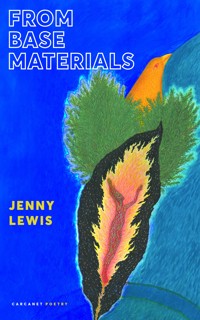
Rich and various, From Base Materials ranges thematically from violence towards women, love in old age and surviving cancer to translations from Arabic and Russian and a topical re-imagining of the Rubaiyat of Omar Khayyam. The poems speak of formation, transformation and the struggles of the human spirit to transmute 'base matter' and accept mortality and frailty of the flesh with courage and compassion. For the long poem, 'Love in Old Age', Jenny Lewis says: 'Although it addresses a lover, it is really about multiple experiences of love (both real and imagined) throughout a long life and how I am as much a literary construct as a human individual. I have drawn on literature that has shaped me, including the Epic of Gilgamesh, early Celtic nature poetry and hermit poetry and, more recently, feminist writings such as those of Hélène Cixous.'
Sie lesen das E-Book in den Legimi-Apps auf:
Seitenzahl: 61
Veröffentlichungsjahr: 2024
Das E-Book (TTS) können Sie hören im Abo „Legimi Premium” in Legimi-Apps auf:
Ähnliche










123
Contents
7For Terry, with love.8
9
‘Oh, Thou, who Man of baser Earth didst make…’
– The Rubaiyat of Omar Khayyam, trans. Edward FitzGerald
‘Alas, our frailty is the cause, not we,
For such as we are made of, such we be.’
– Shakespeare, Twelfth Night
‘Every beautiful poem is an act of resistance.’
– Mahmoud Darwish10
From Base Materials
Fox in a Frosty Field
How grief connects with other griefs, unmanageable and
random, they cluster, form chains like protein.
How after the family left at Christmas my grandmother was
in the room suddenly, the fire lit, the tree twinkling and she
dead fifty years.
How I wanted one more chance to feel the astrakhan collar
of her winter coat, to smell her ‘4711’ cologne.
How I got books for her from the Hammersmith library,
resentfully, swamped by teenage moods.
How my mother was also resentful – caring for her, her
mother, when all she wanted was my dead father back.
How my mother’s grief must lie at the bottom of all my griefs.
How that fox on the road to the garden centre had a ruff of
its own red innards round its neck.
How I cried for it, and also for my mother-in-law who I
once helped to buy a fur stole.
How one April after she died I was on the train to London
when a fox came suddenly, cautiously, into a frosty field.
How its V-shaped face and upraised paw reminded me of fox
furs; their dead faces pointing down, feet dangling, and for
days, I couldn’t stop my tears. 14
How hard it hit me when Terry died, us as students, listening
to the Beatles in a record shop booth; the holes in his jumper,
the terrifying warmth of his nearness.
How grateful we are when our tears for the dead are pure
and not constrained by resentment or the coldness of anger.
How when I had cancer I knew I could bear to leave everything
except my children.
How when you died you left them only a legacy of hurt and
bewilderment.
How when my right breast was removed it was like suffering
a death.
How I felt exposed on one side like a fire-damaged house.
How I Felt Exposed on One Side Like a Fire-Damaged House
How I felt nuclear yet shabby, paint peeling off, a broken thing, a grate coming away from the wall.
How my lungs were old radiators left out in the rain to rust.
How fear made me shake so badly I couldn’t hold the steering wheel.
How I was no longer sexual.
How I wanted to be held.
How I wanted my mother.
How my husband wouldn’t touch me.
How the drugs began with a ‘t’ – tamoxifen, temazepam.
How my right arm was so weak I couldn’t lift a hairbrush.
How in a workshop for cancer survivors I drew a life-sized figure of myself on paper with my right side missing.
How I practised with an intimacy counsellor to say ‘I only have one breast’.
After the Mastectomy
for Terry
When my waking mind became rimed solid
it only allowed me memories in dreams
like when I dreamed I was trying on new clothes
in an enclosed cubicle in a high street shop
and someone parted the cubicle curtain – the shock!
How fast and inexpertly I tried to cover myself.
How fast the relief when I saw it was you,
no threat, but only a sense of comfort.
I woke up knowing the threat of waking up
is to be once more connected to the truth.
The truth is you have died and I feel pain again.
It jolts like a horse with a hot-headed rider.
The weight inside me feels hot-headed
although it is grievous hard and rimed solid.
Words Are Made of Iron
How can we escape them?
We can only push our spirits
through and hope for the best
in the next world, the world
where iron can’t cage us.
Then imagine the freedom,
the expansion:
we are vast as plains
over which the herds roam;
as we roam inside each animal – is it freedom, buoyancy, joy we feel?
There are no words for it.
What do animals know of words?
Water is a reverberance
in bones recalling ponds, puddles,
drinking deep: still water, moving water.
Neither do they know the word for cold
but winter haunches creak
and fettles flinch, brittle with spikes
of ice, while in summer, its pure delight
runs under their skin on a hot day
like a trickling wind.
Animals know cold from every direction –
cold and heat and all the seasons.
Heat
By Aleksei Reshetov
Translated with Natalya Dubrovina
Light showers the grass with gold,
the pine breathes out its resinous aura
and the wild strawberry droops
down its rosy cheek to touch the drowsing earth:
while over the Kama river, bushes bow
low, stunned by the heat;
they’d love to strip off their greenery,
plunge into the water and swim out
like boys chasing the rafts.
Love in Old Age
old man
with all those young men in you, all the young men
you have ever been
still beguiling with your strong, carnivore’s teeth
and stray glances that slip
to other eyes than mine
what can I say about love in old age?
that it’s a burden and a joy, tiring and tireless
restful and restless, the final chapter in a saga
my body and I have never quite agreed on?
my body as friend and enemy
my body as unreliable narrator
my body as male gazed
my body as slave and enslaver
my body as trade and trader
my body as Sheherazade
my body as tall stories




