


5,99 €
Mehr erfahren.
- Herausgeber: Shuttle Systems Ltd
- Kategorie: Ratgeber
- Sprache: Englisch
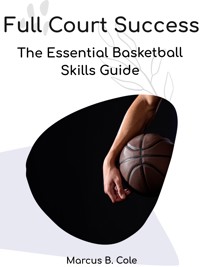
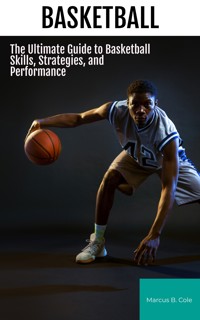
Discover the Ultimate Guide to Mastering Basketball Skills and Achieving Full Court Success!
Are you an aspiring basketball player looking to elevate your game? Want to learn the essential skills, techniques, and strategies that will transform you into a formidable player on the court? Introducing "Full Court Success: The Essential Basketball Skills Guide," your comprehensive handbook to becoming a dominant force on the basketball court.
In this detailed guide, you'll uncover the secrets to dribbling, passing, shooting, rebounding, and more. With easy-to-follow instructions, drills, and exercises, you'll rapidly build your skills and take your game to new heights. Learn how to develop your basketball IQ, increase your agility, and boost your overall performance on the court.
Here's what you'll find inside "Full Court Success: The Essential Basketball Skills Guide":
Master the art of dribbling with proper techniques, drills, and exercises
Unleash your passing skills with chest, bounce, and overhead passes
Improve your shooting accuracy, from layups to three-pointers
Enhance your defensive skills with on-ball, off-ball, and team defense strategies
Develop unmatched footwork and agility to outmaneuver your opponents
Build strength and conditioning for peak basketball performance
Understand basketball strategy, offensive concepts, and defensive principles
Perfect the pick and roll, one-on-one moves, and shot-blocking techniques
Learn how to develop leadership, teamwork, and effective communication on the court
...and so much more!
"Full Court Success: The Essential Basketball Skills Guide" is perfect for players of all skill levels, from beginners to seasoned athletes. Whether you're looking to join your school team, play in a recreational league, or simply improve your skills for personal enjoyment, this book will provide you with the tools and knowledge you need to become a successful basketball player.
Don't miss this opportunity to level up your game and achieve full court success. Invest in yourself and your basketball future by grabbing your copy of "Full Court Success: The Essential Basketball Skills Guide" today!
Das E-Book können Sie in Legimi-Apps oder einer beliebigen App lesen, die das folgende Format unterstützen:
Veröffentlichungsjahr: 2023
Ähnliche









Created by Xspurts.com
All rights reserved.
Copyright © 2005 onwards .
By reading this book, you agree to the below Terms and Conditions.
Xspurts.com retains all rights to these products.
No part of this book may be reproduced in any form, by photostat, microfilm, xerography, or any other means, or incorporated into any information retrieval system, electronic or mechanical, without the written permission of Xspurts.com; exceptions are made for brief excerpts used in published reviews.
This publication is designed to provide accurate and authoritative information with regard to the subject matter covered. It is sold with the understanding that the publisher is not engaged in rendering legal, accounting, health, relationship or other professional / personal advice. If legal advice or other expert assistance is required, the services of a competent professional should be sought.
A New Zealand Made Product
Get A Free Book At: xspurts.com/posts/free-book-offer
––––––––
Table of Contents
Introduction to Basketball Skills
The History of Basketball
Basic Rules and Regulations
Positions and Roles on the Court
Fundamentals of Dribbling
Proper Dribbling Technique
Dribbling Drills and Exercises
Protecting the Ball from Defenders
Mastering Passing Techniques
Chest Pass
Bounce Pass
Overhead Pass
Improving Shooting Accuracy
Proper Shooting Form
Layups and Close-Range Shots
Jump Shots and Three-Pointers
Developing Rebounding Skills
Boxing Out and Gaining Position
Offensive Rebounding
Defensive Rebounding
Enhancing Defensive Skills
On-Ball Defense
Off-Ball Defense
Help Defense and Team Defense
Developing Footwork and Agility
Pivoting and Jab Steps
Quickness and Lateral Movement
Jumping and Landing Techniques
Strength and Conditioning for Basketball
Building Muscle and Power
Cardiovascular Endurance
Injury Prevention and Recovery
Basketball IQ and Strategy
Understanding Offensive Concepts
Defensive Schemes and Principles
Reading and Reacting to Game Situations
Free Throw Shooting Mastery
Free Throw Technique
Mental Focus and Concentration
Free Throw Drills and Routines
Mastering Ball Handling Skills
Crossovers and Change of Direction
Behind-the-Back and Between-the-Legs Moves
Advanced Ball Handling Techniques
Developing Post Moves and Skills
Establishing Position in the Post
Post-Up Moves and Footwork
Finishing at the Rim
Improving Court Vision and Awareness
Reading the Defense
Anticipating Offensive Opportunities
Communicating with Teammates
Perfecting the Art of the Pick and Roll
Setting Effective Screens
Rolling and Popping Techniques
Ball Handler Responsibilities
Attacking the Basket and Finishing
Driving to the Rim
Euro Steps and Floaters
Absorbing Contact and Finishing Strong
Transition Offense and Fast Breaks
Running the Floor
Making Smart Decisions on the Break
Finishing in Transition
Developing Leadership and Teamwork
Communication and Motivation
Building Trust and Chemistry
Handling Pressure and Adversity
Triple Threat Position and Scoring
Establishing the Triple Threat Stance
Attacking from the Triple Threat
Creating Space for Shots
One-on-One Offensive Moves
Isolation Techniques
Step-Back and Fadeaway Jumpers
Breaking Down Defenders
Defensive Techniques for Shot Blocking
Timing and Anticipation
Blocking Without Fouling
Verticality and Contesting Shots
Understanding Basketball Analytics
Key Statistical Categories
Advanced Metrics and Analysis
Applying Analytics to Improve Performance
Special Situations and Inbound Plays
Baseline and Sideline Inbounds
Last-Second Shot Scenarios
Executing Set Plays
Developing a Personal Training Plan
Assessing Strengths and Weaknesses
Setting Goals and Tracking
Progress
Balancing Skill Development and Conditioning
Incorporating Mental Training Techniques
Visualization and Mental Rehearsal
Confidence Building and Positive Self-Talk
Managing Performance Anxiety and Stress
Expanding Your Offensive Arsenal
Off-the-Dribble Shooting
Catch-and-Shoot Scenarios
Scoring off Screens and Cuts
Maximizing Practice Efficiency
Structuring Effective Practice Sessions
Solo Drills and Partner Workouts
Utilizing Video Analysis for Improvement
Nutrition and Hydration for Basketball Performance
Pre- and Post-Game Nutrition
Maintaining Proper Hydration
Fueling Your Body for Optimal Performance
Embracing the Journey of Basketball Skill Development
Learning from Failure and Success
Staying Motivated and Committed
Continuous Growth and Adaptation
Have Questions / Comments?
Get Another Book Free
Introduction to Basketball Skills
Basketball is a dynamic sport that requires a unique blend of physical, technical, and tactical skills. To achieve full-court success in basketball, players must develop a range of fundamental skills that enable them to perform at the highest level. This essay introduces some of the essential basketball skills that players need to master to become successful on the court.
Dribbling is one of the most important skills in basketball, as it allows players to move the ball around the court while maintaining possession. Good dribbling skills involve keeping the ball close to the body, using quick and precise movements, and being able to change direction quickly. A skilled dribbler is also able to use both hands equally, making it more difficult for defenders to anticipate their movements. Mastering dribbling is essential for players who want to be able to move around the court with ease and create scoring opportunities for themselves and their teammates.
Shooting is another critical skill in basketball. Scoring points is the ultimate goal of the game, and players who can shoot accurately and consistently are a valuable asset to any team. Shooting involves a combination of technique, accuracy, and confidence. Players must be able to shoot from different distances and angles, using either a jump shot or a set shot. They must also be able to adjust their shot to suit different game situations, such as shooting under pressure or with a defender in close proximity. With practice and perseverance, players can develop their shooting skills and become a valuable asset to their team.
Passing is an essential skill that enables players to move the ball quickly and efficiently around the court. Good passing requires accuracy, timing, and communication. Players must be able to identify the best passing option, whether it be a quick, short pass or a long, cross-court pass. They must also be able to vary the speed and trajectory of their pass to avoid interception by the opposition. Good communication between players is also vital, as it enables them to anticipate each other's movements and make accurate passes under pressure.
Rebounding is a critical skill in basketball, as it enables players to gain possession of the ball after a missed shot. Rebounding requires strength, timing, and positioning. Players must be able to position themselves under the basket to anticipate the ball's trajectory and jump up to catch it at the right moment. They must also be able to box out opposing players to prevent them from gaining possession. A skilled rebounder can provide their team with valuable second-chance opportunities to score points and gain momentum.
Defending is an essential skill that enables players to prevent the opposition from scoring. Good defenders are quick, agile, and have excellent anticipation skills. They must be able to stay in front of their opponent, maintain a low defensive stance, and use their arms and hands effectively to block shots and passes. They must also be able to communicate effectively with their teammates to coordinate defensive strategies and prevent the opposition from gaining an advantage.
Finally, teamwork is an essential skill in basketball. The most successful teams are those that work together effectively, communicating and coordinating their efforts to achieve a common goal. Teamwork involves a range of skills, including effective communication, trust, and respect. Players must be able to work together to create scoring opportunities, defend effectively, and support each other on and off the court.
The History of Basketball
Basketball is a popular sport enjoyed by millions of people around the world. It has a rich history that dates back more than a century and has undergone numerous changes and transformations since its inception. In this essay, we will explore the history of basketball, from its humble beginnings to its current status as a global phenomenon.
Basketball was invented in 1891 by Dr. James Naismith, a Canadian physical education instructor. Naismith was tasked with developing a new indoor sport that could be played during the winter months when outdoor activities were limited. He created basketball by combining elements of various sports, including soccer, rugby, and lacrosse.
The first basketball game was played on December 21, 1891, in Springfield, Massachusetts. The game was played with a soccer ball and two peach baskets as goals, and each team consisted of nine players. The objective of the game was to throw the ball into the opposing team's basket, and the team with the most points at the end of the game was declared the winner.
The early years of basketball were marked by rapid growth and development. In 1895, the first intercollegiate basketball game was played between Hamline University and the University of Minnesota. By the early 1900s, basketball had become a popular sport in colleges and high schools across the United States.
In 1932, the International Basketball Federation (FIBA) was founded, marking the beginning of basketball's global expansion. The sport was added to the Olympic Games in 1936, and the United States won the first Olympic gold medal in basketball.
The 1940s and 1950s are considered the golden age of basketball. The National Basketball Association (NBA) was founded in 1946, and the first NBA game was played on November 1, 1946, between the New York Knicks and the Toronto Huskies. The NBA quickly became the premier basketball league in the world, attracting top talent from around the globe.
During the 1960s and 1970s, basketball continued to evolve and grow. The American Basketball Association (ABA) was founded in 1967, introducing new rules and innovations such as the three-point line and a red, white, and blue ball. The ABA merged with the NBA in 1976, bringing its innovations into the mainstream.
The 1980s saw the rise of some of the most iconic players in basketball history, including Michael Jordan, Magic Johnson, and Larry Bird. These players helped to popularize the sport and bring it to new heights of popularity and success.
In the 1990s and 2000s, basketball continued to expand globally, with the formation of new leagues and the emergence of international superstars such as Yao Ming and Dirk Nowitzki. The sport also saw the rise of new technologies and innovations, such as video analysis and advanced training techniques.
Today, basketball is one of the most popular sports in the world, enjoyed by millions of fans and players alike. The NBA is the premier basketball league, with players from around the globe competing for the championship each year. The sport has also seen the rise of new stars such as LeBron James, Kevin Durant, and Stephen Curry, who continue to push the boundaries of what is possible on the court.
Basic Rules and Regulations
Basketball is a fast-paced, exciting sport that requires a unique blend of physical, technical, and tactical skills. However, to succeed on the court, players must also have a thorough understanding of the game's rules and regulations. In this essay, we will explore some of the basic rules and regulations of basketball, from the size of the court to the rules of scoring.
One of the most fundamental aspects of basketball is the court itself. A standard basketball court is 94 feet long and 50 feet wide, with a center circle measuring 12 feet in diameter. The court is divided into two halves by a midcourt line, and each half contains a free-throw line, three-point line, and key. The key is a rectangular area under each basket, which is used to determine the positioning of players during free throws and jump balls.
The game begins with a jump ball, where the referee throws the ball up between two opposing players. The jump ball is used to start the game, to begin the second half, and to settle certain situations where possession is unclear.
The objective of the game is to score points by shooting the ball into the opposing team's basket. Each basket is worth two points, except for shots taken beyond the three-point line, which are worth three points. A player must release the ball before their foot touches the ground outside the three-point line to be awarded three points.
The game is played in four quarters, each lasting 12 minutes at the professional level. At the college and high school levels, the game is played in two halves of 20 minutes each. In the event of a tie at the end of regulation time, the game goes into overtime, with each overtime period lasting five minutes.
Players are allowed to move around the court freely, except for certain situations, such as taking free throws and inbound passes. A player is not allowed to take more than two steps while holding the ball, and they must dribble the ball while moving. If a player stops dribbling the ball, they are not allowed to start again, and the ball must be passed or shot.
Players are also required to follow certain rules when it comes to contact with other players. Players are not allowed to make physical contact with an opponent in an attempt to gain an advantage or impede their progress. This includes pushing, holding, and tripping. If a player makes contact with an opponent, the referee may call a foul, which can result in free throws for the opposing team.
Each team is allowed five players on the court at any one time, with substitutions allowed at any point during the game. A player who has been substituted out of the game is allowed to re-enter the game later, but only during a dead ball situation.
Positions and Roles on the Court
Basketball is a team sport that requires players to work together effectively to achieve success on the court. Each player has a specific role to play, and understanding the positions and roles on the court is essential for achieving full-court success. In this essay, we will explore the positions and roles on the basketball court, from the point guard to the center.
Point Guard:
The point guard is typically the team's primary ball-handler and playmaker. They are responsible for bringing the ball up the court and initiating offensive plays. The point guard is also responsible for setting up the team's offense, making quick decisions, and creating scoring opportunities for themselves and their teammates.
Shooting Guard:
The shooting guard is typically the team's best perimeter shooter and scorer. They are responsible for shooting from outside the three-point line and creating scoring opportunities through dribbling and cutting to the basket. The shooting guard is also expected to defend opposing guards and disrupt their offensive plays.
Small Forward:
The small forward is a versatile player who can play both inside and outside the paint. They are responsible for scoring points through jump shots and layups and are expected to be able to create their own scoring opportunities. The small forward is also responsible for defending opposing forwards and disrupting their offensive plays.
Power Forward:
The power forward is typically the team's strongest and most physical player. They are responsible for scoring points through offensive rebounds, post moves, and mid-range jump shots. The power forward is also responsible for defending opposing forwards and disrupting their offensive plays.
Center:
The center is typically the team's tallest player and is responsible for defending the paint and rebounding the ball. They are responsible for scoring points through post moves, put-backs, and jump shots. The center is also responsible for defending opposing centers and disrupting their offensive plays.
In addition to these five positions, there are also several specialized roles that players can take on:
Sixth Man:
The sixth man is typically the first player off the bench and is responsible for providing energy and scoring opportunities for the team. They are expected to be able to score points quickly and efficiently, and to disrupt the opposing team's plays through their defense.
Role Players:
Role players are players who specialize in a specific area of the game, such as rebounding, defense, or three-point shooting. They are expected to contribute to the team's success by excelling in their specialized role and providing support to the team's star players.
Fundamentals of Dribbling
Dribbling is one of the most fundamental skills in basketball. It allows players to move the ball up the court and create scoring opportunities for themselves and their teammates. To achieve full-court success in basketball, players must develop good dribbling skills. In this essay, we will explore the fundamentals of dribbling, including ball control, hand positioning, and footwork.
Ball Control:
Ball control is one of the most important aspects of dribbling. To maintain control of the ball while dribbling, players must keep the ball close to their body and use quick and precise movements. This involves keeping their eyes up and looking ahead while dribbling to anticipate the movement of defenders and teammates. Players should also be aware of their surroundings and avoid dribbling into crowded areas where they might lose control of the ball.
Hand Positioning:
Hand positioning is also essential for good dribbling. Players should keep their hand on top of the ball, with their fingers spread out and their palm facing downward. This allows them to control the ball and maintain a good grip while dribbling. Players should also be able to use both hands equally when dribbling, as this makes it more difficult for defenders to anticipate their movements.
Footwork:
Footwork is another critical aspect of dribbling. Players must be able to move their feet quickly and efficiently while dribbling to create space and avoid defenders. They should use a combination of small, quick steps and larger, more powerful steps to move around the court. Players should also be able to change direction quickly by using a crossover or spin move to get past defenders.
Drills for Improving Dribbling Skills:
There are several drills that players can use to improve their dribbling skills. One of the most basic drills is the stationary dribble, where players practice dribbling while standing still. This drill allows players to focus on their ball control and hand positioning without the distraction of moving around the court.
Another useful drill is the zigzag dribble, where players move up the court in a zigzag pattern while dribbling the ball. This drill helps players develop their footwork and teaches them to move around defenders.
The figure-eight drill is another popular drill that involves dribbling the ball in a figure-eight pattern around cones or other obstacles. This drill helps players develop their ball control and hand positioning while also improving their footwork.
Finally, the two-ball dribble drill is an advanced drill that involves dribbling two basketballs at once. This drill helps players develop their coordination and ball control and allows them to work on their dribbling skills in a more challenging setting.
Proper Dribbling Technique
Dribbling is an essential skill in basketball that requires precision, control, and proper technique. To achieve full-court success in basketball, players must develop proper dribbling technique, including hand positioning, ball control, and footwork. In this essay, we will explore the key elements of proper dribbling technique and how they can help players become more effective dribblers.
Hand Positioning:
Hand positioning is a critical component of proper dribbling technique. When dribbling, players should keep their hand on top of the ball, with their fingers spread out and their palm facing downward. This allows them to control the ball and maintain a good grip while dribbling. Players should also keep their hand relaxed and use their fingers to control the ball, rather than their palm.
Ball Control:
Ball control is another essential aspect of proper dribbling technique. To maintain control of the ball while dribbling, players must keep the ball close to their body and use quick and precise movements. This involves keeping their eyes up and looking ahead while dribbling to anticipate the movement of defenders and teammates. Players should also be aware of their surroundings and avoid dribbling into crowded areas where they might lose control of the ball.
Footwork:
Footwork is also critical to proper dribbling technique. Players must be able to move their feet quickly and efficiently while dribbling to create space and avoid defenders. They should use a combination of small, quick steps and larger, more powerful steps to move around the court. Players should also be able to change direction quickly by using a crossover or spin move to get past defenders.
Proper Dribbling Technique Drills:
To improve their dribbling technique, players can use a variety of drills and practice techniques. One effective drill is the stationary dribble, where players practice dribbling while standing still. This drill allows players to focus on their ball control and hand positioning without the distraction of moving around the court.
Another useful drill is the zigzag dribble, where players move up the court in a zigzag pattern while dribbling the ball. This drill helps players develop their footwork and teaches them to move around defenders.
The figure-eight drill is another popular drill that involves dribbling the ball in a figure-eight pattern around cones or other obstacles. This drill helps players develop their ball control and hand positioning while also improving their footwork.
Finally, the two-ball dribble drill is an advanced drill that involves dribbling two basketballs at once. This drill helps players develop their coordination and ball control and allows them to work on their dribbling skills in a more challenging setting.
Dribbling Drills and Exercises
Dribbling is an essential skill in basketball that requires precision, control, and practice. To achieve full-court success in basketball, players must develop good dribbling skills through a combination of proper technique and specific drills and exercises. In this essay, we will explore some of the most effective dribbling drills and exercises that can help players improve their skills and become more effective dribblers.
Stationary Dribbling Drill:
The stationary dribbling drill is one of the most basic and fundamental drills for improving dribbling skills. This drill involves dribbling the ball while standing still and focusing on proper technique, hand positioning, and ball control. Players can vary the speed and intensity of their dribbling to challenge themselves and improve their skills.
Zigzag Dribbling Drill:
The zigzag dribbling drill is an effective exercise for improving footwork and ball control while dribbling. This drill involves dribbling the ball in a zigzag pattern while moving up the court. Players should focus on using quick, precise movements and maintaining good ball control while changing directions.
Cone Dribbling Drill:
The cone dribbling drill is an effective exercise for improving dribbling speed and agility. This drill involves setting up a series of cones in a straight line or zigzag pattern and dribbling the ball around the cones while moving up the court. Players should focus on maintaining proper technique and ball control while moving quickly and efficiently around the cones.
Figure-Eight Dribbling Drill:
The figure-eight dribbling drill is an effective exercise for improving hand-eye coordination and ball control while dribbling. This drill involves dribbling the ball in a figure-eight pattern around cones or other obstacles. Players should focus on maintaining proper hand positioning and ball control while moving quickly and efficiently around the obstacles.
Two-Ball Dribbling Drill:
The two-ball dribbling drill is an advanced exercise that can help players improve their coordination and ball control while dribbling. This drill involves dribbling two basketballs at once while moving up the court. Players should focus on maintaining proper hand positioning and ball control with both hands while moving quickly and efficiently up the court.
Full-Court Dribbling Drill:
The full-court dribbling drill is an effective exercise for improving endurance and overall dribbling skills. This drill involves dribbling the ball from one end of the court to the other while maintaining proper technique and ball control. Players should focus on using a combination of small, quick steps and larger, more powerful steps to move up the court and avoid defenders.
Protecting the Ball from Defenders
Basketball is a fast-paced, physical game that requires players to protect the ball from defenders. Good ball protection is essential for achieving full-court success in basketball, as it allows players to maintain possession of the ball, create scoring opportunities, and prevent turnovers. In this essay, we will explore some of the most effective techniques for protecting the ball from defenders.
Use Your Body:
One of the most effective techniques for protecting the ball from defenders is to use your body to shield the ball. This involves keeping your body between the ball and the defender, and using your off-hand to keep the defender at bay. By using your body to shield the ball, you can create space and prevent defenders from reaching in and stealing the ball.
Keep Your Eyes Up:
Another important technique for protecting the ball from defenders is to keep your eyes up and your head on a swivel. By keeping your eyes up, you can see defenders coming and anticipate their movements. This allows you to adjust your body position and use your body to shield the ball more effectively.
Dribble with Purpose:
When dribbling the ball, it is important to dribble with purpose and avoid unnecessary movements. This means keeping the ball low to the ground, using quick and precise movements, and avoiding high dribbles that give defenders an opportunity to steal the ball. By dribbling with purpose, you can maintain control of the ball and prevent defenders from getting their hands on it.
Use Fakes and Misdirection:
Fakes and misdirection are effective techniques for keeping defenders off balance and creating space. This involves using fake movements and changes of direction to make defenders hesitate and give you an opportunity to get past them. By using fakes and misdirection, you can create scoring opportunities and prevent defenders from stealing the ball.
Practice Good Footwork:
Good footwork is essential for protecting the ball from defenders. This involves using a combination of quick, precise movements and larger, more powerful steps to create space and avoid defenders. By practicing good footwork, you can move around the court more effectively and prevent defenders from getting close to the ball.
Maintain Proper Hand Positioning:
Proper hand positioning is another critical component of protecting the ball from defenders. This involves keeping your hand on top of the ball, with your fingers spread out and your palm facing downward. You should also be able to use both hands equally when dribbling, as this makes it more difficult for defenders to anticipate your movements.
Mastering Passing Techniques
Passing is a critical skill in basketball that requires precision, timing, and proper technique. Good passing skills are essential for achieving full-court success in basketball, as they allow players to move the ball quickly and efficiently around the court, create scoring opportunities for themselves and their teammates, and keep the defense off-balance. In this essay, we will explore some of the most effective techniques for mastering passing in basketball.
Use Proper Technique:
Proper technique is essential for mastering passing in basketball. This involves using a two-handed chest pass, with the ball held at chest level and both hands on the ball. Players should use their chest muscles and arm strength to propel the ball forward, and follow through with their arms to ensure accuracy and consistency.
Use Both Hands:
Using both hands is another important technique for mastering passing in basketball. Players should be able to pass the ball effectively with both their dominant hand and their non-dominant hand. This allows them to move the ball around the court more effectively and prevent defenders from anticipating their movements.
Pass with Purpose:
When passing the ball, it is important to pass with purpose and avoid unnecessary movements. This means passing the ball quickly and accurately to the intended target, without hesitating or telegraphing the pass. By passing with purpose, players can create scoring opportunities and keep the defense off-balance.
Anticipate Movement:
Anticipating movement is another important technique for mastering passing in basketball. This involves reading the movements of your teammates and anticipating where they will be on the court. By anticipating movement, players can pass the ball more effectively and create scoring opportunities.
Vary Passes:
Varying passes is an effective technique for keeping the defense off-balance and creating scoring opportunities. This involves using a variety of passes, including bounce passes, lob passes, and overhead passes, to move the ball around the court and create space for teammates.
Practice Drills:
Practice drills are an effective way to master passing techniques in basketball. One useful drill is the two-man passing drill, where two players pass the ball back and forth to each other while moving up the court. This drill helps players develop their passing skills and footwork.
Another effective drill is the three-man weave drill, where three players move the ball up the court using a combination of passes and dribbling. This drill helps players develop their passing skills, footwork, and teamwork.
Chest Pass
The chest pass is one of the most basic and fundamental passes in basketball, and is an essential skill for achieving full-court success in the game. The chest pass involves passing the ball directly from the chest to a teammate, using both hands and proper technique. In this essay, we will explore the key elements of the chest pass and how it can be used effectively in basketball.
Proper Technique:
Proper technique is essential for executing a successful chest pass in basketball. The first step is to stand facing the person you want to pass to, with your feet shoulder-width apart and your knees slightly bent. Then, place the ball at chest level, with both hands on either side of the ball. Push the ball out with your chest muscles, using a quick and controlled motion, and follow through with your arms to ensure accuracy and consistency.
Using Both Hands:
Using both hands is another important element of the chest pass in basketball. Players should be able to pass the ball effectively with both their dominant hand and their non-dominant hand. This allows them to move the ball around the court more effectively and prevent defenders from anticipating their movements.
Passing with Purpose:
Passing with purpose is another important element of the chest pass in basketball. This means passing the ball quickly and accurately to the intended target, without hesitating or telegraphing the pass. By passing with purpose, players can create scoring opportunities and keep the defense off-balance.
Anticipating Movement:
Anticipating movement is also an important element of the chest pass in basketball. This involves reading the movements of your teammates and anticipating where they will be on the court. By anticipating movement, players can pass the ball more effectively and create scoring opportunities.
Varying Passes:
Varying passes is an effective technique for keeping the defense off-balance and creating scoring opportunities. This involves using a variety of passes, including bounce passes, lob passes, and overhead passes, to move the ball around the court and create space for teammates.
Practice Drills:
Practice drills are an effective way to improve your chest pass technique in basketball. One useful drill is the partner chest pass drill, where two players stand facing each other and pass the ball back and forth using chest passes. This drill helps players develop their chest pass technique and accuracy.
Another useful drill is the three-man weave drill, where three players move the ball up the court using a combination of passes and dribbling. This drill helps players develop their chest pass technique, footwork, and teamwork.




