


5,99 €
Mehr erfahren.
- Herausgeber: Shuttle Systems Ltd
- Kategorie: Ratgeber
- Sprache: Englisch
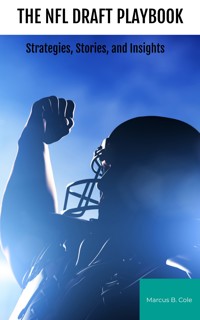
"The NFL Draft is where dreams are born and legends are made."
Discover the secrets behind the NFL Draft with "The NFL Draft Playbook: Strategies, Stories, and Insights" - the ultimate guide for football fans and aspiring scouts alike! In this comprehensive resource, you'll delve deep into the world of scouting, player evaluation, and draft strategy to understand what it takes to build a championship team.
In "The NFL Draft Playbook," you'll explore:
The history of the NFL Draft and its impact on the league
The pre-draft process, including the Scouting Combine and Pro Days
Essential scouting techniques and how to evaluate player potential
The intricacies of draft strategy, from trades to late-round steals
The role of analytics and technology in modern scouting
The art of drafting quarterbacks and the importance of finding a franchise signal-caller
Building a roster through the draft and managing the salary cap
The Rookie of the Year race and the impact of first-year players on the field
The undrafted free agent market and how to find hidden gems
From college standouts to future Hall of Famers, this book covers every aspect of the draft, providing you with the knowledge you need to become a true NFL Draft connoisseur.
Whether you're a casual fan, a fantasy football enthusiast, or an aspiring scout, "The NFL Draft Playbook" is your ultimate guide to the most exciting event of the football offseason. Don't miss this opportunity to elevate your understanding of the game and gain a newfound appreciation for the strategic chess match that is the NFL Draft. Order your copy today and unlock the secrets behind the Draft!
Das E-Book können Sie in Legimi-Apps oder einer beliebigen App lesen, die das folgende Format unterstützen:
Veröffentlichungsjahr: 2023
Ähnliche














Created by Xspurts.com
All rights reserved.
Copyright © 2005 onwards .
By reading this book, you agree to the below Terms and Conditions.
Xspurts.com retains all rights to these products.
No part of this book may be reproduced in any form, by photostat, microfilm, xerography, or any other means, or incorporated into any information retrieval system, electronic or mechanical, without the written permission of Xspurts.com; exceptions are made for brief excerpts used in published reviews.
This publication is designed to provide accurate and authoritative information with regard to the subject matter covered. It is sold with the understanding that the publisher is not engaged in rendering legal, accounting, health, relationship or other professional / personal advice. If legal advice or other expert assistance is required, the services of a competent professional should be sought.
A New Zealand Made Product
Get A Free Book At: xspurts.com/posts/free-book-offer
––––––––
Table of Contents
The History of the NFL Draft
Origins and evolution
Memorable draft moments
The Draft Process
Eligibility requirements
Declaration and invitations
Scouting and Evaluation
College scouting
Pro Days and the Combine
NFL Scouting Combine
Drills and tests
Player interviews and medical evaluations
Draft Strategies
Best player available vs. drafting for need
Trading picks and maneuvering the draft order
Positional Draft Value
Quarterbacks
Running backs
Wide receivers and tight ends
Positional Draft Value (cont.)
Offensive linemen
Defensive linemen
Linebackers
Cornerbacks and safeties
Special teams players
Analyzing College Statistics
Production and efficiency
Adjusting for level of competition
Draft Busts and Success Stories
Biggest draft busts in history
Late-round gems and steals
NFL Draft Rules and Regulations
Draft order determination
Compensatory picks
Draft Day Experience
The green room
Fan events and festivities
The War Room
Draft preparations
Decision-making on draft day
Agents and Contracts
Role of the agent
Rookie contracts and negotiations
Post-Draft Analysis
Grading the draft
Immediate impact and long-term potential
Undrafted Free Agents
Signing process
Success stories
Rookie Minicamps and Offseason Training
Learning the playbook
Acclimating to the NFL
Impact on the Team
Roster competition and position battles
Developing chemistry with new teammates
The Road to the Super Bowl
The impact of draft success on team performance
Building a championship roster
The Evolution of Draft Coverage
Early days of draft reporting
The rise of television and internet coverage
Mock Drafts and Draft Projections
The art of predicting the draft
Well-known draft analysts and experts
International Players and the NFL Draft
Scouting talent abroad
Success stories and challenges
Have Questions / Comments?
Get Another Book Free
The History of the NFL Draft
The National Football League (NFL) Draft is one of the most significant events in professional American football. It has a rich history dating back to the 1930s, and it has undergone numerous changes and developments throughout the years. Below we will explore the fascinating history of the NFL Draft.
The NFL Draft began in 1936, and it was a response to the increasing dominance of the powerhouse Chicago Bears. The Bears had won the NFL championship in 1932, 1933, and 1934, and the league's other teams were struggling to compete. In an effort to level the playing field, the NFL introduced the draft system. The idea was that the worst team from the previous season would get the first pick in the draft, giving them the opportunity to choose the best college player available. This would give them a better chance to improve their team and compete with the Bears.
The first-ever NFL Draft was held on February 8, 1936, at the Ritz-Carlton Hotel in Philadelphia. The Philadelphia Eagles, who had finished last in the league the previous season, had the first pick in the draft. They chose Jay Berwanger, a halfback from the University of Chicago. Berwanger never played in the NFL, but he went down in history as the first-ever player to be drafted.
In the early years of the draft, there was no set order for selecting players. Teams would take turns making picks, and the order would change each round. This system was chaotic and often led to disputes between teams. In 1958, the NFL introduced a "serpentine" or "snake" draft order, which is still used today. In this system, the team with the first pick in the first round gets the last pick in the second round. The team with the last pick in the first round gets the first pick in the second round, and so on. This system ensures that each team has an equal number of picks and helps to prevent disputes.
The NFL Draft continued to evolve throughout the 1960s and 1970s. In 1961, the AFL (American Football League) began holding its draft, which led to a bidding war for top college players. The NFL and AFL eventually merged in 1970, and the draft became a combined event. The number of rounds in the draft increased from nine to 17 in 1994, and in 2010, the draft was extended to three days.
The draft's location has also changed throughout the years. In the early years, the draft was held in various hotels around the country. In 1965, it was held at the Summit Hotel in New York City for the first time. The draft remained in New York for many years, but in 2015, it moved to Chicago. In 2017, it was held in Philadelphia, and in 2018, it was held in Dallas. In recent years, the draft has been held in different cities each year, which adds to the excitement and anticipation of the event.
The NFL Draft has seen many memorable moments and controversies throughout the years. In 1983, the Baltimore Colts had the first pick in the draft and chose quarterback John Elway from Stanford University. However, Elway refused to play for the Colts and was eventually traded to the Denver Broncos. Elway went on to have a Hall of Fame career and led the Broncos to two Super Bowl victories.
In 1998, the Indianapolis Colts had the first pick in the draft and chose quarterback Peyton Manning from the University of Tennessee. Manning went on to have a legendary career and is widely regarded as one of the greatest quarterbacks in NFL history.
The draft has also seen its fair share of controversial picks. In 2007, the
Origins and evolution
The NFL Draft has come a long way since its inception in 1936. What started as a simple solution to the dominance of the Chicago Bears has evolved into a complex system that has revolutionized the way teams build their rosters. Below we will explore the origins and evolution of the NFL Draft.
Origins:
The NFL Draft was created to level the playing field in the league. In the early years of the NFL, teams were able to sign any player they wanted, which led to a few powerhouse teams dominating the league. The Chicago Bears won three consecutive championships from 1932-1934, and the league needed to find a way to make the other teams competitive.
The NFL's solution was to implement a draft system where teams would take turns selecting players from the college ranks. The worst team from the previous season would get the first pick in the draft, and the order would continue in reverse order until the Super Bowl champion had the last pick in the first round. This ensured that the worst teams would get the best players and have a chance to compete with the powerhouse teams.
The first NFL Draft was held on February 8, 1936, at the Ritz-Carlton Hotel in Philadelphia. The draft lasted nine rounds, and 90 players were selected. The Philadelphia Eagles had the first pick and chose Jay Berwanger, a halfback from the University of Chicago. Berwanger never played in the NFL, but he went down in history as the first-ever player to be drafted.
Evolution:
The NFL Draft has come a long way since its inception. It has undergone numerous changes and developments over the years, making it the complex system that it is today. Here are some of the key milestones in the evolution of the NFL Draft:
1. Serpentine Draft Order: In the early years of the NFL Draft, there was no set order for selecting players. Teams would take turns making picks, and the order would change each round. This system was chaotic and often led to disputes between teams. In 1958, the NFL introduced a "serpentine" or "snake" draft order, which is still used today. In this system, the team with the first pick in the first round gets the last pick in the second round. The team with the last pick in the first round gets the first pick in the second round, and so on. This system ensures that each team has an equal number of picks and helps to prevent disputes.
2. AFL and NFL Merger: In 1961, the American Football League (AFL) began holding its draft, which led to a bidding war for top college players. The NFL and AFL eventually merged in 1970, and the draft became a combined event. The first-ever common draft was held in 1967, and the first pick was quarterback Bubba Smith from Michigan State, who was chosen by the Baltimore Colts.
3. Expansion: The NFL expanded rapidly throughout the 1960s and 1970s, with several new teams being added to the league. This led to an increase in the number of rounds in the draft, from nine to 17 in 1994. This allowed the new teams to build their rosters quickly and compete with the more established teams.
4. Draft Trades: One of the most significant developments in the NFL Draft has been the ability for teams to trade draft picks. This allows teams to move up or down in the draft order and gives them more flexibility in building their rosters. Draft trades have become more common in recent years, with teams often trading future draft picks for immediate help.
5. Draft Coverage: The NFL Draft has become a massive media event, with live coverage on television and online. In recent years, the draft has been held in different cities each year, which adds to
Memorable draft moments
The NFL Draft is one of the most exciting events in the sports world. It's the culmination of months of scouting, analysis, and debate, as teams try to identify the best young talent to help them win games. Over the years, the draft has produced many memorable moments that have become part of NFL lore. Below we will take a look at some of the most memorable draft moments in NFL history.
The Manning-Leaf Debate:
1. The 1998 NFL Draft was one of the most highly anticipated drafts in NFL history. The debate centered around two highly-touted quarterbacks: Peyton Manning and Ryan Leaf. The Indianapolis Colts had the first pick and were widely expected to select Manning. However, there was some debate over whether Leaf, who had a standout career at Washington State, might be the better choice.
In the end, the Colts did indeed select Manning, and the rest is history. Manning went on to have a Hall of Fame career, winning two Super Bowls and setting numerous NFL records. Leaf, on the other hand, struggled with injuries and off-the-field issues and was out of the league after just four seasons.
Elway Refuses to Play for the Colts:
In 1983, the Baltimore Colts had the first pick in the draft and selected quarterback John Elway out of Stanford. However, Elway made it clear that he did not want to play for the Colts and threatened to play baseball instead. After a long and contentious negotiation, the Colts eventually traded Elway to the Denver Broncos for a package of players and draft picks.
Elway went on to have a Hall of Fame career with the Broncos, leading them to two Super Bowl victories and setting numerous NFL records. The Colts, on the other hand, struggled throughout the 1980s and did not win a playoff game until 1995.
The Brady 199th Pick:
In 2000, the New England Patriots selected quarterback Tom Brady out of the University of Michigan with the 199th pick in the draft. At the time, few people thought much of the pick, and Brady was not expected to be a star in the NFL.
However, Brady quickly proved his doubters wrong. He led the Patriots to three Super Bowl victories in his first four seasons as a starter, and he has since become one of the greatest quarterbacks in NFL history. Brady's unlikely rise from a late-round pick to NFL superstar has become the stuff of legend.
The Draft That Changed the Saints:
2. The 1981 NFL Draft was a pivotal moment in the history of the New Orleans Saints. The team had been struggling for years and had never had a winning season. However, in that draft, they selected two players who would become cornerstones of the franchise: running back George Rogers and linebacker Rickey Jackson.
Rogers won the Rookie of the Year award in 1981 and went on to rush for over 1,000 yards in each of his first two seasons. Jackson, meanwhile, became one of the best linebackers in the NFL and was inducted into the Hall of Fame in 2010. The Saints would go on to have their first winning season in 1987, and they have been a perennial playoff contender ever since.
The Draft That Built the Cowboys:
The Dallas Cowboys of the 1960s and 1970s were one of the greatest dynasties in NFL history. They won five Super Bowls in seven years and produced numerous Hall of Fame players. The foundation of that dynasty was built in the draft.
In 1964, the Cowboys selected quarterback Roger Staubach in the 10th round. Staubach would go on to lead the Cowboys to two Super Bowl victories and become one of the most beloved players in team history. In 1965, the Cowboys selected defensive
The Draft Process
The NFL Draft is a complex and intricate process that involves months of scouting, analysis, and debate. Teams use a variety of methods to evaluate college players, from attending games and practices to conducting interviews and administering tests. Below we will explore the draft process and the various methods used to evaluate talent.
Scouting:
The first step in the draft process is scouting. Each NFL team has a group of scouts whose job it is to identify and evaluate college players. Scouts attend games and practices, watch game film, and gather information from coaches and other sources. They evaluate players based on their physical abilities, technique, and overall performance.
Scouts are looking for a variety of qualities in players, including size, speed, strength, agility, and football intelligence. They also consider factors such as work ethic, character, and injury history. Scouts use a variety of tools to evaluate players, including stopwatches, measuring tapes, and video cameras.
Combine:
The NFL Combine is one of the most important events in the draft process. The combine is a week-long event held in Indianapolis, where college players are evaluated by NFL scouts and coaches. Players participate in a variety of physical tests, including the 40-yard dash, vertical jump, and bench press. They also undergo medical exams and interviews with teams.
The combine provides teams with a standardized way of evaluating players, and it allows them to compare players from different colleges and conferences. The combine can also help players improve their draft stock, as a strong performance can raise their profile and attract more interest from teams.
Pro Days:
In addition to the combine, many college players participate in pro days, which are individual workouts for NFL scouts and coaches. Pro days allow players to showcase their skills in a more controlled environment than a game or practice. Players can run drills, participate in workouts, and meet with teams.
Pro days are particularly important for players who did not receive an invitation to the combine or who were not able to participate due to injury or other reasons. Pro days can also be helpful for players who want to showcase specific skills, such as a quarterback working on his throwing accuracy or a defensive lineman working on his pass-rushing technique.
Interviews:
In addition to evaluating players' physical abilities, NFL teams also conduct interviews to evaluate their mental makeup. Teams want to know how players think, how they handle pressure, and how they respond to adversity. Teams also want to get a sense of players' character and whether they would be a good fit for their organization.
Interviews can be conducted at the combine, pro days, or on-campus visits. Teams may also conduct phone or video interviews with players. Interviews are an important part of the evaluation process, as they allow teams to get a sense of the player beyond their physical abilities.
Draft Board:
After evaluating players through scouting, the combine, pro days, and interviews, NFL teams create a draft board. The draft board ranks players in order of their perceived value, based on the team's needs, evaluation of the player, and their place in the overall draft class.
The draft board is a crucial part of the draft process, as it determines the team's strategy for the draft. Teams will often try to draft the best player available, regardless of position, but they may also prioritize certain positions based on their needs. The draft board is constantly updated throughout the draft process, as players are selected and new information is gathered.
Eligibility requirements
The NFL Draft is an annual event where teams select college players to join their rosters. However, not all college players are eligible for the draft. There are specific eligibility requirements that players must meet in order to be considered for the draft. Below we will explore the eligibility requirements for the NFL Draft and the various rules and regulations surrounding them.
Age Requirement:
The first eligibility requirement for the NFL Draft is age. Players must be at least three years removed from high school in order to be eligible for the draft. This means that players who are still in college or who have only been out of high school for two years are not eligible. This requirement is in place to ensure that players have had enough time to develop physically and mentally before entering the NFL.
College Eligibility:
In addition to the age requirement, players must also meet certain college eligibility requirements in order to be eligible for the draft. The NFL has a rule called the "three-year rule," which requires players to have completed at least three years of college before they can enter the draft. Players who have left college early to play professionally in another league or who have been out of college for more than three years may still be eligible, but they must petition the NFL for special eligibility.
Academic Requirements:
In order to be eligible for the draft, college players must also meet certain academic requirements. Players must have graduated from high school or obtained a GED. They must also be in good academic standing at their college or university and have made satisfactory progress towards their degree. Players who have been declared academically ineligible or who have been dismissed from their college or university are not eligible for the draft.
Character Requirements:
The NFL also has character requirements that players must meet in order to be eligible for the draft. Players must have a clean criminal record and cannot have been convicted of any felony offenses. They also cannot have been suspended for any major violations of team or NCAA rules. The NFL conducts background checks on all draft-eligible players to ensure that they meet these requirements.
International Players:
In addition to the standard eligibility requirements, international players must also meet certain additional requirements in order to be eligible for the draft. Players who have not attended a college or university in the United States must provide documentation showing that they have been playing football for at least three years. They must also provide proof of citizenship and residency in their home country.
Early Entry:




