


Erhalten Sie Zugang zu diesem und mehr als 300000 Büchern ab EUR 5,99 monatlich.
- Herausgeber: Corvus
- Kategorie: Gesellschafts- und Liebesromane
- Sprache: Englisch
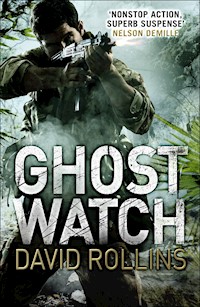
TRAPPED IN THE CONGO JUNGLE. HUNTED BY AN UNSEEN ENEMY. Special Agent Vin Cooper has survived the deadliest job going: bodyguard to bent politicians in Afghanistan. Now, he's got the cushiest: babysitting a pair of hip-hop megastars as they're flown out to Rwanda to perform a sympathy gig for the US army. Most agents would kill for this assignment. Cooper will be lucky to get out alive. When their helicopter crash-lands in the Congo, Cooper must think fast. He's trapped in a snake-infested warzone. No radio. No supplies. Just two spoilt superstars that he's sworn to protect... and a sneaking suspicion that this was no accident. IT'S FIFTY MILES TO SAFETY. VIN COOPER WILL HAVE TO FIGHT FOR EVERY ONE OF THEM.
Sie lesen das E-Book in den Legimi-Apps auf:
Seitenzahl: 732
Veröffentlichungsjahr: 2011
Das E-Book (TTS) können Sie hören im Abo „Legimi Premium” in Legimi-Apps auf:
Ähnliche


















Scarred by the death of a fellow agent last year, Special Agent Vin Cooper volunteers for the most dangerous job going: personal security for bent politicians in Afghanistan. But when his principal is blown up by a suicide bomber, Cooper is reassigned. Now he’s babysitting a pair of spoilt hip-hop superstars, flown to a top-secret base in Rwanda to perform a sympathy gig for the US military.
It’s bad enough that the pair, once lovers, now hate each others guts. But then their UN chopper is forced down into the warlord-run wilderness of the Congo jungle. Surrounded by enemy fire, Cooper has to think quickly as his principals are dragged away. Now he’s trapped in the jungle without radio or supplies. He’ll risk his life to save his superstars: that’s his job. But who is he fighting? And why is he here?
Ticking like a time-bomb, brimming with terror and threat, David Rollins’ Ghost Watch is a high-voltage story of corruption, cover-up and blistering suspense.
DAVID ROLLINS
Also by David Rollins
ROGUE ELEMENT
SWORD OF ALLAH
THE DEATH TRUST
A KNIFE EDGE
HARD RAIN
THE ZERO OPTION
GHOST WATCH
First published in Australia in 2010 by Pan Macmillan.
This paperback edition first published in Great Britain in 2011 by Corvus, an imprint of Atlantic Books Ltd.
Copyright © David Rollins 2010.
The moral right of David Rollins to be identified as the author of this work has been asserted in accordance with the Copyright, Designs and Patents Act of 1988.
All rights reserved. No part of this publication may be reproduced, stored in a retrieval system, or transmitted in any form or by any means, electronic, mechanical, photocopying, recording, or otherwise, without the prior permission of both the copyright owner and the above publisher of this book.
This is a work of fiction. All characters, organizations, and events portrayed in this novel are either products of the author’s imagination or are used fictitiously.
9 8 7 6 5 4 3 2 1
A CIP catalogue record for this book is available from the British Library.
ISBN: 978-1-84887-508-1 eBook ISBN: 978-0-85789-269-0
Printed in Great Britain.
Corvus An imprint of Atlantic Books Ltd Ormond House 26-27 Boswell Street London WC1N 3JZ
www.corvus-books.co.uk
For Sam, Jack, Bart and Ruby.
The conquest of the earth, which mostly means the taking it away from those who have a different complexion or slightly flatter noses than ourselves, is not a pretty thing . . .
– Joseph Conrad, Heart of Darkness
What’s mine is mine. What’s yours is mine.
– Unknown
Prelude
Warm sheets of rain fell from clouds piled like towers of shaving foam above the steaming rainforest. Orange mud showed where vehicles and foot traffic had flayed the skin of vegetation from the ground. There was so much mud, it was as if the base had been rubbed raw. The tread in my boots was clogged with it, making my feet feel heavier than a drunk’s. The stuff was under my fingernails, grinding between my teeth, in my hair and my groin. The sweat and grease of eight days in the Congo rainforest stung my eyes, and a miasma of flies and mosquitoes trailed behind me, along with the rest of my beaten little troop, as we trudged in the stinking humidity through rust-colored puddles of rainwater.
I was looking for someone among the organized chaos and, when I found him, I was going to spoil the asshole’s day.
We looked like the walking dead – a bunch of filthy, haggard, hollow-eyed cadavers lacerated from head to foot by nature’s razor wire: the elephant grass that grew everywhere here. Groups of so-called US allies hereabouts, the armed militia known as the National Congress for the Defense of the People, stopped what they were doing and stared at us. The government troops from the Democratic Republic of the Congo, just across the Rwandan border, called these soldiers ‘the rebels’. My fellow American advisors, here to train the rebels in the art of waging war against the insurgent Hutu militants hunkered down in the DRC, also stared as we cut a swath of silence through the late-afternoon activities at Camp Come Together – most of which consisted of lounging around, smoking and drinking.
And then I saw him. He was up ahead – supervising while others did the grunt work, loading pallets and crates onto a large flatbed truck. Nothing unusual in other people doing his dirty work. The ‘he’ I’m referring to was a shithead by the name of Beau Lockhart, from Kornflak & Greene, the guy who had built this base and ran it for the US Department of Defense. He was involved in shit up to his eyeballs. And the motive? Greed – same as always.
By now I was running on autopilot. I hadn’t eaten much for several days and been forced to drink river water that was soupy with amoeba. Since then, my bowels had had a mind of their own, evacuating themselves whenever. I walked toward Lockhart, my own shit leaking down my legs.
‘Hey, Major!’ Sergeant Major Cy Cassidy called out behind me.
‘Don’t do anything dumb,’ said Staff Sergeant Lex Rutherford.
Now, wouldn’t that be out of character?
‘Cooper! Wait up,’ shouted Captain Duke Ryder, further back.
Lockhart was sharing a joke with a group of US Army personnel, who were, no doubt, good men and women for the most part. But I wondered what they were loading. Did they have any idea what was in those pallets? Lockhart didn’t see me coming. I pulled the Sig Sauer from my holster. Two rounds left in the mag. A couple of the men, and one woman, doing the grunt work looked up and saw me coming. Saw the intent. Froze.
My weapon was raised, two-handed grip, no mistaking the target. Lockhart had his back to me, oblivious.
‘City pussy? It don’t rate by comparison,’ I heard him say with a tsk, like some wine connoisseur unhappy with a vintage. ‘You wanna try pussy from the bush, man. Ai, these fuckin’ tribal girls rut, know what I’m sayin’? I can’t answer for the quality of the local dick, mind. One of you bitches might like to take it from here . . . ha ha . . .’
‘You’re under arrest,’ I said.
He glanced over his shoulder and went instinctively for his pistol. Before his hand got there I smashed the weapon backhand across the side of his skull. Blood burst from a split in the skin on his cheek and spurted from his ear hole as he fell to his knees in the mud.
I had nothing to say to this sack of shit other than the comments posted by my side-arm. The temptation to kick him in the ribs was hard to resist.
Lockhart raised himself on one hand, his head swaying, long strands of spit, sweat and blood draped from his lower lip. Recognition flickered across his face.
‘Damn, Cooper. You still alive, motherfucker?’ he said.
‘Cooper!’ Cassidy shouted once more. ‘C’mon!’
One of the crates being loaded was half on, half off the truck’s tailgate. I leaned on it so that it fell to the ground and I brought the heel of my boot down hard on the green-painted wood packing, splintering it. Shit . . . milk powder. Twenty-four cans of the stuff, not what I was hoping to find.
Lockhart laughed so I struck him again, laying the Sig’s barrel across his jaw line. That wiped away the grin. He coughed and spat a clot of blood into the mud between his hands. Splintered teeth dotted the crimson mucus.
‘Cooper! Stop! Now!’
Cassidy again. I ignored him, pulled back the Sig’s slide, chambering a round, one behind it on standby. I fell to my knees behind Lockhart, grabbed hold of his perfumed hair and pulled back his head. He was semiconscious, no fight left in him. He smelled clean, of hair product and a cologne that was ironically called ‘Guilty’, but there was a stink to this guy that nothing could mask. I placed the business end of the blue-black barrel under his jaw, beneath the joint, and moved my head to the other side, away from the blast of torn flesh, shattered bone, and remaining teeth that would follow the exiting slug.
He again went for the Glock strapped to his thigh. I rapped it sharply with the butt of the Sig to change his mind about pulling it. My purpose hardened. Do it for the dead. For the baby thrown into the bushes; for the women who lost their arms; for all the kids made to grow up mean; for Travis and Shaquand; for Marcus, Francis and Fournier. Do it for what his associates did to Ayesha and for all the men and women mutilated and slaughtered by the people we trained. For the weapons, supplied by this fucker working both sides of the river, that made the mess across the border so much more possible. Do it for Anna.
It would be so easy. An excuse to take revenge on all the bad that just seemed to pile up when no one was looking. Kill Lockhart and I win. That’s the way I looked at it. Cassidy was wrong about this not being the way to do it. Killing Lockhart was right. It would settle so many scores, balance those scales a little. I slipped my finger inside the trigger guard. Three and a half pounds of pressure from my index figure would do it, send one-hundred-and-twenty-four grains of lead up through his brain at twelve hundred feet per second. The slug would be in his head less than a thousandth of a second, enough time to do humankind a big favor.
Muddy water oozed into my pants, mixing with my own funk. My breathing slowed.
‘Cooper. C’mon, man. We’ve come a long way. All of us,’ I heard Twenny Fo, my principal, say. ‘This is not the way it supposed t’ end, you feel me?’
‘There is no other way,’ I told him.
‘Hey, you!’ yelled an unfamiliar voice some distance away, but closing in fast. ‘Drop your weapon!’
A swarm of US Army personnel and Rwandan military police were running toward me, drawing pistols, raising M16s.
Cassidy, Rutherford, West and Ryder turned their weapons on the MPs and a horrible feeling of déjà vu came over me. Everyone was shouting at each other to lower their weapons, but I couldn’t hear them. I was listening to Anna.
‘Vin, no. You’ll die here,’ she said. ‘He’s not worth your life.’
But when I looked up, the voice wasn’t Anna’s. It was Leila’s, my other principal.
The security team fanned out on our flank.
A standoff, just like the one at the Oak Ridge Reservation facility in Tennessee that left Anna on the carpet with a hole the size of my fist blown out of her left breast, her heart rolling in the cavity as it struggled to pump.
One wrong move here and I wasn’t the only one who would die.
‘Put the gun down, Vin,’ said Leila. ‘Let the law have him.’ Her voice wrapped around me like Congo mist.
Lockhart was a sweaty dead weight in my arms, the odor of his cologne clawing at the back of my throat. Maybe Leila was onto something. I threw him to the ground. Seconds later, I sensed Cassidy and Rutherford beside me, felt their hands under my arms, lifting me to my feet.
‘You’re under arrest,’ advised a sergeant MP, a stocky guy with a nose that looked like it had been punched off his face a couple of times. He ripped my arms behind my back and lassoed my wrists together with a pair of flexcuffs. Then he kicked my feet apart and patted down my rags.
‘What’s the charge?’ Ryder demanded to know.
‘Assault and battery, Sherlock. Whaddaya think?’ the sergeant replied. His buddy, a clone but for the fact he had blond hair, kneed me in the guts. That put me down in the mud.
‘Hey!’ said Ryder.
Lockhart rolled his head to the side and looked up at me. Grinning with bloody gums, he mumbled, ‘Yo’ fuckin’ dead meat now, man.’
Contents
Plea
Kabul
Photograph
Kigali
Cyangugu
Merde’
Hostage
Enemies
Friends
Run
Animals
Retreat
Discovery
Rendezvous
Ambush
Reload
Attack
Rescue
Release
Flee
Trapped
Evade
Escape
‘All rise,’ commanded an Air Force sergeant.
The military judge, Colonel Harry Fink, was squat like a bath plug. He entered the largely empty courtroom from a side door, stepped up to the raised bench and took his seat in front of the seal of the Department of the Air Force displayed on the wall.
My defense team and I resumed ours behind a desk opposite him, as did the trial lawyers.
Colonel Fink got proceedings underway, reading the standard pro forma information that ensured there’d be no grounds for appeal down the track. Unlike the many times I’d heard it in the past, where it had brought on a yawning fit, this time the judge’s standard intro gave me an unnerving sense of inevitability, like I was caught on a conveyor belt heading for somewhere unpleasant.
When he was done, Fink raised an eyebrow at the trial lawyers and said, ‘Proceed . . .’
Major Vaughan Latham buttoned his blouse as he stood. Mid-thirties, lean and sinewy, Latham was the outdoors type. And if he wasn’t throwing one into the assistant counsel, a young captain, sitting beside him I’d be questioning his preferences because she was pert, athletic, wore tight pencil skirts and flashed a seductive smile that was as good as a bribe.
Latham took up his part in the script and informed the court that the charges against me were Article 128 Assault with a Deadly Weapon Causing Grievous Bodily Harm, and Article 133 Conduct Unbecoming an Officer and Gentleman.
‘And what plea are we entering today?’ Colonel Fink asked Major Les Cheung, the Area Defense Council lawyer appointed to my defense. All I knew about Cheung was that he looked Chinese. Like the trial lawyer, Cheung had an assistant. His name was Nelson Macri. And all I knew about him was that he wouldn’t look nearly as good as Latham’s assistant did in a pencil skirt.
Cheung stood. ‘Not guilty, sir,’ he said.
‘Enter a plea of not guilty for the accused,’ Fink informed the court reporter.
‘If it please the court,’ said Latham, moving through the formalities of pre-trial, ‘Major Cooper doesn’t own his home. He’s divorced, has no children, and no living relatives. The accused has no binding ties, but he does have a valid passport. And –’
‘You think he’s a flight risk on a 128, Counselor?’ Fink asked, cocking an eyebrow at Latham before turning back to Cheung. ‘No doubt you disagree with this, Counselor?’
‘Vehemently, sir. Pre-trial confinement in the stockade is not necessary here. Major Cooper has been restricted to base by his commander since returning from Africa. He could have absconded at any time should he have chosen to do so. Cooper wishes to clear his name and resume his duties with the Office of Special Investigations, and recognizes that it is not in his best interest to flee. You have before you a recommendation to this effect from his commanding officer.’
Fink read over the letter from my commander, holding it up and inspecting it through a lens of his glasses, like it was a magnifying glass, then sized me up while I kept my eyes fixed forward and did my best impersonation of military bearing.
‘Major,’ Fink said to me after a moment’s consideration, ‘we’ll go with your commanding officer’s recommendation. Consider yourself confined to the base for the duration. Naturally, your suspension from duty will continue pending a verdict.’ He shifted position and let his eyes swivel between Cheung and Latham. ‘Any further business, gentlemen?’
‘No, your Honor,’ said Cheung.
‘No, your Honor,’ Latham echoed.
‘Very well. We’ll reconvene two weeks from today, at 0900,’ Fink said without looking up from his desk. ‘This hearing is adjourned.’
The judge got up, slipped behind his door and was gone within a couple of seconds
‘What now?’ I asked Cheung.
‘Go home. We’ll see you around seven.’
‘Who’s bringing the cards?’
‘We’ll be working, Cooper, to keep you out of Leavenworth.’
‘There were twenty witnesses to the 128.’
‘Which means we’re gonna have to work extra hard.’
I CLIMBED INTO MY old Pontiac parked out in the lot and headed to my temporary residence on the base. It had been provided by Billeting, a ranch-style duplex usually reserved for VIPs with kids. Base accommodations were tight at Andrews AFB, nothing small and uncomfortable currently being available, so at least the needle on this one had swung in my favor. The place had four bedrooms, a yard, and a common porch. The previous occupant had hung two Stars and Stripes, one on either side of the front door, for stereo patriotism.
I drove on autopilot, until my cell began ringing and vibrating.
‘Arlen,’ I said, checking the screen.
‘You were supposed to call me after the arraignment,’ said Lieutenant Colonel Arlen Wayne, the only person at Andrews AFB Office of Special Investigations – my unit – who gave a damn about my current circumstances.
‘Yeah, well, I got a few things on my mind.’
‘Vin, snap out of it, buddy. This is me. How’d it go? You still have your cell, which means they didn’t lock you up. You headed home?’
‘No, Cancun.’
‘Seriously, can I do anything for you?’
‘You could have me moved to Venezuela,’ I said. ‘We don’t have an extradition treaty with them.’
Arlen reset the conversation with a pause.
‘Vin . . . I checked on Cheung and Macri. They’re good. You’re lucky to get ’em.’
‘They remind me of a joke I once heard, the one about the Chinaman, the Italian, and the American. Know it?’
‘I’ve heard ’em all, especially all of yours. Look, this is not funny, Vin. You get a guilty verdict on the 128, and you’re in a concrete box with razor-wire trim for a very long time.’
‘I know; I read the same books, remember?’
The books in question were the Uniform Code of Military Justice and the Manual for Courts-Martial, United States. One outlined the laws those of us in the armed forces must follow; the other documented the punishments meted out for not doing so. Our system wasn’t draconian but it often didn’t take into account mitigating circumstances, unless specifically outlined in the Code. If the court-martial found you did the crime, then you did the time stipulated in the manual. In the instance of Article 128, assault – and particularly, in my case, assault with a deadly weapon occasioning grievous bodily harm – the manual said a guilty verdict required confinement in a federal facility, showering without soap while keeping your back to the wall, for a period of eight years, along with a dishonorable discharge and the forfeiture of all pay and allowances. Like Arlen said, this wasn’t funny.
‘Anything else you need?’ he asked.
‘Another opportunity to kill Lockhart would be good.’
‘C’mon, trust the system, Vin.’
‘The system’s only as good as the people working it,’ I said vaguely, distracted, and the dead air informed Arlen that I wasn’t talking about what was really on my mind.
‘Let it go, Vin,’ he said. ‘You’re not responsible for Anna’s death. We’ve talked about this. The inquiry exonerated you.’
Yes, it did, but it also found that perhaps the situation at Oak Ridge, where Anna and I had confronted the suspects in the case that ended with her death, might have had a different outcome if I hadn’t made an aggressive, badly timed move to end the Mexican standoff that confronted us. I could conjure up the scene at will, as if I were hovering above it, because that’s how I dreamed it like it was on a loop. Helping me out with the details was the forensics team that had gone in afterwards and placed line-of-fire rods through the bullet holes in the walls, floor, and ceiling, so that the trajectories of each round could be visualized and the gunfight recreated.
This is how it went down: Anna was being held from behind by a man who also had a gun to her back. A second weapon was leveled at her by another man, sitting in an armchair in front of her, who had relieved me of my Colt .45. I was down on the carpet, an evil dyke bitch pointing a Glock at my head. The guy in the armchair took his eyes off me for a split second just as a fifth person, a bystander, blundered through the door, which, by a stroke of good fortune, took out the evil dyke bitch and her Glock. That’s when I went for the fucker in the armchair. But it was a bad move. In all, nine shots were fired in that room, most of them at Anna, or in her general direction. The last of these was the one I fired at the creep holding Anna and then the one he fired at me. Anna was between us. The bullet that took her life came from behind, but the weapon that fired it was never determined beyond any doubt, because she was wrestling with her assailant at the time – spinning, twisting, and grappling with him. I fired a Colt .45. The creep shot a nine-millimeter Glock. Ordinarily, that would have settled the question; however, the ammo we both used was ball. Both types left neat entry and raggedy exit holes, and the actual slug that killed her exited her body and was not recovered from the scene, all of which meant that she could have been shot with either a nine or a .45. Tissue damage didn’t resolve the issue either way, but that’s the point. It could have been the shot I fired. I could have been her killer.
Anna died in my arms. She took her last breath lying in a pool of her own blood, the black sucking hole in her chest leaving a bottomless pit in mine.
‘Vin . . . you still there? Hello?’
‘I’m still here.’
‘Hey . . . I miss her, too,’ said Arlen.
Arlen and Anna had been pals from the start, when I introduced them after the conclusion of a case she and I had worked in Germany. Both of us were in the hospital at the time. And ever since, whenever things got a little rocky between us, Arlen had been our go-between. I had first met her twenty-four hours after my divorce had gone through. The last thing I wanted was another relationship, but Anna walked into my life and the fireworks were there from the start. Occasionally, they burned us – so much so that along the way we’d had time apart to cool off. Anna even became engaged to a piece-of-shit JAG attorney with questionable morals, to get, as she put it, a little control back into her life. She came to her senses about the engagement just days before walking into the Oak Ridge office and collecting a round from a nine-millimeter. Or a .45. Now she was gone forever. And the guy responsible – me – was still here. That, not my lack of trust in the system or the shower block at Leavenworth, was my problem.
‘Are you listening?’ Arlen asked.
‘What?’
‘Stay with me, Vin. I said there’s an investigation underway into Lockhart.’
‘Did you initiate it?’
‘Me? Absolutely not.’
‘Then who did?’
‘Your court-martial has attracted a lot of press, especially after the Afghanistan thing. You’ve got plenty of public support. I think maybe the wife of some general up the food chain smelled injustice and leaned on her old man.’
I didn’t believe a word of that. An inquiry into Lockhart was a ball only Arlen would have kicked into play. He would have to play it carefully. News of an investigation into the DoD contractor might make it look to Judge Fink that Cheung and Macri were playing dirty pool, hoping to pressure Lockhart into withdrawing his testimony. As the star witness for the prosecution, his withdrawal would destroy the government’s case.
‘Lockhart has powerful friends,’ I said. ‘Asswipes like him can’t operate without them. Have a look at a guy by the name of Piers Pietersen, from a company called Swedish American Gold. And while you’re at it, check out a black guy by the name of Charles White. He’s thick with Pietersen.’
‘What’s their connection to Lockhart?’ he asked.
‘I’m betting they do his dirty laundry.’
‘I’ll see what turns up.’
‘You should also look into the Congolese and the Rwandans at Cyangugu.’
‘Forget about them, Vin. They’re beyond our reach.’
I wasn’t happy about that, but I understood. Africa swallowed whole populations. It’d be easy for a few connected individuals to disappear. ‘What about that M16 with its numbers filed off?’ I asked.
‘We’ve got no serial or batch numbers. We know it was made by FN Herstal, but without the numbers the weapon’s untraceable.’
Disappointing. I’d carried the weapon all the way through the Congo rainforest believing it would shoot someone important in the foot – hopefully, Lockhart.
‘What about the French Armée de l’Air pilot André LeDuc?’
‘Interpol has a warrant out for him.’
‘Can you get access to his records?’
‘Paris will cooperate. What are we after?’
‘His head on a plate.’
‘See what I can do. While we’re on the subject of the French, I believe they’re going to launch an inquiry into Fournier’s death. You’ll be called as a witness.’
‘Bring it on.’
‘Hey, I have to go, Vin. I’ll try to drop by soon. Hang in there, buddy.’
‘By the neck,’ I replied.
I heard the dial tone, put the cell in my jacket pocket and turned into the double driveway that lined up with the double garage attached to the double-fronted house with its two flags waving in the breeze over the landing. Just some of the perks of criminality.
I took a long bath in the master bathroom and watched a little high-def spring baseball on the flat screen TV with the 5.3 surround sound system turned up. I was eyeing the liquor cabinet when the doorbell rang. Cheung and Macri were early.
‘You’re early,’ I said, as I opened the door to a man I didn’t recognize.
‘Mr Cooper,’ he said, holding forth a hand. ‘My name is William Rentworthy. I’m a reporter from the New York Times. If you’ve got a few minutes, I’d like to talk to you about the—’
I didn’t recognize him, but I knew who he was.
‘Speak to my lawyers,’ I said and shut the door in his face, wondering who’d let him loose on the base.
Cheung and Macri arrived twenty minutes later.
‘We brought some food,’ said Macri, as he came through the open door behind Cheung. ‘Hope you like vegetarian.’
‘I like anything that eats grass,’ I said. ‘Especially if it’s medium rare.’
In fact, I don’t like vegetarian food at all, though I have dined a few times at Summer Love, a little joint on the ground floor of my apartment block. The only thing I like the look of there, though, is Summer herself, who’s hot in a hippy-chick way, with legs so long they could give you a nose bleed just thinking about them.
‘You guys want a drink?’ I asked as I headed for the kitchen. ‘I can offer you single malt or Jacks.’
‘Thanks, but I need something solid,’ said Cheung.
‘I’ll put rocks in it,’ I suggested.
Cheung smiled and shook his head. ‘No thanks. Mind if I set the table?’
‘Go right ahead. How about you, Counselor?’ I asked Macri, passing Cheung some forks.
‘Not for me, either,’ he said, as he divested his briefcase of several pounds of notes and forms and dumped them on the dining-room table.
I fixed a Glen Keith with ice and a little soda and left the kitchen with the bottle so that I’d have an ally with me.
Cheung and Macri sat themselves down at the table, the folders they had brought with them now placed on the floor. Food waited for me on a disposable plate.
‘What’s this?’ I asked.
‘Asparagus and eggplant lasagne,’ said Macri, his mouth already full. ‘It’s pretty good.’
I gave it a go and was pleasantly surprised, though half a pound of ground beef would’ve improved it.
‘I had a visit from the New York Times,’ I told them. ‘A guy called Rentworthy.’
‘What did he want?’ Cheung asked.
‘Dirt. What else?’
‘Twenny Fo and Leila will be called as witnesses, so we can bet on this court-martial getting plenty of media attention, which might hurt or help your case. We’ll see how it goes . . . Might be worth lodging a petition for the court to be closed.’
‘Won’t happen,’ said Macri. ‘Fink’s got a bad case of ASD – attention-seeking disorder. Next time the Times approaches you, Vin, hear him out before slamming the door in his face. If he’s got something important pertaining to the case, and he’s about to report it, he’ll come to you first. You can always refuse to comment. But we’d rather have some warning.’
‘Who said anything about slamming doors in people’s faces?’
‘He’s a reporter out for a little fame and glory at your expense. What else you gonna do?’
‘Let’s get started with a little background, shall we?’ said Cheung, changing the subject. ‘You’ve got an interesting record, Cooper. I see you’ve been up on assault charges before.’
I gave no response.
Cheung sat back. ‘Cooper, I know this is going to be hard for you, but we’re on your side. Here’s the deal. We ask you questions and you answer them without holding back. And if you think we’re not asking the right ones, then you volunteer the information you think we should be getting. This can’t work any other way, all right?’
I shrugged. I didn’t have a lot of choice.
‘There are twenty witnesses lined up against you, Vin,’ Cheung informed me yet again. ‘Frankly, it’s going to take every trick in the book and a lot of luck to pull this one out of the shitter.’
Macri picked a folder up off the floor. He flicked through it on his lap, eventually pulling out a sheet of paper.
‘So you want to tell us about the colonel you, ah, beat up?’
‘The government dropped the case. It’s not admissible,’ I said.
‘We know,’ Cheung responded. ‘But would you mind filling in the background anyway?’
I sighed. There was a time when I would have found this difficult, but now hashing over the facts of my divorce affected me about as much as scratching a rash.
‘My ex-wife and I were in marriage counseling. The counselor was an O-6 reservist. Turned out that he was regularly counseling my ex privately. I came home and found them in the shower. He was giving her some therapy around her epiglottis at the time.’
Macri glanced at Cheung.
‘As I see it,’ I said, ‘the colonel got the life sentence.’
They seemed puzzled, so I put it together for them. ‘He married her.’
‘What about the two drunk and disorderly charges – one substantiated?’ asked Macri.
‘I went through a bad patch.’
Macri gazed at me. ‘You’re a difficult case, Cooper. With a record like this, you’ll never make lieutenant colonel. Why’re you still in the air force?’
I’d thought about that question plenty of times, especially since Anna’s death. She’d planned to leave the service, and wanted me to go with her. I remember thinking at the time that I just might. Would I have gone through with it? Now that she was dead, I’d never know.
‘You want to hear me say that I probably couldn’t cut it anywhere else?’ I said.
‘That’d be honest, wouldn’t it?’ Macri replied.
‘And here I was thinking this wouldn’t be a pleasant evening.’
Cheung gestured at Macri to pass him the folder. ‘I note that a significant amount of your record is classified, much more of it than I would have expected,’ he said. ‘There are big holes.’ He put his fork down and flipped through a few pages. ‘You studied law at NYU?’
‘Know thine enemy,’ I said. There was a flicker of a smile from Macri.
‘You joined up in time for Kosovo and trained as a combat air controller. You also deployed to Afghanistan as a special tactics officer, and then transferred to the Office of Special Investigations, where you cleared a couple of significant cases.’
‘Beginner’s luck,’ I said.
‘Then come those holes.’ Cheung flipped a few more pages. ‘You’ve earned quite a few commendations. In fact, there is plenty of good here . . . perhaps enough to outweigh the bad.’ Macri made a note on a legal pad. ‘You’ve got your jump wings, you’re current on High Altitude Low Opening insertion,’ Cheung continued. ‘I see you’ve done a lot of work with Special Operations Command. You deploy to Iraq?’
‘Not officially,’ I said.
‘There’s the Air Force Cross submission pending . . . Why would you volunteer for personal security ops in Afghanistan? You have some kind of death wish?’
‘I lost my partner. We were close. I needed a distraction.’
‘Can you tell us the circumstances?’
‘Her name was Anna Masters. She died of a gunshot wound to the chest. I was with her at the time.’
They waited for more, but I was reluctant to give it. I freshened my drink.
‘Okay, so your third and most recent deployment to the ’Stan. The mission wasn’t classified. Why don’t you take us through that?’
Cheung sat back and waited for me to begin. I could see what the weeks ahead would be like – every detail that wasn’t classified would be picked over by Charlie Chan and Tony Soprano here, then strategized into a fairytale of life achievement that even I wouldn’t recognize as my own.
‘If I have to,’ I said.
‘You do,’ said Macri.
Afghan Interior Minister Abdul al-Eqbal shared the delusion of all politicians who had well and truly reached their use-by date: that his position and power were preordained and that his people would love him no matter what shit he pulled, who he screwed over, or how he behaved.
Al-Eqbal was fat in a country of skin and bone. He was unpopular because he took bribes. And while this was a society where everyone took bribes, Abdul al-Eqbal was in a class of his own – he took baksheesh from one side and put his hand out to the other, then simply made himself scarce and let the parties slug it out or had the next layer of bureaucracy turn up with its hand out for a cut. Intelligence hadn’t confirmed it, but the word on the street was that al-Eqbal had stiffed the wrong crowd once too often and was now a high-priority target for the Taliban.
After the mess in Oak Ridge, I wanted the ugliest, most dangerous assignment the Air Force had to offer. I felt I deserved it. That turned out to be personal security operations in Afghanistan. The day I arrived in-country, I learned that volunteers were being sought to make up al-Eqbal’s detail. This was the highest risk assignment in the highest risk command. It sounded like the reason I was here, so I took the step forward. And that’s how I found myself in charge of a joint PSO unit racing in a three-vehicle convoy down a minor through-road on the outskirts of Kabul. At the time, we were on al-Eqbal’s turf. His people lived here; the ones who’d voted for him, supposedly. I could hear the guy wheezing and humming a local ditty as he leaned forward in his seat and watched the dung-colored homes flash by.
‘How’s it going back there? Anyone cold?’ asked Staff Sergeant Chip Meyers, occupying the front passenger seat and throwing the question over his shoulder.
Meyers was a fellow special agent in the Air Force Office of Special Investigations, the OSI. He’d been a male model before joining up, his baby blues and six-pack gut selling underwear for Calvin Klein. I was told that he liked to date married women because dodging their husbands added to the excitement. Maybe one day he’d make a good relationship counselor. Apparently, death threats had chased him into the recruitment office.
It was thirty-nine degrees Fahrenheit outside. Cool by anyone’s standards.
‘Sir?’ He turned around fully and pitched the question to the dignitary once more. ‘Cold?’
Al-Eqbal ignored him completely.
Meyers shrugged, turned to face the front, and resumed the eternal scan for roadside IEDs – improvised explosive devices. We were the only two Air Force guys in the bunch. The driver seated beside him was Army, a buck sergeant by the name of Rory Bellows, a skinny guy whose head darted around so much looking for threats that I thought he might have a nervous tic.
The team assembled for this unit was drawn from the OSI and the US Army. Up ahead in the lead vehicle were a couple of Army NCOs named Detmond and Stefanovic. They were both premature. Detmond was prematurely gray, Stefanovic prematurely bald. Stef was also short. He had to sit on a Humvee maintenance manual to see over the dash. Their driver, an Army specialist, was a stand-in I hadn’t worked with. The nametag on his battle uniform said ‘Mattock’.
Bringing up the rear were Sergeant First Class Reese Fallon, a six-foot-seven black guy who’d played power forward for Notre Dame, and driver Specialist Alicia Rogerson, a small-town librarian in her civilian days. I asked what a nice librarian like her was doing in a shithole like this and she told me that she liked to read thrillers and had decided to join up and write a few chapters of her own. She came across as perky, wide-eyed, and enthusiastic, all of which told me that her boots had been on the ground here maybe a week, tops.
‘Stop! Stop the car!’ al-Eqbal suddenly shouted. ‘I order you to stop.’
I jumped. ‘What’s the problem, sir?’
‘Do as I say and stop the car! I command it!’
We were here to keep the guy alive, and stopping in a place that hadn’t been surveyed because maybe the dignitary had to take a shit was not in the rulebook.
Al-Eqbal flicked the lock and opened the door while the vehicle was still moving. ‘Now!’ he demanded.
Jesus . . . I checked the window. The area consisted of run-down housing and some equally run-down businesses. A few cars were on the road. No one seemed to be paying us any mind.
I asked him again. ‘Why do you want to pull over, sir?’
‘I have cousin here. Best snuff in all of Kabul. I come here all the time. These are my people. No danger. Stop here, now!’
Clearly, he wasn’t going to take no for an answer. I called up the lead vehicle on the radio and asked Stefanovic to pull over. The Land-cruiser’s brake lights came on, the tires scratched for traction in the grit and al-Eqbal was out the door. I leapt after him and headed him off, placing the flat of my Nomex-gloved hand on his chest. He looked at it as if it were vermin.
‘Sir,’ I told him. ‘I have a job to do. Please wait.’
He rolled huge brown eyeballs at Allah, while my mind ran through the six basic rules of PSO duty:
1. Under no circumstances leave your principals unaccompanied.
2. The majority of organized attacks are successful.
3. The bodyguards rarely fire their weapons effectively, if at all.
4. The bodyguards almost never affect the outcome of the attack.
5. The bodyguards usually die.
6. The scrotums of bodyguards tighten for a reason – don’t ignore it.
Okay, so number six wasn’t in the official manual, but it was underlined in red in the unofficial one. And mine was now tighter than the skin on a grape.
The detail exited the vehicles, leaving the drivers, Mattock, Bellows and Rogerson, behind. Standard operating procedure was to keep the motors running in case we had to leave in a hurry. Quickly, the rest of us formed the textbook five-man diamond pattern around al-Eqbal: Meyers in front, Stefanovic behind, Detmond and Fallon on each side, and me on the principal’s shoulder. Al-Eqbal pointed to where he wanted to go, which was thirty or so meters back down the street in the direction from which we’d just come.
Folks got out of our way, crossed the road, avoided eye contact. Nothing about this behavior was particularly odd. They were used to seeing armed US military personnel on the streets, but there’d been enough situations resulting in civilian deaths to make them nervous about being anywhere near us.
‘Where are we going, sir?’ I asked the principal.
Al-Eqbal indicated the Kabul version of a general store – a gray two-story structure with several stalls outside displaying newspapers and magazines, various hardware items (from lamps to auto-mechanics’ tools), as well as bottled drinks and tinned foods. Wood and Styrofoam boxes on the dirt beneath the stands contained assorted limp vegetables. Two young males loitered out front, just hanging around, smoking. One called out to someone inside the shop when they saw us coming, then both ran off and vanished down an alley a few doors down.
A middle-aged man emerged from the building. The concern on his face brightened into a grin when he saw al-Eqbal. I assumed he was his cousin because no one but family would be happy to see this guy. The two men embraced and kissed and talked rapid-fire Dari, too fast for me to follow, though I managed to catch fragments of the usual string of outrageous compliments. Our dignitary turned to go inside, but I signaled Meyers to perform a site survey and stepped in front of al-Eqbal, blocking his path again.
‘Sir, please allow us to search the building first.’
He swore in Dari – something about me being the spawn of a goatherd’s tepid urine – but he nevertheless stopped and waited.
I banked the insult to use on someone else one day, while his cousin smiled at me and shrugged, as if to say, ‘My cousin’s a politician – whadayagonnado?’
We stood on the dirt sidewalk, buffeted by grit, and waited. An icy wind blew the superfine Afghan dust that smelled of human shit and pack animals into our mouths and nostrils.
Meyers came back out as the troublesome fingers in my left hand, which had been broken and shot up on previous missions, stiffened into a cramp from the cold.
‘Clear, boss,’ he said.
‘What’s the layout?’
‘One main display room full of junk, two smaller ones behind it full of more junk. A back door – locked – looks like it opens onto a dirt alley. No enclosing walls there. Internal staircase leads to a second story. Old woman peeling spuds upstairs, ugly as a big toe. Three other rooms, all bedrooms. On the rooftop is a washing line and a TV satellite dish.’
The place appeared to be free from threat. Any location that’s been surveyed and cleared of unauthorized persons is technically secure, says the PSO handbook. But life experience was making me cautious. I moved to the side, allowing al-Eqbal to pass, and our diamond pattern was set to move into the confined space. The overall mission for this and almost every other PSO detail was running through my head: prevent assassination, injury, kidnapping, assignation, and, almost above all, safeguard the principal’s schedule. Dual problem right there, I reminded myself. We had us an assignation and it wasn’t on the damn schedule.
Al-Eqbal interrupted my thoughts. ‘I will go in alone,’ he commanded with a wave of his hand as if we were troublesome flies. ‘There is not enough room.’
I looked at the shop and he had a point. It was no Wal-Mart. ‘You can’t go in there without an escort.’
We stared at each other for a few moments before he sighed wearily and said, ‘One guard only. Young man, you are worrying too much, I think.’
‘We can only spare five minutes here, sir,’ I said.
The principal shook his head at me as if to say that I just didn’t get it.
‘Meyers, accompany our dignitary,’ I said.
‘Yes, sir,’ Meyers replied.
The book inside my head played like a bad song that wouldn’t go away:
1. Do not let the principal enter a doorway first.
2. In hallways, keep the principal in the center.
3. Keep the principal away from windows and alcoves and areas limiting escape and evasion.
The cousin put his arm around the principal’s shoulders. They walked toward the shop entrance, chatting, laughing. Meyers took up station ahead of them, scoping left and right. A pro.
I scanned the street. A yellow taxi, with a replacement fender and door panels that gave it a patchwork appearance, drove by slowly, blowing smoke. The driver leaned across the bench seat toward us, eternally hopeful for a fare. Fifty meters down the road, several middle-aged men having a conversation crossed from one side to the other. Nearby, the wind had picked up some dust and blew it into a corkscrew that was moving in our direction. More grit flew into my eyes. I opened them in time to see a woman in a dark blue burka that was billowing like a sail – the bottom hem flapping and whipping around her ankles – walk into the middle of the road, stop, turn around, and then retrace her steps. Two young men on pushbikes swerved to avoid her. A couple of blocks further down, a man pushing a wheel-cart pulled over to sell bunches of bananas.
The drivers reversed our vehicles and parked them in front of al-Eqbal’s cousin’s shop – one of a group of five with common walls. A narrow alley was at either end of the block. The buildings on the other side of the wide street were mostly unpainted gray concrete, two and three storeys, with flat roofs, two windows per floor, no balconies. Some were homes; the living rooms of some functioned as shops, like al-Eqbal’s cousin’s. Over the roofs of these houses rose the imposing mass of TV Mountain. I’d been on its summit years ago when I first came to the ’Stan. The Taliban rocketed our position there, trying to dislodge me and several other special tactics officers while we called in air strikes on their fundamentalist asses. Looking down from the summit, the gray city seemed to wrap itself around the base like a blanket of clothes-dryer lint.
I spoke into the small boom mike, part of the system that allowed our team members to communicate with each other over short distances. ‘What’s happening?’ I asked Meyers.
‘Settling in for the long haul, boss. They’re brewing tea,’ came his reply through my earpiece.
‘Tell Mr Big he’s got two minutes left.’
Stefanovic, Fallon, and Detmond were all Army. They faced out, looking idly toward the mountain, waiting. Their M16s were pointed at the ground. Detmond lit a cigarette. With the principal out of the picture, so was their focus. Our drivers had the engines running. Gangsta crap thumped from an open window.
To pass the time, I asked Stefanovic, ‘So why did you volunteer for this?’
‘Who volunteered?’ he said. ‘I cleaned out my sergeant in a game of hold ’em. It was this or latrine duty. Happens again, I’ll take the crappers. You?’
‘Brain fart.’
‘You asked to do this shit?’ Fallon said. He glanced at me, seeing but not believing.
Detmond grunted.
‘Got a volunteer joke for you,’ I said to our little formation. ‘A guy walks into a bar with a pet alligator. He puts it up on the bar and says to the freaked-out patrons, “I’ll make you all a deal. I’ll put my dick in this here ’gator’s mouth and keep it there one minute. At the end of that time, the ’gator will open its mouth. If I still have my dick, all of you have to buy me a drink.”
‘Of course, the crowd agrees, so he drops his pants, puts his pecker in the ’gator’s mouth, and the room goes silent. At the end of one minute, he picks up a beer bottle and smacks the ’gator over the head with it. The ’gator opens its mouth and out comes the guy’s wang, unharmed. The crowd goes nuts and the free drinks flow. After a while, the guy stands on the bar and says, “I’ll make y’all another offer. I’ll pay a hundred bucks to anyone else willing to give it a try.”
‘A hush falls over the crowd.
‘“C’mon,” says the guy. “Aren’t there no damn volunteers out there?”
‘A lone hand slowly rises over everyone’s heads. It’s a young blond woman.
‘“I’ll do it,” she says, “but only if you don’t hit me on the head with no beer bottle.”’
Fallon’s attention wandered off.
Detmond grunted.
‘My mother’s blond,’ said Stefanovic flatly.
I cleared my throat and told them to keep up the good work, then moved away to check the cousin’s front door.
No one was coming out. I was getting impatient. Loitering on the streets of Kabul with a Stars and Stripes patch on your shoulder was only slightly less moronic than sticking a fork in a wall socket. Besides, his five minutes were definitely up.
‘Meyers . . .’ I said into the mike.
‘He’s telling me he wants another five minutes,’ came the reply.
‘He can’t have them,’ I said, but I knew this guy would take them whether I agreed or not.
I turned in time to see a girl of no more than fourteen years old, dressed in black and wearing a pink scarf over her head, run into the building adjoining the cousin’s. She was bent over with her arms wrapped around her belly as if she were pregnant, and left the front door open behind her.
I was about to say something about this into the mike when a deafening explosion turned the world into a giant dust ball. It punched me backward through the air and I slammed into the house ten feet behind. Dust clogged my nose and eyes and my lungs were clenched, closed tight.
Could.
Not.
Breathe.
I pawed the dirt from my face and saw a massive white, black, and gray cloud boiling into the sky. Below it, two of our Landcruisers were tipped on their sides. My men were down. Something released in my chest, and I sucked down a lungful of powdered building, which brought on a coughing fit. When I pulled out of it, I could see through watering eyes that al-Eqbal’s cousin’s house was gone, along with the neighbor’s, heading skyward in the expanding gray and black mushroom cloud. Jesus . . . Meyers would be in that cloud somewhere. I wanted to move, stand up at least, but everything was in slo-mo. Rog-erson’s Landcruiser was parked outside the spot where the neighbor’s house used to be. I could see her profile. Something about it was wrong. Oh, shit . . . her face . . . she didn’t have one.
My body didn’t want to work. I managed somehow to pull myself up on one knee, and thanked the K-pot on my head and the ceramic plate in the back of my body armor for taking most of the wall’s impact. I could see that Stefanovic, Fallon, and Detmond were flat on the ground, with only sluggish movement from all three. They were closer to the blast than I had been, and harder hit. Detmond was wounded, a red stain advancing down the gray-green pixels of his Army battle uniform toward his elbow. He managed to sit up but was almost immediately hit square in the chest by an invisible force that knocked him down onto his back. Shit, we were being fired on! Fallon and Stefanovic struggled to their feet and dragged Detmond behind the second of the scuttled Landcruisers – my Landcruiser, the one Bellows was driving. Where was Bellows? I couldn’t see him; Mattock either. All three drivers – dead?
The situation would head from fucked up to fucking fucked up if someone didn’t do something fucking quick. Static burst into my earpiece.
‘Who’s this?’ I asked.
Static.
I was about to tear out the earpiece when I heard a voice croak, ‘Cooper . . .’
The voice was familiar, but my hearing wasn’t so good. ‘Meyers?’ I asked.
‘Legs . . . broken.’
Yeah, it was Meyers. Definitely someone who wasn’t able to do something fucking quick or any other way. But, shit, he was alive.
‘I’ll come to you. Don’t move.’
I heard him cackle. ‘Move . . .?’
Bullet holes appeared in the bodywork of the Landcruisers. It occurred to me that while Fallon, Detmond and Stefanovic were getting pounded, I wasn’t attracting any inbound fire, which meant that whoever had us pinned down was not aware of my position. There was no planned kill zone, where the fire was coming in from all angles, cutting off our escape. So, either the attack was impromptu or we were up against the remedial arm of the Taliban.
I was in the only blind spot for the shooters – directly below them. I looked up. Sure enough, rifle barrels poked out from both second-story windows above me, as well as one from a window on the third floor. I counted a total of five protruding barrels.
‘Stefanovic,’ I shouted into the mike. ‘How’s Detmond? Check on Mattock and Bellows.’
I heard a voice in my ear, but it was muffled, woolen.
‘Get on the radio, and get us some air support!’ I yelled. A response came back, but I couldn’t make it out.
Stefanovic had crawled out of sight behind the second Landcruiser, presumably on the hunt for a working radio. I went through a weapons and ammo check to steady my nerves and get some perspective: one Colt M4 carbine; four mags – one hundred and twenty rounds; one Sig Sauer P228 with two mags, one round up the spout; one Ka-bar. No grenades – shit!
The front door beside me was closed and probably locked. My back close to the wall, I moved over to an alley on the left. At the corner of the building I momentarily put down my rifle, pulled the Sig and took it off safety. I popped my head and the Sig around the corner simultaneously. Movement. Two rounds later, a Taliban fighter with an AK-47 found himself haggling with all the other dead martyrs over whose turn it was to get with the virgins.
I holstered the Sig, picked up the M4, shouldered it, and made my way down the alley. I put my fingertips against the brickwork and felt the vibrations. The AK-47s inside the house were spraying away with such exuberance that the percussion was vibrating through the wall. My hearing cleared with a ‘pop’, and what I heard was Stef and Fallon returning fire, the M16 making an altogether different sound than the AK’s.
I followed the Sig around the next corner and came into another alley out back, overlooked by a row of tightly packed dwellings. Men and boys were peering around corners for several blocks up and down the narrow road, eager to catch the action; a good gunfight in these parts being the equivalent of a game of football. One of the boys waved at me from an alcove. I waved back and he flipped me the bird – rooting for the home team, obviously. Maybe he had a big blow-up hand somewhere with ‘Osama’ printed on it.
Pushbikes were scattered behind the rear entrance. The gunmen had cycled to work. The Sig went back in its holster. The M4’s thirty-round mag and short barrel made it the ideal weapon for cleaning house. I flicked the selector to three-shot burst to conserve ammo, took it off safety, and crept inside. It was dark. I stopped against the wall, tried to get my breathing under control and gave my eyes a few seconds to adapt to the available light. There was a room both to the left and right off the short hallway. I checked them and they were clear, so I moved forward into the main room on the ground floor. Also clear. Retracing my steps, I closed the back door – there was no lock – then found the stairs against the wall and crept up the single steep flight to the first floor. It ended on a small landing; the rest of the floor was divided into two rooms, gunfire banging away from my left and right. I cased both rooms quickly. Room on the left had one shooter. Room on the right had two. The floors in both were littered with spent casings and magazines.
The Taliban fighter in the left-hand room was old – mid-fifties – and dressed in black. Pops was making so much noise that he didn’t realize I was behind him until the Ka-bar took out his windpipe and partially severed his spinal cord. Blood went everywhere. I gently laid him down among all his brass trash as he gurgled and shook, then I took his AK and replaced the mag with a fresh one from a satchel sitting on a broken chair. There was no food in the bag, suggesting that this gig was unplanned – good to know. Propped against the wall behind the door were an M16A2 and a bag full of mags. I picked up the rifle. It was brand new, still with that showroom shine. The serial numbers on its receiver had been ground off. Where does a Taliban fighter get one of these? I hooked the weapon over my shoulder and took the satchel with the mags.
Had I killed Pops with the M4, everyone would know that Uncle Sam was making home deliveries. To head off any concern, I fired a couple of bursts from the guy’s AK out the window to reassure his buddies that the old man was still on the job. Then I dropped the weapon and walked across the landing into the room on the right. The door was wide open. Both targets, also dressed in Taliban black, were in their late teens or early twenties. They had their backs to me, firing on full auto on the crippled Landcruisers, wasting ammo, washing my buddies in lead. From the sound of it, one of the targets was firing an M16.
Then a couple of rounds tore into the ceiling above my head. Gray powder drifted down, dusting my shoulders. My guys across the street were zeroing in.
‘Yo, fellas,’ I called out, raising my voice above the din. ‘S’up?’
The shooters glanced over their shoulders, eyes wide. The fighter with the M16 had an orange beard and large blue-green eyes, maybe a throwback to when Alexander the Great arrived here with his army to subdue the local population and get in a little R&R. I didn’t have to think about what to do. Both men got three rounds in the chest. The force of it pushed Ginger out the window, ass first. He fell in silence, already dead.
The shooter on the floor above me stopped firing. He knew something was up, probably when he saw his Islamic brother take the big step backward into the street below. He started calling to his friends. When no answer came, he began firing down through the floor. I made myself small against the wall and changed mags. Plaster, wood splinters, and lead rained down, which gave me some idea of his position. I fired upwards – single shots – emptied the mag, then waited for an answer. I stood on the spot for ten seconds or so, changed mags, listening, looking up. No one was walking around up there, and the shooting had stopped. Blood clogged the bullet holes in the ceiling and began dripping down onto the floor.




