


27,99 €
Mehr erfahren.
- Herausgeber: John Wiley & Sons
- Kategorie: Wissenschaft und neue Technologien
- Sprache: Englisch
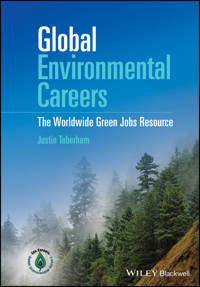
Global Environmental Careers
Global Environmental Careers – The Worldwide Green Jobs Resource
This book is the ideal guide to equipping you with the tools and know-how to develop an environmental career. It is filled with practical advice, case studies, personal profiles and top tips across the global environment sector.
An essential resource for anyone, from school students to those who are already in work but dreaming of a more meaningful career.
‘This new book comes at exactly the right moment. There has never been a more critical time for effective, international action on our common ecological crisis, and success in that work requires a new generation of 21st Century environmental professionals.’
Kevin Doyle, Executive Director, Office of Career and Professional Development, Yale School of the Environment
‘As an experienced green career coach, the top questions I hear from green job seekers are, “What are the green jobs out there, which ones would be a good match, how do I get my foot in the door, and where do I find these jobs?” Taberham’s book answers all of these in a refreshingly approachable way.’
Lisa Yee-Litzenberg, President, Green Career Advisor LLC
‘One of the biggest challenges environmental career seekers face is understanding and muddling through the opportunities available to them based on their experience, education, and interest. Taberham’s book is a great resource to help people navigate their options and grab some tips for the career journey.’
Laura Thorne, The Environmental Career Coach
‘A fantastic book for those who are interested in pursuing a role in sustainability. Jam-packed with helpful resources, career insights, and real-life case studies this is a go-to resource for professionals who are launching their careers.’
Sharmila Singh, New Lens Consulting
‘Justin Taberham provides an impressive global overview of a multifaceted, ever-changing sector that continues to evolve rapidly due to advances in technology and knowledge, changes in funding and incentives, and shifts in priorities and laws.’
Carol L. McClelland, PhD, Author of Green Careers for Dummies
Sie lesen das E-Book in den Legimi-Apps auf:
Seitenzahl: 495
Veröffentlichungsjahr: 2021
Ähnliche



















Table of Contents
Cover
Title Page
Copyright Page
Dedication Page
Acknowledgements
1 Introduction
1.1 Author Introduction
1.2 The Author’s Green Career – Any Lessons to Learn?
1.3 Introduction to the Book
1.4 What Is a Green Job?
1.5 The Global Green Jobs Sector
1.6 The Limitations of Online Searches
1.7 So Where Do I Start?
1.8 Volunteering
1.9 Green Careers Coaches and Green Career Services
1.10 Background
1.11 Reality Check
1.12 Social Media and Online – Popular Resources
References
2 Environmental Consultancy
2.1 Sector Outline
2.2 Issues and Trends
2.3 Key Organisations and Employers
2.4 Careers
2.5 Job Titles in the Sector
2.6 Educational Requirements
2.7 Personal Attributes and Skill Sets
2.8 Career Paths and Case Studies
2.9 External Resources
References
3 Integrated Water Resources Management
3.1 Sector Outline
3.2 Issues and Trends
3.3 Key Organisations and Employers
3.4 Careers in Water Management
3.5 Job Titles in the Sector
3.6 Educational Requirements
3.7 Personal Attributes and Skill Sets
3.8 Career Paths and Case Studies
3.9 External Resources
References
4 Environmental Law
4.1 Sector Outline
4.2 Issues and Trends
4.3 Key Organisations and Employers
4.4 Careers in the Sector
4.5 Job Titles in the Sector
4.6 Educational Requirements
4.7 Personal Attributes and Skill Sets
4.8 Career Paths and Case Studies
4.9 External Resources
References
5 Environmental Policy, Legislation and Regulation
5.1 Sector Outline
5.2 Issues and Trends
5.3 Key Organisations and Employers
5.4 Careers in the Sector
5.5 Job Titles in the Sector
5.6 Educational Requirements
5.7 Personal Attributes and Skill Sets
5.8 Career Paths and Case Studies
5.9 External Resources
Reference
6 Conservation and Ecology
6.1 Sector Outline
6.2 Issues and Trends
6.3 Key Organisations and Employers
6.4 Careers in the Sector
6.5 Job Titles in the Sector
6.6 Educational Requirements
6.7 Personal Attributes and Skill Sets
6.8 Career Paths and Case Studies
6.9 External Resources
References
7 Greening Companies and Corporate Sustainability
7.1 Sector Outline
7.2 Issues and Trends
7.3 Key Organisations and Employers
7.4 Careers
7.5 Job Titles in the Sector
7.6 Educational Requirements
7.7 Personal Attributes and Skill Sets
7.8 Career Paths and Case Studies
7.9 External Resources
References
8 Air Quality
8.1 Sector Outline
8.2 Issues and Trends
8.3 Key Organisations and Employers
8.4 Careers in the Sector
8.5 Job Titles in the Sector
8.6 Educational Requirements
8.7 Personal Attributes and Skill Sets
8.8 Career Paths and Case Studies
8.9 External Resources
References
9 Fisheries Management
9.1 Sector Outline
9.2 Issues and Trends
9.3 Key Organisations and Employers
9.4 Careers
9.5 Job Titles in the Sector
9.6 Educational Requirements
9.7 Personal Attributes and Skill Sets
9.8 Career Paths and Case Studies
9.9 External Resources
References
10 Marine Science and Conservation
10.1 Sector Outline
10.2 Issues and Trends
10.3 Key Organisations and Employers
10.4 Careers in the Sector
10.5 Job Titles in the Sector
10.6 Educational Requirements
10.7 Personal Attributes and Skill Sets
10.8 Career Paths and Case Studies
10.9 External Resources
References
11 Protected Area Planning and Management
11.1 Sector Outline
11.2 Issues and Trends
11.3 Key Organisations and Employers
11.4 Careers in the Sector
11.5 Job Titles in the Sector
11.6 Educational Requirements
11.7 Personal Attributes and Skill Sets
11.8 Career Paths and Case Studies
11.9 External Resources
Reference
12 Waste and Resource Management and Contaminated Land
12.1 Sector Outline
12.2 Issues and Trends
12.3 Key Organisations and Employers
12.4 Careers in the Sector
12.5 Job Titles in the Sector
12.6 Educational Requirements
12.7 Personal Attributes and Skill Sets
12.8 Career Paths and Case Studies
12.9 External Resources
References
13 Renewables and Energy
13.1 Sector Outline
13.2 Issues and Trends
13.3 Key Organisations and Employers
13.4 Careers in the Sector
13.5 Job Titles in the Sector
13.6 Educational Requirements
13.7 Personal Attributes and Skill Sets
13.8 Career Paths and Case Studies
13.9 External Resources
References
14 Journalism and Writing/Blogging
14.1 Sector Outline
14.2 Issues and Trends
14.3 Key Organisations and Employers
14.4 Careers in the Sector
14.5 Job Titles in the Sector
14.6 Educational Requirements
14.7 Personal Attributes and Skill Sets
14.8 Career Paths and Case Studies
14.9 External Resources
References
15 Emerging and Other Sectors
16 Contributors
Index
End User License Agreement
List of Tables
Chapter 2
Table 2.1 Graduate development schemes and career information for ‘environme...
List of Illustrations
Chapter 1
Figure 1.1 The Green World of Work.
Guide
Cover Page
Title Page
Copyright Page
Dedication Page
Acknowledgements
Table of Contents
Begin Reading
Index
Wiley End User License Agreement
Pages
iii
iv
v
ix
1
2
3
4
5
6
7
8
9
10
11
12
13
14
15
16
17
18
19
20
21
22
23
24
25
26
27
28
29
30
31
32
33
34
35
36
37
38
39
40
41
42
43
44
45
46
47
48
49
50
51
52
53
54
55
56
57
58
59
60
61
62
63
64
65
66
67
68
69
70
71
72
73
74
75
76
77
78
79
80
81
82
83
84
85
86
87
88
89
90
91
92
93
94
95
96
97
98
99
100
101
102
103
104
105
106
107
108
109
110
111
112
113
114
115
116
117
118
119
120
121
122
123
124
125
126
127
128
129
130
131
132
133
134
135
136
137
138
139
140
141
142
143
144
145
146
147
148
149
150
151
152
153
154
155
156
157
158
159
160
161
162
163
164
165
166
167
168
169
170
171
172
173
174
175
176
177
178
179
180
181
182
183
184
185
186
187
188
189
190
191
192
193
194
195
196
197
198
199
200
201
202
203
204
205
206
207
208
209
210
211
212
213
214
215
216
217
218
219
220
221
222
223
224
225
226
227
228
229
230
231
232
233
234
235
236
237
238
239
240
241
242
243
244
245
246
247
248
249
250
251
252
253
254
255
256
257
258
259
260
261
262
263
264
265
266
267
268
269
270
271
272
273
274
275
276
277
278
279
280
281
283
284
285
287
288
289
290
Global Environmental Careers
The Worldwide Green Jobs Resource
Justin Taberham CEnv
This edition first published 2022© 2022 John Wiley & Sons Ltd
All rights reserved. No part of this publication may be reproduced, stored in a retrieval system, or transmitted, in any form or by any means, electronic, mechanical, photocopying, recording or otherwise, except as permitted by law. Advice on how to obtain permission to reuse material from this title is available at http://www.wiley.com/go/permissions.
The right of Justin Taberham to be identified as the author of this work has been asserted in accordance with law.
Registered OfficesJohn Wiley & Sons, Inc., 111 River Street, Hoboken, NJ 07030, USA
John Wiley & Sons Ltd, The Atrium, Southern Gate, Chichester, West Sussex, PO19 8SQ, UK
Editorial Office9600 Garsington Road, Oxford, OX4 2DQ, UK
For details of our global editorial offices, customer services, and more information about Wiley products visit us at www.wiley.com.
Wiley also publishes its books in a variety of electronic formats and by print‐on‐demand. Some content that appears in standard print versions of this book may not be available in other formats.
Limit of Liability/Disclaimer of WarrantyWhile the publisher and authors have used their best efforts in preparing this work, they make no representations or warranties with respect to the accuracy or completeness of the contents of this work and specifically disclaim all warranties, including without limitation any implied warranties of merchantability or fitness for a particular purpose. No warranty may be created or extended by sales representatives, written sales materials or promotional statements for this work. The fact that an organization, website, or product is referred to in this work as a citation and/or potential source of further information does not mean that the publisher and authors endorse the information or services the organization, website, or product may provide or recommendations it may make. This work is sold with the understanding that the publisher is not engaged in rendering professional services. The advice and strategies contained herein may not be suitable for your situation. You should consult with a specialist where appropriate. Further, readers should be aware that websites listed in this work may have changed or disappeared between when this work was written and when it is read. Neither the publisher nor authors shall be liable for any loss of profit or any other commercial damages, including but not limited to special, incidental, consequential, or other damages.
Library of Congress Cataloging‐in‐Publication data applied for
Hardback: 9781119052845
Cover Design: WileyCover Image: Courtesy of Bailey Taberham
I would like to dedicate this book to my Mum who inspired my love for books; my Dad who instilled in me the need to work hard and have ‘stickability’; and to Jasmine for her constant love and support. Many thanks to my children for their involvement – Bailey for the book cover image, Ethan for keeping me well fed and amused and Lara for proofreading. This book is in memory of my Dad and Mama Lee, who gave me great support while I was writing but never got to see it finally published.
Acknowledgements
I would like to thank the entire team at Wiley who have helped to bring this book to fruition and most notably to Andrew Harrison, Senior Commissioning Editor and Mandy Collison, Managing Editor.
A group of reviewers helpfully reviewed the book text and passed on their expertise to help make the book more valuable to readers. They are Carol McClelland Fields, Kevin Doyle, Lisa (Yee) Yee‐Litzenberg, Laura Thorne and Sharmila Singh.
I would like to thank my networks and the numerous volunteer contributors, text reviewers and experts globally who have made the book more global, relevant and information rich.
The names of many of the major contributors are noted at the end of the book, but there are also hundreds of additional helpers who chipped in with views and helpful ideas. My thanks go to all.
Justin Taberham, LondonJune 2021
1Introduction
1.1 Author Introduction
The author, Justin Taberham, is an environmental professional and Chartered Environmentalist with more than 30 years’ experience in the global environment sector, working for Government agencies, a water utility, a lobbying charity and a global professional body. He is now a Consultant and Advisor, working in environmental publications, business and careers. He has significant experience of environmental recruiting, developing staff and advising and mentoring people globally who seek to develop a career in the environment sector. His website is www.justintaberham.com, and the site has a full professional profile.
Figure 1.1 The Green World of Work.
Source: Martens 2020. © Joanne Martens.
The Env.Careers Website
The author manages the Env.Careers website www.env.careers which is ‘The “one stop shop” for people who want to develop a career in the global environment sector’.
The Env.Careers website is an allied resource to this book, and it helps deliver ongoing additional content. The website is also a standalone resource with tips, advice and mentoring for those seeking a green career.
1.2 The Author’s Green Career – Any Lessons to Learn?
I grew up in the Norfolk countryside, in rural England. I was an enthusiastic scout, angler, hill walker and conservation volunteer. I was also keenly involved in environmental campaigns on issues such as Rainforest Conservation, Acid Rain and Species Loss. My parents were very tolerant of me bringing home ‘roadkill’ and other natural finds to ‘study’.
As I got older and had to make career direction and subject choices at school, I was often shunted into a specific area of interest which would enable me to more easily get a ‘standard’ job – early suggestions from careers questionnaires were Policeman, Insurer and Teacher. None of these were of much interest to me – it was a mystery why the questionnaires never asked, ‘What do you actually want to do?’ Careers advice tended to just look at the limited subjects I was studying and extrapolate what career field was broadly relevant; the more sophisticated current career survey techniques still extrapolate from your school subjects, general interests and personality traits and find you very common areas of work, in an almost apologetic attempt to pigeonhole you.
In the early 1980s, very few people worked in the environment sector and I struggle to remember any careers talks that mentioned it. ‘The Environment’ tended to be a subject for hippies and drop‐outs, and environmentalism was not perceived in the more positive light that it is today. The ‘Natural World’ was being promoted to the public by the likes of David Attenborough and Jacques Cousteau, but it seemed very exotic and separate from normal career options. Protecting and managing the environment as a career wasn’t promoted, even following the major nuclear reactor accident at Chernobyl in 1986 and the scourge of acid rain in the 1980s.
Many people I have met who work in the global environment sector have grown their passion from childhood experiences with nature and I’m an example of this. Just because a quality has been developed in early life, this doesn’t preclude it from playing a part in your future career decisions.
I decided at school that I would take ‘general’ A‐Levels (UK examinations pre‐university), investigate environmental degrees and consider what jobs were on offer. It must be noted that this was a time when internet searches were not possible, and university and jobs information had to be found in a school or public library, by searching the indexes and shelves. School careers services were very limited and only the most ‘popular’ career sectors had information booklets.
My parents were wonderfully supportive of my decisions and I enrolled in the leading Environmental ‘sandwich’ degree at what is now the University of Hertfordshire, UK (a sandwich degree is a degree that has a year in ‘industry’ in the middle). From the first day, I was hooked and realised that this was a career direction worth pursuing with a passion. Because of the sandwich degree format, I gained a year’s experience in fisheries management around London and Hertfordshire, which helped me to get on the jobs ladder after graduating, in 1990. However, getting my first job still took four months of odd jobbing, hundreds of applications and endless job hunting until things worked out.
One thing that strikes me, when I look back at my attitude at this time, was my ‘stickability’ in the light of people giving me advice to go for a mainstream job. In the global environment sector, this trait is hugely important. Throughout this book, the importance of personality and passion will be mentioned repeatedly, and I am unapologetic for comments that are made frequently when they are crucial.
To complete a degree is a great help for certain roles in the environment sector, but there are many jobs and organisations where your actual skills and personality count just as much as a higher‐level education. There is a significant move away from employers listing specific university qualifications towards the top of their adverts, and instead, professional skills and vocational qualifications are being actively listed. These skills might include specific job‐related safety and training courses, IT suite and other certifications. This is of relevance to employers who need to hire people with the professional skills they require, rather than just an academic qualification; it also can reduce the initial training costs for a new member of staff. In a commercial world with tight budgets, a candidate who has already completed some level of training is a plus. Many companies have recruitment sections that explain apprenticeships, internships, openings for ‘craft’ and manual professionals and school recruitment.
There is also a Masters/PhD dilemma for some people in the sector – they have a degree but wonder if going further in their studies will help them in finding a better job. There is no clear answer to this. I was faced with this dilemma towards the end of my degree – many friends were doing Master’s Degrees in Aquatic Resource Management in order to secure the best jobs, but I didn’t go down this route; the costs were unrealistic, and I wanted to get to work! It is true that some technical and academic roles will ask for higher level education, so researching your preferred area of work is essential.
My career development was an example of a career ‘curve’ rather than change. I worked in Fisheries Management for UK Government agencies for six years and within that period, I changed the focus of my work from fieldwork and monitoring, to management, policy development and research projects. This came partly from promotions, but also from seeing opportunities for new projects and taking them. I also took professional examinations to boost my qualifications and knowledge base. My increasing involvement in policy and strategy development led to me moving to London to work in lobbying and policy development. The career jump from a fisheries role to a lobbying role could be hard to explain and achieve, but the fact that I had ‘morphed’ my past role to include policy development, lobbying and public liaison was a major benefit in my career move. My view was always to see how I might develop different areas of expertise in case another role came up in a different area. However, it was never just a calculating move; I really enjoyed broadening my skills and experience.
My career in policy development also involved finance, management and project roles, which further developed my knowledge. I became a bit of a ‘jack of all trades, master of none’, which is why my current role, specialising in consulting, careers and books, is a wonderful return to a greater focus on fewer work areas. The balance between ‘generalism’ and specialism is considered several times in this book, as it has often been a point of discussion with other environmental professionals.
There were several learning points from the ‘middle’ period of my career. I had a degree of movement in my profession, but I always stayed within the environment sector. The reason that I was able to do this was due to me taking on new areas of work whenever I could, without affecting my day‐to‐day job. In fact, many of the new skills I learned greatly benefitted my role and in addition helped me build multi‐sectoral networks of new contacts. When a new job appeared, I already had a structured CV, which could be changed to match the numerous roles that were of interest to me. The ‘next role’ could have been financial, policy‐focused, governmental or in project management – I had gained work experience and skills in all of these sectors through tasks that I had added to my current role. In addition, I learned an important skill ‐ immerse yourself in the wider sector through networks, groups, newsletters and the like.
There is a significant debate between sector professionals, careers coaches and advisors over how much of a career plan you should have as well as the time span this should cover. My view, and my approach, is that a good practice to get into is to have a rough ‘game plan’, (not always strictly adhered to) which projects to the medium term, (perhaps five years) so that there is a focus for your career direction, network development, skills development and training. This can be a plan ‘in mind’, a structured mind map or document. Many careers advisors suggest a formalised career development plan, which aims to help in key areas: avoiding getting stuck in a rut; opening your eyes to new opportunities; having ideas of how to increase your skills and knowledge (such as training, taking on new projects and professional qualifications); and developing a clear sense of direction, which will give you confidence in your career progression. I have tended to avoid a formalised career plan because when I did have a developed one, it tended to give me a sense of irritation and impatience when I was behind the plan phases. However, for some people, a formal structure is very helpful.
Career planning is also a key moment to consider what you actually want to do. This is surprisingly rare as an action – many people are stuck in jobs that they do not really enjoy, from which they have no clear way out. If you project forward to your ideal role, you may be presented with areas of research and actions so that you can ‘curve’ your career in a positive way. This all sounds simple, but in practice, ‘life’ tends to get in the way; issues such as housing, family, finance and various other factors may make career change less possible. However, there are always ways in which you can continue to develop, ready for the next career step. Often, an ideal role falls right into your lap from nowhere and at other times, you hear of suitable roles from contacts or through sector research and networking.
I have been in the environment sector for more than 30 years and I feel that it is now time to pass on my experience to the next generation, which has a much more global outlook on career development. I mentor a group of young people in the environment sector, worldwide. A mentor is defined in the Cambridge English Dictionary (2021) as ‘a person who gives a younger or less experienced person help and advice over a period of time, especially at work or school’. The practical examples of this are reviewing resumes and applications, suggesting suitable employers, course choices, interview help and sometimes direct approaches and recommendations to potential employers. There is also the element of personal support which is always encouraging. I would recommend to anyone in the sector that they take on this role. There are many courses on how to develop mentoring skills and many companies have their own training schemes in this area.
I was inspired to write about green careers after finding a book in the shop at the wonderful Monterey Aquarium in California, USA, whilst on holiday. It was ‘Environmental Careers in the 21st Century’ by The Environmental Careers Organization, published in 1999. It is a really helpful text covering green careers, mainly in the USA.
There is also a growing number of ‘green career coaches’ who can help with career development. The US expert, Carol McClelland, was always a great source of information in terms of personal development in the green sector.
1.3 Introduction to the Book
This book is aimed at anyone worldwide who has an interest in developing a career in the environment sector: students, undergraduates, career‐changers, university and school careers services, major organisations that are asked for careers information and trade and professional body organisations in the environment sector.
There is a need for a resource that brings together a global text, as well as a linked online resource which cuts through the myriad jobs websites that one finds if you type ‘environmental jobs’ or ‘green jobs’ into a search engine, as well as the large number of books that examine a single country or a small part of the global environment sector.
This book focuses on the career paths that offer the greatest opportunities globally, specifically for those who want to develop an environmental career. There are, of course, many areas of work that are not covered. If I covered every sector, this book would be too big and unwieldy; areas such as mapping and GIS, wildlife crime and planning could easily have been included, but I aim to use the Env.Careers website to fill in any gaps and make any amendments needed.
This book is a practical guide to increasing your chances of developing a successful career within the global environment sector, wherever you are based and want to work. The book has a global multi‐sector perspective and gathers information, tips and advice from professionals in the sector. The layout of the book uses as consistent a format as feasible and is written with a view to minimising jargon or acronyms. There are many differences in environmental terminology worldwide, which is very challenging, and I have tried to be open to using multiple wordings, but there are terminology differences that are unavoidable.
This book is supported by online content on the Env.Careers website, www.env.careers (managed by the author). As new sectors develop, the website will be the location for updates and background information. As the sector is maturing rapidly and changing swiftly, this book aims to meet the need for an up‐to‐date resource in this area, with online resources to back it up and provide updates.
This is an introductory book that is structured as a compendium of sectoral information. There are two larger chapters for water management and environmental consultancies, as these are key areas for people to develop environmental careers in globally.
There are frequent references throughout the book to informative website addresses. The author and contributors have attempted to ensure that, at the time of printing, these addresses were valid. However, websites are often dynamic, and addresses do change. With time, some of the addresses may no longer be valid. Nevertheless, I hope that, where this occurs, the references will still enable you to find your way to the same information, even if at a different address.
Please also note that a mention of a company, website or service within the book does not constitute an endorsement from the author or book contributors unless this is made very clear in the text.
1.4 What Is a Green Job?
There are many formalised as well as general definitions of what jobs fit into the global ‘green’ sector. Many are based on the use of the word ‘environment’, meaning ‘environmental services’, such as waste management, the supply of green goods and products like pollution treatment technologies. ‘The Environment’ covers the natural, built and human environment. There are many careers that touch on environmental issues but are not completely within the scope of being environmental. The type of positions and workplaces vary massively, as do the organisations working in the sector. Some of the many definitions are below.
OECD (2010) notes in its paper ‘Green Jobs and Skills’:
For the purposes of this paper, green jobs are defined as jobs that contribute to protecting the environment and reducing the harmful effects human activity has on it (mitigation), or to helping to better cope with current climate change conditions (adaptation).
UNEP (2008) offers a more detailed definition:
Green jobs are defined as work in agricultural, manufacturing, research and development (R&D), administrative, and service activities that contribute substantially to preserving or restoring environmental quality. Specifically, but not exclusively, this includes jobs that help to protect ecosystems and biodiversity; reduce energy, materials, and water consumption through high efficiency strategies; de‐carbonise the economy; and minimise or altogether avoid generation of all forms of waste and pollution.
The Apollo‐Alliance (2008) definition for so called ‘green collar jobs’ was Green‐collar jobs are well‐paid career track jobs that contribute directly to preserving or enhancing environmental quality. Like traditional blue‐collar jobs, green‐collar jobs range from low‐skill, entry‐level positions to high‐skill, higher‐paid jobs, and include opportunities for advancement in both skills and wages.
The US White House Task Force on the Middle Class (2009) noted:
Green jobs involve some tasks associated with improving the environment, including reducing carbon emissions and creating and/or using energy more efficiently; they provide a sustainable family wage, health and retirement benefits, and decent working conditions; and they should be available to diverse workers from across the spectrum of race, gender and ethnicity
(United States Department of Labour 2009)
The above definitions give a generally helpful outline as to what green jobs cover, but there are disputes over some roles. Often, there is a ‘variety of shades’ in terms of whether a job is green or not.
Brian Handwerk highlighted (2012):
…defining exactly what green jobs are, how they can be created, and how they benefit the economy and environment presents quite a challenge.
As green issues become more integrated within company procedures and environmental regulation, there is an argument that trying to pigeonhole green jobs is not helpful. I can understand this argument – we want all jobs to have an element of being ‘green’ – but generally, green jobs are an obvious choice for those who want to actively ‘make a difference’ to the world we live in. There is a fundamental difference between someone who purely wants to just get a job and someone who wants to make a positive change in the world through their career.
In terms of government reporting, it is helpful to know which industry sectors are growing and where the key opportunities are. Often, government funding for green jobs is diverted into industries where the shade of green is questionable. However, Governments often struggle to decide what green jobs are and what should or should not be included.
Scholars at the Heritage Foundation took issue with the notion that government subsidies and spending are helping to create large numbers of new green jobs, according to a report by David Kreutzer (2012). He explained:
The largest green jobs providers in manufacturing are steel mills (43,658 jobs) …Over 50 percent of all steel mill jobs are green. This high fraction of greenness is driven by the industry’s reliance on scrap steel for the majority of its inputs, not by the greenness of the goods produced with the steel. The trend toward greater use of scrap steel is decades‐long and is not the result of any green jobs initiatives.
Kreutzer also questioned the extent of green jobs and Government green subsidies in renewable energy:
The electric power generation industry has 44,152 green jobs…This may seem like a lot, but only 4,700 are in renewable power generation, including 2,200 in wind, 1,100 in biomass, 600 in geothermal, and only 400 in solar. Though these totals do not include jobs in the manufacture or installation of these power sources, they pale to the equivalent green jobs count in nuclear (35,755), which accounts for over 80 percent of all green jobs in electric power generation.
The US Bureau of Labor Statistics’ numbers above were reasonably close to the findings of a similar US study, ‘Sizing the Clean Economy: A National and Regional Green Jobs Assessment’, by the Brookings Institution (2011). However, the report does state:
The clean economy remains an enigma: hard to assess. Not only do ‘green’ or ‘clean’ activities and jobs related to environmental aims pervade all sectors of the U.S. economy; they also remain tricky to define and isolate—and count.
The International Labour Organisation (2016), an agency of the United Nations, has published its own definition of green jobs in its article, ‘What is a green job?’ Their simple definition is
Green jobs are decent jobs that contribute to preserve or restore the environment, be they in traditional sectors such as manufacturing and construction, or in new, emerging green sectors such as renewable energy and energy efficiency.
Green jobs help:
Improve energy and raw materials efficiency
Limit greenhouse gas emissions
Minimise waste and pollution
Protect and restore ecosystems
Support adaptation to the effects of climate change
In its Green Jobs Programme outputs, Gloria Acuña Navarro, from the National Learning Institute of Costa Rica noted:
Green jobs can embrace environmental practices and decent work conditions to varying degrees. Enterprises can start with small/‘lighter’ green initiatives and with time move towards more comprehensive/’darker’ green initiatives. Improving the environmental and social qualities of jobs is a continuous process that seeks to achieve sustainable development at national level.
Joanne Martens has developed the ‘Green World of Work’ Principle:
The Green World of Work (Martens 2020)
Change has impacted every aspect of our lives. There are tremendous forces reshaping society and with it, the world of work. Organisations and individuals are being required to accept their social, economic and environmental responsibilities. Sustainability and Resilience enable us to survive and thrive.
Environmental Sustainability
We face a number of environmental sustainability challenges in our communities, country and planet. Challenges are areas of focus that must be addressed to be sure that we have a healthy planet and to ensure that current resources will be in good shape for future generations.
Which Environmental Challenge Do You Care Most About?
Clean Water – Manage, deliver and treat water needed for industrial, agricultural, personal use and more responsible global use.
Communities – Build sustainable communities – neighbourhoods and cities – geared to human needs, so people can live and work in healthier ways.
Energy Efficiency – Increase energy conservation by reducing energy waste in our homes, businesses, cars and communities.
Food – Produce local organic food to keep people and the planet ‘healthy’. Encourage safer agricultural growth and develop cleaner processes in food production.
Green Construction – Build homes and businesses that are energy efficient, are healthy to live in and minimise waste.
Green Transportation – Design, build and use alternative transportation systems that move people and goods in energy efficient ways. Expand virtual capacity to minimise travel.
Healthy Environment – Protect and rebuild our environmental resources – oceans, forests and water – and preserve the diversity of plants and animals.
Healthy People – Keep people healthy as environmental changes endanger human health worldwide.
Reducing Waste – Eliminate waste and decrease the use of landfills. Refuse one‐time use products. Reduce consumption. Reuse materials and increase creative strategies. Recycle materials saves money and energy.
Renewable Energy – Generate renewable energy by harnessing wind, solar, geothermal and water resources.
Career Self‐Reliance
Career Self‐Reliance is a lifelong commitment to actively manage your work life and learning in a rapidly changing environment. ‘Work is what you do to learn a living’ (Career Action Center 1997).
How Are You Developing the Characteristics of Career Self‐Reliance?
Self‐Aware
– You know who you are, where and how you do your best work; you understand and can articulate the value you add.
Values‐Driven
– You have determined the values that give direction and meaning to your work.
Dedicated to Continuous Learning
– You regularly benchmark your current skills and create a development plan to keep your skills current.
Future‐Focused
– You look ahead to assess customer needs and business trends; you consider the impact of those trends on your work and on your development plan.
Connected
– You maintain a network of contacts for learning and sharing ideas; you work collaboratively with others towards mutual goals.
Flexible
– You anticipate change and are ready to adapt quickly.
World of Work
The concept of work is employment.
The structure of work are companies, organisations, governments and communities.
The work that needs to be done is often defined by jobs, roles, occupations, etc.
The workforce is made up of people who possess the knowledge, skills and attitudes to perform the work.
The work environment is physical, virtual and cultural.
How Do You Fit into the New World of Work?
The New World of Work redefined the social contract of long‐term employment, a dependent relationship between employer and employee to a social agreement between organisations and workers, developing interdependent relationships and fostering a resilient workforce. Instead of one career for a lifetime, the norm is between three and five careers in a lifetime.
Changemakers
Changemakers of the green generation are playing important roles in all challenge areas to achieve environmental sustainability. Changemakers work in government, business and industry, non‐profit organisations and research and education institutions.
What Changemaker Role Most Interests You?
Policymaker –
Guide people to make decisions and take action to do the right thing.
Innovator –
Work with ideas, research facts and develop new methods, products or designs.
Communicator –
Educate and inform others about issues, solutions and products.
Implementer –
Get the job done and make solutions a reality.
Fundamentally, if your career path is to pursue a green career, you may have a reasonable idea as to the type of jobs you would like to seek. However, the confusion over definitions means that the targeting of ‘green funding’ by governments can often miss the target in terms of driving green career development and the number of truly ‘green’ jobs.
1.5 The Global Green Jobs Sector
The environment is a growing sector for employment globally, and there is also a growing public awareness of green issues, on a global scale. The diversity of green jobs has accelerated, with new sectors of employment being stimulated by technological advances (often called ‘Green Tech’).
Green jobs span a wide array of occupational profiles, skills and educational background and, while some constitute entirely new types of jobs, the majority are modified versions of traditional professions and occupations. There is clear evidence of the viability and potential for green jobs across the entire workforce, including manual labourers, skilled workers, craftsmen, highly qualified technicians, engineers and managers.
Creating and Stimulating Global Green Jobs Growth
There has been considerable inertia and a global resistance to change in terms of developing global green jobs. The UN has been pivotal in terms of highlighting this issue and stimulating funding for international programmes to encourage green jobs growth.
There are significant barriers to growth in green employment programmes. Some areas have poor infrastructure, limited policy measures and little political will to actively develop green sectors. Climate change is having a direct impact on jobs and livelihoods; some sectors, which are seen as being energy inefficient and damaging environmentally, have major employment, so this is a challenge that is yet to be faced. There needs to be a global transition that garners support from all sectors and governments.
The UNEP report from 2008, ‘Green Jobs: Towards decent work in a sustainable, low carbon world’ noted:
This report shows for the first time at global level that green jobs are being generated in some sectors and economies. This is in large part as a result of climate change and the need to meet emission reduction targets under the UN climate convention.
This has led to changing patterns of investment flows into areas from renewable energy generation up to energy efficiency projects at the household and industrial level. The bulk of documented growth in Green Jobs has so far occurred mostly in developed countries, and some rapidly developing countries like Brazil and China.
The US Bureau of Labor Statistics’ data from 2009 did not attempt to track how many green jobs were new and had been created by newer ‘green jobs’ programmes, but the scheme to measure green jobs was shelved in 2013 due to budget cuts. It did report that 2.3 million jobs were in the private sector, while 860 000 were public jobs (US BLS 2013).
Reuters highlighted in 2016: ‘China expects the output value of its energy saving and environmental protection industry to rise from 4.5 trillion yuan ($653 billion) last year to more than 10 trillion by 2020, lifting its share of gross domestic product from 2.1 percent to 3 percent… the industry currently employs more than 30 million people… China is hoping that big outlays in the environmental sector will not only reverse some of the damage done by more than three decades of breakneck economic growth, but will also help diversify the country’s heavy industrial economy.’
In China, as well as in other countries, there is an impetus for growth in global green jobs, through managing issues like climate change and poor air quality, transitioning heavy industries and also developing new opportunities for global trade.
The South China Morning Post reported (2018) that ‘China is looking to set tougher goals in a new three‐year “green” plan to improve air quality and tighten regulations’ and this has not only restricted certain industries but has also stimulated investment in environmental technologies.
Mark Muro, from the Brookings Institution report (2012), reported that:
The ‘green’ or ‘clean’ economy exists; that we can define it; that in fact we can count its jobs and measure it and track its progress. Given that, it is soon going to be time for election‐year combatants to leave aside both flat‐earth denials and exaggerated claims and get down to realistic dialogue about how to foster what turns out to be a modest‐sized, manufacturing‐oriented, unavoidable piece of America’s next economy.
His team’s study reported that most green jobs in the United States are in already‐mature segments, like manufacturing or public services, including wastewater and mass transit. A smaller proportion includes newer green energy ventures such as solar, wind and smart grids – but in recent years, these sectors have been adding jobs at rates that far outstrip national averages.
The 2008 report ‘Working Towards Sustainable Development’, by the Green Jobs Initiative (United Nations Environment Programme (2008), the International Labor Organization, and the International Trade Union Confederation), noted:
Most studies indicate gains in the order of 0.5–2 per cent, which would translate into 15–60 million additional jobs globally. More ambitious green growth strategies could result in even stronger net gains in employment by triggering a wave of new investment into the real economy, as suggested by studies of Australia and Germany’…A significant potential also exists in emerging and developing countries. For example, targeted international investment of US$30 billion per year into reduced deforestation and degradation of forests (REDD+) could sustain up to 8 million additional full‐time workers in developing countries.
The International Labour Organisation (ILO) (2018) has formed a Green Jobs Global Team, and in their 2018 report ‘Greening with Jobs – World Employment and Social Outlook 2018’, they state:
18 million jobs can be created by achieving sustainability in the energy sector. Limiting global warming to 2°C by the end of the century will create, by 2030, jobs in construction, electrical machinery manufacturing, copper mining, renewable energy production and biomass crop cultivation. But there will be fewer jobs in petroleum extraction and refinery, coal mining and production of electricity from coal meriting policies to protect these workers to make sure the transition is just for all.
Santander (n.d.), the multinational financial services company, outlined in its release ‘The future of employment is green’:
If only a couple of decades ago, in the early years of the new century, we would have asked someone about what green employment means, it is most likely that the response obtained would not have implied much more than a park ranger or something similar. And it would not be a bad option, but it would remain insufficient.
That same respondent would have thought we were crazy if, predicting the future, we would have advanced to the following figures: 400,000 new jobs in Europe, more than 50,000 only in Spain and almost 18 million around the world. That is the estimate made by the European Commission in the case that all the legislation enforced about waste would be applied in a real way.
Today, green employment is becoming, with every passing second, a magnificent job opportunity. So, roughly speaking, we could define it as that which has as an absolute objective so lofty as protecting the planet. And how can such a laudable goal be achieved? Basically, by reducing the impact that human action itself, especially through large companies, provokes in the natural environment.
Within this sector, the most demanded areas are those related to energy efficiency, waste management, pollution prevention and many others included in what we know as Corporate Social Responsibility of companies. Ecological agriculture, environmental communication, sustainable tourism and eco‐design are some of the most innovative fields that green employment already places in a powerful place of the supply and demand market.
Box 1.1 Diversity in the Environment Sector
There is an urgent challenge in the sector that in most developed nations, there is significant under‐representation in the environment sector of minority groups and women in terms of engagement with nature as well as in employment.
A headline from the UK body Natural England (2019) in its national survey ‘Monitor of Engagement with the Natural Environment’ noted:
Children from black, Asian and other minority ethnic backgrounds are less likely to spend time outdoors than children from white backgrounds… 57% of children with black, Asian and minority ethnic family backgrounds spend time outdoors at least once a week, compared with 73% of children from white family backgrounds The majority of children (72%) had visited urban greenspaces in the last month while just over a third had visited the countryside (36%) and 17% visited a coastal location. The results for young people show a similar pattern: the majority of visits taken by 16‐ to 24‐year‐olds were to urban greenspaces (62% of visits), with smaller proportions to the countryside (28%) or coast (11%).
The think tank Policy Exchange (2017) also researched diversity in different occupations. They found in their research that, of the 202 occupations, farmers were the least diverse and environment professionals were ranked 201.
In a key 2014 US report by Dorceta Taylor (2015), commissioned by Green 2.0, ‘The State of Diversity in Environmental Organizations’ she highlights:
The current state of racial diversity in environmental organizations is troubling, and lags far behind gender diversity… Environmental jobs are still being advertised and environmental organizations recruit new employees in ways that introduce unconscious biases and facilitate the replication of the current workforce… Moreover, environmental organizations do not use the internship pipeline effectively to find ethnic minority workers
This challenge is being met by many organisations and individuals who campaign and have activities in the area. These include
Green 2.0
www.diversegreen.org
Black2Nature
www.yearofgreenaction.org/green‐actions/black2nature
Bird Girl
www.birdgirluk.com
Diversity Joint Venture for Conservation Careers (DJV)
www.diversityinconservationjobs.org/about
Center for Diversity & the Environment
www.cdeinspires.org
Student Conservation Association ‐ Career Discovery Internship Program
www.thesca.org/cdip
SACNAS – Society for Advancement of Chicanos/Hispanics and Native Americans in Science
www.sacnas.org
Women for Wildlife
www.womenforwildlife.com
Changing Patterns in ‘Hot Topics’ and Funding
If your aim is to develop a long‐term career in the environment sector, there are significant challenges in the fact that the areas of work that attract funding, and therefore offer more jobs, shift from year to year. Government funding priorities can have an immediate impact on the sector, such as announcements on support for areas such as wind power and solar. The classic way to respond to this is to become a generalist, with skills that enable you to shift across areas, but ultimately if your aim is to be, for example, a fisheries or ecology professional you need to develop your skills to enable you to develop a career in the area and to ride out any periods of recession in your sector. In the early 1990s when I graduated, there were few jobs being created in fisheries, but there was still ‘movement’ in the sector which enabled me to get a job and get on the career ladder.
The media hot topic of plastic pollution has increased the profile of water pollution, life cycle analysis, materials production, waste minimisation and management and recycling, but it has had minimal effect on global green jobs. However, the need for solar and wind energy, for multiple reasons including energy production diversity, lower energy costs, climate change response and non‐renewable resource limitations, has led to a rapid increase in global employment. The drivers for green jobs growth are many and varied. As noted earlier, a sensible approach is to develop skill sets which enable you to respond to sectoral changes but stick to the main core of the roles which led you to work in the green sector in the beginning.
However, there are a number of sectors displaying increasing investment and global jobs growth which are worth exploring if you want to develop a green career.
Fastest Growing Sectors
Renewable Energy
The renewable energy sector has experienced significant global growth in recent decades. As noted by Deloitte in their 2018 Deloitte Insight ‘Global Renewable Energy Trends’ article, renewables are becoming a ‘preferred’ energy choice globally. Deloitte’s report notes seven ‘enabling trends’ and ‘demand trends’ driving this process:
Enabling trends: price and performance parity, balancing the grid and new technology and innovation
Demand trends: smart cities, community energy, new emerging markets and growing corporate energy buying
Renewable energy offers a very good opportunity for jobs to migrate across to the green sector from traditional heavy industry roles. The sector has roles in areas, including manufacturing, site installation and engineering design, as well as research, environmental management, and impact assessment. This ‘role transferability’ makes it an attractive choice for governments globally, as the transition process for jobs, skills and infrastructure is streamlined, compared to implementing very ‘different’ new technologies. This book has a chapter on Renewables and Energy.
Fastest Growing Sectors
Environmental Consultancies
There has been a rapid growth in consultancies, especially global environmental and engineering consultancy firms, who have diversified their areas of work. Many have grown significantly through mergers and acquisitions. These mergers continue as key players in the sector seek to secure their positions as ‘super consultancies’.
The so‐called ‘Global 23’ companies (now called the ‘Global 22’ by Environment Analyst in 2019) dominate the global market with over 40% of the total global market. These companies include AECOM, Tetra Tech and Arcadis.
The services delivered by consultancies have developed significantly. There are a small number of global consultancies who are able to manage virtually any engineering, technical and environmental service needed, from building a dam or bridge to developing policies and strategies for governments. There are also many more specialised consultancies who offer services in more specific areas such as ecological surveys, planning, policy development and environmental restoration works. Increasingly, the more successful of these smaller consultancies are being swallowed through acquisition by larger consultancies who want to be able to offer further services and gather the clients of the smaller companies. There is also a pool of experienced independent individual consultants who are hired as freelancers by the larger consultancies as and when they are needed.
Consultancies have become increasingly global in their reach, operations and main offices. This also rings true for employment within these companies – many multinational organisations have teams of experts who work on a global basis, as well as considerable numbers of local staff. This opens an opportunity for global environmental careers in a diverse range of areas of employment. However, the limitations of working rules and visas for certain nationalities can complicate the flexibility for some staff to secure global roles within consultancies. This book has a chapter on Environmental Consultancy as this is a key area to consider for a green career.
1.6 The Limitations of Online Searches
The Internet is an amazing resource for job seekers, especially those in such a diverse field as the environment. The process of job hunting and linking to employment agents and jobs websites has become streamlined and simplified. Unfortunately, as many of us are beginning to realise, using Internet searches for many elements of green career development is becoming an exhausting process unless you’re willing to trudge through what could be termed ‘dross’ all day, seeking a single gem of a site. It is particularly complicated for those who have not yet focused in on a specific area of work.
Information on global environmental careers, both in print and online, is messily scattered and most is very out of date. Most information is either UK‐centric or aimed at US career hunters. There are few resources available that outline in an organised and selective manner what sectors are available and how to get a job in those sectors. A very high proportion of roles and internships in some sectors are not advertised externally and some are only visible on specialised blogs or mailing lists.
Many online resources are just jobs boards, with no supporting information for a career hunter. Where there is careers information, it is often out of date and limited in scope. Even the most promising online resources are hard to find and are not securely funded, often depending on short term charitable funding.
In the current maturing environment sector, there are clearer routes to environmental jobs, and careers services have more computing and search power in their hands to advise on the sector, although careers services worldwide tend to be under appreciated and under resourced. In addition, the internet has helped with job and information finding, but it has also caused a decline in information quality and a clogged internet of old ideas and urban myths.
National governments have supported numerous jobs websites in order to encourage growth in the sector. In the United States, the Government‐supported website Careeronestop (www.careeronestop.org) aims to provide comprehensive careers information in a similar way to the National Careers Service in England (www.nationalcareers.service.gov.uk). However, because these websites are a ‘catch all’, finding the information required and then jobs available in the sector can become an exhausting process.
The global environment sector is growing rapidly and there are millions of roles which are open to those who can use the right resources to get them into the sector. Competition for environment sector jobs is very fierce and job hunters need the right advice, resilience and ‘stickability’. Rapid change in the sector leaves career professionals playing catch up in terms of being supportive to job seekers.
1.7 So Where Do I Start?
There is a blinding amount of information available, some of which will be helpful and much which will take you in circles. There are some fundamental tasks which you should undertake. The tasks below are not in a specific order and some are less relevant to those at different stages of their career.
Tasks for those before ‘working age’:
Do research into the sector. Do you have personal interests that make you want to develop a green career, such as nature watching, fishing or conservation volunteering? Look at roles within the sectors that are relevant to your interests and see what skills, education and knowledge they need. Sign up to relevant newsletters and news services.
Consider voluntary work and look at organising relevant work experience – this can help with applications for further education as well as looking good on a CV or resume. It also can assist you in developing skills and knowledge, which are helpful in any career, let alone a green career.
Consider what school and college choices give you options to develop a green career.
Use social media as a tool for information gathering, as well as a way to develop networks of contacts. Getting into the habit of developing and maintaining a network is sensible.
Tasks for those of ‘working age’:
Sign up to jobs email and update services and link up with jobs agencies. Even if you are new to the sector or have minimal qualifications and experience, it is worth getting to know the sector deeply. If you have a specific area of interest, ‘immerse’ yourself in the subject through newsletters and other news services.
Review your current situation and organise your CV or resume. Many roles ask for specific knowledge and qualifications, so this will help you target your search and consider future training and education. There are many books and websites that focus on CV and resume styles. There are also many experts that may be willing to help you.
Consider using social media and professional networks that are helpful. On LinkedIn, there are relevant networks which include Environmental Careers Network, Sustainability Career Group, Green, Environmental Consulting Professionals and Green Jobs & Career Network.
Is there a mentor who can help you? Mentoring is growing in scope and not just for people already within a company mentoring scheme. LinkedIn have a scheme for mentoring.
Tasks for those who want to transition into a green career:
Transitioning is not necessarily a major career change for many, merely a migration into the area using current skill sets. Use online tools to see what roles you can move into and review your skills and CV or resume to consider what elements would be helpful for a green career. Look at job adverts for roles that would interest you and develop your skills to match their requirements.
Consider additional training to help you fit into the right career.
Each section of this book has information on training and helpful resources in that sector.
1.8 Volunteering
Many careers in the sector started through volunteering for organisations such as nature trusts, conservation NGOs (Non‐Government Organisations) and other small bodies. Volunteering is an option for graduates to build up skills and knowledge, as well as for those who are pre‐University. There are also many organisations specifically focusing on volunteering. The table below lists many organisations where you can volunteer, and in addition some offer summer jobs, placements, internships and full‐time employment. Some volunteering is organised commercially, so this may not be free of cost. There have been concerns raised at the growth of paid‐for volunteering and unpaid internships.
Sarah Bell (2015) wrote her Master’s Degree thesis on volunteer tourism in the ‘conservation’ industry, and her paper gives a helpful insight into the motivations for conservation volunteering.
The Guardian (2017) highlighted concerns over paid and free volunteering and noted:
a depressingly similar story: serial unpaid internships, crippling student debt, short‐term work for little or no pay, dismissive attitudes, and entry‐level job requirements that include expectations of considerable field time and experience…Exacerbating the dismal job market is this trend of graduates becoming stuck in full‐time unpaid internships or long‐term volunteering.
The hope is that volunteering and internships will be a positive rather than exploitative experience.
Box 1.2 Volunteering Opportunities in the Environment
Adventures in Preservation
Different ‘adventures’ for volunteering projects for students to get involved in, in different locations across Europe. Support provided too through staff to endure safety and enjoyment of those on placements
www.adventuresinpreservation.org
BC Parks, Canada
www.bcparks.ca/volunteers
Backdoorjobs.com
Short‐term job adventures, many in environmental areas of work
www.backdoorjobs.com
Blue Ventures
Marine conservation organisation situated within Madagascar, enabling people to volunteer to protect marine coastline and work with the local community
www.blueventures.org/about
British Council
Placements abroad for UK residents
www.britishcouncil.org/study‐work‐abroad/outside‐uk/iaeste
BUNAC
Opportunity to work/volunteer/intern abroad – a particular focus towards Africa for conservation roles. Placements available over different timescales (chance to go over summer in‐between studies as well as after graduation)
www.bunac.org/uk/volunteer‐abroad/wildlife‐and‐conservation




