


68,99 €
Mehr erfahren.
- Herausgeber: John Wiley & Sons
- Kategorie: Wissenschaft und neue Technologien
- Serie: Postgraduate Pharmacy Series
- Sprache: Englisch
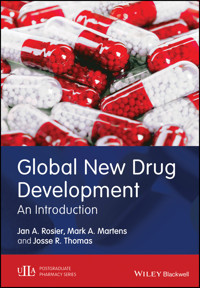
The development of new drugs is very complex, costly and risky. Its success is highly dependent on an intense collaboration and interaction between many departments within the drug development organization, external investigators and service providers, in constant dialogue with regulatory authorities, payers, academic experts, clinicians and patient organizations. Within the different phases of the drug life cycle, drug development is by far the most crucial part for the initial and continued success of a drug on the market.
This book offers an introduction to the field of drug development with a clear overview of the different processes that lead to a successful new medicine and of the regulatory pathways that are used to launch a new drug that are both safe and efficacious.
"This is the most comprehensive and detailed book on drug development I have ever read and I feel that it is likely to become a staple of drug development courses, such as those taught at Masters Level in my own University.... I think in the light of increasing integration of company and academic approaches to drug development both sides can read this book... (and, therefore)... this book could not be more timely."
—Professor Mike Coleman, University of Aston, UK ( from his review of the final manuscript)
Sie lesen das E-Book in den Legimi-Apps auf:
Seitenzahl: 790
Veröffentlichungsjahr: 2014
Ähnliche



















Table of Contents
Cover
Title Page
Copyright
Series Foreword
ULLA postgraduate Pharmacy Series
Preface
Acknowledgements
Abbreviations
Introduction
Chapter 1: Drug Life Cycle
1.1 Introduction
1.2 Drivers of the search for a new drug
1.3 Structure of a drug life cycle
1.4 Costs and risks of drug research and development
1.5 Risks of drug R&D
1.6 Value for patient and society
1.7 The end of a drug's life
1.8 Management
References
Chapter 2: Drug Discovery and Design
2.1 Introduction
2.2 Approaches in drug discovery
2.3 The drug discovery process
References
Chapter 3: Drug Development: General Aspects
3.1 Introduction
3.2 The objective of drug development
3.3 Drug development organisations and teams
3.4 Drug development streams
3.5 Phases in drug development
3.6 Regulatory environment
3.7 Quality management
3.8 Project risk management
3.9 Ethical considerations
3.10 The global nature of drug development
References
Chapter 4: Methods and Techniques Used in Drug Development
4.1 Introduction
4.2 Chemical and pharmaceutical development
4.3 Nonclinical development
4.4 Clinical development
References
Chapter 5: The Early Development of a New Drug
5.1 Introduction
5.2 Pre-clinical phase
5.3 Clinical phase
References
Chapter 6: The Late Development of a New Drug
6.1 Introduction
6.2 Pre-approval development
6.3 Marketing authorisation
6.4 Post-approval development
References
Chapter 7: Special Drug Developments
7.1 Introduction
7.2 Development of orphan drugs
7.3 Paediatric drug development
7.4 Geriatric drug development
7.5 Development of fixed-dose drug combinations
7.6 Other special drug developments
References
Chapter 8: Drug Commercialisation
8.1 Introduction
8.2 Market access
8.3 Pharmaceutical marketing
8.4 Independent drug information
8.5 Rational use of medicines
References
Epilogue
Index
End User License Agreement
Pages
ix
x
xi
xii
xiii
xiv
xv
xvi
xvii
xviii
xix
xx
xxi
xxii
1
2
3
4
5
6
7
8
9
10
13
14
15
16
17
20
21
23
24
25
26
27
28
29
30
31
32
33
34
35
36
37
38
39
39
40
41
41
42
43
44
45
46
47
48
49
50
51
52
53
54
55
56
57
58
59
60
61
62
63
64
65
66
67
68
69
70
71
72
73
74
75
76
77
78
79
80
81
82
83
84
85
86
87
88
89
90
91
92
93
94
95
96
97
98
99
100
101
102
103
104
105
106
107
108
109
110
111
112
113
114
115
116
117
118
119
120
121
122
123
124
125
126
127
128
129
130
131
132
133
134
135
136
137
138
139
140
141
142
143
144
145
146
147
148
149
150
151
152
153
154
155
156
157
158
159
160
161
162
163
164
165
166
167
168
169
170
171
172
173
175
174
176
177
178
179
180
181
182
183
184
185
186
187
188
189
190
191
192
193
194
195
196
197
198
199
200
201
202
203
204
205
206
207
208
209
210
211
212
213
214
215
216
217
218
219
220
221
222
223
224
225
226
227
228
229
230
231
232
233
234
235
236
237
238
239
240
241
242
243
244
245
246
247
248
249
250
251
252
253
254
255
256
257
258
259
260
261
262
263
264
265
266
267
268
269
270
271
272
273
274
275
276
277
278
279
280
281
282
283
284
285
286
287
288
289
290
291
292
293
294
295
296
297
298
299
300
301
302
303
304
305
306
307
308
309
310
311
312
313
314
315
316
317
318
319
320
321
322
323
324
325
326
327
328
329
330
331
332
333
334
335
336
337
338
339
340
341
342
343
344
345
346
347
348
349
350
351
352
353
354
355
356
357
358
359
360
361
362
363
364
365
366
367
368
369
370
371
372
373
374
375
376
377
378
379
380
381
382
383
384
385
387
388
389
390
Guide
Cover
Table of Contents
Preface
Introduction
Begin Reading
List of Illustrations
Figure 1.1
Figure 2.1
Figure 2.2
Figure 3.1
Figure 3.2
Figure 3.3
Figure 3.4
Figure 3.5
Figure 3.6
Figure 4.1
Figure 4.2
Figure 4.3
Figure 4.4
Figure 4.5
Figure 4.6
Figure 4.7
Figure 4.8
Figure 4.9
Figure 4.10
Figure 4.11
Figure 4.12
Figure 4.13
Figure 4.14
Figure 4.15
Figure 4.16
Figure 4.17
Figure 4.18
Figure 4.19
Figure 4.20
Figure 4.21
Figure 5.1
Figure 5.2
Figure 5.3
Figure 5.4
Figure 5.5
Figure 5.6
Figure 5.7
Figure 5.8
Figure 5.9
Figure 5.10
Figure 6.1
Figure 6.2
Figure 6.3
Figure 6.4
Figure 6.5
Figure 6.6
Figure 6.7
Figure 6.8
Figure 6.9
Figure 6.10
Figure 6.11
Figure 6.12
Figure 6.13
Figure 6.14
Figure 6.15
Figure 6.16
Figure 6.17
Figure 6.18
Figure 6.19
Figure 6.20
Figure 6.21
Figure 6.22
Figure 6.23
Figure 8.1
Figure 8.2
Figure 8.3
List of Tables
Table 3.1
Table 3.2
Table 3.3
Table 3.4
Table 3.5
Table 3.6
Table 3.7
Table 3.8
Table 3.9
Table 3.10
Table 3.11
Table 4.1
Table 4.2
Table 4.3
Table 4.4
Table 4.5
Table 4.6
Table 4.7
Table 4.8
Table 4.9
Table 4.10
Table 4.11
Table 5.1
Table 5.2
Table 5.3
Table 5.4
Table 5.5
Table 5.6
Table 5.7
Table 5.8
Table 5.9
Table 5.10
Table 6.1
Table 6.2
Table 6.3
Table 6.4
Table 6.5
Table 6.6
Table 6.7
Table 6.8
Table 7.1
Table 7.2
Table 8.1
Table 8.2
Table 8.3
Global New Drug Development
An Introduction
Jan A. Rosier
University College Dublin, Ireland
Mark A. Martens
Consultant in Pre-clinical Development and Toxicology, Belgium
Josse R. Thomas
University of Leuven, Belgium
This edition first published 2014 © 2014 by John Wiley & Sons, Ltd
Registered office: John Wiley & Sons, Ltd, The Atrium, Southern Gate, Chichester, West Sussex, PO19 8SQ, UK
Editorial offices: 9600 Garsington Road, Oxford, OX4 2DQ, UK
The Atrium, Southern Gate, Chichester, West Sussex, PO19 8SQ, UK
111 River Street, Hoboken, NJ 07030-5774, USA
For details of our global editorial offices, for customer services and for information about how to apply for permission to reuse the copyright material in this book please see our website at www.wiley.com/wiley-blackwell.
The right of the author to be identified as the author of this work has been asserted in accordance with the UK Copyright, Designs and Patents Act 1988.
All rights reserved. No part of this publication may be reproduced, stored in a retrieval system, or transmitted, in any form or by any means, electronic, mechanical, photocopying, recording or otherwise, except as permitted by the UK Copyright, Designs and Patents Act 1988, without the prior permission of the publisher.
Designations used by companies to distinguish their products are often claimed as trademarks. All brand names and product names used in this book are trade names, service marks, trademarks or registered trademarks of their respective owners. The publisher is not associated with any product or vendor mentioned in this book.
Limit of Liability/Disclaimer of Warranty: While the publisher and author(s) have used their best efforts in preparing this book, they make no representations or warranties with respect to the accuracy or completeness of the contents of this book and specifically disclaim any implied warranties of merchantability or fitness for a particular purpose. It is sold on the understanding that the publisher is not engaged in rendering professional services and neither the publisher nor the author shall be liable for damages arising herefrom. If professional advice or other expert assistance is required, the services of a competent professional should be sought.
Library of Congress Cataloging-in-Publication Data
Rosier, Jan A., author.
Global new drug development : an introduction / Jan A. Rosier, Mark A. Martens, and Josse R. Thomas.
p. ; cm.
Includes bibliographical references and index.
ISBN 978-1-118-41488-0 (cloth)
I. Martens, Mark A., author. II. Thomas, Josse R., author. III. Title.
[DNLM: 1. Drug Discovery. 2. Drug Industry–organization & administration. QV 745]
RS420
615.1′9–dc23
2014013906
Wiley also publishes its books in a variety of electronic formats. Some content that appears in print may not be available in electronic books.
1 2014
Series Foreword
ULLA postgraduate Pharmacy Series
The ULLA Pharmacy Series is an innovative series of introductory text books for postgraduate students and researchers in the pharmaceutical sciences.
This series is produced by the ULLA Consortium (European University Consortium for Pharmaceutical Sciences). The Consortium is a European academic collaboration in research and teaching of the pharmaceutical sciences that is constantly growing and expanding. The Consortium was founded in 1992 and consists of pharmacy departments from leading universities throughout Europe including:
Faculty of Pharmacy, Uppsala University, Sweden
School of Pharmacy, University College London, UK
Leiden/Amsterdam Center for Drug Research, University of Leiden and Vrije Universiteit Amsterdam, The Netherlands
Drug Research Academy, Faculty of Health and Medical Sciences, University of Copenhagen, Denmark
Faculty of Pharmacy, Paris-Sud University, France
Department of Pharmacy, University of Parma, Italy
Faculty of Pharmaceutical Sciences, University of Leuven (KU Leuven), Belgium
Faculty of Pharmacy, University of Helsinki, Finland
The editorial board for the ULLA series consists of several academics from these European Institutions who are all experts in their individual field of pharmaceutical science.
Previous titles include:
Pharmaceutical Toxicology
Paediatric Drug Handling
Molecular Biopharmaceutics
International Research in Healthcare
Facilitating Learning in Healthcare
Biomedical and Pharmaceutical Polymers
Inhalation Drug Delivery
The titles in this ground breaking series are primarily aimed at PhD students and will also have global appeal to postgraduate students undertaking masters or diploma courses, undergraduates for specific courses, and practising pharmaceutical scientists.
Further information can be found at www.ullapharmsci.org.
Preface
This book is written for students in pharmacy, veterinary and human medicine, chemistry and life sciences who have chosen to study drug development, and for any reader who would like to gain a better insight into drug development. The complete life cycle of a new drug is described in this book, with an emphasis on drug development. It should be regarded as an introduction and is intended to help students and interested readers on their way to exploration and self-tuition.
The objective of this book is neither to serve as a comprehensive textbook that describes detailed drug development methods and processes nor to offer comparative overviews of regulatory guidelines. Other books have been published that address specific aspects of drug development and discuss legislation and guidelines issued by national and international authorities in greater detail. For example, in vitro and in vivo laboratory techniques that are used during the discovery and development of new drugs are described in great detail in a number of textbooks, but their integration, relevance and interdependency into the larger context of drug development is lacking. It is the intention of this book to fill the gap between detailed descriptions of isolated drug development processes, techniques and approaches and general overviews of pharmaceutical R&D that provide no insight into the interactions between all the activities that constitute a full new drug development process.
On reading this book the reader will have gained a better understanding of the multidisciplinary character of drug development, the interaction between the different scientific disciplines involved and the terms and concepts used. He/she will have gained more confidence in accessing relevant internet websites and databases for specific guidance offered by regulatory agencies and drug development organisations. If the interested reader wants to delve deeper into specific aspects of drug development, references are given to specialised books, publications of the peer-reviewed literature and regulatory guidelines.
Although drug development is a structured process, it allows for the adaptation of the several steps to be taken due to the specific needs of the therapeutic area, the nature of the drug and its route of administration. Since the concept of the book is an introduction to drug development we chose to limit the scope to the development of small molecules with a preference for the oral route of administration. The development of large molecule drugs (e.g. monoclonal antibodies, oligonucleotides) and vaccines—also referred to as biologic(al)s or biopharmaceuticals—are not discussed because the strategies followed in their development are different from those applied in the ‘traditional’ approach of small molecules. The development of biologicals requires a separate book.
An introduction to drug development necessarily includes an introduction to the legislation and regulatory guidelines that govern these processes. However, it is not the ambition of this book to offer a detailed description of all relevant guidelines nor does it quote texts from these guidelines. It has been written from the viewpoint of a drug development team and the individuals who are involved in and committed to the development of a drug and takes the reader through the consecutive steps, while referring to relevant guidelines when needed. For practical reasons preference is given to guidelines issued by the International Conference on Harmonisation (ICH), the European Medicines Agency (EMA) and the US Food and Drug Administration (US FDA).
Regulatory authorities from around the world use different terms to describe processes and phases in drug development. For example, the European Union (EU) guidelines refer to a ‘pre-authorisation phase’ to discuss the processes that take place before the drug is granted a marketing authorisation. The US FDA uses the term ‘pre-approval phase’ to denote the same stage of development. In this book preference is given to the terminology used by the regulatory authorities of the region in the world where the regulatory process applies. For example, the term IND (Investigational New Drug) Application is used for a clinical trial authorisation in the USA, whereas the term Clinical Trial Application (CTA) is used for the same process in the EU. When processes are discussed that are applicable to both regions in the world preference is given to the terminology generally used by drug development teams. In very specific cases, the differences in terminology are clearly explained to avoid confusion.
Jan A. RosierMark A. MartensJosse R. Thomas
Acknowledgements
We would like to thank Arthur Van Aerschot, professor in medicinal chemistry and head of the Department of Pharmaceutical and Pharmacological Sciences at the University of Leuven (KU Leuven) who invited us to write a book on drug development as part of the ULLA series of textbooks in pharmaceutical sciences.
We are also indebted to the experts in drug research and development, regulatory sciences and pharmaceutical business who were so kind as to review parts of the book that belong to their field of expertise and offered their comments:
Bart De Spiegeleer, expert in drug quality and registration, professor at the Faculty of Pharmaceutical Sciences of Ghent University (UGent); Luc Janssens, senior director worldwide CMC regulatory affairs at Janssen R&D, Belgium; Kenny Simmen, vice-president infectious diseases discovery at Janssen R&D, Belgium; Gerben Van ′t Klooster, vice-president drug development at Galapagos, Belgium; Araz Raoof, vice-president and global functional head discovery sciences at Janssen R&D, Belgium; Jan De Hoon, clinical pharmacologist, professor at the Faculty of Medicine of the University of Leuven (KU Leuven) and head of the Center for Clinical Pharmacology of the university hospitals of Leuven (UZ Leuven), Belgium; Katelijne De Nys, radiation oncologist, professor at the Faculty of Medicine of the University of Leuven (KU Leuven), head of the Clinical Trial Center of the university hospitals of Leuven (UZ Leuven) and president of the committee for reimbursement of drugs (CTG-CRM) at the National Institute for Insurance of Disease and Invalidity (RIZIV-INAMI), Belgium; Lieven Annemans, health economist, professor at the Faculty of Medicine and Health Sciences of Ghent University (UGent) and at the Faculty of Pharmacy of the Vrije Universiteit Brussel (VUB), Belgium; and Marijke Van Zieleghem, group product manager, marketing department, Servier Benelux, Belgium.
We are grateful to the reviewers who were appointed by Wiley as experts in the field of drug development for the help they provided to us in the early phases of the writing of this book: Michael Coleman, professor of toxicology at Aston University, Birmingham, UK and Louis Lazo Radulovic, adjunct professor of toxicology at the University of Michigan, USA.
We would also like to thank the students in pharmaceutical sciences of the University of Leuven (KU Leuven) who read certain parts of the book and provided feedback on the content and the clarity of the texts: Sophie Bogaert, Anne Calsius, Christel Claes, Barbara Mertens, Chloé Scheldeman and Eveline Wijckmans.
The authors wish to thank the staff of Wiley Publishers, particularly Fiona Seymour, senior project editor, who steered us through this project with great patience.
The understanding and support of our families, sometimes taken for granted, was key to the successful completion of this book. Therefore we would like to dedicate this book to our spouses, children and grandchildren.
Jan A. RosierMark A. MartensJosse R. Thomas
Abbreviations
ACE
Angiotensin-Converting Enzyme
ADME
Absorption, Distribution, Metabolism and Excretion
ADR
Adverse Drug Reaction
AE
Adverse Event
AF
Assessment factor
AIDS
Acquired Immuno-Deficiency Syndrome
ALARP
As Low As Reasonably Practicable
AMS
Accelerator Mass Spectrometry
APD
Action Potential Duration
API
Active Pharmaceutical Ingredient
ARR/RD
Absolute Risk Reduction or Risk Difference
ASMF
Active Substance Master File
AUC
Area Under the Curve (plasma concentration versus time curve of a drug)
BCOP
Bovine Corneal Opacity and Permeation (assay)
BCS
Biopharmaceutics Classification System
BIA
Budget Impact Analysis
CABG
Coronary Artery Bypass Graft (surgery)
CAM
ChorioAllantoic Membrane
CAPA
Corrective And Preventive Actions
CBA
Cost-Benefit Analysis
CDER
Center for Drug Evaluation and Research (FDA)
CEA
Cost-Effectiveness Analysis
CEP
Certificate of the European Pharmacopoeia
CER
Comparative Efficacy/Effectiveness Research
CHMP
Committee for Medicinal Products for Human use (EMA)
CI
Confidence Interval
Cl
tot
Total Body Clearance
CMA
Cost-Minimization Analysis
C
max
Maximum Plasma Concentration
CMC
Chemistry, Manufacturing, and Controls
CNS
Central Nervous System
CoG
Cost of Goods
CRA/CSM
Clinical Research Associate or Clinical Study Monitor
CRF
Case Report Form
CRO
Contract Research Organisation
CRP
C-Reactive Protein
CT
(X-ray) Computed Tomography
CTA
Clinical Trial Application or Clinical Trial Authorisation or Clinical Trial Agreement
CTD
Common Technical Document
CUA
Cost-Utility Analysis
CV
Cardiovascular
DMC/DSMB
Data Monitoring Committee or Data and Safety Monitoring Board
DMF
Drug Master File
EA
Environmental Assessment (USA)
EAD
Early After Depolarisation
EBM
Evidence-Based Medicine
EC
European Commission
EC
50
Concentration at which an Effect is observed in 50% of the tested population
ECG
Electrocardiogram
EEA
European Economic Area (European Union plus Norway, Iceland and Liechtenstein), sometimes described as the ‘European Community’ or ‘Europe’ or the ‘European region’
EMA
European Medicines Agency
EoPh2
End of Phase 2
EP
Endpoint
EPAR
European Public Assessment Report
ERA
Environmental Risk Assessment (EU)
ETT
Exercise Tolerance Test
EU
European Union, currently 28 Member States
EudraCT
European Clinical Trials Database
EWG
Expert Working Group (ICH)
FAS
Full Analysis Set
FDA
Food and Drug Administration (USA)
Lesen Sie weiter in der vollständigen Ausgabe!
Lesen Sie weiter in der vollständigen Ausgabe!
Lesen Sie weiter in der vollständigen Ausgabe!
Lesen Sie weiter in der vollständigen Ausgabe!
Lesen Sie weiter in der vollständigen Ausgabe!
Lesen Sie weiter in der vollständigen Ausgabe!
Lesen Sie weiter in der vollständigen Ausgabe!
Lesen Sie weiter in der vollständigen Ausgabe!
Lesen Sie weiter in der vollständigen Ausgabe!
Lesen Sie weiter in der vollständigen Ausgabe!
Lesen Sie weiter in der vollständigen Ausgabe!
Lesen Sie weiter in der vollständigen Ausgabe!




