


Erhalten Sie Zugang zu diesem und mehr als 300000 Büchern ab EUR 5,99 monatlich.
- Herausgeber: Carcanet Poetry
- Kategorie: Poesie und Drama
- Sprache: Englisch
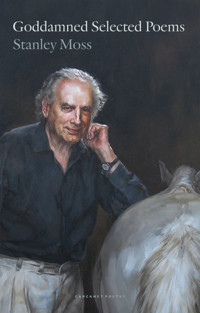
A couple of years ago Stanley Moss renewed his driver's license. Now in his late nineties, his license runs to his 104th year. He has produced such an immense volume of work in his long life that it seemed necessary for his readers, old and new, to essentialise this mass of work into a portable, liftable single collection of highlights, which these 200 pages represent. It has been hard to confine him to this limiting measure because he still, every week and sometimes every day, produces a wholly new poem, surprising his editor and also, always, himself. As he says in 'The Ocean Slaps my Face': Yes, Poseidon, you may call me the F-word, I'm a fluke and flounder. I am a rogue wave, I am a rogue wave! 'Undaunted, outrageously alive,' Rosanna Warren said, 'Moss flaunts more colours than the Grim Reaper ever dreamed of, laughs in his face, rhymes with abandon, makes a joyful noise unto the Lord, and struts with Baudelaire.' He asks what John Ashbery called 'unthinkable questions, but when he formulates them, they take on the quiet urgency of common daylight'.
Sie lesen das E-Book in den Legimi-Apps auf:
Seitenzahl: 204
Veröffentlichungsjahr: 2024
Das E-Book (TTS) können Sie hören im Abo „Legimi Premium” in Legimi-Apps auf:
Ähnliche













Goddamned Selected Poems
Stanley Moss
carcanet poetry
Contents
GODDAMNED SELECTED POEMS
Song of Alphabets
When I see Arabic headlines
like the wings of snakebirds,
Persian or Chinese notices
for the arrivals and departures of buses—
information beautiful as flights of starlings,
I cannot tell vowel from consonant,
the signs of the vulnerability of the flesh
from signs for laws and government.
The Hebrew writing on the wall
is all consonants, the vowel
the ache and joy of life
is known by heart. There are words
written in my blood I cannot read.
I can believe a cloud gave us the laws,
parted the Red Sea, gave us the flood,
the rainbow. A cloud teaches kindness,
be prepared for the worst wind, be light of spirit.
Perhaps I have seen His cloud,
an ordinary mongrel cloud
that assumes nothing, demonstrates nothing,
that comforts as a dog sleeping in the room,
a presence offering not salvation
but a little peace.
My hand has touched the ancient Mayan God
whose face is words: a limestone beasthead
of flora, serpent and numbers,
the sockets of a skull I thought were vowels.
Hurrah for English, hidden miracles,
the A and E of waking and sleeping,
the O of mouth. 4
Thank you, Sir, alone with your name,
for the erect L in love and open-legged V,
beautiful the Tree of Words in the forest
beside the Tree of Souls, lucky the bird
that held Alpha or Omega in his beak.
The Lost Brother
I knew that tree was my lost brother
when I heard he was cut down
at four thousand eight hundred sixty-two years;
I knew we had the same mother.
His death pained me. I made up a story.
I realized, when I saw his photograph,
he was an evergreen, a bristlecone like me
who had lived from an early age
with a certain amount of dieback,
at impossible locations, at elevations
over 10,000 feet in extreme weather.
His company: other conifers,
the rosy finch, the rock wren, the raven and,
blue and silver insects that fed mostly off each other.
Some years bighorn sheep visited in summer—
he was entertained by red bats, black-tailed jackrabbits,
horned lizards, the creatures old and young he sheltered.
Beside him in the shade, pink mountain pennyroyal—
to his south, white angelica.
I am prepared to live as long as he did
(it would please our mother),
live with clouds and those I love
suffering with God.
Sooner or later, some bag of wind will cut me down.
The Bathers
1
In the great bronze tub of summer,
with the lions’ heads cast on each side,
couples come and bathe together: each touches only
his or her lover, as he or she falls back
into the warm eucalyptus-scented waters.
It is a hot summer evening and the last
sunlight clings to the lighter and darker blues
of grapes and to the white and rose plate
on the bare marble table. Now the lovers
plunge, surface, drift—an intruding elder
would not know if there were six or two,
or be aware of the entering and withdrawing.
There is a sudden stillness of water,
the bathers whisper in the classical manner,
intimate distant things. They are forgetful
that the darkness called night is always present,
sunlight is the guest. It is the moment
of departure. They dress, by mistake exchange
some of their clothing, and linger
in the glaring night traffic of the old city.
2
I hosed down the tub after four hundred years
of lovemaking, and my few summers.
I did not know the touch of naked bodies
would give to bronze a fragile gold patina,
or that women in love jump in their lovers’ tubs.
God of tubs, take pity on solitary bathers
who scrub their flesh with rough stone
and have nothing to show for bathing
but cleanliness and disillusion. 6
Some believe the Gods come as swans,
showers of gold, themselves, or not at all.
I think they come as bathers: lovers,
whales fountaining, hippopotami
squatting in the mud.
Heart Work
No moon is as precisely round as the surgeon’s light
I see in the center of my heart.
Dangling in a lake of blood, a stainless steel hook,
unbaited, is fishing in my heart for clots.
Across the moon I see a familiar dragonfly,
a certain peace comes of that. Then the dragonfly
gives death or gives birth to a spider it becomes—
they are fishing in my heart with a bare hook,
without a worm—they didn’t even fish like that
when the Iroquois owned Manhattan.
Shall I die looking into my heart, seeing so little,
will the table I lie on become a barge, floating
endlessly down river, or a garbage scow?
There is a storm over the lake.
There are night creatures about me:
a Chinese doctor’s face I like and a raccoon I like,
I hear a woman reciting numbers growing larger and larger
which I take as bad news—I think I see a turtle,
then on the surface an asp or coral snake.
One bite from a coral snake in Mexico,
you’ll take a machete and cut off your arm
if you want to live. I would do that if it would help. 7
I say, ‘It’s a miracle.’ The Chinese doctor and the moon
look down on me, and say silently, ‘Who is this idiot?’
I tell myself, if I lie still enough I’ll have a chance,
if I keep my eyes open they will not close forever.
I recall that Muhammad was born from a blood clot.
If I’m smiling, my smile must be like a scissors opening,
a knife is praying to a knife.
Little did I know, in a day, on a Walkman,
I would hear Mozart’s second piano concerto,
that I would see a flock of Canada geese flying south
down the East River past the smokestacks of Long Island City.
I had forgotten the beauty in the world,
I remember. I remember.
Chinese Prayer
God of Walls and Ditches, every man’s friend,
although you may be banqueting in heaven
on the peaches of immortality
that ripen once every three thousand years,
protect a child I love in China
and on her visits to the United States,
if your powers reach this far, this locality.
You will know her because she is nine years old,
already a beauty and an artist. She needs more
than the natural protection of a tree on a hot day.
You have so many papers,
more than the God of Examinations,
more than the God of Salaries,
who is not for me, because I am self-employed.
It may help you find her to know her mother
was once my bookkeeper,
her brother is a God in the family, 8
who at six still does not wipe his bottom.
Protect her from feeling worthless.
She is the most silent of children.
She has given me so many drawings and masks,
today I offered her fifty dollars for a painting.
Without a smile she answered,
‘How much do you get for a metaphor?’
Sir, here is a little something to keep the incense burning,
remember her to the Almighty God whose character is Jade.
Happiness
One foot on the ground, I steal
what I love from a wordy wilderness,
I don’t rob banks or make dirty deals,
no pick pocket I steal words, your happiness
without taking away your happiness.
I might name a dog Happy but not Happiness.
I peek in on two lovers tethered,
reading, writing, bathing together,
happy opposites and birds of a feather.
Happiness is tongues playing follow the leader
doing unto others as you
would have others do unto you.
I offer shelter to homeless readers.
I still have my voice but I cannot whistle.
Happiness perks my lips so I can whistle
a tune with Irish propinquity. The Irish
can’t speak a word that is not musical.
Unhappiness has a certain authenticity.
The moon and sun are family, 9
darkness belongs to you and me,
the day belongs to no one, the night is ours.
I am frightened sometimes, family history:
I’ll be hit by an armchair or bamboo.
I wake up in the morning with nothing to do
feed animals, write, water the flowers.
Now is the glorious spring of my content,
I will settle for sorrow and contentment.
Felicity, how now pretty lady. Happiness
is a Goddess in China, good news in Ghent,
I steal happiness, impossible flying elephant.
Letter to the Butterflies
1
Dear Monarchs, fellow Americans,
friends have seen you and that’s proof,
I’ve heard the news:
since summer you traveled 5,000 miles
from our potato fields to the Yucatán.
Some butterflies can bear what the lizard would never endure.
Few of us can flutter away from the design:
I’ve seen butterflies weather a storm
in the shell of a snail, come out of nowhere
twenty stories up in Manhattan.
I’ve seen them struggling on the ground.
I and others may die anonymously,
when all exceptionalism is over,
but not like snowflakes falling.
This week in Long Island
before the first snowfall, there is nothing left
but flies, bees, aphids, the usual. 10
2
In Mexico
I saw the Monarchs of North America gather,
a valley of butterflies surrounded
by living mountains of butterflies—
the last day for many.
I saw a river of butterflies flooding
through the valley, on a bright day black clouds
of butterflies thundering overhead,
yet every one remained a fragile thing.
A winged colossus wearing billowing silk
over a sensual woman’s body
waded across the valley,
wagons and armies rested at her feet.
A village lit fires,
and the valley was a single black butterfly.
3
Butterflies,
what are you to me
that I should worry about your silks and powders,
your damnation or apotheosis,
insecticides and long-tongued lizards.
Some women I loved are no longer human.
I have a quarrel with myself for leaving my purpose,
for the likes of you, beauties I could name.
Sooner or later
I hope you alight on my headstone
above my name and dates, questioning
my bewilderment.
Where is your Chinese God of walls and ditches?
Wrapped in black silk I did not spin,
do I hold a butterfly within?
What is this nothingness they have done to me?
Antony With Cleopatra
Certainly our fields were planted
With lilac and poppies
When there was need of cotton and wheat.
So toward the end of summer
We began our walks on the outskirts of the city
To watch for the coming of strangers.
We were not young—but excellent.
What a long way from Italy,
The Nile never seemed so deep;
It was the very brim of summer,
Still the best time of the year for love,
Roman soldiers dived arch-backed into the sea.
Across the Mediterranean came Caesar and ships,
His spikes and axes multiplying the sun,
His sails full silver;
Our sheets still warm and wrinkled,
Cleopatra pretending sleep,
Antony still naked beneath his armor.
Two Fishermen
My father made a synagogue of a boat.
I fish in ghettos, cast toward the lily pads,
strike rock and roil the unworried waters;
I in my father’s image: rusty and off hinge,
the fishing box between us like a covenant.
I reel in, the old lure bangs against the boat.
As the sun shines I take his word for everything. 12
My father snarls his line, spends half an hour
unsnarling mine. Eel, sunfish and bullhead
are not for me. At seven I cut my name for bait.
The worm gnawed toward the mouth of my name.
‘Why are the words for temple and school
the same?’ I asked, ‘And why a school of fish?’
My father does not answer. On a bad cast
my fish strikes, breaks water, takes the line.
Into a world of good and evil, I reel
a creature languished in the flood. I tear out
the lure, hooks cold. I catch myself,
two hooks through the hand,
blood on the floor of the synagogue. The wound
is purple, shows a mouth of white birds;
hook and gut dangle like a rosary,
another religion in my hand.
I’m ashamed of this image of crucifixion.
A Jew’s image is a reading man.
My father tears out the hooks, returns to his book,
a nineteenth-century history of France.
Our war is over:
death hooks the corner of his lips.
The wrong angel takes over the lesson.
The Blanket
The man who never prays
accepts that the wheat field in summer
kneels in prayer when the wind blows across it,
that the wordless rain and snow
protect the world from blasphemy. 13
His wife covers him with a blanket
on a cold night—it is, perhaps, a prayer?
The man who never prays says kindness and prayer
are close, but not as close as sleep and death.
He does not observe the Days of Awe,
all days are equally holy to him.
In late September, he goes swimming
in the ocean, surrounded by divine intervention.
Krill
The red fisherman
stands in the waters of the Sound,
then whirls toward an outer reef.
The krill and kelp spread out,
it is the sea anemone that displays the of,
the into, the within.
He throws the net about himself
as the sea breaks over him.
The krill in the net and out of it
follow him. He is almost awash
in silver and gold.
How much time has passed.
He believes the undulation of krill
leads to a world of less grief,
that the dorsal of your smelt,
your sardine, your whitebait, humped
against the ocean’s spine, cheers it
in its purpose.
The krill break loose, plunge down
like a great city of lights. He is left
with the sea that he hears
with its if and then, if and then, if and then.
A Visit to the Devil’s Museum in Kaunas
I put on my Mosaic horns, a pointed beard,
my goat-hoof feet—my nose, eyes, hair and ears
are just right—and walk the streets of the old ghetto.
In May under the giant lilac and blooming chestnut trees
I am the only dirty word in the Lithuanian language.
I taxi to the death camp and to the forest
where only the birds are gay, freight trains still screech,
scream and stop. I have origins here, not roots,
origins among the ashes of shoemakers
and scholars, below the roots of these Christmas trees,
and below the pits filled with charred splinters of bone
covered with fathoms of concrete. But I am the devil,
I know in the city someone wears the good gold watch
given to him by a mother to save her infant
thrown in a sewer. Someone still tells time by that watch,
I think it is the town clock.
Perhaps Lithuanian that has three words for soul
needs more words for murder—murder as bread:
‘Please pass the murder and butter’ gets you to:
‘The wine you are drinking is my blood,
the murder you are eating is my body.’
Who planted the lilac and chestnut trees?
Whose woods are these? I think I know.
I do my little devil dance,
my goat hooves click on the stone streets.
Das Lied von der Erde
ist Murder, Murder, Murder.
The Miscarriage
1
You had almost no time, you were something
not quite penciled in, you were more than darkness
that is shaped by its being and its distance from light.
(To give birth in Spanish is to give to light.)
There was the poetry of it:
a word, a letter changed perhaps
or missing and you were gone.
Every word is changed when spoken.
The beauty is you were mine and hers,
not like a house, a bed, a book, or a dog,
unsellable, unreadable, not love, but of love,
an of—with a certain roundness and a speck
that might have become an eye, might have
seen something, anything: light,
Tuscany, Montana, read Homer in Greek—
unnamed of, saved from light and darkness.
2
I was not told of you until long after,
I would not have handed down that suitcase
to her through the train window in Florence
had I known. I might have suggested tea
instead of Strega, might have fanned the air.
Fathers can do something. I didn’t ask the right questions.
I did not offer any sacrifice.
I just walked around in my usual fog looking
at pictures of the Virgin impregnated by words.
What if the Virgin Mother had miscarried? What if
the Magi arrived with all that myrrh and frankincense
like dinner guests on the wrong evening?
Our Lady embarrassed, straightening up, 16
Joseph offering them chairs he made and a little wine,
sinners stoned in the street
while John who would have been called the Baptist
wept in his mother’s belly.
Peace
The trade of war is over, no one sings Over There,
but simple murder is still in fashion.
The No God, Time, creeps his way,
universe after universe, like a great snapping turtle
opening its mouth, wagging its tongue
to look like a worm or leech
so deceived hungry fish, every living thing
swims in to feed. Quarks long for dark holes,
atoms butter up molecules, protons do unto neutrons
what they would have neutrons do unto them.
The trade of war has been over so long,
the meaning of war in the O.E.D. is now ‘nonsense’.
In the Russian Efron Encyclopedia,
war, voina, means ‘dog shit’;
in the Littré, guerre is ‘a verse form, obsolete’;
in Germany, Krieg has become ‘a whipped-cream pastry’;
Sea of Words, the Chinese dictionary,
has war, zhan zheng, as ‘making love in public’,
while war in Arabic and Hebrew, with the same
Semitic throat, harb and milchamah, is defined
as ‘anything our distant grandfathers ate
we no longer find tempting—like the eyes of sheep’.
And lions eat grass.
Review
A clothesline
tied from a dead ash to a weeping willow,
my old and new clothes washed clean,
on close look not washed, something to fool the eye,
my stained underwear and holy socks,
blooms of good and evil, and something to fool the ear,
dirty laundry flapping in the wind in meter.
I know bird chatterings are love calls,
‘Rr’ is the dog’s letter.
Why don’t they teach the ‘are’s anymore,
you are, we are, what are we to do?
Clothespinned to the line, my dirty laundry
often tells the truth, not the whole truth,
not nothing but the truth, so help me God.
Laundry makes nothing happen: it survives
in the valley of never-fooled sun and winds
where nothing is said by happenstance.
I babble, trying to honor the language:
‘I am the world, a globe walking with long legs,
cities, oceans, smoking dumps around my waist.’
When the music changes, the fiber optic lines tremble.
I hum the rest, I remember poets who made it new,
swam in the Yangtze, Passaic, Thames and Charles.
Like Hart Crane I wore a bathing suit with a top.
I thought describing the fat lady in the circus,
legs spread apart from the ankles up,
was the naked truth. Why are there no laughing willows?
There are giggling brooks. I heard laughter in the forest,
seven-foot golden bantam corn growing in August.
It sounds like happiness, till 8 p.m. above the Hudson,
when laundry, clean and dirty, is taken in,
when the night creatures I love come out.
The Falcon
My son carries my ghost on his shoulder, a falcon,
I am careful not to dig in my claws. I play
I am his father owl, sometimes sparrow, a hummingbird
in his ear. I told him from first chirp:
‘Be an American democratic Jew mensch-bird.’
When he was a child in Italy I was a migrant bird
with a nest in America. When I flew home
he cried, ‘Perche, perche?’ I wept
not wanting him to have a distant bird
or a sea captain for a father.
How many times did I cross the Atlantic
in the worst weather to perch outside his window?
What kind of nest could I make in Italy
on a hotel balcony? When he needed to be held
his mother and nannies took turns. When he reached out
to me he often fell. He said I know I know to everything
I might have taught him. I fought for his life
with one wing tied behind my back—
for his name, school, and to have his hair cut
in a man’s barber shop, not a salon for signoras.
‘Lose to him! Lose to him!’ his mother screamed.
I was the only one in his life
who would not throw a footrace
he could win in a year, fair and square.
How could a small boy spend so much time
laughing and talking to a father in restaurants?
He complained in Bologna I took him to six museums,
in Florence four, in España mille e tre.
We laughed at those rare Italian birds
who don’t find themselves sleeping forever
on a bed of polenta—preening, displaying,
making a bella figura




