


Erhalten Sie Zugang zu diesem und mehr als 300000 Büchern ab EUR 5,99 monatlich.
- Herausgeber: Huia Publishers
- Kategorie: Poesie und Drama
- Sprache: Englisch
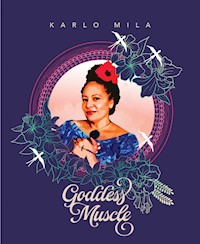
This long-awaited poetry collection from award-winning Pasifika poet Karlo Mila spans work written over a decade. The poems are both personal and political. They trace the effect of defining issues such as racism, poverty, violence, climate change and power on Pasifika peoples, Aotearoa and beyond. They also focus on the internal and micro issues – the ending of a marriage, the hope of new relationships, and the daily politics of being a partner, woman and mother. The collection meditates on love and relationships and explores identity, culture, community and belonging with a voice that does not shy away from the difficult.
Sie lesen das E-Book in den Legimi-Apps auf:
Seitenzahl: 145
Veröffentlichungsjahr: 2020
Das E-Book (TTS) können Sie hören im Abo „Legimi Premium” in Legimi-Apps auf:
Ähnliche














First published in 2020 by Huia Publishers
39 Pipitea Street, PO Box 12-280
Wellington, Aotearoa New Zealand
www.huia.co.nz
ISBN 978-1-77550-400-9 (print)
ISBN 978-1-77550-404-7 (ebook)
Text copyright © Karlo Mila 2020
Illustrations and graphics copyright:
Illustration cover photo © Karlo Mila
Cover illustrated elements © Isobel Joy Te Aho-White
Carving image on dedication page © Papa Sean Bennett-Ogden
Page 10 © Naomi Maraea
Pages 50 & 68 © Delicia Sampero
Pages 70–71, 74 & 78 © Meleanna Meyer
This book is copyright. Apart from fair dealing for the purpose of private study, research, criticism or review, as permitted under the Copyright Act, no part may be reproduced by any process without the prior permission of the publisher.
A catalogue record for this book is available from the National Library of New Zealand
Ebook conversion 2020 by meBooks
For Papa Sean
who gave me the language to describe another world
Contents
Your People Will Gather around You: Love after Love
E Ngā Mate, Haere, Haere, Haere
Malaga: The Journey
Oceania
For Teresia Teaiwa
Bottled Ocean
A Conversation with Hone Tuwhare
Letter to J C Sturm
This Is How We Make a World
Tagaloa: The Order of Things
In the Beginning
Papatūānuku
Te Awa: Love Song for Manawatū
Matau Mana Moana
Mana
Ngatu
The Good Wife’s Prayer
Lonely
Readjusting Great Expectations
A Woman Scorned
The Unfaithful Heart of Her Quiet
Bruise
Terms of a Treaty
Enter Hot Man at an International Conference
Itinerary of Infidelity
summer, bed, awake, alone,
Let Me Tell You What I Remember
Whiro
Love Isn’t
The Good Wife’s Prayer
Hawai‘i Found
What the Students Said: O‘ahu 313
Tūtū Pele Intervenes
Our Generation: ‘Āina Aloha
Intergenerational Healing: Lessons from Hawai‘i
Anchoring the Cry from Within
Kūkaniloko
Demigods in Archetype City
Shark
Hina: Advice Column across the Ages
The Tale of Hina and Sinilau
Hina and Her Pool
Rupe/Lupe
What Trees Will Say
One Last Lifetime
Dry-docked
Wedding River Song
Is That a Sex Poem?
Go-betweens
Bloodshed
Carved on a Pou
You’ve written a lot of poems, he said
Odyssey in Black Sand
How to Break a Curse
Telling the Other Side of the Story
After Reading Ancestry
Son, for the Return Home
We Find Ourselves Statistics
Finding Our Way
Our Fears
Moemoeā
A Tongan Reflection on Tino Rangatiratanga
Tūhoe Boys
For Tamir, with Love from Aotearoa
Now THIS is Reverse Racism
For All My Sisters
Lost and Found
The Sounds of Princess Ashika
Spirited Leadership
Lost and Found
Poem for the Commonwealth, 2018
Kapihe’s Prophesy
Matariki: A Call to Kāinga
The Art of Walking in Dark Light
Te Korekore
Te Pō: The Dark Ages
Te Ao Mārama: The World of Light
Unbecoming
The Art of Walking in Dark Light
Goddess Muscle Meditation
Acknowledgements
Your People Will Gather Around You: Love after love
Your people
will gather around you.
Your family
who prepared
a place for you,
in a lineage
that connects you
all the way back
to the beginning.
A family
that dreamed you
possible.
It is their
soft singing,
cellular love songs,
the chanting lyric of bloodlines,
accompanying you
all the way
through the lonely.
The benefactors of your bones,
blood, and body.
Each is a love letter
folded in your DNA sequence.
With double-helix tongues
they whisper you
into your dreams.
Why you are here.
What you are meant to do.
Hoping you have ears
in your waking life
and eyes to see.
They call you to transform
the weft and warp
of what has been
woven before you.
To bring it back
into balance.
It is their magnetic pull
of molecule
that gathers all that is lost
and redirects your return
to centre.
Reorients you
to radiant nucleus.
Re-sourced.
So you can widen your circles
of compassion; travel beyond
your own limits, beyond almost
what you can bear.
Accompanied all the way.
Yes, this is the large, large,
ever-expanding loving
of everything
that has been the making of us.
Knowing itself
through you
and evolving.
Yes, your people
will hold fast within you.
In the marrow of your bones,
waiting to be known.
Travelling with you
along the soft breathing
curves of an infinite circle
that has no circumference,
and whose centre
is everywhere.
Ever so slowly,
all your people will gather around you,
the ones you realise, when you look in their eyes,
that you’ve known for a life cycle, or two,
who not only help you on your journey
to find home,
but who make it home,
this strange lonely journey,
who make it home as you travel it.
And then time will come
with great knowing,
when you will remember yourself
back to yourself.
Returning
to a memory
of wholeness.
E NGĀMATE,
HAERE,HAERE,HAERE
Malaga: The journey
(FOR ALICE SUISANA HUNT)
It is a spindrift
that rises from the body.
Our final exhale
beyond the breath,
where we give ourselves up
in completion
to life.
Where everything that you are
leaves behind
everything that you were.
Departing
that faithful friend
of the body.
Its soft limbs.
Its forgiving flesh.
Muscles, skin, sinews –
all that held you together –
so gently,
for so long.
A song
of water, blood,
breath and bone.
We acknowledge all
that you have left behind.
All that you have given.
And what a life you have seen,
and what a life you have been
and how we have loved you.
We stay here,
with that precious vessel
that carried you
through this life,
but cannot carry you
into the next.
And may we who loved you,
holding the song, blood and bone vessel of your being,
may we carry the meaning
of your life forward
into the world of light,
so that it will reach
those who come after.
He waka herehere ngā waka.
The vessel that binds us
to the great moving fleet.
We know that it’s your time to depart,
to embark on an ancient route of return,
along the terrestrial contours of this land
that has birthed and fed you,
this land on which we stand,
towards a celestial flight path
beyond the wingspan of birds,
into the stars,
towards the warmer weather of our dreams,
towards islands we have held gently in our memories,
where we once belonged.
At Te Rerenga Wairua,
where two oceans meet,
a pōhutukawa tree still holds,
waiting for you
with a fragrant, green-leaved,
red-crowned,
farewell.
The whole earth heaves
a sigh of release.
And from here,
wreathed in red and green,
you will bid us farewell
and begin to travel the ocean roads.
The sea path traced by star walkers,
past Tongatapu, to ‘Uvea and Futuna,
where with the splitting of rocks, it all began.
You will enter the deep, blue channels
of ocean and night
and move between worlds
of underwater darkness and celestial light.
You will take flight.
Until you reach Savai‘i
and follow the black lava fields
towards the last rites.
Here, you will be cleansed
in the waters of Falealupo.
The final farewell at the seashore.
It is here we face that truth,
that you are westward-bound.
Ia Manuia Lou Malaga.
Blessed be your journey.
Follow the shining trail
of the setting sun
towards the great mystery
beyond all of our knowing.
We must trust then,
in all we cannot understand,
and like the land,
heave a heavy sigh of release.
O le mavaega nai le tai e fetaia‘i i i‘u o gafa.
The farewell at the seashore,
with the promise
to meet again in the children.
Oceania
(FOR EPELI HAU‘OFA)
Some days
I’ve been
on dry land
for too long
my ache
for ocean
so great
my eyes weep
waves
my mouth
mudflats
popping with
groping breath
of crabs
my throat
an estuary
salt crystallising
on the tip of my tongue
my veins
become
rivers that flow
straight out to sea
I call on the memory of water
and
I
am
starfish
in sea
buoyed by
lung balloons
and floating fat
I know the ocean
she loves me
her continuous blue body
holding even
my weight
flat on my back
I feel her
outstretched palms
legs wide open
a star in worship
a meditation as old as the tide
my arms, anemones
belly and breasts, sea jellies
Achilles fins, I become
free-swimming medusa
my hands touching
her blue curves
fingers tipping
spindrift
a star in worship
a wafer in her mouth
a five-pointed offering
she swirls
counter-clockwise
beneath me,
all goddess
all muscle, energy
power, pulse
oh, the simple faith
of the floating
letting go
in order to be held
by the body water of the world
some days
this love
is all I need
For Teresia TeaIwa
I am going to light a candle for you
e hoa, although at our age
candles should be for lovers
and shy bodies ushering in
trust,
or for mindfulness
at the end of a long
short-wick
of a working day.
Not for this.
He tangi oiaue.
I will light this candle.
The spendy kind,
cradled in glass,
that burns for days
smelling of coconut and vanilla
and I will say prayers for you
even though my prayers
are like bad poems
and are often wordless.
I hope,
at the least,
you will feel the
long-burning
flame of my intent,
warming the space
between us.
You are the first of us
‘young ones’ –
the OG feminist:
Dr Dusky Maiden,
who famously
cried salt-tears
and sweat ocean,
creating a wake
wide enough
for so many of us
who followed.
In the deep multicolour
of your wide, wonderful wake
I am thinking of a word: Huliau,
described to me once
by a Tongan artist,
but no Google search
reveals its meaning.
And as you well know,
the stuff really worth knowing
isn’t found on Google.
Although I see in Hawaiian,
huliau means climate
and sister –
climate changer
feels right to me.
We felt you
change
the climate Tere.
Daughter of Oceania,
ambiguously native,
kin somehow
to all of us.
(Even us polys,
while calling us out,
our volume,
and our
repetitive
raw fish.)
You are,
Maraea nailed it,
‘kaupapa as’ –
unafraid,
yet overburdened
with community service,
with marking
and mentoring
and doing all of this
and all of that,
with so much
determination
and good grace
it escalates
around you.
Contagious.
Although I for one
wish you had more time
to write poetry
and just sit, very quietly,
wherever you liked.
You are the reason
I sat with coconut cream
in my wild hair
on a wilder beach
in west Auckland,
with other curly girls
in a salt pool
in dark black sand.
You told me via story
that a tatau should never
point to your sex, giggling,
pointing to your paradox.
We were standing, at the time,
next to a replica moai,
but still, it was on a beach –
nobody can laugh at
that southern-most water
too cold to swim in.
And in Wellington,
in a sea of Palangis,
in the windy, wide-eyed dry,
I was thirsty for your stories
of tatau and French Polynesian authors
and an Oceania
more expansive than mine.
Shy admission: more than once
I caught my breath
with how much
there was to admire.
Diplomat: representing us overseas with your not-missing-a-beat articulate.
Truth teller: revealing and peeling off your skin
in front of students unaccustomed
to real,
in school assemblies
when in uniform.
Activist: in front of everyone
that little bit braver
than the rest of us.
You are
a voice,
a song,
a poem,
an essay,
a direct quote,
a protest sign,
a presence.
Beloved.
You are
my prayer.
Botled ocean
(FOR JIM VIVIEAERE)
i)
We shared a beer once.
A quiet conversation
that quickly moved
to what lurks beneath.
You showed me your work:
dark purples, subterranean colours,
images like bite marks into
the deep flesh of memory.
You-made-it-so-beautiful
Bat-winged boy remembering
i-felt-it-so-painful
but
you-held-it-so-lightly
such gentle eyes
the way
one
might bottle
a moving ocean
changing
forever
what is seen
behind the glass.
ii)
Yes,
that exhibition
made it all the way to my hometown,
Palmerston North,
right on time.
Flooding the old, tired,
savage story of us.
Blotting and plotting
lucid watermarks,
washing up another vision entirely.
You were always at the forefront
of the wave.
Even in the unkind infrastructure of cities –
betrayals of bureaucracies, blood, flesh, and bone –
where soft, brown-eyed boys
are broken
and split open,
betrayed –
in windowless rooms
where tenderness
is turned
in
on
itself,
and will never
return.
boys2men
You found
the whakapapa trail
back to the
open-harboured arms
of unconditional ocean,
ever-present,
where all lost boys
can be both lost
and loved,
with warm waves
promising distant shores
beyond the blue,
where we might be received
by holy women,
fragrant with flowers,
welcoming us home.
All of this dream,
you bottled it.
With a fine eye for
beautiful blemish,
the alchemy
of soft anxieties,
the luminosity
of dark depressions.
Juxtapositions of
plastic and pearl
ancient and fresh
real and surreal
loss and light
gift and grief.
Finely shaped,
carefully thought,
gently wrought.
Installations of
Urbanesia:
incisions,
bite-marks,
we slash and cut,
stitch and sew,
bind and lash.
On urban drift
wood, we pull
out our blades
and carve
new pou,
muttering karakia
for these times,
black inking
our steps.
We mark
our stories
in flesh.
We dare
to be here.
Carve
our own
freshwater faces.
We take our places,
among the ancestral real.
We sit among
the all-seeing eyes.
E pou,
You are an ancestor at the apex
of this new meeting house,
where our artists gather
to determine our fate.
A Conversation with Hone Tuwhare
Hone,
I can afford to buy-you-by-the-book
these days
instead of take you out.
Small holes in
my pockets.
Middleclassy.
It can put an honest man off.
You boilermaker,
fabricating lyrical weld
from blast furnace
of sun,
slowed,
stopped and
set
on white horizon
of page.
Flames on your fingers, Māui,
wrestling words and worlds.
Nothing ordinary about it.
Like that alchemical asshole
crawling into places he shouldn’t go:
repipe, retube, repair.
Hine-nui-te-pō
has had her way with you –
but still
you speak
on page –
a fantail laughing.
Trickster.
You and I both know,
the ones who break the rules
get the chicks.
You and I both know
how after a while
we stop dedicating poems to our
loves, crushes or would-be-loves.
There are too many
who could drape those
fancy, flimsy stanzas
against their ribs;
stretch them to fit.
OSFA.
I think of your lips
slurping the genitalia
of kaimoana.
Endless odes to small holes.
When my memory
of the sound of you
is translated,
it tastes like
fish.
letter to j c sturm
Dear Jacquie,
I have repeatedly tried to write the poem
‘Dear Jim’. And failed.
May I call you Te Kare?
I looked it up on the online dictionary:
1. Kare (noun) dear friend.2. Kare (verb) to long for, desire ardently, to whip.3. Kare (noun) ripple, surface of the sea.
Te Kare, will you be my friend?
Can I tell you my story?
I can’t write anything for him.
My mother and I,
we went to Hiruharama, Jerusalem
after Hine-nui-te-pō
visited us.
Fantails were flapping indoors
alarm birds winging,
alarm birds ringing.
Our matriarch lay dead.
My grandmother
moved between worlds.
I am still in the soft, dark feathers
of Hine-nui-te-pō.
I am not ready to come back.
Wreathed with grief,
fragile with fresh mourning,
I read Baxter’s letters,
tasked with writing back.
So many pages. All his words.
His too-many words,
so many written for other women.
He grew smaller
and smaller with every page.
His over-published words,
until I had nothing left to say to him.
But moving under all that surface skimming
was you. Rippling beneath
every page, Te Kare,
His longing, the whiplash,
the reliable tide.
All depth to his shallows.
I sought out his biggest idea.
Heaving in your direction.
My mother and I took
the winding roads
to Whanganui
in search of Jerusalem,
to see if his vision
had borne fruit.
The world is full of men with visions.
We stopped at the museum,
met the hei tiki
of Tahupōtiki Wiremu Rātana
around the neck
of a green-eyed woman.
Nosy, she said, his taonga was nosy,
as I told her our business.
And Jacquie, to be honest,
I was carrying my own ache.
Not just the death of my matriarch,
but an old-fashioned
broken heart.
He is the river.
And the river is him.
I am waewae tapu here.
To show our respect,
we pulled over and parked.
I took off my jandals,
did a small mihi
to a great awa.
I watched the alchemy of sunlight
transform liquid mud
into slow-moving molten.
Gold is the only colour
you could call it. Te Kare.
It’s a cliché, and neither you
nor I are fans of those,
but I have the photos to prove it.
Te Awa Tupua,
ancient highway
of the human and not-quite human,
all sorts of things travelling
in a full-veined,
gold-blooded
river-road.
Motorway
of a waka-nation.
On the winding land road,
we passed through London –
Rānana, Athens – Ātene,
Corinth – Koriniti,
unexpected reincarnations
of faraway places.
Settled uncomfortably
on the hips of the old awa,
like new ideas that haven’t really
been thought through.
We finally found Jerusalem.
His big idea.
The one he swore might reunite you.
He hoped
the church would one day
have a carved
whare-whakairo face.
But I am sad to report Jacquie,
although it may not surprise you,
the kōwhaiwhai patterns
were made out of cardboard.




