


4,49 €
Mehr erfahren.
- Herausgeber: Christine Dillon
- Kategorie: Religion und Spiritualität
- Sprache: Englisch
Professional success. Personal failure.
As a respected cancer specialist, Paul Webster knows what he's doing. At least, he does at work. His home life's another story.
Now he's been thrown into a spin by a patient's death and her unshakeable confidence in life beyond the grave.
He’s always dismissed Christians as simplistic fools but this woman didn't fit his stereotype. What if there is truth beyond what he can learn with lab tests and logic? And what will checking out that truth cost him?
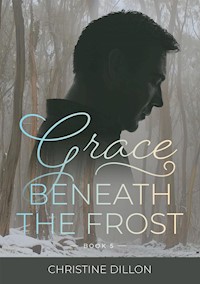
Grace Beneath the Frost is a soul-stirring contemporary Christian novel. Book 5 in the
Grace series.
If you like compelling Christian fiction, relatable characters, and real emotion, then you’ll love Christine Dillon’s inspiring series.
Das E-Book können Sie in Legimi-Apps oder einer beliebigen App lesen, die das folgende Format unterstützen:
Veröffentlichungsjahr: 2021
Ähnliche
















GRACE BENEATH THE FROST
BOOK 5
CHRISTINE DILLON
LINKS IN THE CHAIN PRESS
www.storytellerchristine.com
Grace Beneath the Frost
Copyright © 2021 by Christine Dillon
All rights reserved. This book or any portion thereof may not be reproduced or used in any manner whatsoever without the express written permission of the author except for brief quotations in a book review.
Scripture taken from the HOLY BIBLE, NEW INTERNATIONAL VERSION®. NIV®. Copyright © 1973, 1978, 1984 by International Bible Society. Used by permission of Zondervan. All rights reserved worldwide.
This book is a work of fiction. Characters, any resemblance to persons, living or dead, or events is purely coincidental. The incidents are the product of the author’s imagination and used fictitiously. Real settings are sometimes used.
Cover Design: Lankshear Design.
ISBN: 978-0-6485890-8-2
This book is for the men in my family:
* Dad - thank you for your staunch support and for all you’ve taught me about life and ministry. Thank you also for pushing me to be more adventurous.
* My brother, Jeff - watching you as a husband and father is so much fun. You inspire me with the generosity of your life and how you strive to make disciples.
* My brother-in-law, Remo, thank you for your hard-work and steadiness. It is so great to see you and Jenny together.
* My nephews - it is exciting to watch you grow and change. May you become men of whom it is said they were ‘men after God’s own heart’ (1 Samuel 13:14).
FIND OUT MORE
NOTES TO READERS
* All books are written from a worldview, be it secular, communist or New Age. This book is unashamedly Christian. If you’re not a Christian, the views expressed by the characters might appear strange BUT it’s a great opportunity. Why? Because this story allows you, if you’re not yet a follower of Jesus, to see things from a perspective totally different to your own. Are the characters’ views consistent and does their worldview make sense of the challenges in their lives?
* This is an Australian story and thus uses Australian spelling, grammar, punctuation, and word usage which may be a little different from what you’re used to.
* This series highlights different parts of Australia. Most of this book is set in Sydney but there are scenes in Smiths Lake (New South Wales), Canberra, the Snowy Mountains, and Cairns (Queensland).
CONTENTS
Prologue
Chapter 1
Chapter 2
Chapter 3
Chapter 4
Chapter 5
Chapter 6
Chapter 7
Chapter 8
Chapter 9
Chapter 10
Chapter 11
Chapter 12
Chapter 13
Chapter 14
Chapter 15
Chapter 16
Chapter 17
Chapter 18
Chapter 19
Chapter 20
Chapter 21
Chapter 22
Chapter 23
Chapter 24
Chapter 25
Chapter 26
Chapter 27
Chapter 28
Chapter 29
Chapter 30
Chapter 31
Chapter 32
Chapter 33
Chapter 34
Chapter 35
Chapter 36
Chapter 37
Chapter 38
Chapter 39
The next book …
Prologue (Grace Across the Miles)
Enjoyed Grace Beneath the Frost?
Storyteller Friends
Fiction - Grace Series
Non-fiction by Christine Dillon
Author’s notes
Acknowledgments
About the Author
PROLOGUE
Sydney, Australia, 1992
“This can’t continue.”
Paul raised his head out of the depths of the newspaper and peered at his wife. “What can’t continue?”
“This.” His wife gestured between them both.
He stifled a sigh and put down the newspaper. “I’m not sure what you’re referring to.”
“That’s just it. You’re oblivious.”
“To what?”
Wendy rolled her eyes. “To the state of things between us.”
The state of things between them was fine. Wasn’t it?
Wendy bit her lip, and he stifled another sigh. It was obviously not going to be a quiet morning of reading the paper. He leaned back in his chair and folded his arms. “What’s bothering you?”
“See, even the way you ask that question implies I’m the problem and you’re the consultant waiting to sort me out.”
What did she expect? For most of the week, consulting was his job. How was he supposed to switch off when he walked into the house?
He unfolded his arms and tried to look more approachable.
Wendy was silent, her face turned slightly away from him. Was he supposed to say something? Perhaps not. With Wendy like this, whatever he said would be the wrong thing.
The uncomfortable silence stretched on, broken only by the muffled hum of traffic in the distance and the squeal of the train braking as it approached the station across the park.
Paul cleared his throat, the sound loud in the room. “I think things are more than good—we have this house, and the children are in excellent schools.” Much more security than he’d had as a child. “Do you need a holiday?”
She turned towards him. “Do you really think it’s just a matter of providing me with things? I’m your wife, not your housekeeper.” She stared down at the Persian carpet. “I need you.”
Good grief. She’d known he wanted to be a medical specialist when she married him. Did she think that happened within a nine-to-five working life?
“We barely see you,” Wendy said. “And when you are home, you’re buried in your study and only come out for meals.”
Huh, yes. Meals where all conversation was dominated by the children. Those Victorian-era parents knew a thing or two when they said, “Children should be seen not heard.”
“Do you really need to go to medical conferences every second weekend a month and write quite so many articles?”
“I do, if I want to be a leader in the field, not just a cancer specialist.”
“A normal cancer specialist would be more than enough for me,” she muttered.
But it wasn’t enough for him.
“Why don’t we talk about this next weekend, when I have more time, and—”
“And what?” she said, voice sharp.
He’d been about to say “when you’ve calmed down” but that would really get her riled.
“And when I can think straight,” he said.
But she hadn’t given him the chance.
Four days later, he’d come home to an empty house and a note.
We need to take a break. I’ve taken the kids to Mum and Dad’s. I don’t know if we’ll be back. I’ll contact you when I’m ready.
He’d waited and hoped, but she’d never been ready ...
1
Easter, 1997
Sydney, Australia
“Never get emotionally involved with a patient.” How many times had Paul heard that as a medical student? And he’d always followed the unwritten rule—an absolute must for a cancer specialist who heard more than his fair share of heartbreaking stories and saw too many poor outcomes.
He buttressed his heart. He controlled his emotions. His patients’ pain slid off him. Warmth and empathy? That was for the nurses.
Meeting Esther for the first time, he’d had no clue he was in danger.
The door from Sister O’Reilly’s office opened, startling him.
“Dr Webster—” A faint flush stained her cheeks. “Mary Brown just tapped on my door and asked if you’d forgotten her.”
Now it was Paul’s turn to be embarrassed. He had indeed forgotten Mary, and he’d never done that before.
“Yes, please send her in.”
Sister O’Reilly looked at him. “Are you sure you’re alright? You’ve seemed distracted all day.”
He reached for Mary’s file on his desk. “I’ll be okay. Nothing a good sleep won’t fix.”
But that was precisely the problem. He hadn’t been sleeping since Esther had died. Why, oh why had he failed to keep the normal emotional distance? Yesterday, he’d attended Esther’s funeral. Broken another personal rule.
Mary entered his office.
“Sorry to keep you waiting,” Paul said as Mary sat down. No point in telling the poor woman he’d forgotten all about her.
Thankfully it was Mary’s final check-up, and the news was all good. He could do these kinds of appointments on automatic—which was useful today. By keeping the file open in front of him, he managed not to call her by the wrong name and must have made the correct comments.
“Still all clear. Hopefully I won’t be back,” he heard her say to Sister O’Reilly as she left.
These were the cases he longed for—breast cancer caught early and responsive to treatment.
Some of the doctors he’d graduated with couldn’t understand how anyone could handle being a cancer specialist. Couldn’t understand the challenge of fighting something so insidious, life changing, and sometimes life destroying.
But Paul loved the fight. Loved being on the frontline of such a worthwhile war. Loved seeing the success rates improve as new treatments became available.
He wasn’t the sort to enjoy doing cosmetic surgery for people dissatisfied with their appearance. Dealing with disfiguring conditions like cleft palates made sense, but not doing surgery for people like his mother, people desperately trying to stop the ravages of time. Ridiculous.
Sister O’Reilly poked her head through the connecting door. “Is it okay if I head home now?”
He nodded. “Sorry I kept you late.”
She turned to leave, then hesitated and looked back at him. “You will let me know if there is anything I can do?”
He’d always suspected a warm heart beat under her formal, old-fashioned exterior.
“Thank you for your concern.”
Paul waited until she’d gone before scribbling the final notes for Mary and putting the folder aside to be filed.
He looked at the chair Mary had vacated. He hadn’t registered anything unusual about Esther when she first sat in that chair. She was one more strained, pale face in a line of similar cases stretching back twenty years.
He hadn’t even paid attention when rumours drifted back to him that Esther had caused a minor sensation prior to her surgery. Apparently, her father had organised a meeting in the ward to pray for healing. Then Esther had insisted her breast examination be redone just before surgery in case she was healed and didn’t need a radical mastectomy.
Paul laughed grimly. He’d never seen such a miracle. He’d been prepared to write Esther off as some sort of religious nut after hearing about that incident, but things hadn’t turned out as he’d expected. In fact, over the next months, Esther had changed in ways he couldn’t ignore. A growing peace and calm and eventually a twinkling sense of humour had replaced her fear.
Before long, he had found himself looking forward to her visits. And no, he hadn’t fallen in love with her.
Esther had been plucky and courageous, with a winsome sense of fun. She’d never seemed overawed by the fact he was a cancer specialist. People often treated him as a demigod, and it had been refreshing to be treated like a normal person. Not that she’d been rude. Not at all. But when they’d finally ventured beyond medical matters, she’d dared to call him out on some of his beliefs. He chuckled at the memory of her expression when he’d laughed at her belief in heaven. He’d said she was a gambler, trusting in blind faith. Not exactly a tactful thing to say to someone with her diagnosis. Esther hadn’t backed down. Instead, she’d called him the superstitious one and given him two books—books he’d put off reading until the consistency of her beliefs had been too confronting to ignore.
He stared at the clock on the wall. He must get home. Not that home was any more than a place to sleep. These last five years had been the loneliest time of his life. He lived for his monthly visit from his kids. Lauren, almost eighteen, and Ben, nearly sixteen, who was just beginning to step out from under his sister’s shadow.
If only Paul hadn’t been so selfishly preoccupied with his climb to the top of his profession. He’d been stunned when Wendy had walked out, but he’d been too proud to fight for her and the kids and now he had no one but himself to blame for the barrenness of his life.
Maybe that was why Esther had managed to get under his skin.
Right. Get up, Paul.
He got up, went over to the locked cupboard and took out the grey leather briefcase Wendy had bought him for their final anniversary before she’d left. He’d grab a bite to eat on the way home. He’d barely slept last night. Too much on his mind. Too many whirling thoughts.
He flipped off the last of the lights, locked his office door, and strode towards the main doors of the building. The security guard said goodnight, and he was out into the cool darkness. Somewhere, the scent of a flower perfumed the air, the same kind of flowers that had been part of the floral arrangements at the funeral.
A wave of sadness coursed through him. Such a waste. Twenty-nine was too young to be gone. Yet Esther hadn’t railed against God. He snorted as he opened his Land Rover door. When they’d stood around her hospital bed on her last night, all long faces and gloom, she’d chastised the lot of them for not understanding she was going to a better place.
Paul turned the car key and backed out of his reserved car spot. He didn’t understand Esther. But then he still didn’t know if Jesus had ever existed, and if he had, whether he was anything more than an impressive teacher. Esther had laughed at him when he’d expressed these kinds of thoughts. She believed Jesus was God and her confidence was unshakeable. Why?
2
“Dad, that’s the third time you’ve yawned in the last few minutes.” Lauren frowned as she drove. They were past halfway on the four-hour trip to Smiths Lake, where he’d hired a place for a week of the Easter holidays. The long drive gave Lauren plenty of time to practise her driving before she took her test next month.
He sighed. She was growing up so fast, and he’d missed too much of the process.
“Dad. You didn’t answer. Why are you yawning?” Lauren repeated.
“Sorry, I haven’t been sleeping well.”
“Have you been staying up too late?”
He laughed. “You’re more like your mother every day.”
Lauren raised an eyebrow at him. “And is that a bad thing?”
“No, not at all.” And it wasn’t. Wendy was caring but discreet with her friends’ troubles; responsible, trustworthy, and fiercely loyal. Saying Lauren was her mother’s daughter was a compliment. He hadn’t known how good life had been until the separation.
Wendy being on holiday with them would have made the whole thing perfect. She brought fun and a sense of meaning that had been missing from his life for too long. But she wasn’t coming. That part of his life was over.
At least he still had time with the kids, although they hadn’t wanted to visit him at all in the first year of their separation. It was Wendy who had eased them into it. He didn’t know what she’d said to them, but it had worked. He’d soon learned that when Ben and Lauren were with him, he needed to give them all his time, even if he spent most of the weekend chauffeuring them to sport and other events. He’d resented it at first, but now he appreciated a weekend to switch off from work. Keeping busy and having active holidays made things easier. He wasn’t great at deep and meaningful conversation, but the children did open up when they were on a boat or hike together.
He might not be anywhere near perfect, but even if he turned up once a year, he’d be a million times better than his own father. His father ducked out so early that Paul only had vague memories of him, a tall dark-haired man who smelled of tobacco. Paul thought he smoked a pipe rather than cigarettes, but he couldn’t verify the memory because Paul’s mother refused to talk about her ex-husband. There had been the occasional rant while he was in primary school about how his father was a wastrel and she should never have married him, but apart from that, no other information passed her lips. Nope, he had no intention of ever being like his father. He wanted his kids to look at him with affection and be proud of him.
Lauren indicated, checked her blind spot, changed lanes and overtook a caravan crawling up a hill in the left lane.
“Are you ready for a break?” Paul asked.
She nodded.
“Why don’t you take the next exit?” He glanced at the petrol gauge. “Pull in at the petrol station, and I’ll take over.”
“Wish I could start learning to drive,” Ben said from the back seat.
“The summer holidays will be here soon enough,” Paul said. It only seemed like yesterday that Ben had his little-boy voice. Now he was pushing to fly the nest. How many holidays would they have together before his kids went their separate ways?
On the last morning of their holiday, Paul called up the stairs to the children. “Last chance for a sail. Is anyone coming?”
There was a loud groan from Ben’s room. He preferred to exercise in the afternoons, when he was fully awake.
Paul carried his coffee out to the front deck with the view over the lake. Several small islands dotted the water, too small for living on but just right for sailing or kayaking around. A cool breeze ruffled the surface of the water and rustled the leaves of the gum trees.
He heard footsteps on the floorboards and Lauren came out to join him.
“Morning, Dad. Did you sleep better?”
He nodded. This break had been just what he needed, sailing every morning, then swimming or kayaking in the afternoons.
“If you give me a chance to grab some breakfast, I’ll come with you.”
He smiled across at her, delighted to have her seek out his company.
“Meet me down there. I’ll get everything ready to go.” Not that it would be hard, as the place they were staying had its own jetty.
He’d just finished his preparation when Lauren stepped onto the jetty, hair pulled back in a ponytail. He handed her the life jacket and she put it on with a little shiver. “You can feel the change in the season.”
It wasn’t a strong breeze but with the sail up, the boat began to move forward. There’d be more wind once they were out of the shelter of the nearest island.
On days like this, he was thankful to his mother for letting him go to the school near Melbourne where he’d learned to sail. He still didn’t know how a kid from Canberra had received a scholarship to one of the best schools in Australia. Surely there must have been more deserving kids who lived closer to the school. Maybe his mother knew, but if so, she’d kept her usual silence on the matter. Even with the scholarship, she’d had to sacrifice to buy his uniform and all the extras.
“A little more to port,” he said to Lauren. She adjusted the rudder and the boat responded with a tiny surge, as though glad to be free. The sail flapped, Lauren made another small adjustment, and the sound stopped as the sail filled more evenly.
They spent the next hour tacking to and fro, discussing Lauren’s options for university.
“You’re good with people. Do you think you’d like teaching?”
“I’m not sure. Maybe I can do a general degree first, and decide later.”
Paul adjusted the sail to maximise the wind available and the boat tilted slightly.
“What do you want to do for your eighteenth? It’s only a few weeks away and I expected you to mention it before this.”
“I’ve talked it over with Mum.”
A stab of jealousy slid under his rib like a knife. Get a grip, Paul. Of course she’d talk about things with Wendy first. Wendy wouldn’t leave something significant like this birthday to chance.
“Jill and I are thinking of doing a joint celebration after the trials and before the final exams.”
That made sense. Lauren’s next few months would be dominated by her trial exams, which contributed a good percentage towards her final marks.
“Head down, coming about,” Paul said. “Were you thinking of something for family too?” he asked once the boat was sailing on its new tack.
Lauren was silent, a flush spreading up her neck. He hadn’t meant to put her on the spot.
“I don’t really know what to do. It’s difficult.” She swallowed.
“You mean you’re not sure if your mother and I can sit at the same table together.”
She looked back towards their jetty. “Well, you never do, do you? You wait in the car to pick us up and only occasionally make arrangements on the phone.”
He’d done things that way because he didn’t know how he’d react to seeing Wendy. It was easier to keep away, but he hadn’t considered how it was affecting his children.
“And Miranda, well, you know.” Lauren’s voice trailed off.
He did know. His mother refusing to be called anything other than her name was only one symptom of a broader problem. Wendy’s parents happily answered to Nana and Pops and thought his mother was foolish for believing being called “Grandma” made her seem old and stodgy. He secretly agreed. Even after his marriage his mother had never said anything as friendly as “Call me Mum” to Wendy. He was the only one who could get away with not calling her Miranda, and even he called her “Mother”, not “Mum”. His mother hadn’t made any comment when he’d told her he and Wendy were separated, although she complained he still didn’t head home to Canberra often enough.
Much as he hated to admit it, he didn’t enjoy visiting his mother. She was a cranky old woman.
Paul mentally shook himself. He was supposed to be talking about Lauren’s birthday.
“Would you like me to talk to your mother and see what she suggests?” he asked.
Lauren turned to him. Her eyes looked a little wet. “I’d like that. I do want to do something special with family, but I’m not sure it’s possible.”
“I’ll call next week.”
Lauren gave a small stiff nod. “Thanks, Dad. I’d appreciate it.”
He kept thinking Lauren appeared tough, but her desire for family harmony revealed a touching vulnerability. That desire resonated deep within him.
The holiday helped, but back at home, Paul still wasn’t sleeping. He tossed and turned, pummelling his pillow to try to make it more comfortable. As always, a picture of that young woman filled his mind.
Esther.
Again. All this angst proved that he needed to keep his patients at a distance. He couldn’t afford sleepless nights for each and every death of those under his care.
He blew out a long breath. Funerals were supposed to bring closure, so why did he still feel so unsettled? He pictured Esther sitting in the chair opposite his desk, her face alternating between gentle teasing and utter earnestness as she challenged him to properly examine Jesus’ claims. What had she said? Something about how investigating Christianity would only take a tiny percentage of his time and it might be the best investment he’d ever make.
He’d never believed in haunting, but perhaps peace would come if he treated her challenge seriously. Esther believed Jesus was God. Paul had spent more time cutting his toenails than he’d ever spent on Jesus.
He laughed grimly in the darkness. Esther was convinced Jesus would come again to judge the world. If that were the case, then it made sense to be on Jesus’ good side, although he doubted that being a friend of Esther’s would gain him any points.
Paul turned over. He might not be a sensitive, self-aware sort of guy but he knew himself well enough that though he might decide to do a thorough investigation of Jesus’ claims, there was no way he’d complete it. Not on his own, anyway. Too many things would get in the way.
Just like general busyness had prevented him from reading more than one of the books Esther had given him. Even then, he’d only casually skimmed its contents to make Esther happy.
Okay, so he needed someone to keep him on track. But what kind of someone? He didn’t want a Christian. He wanted a sceptic. A man he could respect and who could be trusted to take the task seriously. Someone who could hear a raw and honest question and give a raw and honest answer.
The next morning, he woke with one name on his mind. It felt risky to ask, and he didn’t even know how to find the guy.
He got out of bed and went to shower. While shaving he came up with a way to find out the information he needed. The question was, did he dare?
3
Paul went into work half an hour early. The centre receptionist’s eyes widened when Paul said good morning to her. Michelle greeted him every morning, but he’d never initiated the morning pleasantries.
He glanced around to check the place was still deserted. It was. Good. He took a deep breath. “I saw you at Esther Macdonald’s funeral. Do you often go to client funerals?”
Michelle shook her head. “It was only the second time.” She straightened a pen on her desk. “Esther and I had sort of become friends, you know.”
“She was great at making friends.”
Michelle smiled.
Paul felt his neck heat. “Last week was the first time I’ve attended a patient’s funeral.”
“Oh.” She nodded politely.
She wasn’t saying it, but she was probably shocked to have seen him there. If his colleagues had run a competition, he’d have been voted the least likely to attend such a funeral.
Paul cleared his throat. “There was another one of our patients at the funeral. Rob someone. He stood up and said he used to chat to Esther here.”
Michelle smiled. “Yes, he and Esther used to joke a lot together. They arranged their appointments on the same afternoons.”
“I’d like to get in touch with him.” Paul checked over his shoulder. “I know you can’t get his file for me, but could you give me a clue as to how I could find him?”
Michelle paused and fixed a steely gaze on him. “This isn’t for any nefarious purpose is it?”
He blinked. “Nefarious. That’s quite a word for a Monday morning. Yes, I can promise it isn’t for any nefarious purpose.”
“Ever since I heard that word on a quiz show last month, I’ve been dying to use it.” Michelle tightened her lips to hide a smile. “I can’t give you information off his file, but I think it would be okay to tell you what I overheard.” She glanced around the room. “He’s a science teacher at the local high school. That should be enough for you to find him.”
Paul shifted down a gear as his car approached his street. He’d been debating with himself all day about whether or not he would contact Rob. What was less odd—trying to find his address in the phone book, or sending a letter to the school marked Rob, Science Department?
He switched on his indicator, pointed the remote gate opener, and drove under the apartment block to park the car. He’d write to the school. He didn’t really expect Rob to answer. If Esther truly was in heaven—whatever that meant—she would surely know he’d tried his best. Anyway, he wasn’t sure he believed in heaven. Esther had laughed at images of puffy clouds, long white gowns, and harps, and told him to expect a world more beautiful than the current one.
After he’d eaten, he got out some paper and wrote—
Dear Rob,
My name might be familiar to you, even if we haven’t met. I was Esther Macdonald’s cancer specialist. Like you, I attended her funeral last week.
I don’t make a habit of going to patients’ funerals, but I made an exception for Esther’s. I was interested in what you said about her. You were right. She was real and winsome. I haven’t heard that second word in years, but it described her well. You also said that you were one of her failures and that once you were cancer-free you tried to forget all you’d discussed together.
Paul nibbled the end of his pen and stared at the wall. How could he say this next part without appearing too vulnerable?
The reason I’m writing is that I’m also one of Esther’s failures. She did talk to me about her faith, and I ignored most of it. Actually, I was quite dismissive of the things she believed. Because I was a scientist, I've always thought Christianity is a silly superstition, but Esther didn't see any contradictions between science and believing in Jesus. At her urging I read some of the Bible but I treated it fairly casually.
He wasn’t going to tell Rob how much Esther’s death had shaken him. It was too personal. All too often, he would remember Esther’s glowing face as she talked about Jesus. It had seemed Jesus was more real to her than anyone else around her.
This week, I found the funeral programme on my kitchen bench with my scrawled notes. I, too, feel the way to honour Esther is to take up her challenge to investigate her beliefs.
I know I’ll never get around to it if I try to do this on my own. I don’t want to meet up with a Christian because they’ll try to convert me. I want to be free to ask questions without censoring myself. I want to bounce ideas off another sceptic. The only person I can think of is you.
We don’t know each other, but we both knew Esther and we’re both scientists. Would you be willing to meet with me to discuss Luke? It only has 24 chapters, so it shouldn’t take long. We could come each time with a list of questions and comments.
I know this sounds crazy but what do you think? Are you willing to be part of a two-man sceptics’ club for six weeks?
Paul reread the letter, signed it, and added his home phone number. It would do. Now the ball was in Rob’s court—and Paul wouldn’t be unduly upset if he never heard from him. It would give him an excuse to avoid the task. The question was whether his conscience—or whatever it was that was bothering him—would let him off so easily.
4
Lauren did most of the cooking when she and Ben came over. Paul had protested at first, but she’d said that once she learned a new recipe, she wanted to use it. So he’d relented. Truth be told, he hadn’t wanted to win that argument. He recognised Wendy’s recipe of fettuccine carbonara.
When Paul had driven over to collect Ben and Lauren, he’d intended to ask Wendy if she’d talk to him about Lauren’s eighteenth birthday celebrations, but somehow it seemed easier to come home and phone later. Wendy had never shown the slightest interest in seeing him. He hadn’t even caught a glimpse of her for over a year.
“Great dinner, Lauren,” he said after the meal. “C’mon Ben. Your sister cooked, so you and I are on dishes.”
“Do I have to?”
“I’d prefer to have self-washing dishes too, but that’s not how it works.” Paul gathered the plates as Lauren plopped onto the couch.
“Why doesn’t he get a dishwasher that works?” Ben muttered behind Paul.
After the dishwasher broke down, Paul had never bothered to replace it. In the kitchen, Paul turned on the hot water tap. A minute later, Ben dragged himself in and reluctantly armed himself with a tea towel. Phew. Looked like he’d won this round, but what was eating at Ben?
“Shall I make some popcorn to go with the movie?” Lauren said, coming into the kitchen.
“I’m full from your delicious meal, honey. Why don’t we make popcorn later? You sit down.”
“Sure. I’ll get the movie ready,” Lauren said.
Ben snorted. “Crawler,” he said under his breath.
Should Paul say something or not? Being an only child, he never knew what was considered a normal amount of bickering. Attending a British-style boarding school hadn’t helped.
“Your sister isn’t a crawler.”
Ben glowered and turned away.
What did a parent do in situations like this? Paul kept washing the plates. Help. He didn’t know who he was asking for help and didn’t expect to receive any. Was that why people became Christians? Because they needed help? If people didn’t have the answers, a divine answerer made sense. But it only made sense if God, or whatever divine power, knew about parenting and was wise, good, and willing to share. Paul wasn’t sure God existed, and if he did, was he good? The state of the world suggested he was a hands-off kind of being, perhaps even some sort of sadist.
“How was your week?” Paul asked.
“Okay, I guess.” Ben attacked the plate with a tea towel.
Paul wanted to tell him to be careful, but it wasn’t worth it. Ben was obviously looking for a fight, and Paul didn’t plan to give him a reason to start one.
Talking to Lauren used to be hard work until he’d begged Wendy for some hints about asking good questions. He tried again.
“What was the best thing about your week?”
Ben sighed as though he was faced with a major world crisis. “PE, I guess.”
Did Ben have any idea how lucky he was to have a father around at all? Back when Paul was at high school, he would have given anything to wash dishes and chat with his father.
Every birthday, Christmas, sports match, graduation, and especially his wedding, had made the hole grow deeper. To this day, Paul didn’t know how tall his father had been, his eye colour, or even his name.
Even when he’d heard his father was dead, the questions hadn’t been stilled. Since they’d never meet, the most precious gift in the world would have been a photo. One photo. Surely his mother had a single photo somewhere. Or could she have destroyed every bit of physical evidence that her husband had ever existed?
Even if conversation was hard work at the moment, Paul wasn’t giving up. “Is there any subject beside PE that you enjoy?”
“Not at the moment.” Ben grabbed the cutlery, drying it before shooting it into the drawer with a loud clatter.
Paul was tempted to add his own world-shattering sigh to the situation. He didn’t remember being this moody as a teen. He’d worked hard, and enjoyed most subjects. “What experiments have you been doing in science?”
Ben mentioned dissecting a frog and playing with dry ice. For the first time in ages, there was some animation in his voice.
Perhaps his usual indifference was just pretence, but how did a father go deeper with a soon-to-be sixteen-year-old son?
As Paul came through his front door, the red light on the phone in the entrance area flashed to let him know there was a message. He pushed the button and listened. It was from Rob, not only agreeing to meet but suggesting a time and a café near both of their workplaces.
Paul let out a gusty sigh. He hadn’t expected Rob to agree so readily. Now there were no excuses. He found a piece of paper and wrote down the details, then took another deep breath as he picked up the phone to call Wendy.
This call would be more than simply business, which was the only type of interaction they’d had for a good long time.
Once he’d identified himself, she greeted him in return. Even hearing her voice say his name made his heart race.
“Wendy, how’s work?”
“Fine, thank you.”
He hated the blandness of their conversation.




