


4,49 €
Mehr erfahren.
- Herausgeber: Christine Dillon
- Kategorie: Religion und Spiritualität
- Sprache: Englisch
When is a marriage over? When do you stand and fight?
William Macdonald is at the pinnacle of his career. Pastor of a growing megachurch and host of a successful national radio programme. Clever and respected, he’s a man with everything, including a secret. His wife has left him and he can’t risk anyone finding out.
Blanche Macdonald is struggling. Her once rock-solid marriage is showing cracks. She promised to love her husband for better or for worse, but does loving always mean staying? Blanche desires to put God first. Not William. Not her daughter. Not herself.
When is a marriage over? When do you stand and fight?
Das E-Book können Sie in Legimi-Apps oder einer beliebigen App lesen, die das folgende Format unterstützen:
Veröffentlichungsjahr: 2019
Ähnliche
















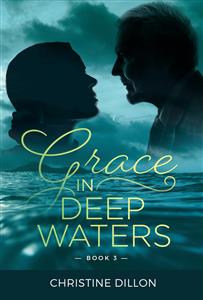
Grace in Deep Waters
Book 3
Christine Dillon
Links in the Chain Press
www.storytellerchristine.com
Grace in Deep Waters
Copyright © 2019 by Christine Dillon
All rights reserved. This book or any portion thereof may not be reproduced or used in any manner whatsoever without the express written permission of the author except for brief quotations in a book review.
Scripture taken from the HOLY BIBLE, NEW INTERNATIONAL VERSION®. NIV®. Copyright © 1973, 1978, 1984 by International Bible Society. Used by permission of Zondervan. All rights reserved worldwide.
This book is a work of fiction. Names, characters, any resemblance to persons, living or dead, or events is purely coincidental. The characters and incidents are the product of the author’s imagination and used fictitiously. Locales and public names are sometimes used for atmospheric purposes.
Cover Design: Lankshear Design.
ISBN: 978-0-6481296-9-1
For my parents—thankfully you are nothing like William and Blanche. Thank you for your model of how to follow Jesus, your love, and your decades of prayer. I am blessed to be your daughter.
As missionaries, part of the cost for you was boarding school for us children. Thank you to the many other parents who looked after me at Chefoo School and Faith Academy. My heavenly Father taught me much through each of you.
And in memory of my grandfather, Robert Reginald McCredie (1910-1994). Potter and master craftsman. I thought of you often as I wrote the scenes in the workshop with Reg. I wish I’d had the courage to ask you to teach me woodwork.
Find out more …
Contents
Notes to readers
Prologue
Chapter 1
Chapter 2
Chapter 3
Chapter 4
Chapter 5
Chapter 6
Chapter 7
Chapter 8
Chapter 9
Chapter 10
Chapter 11
Chapter 12
Chapter 13
Chapter 14
Chapter 15
Chapter 16
Chapter 17
Chapter 18
Chapter 19
Chapter 20
Chapter 21
Chapter 22
Chapter 23
Chapter 24
Chapter 25
Chapter 26
Chapter 27
Chapter 28
Chapter 29
Chapter 30
Chapter 31
Chapter 32
Chapter 33
Chapter 34
Chapter 35
Chapter 36
Chapter 37
Chapter 38
Chapter 39
Chapter 40
Storyteller Friends
Non-fiction by Christine Dillon
Fiction
Enjoyed Grace in Deep Waters?
Bible Storytelling
Acknowledgments
About the Author
Book 4 in the Grace series
Prologue
Notes to readers
* This book is unashamedly Christian. All books are written from a worldview, be it secular, communist or New Age. If you’re not a Christian the views expressed by the characters might appear strange BUT it’s a great opportunity. Why? Because this story allows you, if you’re not yet a follower of Jesus, to see things from a perspective totally different to your own. Are the character’s views consistent and does their worldview make sense of the challenges in their lives?
* Christian authors are told not to put miracles in their stories. This seems like peculiar advice since God is a God of miracles. One of the reasons for this advice is that people don’t want to raise the false expectation that God will always work miracles. Sometimes he chooses not to. Any miracles in this book are based on real life examples.
* Should this book contain spelling, grammar, punctuation and word usage that are unfamiliar it is because it is an Australian story. It seemed wrong to write an Australian story according to the Chicago Manual of Style.
* Some of this book is set on Lord Howe Island. Choosing to name a place in a novel is always dangerous because it is easy to get small details wrong or the author might need to change some details for the sake of the story. I apologise for any errors and for any times the story trumped the real place. I hope this story gives you an idea what an amazing place it is. Perhaps I’ll meet you there one day.
Prologue
11 November 1944
Sydney, Australia
The radio dominated the room. All gleaming wood and intriguing metal dials.
William zeroed in on it, ignoring all the people, desks, and typewriters crammed into his father’s office. His stomach fizzed. This was the first time he’d ever been allowed here, although Ian, his older brother, was always welcome.
William reverently stroked one finger across the radio’s wooden case.
“Careful son,” his father said.
“He won’t hurt it, Mr Macdonald.” William could hear a smile in the lady’s voice. His face warmed and he looked around at the people eating and drinking out of tall glasses. The kind lady offered him the plate of scones. William looked towards his father, who nodded. He took a scone and thanked the lady. Mum always insisted he show good manners.
“Nearly time,” said someone at the back of the room. His father pulled out his fob watch and then came forward to switch on the radio. It crackled to life.
“One hundred thousand people packed into Flemington race track today. Good sports and good sorts.” The marching music in the background and the way the radio announcer emphasised the words sent reverberations into William’s stomach. “The bookmakers’ area is seething with punters.”
Yesterday he hadn’t known what all these words meant, but last night his father had explained what would happen today and had given him strict instructions about how to behave. Being too noisy or behaving like a hooligan would get him sent home.
“Bookmaker.” William whispered the word to himself. Dad wasn’t a betting man. Said it was a game for mugs but he allowed something called a sweepstake at the office and he’d promised both boys a ticket—against their mother’s protests. Dad picked him up, sat him on the edge of one of the desks, and handed him a slip of paper with the number four and one word written on it.
It was a strange word and William didn’t know if he could pronounce it correctly, but he knew it must be the name of a horse. S-i-r-i-u-s. He looked over Ian’s shoulder and read his horse’s name—Peter. Dad said the first three horses would win money—a whole shilling for the winner. William could hardly imagine it. He never won anything. Ian might have been only two years older, but he was bigger and faster and smarter. He always came out on top, and Dad was always there to clap enthusiastically.
“And the ladies,” the radio announcer said. “A sea of blue and green, red and pink. Whoops!” The announcer’s voice rose. “There goes someone’s hat.”
Who cared about ladies and their hats? William swung his legs and clipped the side of the desk. His father glared at him over his glasses, and William froze. He mustn’t mess up his first visit to Dad’s office.
People said his father was a successful man. He supposed Dad was, since he was boss of this office and had a big car and house, but William wished they saw him more. Dad almost always arrived home after William and Ian had eaten. By the time his father finished dinner, William was in bed and only Ian got the chance to talk to him. The weekends weren’t much good either for kicking a ball around or getting help with his train set, because Dad spent all his time attending Ian’s sports matches, instructing the gardener, or reading the newspaper.
Mum said they were lucky to have Dad home at all. Half the boys at school had fathers away in Europe, fighting.
“They’re coming out now. Twenty-three of the nation’s finest horses. Look at the sheen on their coats. Look at the way they prance and fight the bit. They know what’s coming—Australia’s greatest race.”
William couldn’t control a tiny wriggle. The announcer sounded so excited, and all the adults were motionless, staring at the radio like they didn’t want to miss a single word.
“Two miles of speed and glory. Two miles of agony and ecstasy. Two miles to prove who’s champion.”
The announcer reeled off information about each horse. William glanced down at the paper cradled in his hand. He was only interested in …“Number four—”
William sat up straight.
“Sirius, ridden by Darby Munro and owned by Reg Turnbull, our very own Chairman of the Victorian Racing Club. Three to one favourite.” William’s stomach fluttered. The numbers meant nothing, but favourite sounded promising. If only his horse would win.
“Ladies and gentlemen, the 1944 Melbourne Cup is about to begin. May our boys be home from the front to watch the next one.” The announcer’s voice went sombre for a moment. Dad said the tide of the war had turned, and Hitler would soon be running for cover. Course he would. How could he stand up against the great British Empire and the Americans?
A gunshot sounded, and William jumped in his seat.
“They’re off!” The microphone squealed. “A great start to the 1944 Cup.”
William had seen last year’s race on a newsreel, and he could picture the horses all bunched together.
“Clayton has settled down near the fence.”
He didn’t care about Clayton. Where was Sirius?
“As they pass the two furlongs post for the first time, Clayton is out front by two or three lengths. In second place is Judith Louise, and Sirius in third place.”
Sirius had a chance. William clenched his fist around the slip of paper. Come on, Sirius.
“As they come to the third furlong, Sirius is moving up.” The commentator’s voice sped up. “He’s looking in control.”
Come on, Sirius.
“Two furlongs from home, and Sirius is still in the lead.”
Could he do it? Could he win?
“Sirius now a length and a half in front. Cellini in second and Peter coming up on the outside.”
Not Peter. Any horse but Peter.
The commentator’s voice rose in a crescendo. “Peter on the outside has thrown out a challenge. He’s surging forward.”
William squeezed his eyes shut, clenched his jaw, and willed Sirius on. Go, go.
“Peter is closing the gap. He’s closing the gap.”
William wanted to vomit.
“Sirius is being ridden for dear life. Can he hold his lead?”
Come on. Come on. William pounded his fists on his knees. You have to win.
“And it’s Sirius by a head,” the commentator finished, his words breathless. “Peter in second and Cellini third.”
William pumped his fist in the air and flashed a smile at his brother. Finally. A win. He jumped off the desk and waved his paper. “Sirius won! He won!”
A whole shilling. What could he do with a whole shilling? Maybe buy the model aeroplane he’d been staring at for weeks in the shop window. Or maybe he’d keep the money and treasure it. He bounced up and down. Today he’d beaten Ian for the first time, and he didn’t intend it to be the last. Dad often told them “no one remembers who is second.”
Well, Sirius would be remembered, and maybe, just maybe, his father would notice him at last.
1
Late 1990s
Sydney, Australia
William had buried his youngest daughter three days ago.
He hadn’t technically done the burying, but she was buried nonetheless, and now it was 9:59 on Sunday morning. William rolled his shoulders and took a breath to relax himself. His church leaders had urged him to take the month off, assuring him everyone would understand.
Everyone might understand, but William couldn’t do it. Sit in the house and stare at the wall? Never. He’d go crazy. Much better to be in his normal environment, here at church. Doing what he loved and what people loved him to do.
The music swung into the bridge to announce his entrance. William braced himself. As he heard the last notes, he strode from behind the curtain and across the stage. The lights blinded him for the first few seconds.
Out there were his people. His congregation. Every week he provided them with the spiritual food they longed for. Every week he went home pumped up, having sent them home happy, replete with the words he’d digested and regurgitated for them.
William scanned the people in front of him. Years ago, his mentor had taught him to concentrate on a small selection of representative people. Make them feel he was speaking especially for them. It was a technique he’d perfected, one of the secrets of his success. And he was successful. Victory Church had been dying when he’d started here, and now look at it. Thousands of members. Sure, some left each year, but this church wasn’t about those who couldn’t fit in. There were plenty of other places for those kinds of people. This was a church for winners. People like William.
A winner? Really? What about Blanche?
He mentally squelched the questions before they could bloom into doubt. Blanche would be back home soon. They’d had a ding-dong all-guns-blazing fight, but she’d understand he’d been under pressure. Blanche knew his foibles—she’d been married to him long enough. She’d come around in time. She always did—not that she disagreed with him often. In fact, she’d only become argumentative the last few weeks. That was Esther’s influence, but Esther wouldn’t be influencing anyone any more.
William shivered. Esther was another thing he didn’t want to think about. Time to pull himself together. Do what he did best.
“This is the seventh of our sermons on heroes of the faith.” Noah and Abraham. Joseph and Moses. Joshua and Gideon. This morning it was David’s turn.
“The Philistines came out to fight against the Israelites. They occupied one hill and the Israelites another, with a valley in between the two armies.” He gave a quick summary to give the context. A few years ago he’d done training with a professional storyteller and learned people preferred hearing stories over a dry Bible reading. Telling stories meant he could skip the tongue-twisting names and jazz things up a little. Those biblical authors had written for a different audience. A different culture in more primitive times. Nowadays he needed to keep the stories short and snappy.
“The Philistines sent out their champion, Goliath. He was three metres tall and wore bronze armour weighing nearly sixty kilos.” William hefted an imaginary spear. “His spearhead alone weighed seven kilos.”
The men in the congregation loved these details. They sat up taller as though they were shouldering their own armour.
“Goliath stood and shouted, ‘Choose a man and have him come down to me. If he is able to fight and kill me, we will be your subjects, but if I overcome him, you will become our subjects.’”
William used his voice to project the Israelites’ fear, the Philistines’ bravado. The congregation gazed at him with rapt expressions, and the teenager in the front row shivered. Good. He was in top form, despite the dramas of the last few days. Another person in the third row jerked back as the imaginary stone flew through the air and landed in the centre of Goliath’s forehead. Exactly the kind of reaction he was after. He should have been an actor.
William had practiced his story ten times the day before. It kept his mind off other things like the emptiness of the house without Blanche and wondering when she’d be home. If Blanche stayed away more than a week or two, the elders were going to start asking questions. Awkward questions. He’d already had to evade several curious church members who wanted to know why they hadn’t seen Blanche for a few weeks. It was none of their business, and he had managed to palm them off with the excuse of a sick relative. Not a lie. Specifics would lead to questions about why he wasn’t with his wife. Maybe he should send flowers to her. Women usually appreciated flowers when they were upset.
“‘So David triumphed over Goliath with a sling and a stone. Without a sword in his hand, he struck down the Philistine and killed him.’”
William had memorised the line because the rhythm was perfect. Sometimes even he couldn’t improve on those biblical writers. He paraphrased the next part. “Then David ran over and stood above Goliath. He took Goliath’s own sword and hacked off his head.” Hacked sounded so much better than cut. “When the Philistines saw their hero was dead, they turned and ran. And so Israel conquered the Philistines.”
The story had already taken a quarter of his sermon time. This week he hadn’t been able to concentrate to prepare his normal quality of content. Instead, he’d focused on polishing what he had and working out a memorable title and section headings. All the content in the world wasn’t much help if he bored people to death.
“Do you have giant-sized issues in your life? Issues that seem insurmountable? Issues well beyond your own ability to deal with?” Rhetorical questions, relevant to people’s everyday lives, were one of his favourite ways to start. They snared people’s interest from the first line. Pertinent questions, plus humour, plus stories, equalled a perfect formula for success. It was something he was drilling into Nick, his protégé.
“Know your enemy.” William enunciated his first point. He listed off possible enemies—sickness, difficult people or work challenges. His listeners nodded. He avoided mentioning cancer. Would anyone notice? If only Esther had shown more faith. Her prayers had been half-hearted from the start.
But yours weren’t.
Where had this pesky thought come from? There had to be some explanation for why Esther hadn’t been healed.
All over the auditorium, people were maintaining eye contact as he launched into his second point, “Know your God.” This was a point he made so often, he had to work hard to make it sound new. After all, he couldn’t say “God is powerful” every week.
Nick frowned from the front row. William would have to speak to him after the service. He and Nick were as close as a father and son, but Nick couldn’t appear to disagree with William. Not in public. Disunity among staff members destroyed churches. Ripped them apart. That was one reason Esther had had to leave. Her doubts threatened everything he’d built.
A shiver of sadness slithered through him. If only she had dealt with her giants and come home.
As usual, the congregation were eating out of his hand by the end of the final point, “Nail your giant.” He had them repeat the phrase several times. The final shout would probably have registered on the Richter scale. Thirty minutes of speaking, and he felt like he’d completed an Ironman race.
The musical postlude swelled, and William sat down on the preacher’s chair and mopped his brow with his handkerchief. That had gone well. He bowed his head to pray and his coat rustled. He’d absentmindedly slipped the envelope he’d found on his church desk this morning into the inner pocket. It had been more than twenty years since he’d seen his mother’s handwriting. She’d stopped writing to him after he’d marked half a dozen of her letters “return to sender”. Why would she be writing to him now? Considering its timing, the letter wouldn’t say anything he wanted to hear. He should toss it and be done with it.
But what if it was from Esther? A pressure rose in his throat, and he covered his mouth lest it erupt. They’d exchanged hard words recently, but she’d always been tractable. It wouldn’t be like her to hold a grudge. He’d open the letter in a heartbeat if it was from Esther, but that wasn’t likely. The letter was probably a lecture from his mother, and he wasn’t in the mood for lectures. He pushed the envelope deeper into his pocket.
He’d put it in a safe place and read it when he was in the right mood.
Whenever that would be.
2
A magpie carolled outside Blanche’s bedroom window. She groaned, turned over, and squinted in the sunlight.
She’d never felt less like birdsong and sunshine. It had only been four days. Four days since thirty years of loving had been reduced to a pile of ashes.
The days before the funeral had been full of frantic activity. Now it was too quiet. Eerie. Hushed. Like there’d been a city-wide blackout.
Blanche stretched, feeling the welcome pull along her back and down her legs. Last night she’d collapsed, exhausted. Exhausted from trying to hold herself together. Exhausted from planning a funeral. Exhausted from pain and grief and despair. And joy. Esther had died well.
It was living with her death which was proving hard.
A great bubble of grief pushed up Blanche’s throat and squeezed her heart, but tears no longer came. The well was cried dry. She ached in every joint and muscle like someone had beaten her with a meat tenderiser. She had given everything she had these last few weeks. If only she didn’t have to get out of bed. Ever again.
What was there to get up for? Blanche had nothing. No job, no goals, no purpose. What did a mother do when her daughter died?
The kettle whistled in the kitchen. Her mother-in-law was up. Blanche might not want to get out of bed, but she couldn’t stay here and drown in her memories. She needed activity. Everything might feel pointless without Esther, but they still needed food and a clean house, and Naomi was too old to carry any more burdens.
Blanche rolled out of bed, feeling every stiff muscle and joint. She took the dressing gown down from behind the door and trudged out to the kitchen.
“Morning,” Naomi said, the lines on her face even deeper today. “I won’t ask you how you slept.”
Blanche nodded as tears filled her eyes. So the well wasn’t dry after all. She turned her face away. How were they going to get through this?
“Rachel’s about to head off to work.”
Blanche sniffed, a habit she hated in others. “I envy her. I have no idea what’s next for me.”
Naomi handed her the marmalade. “Why don’t we start with something to eat?”
They busied themselves with bowls and spoons, teacups and toast. The minutiae of daily life.
“Let’s eat on the verandah,” Naomi said.
Blanche nodded, relieved not to have to decide.
Rachel came rushing into the kitchen in her work overalls and cotton shirt. She grunted a greeting but avoided looking at them as she headed to the fridge.
“Slow down a little, can’t you?” Blanche snapped.
Rachel glanced over her shoulder, eyes wide, and no wonder. Blanche had always been a mother who ran from any potential conflict.
“Sorry,” Blanche rushed to say. “I don’t know what got into me. I know you’re in a hurry to get to work.”
“No, I’m sorry,” Rachel said. “I shouldn’t have barged in here before you were finished.”
Blanche smiled a tremulous smile of truce. All three of them had been irritable the last few days. Too many nights of broken sleep and mountain ranges of unresolved grief made them overly tense and self-conscious with each other. They kept apologising unnecessarily and starting sentences that trailed off into nothing.
Better to remove herself completely from the situation before she burst into tears and made matters worse. Again. Blanche picked up the tray and followed Naomi outside. Who cared if the neighbours spotted them in their dressing gowns? She had no energy to present her usual perfection to the world.
They sat in the sun together, the only sounds the crunching of toast and quiet chewing. Ordinary sounds, on this unordinary day. Ordinary sounds to cover her inability to say anything worth saying. Her mind was one vast, aching hole. She didn’t want to talk about Esther. Yet not talking about her didn’t seem right either, as though Esther’s loss hadn’t been important. Was this what the rest of life would be like, a silence pregnant with pain?
Everything she used to spend her time and energy on seemed pointless. Running around for William. Looking right and saying the right thing at the right time for the right people—for what? The death of a daughter? She couldn’t do any of it again—and that’s if such a role even existed for her any more. Her fight with William was weeks back, but there’d been no word. No word as Esther lay dying. No word after she’d sent the funeral details. No word since.
She suddenly realised Naomi was speaking. How much had she missed while she’d been wallowing in her own thoughts?
“We did everything wrong when Ian died,” Naomi said, her voice paper-thin. “We never mentioned him—we curled in on ourselves, nursing our pain.” Naomi stared off into the distance. “My depression, Norman’s rage, and our joint neglect of William were the results of allowing grief to grow and twist in on itself.”
“But how do you avoid grief getting twisted?” Blanche asked, her breath catching in her throat. “How does anyone get through something like this?”
“Step by step.” Naomi leaned across the table and took Blanche’s hand in her arthritic ones. “When Ian died—and then Norman—I had nobody to lean on. No family, no close friends, and I didn’t know the difference Jesus could make.”
“Jesus,” Blanche whispered. “How does he help? How does he help me get through today?”
“He makes all the difference in the world. Somehow we have to help each other look at him.” Naomi’s voice cracked.
“I’m not sure I know how.”
“That’s why we’re in this together. Grief wants to tell us we’re alone, but we’re not. We’re a group of people who loved Esther and were impacted by her life.”
Blanche teared up again.
Naomi patted Blanche’s hand. “There are going to be a lot of tears over the next few months, but we mustn’t fear them. They’re healthy.” Naomi’s bottom lip trembled. “We must talk about Esther and what she meant to us.”
“It hurts to even hear her name.”
Naomi took a lace handkerchief out of her sleeve and blew her nose. “Eventually we’ll stop wincing.”
Blanche shifted in her seat. “Wincing. That describes exactly what it feels like. Like I don’t want to hear her name or think about her, but I can’t bear not to—”
“I know dear. I feel it too.”
Blanche wrapped her arms around her middle. “I’m suddenly thrown into a foreign country where I can’t speak the language and have no idea what’s going on.” She closed her eyes. “And William—” She stumbled over his name. “—must be in a worse state than I am.”
Even saying William’s name made her fume. She’d been distraught when he never came to say his goodbyes to Esther, because she knew he’d eventually regret it. But his no-show for the funeral had really made her blood boil. Hot enough to scald if he’d come within range. Which he hadn’t. What possible excuse could a father give for not turning up to his daughter’s funeral?
Of course they’d had their differences recently, but honestly. She clenched her fists. He and Esther had been close, and she and William had loved each other too. She presumed he must still love her, but his stubbornness was unbelievably irritating.
Naomi shook her head. “If I could do it again …” She looked out to the garden and let out a breath. “Putting William in boarding school seemed the right thing to do.” She corrected herself. “Well, the easiest thing, at any rate.” She gave Blanche a wry smile. “It was hard enough to deal with Norman and me falling apart. I couldn’t deal with a child’s grief as well.” She looked down at her lap. “It’s my biggest regret. We were poor parents, and I’m sorry for it.”
Blanche pulled her chair over to sit next to Naomi. “I have regrets too.” Too many to think of now and mostly entangled with the mess of her anger and feelings about William. She took Naomi’s hand again. “You’ve been a wonderful grandmother, and you’re a wonderful mother-in-law.”
Naomi hugged her. “You are such a gift to me.”
Blanche leaned her head on Naomi’s shoulder. There were a lot of lost years to make up for. “It’s strange isn’t it? We’ve had such a mixture of joy and pain, sunshine and rain.”
“I’ve often wondered if true joy needs pain to be fully appreciated,” Naomi said. “Somehow the contrast between sun and rain makes us appreciate both more.”
“That’s what I feel about Esther. Even her death and funeral combined sunshine with the rain.”
If only Esther had had anything but cancer. William was almost allergic to the word.
Cancer. Blanche turned the word over in her mind to see what power it still held over her and was surprised to no longer feel the dread and terror it had once provoked. Cancer had sliced its way through their lives, separating father and daughter yet drawing mother and daughter together.
Cancer refined Esther to pure gold.
Blanche wiped her eyes.
Cancer had changed her too. It had given her courage. She smiled to herself. Ironic that she needed courage to stand up to her own husband. She let out a sigh. Perhaps it had come too late, though. If she’d been brave years ago, how different their lives might have been.
“And we can’t begrudge Esther what she’s experiencing now.”
Blanche’s skin tingled. “Being with Jesus forever. Such a contrast to the last weeks of her life.”
“Why don’t we pray together first.” Naomi put her breakfast dishes on top of Blanche’s. “And then what would you say to cleaning the kitchen and doing the vacuuming? Housework has been a little neglected of late.”
Blanche laughed. “It would be a relief. I feel aimless, but I don’t want to tackle anything major.”
“A clean house will make both of us feel we’re achieving something,” Naomi said.
“Yes, and we can do a bit at a time and leave bigger tasks to deal with another day.”
They held hands and bowed their heads to commit the day to the Lord.
How had she survived all those years without Naomi’s support—no, without any real support at all? If only she had dared to stand against William earlier and work at the relationship with her mother-in-law. Her old fear of putting her head above the parapet had prevented her doing what was both right and wise. This fear of provoking anger had kept her silent. Silent when William had vilified his mother. Silent when Rachel had run away. Silent when William had pushed Esther out of the house.
She’d let fear bind her. What might life be like if she walked free?
3
Blanche hung the mop up on its hook and ran a critical eye over the damp bathroom floor. Having this simple task to do had gotten her out of bed this morning.
She put her hands on her lower back and arched backwards. Naomi must be ready for a break too. The look of concentration on Naomi’s face earlier had signalled she’d been pleading in prayer for their family while she dusted. Blanche had tried to follow Naomi’s example, but had been distracted. Instead of praying she’d caught herself wondering when she should go home. Or if.
She walked down the hall and poked her head into the living room. “Naomi, are you ready for a cup of tea?”
“I certainly am.”
Blanche soon had the tea ready, and they sat down at the kitchen table.
“I’ve spent a lot of time praying for William,” Naomi said. “Have you heard anything from him?”
Blanche shook her head. “Nothing and I don’t know what’s next for us.” The only way she knew William was alive was from listening to his weekly radio programme, and that was little comfort. His voice was the same as ever. Shouldn’t it have betrayed something? Did she—did Esther—mean so little to him? “I don’t know if I should visit or if writing would be better. Writing feels odd.” Tears sprang into her eyes, and she dabbed them with the back of her hand. “I don’t even know if I’m welcome at home.”
“Do you think it would help you to talk about what happened?”
Blanche’s stomach cramped. “I appreciate you waiting this long to ask me. You must have been curious.”
Blanche went over to the sink. She’d be able to talk more easily if her hands were occupied. Naomi got to her feet and reached into the drawer for a new tea towel.
“The week before Esther died, she dictated a note to William, begging him to visit her.” Blanche scrubbed the plate in her hand too vigorously. It was hard to travel back to that horrible day. Hard to relive how William had behaved. Up to that day, their marriage had been easy. Not because it was the good marriage she’d believed it to be, but because she’d never dared to say anything to disturb the glassy smooth water on the surface of their relationship.
Naomi opened her mouth. “Do you—”
But Blanche raised her hand. “Naomi, please don’t interrupt or I won’t be able to get through this.” She gripped the dishwashing brush and forced her memory back.
Blanche handed William the note across the dining room table.
William took it from her hand and scanned it. “This is your writing, not Esther’s.” His words were cold.
“Esther is in palliative care.” Blanche couldn’t help speaking slower and louder than normal, like she was explaining things to someone who couldn’t grasp simple facts. “She no longer has the energy to write. The doctors think she may have as little as a week left.” It was an effort to get the words out. Each sentence she spoke was like the clang of a death knell. Lord, help me not to break down. Not now.
“She was fine a few weeks ago.”
She wanted to shake him but stayed patient. “Sometimes the end comes swiftly. The cancer has spread into her lungs.” She gulped. “And her liver, and her brain. Esther wants to say goodbye properly.”
“None of this would have happened if she’d been less half-hearted about asking for healing.”
“I don’t agree,” Blanche said, heart thudding and knees trembling.
William’s head snapped up. “What do you mean, you don’t agree?”
Normally his belligerent tone would shut her down, taking her back to docile agreeability, but not today. Today was more than time for a new start.
Blanche kept her voice low and even. “I’ve been full of questions lately and now I find I no longer believe things I once did.”
William pushed out his chair and came to loom over her.




