


Erhalten Sie Zugang zu diesem und mehr als 300000 Büchern ab EUR 5,99 monatlich.
- Herausgeber: Cinnamon Press
- Kategorie: Gesellschafts- und Liebesromane
- Sprache: Englisch
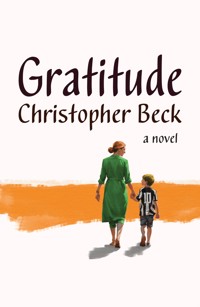
At 44, New York divorcee, Mel, is not ready to give up on God or the possibility of motherhood. Between running an actors' agency in Hammersmith and rehearsing her role in a rock musical, she agrees to take care of her stepdaughter, Jess's challenging four-year-old son, Billy, two afternoons a week. Writing: Playing Billy's Mom on a strip of paper to place in her Gratitude jar, she prays that her good deed will have a pay off: her own fertility. Meanwhile, prepped with hormone tablets and injection at the ready, she awaits the return of charismatic Royce, who has been filming in Hollywood. But all is not well with Royce. A strange incident on Venice Beach after dark has shifted his world. Can he really be cursed? Desperate, Mel reaches out to her friend, Anto. He's gay but wants to be a parent. Thwarted again, will surrogacy be the answer? Will Mel be locked into taking on more responsibility for Billy as Jess spirals into depression following the loss of her father? Or can Mel make a life with the new man in her life, refugee Hassan, suffering from PTSD and raising his disabled eight-year-old son alone? Or will life take an unexpected turn? As Mel's faith moves towards Buddhism under Anto's influence and a friend steps in to help with a problem deeper than infertility that is gripping her life, will she be able to answer the call when an unlooked for opportunity presents itself? A deeply empathic, humane debut, Gratitude asks how we live now and how we make meaning in lives that rarely work to plan.
Sie lesen das E-Book in den Legimi-Apps auf:
Seitenzahl: 358
Veröffentlichungsjahr: 2024
Das E-Book (TTS) können Sie hören im Abo „Legimi Premium” in Legimi-Apps auf:
Ähnliche




















Contents
Title Page
Copyright
About the Author
Half Title
Chapter 1
Chapter 2
Chapter 3
Chapter 4
Chapter 5
Chapter 6
Chapter 7
Chapter 8
Chapter 9
Chapter 10
Chapter 11
Chapter 12
Chapter 13
Chapter 14
Chapter 15
Chapter 16
Chapter 17
Chapter 18
Chapter 19
Chapter 20
Chapter 21
Chapter 22
Chapter 23
Chapter 24
Chapter 25
Chapter 26
Chapter 27
Chapter 28
Chapter 29
Gratitude
Christopher Beck
Published by Leaf by Leaf an imprint of Cinnamon Press,
Office 49019, PO Box 15113, Birmingham, B2 2NJ
www.cinnamonpress.com
The right of Christopher Beck to be identified as author of this work has been asserted by him in accordance with the Copyright, Designs and Patent Act, 1988. © 2024, Christopher Beck.
Print Edition ISBN 978-1-78864-893-6
Ebook Edition ISBN 978-1-78864-881-3
British Library Cataloguing in Publication Data. A CIP record for this book can be obtained from the British Library.
All rights reserved. No part of this publication may be reproduced, stored in a retrieval system, or in any form or by any means, electronic, mechanical, photocopying, recording or otherwise without the prior written permission of the publishers. This book may not be lent, hired out, resold or otherwise disposed of by way of trade in any form of binding or cover other than that in which it is published, without the prior consent of the publishers.
Designed and typeset by Cinnamon Press.
Cover design by Adam Craig © Adam Craig.
Cinnamon Press is represented by Inpress.
About the Author
Chris realised a long-held ambition to write when, owing to health problems, he was forced to give up a career as a medical practitioner. In 2007 he won a regional play writing competition with TheLesson and had it performed at The Little Theatre, Wells. In 2010 he obtained an MA in Creative Writing at Southampton University. He had two short plays performed at the café, Nuffield Theatre, Southampton. He self-published a novel TheSummertimeBlues in 2015. Throughout his writing career there has been a steady output of poetry, some of which has been published. In 2021 his poem Stillsomewaytogo, MotherRosa was short-listed for the Wells Literary Festival Poetry Competition. Other interests include music, playing classical guitar and sailing.
Gratitude
Chapter 1
Under some protest Mel was told she could take her place a little early. She’d learned that playing the dumb tourist would loosen up the most tight-assed official, even at the Ritz Hotel. She was early because of the tall woman who’d begun to waylay her at Green Park Tube Station. Hardly realizing it, Mel had fallen into the habit of allowing extra time to complete her journeys.
She sashayed past the grand piano then glided up the short rise to claim her table for afternoon tea, this time taking more notice of the décor. She supposed it grand in a museumy sort of way. For the year 2016 the word passé didn’t seem out of place. Despite, or because of this it gave—she imagined—ordinary folks a sense of occasion and style, not to mention the chance of observing how the posh took their tea. That the noisy crowd of women to her left were revelling in, and at the same time, defying their surroundings was quite okay with her.
She was waiting for Helena, not just any Helena, Lady Helena. They were both recent alumnae of the same Harley Street clinic. In just two or three meetings their sorority was sealed. Defying post op instructions they had deserted their rooms to wander the corridors and get some air. They compared notes, bandages and leisure time, discovering a mutual aversion to daytime TV. Helena needed little persuading to come back to Mel’s room and assist with a bottle of Prosecco.
A large woman in a ruched maroon gown approached the piano, adjusted the stool and began to play. Chopin Mel thought, remembering early days with her piano teacher. But, at times, the soloist could barely rise above the orchestra of loud women—out-of-towners on a spree, all sporting more or less the same labelled shopping bags. Mel wondered what pricy flights of fancy were stashed away in those gaudy bags. They were all overdressed, as most likely she, in her chambray pantsuit, was.
Close enough to the appointed time her clinic buddy appeared as if she’d just come on at the Old Vic. Wearing Cashmere and pearls, she tipped the pianist a respectful glance then took the short flight of steps as if she owned the place. There was a microsecond of silence from the tables as she approached. Mel waited until she could just see the azure of Helena’s irises, then stood up.
‘Hello, Blue Eyes.’
‘Hello, Green Eyes.’
Mel was quick to convert her companion’s intended handshake into a high five, and for several seconds they stared into one another’s faces, observing in their different styles of speech what a favourable result each had achieved. Lady Helena’s perfume reeked as much of class as of money.
‘You heal real fast, Helena.’
‘Just luck,’ she replied, touching her face. ‘I envy you your complexion, so delicate and pale.’
‘You shouldn’t, it’s high maintenance.’
‘Forgive me… you’re much younger than I remember. Too young to need…’
‘Show business,’ Mel replied. It seemed as good an explanation as any.
For a while they continued to smile conspiratorially at one another until the waiter appeared and offered them an extensive choice of tea. The order completed, Helena’s expression was unmistakable: who are these awful women?
‘It’s a package. The coach does a store-crawl then tops it off here. They’ll talk about this forever in Dullsville. Sorry, I thought it’d be quiet… even familiar.’
‘Never been. I told you we were country bumpkins.’
‘But aren’t you married to a Sir, live in some ancient hall.’
‘Oh dear, Mel. You’ve got that look I like to see only when I’m working. I’m the girl next door, brought up in Aylesbury, won a scholarship. I actually voted Labour once.’
Aside from a maverick giggle, Helena looked and sounded nothing like the girl next door. It was those schoolgirl splutterings as much as anything that had endeared her to Mel in the first place. Then there was the voice, unfettered now by dressings: a rounded alto register that would not have been out of place in a certain play by Oscar Wilde.
‘So, what is your actual… role?’ Mel asked.
‘I extort money from the rich and hand it over to charity.’
‘Robin Hood!’
They laughed, their voices melding into something softer than the crescendo and forte of the brassy orchestra. The pianist, meanwhile, soldiered on with AnEnglishCountryGarden.
Eyebrows raised, a note of faux exasperation stealing over her face, Helena asked, ‘Am I so amusing?’ She’d placed her cup and saucer down on the table and returned a tiny half-eaten sandwich to her plate.
‘I just love all that refinement—the English etiquette. I’m jealous, that’s all. It comes over so natural. Has to be in your DNA.’
‘But not in yours, I think.’
‘Now let’s not fall out over a little thing like tea cups.’ Mel went on, ‘You know, I nearly asked for coffee just to see what’d happen. Would the waiter deconstruct on the spot or show me the door?’
‘Probably both, you wretched gel.’
They were back at the clinic where keeping a straight face carried more than one meaning. They could always rely on their cultural differences for an inexhaustible repertory of jokes. They’d even begun to talk clinic style—side of mouth.
‘You’d have been great with a burger, Helena. Maybe that’s where we shoulda gone.’
‘You’re impossible!’ Helena protested.
‘That dainty way you hold your cup and saucer. See—critical use of the pinky finger, both hands. That’s just how to keep your burger’s content from decorating the Versace, the Gucci or just the sidewalk.’ Mel demonstrated the technique with her mouth wide beyond the cause.
Helena erupted, dabbed her eyes and kept saying, ‘I’d never…’ but got no further. Finally, her convulsions subsided.
‘I’d never manage one. It does seem to require a rather large mouth.’ Helena was exercising her jaws, to which she kept drawing up the modesty of a hand.
‘And what’s that supposed to mean?’ Mel replied with mock offence, thinking, so far, so good.
She’d been here once before, the guest of a media personality. His niece was going to be the next stage sensation. Daisy was still her client but now majored in stage design. For a while he kept turning up at the agency with flowers and an ego the size of which she’d not met with since her trips to Hollywood.
After scones and cakes, they left together for a stroll through the park. It brought Mel down to earth with a thump. She’d assumed that beyond the jokes they’d discover common ground. She hadn’t been anywhere near a horse since she was a girl and Helena rarely went to the theatre. They were town and country.
Over tea they’d put a little more flesh to their individual resumés, or rather Mel had. Helena was more reticent about her personal life. The estate was involved with weddings and corporate events. There were two teenaged sons who roared about the top field on motor bikes in the school holidays. Noble hubby was a ‘hands on’ farmer and the family occupied only a small section of the Jacobean house, which was in need of extensive repairs. To her relief Mel gained the impression an invitation to stay was not a realistic expectation. She had no wish for an entrée into ‘high society’. Eccentricity aside, all she’d read and heard was negative.
A countryestateissomethingI’dhate, sang a voice in her head.
Helena became animated recalling her forays into the mathematical worlds of corporations and industry. It was where she’d worked before her marriage, where she could ‘talk the talk’. It led Mel to guess that not just charm but a dose of bullying went into her charity pitches. Behind all that jolliness and blue eyes there was clearly some steel.
‘Anything wrong?’ Helena asked as soon as they were completely on their own. There was something about her friend: Mel could only describe it as a finely tuned instinct.
‘I’m crazy, that’s what. Going on stage again after such a long break. It’s no big deal, a rock musical, four soloists. And I really like the people running the show. They’re younger, ten years or so. My last boyfriend was younger still. You get the picture?’
‘You’ll be fine, I haven’t the tiniest doubt,’ Helena said. ‘I can imagine the self-questioning, but this little trick,’ she added, touching her face, ‘works as much on the psyche as the physical. I can’t wait for my next assignment.’ Helena knew nothing of the stage yet what she said made some sense. It sounded like the sort of flummery aristos are born to pull off, but no, this woman—maybe just fifty—was even older in wisdom. Mel was half-expecting her companion to use an algorithm and come up with a figure close to her own 44 years.
They kissed goodbye near Buckingham Palace, Helena in a taxi to her ‘office’—an apartment near Russell Square, Mel returning through the park, a familiar emptiness taking hold. Helena promised to be in touch when next in town. Then her expression had changed—the Lady Helena was constantly on guard against the attentions of the press and social media.
‘So, could we keep this …’ she breathed, ‘entirely entrenous?’
It was as if her face was still swathed in bandages, her mystery preserved while Mel’s mask had been removed—she’d talked too much about Henry and the divorce.
The daffodils were a blaze of gold through the lattice of bare trees as Mel wandered back through the park, convincing herself of nature’s restorative powers before the hustle for the Piccadilly Line. She almost willed the crazy woman, a stylish, some would say loud, dresser to appear but there was no sign of her lofty presence on Mel’s route through the crowded station. Retaining her sunhat, she felt at least partially disguised.
Green Park was where Mel often changed lines when visiting her stepdaughter in North London. She could make the transit by the corridor or the escalators, turning it into a sort of hide-and-seek game where you were never quite sure how it would play out until the last moment. Even losing could be graded—minor if the woman just held a photo in front of you, major if she tried to engage you in conversation.
Emerging from Hammersmith Tube station Mel felt the chill of a cold wind go straight through her silk pantsuit. Weathering New York winters seemed a lifetime ago. In four years, she’d adjusted, in mind as much as body, to the London climate.
Upping her pace, she arrived at the one-and-a-half room, second floor office, warmer and breathless, the combination of exercise and cold having made her wheeze a little. She’d kept away from health issues with Helena, though the cues to respond had been out there. Mel had still talked too much and, come their next meeting, that would have to be turned around. She couldn’t quite escape the notion that Helena, despite her status and need for nothing, still wanted something more from her.
‘Holly, you get outta here right now,’ Mel said sternly, but in a whisper.
The sound booth was still in use. Jared, one of their regular narrators, a client no less, was yet to finish recording all his chapters. Creating files for audiobooks was a useful side line for the agency. They had access to some of the finest voices.
‘Will there be flowers from a certain uber-smooth personality?’ Holly teased in her flat northern vowels.
‘Like fuck! She was a she, a lady. A real lady. Only you gotta keep schtum.’
Chapter 2
The northbound Jubilee line was its calm Sunday morning self, the cars rattling along in that hollow, empty manner that seemed to beg the question: where was everybody? It always came with a subtle change of mood when the train hit broad daylight—part of the ritual and excitement Mel felt when visiting her English family. Only this time it had cost her some sleep. Today, a decision had to be made about who was to care for Billy after preschool when Jess was at work. Mel was armed with a sticker book full of different scenes and a wealth of adhesive characters and animals. She’d also brought her small guitar to sing to him.
As soon as he saw her enter the soft play café he waved and shouted. His mum, on all fours, turned and beamed at Mel. Jess had attractive almond eyes and good bone structure, her blond hair now short and stylish. Even before they kissed, Mel knew something was wrong. She hoisted Billy up, cuddled him then kissed his head. He too had had his hair cut short—much to her disappointment.
‘Can I play too?’ Mel asked.
‘He wants you to play with him outside. Don’t you, darling—the pirate ship, or maybe the fort. Wow! You look super relaxed, Mel. You must so love that job of yours.’
‘Matter of fact I’ve had a short vacation.’ Mel instinctively touched her face and tried not to guess the cause of Jess’s anxiety. This on top of the nerves she’d been nursing about whether she’d be offered ‘the job’.
‘Go anywhere?’
‘Only walked the river and read.’
‘I’d be like that if I could just design.’
‘Oh, had a facial too.’
Jess worked three days a week in a West End clothes shop that had once sold a dress she herself had designed and made.
‘Come on little big man, let’s go play,’ Mel said, handing Jess her phone, the book and the guitar, then leading her young charge out through the open café door where he gave her the slip and scampered off towards the blue and white pirate ship. As ever, he was wearing his striped soccer shirt.
They’d done the swings, the ropewalk, the revolving saucer as well as playing pirates—good and bad. Now all he wanted was to play in the fort that stood in the older kids’ section.
‘Okay, pirate man, but we’ll have to lift you over the ramparts. Then you be careful.’ The steps and ladders were higher and steeper here and once he was installed, she didn’t take her eyes off him for a second. At least it was quiet and not teeming with older ones. Billy suffered from a degree of clumsiness that Jess preferred to call dyspraxia.
He was issuing urgent instructions to his imaginary minions. Together they fought off two waves of enemy attacks in quick succession when a plane banked overhead, the sun flashing off its wings. Mel looked up and was about to say something when the air suddenly reverberated with noise. Billy covered his ears, his little face contorting with distress. She leant over the fort, plucked him up as if from the jaws of a fiend then rushed him back to the café. Jess was already at the door.
‘Alright my baby. Alright now,’ she soothed in his ears. Billy had a problem with sudden, loud noises, Jess explained, and wherever they went she carried a supply of cotton wool to protect his ears. As soon as he was pacified, he turned his attention to the book and began attaching figures with unconscious surrealism to the various scenes. Mel’s phone had chirped only once. She and Jess cradled large cups of coffee.
‘It’s about Dad,’ Jess began.
‘Oh?’
‘The consultant says he’s showing signs of dementia.’
‘Surely he’s much too young,’ Mel said with conviction.
‘They’re calling it pre-senile dementia.’
‘Shit!’ Mel gasped, then checked that Billy hadn’t heard. Her mind was struggling to come to terms with the diagnosis, its ugliness, and then thinking about the implications for Jess and for Billy. Weren’t some cases hereditary?
‘There’s something else one of the doctors keeps asking about: the time you two met. They seem to be saying that on that particular day the air was so full of toxic stuff, the gases, the dust, there might be long-term effects. Dad never talked about it. Now I think…’ Jess reached for a paper napkin on the table, ‘he can’t…’
‘Remember?’
‘He can… but he needs a lot of prompting. Then we—I mean Davina and me—aren’t the best prompts. We don’t know the right questions to ask. I’d hate to ask something that’d upset him.’ Jess’s face was taut, her lovely eyes grave and a little evasive. Mel caught her stepdaughter’s drift and took refuge in Billy.
‘Love that dinosaur on the farm, babe. He’s really gonna give those other animals a hard time. Unless he’s vegetarian.’
‘T-rex only eats meat,’ Billy said with enormous conviction.
‘Too bad for the farm then,’ Mel replied looking at Jess and coaxing a brief smile. ‘Okay, whaddya want?’
‘Could you meet and talk? Just once.’
‘About what?’
‘Oh, I don’t know. If you could just see him I’d be… it would be so right. Even if nothing… I’d feel a lot better getting your input. A big ask, I know.’
‘Just your dad and me, right? No Davina.’
Jess nodded enthusiastically and was about to launch into unconstrained gratitude when Mel felt a sudden urge to bring up the past, then wished she’d kept quiet. ‘Don’t know if there’s any connection. Suppose that doctor ought to know we used to do stuff. But then so did the rest of New York for heaven’s sakes.’ A change of expression spread over Jess’s face. ‘Nothing way out, just the usual suspects. God! Why did I open my big mouth?’
‘And why did the happy couple need drugs?’ Both women glanced towards Billy as if the topic might affect him but he was fully absorbed with his sticky figures.
‘Because, you know, it makes you feel… you can do anything. You’re rich and beautiful.’
‘And now?’ Jess enquired, looking serious, hostile even.
‘I’m much more responsible now,’ Mel said.
‘So it’s only now and then, is it?’ Jess’s sarcasms were getting louder and Billy’s concentration had at last been broken.
‘Mummy sad.’
‘No, no, babe. Just grown-up talk,’ adding, ‘well, some of us think they’re grown-up.’
‘Ouch! Don’t do any of that stuff these days. It has zero relevance to your dad. It’s just there was something back awhile in the press. Fizzled out pretty quick I recall.’
‘What about booze?’ Jess probed.
‘Negative, leastways we were only occasional users.’
‘Dad drank after the divorce. Now Davina’s quite hard on him. What about you?’
‘Hey, what is this?’
‘Mel, you look fantastic, you’ve got this amazing job that you alone created. But I know there’s a back story.’
‘Uh-huh, there’s ups and downs. But I can be hard on me too. Can we change the tape, my dear stepdaughter?’
On the way back the train was busier—ideal for Mel to cut off into daydreams of Billy, having him all to herself in Chiswick, playing mom. She almost shivered at the thought of bathing his perfectly proportioned body, putting him to bed, reading him stories and singing to him. When the train went underground, she was confronted by her reflection in the opposite window, hugging her guitar and smiling stupidly. She hastily adopted a more neutral expression but the bubble of joy inside her refused to burst. It didn’t matter that Jess had never so much as mentioned Billy sleeping over in Chiswick. It was pure speculation, of course, but might caring for Billy lead to certain changes in her own chemistry? She prayed it would.
Mel was to pick up every Tuesday and Wednesday lunchtime, maybe sometimes staying over. The current child-minding arrangements—never satisfactory—had been eating into her stepdaughter’s meagre earnings. Her own mother lived in Sussex and rarely came to London.
The ‘interview’ had turned into something like a poker game, Jess keeping her weak cards close to her chest while Mel put down her invincible ace—the promise to see her ex-husband. Even then Jess had taken a final swipe at Mel’s chemical past.
‘And I always thought how brave you two were after 9/11, how well you’d coped. Now I know—you were in La La Land.’
‘Never said I was brave. We were in love. It was just parties and concerts. Molly and coke.’
‘Who? What?
After a tedious explanation about MDMA, e and amphetamines, Jess calmed down but not before Billy, once again distracted, asked, ‘What’s e, Mum?’ With great emphasis Jess replied, ‘A baddy’ and then followed this with, ‘e’s a baddy’ and everyone laughed. With that, Jess became serious, even melodramatic.
‘Not made a will—yet. But if shit ever happens, Mel, you rank above my mum, right?’ It was as if Jess had just pinned a medal on her. She was choked.
But Mel would need some basic instruction—what exactly were pull-ups? And only when the part-time mom checked all the right boxes to Jess’s satisfaction would she begin her scariest job.
At Green Park, she’d almost made it to the Piccadilly Line when she heard a familiar voice.
‘Do you busk?’
There was no way anyone carrying a ¾ guitar could be mistaken for a busker. Mel was too taken aback to reply. In any case the tall woman—appearing from nowhere—went on, ‘My sister, Jo-ju, used to have a regular pitch right here.’
‘Oh, okay,’ Mel said, feigning some interest.
‘I showed you her photo once.’
Two or three times, Mel half recalled to herself.
‘You think I’m loony, don’t you? Asking total strangers if they’ve seen Jo-ju. I was working abroad, lost contact.’
‘Missing Persons?’
‘They said social media was best.’
Mel had an uncanny sense she knew where the conversation was heading. It had never progressed this far before.
‘Hope it works out for you,’ she said and scuttled off to the west-bound platform where a wall of sound indicated the next train’s imminent arrival and her escape. Or so Mel thought. The woman had kept pace with her and, as the train noisily pulled up, began to shout, ‘Do you know anyone, I don’t do social media. I’m desperate.’
The car doors were opening. Mel had only to make a few yards of ground at speed and lose her pursuer. Then it dawned—there was nothing to stop the woman doing the same, maybe even following her all the way to her house. There was only one thing to do. She took out her card and thrust it into the woman’s hand and, without waiting for any reaction, turned and ran for the train. Not daring to look back, it was a while before she was confident her pursuer had not boarded the train. She still felt shaky and now regretted giving this anonymous person the means to go on harassing her. The ‘game’ had got a lot more serious, and how quickly it had all happened. She couldn’t help thinking she’d been singled out, that the woman had inside information. She’d dressed, by her standards, drably today in jeans and sweater. Mel must have walked right past her; now she felt robbed of her reveries—in their place anger and unease.
As soon as Mel made it home, she got out the Mason jar, her treasury of Gratitudes, and tipped out all the little strips of card. She read several at random before unscrewing the top of the fountain pen and filling out a blank one with the words: PlayingBilly’sMom. She made sure there were always a few left blank in the jar. Did that make her an optimist or a fantasist?
After their brief Monday morning conference, Holly rolled her eyes as she handed Mel an airmail letter.
‘Our man in Hollywood. I’m dying to know—does he still do those pencil sketches?’
‘He has so far,’ Mel replied.
Six or seven weeks earlier, Holly had ‘mistakenly’ opened and read the first two letters of the correspondence before realising their personal nature. She had a theory; Holly always had a theory. ‘One day they’re going to be worth serious dosh. That’s why he sends them here. Security.’
In the circumstances—each letter headed, Pleasefileallcorrespondence—it was not an unreasonable guess and Mel agreed. Holly curtsied, cleared her throat and said, ‘Sir Royce, your sirship.’
‘Whatever. He’s earning us bucks,’ Mel replied.
It took a good forty minutes to go through the various actors’ ‘Spot’ files, fire off emails and send text messages. Revivals were in the air, and the New London Theatre was casting for The King and I. Only then did she read the letter, his fifth, bearing sketches like the others, then place it with the rest in the only drawer in her desk with a lock. She was about to turn the key when she sought out the first airmail, in particular the pencil sketches, the subject a hooded figure whose face was a little obscured, a woman’s face.
My Dear Irish, A little problem and all because I paid no heed to your tenderadmonitions and now I’m payingsomething else—the price. ‘Don’t go to Venice Beach after dark’ was your almostcasual PS. Was it a joke or did you know something?
Mel had no recollection of ever giving him any advice about Venice Beach.
I’d forgotten how quickly the sun goes down here so I was coming back in the dark when I made out this tall figure silhouetted by the surf. There was something familiar too—dark hood and streamers—straight out of the RSC’s wardrobe for the Scottish play! Sorry, that was not our best period, was it? But we did seem to salvage something after all…
Mel didn’t go much on the word ‘salvage’ nor was she crazy about ‘not our best’. She’d done nothing wrong aside from letting him out of her sight and had told him so in her reply, adding one sad emoji, and then another. Stratford, that summer season of 2014, was a steep-sided roller-coaster, forcing her to come to terms with a relationship that was always going to be ‘nuanced’.
‘Sorry, I talk too much, don’t I?’ Holly had gone around the back of the sound booth and stood by her boss’s desk.
‘It’s okay.’
‘And I’m nosey… all I want to know is, has that witch woman still got the hex on him?’
‘Seems so,’ Mel replied, manufacturing a smile.
Holly nodded, smiled weakly then returned to her desk. Mel hadn’t the heart to tell her that the ‘witch woman’ was probably dead. She’d snuck up on Royce in the dark, blown some powder in his face and he’d been sneezing ever since—a ‘spell’ had been put on him. A few days later a woman’s body, full of methamphetamine, had been brought ashore at Malibu. Mel returned the letter to the drawer.
Five minutes later, with a steady hand, she poured the coffee into two mugs—hers a Jackson-Pollock design, Holly’s covered in Van Gogh irises. She’d bought them at MOMA as presents but never got around to sending them.
Chapter 3
Mel hadn’t a clue what she was going to say to her ex-husband.
Their meeting suddenly felt absurd, and what if he wanted to meet again? She was afraid he would stumble over her name, worse, call her by his first wife’s name. How she must love Jess and Billy if this was the measure of it—a train ride through Kent to a Friday lunch date with a man she’d once loved, a man who might not remember too much about that love. But wasn’t that what she was quietly hoping for? No, not if it meant he had something wrong with his brain. It was important to get Davina out of her head. God only knew what she thought of the visit. That would come later through Jess, carefully filtering her words, softening the barbs with a wine or two. On the Tube Mel had avoided her reflection; apart from a pink scarf and beige shoulder bag she was in grey—leggings, skirt and top. She might be visiting a maiden aunt.
After leaving the city’s gritty air, the atmosphere and outlook improved—woods and gentle hills—but nothing came near distracting her from her mission, whatever that was. She’d resisted the idea of running a list of questions past Henry to see how they squared with what she’d learned online. The last thing she wanted was to stir up anything painful. There was no expectation of point-scoring or blame games—that wasn’t how they’d parted—but could she trust his wife not to start calling her names again, and what effect that might have on Henry, especially now?
As the train slowed for the village, the last thing she expected was any sense of familiarity. But having rushed to her feet and peered this way and that, she began to see clapboard houses in spacious lots that reminded her of places in New England she’d visited or passed through as a child. Her carriage coasted slowly past Henry before coming to a halt; now he was looking in the wrong direction. She hadn’t quite been able to wave to him, but she’d seen his face, checked his bearing and concluded he was simply a slightly older version of the person with whom she’d spent ten years of her life. He was half leaning on a golf umbrella.
She tapped him on the shoulder and, spinning round, he looked briefly stupefied. ‘God! You’re looking well, so young. How are you?’
‘I’m good, Henry. And you?’
‘Old, as you see. Now I feel even older,’ he said with a thin laugh.
‘You’re looking good. Must be all that golf.’
There was a polite exchange of smiles, and as they came out of the station Mel tried to guess which car was Henry’s. After their move to England, he’d evolved at weekends into a sports car enthusiast. The quandary was resolved when he told her it was less than a half mile walk to the house. What a good plan to have chosen to wear boots for the occasion; he made a joke about them, said they reminded him of Minnie Mouse, then offered to carry her bag. There was some patchy mist about and the threat of rain but only the odd drop had fallen. She still seemed to be looking about convincing herself this was old England.
‘Bet you could walk miles in those boots,’ he said.
What had he in mind? she wondered.
The cottagey house with mullioned windows was set back from the lane by a well-tended lawn and a few small trees. Inside was a rash of wood panelling and every room they entered appeared tidy to a meticulous degree. She failed to imagine Billy playing here, failed too to spot any of Henry’s old prints—no Hoppers or Jackson-Pollocks in sight. Maybe they were upstairs but Mel had her doubts—what passed for art on the walls was either pure kitsch or dark biblical scenes.
‘I think all this gloomy woodwork’ll have to go. It’s getting on Dav’s nerves, mine too,’ Henry explained.
It was clear Henry was now a bunch more fastidious under the third wife’s house rules. In New York and London, they had only ever rented apartments, and in all that time they’d barely been able to keep their rooms clear of junk and dust. It was as if they could never quite shake off the debris that had so entirely informed the day they met. Coming to the UK, there were too many changes at once, the exception being their mutual untidiness. Although it increasingly got to them, they never quite learned to deal with it other than citing some bohemian tendency, more his in New York, hers in London.
There was something exaggeratedly self-conscious about the way Davina’s lasagne and salad selection deputed for her. But it was too good for Mel not to utter delicious and, still hungry, ask for more. She kept waiting for his jibe about her poor attempts at fine cuisine but he’d either forgotten or wanted to spare her. In New York it had never been an issue, but in the London apartment, without a job, she was expected to produce meals when Henry returned exhausted from Canary Wharf.
After they’d cleared their plates and drunk half the bottle of red, Henry’s mental machinery seemed to go into slow motion.
‘You’re living with this nice guy now, Antony, isn’t it?’
‘No, Henry,’ she replied, stifling a laugh, ‘he’s just a dear friend.’
‘Dear friend? He’s got to be gay. What does he do?’
‘Writes the art pages and reviews in all the local mags.’
‘Oh yeah, Jess did tell me. I forget things, then come up with a different version. Mind’s not as sharp as it was. I have trouble with names. Who doesn’t? Davina’s a love, but a great worrier. And she’s laid it on pretty thick to Jess.’
‘Anything else?’
‘Not really,’ he said, sounding almost offended. ‘Once, I cut off on the train, next thing I knew I was two stops down the line.’
‘You did that on the subway.’
‘Did I?’
It was her first screw-up. ‘Don’t bring up anything from the past’ was in big letters in the rulebook she was supposed to keep in her head.
After the Twin Towers, Henry had got himself enrolled at short notice in Graduate School, Columbia. He’d take the Number One to the Morningside campus while she walked, more often ran, from their Village apartment to the Broadway office. A sponge to Art and the Humanities, Henry never entirely mastered the map of the New York subway nor the order of its stations.
‘Well, only once or twice,’ she said, backtracking and shrugging.
The apple strudel looked so cookery-book perfect it heightened all Mel’s hostility towards Davina but, once in the mouth, its yummy flavour made her mad with envy. She was used to her cooking being described as fast and brutal, even taking a kind of pride in its lack of pretension, its throwback to a simpler lifestyle. In and around Greenwich and the East Village they’d curated their own medley of dining experiences—home, restaurants and everything in between.
‘I hear you’ve made contact with some of the old crowd,’ Henry said.
‘The other way about, Henry. They’re desperate for tickets for the shows when they hit town. I do my best—at short notice—and they take me out to dinner. They always ask after you. Why’ve you given them up?’
‘Oh, I don’t know… they’re a bit serious. Davina’s got a big family, nice folk.’
Serious was not a word Mel would have used to describe ‘the crowd’. True, they didn’t exactly let their hair down but they laughed at her cheesy jokes and liked their food and drink. She suspected they were way more fun than Davina’s folks.
‘Look, Henry, you’ve gotta keep up, stay in circulation. Meet people, new people. Have your own circle.’
‘I was wondering when I was going to get the lecture. Last time we met you were the one finding it hard to make friends.’
‘I took my own advice. I’ve some real good friends now.’
‘Boyfriends?’
‘No time for that right now. The agency and the audiobooks keep me busy.’
‘What about your… the actor. Forgotten his name.’
‘Royce. He’s filming right now in Hollywood. It’s entirely professional.’
Trying to fill the blanks in their conversation she’d talked too much about herself and couldn’t get Henry to open up. All he kept saying was ‘I’m boring. Your life’s more exciting’. At last there was a breakthrough when she asked about his trips to the British Museum.
‘It’s that book I started on, you remember, at Columbia. Eco-economics. I have to make myself go into town. Some days I’m just not up to it.’
It was the best news she’d heard and she gave him all the encouragement she could muster, even asking ‘technical’ questions, which meant she was soon lost, but his enthusiasm was unmistakable. Why hadn’t they gotten onto this earlier?
‘Hear you’re returning to the stage,’ Henry said.
‘We did five nights in our local theatre. I was just helping out some people I met in the pub. Such a fun time, it feels a bit flat now,’ Mel said, remembering just in time not to make it sound such a blast. She tried to get him to enthuse about the book again but the glint in his eye had gone. It was time for direct questions. ‘Truly, Henry, how are you? And Davina?’
He said he felt under a cloud, but that if he was patient enough it would pass. He said nothing about his wife or their relationship, which was a relief to Mel who’d only asked out of politeness. She stood up, started to fidget then tried to think of something nice to say about Supercook, suddenly getting inspiration from the wood panelling. Close up she could see it was quality oak but darkening unevenly.
‘Davina’s right…’ she said, turning round, but didn’t get any further. Henry, still at the table, head bowed, looked fragile and lost. He was moving his lips but she could barely hear him. She rushed over. Had she brought on a spasm, a stroke? Placing her arms around his shoulders, their heads touching, she whispered, ‘Henry, you okay?’ When there was no response, she repeated her question louder, unsure why she’d whispered before. His monotone went on without a break, slowly, softly but now it was possible to make out the words.
‘…didn’t know where I was, how I’d got there. No memory. Something really terrible had happened, but what. I was covered in something but couldn’t work that out either. Could hardly hear a thing but there was someone out there coughing. Finally realised it was me. Felt like I was totally alone, the world had gone away. Then close to, a sound, a voice that wasn’t mine. Frightened me at first. Then gradually, gradually…’
He turned to her, offered a bemused look, almost a smile. She held his hand and waited for the spell to pass. Eventually he stirred and said, ‘Where was I?’ Mel tried to revive the subject of the book but it seemed beyond Henry’s reach so she stuck to safer, everyday things. When she volunteered to tidy the kitchen, he reacted with the ghost of a smile. Instead, they decided to walk out to the local wood.
Back on the train Mel concluded the visit had done neither of them any favours. Physically exhausted, she now saw more clearly how prominently she’d figured in the failure of their marriage, and perhaps, to a degree, in what had since become of her ex-husband. Suppressing tears, she divided her attention between answering texts and visiting her photo file—in particular, Jess and Billy. They’d pronounced him ‘high functioning’ at the last clinic assessment; the result being he’d go to mainstream school, probably next January. Poor Henry could barely come to terms with there being anything wrong with his only grandchild. He’d cashed shares, promising Jess a fund for the therapy he didn’t quite believe in.
She left the train at Hammersmith, checked out some performance dates at TheLyric, then let herself into the agency office. Holly’s message read, ‘Everything sorted and up to speed. Hope trip was OK’. Mel sat down at her desk trying to find something to do. She got up, made a coffee, returned to her desk and then, beginning to think about Royce again, unlocked the drawer and re-read his latest letter.
Dear Irish, Let’s call this episode five. I went to seethe rhinologist—nose man to the stars. Nice but ineffective—the sneezing goes on. This and other things confirm to me I’m the victim of a curse, so I’ve started seeing Madame Ruth. Have also been to see the Santa Monica police in the shape of Lieutenant Dolores Del Rey. What eyes! And the way she carries her gun! So far, the LAPD have been unable to identify the body and the lieutenant is toying with the idea of seeing copies of the sketches I sent you of the creature on the beach. You may need to take them to my solicitor, witness copies, sign forms etc. In two days, we leave the studios for shooting in New Mexico…
The policewoman had made quite an impression—he’d included three sketches of her, including her gun, which seemed overly large. The sexual thing was only too obvious but something else in the letter struck Mel again. Royce was scared, the obvious culprit the ‘curse’, but she couldn’t help thinking it had more to do with the lieutenant. There was also a nondescript sketch of the clairvoyant.




