


Erhalten Sie Zugang zu diesem und mehr als 300000 Büchern ab EUR 5,99 monatlich.
- Herausgeber: Eye Press
- Kategorie: Gesellschafts- und Liebesromane
- Serie: Eye Classics
- Sprache: Englisch
Sister Ignatius was unimpressed. 'I hope you are a quick learner. I have a hospital to run.' 'I, er, I promise to do my best.' I stammered, feeling out of my depth. After all, this wasn't a Brownie Badge; I had volunteered to pay my debt back to society by saving lives, as well as hoping to find myself...and a man. Emily Joy puts on her rose-tinted specs, leaves behind her comfortable middle class life as a doctor in York and heads off for two years voluntary work at a remote hospital in Sierra Leone. Emily finds the prospect of life in a rural African village less than enticing. There is no equipment, no water, no electricity and, worst of all, no chocolate to treat her nasty case of unrequited love. Despite this, the Sierra Leoneans she meets (who, after all, have far worse problems to think about) inspire her with their courage and vivacity. Dr Em's poignant and often hilarious adventures show us how fulfilling volunteering can be.
Sie lesen das E-Book in den Legimi-Apps auf:
Seitenzahl: 450
Veröffentlichungsjahr: 2010
Das E-Book (TTS) können Sie hören im Abo „Legimi Premium” in Legimi-Apps auf:
Ähnliche



















PRAISE FOR GREEN ORANGES ON LION MOUNTAIN
“Green Oranges illustrates the tenacity anddetermination of the people of Sierra Leone.”Sarah Ferguson, Duchess of York
“I found this book inspirational.”British Medical Journal
“Very down to earth, very funny, very human.”Yorkshire Evening Post
“Joy is not Mother Theresa. But her refreshing honesty and humour combine to make her tale all the more harrowing, yet simultaneously uplifting.”The Herald
“A fine book which sets our selfish Western concerns alongside the grim reality of life in Africa.” Aberdeen Journal
“Heart-stopping stories. I couldn’t stop myself turning the pages.”Barbara Trapido
“A fantastic book with humanity and humour. It is both uplifting and an extraordinary tale of the power of the human spirit.” Phil Hammond
“I’m glad to see my books were put to such good use.” Maurice King, Editor of Primary Surgery Parts 1 & 2
“A real luscious fruitcake of a book.”Sister Hilary
This Eye Classics edition first published in Great Britain in 2010, by:Eye Books29 Barrow StreetMuch WenlockShropshireTF13 6ENwww.eyebooks.com
First published in Great Britain in 2004Previously published as What For Chop Today
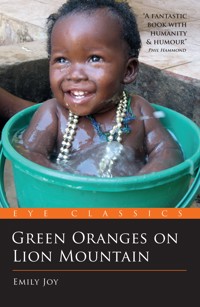
Copyright © Emily JoyCover image copyright © Sandra Lako. The photo was taken when she was working at the West African Fistula Centre (now know as Aberdeen Women’s Centre) www.sandralako.blogspot.com
Cover design by Jim Shannon/Emily AtkinsText layout by Helen Steer
The moral right of the Author to be identified as the author of the work has been asserted.
All rights reserved. No part of this publication may be reproduced, stored in a retrieval system or transmitted in any form or by any means without the prior written permission of the publisher nor be otherwise circulated in any form of binding or cover other than that in which it is published and without a similar condition being imposed on the subsequent purchaser.
British Library Cataloguing in Publication DataA catalogue record for this book is available from the British Library
ISBN: 978-1-903070-73-4
Some of the names in this book have been changed to protect some individuals’ identity.
Karin, Zietje and Eelco Krijn
Father Felim McAllister
On 12th March 1994 Felim, Eelco, Karin and three year old Zietje were killed by rebels as they evacuated Panguma Hospital.
Dr. Eelco and his family were just coming to the end of their three year placement at Panguma and Father Felim had been Panguma’s parish priest for over twenty-five years. They all loved Sierra Leone. This book is written in their memory and all the other unnamed souls who lost their lives in Sierra Leone’s dreadful civil war.
ACKNOWLEDGEMENTS
My thanks to the people of Salone who were so welcoming and boosted my faith in human nature despite some appalling circumstances. I can’t mention everyone, but I do have to thank Pa George, just for being himself. I met some of the best nurses in the world in Sierra Leone. In particular I’d like to thank Tiange and Alhusan (who taught me how to do surgery), Roberta (for her online real-time course in obstetric disasters), Sai Conteh (who kept my patients alive during the operations) and the marvellous Betty Sam for all her good sense, wisdom and kind heart. The Community Health Officers are now the lynchpin of medical care in Sierra Leone and Mohamed was a fantastic example of the enthusiasm and can-do attitude of this new breed of super-paramedic.
Voluntary Service Overseas gave me an amazing life experience but I would never have stuck it out without the support of my fellow volunteers, especially Alan O’Connor and Paul Weinberger. Thanks must also go to the Sisters and Fathers, in particular to Margaret Brennan and Pete Queally for their kindness and Hilary Lyons for her inspiration. Richard, Nick and Gladys in the VSO field office did their best to keep us safe and sane in difficult circumstances, despite all our complaints!
For my recent trips I’d like to thank Richard Kerr-Wilson from the Kambia Appeal for making it possible for me (and my family!) to keep my promise to return to Salone, and to Moses and Charles for looking after us so well when we got there.
Back in Serabu, I have to thank Fathers John Sandi and Sylvester Swaray for their hospitality and tireless work to rebuild the hospital and community. Royalties from this book are to try and help Serabu and Kambia in a small way.
None of it would have been possible without Terry’s advice support and patience. He also gets 10/10 for agreeing to our six weeks in Salone en famille in 2008, and 11/10 for looking after the troops so I could go again in 2009. On the writing front, my biological Pa George rescued me from the worst of my grammatical faux pas. Finally I’d like to thank Dan and Helen at Eye Books for giving me another bite of the banana.
And of course big kisses to Craig, Paul and Kristin. They were such troopers in Salone.
CONTENTS
Prologue
Surgery for Non-Surgeons
Arrival on Lion Mountain
Stand Back I’m an Administrator
What for Chop Today?
Oh Lord, Give this Patient Well Body
I’m Not Old.
I’m Just Ugly
Locked Out
Break a Leg
Let Them Eat Plassas
A Woman’s Life
A Christmas Carol
Nurse
The Junkie
The High Commissioner’s Party
No Socks, No Sex
Mariama’s Wedding
Where Mi Krismas?
Happy New Year
Saffa and Scooby
Creature Crawling in Abdomen
Raising the Roof
The Rebels are Coming
The Refugee
The Refugee Returns
Post Evacuation Blues
Phillippe’s Party
Guarding the Hospital
Rebels this Way
Last Orders
Discharged
Running Away!
Queen Without a Throne
Emergency Operation: Please Bring Welding Equipment
Panguma
Epilogue 2003
The Return of the Prodigal Daughter
Epilogue 2009
School in Africa by Art (11)
Sierra Leone: A Potted History
Links
About this Author
MAP OF SIERRA LEONE
Sierra Leone 1990
Population: 4 millionLife expectancy: 42Under-five mortality: 20%Literacy: 17%HIV infection rate: 3%UN Human DevelopmentIndex: bottom
Sierra Leone 2009
Population: 6.2 millionLife expectancy: 41.8Under-five mortality: 20%Literacy: 35%HIV infection rate: 7%UN Human DevelopmentIndex: 3rd from bottom
PROLOGUE - 2008
Are we nearly there yet?”“Ella! Shh!” echoed the boys, their faces shiny red and orange after eight hours of dust and sunshine pouring through the windows. My family definitely had more right to be cross at their mother than vice versa.
“Yes,” I said, suddenly feeling quite choked. “We’re nearly there.”
“There it is! Serabu!” yelped Frankie, pointing at a sign saying Southern Eye Clinic, Serabu. I frowned a little. This didn’t look like the Junction — no shacks, or traders, or people. The sign made no mention of the hospital.
We turned down a road, so overgrown and furrowed that it was hard to believe that anyone travelled here anymore. Art, our eleven-year-old official trip photographer, took shots of palm and banana trees and the occasional burnt out building that dotted the route down the hill onto the main street.
“Is this it, Mum?” asked Frankie.
“I… think so…” I looked out of the Landrover window at the rebuilt houses, the shiny new Eye Clinic and the street-side stalls. The stalls seemed more numerous than before, and had added mobile phone scratch cards, dresses and flip flops to the more usual wares of little piles of chillies, rice and Maggi cubes. But where were the customers? At least I recognized the church. Jesus was extending his arms in welcome, with yellow flowers at his feet. I hadn’t always seen eye to eye with the Nuns, but I was glad that the rebels hadn’t touched Jesus — the first sign that they had known any limits at all.
“This is your dream come true, isn’t it Mummy?” said Ella. Gosh, what a strange thing for a six year old to say. Had I said that? Fairytale terminology for a fantasy promise that you never really expected to become reality.
A new school, painted bright yellow and blue, had appeared in the patch of land between the church and the hospital. Beyond the school were the concrete walls that now surrounded the New Serabu Hospital. I didn’t like the walls.
Father Jabati met us at the gates. “Dr. Em, Mr-Dr-Em and the children! Welcome home!”
SURGERY FORNON-SURGEONS
And the Golden Rule, Dr. Joy?”“Where there’s pus, let it out.”
“Exactly. So if you learn nothing else…” Mr. Lord stared down at the cat’s cradle of sutures imprisoning my stubby fingers.
“Remember never, EVER, sew up an infected wound. Especially in a hot climate. The rest is in here — twenty years of African experience.” He thumped a tome the size of the Glasgow yellow pages. “Maurice King’s Primary Surgery. Everything you need to know from lancing boils to amputating legs.”
What? Surely no one would seriously expect me to amputate a leg? Fortunately the phone rang, rescuing us from further insights into the alarming contents of the DIY surgery book.
“Lord.”
“Mr. Lord, this is really too much” shrieked an irate female voice, “There’s been a delivery to Casualty. From your butcher!”
Mr. Lord held the handset at arm’s length. “Indeed?”
“It’s dribbling something unspeakable all over my desk!”
“We’ll be right there. So, class,” He grinned. “Time for our practical.”
Mr. Lord marched briskly down the corridor, his moccasins making no noise on the shiny white tiles. My friend Morag (slim, pretty, crisply ironed, compassionate, steady, able, hardworking, serene, professional and if that wasn’t bad enough, ever so nice too) glided beside him. I trudged behind, wondering if Voluntary Service Overseas actually believed we could be turned into surgeons in a week?
“I believe you have something for me?” Mr. Lord beamed at the middle-aged receptionist. She thrust a Marks and Spencer’s carrier bag over the counter.
“Much obliged.” He turned back to us. “Let’s practice our bowel anastomoses.”
Morag and I exchanged horrified glances. Mr. Lord was talking about major abdominal surgery.
“This way.” He held open the swing door opposite. “The plaster room appears to be free.”
“Mr. Lord.” The receptionist peered over her glasses.
“Yes?”
“You’re dripping.”
Once inside, Mr. Lord released a tangle of sheep’s bowels, letting them slither onto a metal tray. “My butcher is always most cooperative.”
We gaped. “Come, come, no time to lose. Trouble with your gloves, Dr. Joy?”
Mr. Lord handed me ten feet of clammy intestines just as I was trying to free my middle finger from the index finger-hole. His slimy offering sloshed faecal fluid across my newly laundered white coat.
“Hold the ends up, woman. Are you trying to give your patient peritonitis?”
Gulping back my nausea, I set to work on the sheep’s innards while Mr. Lord paced behind us. “Let us pretend that the middle foot is dead bowel that you have just released from a strangulated hernia. Smooth away the bowel contents back to healthy tissue. Good. Double clamp either end…”
What would VSO say if I wimped out now? Even worse, what would Morag say? It would mean she would have to go to Zambia on her own, but really, I wasn’t up to this.
“Dr. Joy, are you concentrating?”
“What? Yes, of course Mr. Lord.”
Ten minutes later, I knotted off my final stitch. Morag’s intestines were already neatly arranged on the tray.
“So. The moment of truth is upon us.” Mr. Lord declared with relish. “Have you saved your patient’s life? Will your anastomoses allow the bowel contents to pass freely without leakage? Undo your clamps!”
We gingerly released the clamps that had held back the intestinal juices from our newly stitched anastomoses.
“Hold up your intestines to test the join. Good, Dr. MacDonald, absolutely watertight, excellent… Oh dear, Dr. Joy.”
Faecal fluid oozed between my stitches and dripped onto the table.
I couldn’t do it. Well honestly, even with Morag holding my hand, how was I ever going survive two years running a hospital in the back of beyond?
So while Morag packed her bags for Zambia, I returned to verrucas, colds, bad backs and enough marital misery to convince me that being single was probably a blessing. In fact I turned out to be quite a good doctor, but I couldn’t stop dreaming of the world beyond my cosy backstreet surgery. One day, after hearing about Mrs. Jones’ twenty-two separate symptoms, followed by a drug addict calling me a fucking cow for not replacing his methadone script that had allegedly been eaten by his dog, I finally decided I had had enough. I picked up the phone to the VSO Postings Officer. Surprisingly, prior cowardice was no barrier to future employment.
“Excellent, we need a Doc in Sierra Leone.”
South America, how exotic! My atlas index sent me to page 36 — Africa? And sure enough, there it was — Sierra Leone, a country the size of Ireland on Africa’s western bulge, sandwiched between Liberia and Guinea. I had heard of Liberia, thanks to an unpleasant sounding civil war a couple of months back. Hmmm, civil war a hundred miles from my new home didn’t sound too good. Still, there’d been no recent media attention and no news was hopefully good news.
The details of Serabu Catholic Mission Hospital fell through my letter box the next morning along with a four-page resume of Sierra Leone. The name came from an intrepid Portuguese seafarer, Pedra da Cinta, who had spotted the mountainous Freetown peninsula jutting out into the Atlantic Ocean in 1460 and called it Serra Lyoa — lion mountain.
Over the next few hundred years various Europeans passed through, largely to pick up ivory or slaves until some spoilsport banned slavery in 1807. However the British government couldn’t allow ex-slaves to mix with polite white society, so decided to ship them all ‘home’, although virtually none had originated from Sierra Leone. These British slaves were destined for the euphemistically named Freetown (the Americans had a similar idea and called Sierra Leone’s neighbour, Liberia). Most of the early shipments died — those that disease spared were killed off by the indigenous Africans.
Undeterred, the British Government tried to mould the survivors who had no common language or culture into a homogenous Christian community — the Freetown Krios. The rest of the country was labelled a ‘Protectorate’. I think that meant that the gold, diamonds, rutile (used for white paint and the coverings of space ships), aluminium bauxite, palm oil (used in making the original Palmolive soap) and piassava (used for the bristles in sweeping brushes) were protected for the exploitation of the British, but history is rarely the strong point of we scientific types. Admittedly railways, power stations, hospitals and telephone lines were built in exchange for removing the aforesaid goods (or in order to remove them more efficiently). We British even set up black Africa’s first institute of higher learning, Fourah Bay College, to turn the Krios into teachers and missionaries.
By 1961, the British were washing their hands of the colonies and handed Sierra Leone over to Sir Milton Margai, a former doctor (should have been a good bloke then). Unfortunately the reins of power were soon seized by one Siaka Stevens.
Siaka Stevens and his Swiss bank account did very nicely. So nicely that there was not a single railway line, power station or up-country telephone remaining when he retired thirty years later. Nor was there any opposition (opposition having been conveniently outlawed, murdered or executed) to his handpicked successor, Major General Momoh, commander of the armed forces.
Momoh made his own fortune from the British, the Lebanese and various others with rich pale skins, by coming to an agreement whereby they could help themselves to the gold, and the diamonds and the rutile and the bauxite, without having to worry too much about little inconveniences like tax. Meanwhile the sixteen tribes that made up the four million strong population of Sierra Leone continued to scrape an existence off the land.
Sierra Leone’s only claim to fame seemed to be that Graham Greene had once stayed in Freetown and written The Heart of the Matter about the British colonial days, when Sierra Leone was known as ‘White Man’s Grave’ — largely due to the particularly lethal falciparum malaria.
White Man’s Grave rather missed the point if you looked at the statistics for the indigenous population. With a life expectancy of 42 and an under-five-mortality of 20% (the world’s second worst), the black men, women and particularly children were filling graves much faster than their expatriate counterparts but who cared about them?
That was where I came in. I would care. I would make a difference. I would change those statistics….
Five months later, I was sitting on the toilet at Gatwick Airport opening a bag of Maltesers. I popped a couple in my mouth and leaned against the cistern to stare at The Pregnancy Advisory Service number. Not that I was ever likely to need their services. ‘Finding a man’ was on my list of goals — after saving the world, saving lives and saving my soul. And losing weight. Four more Maltesers followed their siblings.
Hiding in the Ladies to avoid check-in didn’t say much for the state of my soul and with only two blokes in our group (a little Cockney mechanic and a married man pushing fifty with a wooden leg) finding a man had to be easier in Dunblane.
That left saving the world (always a bit unrealistic) and saving lives (not likely after the Surgery for Non-Surgeons course). I stuffed a handful of Maltesers in and crunched. Although I wore a mantle of sunny optimism, my robust exterior and endless jollity belied my lack of self-confidence but then, of course, all extroverts claim to be shy. People my size, with the voice to match, are not allowed to be vulnerable.
My voice. Ughh, now there was a thing. Too loud and too English. How I longed for a soft Scottish burr like Morag’s. I had spent six years at Dunblane High School and six years at Edinburgh University, declaring that I was a real Scot. It wasn’t my fault that I had spent my pre-school years as an Air Force daughter (until my father crashed his plane into a water buffalo which inconsiderately ambled across the runway). With this hereditary tendency for embarrassing disasters, why was I setting myself up for more?
“OK, Em. You don’t have to go.” I was right, I didn’t. I hadn’t checked in and could easily sneak off before my VSO compatriots even knew I’d arrived. There were other ways of achieving my goals. I could go on a diet, for instance. Hell’s bells, I could even start going to church!
I rummaged around in the bottom of the bag of Maltesers to find only a single osteoporotic crumb of honeycomb. Pathetic. I crumpled the bag and was about to sling it on the floor when my middle-class upbringing got the better of me. I was not a mere smoker who indulged her habit in the toilets and threw her butts in the pan. I was a chocolate eater and we were surely a better breed of addict. I put the wrapper in the sanitary disposal unit and sighed. Time to make a move.
I kicked my rucksacks, crammed with Tampax, rubber gloves and of course Primary Surgery, out of the cubicle. The choice between the rubber gloves and a pile of rubbishy best-sellers had been a difficult one, but AIDS mania filled the tabloid and medical press at that time, and Africa’s figures were alarming. Catching HIV from a patient during surgery seemed a cruel reward for attempting to save the world. Another good reason for staying at home.
Turning the cold tap full on, I washed my face under the washbasin mirror. My usually warm brown eyes frowned back accusingly, puckering my neat nose and cupid’s bow mouth. Perhaps the straight dark bob with Cleopatra fringe didn’t flatter my square face and perhaps if I ever tried a little makeup? Still, I looked quite young for twenty-seven — a sturdy example of a female Homo Sapiens, built to withstand the rigours of Africa. Nice teeth too, I was told. I smiled to reveal my best feature. All the better for eating with.
“Hi, Emily, you’re here!” I jumped. Lindsey dropped her bags next to mine and threw her arms round me. “The others are all checking in. They thought you’d wimped out!”
“No way!” I laughed. “Not me!”
“That’s what I said,” Lindsey giggled in a lovely Scottish lilt that I would have killed for. It was hard to imagine a more unlikely librarian. “Wait for me, would you? This is the fourth time I’ve been. I’m so excited!”
I watched Lindsey’s svelte figure slip into my cubicle then cursed at the mirror.
Positive thinking. That was the trick. Visualise yourself as you want to be and it will be so. I closed my eyes to imagine my metamorphosis, two years hence.
There I was, slim and glamorous, an accomplished surgeon, stepping off the plane on the arm of a handsome diplomat, my friends gaping at the swan before them….
“Dream on.” I stuck my tongue out at my reflection “Just try to survive two years without killing too many patients or sticking yourself with an AIDS-infected needle.”
At least there was still time to buy another bag of Maltesers.
We exited the Ladies, arms linked, and spotted our fellow VSOs standing in line at the Freetown check-in desk, each accompanied by matching bulging rucksacks.
“Kushe everyone!” I waved over-enthusiastically.
“Hey, it’s the Doc! Told you she’d show up eventually.” Klaus waved back. Good Lord! What had happened to his hair? People called Klaus really shouldn’t have a skin-head.
Klaus was the Cockney mechanic, despite the name bequeathed by a German father. He was a thirty-year-old ex-rigger, who had worked in Saudi and the North Sea, before adding Sierra Leone to his rather dubious list of workplaces. Half the size of my idea of a rigger, he seemed even shorter with no hair.
“Klaus! Love the hairdo!” I rubbed his shorn head. Neo-Nazi or Buddhist monk, it would undoubtedly prove cooler than my bob.
“So, Doc!” Mike with the wooden leg appeared and put his arm around me. “You didn’t abandon us?”
“Would I do that?”
“Course not, we need you to tend to all our ailments,” winked Mike. “Glad you’re here too, mate.” Mike thumped Klaus on the back. “Rescue me from all these women, eh?” Mike’s much younger wife smiled indulgently beside him.
“Pity we’re posted miles away from the delectable Lindsey.” Klaus nudged Lindsey’s shoulder. Lindsey tucked a wayward brown curl under the twist of multicoloured material holding her fringe off her forehead, and stuck up two fingers.
“Good odds though, Klaus. Seven to two!”
“Six to one,” corrected his wife.
“Of course darling.”
“Six to one, and take a look at the one!” I thought, eyeing Klaus unkindly before adding out loud. “So tell me, Mike, what’s with all this extra luggage?” I looked down at his two large rucksacks, plus a three-foot oblong box.
“My spare leg.”
“Of course.”
“In case this one gets eaten by termites.”
“A hazard of wooden legs, I suppose.”
“Not with my high-tensile graphite number. Look.” Mike hoisted his trouser leg and unstrapped his leg as the queue shuffled forwards around us. “No termites are likely to get this boy.”
“It’s so light!”
“Shhh! I claimed an extra twenty kilos,” Mike whispered. “And since good old VSO is too PC to quibble with poor disabled me, there’s lots of extra books and sweeties for us!”
“You are defrauding VSO of valuable funds,” a high-pitched Home Counties voice cut in. Susan was a medical secretary who would be teaching typing to Salonean college girls. Unlike the rest of us who all wore light cotton trousers and a T-shirt, she was dressed thirty years out of her time, in a brown corduroy skirt, brown jersey and high-necked lacy blouse, set off by delicate pearl earrings nestling in short blonde curls. “Funds that could be better spent on the Africans we are trying to help.”
“Oh Susan,” Lindsey sighed. Mike just laughed and strapped his leg back on.
“So, girls.” Lindsey changed the subject. “How did you fit two years’ Tampax into your bags?”
“Left everything else at home.”
“Won’t it be the rainy season when we arrive?”
“Yees?” Lindsey furrowed her brow. “Why so concerned, Susan?”
“What will happen to all the Tampax if our rucksacks get wet?”
We collapsed in giggles at Susan’s face and the vision of hundreds of expanding tampons bursting out of our bags.
Keen to thwart any potential VSO uprising, the customs men pulled Susan aside and started rummaging through all her Tampax. They obviously didn’t believe anyone could look so innocent. Whilst Susan blushed, the Neo-Nazi mechanic popped his bag onto the conveyor, where it slid unobserved past the TV monitor displaying spanners, monkey-wrenches and all manner of other lethal weapons.
“What have you got in there?” I asked as Klaus swung his bag off the conveyor belt as easily as if it contained a mere change of underwear.
“Tools of the trade. Haven’t you brought a set of surgical instruments or something?”
“Only rubber gloves. I can’t equip an entire hospital in twenty-five kilos.”
“What happens if I need my appendix out, then?”
“I’ll use your monkey wrench.”
“Ouch,” Klaus winced. “So, two years in White Man’s Grave, eh?”
“Have you been reading The Heart of the Matter?”
“Yeah, what was VSO thinking, putting Graham Greene on the reading list? Let’s call it Lion Mountain instead.”
“Lion Mountains,” Klaus corrected. “Serra Lyoa is plural.”
“Smartarse.”
“But I agree, Lion Mountain is more romantic.”
I smiled. Perhaps Klaus was all right, small, but perfectly formed, and after all, hair grows.
I had done it now. I was actually on my way to Sierra Leone. I needed a chocolate fix so pulled the family size bag of Maltesers from the sick-bag holder and tugged it open. The bag split and Maltesers danced away under the seats.
“Oh no,” I wailed, watching the chocolate marbles roll down the gangway of the climbing aircraft.
“Never mind, Doc,” said Klaus. “You can have one of my Minstrels once we’ve finished our ascent.”
“That long!”
“Ingrate!”
“I suppose I’ll manage ten more minutes.” I gripped the armrests instead.
“A big strong girl like you scared of flying?”
“No. Scared of two years alone in the wilderness.”
“You’ll be fine. A big…”
“Strong girl like me?” I glared at him.
“Yeah. At least we’ve got a fortnight’s Krio lessons before they dispatch us to fend for ourselves up-country. Look.” Klaus nudged me. “Drinks already. Fancy a beer?”
“No thanks! I don’t like beer. I’ll have Drambuie.”
“Yugh!”
“It’ll go well with those Minstrels…”
“Okay, okay.” Klaus pulled his rucksack from under the seat in front.
“Thanks.” I reached over to pluck a Minstrel from his bag and spilled my Drambuie over his leg.
“Sorry, sorry!” I frantically rubbed Klaus’ sticky thigh with my sleeve, but only succeeded in knocking his beer into his lap. He adjusted himself a little in his seat. “Oh, no. I’m sorry. I’ll…”
“Leave it,” he sighed. “I hear beer is a good mosquito repellent.”
“But mosquitoes probably love Drambuie. Sorry.”
“I won’t smell so sweet for a long time. Stop saying sorry.”
“Sorry.”
“For heavens sake, have another Minstrel.”
“You’ve only got one left.” I looked pleadingly at him.
“Eat it. It looks like your need is greater than mine. Besides, I’ve got another packet. In fact, why don’t you take that too?”
“Really?” Klaus shot up in my estimation.
“Really, but only if you promise to save them for Serabu.”
And he gave me his very last bit of chocolate for two years. I instantly forgave him his haircut and all comments about big strong girls.
ARRIVAL ONLION MOUNTAIN
The VSO office sat huddled in concrete, two floors above the Red Cross, just off Siaka Stevens’ Street in the throbbing heart of Freetown. Not a place to linger.
The British High Commissioner certainly didn’t hang around, keeping his pep talk focused on the perils of having relationships with or, God forbid, marrying the locals. He wasted no time in asking about our jobs, destinations or worries, as obviously British High Commissioners have much better things to do. After a curt goodbye, he tippety-tapped down the staircase, past the Red Cross office and pushed his way through a crowd of Liberian refugees to head straight for his shiny, air-conditioned car. There were no windows in the VSO office, but we watched him through the latticed brickwork that allowed a little air to circulate.
Mike found it all very amusing, but then he was a seasoned Aid Worker who had already spent a number of years overseas. Wooden leg or not, he was unlikely to have problems. Mike told us the two main reasons for volunteers being med-evacced were motorcycle accidents (not a problem for me, I wasn’t going on any motorbike) or psycho-vaccs. Well, nervous breakdowns weren’t my style either. After all I was a stable sort of character, wasn’t I?
Of course anybody could be stable when they’d had an easy life like mine: never abused or raped, no major bereavements, no ghastly relationship breakdowns, and even my parents were still married to each other. A spoilt only child with a cushy, middle class upbringing; that was me. I had no excuse to be anything but an optimist. And now it was payback time. Help!
“He’s totally ignoring all those refugees,” Susan sniffed as the British High Commissioner’s chauffeur shut him into his cool oasis, closing the passenger door on the smelly, noisy humidity of downtown Freetown.
“What can he do, Susan?” asked Mike.
“He’s the High Commissioner, he should help them.”
“How, Susan?” pressed Klaus, ever the realist. “He’s not responsible for Liberia, and besides he’s only in Salone for decoration. The Foreign Office is hardly likely to send its leading lights here.”
“Apparently he’s been relocated from Outer Mongolia,” whispered Lindsey.
“I rest my case,” said Klaus. “At least he’s invited all we lowly VSO subjects to his Christmas Party.”
Only three months till Christmas. I tried to forget about the bit in-between.
“Did everyone see that bit in The Guardian about Doe?” continued Klaus.
“Who’s Doe?” I asked.
“Liberia’s president. Don’t you docs pay any attention to current affairs?” groaned Lindsey.
“No, we leave that to smartarse librarians.”
“Well he’s an ex-president now,” laughed Mike. “Got himself knocked off by the rebels last week.”
“And good riddance by the sound of him,” added Lindsey.
“Oh dear,” said Susan. “Will that bring peace to Liberia?”
“I must say, civil war does sound worrying.”
“How does it worry you, Doc, when you obviously don’t know a thing about it?” teased Mike.
“Actually, Liberia came up at a family planning lecture last month.”
“What?” spluttered Lindsey.
“Liberia was one of the main producers of rubber for the condom industry. The civil war’s caused a bit of a supply crisis, especially with AIDS causing such a surge in demand.”
“So is that all we care about the dreadful things that are happening in Liberia?” Susan howled. “Our condom supply?”
“Well the Saloneans sound a pretty laid back lot. Sixteen tribes and no wars,” mused Klaus. “Sound safe enough for you, Doc?”
“That’s the only reason I agreed to come.”
It’s hard to feel chipper when you are emotionally and physically exhausted. The two-hour introductory tour of the Capital, on top of a six-hour flight, four hours at Lungi airport, five hours waiting for the Freetown ferry, an hour on the ferry, and only four hours in bed (or rather on the Field Officer’s settee), had assaulted all our senses, leaving “Oh my God, what have we done?” hanging unspoken in a big black cloud above us all. With the exception of Mike of course, who had done it all before.
Once the British High Commissioner had beaten his retreat, our rather weary, sad-eyed Field Director repeated, verbatim, the potted history of Sierra Leone that VSO had sent us in our introductory packs.
An overhead fan limped in time to the Field Director’s monotone voice and my attention wandered to the one beacon on the horizon of my two year sentence — Nick.
Nick was our Dutch-Indonesian Field Officer, all multicultural designer cool and immaculate grooming. Despite this, he treated us as comrades, rather than naughty school children as already seemed to be the Field Director’s wont. Admittedly the Field Director did manage a smile or two for me, which I put down to my dazzling personality, but Klaus said he had no choice — it would not do to alienate even the most dubious of doctors when you lived in White Man’s Grave.
The Field Director paused to point out the large map of Sierra Leone, sellotaped onto a cork notice-board which hung on the yellowing walls of the VSO office. Fifty red pins protruded, scattered around the country, each representing a volunteer. Most were in clusters, like the eight pins in Freetown itself, and four in Moyamba, where Klaus was headed, but there were a few singles, including me in the Southeast.
“The lonely onlies. Look at this poor person.” I pointed to a pin, way out East. “Miles from anyone.”
“That’s Panguma Hospital.” said Nick. “But another doctor has just arrived this month.”
“Great. So I won’t have to deal with all VSO ailments myself?”
“No,” said Nick. “Your pals will be relieved that they can see Morag instead.”
“Morag…?”
“Yes, here she is.” The Field Officer pushed another pin in his map. “Dr. Morag MacDonald, Medical Officer at Panguma Hospital.”
“Morag?” I couldn’t believe it. “Morag’s here! What happened to Zambia?”
“Somebody left her in the lurch, so it fell through.” Whoops, I thought, but kept quiet. “But Panguma’s delighted,” Nick continued. “We suggested she wait to come over with you lot, but she was desperate to get to work.”
“Typical Morag!”
“She left you a letter.” Nick waved toward the alphabetical pigeonholes at the front of the office.
Predictably the letter was full of enthusiasm for her job and her colleagues and said I was going to love Salone. Somehow I wasn’t comforted. It sounded like bloody hard work, and I was singularly unimpressed so far.
“I’m in heaven,” said Klaus, lying between Lindsey and me on soft yellow sand. “A beach that stretches forever, sun on my skin and two beautiful semi-naked women by my side.”
Beautiful? Me? I shivered with pleasure. “Better than Club Med,” I sighed.
The moment we had seen Freetown’s idyllic beaches, we had forgotten all about poverty and suffering. After all, how could it coexist in a world that had beauty such as this?
“You’ve never resorted to Club Med, Doc!” There he went again, implying that I was a desirable woman surrounded by suitors. I bristled with satisfaction. Klaus was right, I had avoided Club Med holidays, but not through tasteful superiority. It was those brochures featuring page after page of skinny blonde women draped over rugby-muscled men that scared me off. I wouldn’t stand a chance.
“This is awful,” said Lindsey, turning over on her towel. “Did you know they filmed the Bounty Bar advert here? How can I write home about the lush palm trees and the blue sea lapping at my feet without losing all credibility?”
“Yep, it’s a problem,” agreed Klaus. “Not nearly enough suffering to report.”
“Kushe, kushe.” Mike’s hefty body loomed over our little ménage à trois. His wife stood by his side with a tray of drinks. “How di body?”
“Kushe. We’re just fine.”
“How di body is the singular form of how are you. We’re plural.” Klaus chastised.
“Swot!” I grumbled. Klaus had come top in the Krio test — imagine being beaten by a mechanic!
“So what is the plural of how di body, Herr Top-of-The-Class?” Lindsey asked.
“I have absolutely no idea.” Klaus cat-stretched to his full five foot five, then sat up, cross-legged on the sand. “Do I see beers?”
“Here you are mate.” Mike distributed drinks from his wife’s tray. “And a double price G and T for the Doc.”
“Sorry,” I said. “But I really don’t like beer.”
“Time you learnt.” Klaus offered me his bottle. “There’ll be no pink gins up-country.”
“I doubt there’ll be any beer either.”
The Venue was the first place we’d found with the luxury of a fridge. It was an enormous raffia basket that housed a beach bar run by members of the enterprising Lebanese contingent. Despite the flimsy walls that had to be rebuilt at the end of each rainy season, trade roared. There were always plenty of thirsty volunteers, eager for a beach break from their up-country postings: fifty VSOs, a hundred American Peace Corps, numerous priests, nuns and other assorted missionaries, plus various outfits with names like CARE and CONCERN. Whatever the organisation, the Venue was the place to be.
“Here’s to our first week on Lion Mountain.” Klaus raised his bottle.
“Serra Lyoa,” agreed Lindsey, and we all clinked glass.
“Isn’t Susan joining us?” Klaus nodded towards the small figure huddled over a book in the corner out of the sun.
“Doesn’t drink,” said Mike.
“What’s she reading?” asked Lindsey.
“Jane Austen,” I said. “She was reading it in class. Poor girl can’t bear Krio’s bastardisation of the Queen’s English.”
“Krio’s great,” enthused Klaus. “So descriptive.”
“A German Cockney’s bound to love Krio.” teased Lindsey. “You can’t quibble with Susan’s taste though.”
“Huh?”
“Sense and Sensibility. It’s great fun.”
“Great fun?” I mouthed in amazement. Now Susan was bound to love such books, but real people like Lindsey? Well just wait; even I fully intended to spend my spare time in the wilderness expanding my reading repertoire. The one book I had not sacrificed for more rubber gloves was an exceedingly small-print edition of Tess of the d’Urbervilles. I was proud that it had triumphed over other options such as Jilly Cooper. Hopefully at the end of my two years I too could announce in front of my literary friends that I adored Jane Austen and Thomas Hardy. All part of saving my soul.
“Anyway,” Lindsey continued. “Reading tastes aside, I don’t think Susan approves of me.”
“Or any of us.”
“Oh, no. She thinks you’re fantastic, Em; you’re a doctor, you’re here to save lives!”
“Hmmph.”
“In fact, you’ve got quite a fan club already. Did I tell you about my granny?”
“Your granny?”
“She saw your picture in the Stirling Observer: Dunblane Doctor Goes to Africa.”
“Oh yes?”
“Isn’t it marvellous, that young lady doctor going to Africa?” mimicked Lindsey. “I pointed out that I was going to Africa too, but that didn’t seem to count. After all, I’m only a librarian.”
“Sorry,” I mumbled. I would have to perform well now, so as not to disappoint Susan and Lindsey’s granny.
“Never mind, Lindsey,” laughed Klaus. “Em’s hardly heroic doctor material.”
“Hoi, what do you mean?” Heroic doctor definitely fitted my goals and, although I couldn’t quite see it myself, I rather wanted everybody else to think I was wonderful. Especially Klaus, although I couldn’t imagine why I should care what he thought.
“You’re not pompous enough, that’s all.” He punched my arm.
“Hmmph,” I grunted. Now, as if the expectations of Susan and Lindsey’s granny weren’t enough, I’d have to prove myself to Klaus too.
“Come on, Doc,” Klaus jumped up. “Race you to the sea.”
And we ran laughing across the expansive sands, two white bodies, little and large, hurdling over the waves to plunge into the turquoise Atlantic.
The second week flew past. We were let loose on the vibrant markets of Freetown to practice our newly acquired Krio. The market women draped from head to toe in tie-dyed primary colours, tried to sell us piles of dried fish, rice and chillis from their stalls, or tempt us with strange coloured fruits and weird vegetables from the baskets balanced on their heads. I accidentally bought a bag of dried fish, thinking bonga too pretty a name to be applied to five-year-old reject sardines that never made it to a cosy oiled can. Klaus, of course, only went for the mouthwatering options like mangoes and pineapples. Smartarse, I thought, as we walked companionably back for our afternoon Krio lesson.
Two days before the end of our orientation fortnight, Serabu Hospital radioed to say that I was needed ASAP and that they’d collect me that afternoon. Susan nodded approvingly — no time to waste when there are lives to be saved. My brief surge of self importance was rapidly replaced by panic. I didn’t want to be dragged away from the security of our little group. It would be three months before we would be reunited at the VSO Christmas Conference. Three months of work and God knows what else, and three months before I would see Klaus again.
Whoa! Why was that suddenly a problem?
“Hard luck, Doc,” said Mike.
“You’ll do fine,” said Klaus.
“See you at the Christmas Conference,” smiled Lindsey. “Don’t work too hard.”
“I’ll write.” Klaus gave me a hug. “Tell me all about your first op.”
“Okay.” I shrugged. He said he would write!
As I climbed into the front seat of the Serabu Hospital Landrover the driver nodded a silent ‘hello’ and the Field Director handed me a plastic bag stuffed full of money.
“What’s all this?”
“Your monthly allowance.”
“Good Lord. It looks like I’ve robbed a bank!”
“Eighty pounds,” said the Field Director. “That’s Salonean inflation.”
“Don’t spend it all on gin and chocolate,” teased Klaus. His words were lost in a roll of thunder, followed by a curtain of rain swooshing onto the roof of the Landrover like a celestial car wash. I tried not to think of it as an omen and smiled weakly at Klaus. He gave a little wave, then dashed for cover with the others.
The big strong girl was on her own now.
STAND BACK, I’M ANADMINISTRATOR
The rain had stopped as suddenly as it had started, leaving an eerie silence. After seven hours imprisoned in the suspensionless Landrover rattling over the most dreadful pot holed roads, I was suddenly reluctant to get out.
Eight hours ago I had been surrounded by friends, my hair damp from the sea and my face flushed and salty. Now Moses, the hospital driver, had bypassed the Promised Land and delivered me straight to the Gates of Hell. My posting.
Well I couldn’t stay in the damned Landrover forever, so I opened the passenger door and jumped straight into a puddle.
“I am Sister Ignatius,” announced an austere voice. “Welcome to Serabu Catholic Mission Hospital.” I looked up. She was dressed in a white polyester veil and habit. The kerosene lamp that she held, à la Florence Nightingale, illuminated thin, blue-veined skin stretched over an angular face. Shadowy buildings loomed behind her, shrouded in hot damp mist.
I straightened to my full five foot six — physically half a foot taller and some four stones heavier than Sister Ignatius, so why did I feel so small?
“Er, thank you.” I held out my hand. “Emily Joy.”
“You are late, Dr. Joy. We were expecting you in daylight.”
“Sorry,” I muttered, unsure as to why I was apologising for my long uncomfortable journey. Perhaps the pull of my subconscious had slowed the vehicle down, so strong was my desire to remain in Freetown with Klaus and my friends on the beach. Unlike Morag, I certainly hadn’t been in any hurry to come to this black concentration camp run by the Ghost of Christmas Future. My future for the next two years.
“Come with me, Dr. Joy. You will need food.”
For the first time in my life, I just didn’t feel hungry.
Sister Ignatius sat across the convent table and watched me eat dry bread and sardines. Finally she spoke.
“Are you a surgeon, Dr. Joy?”
“Sorry. I’m afraid not.”
“I see.”
“I’m willing to learn,” I offered. Willing, yes — but able? Ignatius fell silent again, so I took another bite of my bread and tried not to slurp my tea.
“You are here to replace Dr. Pat. Patients travelled from all over Salone to benefit from Pat’s surgical skills.” Ignatius looked me up and down, no doubt wondering why VSO had sent such an inexperienced girl.
Why indeed? I swallowed my bread and felt the hard lump scrape its way down my oesophagus. “I’m sorry,” was all I could say. I was sorry. I was sorry for Serabu Hospital, I was sorry for Ignatius, and I was very sorry for myself. Why hadn’t I trusted my instincts in the Ladies at Gatwick, or even earlier, when I pulled out of Zambia? I wasn’t a selfless hard worker like Morag, or a surgeon like this Dr. Pat, or an idealist like Susan, or even a confident cynic like Mike. I was a spoilt only child who liked gin and chocolate and running round a squash court. What was I doing here?
“Well, we have to make do with what is available.” Sister Ignatius stood up.
“I’ll… er… I promise to do my best,” I stuttered. For heaven’s sake, this wasn’t a Brownie badge; it was two years’ responsibility for hundreds of lives.
“Very well. Mass is at six-thirty every morning, if you wish to attend.”
I cast my eyes down, unable to find the courage to tell her that to compound my inadequacies, I wasn’t a Catholic. Brought up rigidly agnostic, I hadn’t even been baptised. Forget my soul, would somebody please save me?
God granted me a brief respite in the form of a pot-bellied, bearded redhead. My angel of mercy burst into the room, dressed in a traditional Salonean suit of pink and blue tie-dyed material with a fancy embroidered yoke which did nothing for his shiny, sunburnt, bald pate, but somehow I couldn’t imagine him dressed in anything else. He was a thirty-something Santa on holiday, beaming ‘welcome’ across his freckled face.
“Ah, now, would I be seeing our brand-new doctor?”
Irish! Look, Ignatius, this is how the Irish are supposed to be. While I was considering throwing my arms round him in relief, I found myself already enveloped in an enormous bear hug. “Welcome to Serabu, Dr. Emily!”
“Good evening, Nathaniel,” Ignatius interrupted. “Please take Dr. Joy to her house.”
“Good evening, Sister.” He gave her a curt nod as she left, then bowed to me. “Nat O’Connor, Assistant Hospital Administrator of Serabu Hospital.”
“I’m Emily. Em. Hi.” I squeezed his soft pale hand tightly in mine.
“It’s mighty to have you here.”
“She didn’t think so.”
“Don’t be worrying about Ignatius,” Nat reassured me. “The staff are all a-buzz over the new lady doctor.”
“Oh no,” I whispered, my fears flooding back. I could talk to Nat. “I’m not sure I’m up to this job. Sister Ignatius has just been telling me about Dr. Pat. I think…”
“You’ll be grand.” He thumped me on the shoulder. “Come for a beer.”
“I don’t really like beer.” I knew I sounded churlish, but I was exhausted, I still hadn’t seen my house, and I really didn’t like beer.
“Rubbish. The night is young,” Nat continued unperturbed. “After meeting MT, you’ll be needing a few beers.”
“MT?”
“Maggie Thatcher. The staff call her MT.”
I laughed despite myself. “How do they know about the Iron Lady?”
“The World Service. Everybody knows Maggie.”
“And I came to escape her!”
Five bottles of Star beer later, Nat took me on a midnight tour.
All I wanted to do was crawl into bed, but I was too tired and too drunk to argue.
The hospital looked grim, each ward more unwelcoming than the last, all housed in concrete with kerosene lamps illuminating rows of windows along the sides.
“You’d better know up front that Serabu Hospital, like the whole country, is in dire financial straits.” Nat offered me a cigarette.
“No thanks.” How could he smoke in this heat? “Yes, we’ve been told all about inflation — the VSO Field Director gave me a bag of money that would have warmed the hearts of Bonnie and Clyde,” I giggled. Oh dear. That beer was strong.
“I’m afraid it’s not funny.” Nat turned serious. “The people have no money, so they don’t come to us until it’s too late. It’s disastrous — for our patients and for our hospital. Our income depends on attendance.”
“But surely you don’t charge!”
“Of course we do. The Catholic Mission isn’t made of money. Things are so bad now that unless our finances improve, they’ll withdraw their funding in July and that’ll be the end of Serabu Hospital.”
VSO had made no mention of the fact that my hospital might close before my first year was up. “That’s awful!” I exclaimed loudly, attempting to cover the shameful thought that I might not be committed to two years after all. So much for saving the world.
“It’s fearful, but everybody’s mighty excited that you’ve come. Enthusiastic new doctors are always good for business.”
“Oh God!” Never mind saving the world — was I was expected to save Serabu? Nat took one look at my face and laughed.
“Are you sure you’re not wanting that cigarette?”
“I almost wish I did!”
“Well you didn’t drink beer three hours ago,” he teased. “Enough gloom. On with the tour. This is Medical Ward and up here is the Administration block that backs onto Outpatients’ department. There’s also a small lab for simple tests…”
But I had stopped listening — there was a body slumped against the wall. Its head lolled forward with its arms akimbo, palms open to the black sky. Shit! I supposed I ought to do something.
Nat puffed on his cigarette, waiting, no doubt, for the new doctor to spring into action. Shit, shit, shit. “Nat.” I tugged at his cropped sleeve. “I… I can’t.” And I couldn’t. Nat took a long drag, making his cigarette end glow hot orange in the dark. Ashamed, I looked away and focused on a raindrop clinging to the guttering of Medical Ward. Slowly it stretched until it could cling no more, then dropped onto the woolly bonnet that covered the Body’s head. Nat puffed again. “Nat,” I coughed. “We can’t just leave it… him… there.”
“Ah, no indeed.” Nat stamped on his cigarette. “Stand back, doctor. This is a job for an Administrator.”
“Huh?”
“Shhh!” Nat crept up to the Body and lifted its woolly bonnet to expose an ear. “EMERGENCY!”
“Aaah!” The Body sprang to its feet.
“Aaah!” I echoed, jumping back into a puddle.
“Kushe, kushe.” Nat draped his arm round the wiry figure’s shoulders. “Is Serabu Hospital’s laziest night-watchman sleeping on duty again?”
“I notto sleep, Mr. Nat,” replied the Body.
“Sweet dreams, I hope, Almamy?” Nat pulled a box of matches from his pocket and lit another cigarette. I hung back in the shadows.
“No, Mr. Nat, I notto dream.”
“Well if I find you asleep one more time, Almamy, it will be nightmares. Understand? Bad, bad dreams.”
“No, no. I notto sleep, Mr. Nat.” Almamy shook his head until his woolly bonnet fell off.
“Of course not.” Nat picked up the bonnet and brushed it down. “Your hat, Almamy. Better have you looking your best for Dr. Emily.” Nat pulled me forward.
“Dr. Em!” Almamy sandwiched my pale hand in his black vice and crushed it with delight. “Kushe, kushe, Dr. Em!”
“Aaaah, kushe, Almamy,” I gasped. “How di body?” At least I could remember ‘Hello, how are you?’
Almamy replied by dropping his trousers to reveal a large scrotal hernia.
“Almamy has been saving his hernia,” whispered Nat. “For the new lady doctor.”
“I’m sorry,” I spluttered, catching my giggle with my hand. “I’m not a surgeon.” Unimpressed, Almamy tugged up his trousers, pulled his woolly bonnet back over his eyes and made himself comfortable against the wall.
“I wouldn’t be staying awake either, for £10 a month.”
“And I was complaining about £80! How can he live on £10?”
“And half a sack of rice.”
“Wow.”
“But I don’t want you thinking Almamy is typical. Our staff are mighty, you’ll see.”
“I’m more worried about what they think of me.” I slurped behind my new friend along the muddy path that led to my house. “So far I’ve met Almamy, who’ll be telling everyone I can’t even fix a simple hernia, and Ignatius. I bet you never realised those two had anything in common.”
“Bejasus! Such talk. We’ll be turning you into a surgeon within the week.”
“I doubt it,” I grunted, side-stepping a small pond.
The path was cut through long wet grass that brushed against my legs, soaking my dress and plastering it to my thighs. Muddy water splashed my shins and trickled back down to my leather sandals, which were now so soft that my feet slid off the soles and chafed against the straps.
There was a damp sweet perfume in the thick air that reminded me of Klaus soaked in Drambuie. I was already missing the little mechanic.
“Don’t you have a torch?” I asked Nat.
“No batteries. I hoped you’d bring supplies from the land of electricity.”
“I’ve two spare sets and a torch at the bottom of my rucksack, wherever that is.”
“Don’t worry, Moses’ taken everything to your house. But always hang onto your torch. You don’t want to be standing on any snakes or driver ants.” Nat certainly knew how to cheer a girl up. “Now then, here we are. Chez Dr. Em.”
We stood outside a big dark bungalow, the last building on the compound some five hundred metres from the wards. The moon picked out silhouettes of three tall palm trees standing behind my house, casting their shadows protectively over the corrugated iron roof. My personal guards.
“Is that all for me?” Where was the mud hut? This was bigger than my own York semi — currently overrun by lodgers. Oh dear. A sudden vision of my cosy living-room redecorated with purple flowery wallpaper popped into my head. Stop it. There was enough to worry about right here.
“The volunteer doctors often have families.”
“I’m young, free and single, I’m afraid.”




