


Erhalten Sie Zugang zu diesem und mehr als 300000 Büchern ab EUR 5,99 monatlich.
- Herausgeber: Peepal Tree Press
- Kategorie: Poesie und Drama
- Sprache: Englisch
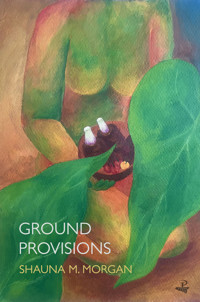
In her debut collection, Ground Provisions, Shauna M. Morgan takes us on a sensory journey across landscapes of the body and the earth. Immersing readers in lush language and imagery, the collection traverses the natural world from the Caribbean to North America and provokes questions about identity in the making of diasporas and the formation of multi-ethnic realities. What remains and what is created anew? Who emerges at the fissures of culture? What is learned from human relationships with the land? How do we make provisions between generations? These poems guide us through a backabush Jamaican community to an often-hostile US environment as they interrogate power, follow the desire for freedom, explore the necessity of ancestral memory, and answer the crucial need to touch the earth and each other. Sonnet and sestina walk alongside contemporary poetic forms such as haibun and duplex to explore family origins and Afro-Indo cultural syncretism while offering intimate views of the speakers and their interior lives. We witness grief overwhelming the mind and body, children holding painful secrets, women leaning into sensuality, and families coming to terms with fracture and reconciliation. Through intertwined familial and historical inheritances, these poems ask us to imagine the liberatory possibilities of establishing new roots with legacy seeds.
Sie lesen das E-Book in den Legimi-Apps auf:
Seitenzahl: 66
Veröffentlichungsjahr: 2025
Das E-Book (TTS) können Sie hören im Abo „Legimi Premium” in Legimi-Apps auf:
Ähnliche




















SHAUNA M. MORGAN
GROUND PROVISIONS
POEMS
CONTENTS
I
Ground Provisions
Grafted
Molasses
Dougla दोगला, Triveni Flow
Ghazal Behind Dasheen Leaves
Royal Poinciana
Saturday Night Revival
Sugar Babies
Stolen Mango
Moss
Paper Boats
Waiting
A Mum Brings Her Daughter Home
Shame
Polly Lizard Tails
Carry-on Items
Commendation of the Dead
More Than Ever
Away Like Dust
Moonshine Babies
Sestina, On Waiting for a Son
River Dream
Devi, Triveni Flow
II
Résumé Names
How to Make Her Stay
Midnight Feeding
Vines
Places Set
Spectre
Residue
Pining Away, Duplex
Another Language
Broken Things
The Space Between
(Un-manage)able Woman
(Re)Kindling
Drum Festival
Love Altar
This Valley: Away
This Valley: Strange Things
Plantation Mint
Fear of Dogs and Other Animals
Riposte XIV:
Passages
Sea Level
Teakwood
Scent of Wood and Water
Blood
Harvest
Mooring
Mirror Song
Bequest
Blood and Bread for the Earth
Sonance
Perpetual Winter
Needlework
Groundlife
III
Growing and Weeding
New Provisions
Diviner
Black-throated Songs
Another Season
Sawdust
Exotic Wager
Arch
Ode to Mountain Mint
Passion Flower
After Asking My Straight Husband If He Ponders the Oddities of Our Queer Marriage
Sweet Samba
This Valley: Home
In Abundance
Water Prayer (Omi Adura)
NOTES
ACKNOWLEDGEMENTS
For my parents, Verna Rose Isaacs Morgan
and Ranford Roy Morgan (Shan-Moghan)
and for Neena, Ella, and Kumasi
In solidarity wid mi people dem who a mek life through di struggle
With loving memories of Sheldon Vaughan Morgan and Adassa Merelda Isaacs Morgan
In what-left hours, they transformed rock
hillsides to bearing ground under the shine
eye moon, which is why ground provisions
gleam when tumpa knives cut them open.
– Lorna Goodison
it has been enough
slowly the soft eyes open
what ground is this
what god
– Lucille Clifton
I
GROUND PROVISIONS
At a corner, some obtuse angle rendering earth to land to property, we work a plot of reckoning,
sowing for sustenance instead of sale. The yam, ancestral return, yellow flesh sticky with survival,
roasts on the woodfire, crackling brown to black skin, a dry aliment, spirit food for mouth and mind.
Whentime fi nyam, we close our eyes, gather the scent, scorched and savoury, the textures of freedom and love,
grandmother root food. The children sit around a hill of gungo peas, sing to lead the shelling and sorting.
Mummaw ambles over, eyes grey with a bondage of memory. Her pipe all puff and defiance, she teases
them away to the river for janga. A diver emerges with two baskets full, prawn antennae seeking
their place. His nakedness tickles out the children’s giggles. Between smoke and water the old woman says:
A god flesh and backra claat. A divine silence falls, leaving only the hush of stream and breeze as they return in line
to the parcel of rock and clay. An iron pot has joined the ground provisions. Inside, a swirl of leaf and pepper
awaits the impatient river-shrimp. Baaba sees a need Anancy-like and rooted shallow. The cassava reaches
from beneath the soil, its star-spread legs eager for a mound, a ceremony of dirt. On the other side
of the harvest, we will pound fufu in burru beat, steam garden eggs, watch their flesh soften to seeded generosity.
GRAFTED
एक
Four Paths to Denbigh Drive, a narrow way to the yard where white-ringed trees and mangoes stand guard. Bombay on the left, East Indian on the right, the Pahari and Chinna Rasulu forming a new fruit, cleaving flavours for the elder son who had grafted his own tree, springing heavy branches, a motley of impossible tones and textures.
दो
Beyond the pink house, its barred windows, its iron seats, after all this time a breadfruit hangs, yellow heart so sweet, still here, having never worked off its time. Past the old lime, branches alive with a blanket of black caterpillars crowded on each other’s backs, a patch of grass holds the avocado pear tree, roots turned sideways, branches and fruit lying down where we wept a loud and sad release, a mournful bhajan.
तीन
Krishna ko sangh ho tu balak; gau’ charhavan, ban gaya. Krishna ko sangh ho tu balak; gau’ charhavan ban gaya. A song in my grandfather’s lessons, my ashen, not-as-brown skin, bare feet spun, stamped the ground, hands and wrists twisted this way and that, broadened his infrequent smile like my ek, do, teen, chaar, paanch.
चार
I never saw his fading face, only heard the deathbed song, a weak, hollowed-out thing, a Bhojpuri dirge, lyrical and long, for the hummingbirds who flitted from trumpet flower to hibiscus, their wings in harmony with my giggles, leaving as swiftly as I did when the smell of sweet crispy gulgula and jalebi welcomed me in for prasad and puja.
पाँच
An image of him riding his mule through canefield heat sits next to a glass, its tray, the oil I used to rub his feet. The Murti hangs above his Holy Bible, its pages marked by tazia paper, remnants from the last Hussay he built. His gun and hat sit restless atop the wardrobe; I pull his fine comb and scissors, see one of my many faces in him.
Krishna ko sangh ho tu balak; gau’ chahavan, ban gaya.
MOLASSES
Dem tell mi seh di birtin did hard.
Life torn from my mother who squatted in the dirt, back against the trunk of the soursop tree she stole away to, her circles in the soft ground to call up root weevils, fingers a plaid of sugar-caned skin and blood.
Navel-string still hitch on, tie up inna har.
They found me, mounted on her left breast suckling death, covered in sex and a vernix of ghosts, her hands on my back.
Mi madda nevah know weh di rainbow mean.
The afterbirth always beckoning me home to witness the memories of old folk, their songs and stories marking my flesh, echoing a tone my bones find familiar, chords reverberating through my hips and thighs.
She come dung faas like fiyah inna canepiece.
Always turmoil in the telling, her life between rows of cane, with light brown child mashed from molasses, bitter confection.
DOUGLA दोगला, TRIVENI FLOW
On sharp islands in the cross Caribbean Sea, we harvest okra and collect the bitter melon, ever looking east, to gather our green selves.
Hear the dholak, hear the old Bhojpuri songs matching the burru bass, Akan ancestor beat. One goat bellows the sound of two drumskins.
Father is a silent river running deep and black; mother races rapt to greet him in a holy bend; we many-faced children surge and flow below.
Her head was proud, a crowning black Afro, and he a certainty in shimmery pompadour. My hair grows free in lovematch corkscrew.
We are the children of indenture and theft, enslaved with rebellion rising in our ranks. Today finds us braiding backra hair black.
A slack-talk girl singing with masala lips, hot shito paste dancing upon her tongue – call her to your bed only in bland English.
Reach for Yemanja and Saraswati breasts to milk our many mouths: this old hunger.
Rivers flow to feeding, a new sustenance.
We are the waters coursing above and below, tributary song strummed on veena and banjo. The vibrating sounds, music to bring us home.
Language lost at sea returns in waves, words like speckled cowrie shells scatter the shores.
At dawn we gather our broken, sharp selves.
GHAZAL BEHIND DASHEEN LEAVES
We ran from the croaking lizards on nights when burned cane leaves whirled up, smokey behind the unconcerned dasheen leaves.
On cool evenings when mother cooked curried eggs and white rice and fish-tea for dinner, she cried – spurned for using thyme leaves.
We clapped mosquitos, caught peeny wallies at early dusk, before the moon-brightened star-apple overturned its dark leaves.




