


Erhalten Sie Zugang zu diesem und mehr als 300000 Büchern ab EUR 5,99 monatlich.
- Herausgeber: Istros Books
- Kategorie: Gesellschafts- und Liebesromane
- Sprache: Englisch
Vladislav Bajac's novel Hamam Balkania has won five awards, been printed in seven bestselling editions, and has finally come to the UK. In the tradition of great modern Serbian novelists, Bajac twists and weaves a tale between old and new, modern and rusted, East and West, water and fire. This is a book that lives in two parts - one set in the Ottoman empire of the 16th century, and the other in our own 21st century reality. Here we have the story of two friends, both taken as children from their homes and inducted into the Turkish Sultan's private guard: Sokollu Mehmed Pasha, the Serbian shepherd boy who rose to the position of Grand Vizier and Koca Mimar Sinan, the 'Michelangelo of the East'. Between them they represent both destruction and creation, while at the same time providing us with a harrowing insight into the heart of religion and identity. Back in our own time, we hear the voice of the author, sharing with us his experiences in the modern world, and his musings on faith, identity and nation. This is a truly ambitious book that rewards the reader with insights into some of the great questions of our time. The author's home country of Serbia is fascinated with its Ottoman roots, and this novel is no exception. Bajac takes the lives of ancient figures and weaves them together with flashing, real, and dirty characters from Western society's recent past - his stories at times dipping their pen into the well of memoir. Bajac has rubbed elbows with Leonard Cohen, and shared words and stages with literary greats - none of that is lost on the reader here. Two stories collide in the reader's mind, not on the pages, as if learning two different histories from two separate professors. This is at once a story of friendship, and a book of warning: do we really know that which we believe we know so well?
Sie lesen das E-Book in den Legimi-Apps auf:
Seitenzahl: 560
Veröffentlichungsjahr: 2015
Das E-Book (TTS) können Sie hören im Abo „Legimi Premium” in Legimi-Apps auf:
Ähnliche

















HAMAN BALKANIA
First published in 2014 by
Istros Books
London, United Kingdomwww.istrosbooks.com
© Vladislav Bajac, 2008
English translation © Randall A. Major, 2009
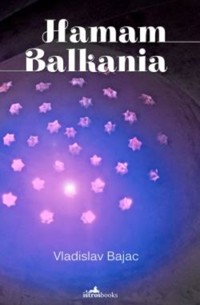
Cover photograph ‘16th-Century Ottoman Hamam’ by Anthony [email protected]
Artwork & Design@Milos Miljkovich, 2013
Graphic Designer/Web Developer – [email protected]
This novel was first published in English by Geopoetika, 2009, as part of the Serbian Prose in Translation/Srpska proza u prevodu series, financed by the Serbian Ministry of Culture. First published in Serbian as Hamam Balkanija by Arhipelag, Belgrade, in 2008.
The right of Vladislav Bajac to be identified as the author of this work has been asserted in accordance with the Copyright, Designs and Patents Act, 1988.
ISBN: 978-1-908236-14-2 (print edition)ISBN: 978-1-908236-86-9 (eBook)
Printed in England byCMP (UK), Poole, Dorsetwww.cmp-uk.com
The names in this book are fictional.All the characters as well,including the omniscient author.
It is quite probable that the famous phrase ‘miracle of nature’ originates with the ancient Greek materialist philosopher Epicurus (341–270 BC). And this is why: he based his ethics and his view of human happiness on the belief that ‘without a knowledge of nature it is impossible to achieve the light of enjoyment’. According to him, the greatest good is blissful pleasure. To have these postulates as a goal was not related to the vulgar pleasures of merrymakers or to immoderate gastronomic satiation, as those unfamiliar with him conclude, but rather referred primarily to the elimination of physical suffering and disturbances of the soul.
The attainment of spiritual tranquillity is founded on a naturalistic and individualistic basis.
Epicurus’ belief in hedonism was so firm that it could not be shaken even by the dark times of the dissolution of Alexander’s empire (and Epicurus had witnessed its grandeur and power), the consequences of which were anything but pleasurable. In spite of it all, he claimed that ‘the words of philo sophers that do not heal human suffering are of no value. Because, just like medicine that is not able to rid the body of illness, of equal uselessness is a philosophy that is unable to rid the soul of suffering’.
Thus, anyone who knew how to avoid physical pain and spiritual disharmony, who knew that sensual pleasure and spiritual joy (as a unity) are the greatest values of living and, therefore, who knew the very skill of living – such people belonged to the Epicurean brotherhood, maintained to this very day.
His spiritual father was Aristippus (435–355 BC), the founder of the Cyrenaic school, born in Cyrene, the most beautiful and advanced Hellenic settlement in Libya. Pindar described this spot as a remarkably well-situated hill, covered with springs that were utilised to artificially irrigate its garden terraces. These picturesque surroundings were dotted with olive orchards, vineyards and the famous silphium plantations, and also with vast meadows covered with sheep, goats and horses – the last ultimately giving rise to the noble Arabian breed. In spite of their hard-fought battles with the Egyptians and Libyans, the Cyrenians maintained a highly developed trade that made their homeland one of the wealthiest of the Hellenic states. Therefore, its citizens did not have to expend all their energy working, but also became skilfully familiar with the luxury and pleasure ‘that come from plenitude and a refined sense of living’. This is the place that seems to be the ancient prototype of the utopian city-states, and most certainly of the societies of Sir Thomas More and Tommaso Campanella.
It is no wonder that the thinker who promoted pleasure as the central principle of life, Aristippus, was born in none other than Cyrene. Indeed, he remained known as the philosophy’s progenitor, but under a different name: hedonism. He pronounced pleasure to be the only good and maintained that pain was the only evil. The feeling of pleasure, he claimed, is expressed in movement, ‘The gentle movement of feeling, like a breeze suitable for a sailboat, is the source of satisfaction; the rough movement of feeling, like a storm at sea, is the source of dissatisfaction; the absence of the movement of feeling, like a calm sea, is the source of indifference, equal to someone else’s satisfaction or dissatisfaction.’ However, Aristippus did not in any way believe it was possible to reduce man as a whole to the hunt for momentary physical pleasures, on the contrary, he taught that a wise man, controlling himself with reason, does not become a slave to pleasures, but rather controls them. He testified to this position through his relationship, in no way indifferent, to his hetaera, or concubine, Lais, in his most famous claim, ‘I possess Lais, but she does not possess me’.
Quite close to this idea was the ethical school of eudemonism (after the ancient Greek goddess of happiness and well-being) that believed happiness and well-being to be the guiding motive, the reason and goal of all our actions. Furthermore, a heavy emphasis on individualism is the common element of all kinds of hedonism, from the harshly sensual to the rationally spiritual.
The history that followed, that came about after these Hellenistic ‘schools of pleasure’, shows that some of its most important and well-remembered creators, along with many anonymous and now-forgotten individuals, attempted to become pleasure-seekers, even through personal and national tragedies. They zealously tried to feel satisfaction even in the broadest and most absurd range of the understanding of the meaning of hedonism, even taking pleasure in physical beauty, or even death.
If nothing else, they proved the constancy of the role of ethical relativism.
Višegrad, like any other place, has its own daily life. Yet, like few others, it also has its own abstract life. My experience with the metaphysics of Višegrad began in April, 1977, on approaching the town, before I ever saw the famed bridge on the Drina, which has fixed the town’s place in history forever. In my little haiku notebook, which I still have, I noted down a geo-poetic commentary ‘on the gravel of Višegrad’ with the poem that I saw through the window of the bus:
A stone between themtwo sunbathed firs, a partingmade in the forest.
My host and friend from my university days, Žarko Čigoja, thought that the bridge of Mehmed-pasha Sokollu (as it is written in Turkish) from 1571 – the bridge Andrić wrote about – was enough of a prize and a pleasure, for that occasion, so that he did not even show me the other attractions of his hometown. He could not even imagine how selfish I was, actually even unhappy, that I had to share this magnificent bridge with others. I did not know then, that deeper knowledge of the secrets of the environs of Višegrad would have to be earned by future experience. Once again, a secret brotherhood was in question and I would have to wait twenty-six whole years to enter that brotherhood. It was worth it. It was actually Ivo Andrić who taught me to wait; through reading him again. During my literature studies I was not yet able to connect his masterpiece with real life: too flippantly had I passed over his notes on the beginnings of the bridge’s construction – on its very essence – on the “transportation of stones from the quarries that were opened in the hills near Banja, an hour’s walk from the town”. What is more, the two most important literary bridges in all of Bosnia – this one on the River Drina and the other on the River Žepa – were built of the very same white stone mentioned in my haiku poem: with the love and money of Mehmed-pasha Sokolović and Jusuf Ibrahim, both Turkified or Islamised Serbs, made eternal in the humble and wise words of Andrić, the man who attributed his own life’s motto to his literary hero: there is safety in silence.
When I complained to a friend that I had perhaps dried up in my writing, he told me not to worry in the slightest. He had a certain cure for that illness. He was, actually, expecting the arrival of the Turkish writer, Orhan Pamuk, with the same diagnosis, so that the two of us could be cured at the same time with his prescription.
The only thing I knew about Banja, about Sokollu’s Spa, the Spa of Višegrad, as everyone called it, besides being the source of crystalline calcium carbonate used to build the bridge in Višegrad, was that there was a medicinal spring in this place three miles from the town. It was here that Mehmed-pasha Sokollu, in his waning years in 1575, built a domed Turkish bath, wanting to give something (more) to his birthplace. In a brochure from 1934, I read that the radioactive waters (at an altitude of more than 1200 feet) treated rheumatism, neuralgia and ‘women’s disorders’. The brochure further claimed that the spa waters have an especially beneficial effect on barren women. ‘When a barren wife hails at the spa, and then begets a child, the village round doth shake its head, saying: By God, if she hadn’t hailed at the spa and her incantations said, she never ever would have bred…’
So it was that I also travelled through the thick forest to the spa, which I nicknamed ‘the Maidenhair’ after the magical looking rare grass that grows only there. I was happy to meet up with my old acquaintance, Orhan Pamuk, himself a native of Istanbul. And I was mildly surprised that he too, was suffering from a dry spell, because he was known to be a prolific writer. If perchance in some period of his writing life he did not publish a book for a long while, the one that followed was sure to be a hefty baby.
I gave birth to my children less often, and most often they were of medium weight. Such was my rhythm. However, in the last couple of years I had not conceived a single one, and I was getting seriously worried. That was why I went to visit the stone that gave birth to water: such fertility revived my faith. The stone on which I stepped had been polished for more than four centuries and was now the colour of grass and moss. The water, hot but not boiling, was of a heavenly warmth. and my body was turning into a ghost: alive yet dead. Pamuk and our host tried to talk through the water vapour, but the words disappeared in the glass windows of the dome and lost all their meaning. Our eyelids closed, but our eyes did not go to sleep. I push my way through the powerful water, to sit under the heavy stream that rushes from the mountain into the small pool, across my back. I am beaten as I never have been before. And I am happy to the point of silliness. This is the meeting point of the Cabbala, Zen, Sufism, Orthodox Aestheticism, the Catholic erasure of the fear of sin, the artistic heights of Islam... Just as the maidenhair fern can grow nowhere else but here, only here does the water arrive from a depth of 590 feet and from a more important historical depth of thirty-eight thousand years. An age sufficient to quell counts about its reason for existence or for speaking to the world.
It is also the reason for my relationship with the past. The antiquity that is inhaled here is completely authentic and cannot be resisted. The spirit first loses its orientation, and then the concept of time, and then the body also loses its orientation, and then its concept of space. This peculiar nirvana transformed me into a large question mark: were the barren women at this bath, perhaps, serviced by a man who was renowned for his healthy seed? Was this bath perhaps a male harem for desperate barren women? What kind of pleasure this tucked-away pool must have been for beys, pashas, viziers or sultans, regardless of whether they were the hosts or guests here. Whichever of the genders served these active waters and their bathers – it is noted in a long-lost text, that making love under this mountain stream (at a temperature of 95 degrees) is on par with the pleasure in the beauties of the heavenly gardens, Valhalla and Jannah.
This hamam could have been an ideal place for a caravansary, for surely travellers would have parted with their money here. Yet, nature (and perhaps fate) wished to hide it from the busy byways, and so placed it at an altitude that discouraged the weary traveller from the very thought of climbing up to it. That is why the stones of the hamam were polished by decades and centuries, and largely not by the hand of man. Although, it must be admitted, that hand got involved wherever and whenever it could: thus it is possible to find quotations in old manuscripts that overlap with the present: ‘Next to the spa stands a building where a popular investor maintains a restaurant and has rooms for overnight stay. In front of that building there is a large veranda in front of which spread magnificent panoramas of nature.’
I don’t know who the popular investor is nowadays, but he has not deprived himself either of the ‘restaurant’ nor of the ‘veranda’. For, it is true, the satisfaction of bathing in the tiny heavenly pool would not be complete if one does not go to the restaurant veranda afterwards, across a large hanging balcony without glass, above a deep mountain ravine that expands your thoughts with its marvellous views: thoughts that do not seem, reflecting off the Bosnian hills and vales that stand shoulder to shoulder with you, to return to you infertile. And the food! Along with the local specialities, you will be served royal young trout, just pulled from the nearby rapids, ordered by telephone only an hour before. This is trout that has gone all winter without eating, and has just begun to feed on pristine food.
However, the modern structure of this restaurant should not be confused with the caravansary in the 16th century. That, it is not. Today, for those who wish to enjoy these marvels for a while longer, there is a hotel – a rehabilitation centre called ‘Maidenhair’, with all the necessary comforts and also a modern pool, which is also filled with the thermal waters. The source of their radioactivity is radon, and where there is radon there will also be doctors and physiotherapists. Clearly, you do not have to be ill or concerned about your health to come to this place. In fact, by going there healthy, you prove to yourself that you have not yet rid yourself of hedonism.
Even Mehmed-Pasha himself did not make a caravansary of the hamam, of ‘the beautiful spa with its dome roof’; he built one nearby: “next to the River Drina as Sokollu’s stone inn or caravansary, which could take about ten thousand horses and camels under its roof”. Do you think the numbers are exaggerated? I wouldn’t say so. If they are, then they are not far from true. Just imagine what a task it was like to build a bridge like the one in Višegrad in the 1570s! In Mehmed-Pasha’s time Višegrad had about seven hundred homes, a mosque named Selimiye, a fountain, about three hundred shops, an imaret (hospice) that served the village’s poor, and a Dervish monastery – a tekya. In the village of Sokolovići (which got its name after the pasha, or the pasha got his name after the village, it makes no difference), there was a mosque called Sokolović mosque, but there was also a place for a Christian church where, according to legend, the pasha built a church dedicated to his Orthodox mother. This, of course, should not surprise anyone, if it is generally known that it was actually Mehmed-Pasha Sokollu who, as a vizier of the Turkish Dīvān, in 1557, personally had the Serbian Patriarchate at Peć renovated and then placed his brother Makarije at the head of the church, as the sources say, at the moment, ‘when Orthodoxy was in chaos and disarray, and the national idea of the Serbian people was beginning to wane in the heavy shackles of its slavery’. Some historians hold the position that, with the latter, ‘the great vizier through this decree preserved the Serbian people from final extinction and destruction’. This cannot be far from the truth if one knows to what extent the Serbian people of the time, no longer having their own independent state, lent importance to the only existing replacement for statehood – the Serbian Orthodox church. This is the reason for the widely held qualification that Mehmed-Pasha Sokollu was ‘an unshakeable Moslem and, at the same time... a good patriot who paid his dues to his people with dignity’. He believed that he made peace between Islam and his Bosnian homeland; his Serbian roots and the Orthodox Christian faith.
And that is why (in my mind) it was there, at the hamam, at that particular time, that most popular and controversial contemporary Turkish writer, Orhan Pamuk showed up with me – because, if there is any ideology in novel writing, he dedicated his books to the relations between East and West, and thereby continued down the path followed by some of his ancestors. And there is another reason: his masterpiece novel My Name is Red deals with the Ottoman Empire and in part with Mehmed-Pasha’s time, and also with the consequences of that time. For his explanation of that period, Pamuk deserved a virtual (or perhaps for him, Dervish’s) bath – for there is never enough cleanliness and purification. Nor is there enough enjoyment, or akshamluk ‘the Bosnian custom of sitting on the grass in the evening, usually by a body of water, drinking brandy, singing and talking’.
What kind of writers would we be if we did not, sometimes, next to the hamam, enjoy a bit of akshamluk ourselves? While understanding this word’s hedonistic and philosophical meaning.
One of the writers’ main problems, is that they often confuse reality and imagination. That is the source of the famous loss of the boundary between what happened and what was experienced. And that is how I began to temporally mix my encounters with people close to me; it is in fact, how I brought those who lived five centuries before me closer to my own time, and transferred myself and my friends (or characters, it makes no difference) with ease into lives centuries older than we are.
It was one of the ways of fulfilling the writer’s dream about the temporal omnipotence of words.
Because of that dream, books come into being.
He wished that someone would kill him. Yes, that is right. Simply – to be killed. In the past year so much that he cared about and so many that he loved had disappeared from his life. This was, of course, no accident. It was all carefully planned and likewise carried out. He had to admit – his opponent executed it all without error, and thus, from the standpoint of the skill and expertise of what had been done, he had absolutely nothing to object to. Except for the very basis of the idea: why had his enemies set the entire machinery in motion and spent so much time, money and energy in order to obliterate everything dear to him, when it would have been much quicker, cheaper and easier to kill him and him alone?
Yet, in fact, he knew the reason. What they really wanted was for him to constantly ask that question and, not finding an answer, to ultimately feel so alone and abandoned that he wished to live no longer. Because watching those near, dear and loyal to him disappearing one by one before his very eyes, that had to hurt, and it went on and on. If they had killed him first and immediately, there would be none of the suffering they wished him to go through. To be honest, after so many decades in authority, at the very top, he had to expect such a decline. So it had been, it seems, from the beginning of the world; one’s rise is most often associated with one’s fall. Whoever reached the top, must also find the bottom, in whatever sequence. But whether everyone actually had to fall to the bottom after being at the top, that is questionable. It did fall to him. Or it was, as they say, his destiny. Or had he actually brought on his own decline.
To be fair, his fall was actually rather literal. No one replaced him, overthrew him or passed him by in a new distribution of authority (even if such things had been planned). He fell from a single, sudden stab of a knife right in the heart and now, there he was, lying in a pool of blood, watching his entire past life as if he were summarising it before death so that he would not forget it.
What more could he ask, his wish was fulfilled: someone had killed him.
Strange, how death can be a relief. Certainly, his murderers had not done this to show him compassion. During his reign, violent death had been a normal, everyday phenomenon; the nuances were just in the type or degree of the morbidity and brutality. The Empire had required violence at all times and in all forms. While he was a grand vizier, taking others’ lives was not in any way characteristic of him as a leader or, God forbid, as a person. It was part of protecting the system; it was not even a matter of safeguarding his own authority. It was a mechanism, centuries in the making, that no single individual, no matter from what position of authority he acted, could disturb, much the less change, even if he wanted to. In the battles, wars, campaigns and conquests, death was commonplace. It occurred frequently in peacetime as well, only just not as widely spread.
After all, was he not famed as a grand vizier also because he ruled during the reign of three sultans! Who else could make such a claim? A rarity was a vizier who could survive the enthronement of one sultan, and no one ever connected three in a row! All death had originated from the highest ruler: did not every sultan, when taking the throne, by an unwritten law, first kill all his brothers (some also killed their own children) so that they did not threaten his reign with their very existence?
It would also not be true to say that he was waiting for his own death. It simply did not surprise him. About Death itself he knew everything: it would be difficult to find someone who could outdo him in his knowledge of its causes and effects, its kinds and types. Perhaps he would not excel at questions of its usefulness: not one of his teachers or rulers had instructed him about such secrets because the question of purpose would never be asked by such people.
‘Wishing’ to die did not also mean that he ‘longed’ for it. His wishing allowed him to peacefully await his own fate. It removed all unnecessary uncertainty.
Now everything stopped being important, and especially everything that required additional time for reflection. There was just not enough time for anything. Except for death.
Since I had inwardly proved to myself that I had not ‘dried up’ as a writer, I could begin in reality to struggle in solving a dilemma. Which of the three planned books should I start to write? I will not mention the other two anticipated books because I have, obviously, started writing the frontrunner. Of course, subtle reasons were in this book’s favour because I had also done most of the serious and necessary preparatory work for the other two future books from the narrow selection.
Of those subtle reasons, the scales were tipped by those that I would group under ‘local-patriotic’ reasons. Namely, in a recent conversation with a colleague on the topics of nationalism and globalism in literary themes, I realised for the first time the fact that the fervent defenders of the ‘domestic novel’ had labelled me ‘cosmopolitan’, a term that they used with condescension. Yet in this conclusion they ignored the fact that in four out of my five published novels, the action at least begins or takes place entirely in Belgrade and/or Serbia, and that of my seven books of prose (not counting this one, of course) six contain the same topography! And yet, the fault-finding had no end: perhaps those books in their essence or message were too cosmopolitan, so even local geography or local action could not help them. They did not manage to rise to the level of national myths, which was, to be honest, not part of their conception either.
The chosen topic hid new traps, not only compositional but also those mentioned earlier – ideological. However, if a writer puts too much stock in all that, he probably would never write anything (worthwhile). Thus, I resolved to write about a Serb who became something else. This ‘something else’ was what interested me. Not really the ‘Serb’ part although, even if I wanted to, I could not separate that from ‘Something Else-ness’. If I were to delve into it really deeply, I would have to admit that I was actually and essentially interested only in the existence of the transition from One into Something Else: the very act in itself.
So, I started researching, investigating, gathering, selecting, accepting and rejecting my materials. Yet, a method had to be chosen for this gathering activity, or at least the order of steps to be taken. Facts as a sort of leitmotif of the process could pop up from anywhere and then be added to the already existing ones. One of my methods was to follow the traces of the protagonists. Thus, over several years (in parallel with other ways of studying this topic) I basically passed through the most important regions where Sokollu Mehmed Pasha had been or had worked: Višegrad with its environs and the wider area of eastern Bosnia and western Serbia (including the Drina River that divides/joins them), Herzegovina and Dubrovnik, Vojvodina and central Hungary, its western part with the centre of the old Austro-Hungarian Empire – Vienna, all of Bulgaria in its breadth, the former capital of the Ottoman Empire – Edirne, and then to the heart – both ancient and modern – Byzantium/Constantinople/Stambol/Istanbul, and all the seas in the area (the Adriatic, the Black Sea, the Sea of Marmara, the Aegean Sea). I finished my search in south-western Turkey and, at the very end, in the Princes’ Islands. I covered it all several times. Persia was the only part to remain outside of my reach, as I was hindered by the wars in the Turkish surroundings – today non-existent Persia. Before that, the wars around Serbia, in today’s non-existent Yugoslavia, hindered me from seeing things in my own backyard. (Belgrade, which was so vital to me, was presupposed also as a toponym. In any case, the whole thing started there and, in principle, soon everything will end there as well.)
In parallel, I also visited the architectural wonders of Mimar Koca Sinan, a contemporary of Mehmed Pasha and the second character in the forthcoming book. I also visited a man named Orhan Pamuk, and a certain V.B. These two latter became the second couple of the parallel action of the planned novel.
These four people became characters in the same book (placed, in fact, on opposing pages), which recruited all of them in a conspiracy against history as I knew it.
Before his death, of course, there was a life. A long and rich one. Powerful, but also insecure. As much his own as someone else’s. From time to time, the ownership of his own life slipped away from him. If it had only been a matter of God himself – the Lord of lords or God’s emissary, the choice would have been simple: Mohammed or Christ. Or both of them at the same time. However, someone, or more likely something, took over his life occasionally and left him without the essential possibility of choosing for himself to what or to whom he belonged.
Perhaps this in itself would not have been such an enigma if it had not kept imposing itself so often and so persistently, and with increasing intensity as he grew older. Even to the point of exasperation. Since he was unable to find logical reasons for it, he was also unable to solve the problem. And when the Secret was heaped onto the burden of so many years, life became a nightmare. It is possible that his approaching death (or, more likely, his wish for it) had an effect; the smell of its proximity could change his view of the world – accepted and proven a thousand times over – to turn it inside out into its own opposite and transform it into a completely repulsive truth. And yet, he could not reach even such a truth! So he thought that it would be easier to accept even the worst of truths, driven by his inability to capture any of them.
In no way could he take two possible explanations into consideration.
The first was understood: It was Allah’s will! One dared not and could not contradict him publicly. In any case, since this was a conversation he kept within himself, the public had nothing to do with it, nor did Allah.
The second explanation did not lead far away from the Almighty. It could be said that it was moulded for him: it was his Destiny. This he could not accept because it was an invention of the powerless to justify their weakness.
He experienced the truth – oh the irony of it! – as the blade of the knife buried itself in his chest: he was the lord of his life only halfway. The other half was ruled by the other half of his personality: the first part of his personality, the one that belonged to Serbia and Bosnia.
He was both a Turk and a Serb. Both a Serb and a Turk.
What a relief.
To die.
Planning the structure of a novel presupposes the existence of two beginnings and two endings, or two sorts of beginning and ending. One of the beginnings and endings has to do with action: how and when it will begin and how and when it will end. This is perhaps the most important secret of the book to the reader. To the author, another secret may be of more importance, the secret of the beginning and end of the ideas that stimulate him; that question or problem that actually inspired the author to come up with the book to begin to write, and that desirable, ultimate idea that could bring the book to its end.
While the structure of this book was still rather abstract and quite foggy, I knew that its protagonists offered the possibility of a profound story which explored the ideas of identity and change. That was the so-called starting point, while the ultimate goal could already be guessed: what is it that occurs to human beings, and around them as well, who happen to have a double identity?
The driving force of this novel, Mehmed pasha Sokollu (in Serbian he is known as Mehmed-paša Sokolović) made the decision for me about the cause and reason for me to write. (I recall how they prepared us in elementary school for the subject of logic, and the preparations for war, by teaching us to differentiate cause from reason. Most of us did not get it, and if we did, it was with great difficulty. Still, I managed, after great effort, to fathom it once and for all: the cause was long and carefully prepared, and the reason was a distraction and could also be given ad hoc, because it was simply a cog in a long-existing plan. The example they liked to use the most was the First World War – the lineage of the Austro-Hungarian monarchy, Serbia, Bosnia, Sarajevo, the group known as ‘the Black Hand’, and the assassin/patriot Gavrilo Princip).
In this case, the cause for me to work on Bajica Sokolović was the discovery that he was already eighteen years old when taken to Turkey as part of the infamous devshirme (‘blood tribute’), and not as a small child who would hardly be able to remember where he came from. I wondered why he was chosen to become a janissary when he was already so old? While training them for the army, the Turks did not forbid the chosen boys to be conscious of their roots, but they rightly calculated that the fewer memories one has of one’s homeland means that one will be less emotionally connected to it.
And ultimately, this was my real reason and the ultimate motive to start writing about Sokollu Mehmed Pasha: when I had studied everything I could find about the life and times of this interesting man, and all of that was still not enough to convince me to start writing (those other two possible books were still in play), one thing made the essential difference. I had found undeniable evidence (manuscripts and drawings, comments and descriptions from several sources) that around 1575 Mehmed-pasha had built in Belgrade, among other things, a famous caravansary and market place right under the foundations of the building where I was living then, in 2005, and where I live to this very day! Of all places, right in that very spot. A coincidence? When I say ‘built’ I mean that it was built according to his wishes and orders, and that he was the one who financed the project: the patron. The construction work was carried out by an architect-builder, in this case probably a man named Sinan.
After this discovery, whether I wanted to or not, whether it was pretentious or not, I felt the call to write something about these two people in one body. The question of double identity attracted me at the beginning exclusively as a problem of the dual national identity and religion of an individual. And with the entrance of Sinan the builder into Mehmed Pasha’s life, there was the possibility of a double identity in two men. Thus, the double identity of two people in one body at once could have multiple meanings: it was even possible to divide the separate individuals into two personalities, but it was also possible that the complete (or even partial) similarity between two people led them to melt into one!
Now, back to my address. The foundations of this building in the Dorćol district of Belgrade, were laid beginning in 1914 (again, the First World War!) according to the design of Petar Bajalović, and the building was completed in 1924 in the so-called Serbian-Byzantine style with elements of the Wiener Secession, which is a rarely used combination in the architecture of Belgrade. It could be called the place from which I speak, both in the literal and in the symbolic sense. If I would add to that the sense of writing, liberated, and here and there my own impudent attitude, then I could add something else as well. The historical heritage of Ottoman-Islamic architecture left behind by Sinan is not the only connection between the past and present. There are others: for example, the wordplay of the Serbian names Bajo/Bajica – a future vizier of Turkey, the most powerful empire at the peak of its might while he was alive – with the surnames of the Serbian architect of my building, Bajalović, and the author of this book – V. B. (whose surname, after its Germanisation by Maria Theresa in Vojvodina long ago, was closer to Bajalović’s surname than to Bajica’s name). Then, the fact that my home rests on the remains of that ‘enemy’ culture of the time, with its modern address being the ‘Street of Emperor Dušan’, named after a Serbian ruler from the 14th century, called ‘the Great’, who made Serbia the greatest it had been in its history, not only territorially speaking, just as Suleiman the Magnificent did for Turkey with the zealous aid of Bajica/Sokollu Mehmed Pasha two centuries later. Thus, that is the building from which I speak, whose square tower at the very top carries an inscription, in large letters, saying that it belongs/belonged to the Society of St. Sava (the greatest of Serbian Saints, and also the most important secular figure).
History especially favours the greatest, the strongest, the most powerful and all the other ‘mosts’. This book, however, has a different purpose: to ask, for instance, whether any of these ‘mosts’ from the preceding paragraph ever came into conflict here, did they meet? And why? If the answer to any of those is ‘yes’, then the book asks how, and what happened before that, and after that, then again how, and perhaps even why... In this case, even the name of the place where these thoughts occur to me, the Dorćol district of Belgrade, is of Turkish origins (Dort-jol), suggesting even linguistically and literally that this is (was) a place of meeting, of gathering and remaining, because in Turkish it marks four roads or, if you will, the crossroads.
In summary: this book deals with gathering the probable and certainly the ephemeral.
Meanwhile, history still stands steady as a monument.
By moving his family from the small town to his brother’s place in the village, his father thought that they were saved from the Turkish menace; that gathering up of small Serbian children to send to various parts of Turkey, and even to the court, in order to make elite soldiers of the Empire out of them. However, he did not know that the Herzegovinian, Sandžakbey Skender Ornosović, had been given orders from Constan -tinople that every few years he was to trawl Bosnia and Herzegovina and ‘to collect a thousand children in the ‘blood tribute’ and take them to the palaces…’1 And that had meant an additional problem: in order to fulfil such a high quota of specially gifted children, which had been increased after the capture of Belgrade in 1521 due to heavy losses in the siege, the bey had to gather up older children as well, which had not been usual practice before that time. Just how strictly this duty was being enforced could be seen by the persistence with which, this time, he did not pardon the parents who hid their children in the forests, or even those who intentionally maimed their offspring because they thought that the Empire would not need them that way. Even in these drastic cases, the agas did not desist. They even visited the monasteries and took young men who were preparing for monkhood away from their books. Among them was Bajo Sokolović, taken by force back to the village of Sokolovići from the monastery of Mileševa; an Orthodox theologian far from being a child, a tall young man almost eighteen years old. In addition to his learnedness, there was a single factor that also went in his favour: he came from a noble family and therefore especially desirable for the tribute in blood. The fact that he had studied the Christian word of God was also not a barrier for the Ottomans. At one moment his Father Dimitrije found out just how special his case was: the head captain, Mehmed-bey, admitted that a special order had been given so that his Bajica would be taken by the tribute to the capital of the empire. Comforting him by saying that his son was destined for an important place and even more important works, he told him that the proof of that was that Bajica had been asked for by a certain Sokolović who had been taken away in an Imperial caravan some twenty years before. That man’s name was now Deli Husrev-pasha. His younger brother had also gone not long ago, and was now called Mustafa. Husrev had advanced very quickly at the sultan’s court, arriving at a position where, as a pasha, he could make important decisions as well.
All of these were additional reasons why his father and his cousin – a monk of Mileševo – together with the leader of that monastery, Božidar Goraždanin, could convince none of the agas not to take Bajica away, not even with their pleas or their money. In the end, he had to comfort himself as a parent with the fact that they left his two younger sons with him: the Turks kept firmly to their own rule that only one male child could be taken from a given home.
Though nothing, of course, could lessen the pain of their parting, it might be said that it was hardest for Bajica. He was the only one leaving, everyone dear to him was remaining together, so that they were at least partially protected from the heavy weight of loneliness that he was carrying as they said their good-byes. In addition, being forced to leave his home, he was driven into the unknown while his entire family remained where they belonged.
On the long journey through Serbia and Bulgaria, he was only able to think about all that he was leaving behind, and of all the things that yet awaited him. The first drove him to tears, the second caused him to be afraid.
Completely exhausted by his continual crying that occasionally broke into wailing, and then into sighs, deep and loud, at one point he finally ran out of tears – there simply were no more. He could go on crying only within himself.
If he only knew then what a huge part of his life he would actually spend like that – within himself – perhaps it would have comforted him. If he had perchance said publicly and out loud at the end of his life that he had spent the largest part of his life within himself – no one would have believed him. And why would they? His life was an example of living to a ripe old age, despite being cut short. At the same time, his life was so public and important that any other life, or anyone else’s life, could not even draw close in comparison.
The ruler’s every move was so highly visible to the general public and to every individual in the empire that the regularity of making public decrees, acts and appearances, the making of proclamations, travelling, going to war, receiving high dignitaries, punishing the disobedient, frequent hunting trips and Lord knows what else, all made it seem that the great vizier had no time to do anything for himself, much the less to have a private life. Yet, of course, he had more than enough time to be his own person. The frequency of his public duties (of which, in truth, a large part was done by the servile apparatus of the empire, and not by him personally), and especially the constant linking of his name to everyone and everything, made it seem that each time his name was mentioned he was actually physically present there as well and built the illusion that he was omnipresent. If such a thing were allowed, probably some of his loyal subjects would even have felt sorry for him. Yet this omnipresence fuelled stories about the ruler’s doubles: the high visibility of a single person could only be created by replicating him, and since that was not possible, stories were invented that the ruler had doubles. Later, the reasons for the ruler’s simultaneous appearance in several places at once were expanded to include his avoidance of assassination.
Yet on his journey, the pack train of horses and people that drew out in front and behind him to the horizon helped him to begin to gather his thoughts. In the first place, it was clear that he could never return again. Escape was hardly feasible, and even if he managed, he wondered what he would do with that kind of freedom. The new masters of his fate knew who he was; he had not reached this place as a child found by accident, but rather as a carefully selected young man, with a name, a surname and a pedigree. His departure for the Turkish Empire was actually decreed. He was indeed taken abroad, not to vanish but rather to vanquish. He needed to be smart and practical. His own father had advised him to make the best of the whole situation, and to even try to profit from it.
He prayed that God would not forsake him. He prayed that his memory would not betray him. At this moment, ‘being his own man’ meant ‘remember everything’. As time went by, his memories slipped from his conscious into his physical self and thus built the organic memory that makes one what one actually is – in truth, the stuff one is made of. He had to be afraid of forgetting. He thought that if he forgot, he would cease to exist. He did not know that the body is able to read like the mind does: at that moment, in order to defend him from the new, it was actually reading through his entire childhood, his language, his faith, his parents, his brothers and sisters, his time in the monastery cell, and storing all of that in the farthest reaches of his body, preparing the messages of that language for a kind of hibernation, however long it might take. In that way, his memory could last with certainty.
It was only with the passing of time that he began to understand why his new hosts, at the same time masters and owners – did not have to worry about how much he and the other children with him would forget or not forget of what they had left behind. The tempo of events that followed and the sheer volume of new commitments would resolve that problem all by themselves.
When writing a book with at least a partial background of historical facts, it is almost impossible to avoid mystification, accidental though it might be. For example, when I thought through about all the coincidences that occurred as I wrote this book, it turned out that I started writing my novel about Mehmed-pasha Sokollu at the precise moment marking five-hundred years since the birth of his ‘first half’, that is Bajica Sokolović, in 1505. I thought to myself, well alright, I will incidentally be the single individual who will celebrate such an important anniversary, which passed with only the minimum of public interest.
Visiting for a while in Turkey in that jubilee year, I also did not notice that anyone paid any particular attention to the anniversary, either. It was as if this unique opportunity was given to me to subtly mark the occasion by writing about it, at first for myself, and later for the general public. Because, by the time this book is published, the anniversary will no longer be timely, in fact it won’t even exist. Why, indeed, even as I write this, the time has (already!) run out. Thus, a celebratory mood ought to be kept under control or should at least be hidden by coincidence – a fortunate turn of events that it was overshadowed by another celebration – the coming of the New Year.
A party turned into a commemoration.
An anniversary replaced by New Year.
Mehmed-pasha disguised as Santa Claus!
A true possibility that seems like a joke. Cynical humour created by circumstances rather than the writer’s talent. Like when a writer works without an outline and yet ends up with a novel without substance.
The big question is: what is coincidence in writing? The writer loves to displace, invent, augment, to multiply and then divide, organise, borrow... but above all he loves to intertwine. And when he does, then everything is possible. That is why his possible guilt for incidental (mis)deeds of which he is not even aware can be forgiven like the transgressions of a child. First of all, because those (mis)deeds occur accidentally and incidentally; they were not the goal but are simply there without forethought. Secondly, because their consequences can hardly be so dramatic that they are irreparable. And even if they are irreparable, they are not far-reaching. Thirdly, because the basic idea still remains as the centre of attention – the misdeeds are concomitant. Finally, does any one really take a writer seriously and at his word? That is another additional reason, if not also a justification, for why he is allowed to intertwine things so easily. And not to be held responsible.
Here is an example of such a (mis)deed: in the chapters that are supposed to be dealing with the present (like this one), at least for now, I keep having conversations with myself! Is that good or bad? Perhaps in the end I will realise that it is, after all, good for the book, although I doubt it at the moment. Why don’t I allow the heroes to head down their paths, to – as they say – develop? Well, perhaps it is not their time. And on the other hand... it so happens that I am one of those heroes (the one with the initials V.B.). Am I not developing as a character through this very same dialogue with myself? Hasn’t the reader begun quite clearly to make certain conclusions about him (me)? I mean, the reader should be drawing certain conclusions. If they don’t draw them, who will?
They stopped in Jedrene, or Edirne in Turkish, the famous imperial winter residence and former capital city.
After a rest, the caravan with its large number of children continued on toward the interior of the country. Bajica, along with a small group of a hundred or so, was detained at Edirne. The beauty of the place and the sheer luxury of the exterior of the caravansary occupied their attention and their thoughts. They almost forgot all the difficulties and the length of the journey they had just made. Before them lay their first life challenge, which they could not be aware of, nor could they clearly place it for themselves; they were merely comparing where they came from to where they had arrived, and as of yet they still had not even had the chance to see the second courtyard, much the less the third courtyard inside the caravansary.
Their senses were already overwhelmed, and no one had even offered them anything.
They were sent to the soldiers’ barracks, which lay next to the room belonging to the Sultan’s guard. A few guards were assigned to them – keepers who spoke Serbian, but who addressed them in it only insofar as their service demanded: they were not allowed to say anything privately, much less to offer any sort of explanation. Each of the future courtiers was supposed to understand by himself however much he was able to.
In the census books, in addition to the existing facts brought from Bosnia and Serbia, their new Turkish names were entered. Bajo Sokolović became Mehmed Sokollu. They were ordered to respond only to their new names from then on. They began learning Turkish immediately. Their lessons were based on the gradual learning of the basics of communication, but they also included concepts that they had to learn by rote, with the explanation that these things would be clarified later, when they began to study the Qur’an. Their language classes went on all day, interrupted only by physical exercise and scanty meals. Before falling asleep, Baja still called himself Bajica, but this would not last long: completely exhausted like all the others, he would go to sleep instantly.
The first months went by like a whirlwind. As soon as they had mastered their new language enough to communicate without difficulty (while in the presence of their teachers and supervisors, they also had to speak it among themselves), they began to read and write intensively. And even though it existed from early on, a clearly visible selection was now conceived: those who proved to be among the best were chosen to study various fields of scholarship and to enter them quickly, broadly and profoundly. Then they were immediately tested on the things they had learned and sorted into groups according to ability. One thing was common and clear to all of them; that their training was subjugated to the one and the same goal – that they were all to serve one master and him alone. Within that framework they were fit into various positions, but those were only nuances in relation to the unifying submissiveness and to the resulting blind and united fealty.
The Imam of Edirne converted them to Islam in a ritual, a humble and highly simplified ceremony. They were also circumcised. Only then were they able to attain true religious and spiritual knowledge, along with vigorous and varied military training. Before long the breadth and length of their combat exercises was completely matched by the time spent in lectures on Islam, in the study of the Holy Qur’an and in their community prayers. Bajica felt like they were making a super-man of him, capable and competent for all sorts of exploits of the body, mind and soul. He did not waste his strength on resistance; it was clear to him that through opposition he would not manage to ward off the inevitable. In that way, he at least had the comfort (or the illusion) that he was participating in the decision making process of his acceptance, without knowing if it was it forced or voluntary?
It was as if he was thinking in Turkish, but dreaming Serbian. Thus translating himself from one language into the other and vice-versa, it seemed that he was preparing his very essence to be the eternal guardian of the boundary between dreams and reality. Maintaining his balance on such a sharp edge, as time went by, it began to remind him of the skill of the tightrope walker at the bazaar. As the height increased, the danger of the fall grew as well, and of its consequences, but the profit from his possible success also rose. Actually these contradictions were the essence of his present, and also future – and therefore entire – life, were they not? The choice was completely limited: he could allow the mainstream to carry him, or he could attempt to step out of it while yet knowing that there was no salvation in it; giving up would not send him home. He would only be forced into the worst possible life conditions as a common slave, all opportunities for change removed, much less for advancement or success. By obeying others’ decisions about his life, he ensured for himself some kind of possibility that, somewhere in the future he would take over responsibility for decisions about that same life. His life.
The time of wars made in the territory of my former homeland has passed, hopefully, never to return. But not enough time has passed to wash away the consequences. One of them, naive only at first glance, consists of a new and persistent phenomenon of the vulgar exchange of quality for quantity, for example – turning literature into mathematics. Let me explain. Since the transition period of society among the uneducated is also taken as the attempt to express everything in numbers, then as a by-product of ‘the establishment of primary capital’ as it is called by those who rob the people and the government, it shows up as the need to give everything a rank. Of course, ranking is done – with numbers. For the money addicts, the only measures of value are (and always were) numbers. So, top-lists of everything existing have been made. Whatever subject you chose, you could express it in terms of the comparison of its ranking to whatever else you might have chosen.
Even in publishing and literature, numbers of all kinds began to show up: even numbers that expressed the numbers of copies of a printed book and the number of editions for a particular title. Such totals have always been around but, while they are quite important for publishing, they were never decisive, unchallengeable or divine. They were simply there, as a normal part of a whole make-up of various elements, including numbers as well, that constitutes a book and its life.
However, these other numbers that appeared after the fact in the transition, were excessive: for example, the number that marks the place a book took on the top-list of the most popular, most sold, most read, most modern and so forth... On the surface, winning a place through the democratic method. But, this was an illusion. The feeling is irresistible: the transition is being constructed through the use of numbers, by the theft of places.
And the measurements went on and on: how many weeks a book was on the top-list, how many editions as a hardcover, as a paperback, as re-bound, in gold-leaf covers, absurd covers, ending in covering the eyes of the reader. And then, which place it held the week before, for how many weeks, how many votes it received, and if the voting was done electronically – how many ‘hits’ there had been on the voting website. Then the comparisons: all of the data about a book translated from a foreign language compared with the numbers in other countries. Then, the whole thing one more time.
There are also hidden numbers that never reach the public: agreements, binding contracts, the deadline for a writer to hand in her or his manuscript, how many pages she or he can or must write (not more, not less), percentages of possible profits in all possible situations for every party in the contract, and that means more than just the writer and publisher. Even what will happen in unforeseen circumstances is foreseen.
Non-fulfilment of the binding elements of such contracts can also be expressed in numbers: from punitive points to percentage losses. This kind of mathematics is even stronger than death. Seventy years after the author’s death, the calculation remains the same: everything continues to be calculated, added, subtracted, multiplied and divided. It is fortunate that books outlive their authors, but the calculations never give up: they follow the author into the other world and do not allow him to rescind his rights. That post-mortem portion of time is called happy mathematics.
The arguments have still not come to a head – for and against this marriage and all like it, between literature and mathematics. The reason is simple, though it is not visible. Namely, in the transition, intellectuals lost their social and also cultural significance, which caught them off guard, then confused them, degraded them and pretty well marginalised them. To all of that change of status of their former significance was also added a new and cruel poverty. In such a pre-depressive state, some of the people in the world of literature and publishing became morally and materially corruptible. Popularly, they were called ‘mathematicians’.
Yet, perhaps all of that would not have been so tragic had it not also caused a change in certain features and parts of their character. In combi -nation with the question of nation, ethnic belonging, language issues, newfound independence and so on, the intellectual ultimately arrived at the problem of identity. And when it arrived at that point, the destruction and construction, construction and destruction started. Of identity. And of everything else.




