


1,99 €
Niedrigster Preis in 30 Tagen: 0,00 €
Niedrigster Preis in 30 Tagen: 0,00 €
Mehr erfahren.
- Herausgeber: DigiCat
- Kategorie: Abenteuer, Thriller, Horror
- Sprache: Englisch
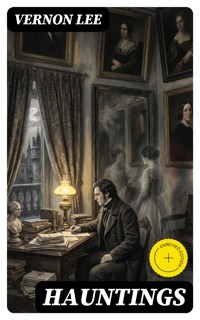
In "Hauntings," Vernon Lee offers a sophisticated exploration of supernatural themes through a collection of essays and short stories that intertwine philosophy, aesthetics, and Gothic elements. This work showcases Lee's unique literary style, characterized by lush, evocative prose and intricate psychological insights that delve into the human psyche. Set against a backdrop of turn-of-the-century Europe, "Hauntings" examines the intersections of art and experience, probing the boundaries of reality and the spectral dimensions of existence. Lee's deft use of narrative and her keen perception of the uncanny contribute to the rich tapestry of this volume, celebrating the intricate relationship between fear and beauty. Vernon Lee, born Violet paget, was a pioneering intellectual and a key figure in the fin-de-siècle movement, often associated with aestheticism. Her extensive travels and scholarly pursuits in philosophy and art heavily influenced her writing. A close acquaintance with prominent figures such as Oscar Wilde and Henry James further shaped her views on aesthetics and the supernatural, serving as a catalyst for the themes explored in "Hauntings." Lee's unconventional approach to gender roles and her fascination with the uncanny also reflect her position as a progressive thinker in a conservative society. For readers captivated by the interplay of art, emotion, and the supernatural, "Hauntings" presents an exquisite amalgamation of these elements. Vernon Lee's adept storytelling and philosophical insights invite readers to engage with the hauntingly beautiful, making this work an essential read for those interested in Gothic literature, aesthetics, and the art of the uncanny. Prepare to be enchanted, challenged, and ultimately transformed by the spectral journeys found within these pages. In this enriched edition, we have carefully created added value for your reading experience: - A succinct Introduction situates the work's timeless appeal and themes. - The Synopsis outlines the central plot, highlighting key developments without spoiling critical twists. - A detailed Historical Context immerses you in the era's events and influences that shaped the writing. - A thorough Analysis dissects symbols, motifs, and character arcs to unearth underlying meanings. - Reflection questions prompt you to engage personally with the work's messages, connecting them to modern life. - Hand‐picked Memorable Quotes shine a spotlight on moments of literary brilliance. - Interactive footnotes clarify unusual references, historical allusions, and archaic phrases for an effortless, more informed read.
Das E-Book können Sie in Legimi-Apps oder einer beliebigen App lesen, die das folgende Format unterstützen:
Veröffentlichungsjahr: 2022
Ähnliche


Hauntings
Table of Contents
Introduction
In Hauntings, the magnetism of beauty lures scholars and connoisseurs toward moments where admiration becomes obsession, and the exquisitely preserved traces of art, music, and legend press upon the present with such insinuating intensity that they seem to acquire will, testing the boundary between refined attention and moral peril, between explanation and enchantment, and between the living pursuit of culture and the dead weight of history that refuses to lie quiet, so that the act of looking, listening, and remembering turns into an invitation to be looked at, listened to, and remembered by presences that may be no less exacting than alive.
First published in 1890, Vernon Lee’s Hauntings is a fin-de-siècle collection of supernatural tales that merge the ghost story with psychological inquiry. Lee—known for criticism and fiction steeped in aesthetics—situates her narratives in European milieus where art, music, and local tradition saturate everyday life. The collection belongs to the late-Victorian moment when questions of sensation, suggestion, and the unseen energized literature. Rather than folkloric shocks, these stories cultivate a cultivated dread, drawing on the period’s fascination with taste and the mind. The result is a work poised between decadent elegance and moral scrutiny, attentive to both atmosphere and intellect.
The premise of each tale is spoiler-safe yet unmistakable: a sensitive observer encounters the residue of a past life—an artifact, a rumor, a melody—and feels its claim. What follows is less a chase than a gradual enthrallment, narrated in the measured voice of someone trained to analyze beauty and yet increasingly compromised by it. Lee’s narrators are articulate, self-aware, and often skeptical, but their explanations fail to clarify the unease they register. The reading experience is immersive and deliberate, marked by rich description, quiet tension, and the unsettling sense that interpretation itself might be the mechanism by which the uncanny draws near.
Stylistically, Hauntings favors precision over pyrotechnics. Lee’s prose is sinuous and analytic, lingering over textures, spaces, and the moods they induce, while calibrating how a scene is seen—by whom, from where, and under what cultural expectations. The supernatural remains equivocal: apparitions flicker at the edges of perception; psychological motives shadow every extraordinary event. Readers encounter learned voices that cite history and taste, yet the very vocabulary of appreciation becomes a conduit for dread. The book’s refinement is not ornament for its own sake, but an instrument that measures pressure points where sensibility becomes susceptibility and cultural memory turns coercive.
Across the collection, Lee explores themes that keep gathering resonance: obsession’s capacity to masquerade as devotion; the ethics of aestheticism, especially when admiration begins to treat people as images; the seductive authority of the past; and the entwining of desire, power, and representation. Time in these stories is layered rather than linear, and spaces seem to store intentions as well as memories. Characters are haunted not only by possible spirits but by ideals of beauty that make demands. The result is a meditation on how culture shapes feeling—and how feeling, in turn, can animate culture, sometimes with disastrous consequences.
For contemporary readers, Hauntings remains pertinent because it dramatizes how images, sounds, and narratives possess us. In an era saturated with curated archives, restorations, and revived icons, Lee’s questions about influence, consent, and responsibility feel urgent. The book also speaks to continuing debates about the legacies we inherit and the pleasures we permit ourselves, asking what it means to love works whose histories are troubling. As a writer publishing under the name Vernon Lee, Violet Paget modelled a cosmopolitan, critically engaged authorship that invites present-day readers to consider the relationships among taste, identity, and power.
Approached with patience, Hauntings rewards readers who savor ambiguity and atmosphere. Its hauntings are not puzzles to be solved so much as experiences to be undergone; the tension lies in recognizing when appreciation becomes complicity and when interpretation becomes invocation. Lee offers a distinctive alternative to shock-driven horror: a cultivated terror in which sentences, settings, and sensibilities do the work of specters. The collection endures because it treats the ghost story as a form for thinking—about art’s afterlives, about how we inherit the past, and about the unsettling fact that beauty, like memory, has designs upon us.
Synopsis
Hauntings (1890) gathers four fantastic tales by Vernon Lee, in which cultured narrators confront the uncanny through art, memory, and historical research. Rather than offering overt apparitions, the collection stages hauntings as intensifying fixations, where the past insinuates itself into perception. Each story unfolds through intimate records—diaries, letters, or retrospective accounts—so that evidence and emotion accumulate together. Settings shift from Italian hill towns and seaports to an English manor and Venetian salons, but the atmosphere remains sensuous, erudite, and increasingly disquieting. Lee’s aesthetic preoccupations shape the plots: portraits, manuscripts, and melodies act as conduits, drawing observers toward perilous states of attention.
Amour Dure follows a young foreign scholar assigned to catalogue archives in a secluded Italian city. While tracing the life of Medea da Carpi, a Renaissance noblewoman notorious for fatal affairs and political intrigues, he becomes absorbed by portraits, chronicles, and rumors that contradict one another yet sharpen her allure. The documents seem to answer his thoughts; coincidences pull biography into the present. His notebook registers a shift from academic interest to personal enthrallment, as if research itself were a summoning. Local warnings and episodes in shadowed streets test his resolve, while the figure of Medea grows at once clearer and more unreachable.
Dionea is presented through letters and medical notes that track a child rescued from a shipwreck off an Italian coast and raised under clerical supervision. As she matures, artists and dilettantes gather around her, drawn by a beauty that seems allied with older, unchristian rites. Commissioned artworks, garden fêtes, and whispered scandals expose competing claims over her meaning—object of charity, muse, or remnant of a pagan world. The doctor-narrator records changes in the town’s moral temperature as fascination mounts. Religious authorities and aesthetes vie for influence, and a climactic episode unsettles both camps without conclusively assigning cause to chance, ritual, or imagination.
Oke of Okehurst; or, The Phantom Lover recounts an artist’s stay at a country house, where he has been engaged to paint the lady of the manor. The rooms are lined with ancestral portraits and fragments of legend about an Elizabethan poet tied to the family’s past. The sitter cultivates a refined self-theatre that aligns her with the older story, while her husband’s unease shades into jealousy and fear. During long sittings and evening conversations, the painter’s aesthetic admiration becomes implicated in the couple’s tensions. The suggestion of a revenant complicates ordinary grievances, and the portrait sessions gather a charged, unrepeatable stillness.
A Wicked Voice centers on a modern composer intent on resisting the seductive manner of eighteenth-century Italian song. In Venice, while studying old scores and anecdotes about a celebrated singer whose voice was said to conquer wills, he encounters musical traces that seem to answer him from beyond the archive. A snatch of melody intrudes on work and sleep, destabilizing artistic convictions and personal composure. The narrative dwells on acoustics, echoing rooms, and instruments as if sound itself were a haunting substance. Invitations, rehearsals, and private performances escalate the conflict between resolve and temptation without settling whether the origin is external or remembered.
Across the collection, Lee treats art objects as active presences: portraits frame identities, manuscripts script behavior, and melodies colonize attention. Characters believe they can observe with detachment, yet their connoisseurship becomes the medium of influence. Gendered charisma and the cult of the beautiful recur, raising ethical questions about fascination, consent, and the uses of the past. Although the locales teem with historical detail, the machinery of the supernatural remains deliberately uncertain, leaving readers to weigh coincidence, suggestion, and genuine visitation. The prose lingers on textures and atmospheres, building a cumulative pressure in which the choice to look or listen becomes momentous.
Hauntings endures as a fin-de-siècle landmark that relocates ghostliness from cemeteries to galleries, studies, and salons. Its hybrid of scholarship and sensation anticipates later psychological ghost stories, inviting reflection on how art curates desire and how desire edits evidence. The tales rarely resolve into a single cause, yet they do resolve into a mood: the past persists where we house it—in collections, performances, and private fixations. That emphasis keeps the book resonant for readers interested in aesthetics and the mind, while preserving the narrative surprises and ambiguities that give each story its particular chill.
Historical Context
Hauntings: Fantastic Stories (1890) collected four tales by Vernon Lee, the pen name of Violet Paget, a British writer who spent much of her life in Italy. Issued in London by the new firm William Heinemann, the volume places modern observers amid relics of the Italian Renaissance and the English gentry. Lee drew on the Anglo-Italian expatriate milieu of Florence, where libraries, salons, and museums fed historical curiosity. The settings—from Venetian palazzi to a Sussex manor—mirror late Victorian travel and research habits, in which educated readers pursued the past through archives, portraits, music, and local legend while moving across national borders.
Lee wrote Hauntings amid debates on Aestheticism and Decadence that shaped British letters in the 1880s–1890s. Walter Pater’s The Renaissance (1873) had promoted refined sensibility and “art for art’s sake,” while John Addington Symonds popularized Italian cultural history. Continental Decadence, visible in writers like J.-K. Huysmans, emphasized exquisite sensation and moral ambivalence. British periodicals and new publishers made such currents widely accessible. Lee, already known for essays in Belcaro (1881) and Euphorion (1884), adapted aesthetic criticism to fiction, examining how beauty, style, and atmosphere move modern minds. Her tales negotiate fascination with the past while questioning the costs of aesthetic absorption.
Unification transformed Italy between 1861 and 1871, connecting provincial cities and promoting national heritage. For Anglo-European visitors, the period coincided with a scholarly revival of the Renaissance: Jacob Burckhardt’s The Civilization of the Renaissance in Italy (1860) and Symonds’s multivolume Renaissance in Italy (1875–86) framed the epoch as both creative and perilous. In archives, small museums, and frescoed palaces, researchers sought documents and portraits linking individuals to turbulent city-state histories. Lee worked from Florence after 1889, when she settled at Il Palmerino, and traveled widely. The stories’ Italian locales reflect this documentary tourism, where catalogues, inscriptions, and local records animate compelling, sometimes disquieting, antiquity.
Victorian fascination with ghosts blended entertainment and inquiry. The Society for Psychical Research, founded in London in 1882 by scholars including Henry Sidgwick and Frederic W. H. Myers, investigated apparitions, hallucinations, and suggestibility; its Census of Hallucinations (1894) gathered thousands of testimonies. Literary traditions had already moved toward psychological ambiguity, from J. S. Le Fanu’s In a Glass Darkly (1872) to Robert Louis Stevenson’s experiments with divided selves. Lee’s stories adopt this climate of cautious skepticism: antiquarian narrators observe, document, and doubt. The supernatural is filtered through diaries, letters, and connoisseurship, underscoring how perception and memory can mislead without dissolving mystery.
Publishing under a masculine pseudonym, Vernon Lee navigated a literary marketplace that often treated historical criticism and aesthetic philosophy as male domains. Late Victorian debates about the “New Woman” highlighted women’s education, authorship, and autonomy, themes visible in reviews and periodical culture of the 1880s–1890s. Lee’s reputation rested on exacting scholarship and stylistic poise; she lectured, reviewed, and published widely on art and ethics. In Hauntings, erudite narrators and learned settings lend authority while exposing vulnerabilities of expertise. The collection’s femmes fatales and cultured observers echo contemporary iconography and criticism, rather than mere folklore, situating desire within libraries, galleries, and salons.
One tale turns on the aura of eighteenth‑century vocal virtuosity. In that era, Venice supported renowned opera houses, including the Teatro San Giovanni Grisostomo (later the Teatro Malibran), and attracted composers and star singers. Castrati, central to baroque opera, dominated European stages and court chapels; the tradition lingered in sacred music into the early twentieth century. Nineteenth‑century collectors amassed scores, libretti, and portraits of earlier performers, sustaining a romanticized musical past. Lee taps this environment to explore how an old voice—encountered through manuscripts and legend—seems to breach time, dramatizing debates about music’s sensual power and its capacity to command obedience.
Another narrative engages the English country house, a locus of lineage and taste in late Victorian culture. The arts-and-crafts revival and lingering Pre‑Raphaelite medievalism encouraged reverence for ancestral portraits, tapestries, and heraldry. At the same time, the agricultural depression of the 1870s–1890s strained many estates, as families balanced tradition with economic pressure. Antiquarian catalogues, county histories, and private galleries shaped how owners read their own pasts. Lee situates aesthetic contemplation within that environment, where a manor’s image-making—its portraits and stories—mediates identity. Artistic style and family legend become active forces, foregrounding how curatorship can tempt viewers toward partial, even perilous, interpretations.
Hauntings thus emerges from a recognizably fin‑de‑siècle matrix: aestheticism, archival historicism, psychical inquiry, and transnational travel. Lee fuses these currents to test the limits of connoisseurship and taste, suggesting that historical beauty can enthrall as powerfully as any creed. Her narrators adopt modern methods—notes, catalogues, attributions—yet confront ambiguities those methods cannot resolve. Without relying on sensational disclosure, the collection critiques complacent spectatorship and the will to possess the past, showing how culture’s masterpieces may unsettle their beholders. In doing so, it reflects late Victorian hopes for disciplined attention and their anxieties about obsession, suggestion, and the persisting claims of history.




