


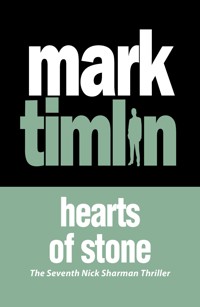
5,49 €
Mehr erfahren.
- Herausgeber: No Exit Press
- Kategorie: Krimi
- Sprache: Englisch
The Seventh Nick Sharman Thriller Life as a private detective has proved too much for Nick Sharman, and when a chance run-in with a couple of young thugs secures him a job as a part-time barman, it looks as if he's found a promising new occupation. Unfortunately the drug squad has other plans. With two coppers slaughtered in as many weeks, Sharman finds himself being coerced into helping track down the killers. All too soon he is working alongside a pony-tailed Detective Sergeant with unexpected sexual tastes, and consorting even more closely with a beautiful high-class whore who likes to be spanked... never mind some dangerously unpredictable big-spending villains. The perils of playing pig-in-the-middle certainly add excitement to life, but Sharman is now mixing with some very bad company, and even he cannot predict the scale of the bloodbath that will follow.
Das E-Book können Sie in Legimi-Apps oder einer beliebigen App lesen, die das folgende Format unterstützen:
Veröffentlichungsjahr: 2015
Ähnliche



HEARTS OF STONE
Life as a private detective has proved too much for Nick Sharman, and when a chance run-in with a couple of young thugs secures him a job as a part-time barman, it looks as if he’s found a promising new occupation.
Unfortunately the drug squad has other plans. With two coppers slaughtered in as many weeks, Sharman finds himself being coerced into helping track down the killers.
All too soon he is working alongside a pony-tailed Detective Sergeant with unexpected sexual tastes, and consorting even more closely with a beautiful high-class whore who likes to be spanked… never mind some dangerously unpredictable big-spending villains.
The perils of playing pig-in-the-middle certainly add excitement to life, but Sharman is now mixing with some very bad company, and even he cannot predict the scale of the bloodbath that will follow.
MARK TIMLIN
Mark Timlin has written some thirty novels under many different names, including best-selling books as Lee Martin, innumerable short stories, an anthology and numerous articles for various newspapers and magazines. His serial hero, Nick Sharman, who appears in Take the A-Train, has featured in a Carlton TV series, starring Clive Owen, before he went on to become a Hollywood superstar. Mark lives in Newport, Wales.
‘The king of the British hard-boiled thriller’
– Times
‘Grips like a pair of regulation handcuffs’
– Guardian
‘Reverberates like a gunshot’
– Irish Times
‘Definitely one of the best’
– Time Out
‘The mean streets of South London need their heroes tough.
Private eye Nick Sharman fits the bill’
– Telegraph
‘Full of cars, girls, guns, strung out along the high sierras of Brixton
and Battersea, the Elephant and the North Peckham Estate, all
those jewels in the crown they call Sarf London’
–Arena
Other books by Mark Timlin
A Good Year for the Roses 1988
Romeo’s Girl 1990
Gun Street Girl 1990
Take the A-Train 1991
The Turnaround 1991
Zip Gun Boogie 1992
Hearts of Stone 1992
Falls the Shadow 1993
Ashes by Now 1993
Pretend We’re Dead 1994
Paint It Black 1995
Find My Way Home 1996
Sharman and Other Filth (short stories) 1996
A Street That Rhymed with 3 AM 1997
Dead Flowers 1998
Quick Before They Catch Us 1999
All the Empty Places 2000
Stay Another Day 2010
OTHERS
I Spied a Pale Horse 1999
Answers from the Grave 2004
as TONY WILLIAMS
Valin’s Raiders 1994
Blue on Blue 1999
as JIM BALLANTYNE
The Torturer 1995
as MARTIN MILK
That Saturday 1996
as LEE MARTIN
Gangsters Wives 2007
The Lipstick Killers 2009
For Mrs Lancaster,
who makes the best breakfast in London.
ACKNOWLEDGMENTS
Thanks and best wishes to:
Simon and Cathy Keable-Elliott, India and Jessie for letting me send them to Blackpool or Blackburn or somewhere like that to open a brasserie, and letting me convert Keable’s Wine Bar into The Twist & Shout.
Steve Woolmington and the Ford Motor Company, for the loan of a Sierra Sapphire RS Cosworth 4x4, which unfortunately I had to return.
Adele Wainwright and Caroline Harris at Headline for coffee and sympathy.
Kerstan Mackness for taking all the digs about Arsenal.
And, of course, Hazel, with love.
Three years closer. Ai No Corrida.
Naijo No Ko.
Arms consultant: Arms De La Chasse, London.
1
I shut up shop in May. I’d had enough of the detective business.
It was no big deal. I just packed a few things in cardboard boxes, rented a garage to store them, locked the front door of the office, returned the keys to the estate agent, and paid off the lease. Simple.
I wasn’t short of money, you understand. I had plenty. Enough, in fact, to pay off the mortgage on my flat. See, an old friend of mine had died and left me the sum of her worldly goods, including a rather pleasant terraced house in Brixton. I sold the place. I had considered living there myself, but I’ve got enough ghosts, thank you very much, without living somewhere where one more might walk the corridors on the dark midnight.
Then my ex-wife informed me that she, her new husband, their young son, and my daughter Judith were moving lock, stock, and barrel to Scotland. Aberdeen to be precise. About as far as they could go and still be in mainland Britain. My wife’s new husband is a dentist, and apparently the teeth business is booming in that part of the world. It must be something to do with North Sea oil.
At first I did the aggrieved parent bit. You know the sort of thing. But, as my ex calmly told me, it wasn’t as if they were leaving the country altogether. And anytime I was in the area I was welcome to pop in for a visit – I ask you. As if…
Of course, I eventually calmed down, and we sorted out that I could see her during the school holidays and on her birthday and every other Christmas, and all that sort of malarkey. So it wasn’t too bad. After all, I’d never been much of a father to Judith and, loath as I am to admit it, she’d be better off with her mother and her stepfather, who are rather better role models than I’ll ever be. So that was that.
I’ve shed a few tears since she left, but sometimes I think they’re much more for me than for my little girl, who’ll be a teenager soon, and would probably have grown to despise me anyway. By the time she left, it seemed that everyone else I’d ever cared for had gone too. Even my cat seemed to prefer other digs.
I was like a ship that had lost its anchors. I floated where the times and tides took me. I went into a sort of decline. And it was nothing like I thought it would be. I didn’t sit behind closed curtains in a filthy room, unshaven and eating TV dinners and watching porn videos on the box.
Did I, hell.
I shaved every day. Shampooed and conditioned my hair, and checked the comb every morning to make sure I wasn’t losing too much. I flossed my teeth, hoovered and dusted every other day, did two loads of washing a week in the Zanussi, and even ironed my T-shirts.
Every morning I took a stroll to the local café and breakfasted well, and exchanged merry banter with the staff and customers over my second pot of tea and the Telegraph crossword.
I slept alone. Not entirely by choice. The women I met sensed there was something not right about me. Probably that was just as well. You see, sometimes I’d come awake in the middle of the night calling out a list of the dead and dying who visited my dreams.
So that was me that summer. And as far as I was concerned, it would be me forever. But like all the best laid plans, it wasn’t to be.
You see, life goes on.
2
And as life went on for me, so it went on all around me, too.
Take the local bar that I drank in. The couple who owned it had sold up at the beginning of the year and taken themselves and their babies up north, where they opened a brasserie in Blackburn or Blackpool or somewhere like that. The old place was taken over by two ex-cabbies from east London, who decided that what was needed in the area was a tapas bar and Spanish restaurant. We, the locals, decided otherwise, and the new owners lasted just over three months. At almost the same time I closed my business, the bar was bought by a redundant advertising executive named Joe Jeffries. JJ to his friends. He was forty-something, with a surfer’s haircut, a fitness fetish and a 1940s Willys station-wagon with wooden panels on the sides. He changed the name of the place to the Twist & Shout, or JJ’s as it was known locally, stuck in a fifties Wurlitzer jukebox and an illuminated Budweiser sign, but otherwise didn’t mess with the place much. That suited the locals down to the ground. We’re a conservative lot in West Norwood.
I spent a lot of time in JJ’s that summer, as May became June, which turned into July and then an August which started hot and dry with long, boiling days and short humid nights that brought threats of water rationing on the radio, as the trees turned crisp under the unrelenting sun, and all that could be comfortably worn was T-shirt and shorts.
Then the weather changed, and August leaked into September under a bloated leaden sky that would suddenly open without warning and let go rods of silver rain that bounced off the streets and pavements until the water ran like rivers in the gutters and carried brightly coloured litter and dog shit to block the drains.
One day in the middle of the month, when the lunchtime crowd had left and the evening crowd hadn’t arrived yet, JJ and I were alone in the bar buying each other drinks and telling each other lies as usual. I was sitting on my regular stool at the corner of the bar in front of the big water-streaked plate-glass window and sucking on a bottle of Sol lager, and JJ was standing behind the jump, polishing a glass. The jukebox was playing a Ray Charles single, and all was right with the world. Suddenly the street door crashed open behind me and two geezers blew in, let it slam behind them, put up the CLOSED sign and pulled down the blind. I looked at them, and then at JJ, and he looked at me. One of the geezers was black, one was white, they were both young, bigger than average, and dressed in baggy street fashion. Although they could pretty well be described as average customers at the bar, average customers did not usually carry pickaxe handles. I looked over at JJ again, and he looked back at me and shrugged. I carried on drinking and he carried on polishing and we both waited for the punchline. It wasn’t long in coming.
‘We’re here for our money,’ said the white guy.
‘What money?’ asked JJ, remarkably calmly under the circumstances.
‘You know what money,’ said the black guy and slammed his axe handle on the counter, destroying half a dozen or so plates that JJ had washed and dried but hadn’t put away yet. ‘Mr Lasky sent us.’
‘Never heard of him,’ said JJ, still calmly, and placed the glass he was polishing carefully on the bar in front of him. I did the same with my bottle.
‘The money you pay us so that this sort of thing doesn’t happen,’ said the white guy and slammed the end of his axe handle against a particularly nasty mirror advertising a brand of Pilsner that the bar didn’t stock anymore. I for one was glad to see it go, and I wondered for a moment if these two weren’t from the good-taste police.
‘Or this,’ said the black guy and whacked my bottle of Sol a good’un so that it exploded and covered my nearly new Aquascutum trench coat, which I hoped made me look like Humphrey Bogart as Philip Marlowe, in a mixture of beer and broken glass. At that point I stood up. ‘Sit down, cunt,’ the black guy said, and smashed the stool next to mine into four or five pieces.
I sat down.
Now, if it had been a movie, JJ and I would have taken the pair of them apart and dropped them outside in the gutter and come back into the bar and had a celebratory glass each. But, being as it was real life, I sat, and JJ stood, and the two gangsters smirked at each other. Then the black guy looked at the jukebox, and tapped it gently on the glass bubble at the top with the lump of wood he was holding.
JJ went white under his sun-lamp tan.
‘Leave it,’ said the white guy. Then, to JJ, ‘save yourself grief and pay up. We’ll be back tomorrow, same time. We want a ton each, and no coppers or you’ll be fucking sorry.’
I already was. I knew it was going to be murder to get the stains out of my coat.
The black guy ran his axe handle along the bar, sending everything on top on to the floor, then he and his partner left. I watched them get into a massive Chevrolet Blazer 4WD truck, sprayed bright red, and dripping with chrome, the black guy driving, and peel off into the traffic.
I looked at JJ, and he looked at me yet again.
‘Was that for real?’ I asked.
‘Looks like it.’
‘So who’s Mr Lasky?’
He shrugged. ‘Don’t know. Do you?’
I shrugged back. ‘Did you know they were coming?’
‘If I had, I’d’ve baked them a carrot cake,’ he said.
‘They seemed to think you did.’
‘There’s been a couple of calls.’
‘Threatening?’
‘Vaguely.’
‘Demanding money with menaces?’
‘I suppose.’
‘And you ignored them.’
‘I get calls from double-glazing firms. I ignore them too.’
‘If they start performing with those pickaxe handles near your window, maybe you’d better keep the phone numbers handy,’ I said. ‘You might be in the market for a spot of double-glazing sooner than you think.’
He just looked peeved and said nothing.
‘Get me another beer, will you?’ I went over and started picking up pieces of broken glass and china from the wooden floor. ‘Got a dustpan and brush?’ I asked.
Within ten minutes those two geezers might never have been inside the bar, except for the rapidly drying stains on my mac. We cleared up the mess, let up the blind, and turned the sign round again.
After the equilibrium was restored, JJ said to me, ‘What do you reckon?’
‘I reckon you should call Old Bill.’
‘And end up with a set of busted windows like you said. Or worse.’ He looked over at his beloved Wurlitzer.
‘That’s the risk you take.’
‘You used to be in that game,’ he said. ‘What did you make of them?’
‘Wankers,’ I replied. ‘Amateur night. They didn’t even have a driver as look-out. They’re just a pair of chancers looking for an easy score.’
‘You want to help me out?’ he asked.
‘Not me, mate. I’ve finished with all that.’
‘I’ll buy you a new coat.’
I shook my head. ‘I’ll put it into Sketchley’s. It’ll be fine.’
‘And I’ll give you a job.’
‘Do what? What do I want a job for?’
‘You spend most of your time here anyway. You might as well get paid for it.’
That made as much sense as anything else I’d heard that afternoon. ‘How much?’ I asked. There was no harm in asking.
‘Assistant manager. Four and a half an hour, plus a share of the tips, a decent meal and all the women you can pull. It’s amazing how attractive they find barmen.’
‘And a clean apron every day?’
‘Every other day.’
What the hell, I thought. It was the best offer I’d had all year. ‘You’re on,’ I said.
‘What’ll you do about those two, then?’ he asked.
‘You’ll see. I’ll come in tomorrow and deal with them.’
When I got home I went up into the crawl-space under the roof of the house and pulled out the last reminder of my previous life. I’d kept it for old times’ sake, and this was exactly that – just like old times.
I felt around in the dark and pulled out a Holland & Holland 12-bore Howdah pistol almost old enough to be an antique. 1913 I think it was made. For an officer in the Indian army. The Howdah is a top lever, back action double-barrelled pistol, with an eight-inch barrel, pistol grips and exposed hammers. It looks something like a sawn-off shotgun, but the last two inches of the barrels are rifled, and it fires solid cartridges that can bring down an elephant. The whole thing wasn’t much more than a foot long, weighed just over three pounds, and was sheathed in a custom-made holster with a leather bootlace threaded through two holes at the muzzle end, so that it could be fastened just above the knee and allowed the gun to be fast drawn like a revolver. The holster came with a matching belt, with leather loops to carry extra cartridges. The Howdah could be fired one-handed, but there was the risk of a broken wrist if you did.
I’d taken the gun and holster off someone I’d met whilst working on one of my last cases. It was a good weapon and was just what I needed to put the fear of God into the pair of would-be protection racketeers I’d met earlier. There was half a dozen of the heavy, pointed shells in a box next to the gun. I took just two: they were all I’d need, and I hoped I wouldn’t actually have to use either of them. I took the gun down into my flat and dusted it off and broke it down and cleaned it, dry fired and loaded it. I put on the rig and slid the gun into its holster, and pulled on my Aquascutum. There wasn’t even a bulge to show it was there. I took off the coat and hung it up again, then unbuckled the holster and put it under the bed, and hoped that no one would come calling that evening.
Who was I kidding? No one had come calling for months.
3
The next day, lunchtime, I got tooled up and went to JJ’s for a beer. He was looking a bit green around the gills when I arrived.
‘What’s up?’ I asked.
‘I’ve been thinking…’ he said.
‘Don’t,’ I interrupted. ‘You’ll give up everything enjoyable if you start that lark.’
It was quiet again, being midweek, and by 3.00 pm we were all alone in the bar, just the two of us. I sat where I’d been sitting the previous day, but angled round so that I could view the street through the big window. My mac was open, hanging down and hiding the Howdah.
It was raining again outside. A slow relentless drizzle like a mountain fog. At three-thirty by the Rolling Rock clock on the wall, the Blazer pulled up outside, its wipers beating a slow tick-tock across the windscreen.
‘Visitors,’ I said.
JJ was polishing glasses again.
The same two geezers piled out of the motor and straight in through the door, put up the CLOSED sign and pulled down the blind. Just like before.
‘You still here,’ said the black guy to me. ‘You’re a glutton for punishment, ain’t you?’
‘He’s got no home to go to,’ said the white guy.
‘Got our money?’ said the black guy to JJ.
I slid my left hand inside my coat and pulled the pistol half out of its holster.
‘No,’ replied JJ.
‘Cunt,’ said the black guy through clenched teeth, and raised his pickaxe handle.
I hauled back the skirt of my coat, pulled the Howdah all the way out of its holster, and pointed it at the black guy’s head one-handed. With the other hand I cocked the hammers and felt the two triggers move under my forefinger into firing position. The muzzle was steady, about a foot from his head.
‘Put it down,’ I said. ‘Or you’re history. There’s a bullet in here will take your head right off. Believe me. Your life depends on it.’
The white guy dropped his bat right away, although I wasn’t talking to him. The black guy thought about it, hesitated, then did the same.
‘Hands on the bar, both of you,’ I said. They obliged.
‘Now empty your pockets, and don’t fuck about. You first.’ I pointed the gun at the white guy. He took out some cash, notes and change, house keys, a driving licence and a used tissue. ‘Is that all?’ I asked.
He nodded.
‘Now you,’ I said to the black guy. All he had was a small bundle of banknotes and the keys to the Chevrolet.
‘Count the money,’ I said to JJ. He did as he was told. His hands were shaking, but not badly.
‘Thirty-eight pounds sixty,’ he said. That wouldn’t even buy one sleeve of a new Aquascutum.
I picked up the white guy’s driving licence. ‘Yours?’ I asked.
He nodded, too.
‘I’m keeping this,’ I said. ‘You’ll have to report it lost. Now I’ve got your address, so if anything happens here I’ll be round with a few mates. Understood?’
He nodded again.
‘Stay where you are,’ I said to them. To JJ: ‘Hold this.’ I passed him over the pistol. ‘It’s a shell, not shot. Aim for the chest. It’ll make a hole big enough to drive your car through. And watch it: the fucker kicks like a mule. I’ll be right back.’ He looked even greener at that.
I bent down and picked up one of the axe handles. I opened the door and went outside to the Blazer. I smashed the windscreen, all the side windows, the back window, both rear-light clusters, the head and spot lights, and the wing mirrors, and snapped off the radio aerial.
A small crowd gathered at the bus stop to watch, but didn’t interfere. The woman from the card shop next to JJ’s popped her head out of the door. ‘Insurance job,’ I said. ‘I’m the claims adjuster.’ I slung the handle through the broken windscreen and went back into the bar and took the gun from JJ.
‘Now fuck off and don’t come back,’ I said to the two of them. ‘You’ve picked on the wrong people this time. Learn by your mistakes. If I see you round here again, you’ll end up in casualty. You, or Mr Lasky. All right?’
Neither of them said anything.
‘All right?’ I asked again.
They both nodded and left, and got into the wreck and drove off with the windscreen wipers wiping air.
And that’s how I got the job of assistant manager at the Twist & Shout.
4
So that was that. I had a job. In a bar. Luxury.
It wasn’t hard work. The days were split into early and late shifts. I alternated with JJ, who was restoring a pre-war Harley-Davidson in the lock-up at the back of the bar in his spare time. And, from the bits of oily engine and rusty frame spread around the concrete floor in there, he needed all the spare time he could get.
Early was ten-thirty in the morning to six-thirty in the evening. The bar opened at eleven-thirty, so the first hour was cleaning up after the night before, bottling up, preparing orders and taking in deliveries. Late was six-thirty in the evening until about one the following morning. The bar closed at eleven, except Sundays, just like a regular pub, but it was always murder getting the last of the Billy Bunters out, and then we washed up the glasses and had a final coffee and brandy before shooting off.
It suited me down to the ground. We never heard from the protection boys again, and there was rarely any trouble. The fighters in the area had a couple of pubs to go to where they hosed the blood off the walls every night at closing time, so they didn’t bother us much. Besides, I think JJ had told a couple of people about the nasty little toy I’d brought in strapped to my leg that rainy September afternoon, and that helped keep the peace.
JJ’s was OK. Friendly, you know. Plenty of people to talk to and newspapers and magazines to read. Good music on the Wurlitzer, good food, good booze, and lots of it. The rest of the bar staff were young good-looking women, which didn’t hurt one bit, and some of the female clientele would knock your eye out. But apart from being polite, and occasionally getting into a bit of verbal, I mostly ignored them. The feeling was mutual.
The year ended with a three-week-long piss-up over Christmas and the New Year. I suppose I grinned as much as anyone, and wished the customers the compliments of the season, but I didn’t enjoy the holidays one bit. I might even have gone a bit heavy at the Grand Marnier from time to time, when it all got too jolly to bear. But no one was counting. No one cared, to tell you the truth.
I could have had Judith down, I suppose. But to see her for a bit and then lose her again would have been worse than not seeing her at all. So I spoke to her on the phone and sent cards and parcels. She sent me two cards back. She pretended one was from my ex-wife, but I knew better, though I didn’t say so. And she sent me a great baseball cap. It’s all American up in Aberdeen apparently. It was a real quality one, with an adjustable leather strap at the back, and a picture of an oil rig embroidered on the front. I felt ridiculous wearing it outside, but I’d put it on sometimes when I was in the flat alone. Just so that I felt closer to her. Stupid, I know. I wore it when I ate my Christmas dinner by myself, with just the Queen on the box for company. Not one of my happiest meals. But I survived.
Christmas was followed by the kipper season over January and February, with no one spending much, but we did all right in the bar, even so.
Then winter began to soften into spring as the world turned, until one early morning in March it all came on top again. Just like it always does, sooner or later.
5
I woke up with the beam of a 1000-candlepower torch in my eyes. It was a sudden awakening. The kind they like. The kind that the Nazis, fascists, the secret men have used since time began. Since our ancestors hid in caves and waited for those with the power of life and death to come for them with flaming brands held high against the dark. It was the kind of awakening that robs you of your manhood. Makes you like a child who wants his mother. Undignified. Scary.
I was naked under the sheet and the duvet. I sat up quickly, and was pushed back hard. I raised my arm to shade my eyes from the light, but someone knocked it away. Then a hand appeared. A hand holding a police warrant card, all neat in a leather folder. A big hand, with bitten-down nails and nicotine stains between the first and second fingers. Detective Inspector Chiltern, it read in the spill of the torch’s light.
‘What do you want?’ I said rustily.
‘Stay still and shut up,’ said a voice. ‘Police. We want to talk.’
Police. Why? I thought. My conscience was clear. As clear as it was ever going to be.
‘What do you want?’ I said again.
‘We want you. Get up and let’s go. Don’t mess about.’
‘I’ve got no clothes on,’ I said stupidly.
My dirty shirt and jeans landed on the covers in front of me. I sat up and pulled on the shirt. It stank of the bar. I hate that. I swung my legs out of the bed and pulled on my blue jeans. No underwear. But I was glad of anything to cover me: to get back a vestige of dignity.
I stood up to button the fly. The clock on the table next to me said 3.59. Then it moved silently to 4.00. I’d been in bed less than two hours.
I found my shoes and slipped my bare feet into them. I stood there in the beam of the torch and peered beyond it. Into the blackness made even blacker by its light. ‘What’s the big idea?’ I demanded. I was beginning to feel a little braver with some clothes on.
The main light in the room was suddenly switched on, and the power of the beam diminished slightly. There were two average-looking blokes standing looking at me. The one by the light switch was six foot or so, with long greasy yellow hair going a bit thin at the front and pulled into a ponytail at the back. He was wearing a brown leather jacket, jeans and cowboy boots, and looked vaguely familiar. His mate with the torch was shorter, older, with thick brown hair and a week’s growth of stubble. He was wearing a similar leather, jeans again, and bumper boots. He was the one with the nail-biting habit.
‘Got a warrant?’ I said.
Ponytail shrugged. ‘Shit no,’ he said. ‘I knew we forgot something in our enthusiasm to get here.’
‘Who are you?’ I asked.
‘Brady. Detective Sergeant,’ replied Ponytail.
‘No ID?’ I said.
‘I must have forgotten that too.’ He shrugged.
‘Take his word for it,’ said Chiltern.
I had no choice.
‘What do you want?’ I asked for the third time. Maybe, some day, one of them would answer me.
‘You,’ said Chiltern. ‘Come on, let’s go.’
‘Go where?’ I said.
‘On a magical mystery tour,’ said Brady. ‘We’re off on the yellow brick road to see the Wizard of Oz.’ He giggled and grinned a mad grin, and it occurred to me that there was something badly wrong with him.
‘I’m not going anywhere,’ I said.
Chiltern sighed. ‘Why do people always say that?’ he asked no one in particular. ‘Listen, Sharman, you’re claimed. For the foreseeable future you’re the property of the drug squad.’
I looked into Brady’s eyes. They stared back as if from another planet. Just what I needed: a couple of undercover cops from the drug squad calling at 4 am. And at least one of them sampling the goods, from the look of him.
‘No,’ I said.
‘Brady,’ said Chiltern.
Brady pulled out a set of handcuffs. ‘It’s this way or the friendly way,’ he said. ‘Voice your choice.’
The two policemen were both tough-looking individuals. I was well out of condition. Too much booze and rich food. ‘All right,’ I said. ‘But where are we going? I’d like to inform my solicitor.’
‘Solicitor. Listen to him,’ said Brady. ‘You’re out of the world, son.’ He was at least ten years younger than me. ‘Incommunicado. Lost in space. No solicitor. You’ll be asking for the number of the local Citizens Advice Bureau next. Now, come on and don’t fuck about.’
So I went.
There was a Seven Series BMW parked outside the house, with its sidelights on. I was put in the back along with Brady. Chiltern sat in the front, next to the driver. He was another leather-jacketed character who looked like he worked out a lot.
‘Nice wheels,’ I said.
‘They suffice,’ said Chiltern.
‘Since when has the Met been laying on motors like this for the squad?’ I had a horrible feeling I was being taken for a ride in more ways than one.
Chiltern picked up the thought. ‘Don’t worry,’ he said. ‘We’re kosher. It’s a perk of the job. Drive on, Ollie.’
The driver nodded and started the engine and put on the main beams. He indicated, glanced over his shoulder, and pulled the car into the deserted street.
We headed north through Herne Hill, Camberwell, and the Elephant. I thought that we were going to cross the river, but instead we turned towards Bermondsey. Then into the back streets around London Bridge. The BMW turned into a service road between two buildings, and the reflection of the headlights splashed painfully back into my eyes from a set of mirrored windows. The driver stopped the car in front of a metal door, then pushed a button on a box on top of the dash. The door rattled upward and we drove in.
No one had said a word during the journey. The only sound inside the car had been Joan Armatrading’s greatest hits playing at a very low volume on the in-car CD. There was no police radio in the BMW.
The car bumped over the slight hump where the door joined the pavement, and through the entrance and up a ramp. Behind us the shutter rattled down again.
We were in what appeared to be half a warehouse and half a parking garage. There were boxes and cartons piled up the walls, and lots of cars, some covered with dust sheets or tarpaulins and some not. The ones not covered were very upmarket. Mercs, Porsches, more BMWs and even a Rolls-Royce.
‘Where the fuck are we?’ I asked.
‘You’ll see,’ said Chiltern.
We drove up four storeys and stopped in the middle of an empty floor the size of a football pitch.
‘Out you get,’ said Chiltern.
‘I don’t like this,’ I said.
‘Relax. No one’s going to hurt you.’
‘Unless you ask for it,’ added Brady, and giggled again. He was beginning to get on my nerves.
I did as I was told. Chiltern and Brady joined me on the concrete floor, and the BMW took off with a long squeal from its fat tyres.
‘Over there,’ said Chiltern. In the far corner of the warehouse or whatever the hell it was, stood a Portakabin. It was dark and deep in the shadows so that I hadn’t noticed it earlier.
We walked over towards it in a flying wedge, me in front. When we got close up, I saw that there was a chink of light under the door. The windows had been blocked off with black paper.




