


6,99 €
Mehr erfahren.
- Herausgeber: Open Book Publishers
- Kategorie: Wissenschaft und neue Technologien
- Sprache: Englisch
Heavy Metal: Earth’s Minerals and the Future of Sustainable Societies brings together world-leading experts from across the globe to reimagine the future of mineral exploration and mining in a post-fossil fuel world.
Minerals and metals – for batteries, circuit boards, wiring and other components – are essential to a digital, carbon-neutral economy. But how can we grapple with the environmental, social and geopolitical challenges caused by the extraction and use of these critical resources?
Concise, accessible, and engaging, the essays in this timely collection intertwine a broad spectrum of disciplines to help us understand and reimagine our relationship with minerals. Exploring a wide range of themes, from the colonial history of mining and Indigenous resistance, to new frontiers in exploration geology, waste management and recycling, this book draws on experts from fields as diverse as geology, mining engineering, law, economics and public policy.
The book also explores mineral resources through an artistic lens, with a collection of stunning images from the Canadian photographer Edward Burtynsky, and excerpts of a new musical work, the Heavy Metal Suite.
This thought-provoking and ultimately hopeful book guides us towards a more responsible, ethical and sustainable use of metals and minerals. It is essential reading for anyone interested in how we supply the resources needed for a carbon-neutral economic future.
Das E-Book können Sie in Legimi-Apps oder einer beliebigen App lesen, die das folgende Format unterstützen:
Veröffentlichungsjahr: 2024
Ähnliche


















HEAVY METAL
Heavy Metal
Earth’s Minerals and the Future of Sustainable Societies
Edited by Philippe D. Tortell
https://www.openbookpublishers.com
©2024 Philippe D. Tortell (ed.). Copyright of individual chapters is maintained by the chapters’ authors.
This work is licensed under a Creative Commons Attribution 4.0 International license (CC BY-NC 4.0). This license allows you to share, copy, distribute and transmit the text; to adapt the text and to make commercial use of the text providing attribution is made to the authors (but not in any way that suggests that they endorse you or your use of the work). Attribution should include the following information:
Philippe D. Tortell (ed.), Heavy Metal: Earth’s Minerals and the Future of Sustainable Societies. Cambridge, UK: Open Book Publishers, 2024, https://doi.org/10.11647/OBP.0373
Further details about CC BY-NC licenses are available at https://creativecommons.org/licenses/by-nc/4.0/
Photographs by Edward Burtynsky in this book are published under an ‘all rights reserved’ license and have been reproduced at 72 dpi in the digital editions due to copyright restrictions. All other images are published under CC BY-NC 4.0 license.
All external links were active at the time of publication unless otherwise stated and have been archived via the Internet Archive Wayback Machine at https://archive.org/web
Digital material and resources associated with this volume are available at https://doi.org/10.11647/OBP.0373#resources
ISBN Paperback: 978-1-78374-956-0
ISBN Hardback: 978-1-78374-958-4
ISBN Digital (PDF): 978-1-80064-977-4
ISBN Digital eBook (EPUB): 978-1-80064-390-1
ISBN HTML: 978-1-80511-043-9
DOI: 10.11647/OBP.0373
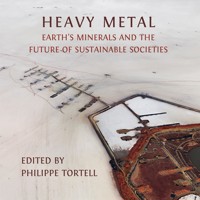
Cover image: Edward Burtynsky, Silver Lake Operations #15, Lake Lefroy, Western Australia, 2007. Photo © Edward Burtynsky, all rights reserved.
Cover design: Jeevanjot Kaur Nagpal
Contents
Introduction
Philippe Tortell
Colonialism and Mining
Allen Edzerza and Dave Porter
The Future Demand and Supply of Critical Minerals
Werner Antweiler
Where We Find Metals
Shaun Barker
Ocean Minerals
John C. Wiltshire
Mines in the Sky
Sara Russell and Riz Mokal
Mining in Icy Worlds
Anita Dey Nuttall and Mark Nuttall
Landscapes of Extraction
Edward Burtynsky
Black Panther and an Afrofuturist Vision for Mining
Sara Ghebremusse
The Face of Mining
Carol Liao
Indigenous Mining: Ancient Wisdom and Modern Practice
Melanie Mackay
Can Small Mining Be Beautiful?
Marcello M. Veiga and J. Alejandro Delgado-Jimenez
A Closer Relationship with Our Metals
W. Scott Dunbar and Jocelyn Fraser
A Matter of Trust
Allison Macfarlane
The Heavy Metal Suite
Introduction
Philippe Tortell and Dorival Puccini, Jr.
Diloo
T. Patrick Carrabré
Kypros 29
Valeria Gisel Valle Martinez
Zinc
Yao Chen
Platinum
Vuma Levin
Aura Tenebris (Radiant Darkness)
Augusta Read Thomas
Iztacteocuitlatl (Silver)
Roberto Morales-Manzanares
A Lithium Fascination
Christopher Sainsbury
Silicon
Chris Chafe
The Copper Supply Gap: Mining Bigger and Deeper
Erik Eberhardt
Lithium
Lee A. Groat
Metal and Water
Nadja Kunz
Mine Waste
Roger Beckie
Microbial Mining
Gordon Southam
A New Life for Old Metals
Maria Holuszko
The End of Endlessness
Naomi Klein
Index
Epigraph
Head bangers in leather
Sparks fly in the dead of the night
It all comes together
When they shoot out the lights
50,000 watts of power
And it’s pushin’ overload
The beast is ready to devour
All the metal they can hold
Sammy Hagar, ‘Heavy Metal’,
Standing Hampton (Geffen, 1982).
Acknowledgements
I am grateful to all the contributors in this volume for sharing their insights, wisdom and creativity, and for their patience with all of my editorial suggestions. Through their words and ideas, I have come to better understand the challenges and opportunities ahead in humanity’s search for future mineral resources. I also want to thank my wife, Maite Maldonado, for her support during the many hours this ‘side-project’ took away from shared evenings and weekends.
Contributor Biographies
Werner Antweiler is an Associate Professor in the Sauder School of Business at the University of British Columbia (UBC). He holds a Chair in International Trade Policy, and specializes in topics of international economics related to the environment, energy, natural resources and climate change. His recent work has focused on bilateral electricity trade, the integration of renewable energy into the electricity grid, grid-scale electricity storage and the electrification of transportation systems. Werner has authored the textbook Elements of Environmental Management, and co-authored the textbook Government Policy, Business, and Society, and is a frequent commentator on public policy topics in local and national news media.
Shaun Barker is an Associate Professor and Director of the Mineral Deposit Research Unit in the Department of Earth, Ocean and Atmospheric Science at UBC. He has a background in structural geology and geochemistry, and conducts research on hydrothermal systems, which form many types of ore deposits. Over the last few years, Shaun has focused on developing and applying new tools to improve exploration success for copper and base metal deposits that are needed to support the low-carbon energy transition. He is a Lindgren Fellow of the Society of Economic Geologists.
Roger Beckie is a Professor in the Department of Earth, Ocean and Atmospheric Science at UBC. He is a hydrogeologist and registered professional engineer, with expertise in drainage from mine waste rock. He serves on several Independent Technical Review Boards for tailings-management facilities, and is the liaison to the Tahltan Nation for the Red Chris Mine’s tailings-management facility review board.
Edward Burtynsky is one of the world’s most accomplished contemporary photographers, whose depictions of global industrial landscapes have documented the impact of humans on the planet for more than four decades. Burtynsky’s photographs are included in the collections of over eighty major museums around the world. Major touring exhibitions include: Anthropocene (2018); Water (2013); Oil (2009); China (2005 five-year tour); and Manufactured Landscapes (2003). He was also a key production figure in the award-winning documentary trilogy Manufactured Landscapes (2006), Watermark (2013), and Anthropocene: The Human Epoch (2018). Burtynsky’s distinctions include the inaugural TED Prize in 2005, which he shared with Bono and Robert Fischell; the 2016 Governor General’s Awards in Visual and Media Arts; the 2018 Photo London Master of Photography Award, and the 2019 Lucie Award for Achievement in Documentary Photography. He was awarded a Royal Photographic Society Honorary Fellowship in 2020. In 2022, he was honored with the Outstanding Contribution to Photography Award by the World Photography Organization, and also inducted into the International Photography Hall of Fame. Burtynsky currently holds eight honorary doctorate degrees.
T. Patrick Carrabré is a Métis composer living in Vancouver. Construction of identity and community engagement are long-term themes in his compositions, artistic programming and administrative activities. His best-known works include Inuit Games, for katajjak (throat singers) and orchestra, which was a recommended work at the International Rostrum of Composers (2003), Sonata No. 1, The Penitent, for violin and piano, and From the Dark Reaches, which were nominated for JUNO awards. In 2021, he was recognized with a second Western Canadian Music Award (Classical Composer of the Year) for the album, 100,000 Lakes. Other recent work includes Métis Songs, commissioned by Harbourfront for Rebecca Cuddy and the Wood and Wire String Quartet, and Snewíyalh tl’a Staḵw (Teachings of the Water), written in collaboration with the Elektra Women’s Choir. His composition Orpheus(1), written in collaboration with pianist Megumi Masaki, was released on the Centredisc label in March 2023, and an EP of Métis Songs was released in September 2024 on Winter Wind Records.
Chris Chafe is a Professor, composer, improvisor and cellist, and the Director of Stanford University’s Center for Computer Research in Music and Acoustics (CCRMA). He develops much of his music alongside computer-based research, and pursues methods for digital synthesis and network music performance. An active performer in both physical and virtual spaces, Chris’ music reaches audiences in a range of venues, including gallery and museum installations, and even works performed by the horns of large ships in the port of St. Johns, Newfoundland. He has many active collaborative research projects, working with scientists and medical professionals in the ‘sonification’ of a wide range of data sets—from paleo ice core data to neurological electrical fields. He has been a Visiting Professor at UBC, Politecnico di Torino and the Technical University of Berlin, and an Artist in Residence at The Banff Centre for Arts and Creativity.
Yao Chen is a composer and a Professor of Composition at Central Conservatory of Music in Beijing. He received training in composition at Xinghai Conservatory of Music and Central Conservatory of Music, and obtained his PhD in Composition from the University of Chicago. Chen has received commissions and awards from many international organizations, including Radio France, Harvard University’s Fromm Foundation, the Leonard Bernstein Foundation, the Mellon Foundation and the China National Center for the Performing Arts. His music has been performed by many internationally-acclaimed musicians and ensembles, and he has won awards at renowned music festivals such as ISCM World Music Days, Centre Acanthes, Festival Présences, Tanglewood Music Festival, Aspen Music Festival, Pacific Music Festival, Beijing Modern Music Festival among many others. His music eschews contemporary vogues, aiming for a timelessness and an otherness that exists beyond the standard categories – music for the moment, but also music for then and music for what lies ahead.
J. Alejandro Delgado-Jimenez is a mining engineer and researcher who holds a PhD in Earth Resources Development Engineering from the Colorado School of Mines. He specializes in the sustainability of the mining industry, and the environmental, social, economic and governance aspects that shape relationships between mining operations and local communities. Alejandro has worked with multidisciplinary teams promoting sustainable mining practices through teaching, consulting, research, and the translation of knowledge into practical applications within the mining sector. He has received several scholarships, including the Australian Leadership Program, the Canadian Emerging Leaders of the Americas, and a fellowship in the PIRE program from the United States National Science Foundation.
Anita Dey Nuttall is the Polar Science and Policy Engagement Officer in the Department of Earth and Atmospheric Science at the University of Alberta. She teaches resource management and environmental policy, and researches science policy issues, the history and contemporary nature of national Antarctic programs, and geopolitics, security and sovereignty in the circumpolar regions. She is a member and past Chair of the Canadian Committee for Antarctic Research, and has been involved in several University of the Arctic (UArctic) initiatives. She has also been a Visiting Researcher at the Thule Institute, University of Oulu in Finland, and previously served as Associate Director of the Canadian Circumpolar Institute, University of Alberta, and UAlberta North, an interdisciplinary office concerned with Northern research and community engagement.
W. Scott Dunbar is a Professor in the Department of Mining Engineering at UBC. His research explores the future of mining, drawing ideas from a range of science and engineering disciplines to develop novel concepts and methods for mining and mineral processing. His recent work has focused on organizational innovation in the mineral supply system. He is a registered professional engineer in the province of British Columbia, and the author of How Mining Works, a book that explains the mining industry to non-specialist audiences.
Allen Edzerza is an Elder of the Tahltan Nation, and a member of the Tahltan Elders Council. He has led mining reform discussions with the Government of British Columbia on behalf of the First Nation Energy and Mining Council, and has served as an advisor on Aboriginal issues to the Premier and Cabinet of Government of British Columbia and the Yukon. For more than three decades, he has worked to advance Indigenous title and rights and the re-establishment of Indigenous sovereign governments, supporting resource projects to address climate change, while protecting the environment and wildlife populations. He is also working with UBC to bring post-secondary education to remote northern communities, with a significant component of land-based experiential learning and Elder knowledge.
Erik Eberhardt is a Professor of Geological Engineering in the Department of Earth, Ocean and Atmospheric Science at UBC. He previously served as the Associate Director of the Rio Tinto Centre for Underground Mine Construction (RTC-UMC), and now serves on the leadership team for the International Caving Research Network (ICaRN). His research integrates geological field measurements with advanced computer modelling to better understand and assess the underlying mechanisms responsible for complex geological hazards, including engineering risks associated with large open pit and deep underground mining projects. He is a registered professional engineer in the province of British Columbia, and recently won the Rock Mechanics Award from the Canadian Institute of Mining in recognition of his significant and lasting contributions to rock engineering.
Jocelyn Fraser is a Research Associate and Sessional Lecturer in the Department of Mining Engineering at UBC. After working for extractive companies on community and stakeholder engagement issues, she completed a PhD in Mining Engineering at UBC on the topic of shared value. She teaches and conducts research on the intersectionality of mining and society, with a focus on social risk and responsibility in the mining sector. She is particularly interested in approaches to increase collaboration, reduce mining-community conflict, and business model innovation to achieve the agenda of the United Nations Sustainable Development Goals. Jocelyn sits on the advisory panel of the Mining Association of Canada’s Towards Sustainable Mining initiative and leads a Canadian Institute of Mining and Metallurgy working group on stakeholder engagement.
Sara Ghebremusse is an Assistant Professor and the Cassels Chair in Mining Law and Finance at the Faculty of Law, Western University. She works in the areas of mining governance, transnational law and human rights, with a particular focus on the interests of Indigenous peoples and mining-affected communities. She is a board member with the Justice and Corporate Accountability Project, and a Principal Co-Investigator of the Canada Climate Law Initiative.
Lee A. Groat is a Professor of Geological Sciences at UBC. His research uses field studies of known and newly discovered critical mineral deposits to understand how these resources are formed and distributed, and how we can better explore for them. Professor Groat advises industry, governments and First Nations on issues related to mineral resources, including assisting First Nations in assessing the mineral potential of their territories. He also serves as Director of the Integrated Sciences specialization at UBC, where he teaches courses in systems and sustainability. In 2009, a newly discovered mineral, groatite, was named in honor of Lee, to recognize his research contributions.
Maria Holuszko is an Associate Professor in the Department of Mining Engineering at UBC. She holds both a MASc and PhD from UBC, and is a mineral processing engineer by training, with more than thirty years’ experience as a registered professional engineer. Her research focuses on the recovery of valuable materials from both industrial and municipal wastes including the recovery of critical minerals and metals from mining tailings, urban wastes and electronic waste. In 2015, Maria co-founded, with Professor Marcello Veiga, the Urban Mining Innovation Center (UMIC) at UBC, and she is also the current Co-Chair of UNESCO’s Sustainable Electronics initiative, led by Professor Clara Santato (Polytechnique Montréal). She recently edited the book Electronic Waste: Recycling for Sustainable Future.
Naomi Klein is an award-winning journalist, columnist and the international bestselling author of nine books published in over thirty-five languages, including No Logo, The Shock Doctrine, This Changes Everything, No Is Not Enough, On Fire and Doppelganger: A Trip into the Mirror World, which was published in September, 2023. She is a columnist for The Guardian, and her writing has appeared in leading publications around the world. Naomi is also an Honorary Professor in Media and Climate at Rutgers University, an Associate Professor in the Department of Geography at UBC, and the founding Co-Director of UBC’s Centre for Climate Justice.
Nadja Kunz is Assistant Professor and Canada Research Chair in Mine Water Management and Stewardship at UBC. She is jointly appointed in the School of Public Policy and Global Affairs, and the Norman B. Keevil Institute of Mining Engineering. Nadja uses interdisciplinary research methods to identify the constraints and opportunities facing the mining sector in transitioning towards more sustainable water and waste management practices. She has operational experience in the mining, oil and gas sectors, and has contributed to corporate sustainability reporting, strategy development and consulting for a variety of organizations.
Vuma Ian Levin is a jazz guitarist and composer, whose music interrogates conceptions of identity, nation, culture, power and being, both globally and in the emergent, post-1994 South African Democratic project. He has been described, by The Mail and The Guardian, as “destined to be one of South African jazz’s greatest musicians”. Vuma attended the Conservatorium van Amsterdam where he earned the Non-European-Union Talent Scholarship to finance his study. He currently lives in Johannesburg, where he holds a teaching position at the University of Witwatersrand, and continues to play and record widely. He has been the recipient of numerous award nominations and prizes, including the Keep an Eye International Jazz Awards, the Dutch Eindwerkprijs, Dutch Jazz Competition, the Socar Montreux Jazz Electric Guitar Competition and the Standard Bank Young Artist Award. He has been featured on CNN’s African Voices, and was included in TheMail and The Guardian’s 200 young South African’s list. Vuma has performed at a number of top venues and festivals in South Africa and abroad, including the North Sea Jazz Festival, Montreux Jazz Festival, Cape Town International Jazz Festival and Budapest Palace of the Arts. He has released five albums as a bandleader, and played on many others as a sideman.
Carol Liao is an Associate Professor at the Peter A. Allard School of Law and the Distinguished Fellow at the Peter P. Dhillon Centre for Business Ethics, Sauder School of Business, UBC. She is the Chair of the Canada Climate Law Initiative, dedicated to advancing director knowledge on the latest in climate science and fiduciary obligation. Her research focuses on corporate law and sustainability, climate governance, gender and racial justice. Carol was named as one of Canada’s 2024 Clean50 and Canada’s Top 100 Most Powerful Women, and is the recipient of the Business in Vancouver Influential Women in Business Award, TELUS Community Service Award, and BCBusiness Women of the Year Award.
Allison Macfarlane is a Professor and Director of the School of Public Policy and Global Affairs at UBC. Her research focuses on the technical, social and policy aspects of nuclear energy production and nuclear waste management and disposal, as well as regulation, nuclear nonproliferation and energy policy. She has held both academic and government positions in the field of energy and environmental policy, with a focus on nuclear policy. The first geologist (and third woman) to chair the US Nuclear Regulatory Commission from 2012–14, Allison holds a PhD in Earth Science from the Massachusetts Institute of Technology, and a BSc from the University of Rochester.
Melanie Mackay is a PhD student at the Norman B. Keevil Institute of Mining Engineering at UBC. She is a member of the Neskonlith Indian Band, Secwepemc Nation and a professional geoscientist with almost twenty years of experience in the mining industry, and ten years of research experience with the Canadian Carbonization Research Association. Her research focuses on methods for evaluating metallurgical coal, carbonization, critical elements in coal mine and steelmaking waste, and First Nations mining history and traditional uses of rocks and minerals. She is the recipient of the 2023 Coal Association of Canada Award of Distinction, and her research is supported by a fellowship from the Natural Sciences and Engineering Research Council of Canada.
Riz Mokal has researched, taught and practiced insolvency, property and commercial law over the past twenty-five years, and has advised governments on law reform. He currently practices law at the English Bar from South Square in London, and previously held the Chair of Law and Legal Theory at University College London, served as Senior Counsel to the World Bank and headed the Bank’s Global Insolvency and Creditor/Debtor Initiative. He has also been a member of the World Bank’s and, subsequently, the United Kingdom’s delegations to the United Nations Commission on International Trade Law. His work has influenced law reform in several jurisdictions, and has been cited with approval by courts around the world.
Roberto Morales-Manzanares is a musician, composer, performer and Professor of Music at the University of Guanajuato. He holds a PhD in Composition from the University of California (UC), Berkeley. In 1987, Roberto co-founded, with Francisco Núñez, the Laboratory of Computer Music and Digital Synthesis at the Escuela Superior de Música. In 1992, he founded the Laboratorio de Informática Musical at the Escuela de Música de La Universidad de Guanajuato, of which he was Director until 2019. He has won a number of national and international awards as a composer, and his music is regularly performed in Mexico, the United States and Europe. Roberto has been invited as Composer-Researcher in Residence at several universities, including Stanford University, UC Berkeley, UC San Diego, McGill University, New York University and Columbia University. He has organized and directed several international music festivals, including ‘La Computadora y la Música’, ‘Callejón del Ruido, Composición Ideas y Tecnologı’a’ and ‘Transito_MX04’. Currently, Roberto organizes courses and seminars on composition, music and mathematics and digital art in various institutions across Mexico. His research interests focus on real-time composition generated from mathematical models, learning systems applied to audio and video computing, gesture capture, and real-time processing of image and sound.
Mark Nuttall is Professor and Henry Marshall Tory Chair of Anthropology at the University of Alberta. He has carried out anthropological work in Greenland, Alaska, Canada, Finland, Scotland and Wales. His research examines a range of issues in human–environment relations, including climate change, extractive industries and the political ecology of energy. His recent books include Climate, Society and Subsurface Politics in Greenland: Under the Great Ice, The Shaping of Greenland’s Resource Spaces: Environment, Territory, Geo-security and Anthropology and Climate Change: From Transformations to Worldmaking (co-edited with Susan Crate). He is a Fellow of the Royal Society of Canada.
Dave Porter is an Elder of the Kaska Nation, whose traditional territory covers a large part of northeastern British Columbia and southeastern Yukon. He is the CEO of the British Columbia First Nations Energy and Mining Council, and President of the Dena Kayeh Institute. He has previously been a member of the Yukon Legislature, where he served as House Leader, Deputy Premier and Minister of Renewable Resources, Tourism, Heritage and Culture, and Minister Responsible for Constitutional Devolution. Dave has also served as a Deputy Minister and Assistant Deputy Minister in the governments of the Northwest Territories and British Columbia, and as Executive Director of the Yukon Human Rights Commission. In 2002, he was elected Chair of the Kaska Dena Council, with a special commitment to preserve Kaska culture and create greater opportunity for Kaska youth. Over his career, Dave has worked to promote sustainable economic and social development on Indigenous lands.
Trumpeter Dorival Puccini, Jr. is an active soloist, chamber musician, orchestral player, producer and educator. Founder of the award-winning Axiom Brass quintet, his interest in chamber music has led him to contribute several musical translations for brass quintet specially written for the Axiom Brass. Dorival has co-produced all of Axiom Brass’ albums including New Standards, First Impressions and Astor, which includes ten of his musical translations of Astor Piazzolla’s compositions. As a proponent of chamber music, Dorival has commissioned and premiered over fifty new works for brass, and is the founder and chief-editor of Brass Legacy, a publication and commissioning consortium dedicated to Brass Chamber Art Music. His works have been performed across the United States, Europe and Asia. He holds a Bachelor’s degree from Grand Valley State University, a Master’s degree from the Juilliard School of Music and a Doctoral degree from Michigan State University.
Sara Russell is a Merit Researcher in Planetary Sciences at the Natural History Museum in London. She and her team investigate the formation and evolution of the Solar System using meteorites that originated from asteroids and the Moon. Her recent work has focused on the analysis of asteroids Ryugu and Bennu returned to Earth by space missions. She was a member of the Japan Aerospace Exploration Agency’s (JAXA) Hayabusa2 Science Team, is a Deputy Mission Sample Scientist for the National Aeronautics and Space Administration’s (NASA) OSIRIS-REx mission, and is a European Space Agency (ESA) Representative for JAXA’s MMX mission that will visit Mars’ largest moon, Phobos, and return fragments to Earth. Asteroid 5497 Sararussell is named after her.
Christopher Sainsbury is an Associate Professor in Composition at the School of Music at the Australian National University, and an Australian Performing Rights Association Luminary. As a scholar, his primary research focus is on regional music and identity. He has received commissions from the Australian Chamber Orchestra, the Sydney Symphony Orchestra, Victorian Opera Company Melbourne, the Canberra International Music Festival, the Sydney Festival and many regional community music groups including Symphony Central Coast (his long-term home group). Christopher is of mixed heritage, as a member of the Dharug (Eora) Aboriginal people of Sydney and the surrounding mountain and coastal regions. He runs the Ngarra-burria First Peoples Composers program in Australia, which mentors and connects Aboriginal and Torres Strait Islander composers with industry. The group has released two albums with the Australian Broadcast Corporation, and the program received an international Classical:NEXT Innovation Award in 2022. Christopher also loves playing guitar and writing for his surf music group Random Earth Band.
Gordon Southam is a Professor of Geomicrobiology, cross-appointed between the School of the Environment and the Sustainable Minerals Institute at the University of Queensland, Australia. His research on bacteria-mineral interactions crosses the traditional boundaries between biological and geological sciences to examine bacterial transformations of materials composing the earth’s crust, and the impact of these transformations over geologic time. He has conducted field studies across the globe examining life in extreme environments, from hot springs in Yellowstone National Park, the Canadian high arctic and Antarctica, to ultradeep gold mines in South Africa, iron mines in the Amazon Rainforest, and deep-sea ocean environments. He was previously appointed as a Canada Research Chair in Geomicrobiology, and Director of the Environment and Sustainability program at Western University, Canada.
Augusta Read Thomas is one of the most critically-acclaimed and widely performed composers working in the US today. According to the American Academy of Arts and Letters, she ‘has become one of the most recognizable and widely loved figures in American Music’. Thomas was the longest-serving Mead Composer-in-Residence with the Chicago Symphony, for Daniel Barenboim and Pierre Boulez, from 1997 through 2006. This residency culminated in the premiere of Astral Canticle, one of two finalists for the 2007 Pulitzer Prize in Music. She has won the Ernst von Siemens Music Prize, among many other coveted awards. Augusta is a member of the American Academy of Arts and Sciences, and of the American Academy of Arts and Letters. Recent and upcoming works include commissions from the New York Philharmonic, Boston Symphony, Utah Symphony, Philharmonic de Paris, the BBC Proms, Wigmore Hall, Martha Graham Dance Company and the Santa Fe Opera.
Philippe Tortell is a Professor of Oceanography at UBC, Head of the Department of Earth, Ocean and Atmospheric Science and Co-Lead Investigator of UBC’s Future Minerals Initiative. He is a sea-going oceanographer, with more than two decades of experience documenting the effects of climate change on marine ecosystems around the world. He has been a member of the College of the Royal Society of Canada, a Von Humboldt Research Fellow and past Director of the UBC Institute for Advanced Studies. He has published more than one hundred research articles, and edited three previous books, including Reflections of Canada, Memory, and Earth 2020: An Insider’s Guide to a Rapidly Changing Planet.
Valeria Gisel Valle Martinez is a composer, researcher and scientific communicator based at the Pontifical Catholic University of Valparaíso. She is currently studying for her doctorate in Media Studies at the Alberto Hurtado University. Valeria is the Lead Researcher in the Poet Program of the San Ignacio del Huinay Foundation, working to develop scientific dissemination through music. She has previously developed collaborative science and music projects, including her album Umwelt, which fuses neuroscience with notions of territory and nature. Valeria is the Director of the Resonance Femenina collective, a member of the Latin Recording Academy and an advisor to the Chilean Ministry of Culture. Her music has been performed in Chile and abroad, and she is a past winner of the Classical Next Innovation award in the Netherlands.
Marcello M. Veiga is Emeritus Professor in the Department of Mining Engineering at UBC. Over his twenty-five-year academic career, he participated in more than sixty-five international projects on mercury pollution and artisanal gold mining, and published more than 300 research papers with his graduate students. Prior to working at UBC, he spent two decades working for Brazilian mining companies. Today, he is still researching and teaching social and environmental issues in mining, working with NGOs, universities, governments, companies and international agencies to understand how mining can reduce the impacts of poverty in developing nations around the world.
John Wiltshire is an Emeritus Professor at the University of Hawaii, former chair of the Ocean and Resources Engineering Department and past Director of the National Undersea Research Center in Hawaii for the US National Oceanic and Atmospheric Administration. He is currently Editor of the journal Marine Georesources and Geotechnology, and President of the International Marine Minerals Society. He is a Fellow of the Marine Technology Society, and Vice President of the TCI Consulting Group on the Big Island of Hawaii. He is a geologist by training, and has worked in the exploration departments of several international mining companies, conducting base metal exploration in Northern Canada, where he lives part of the year.
Introduction
——
Philippe Tortell
©2024 Philippe Tortell, CC BY-NC 4.0 https://doi.org/10.11647/OBP.0373.01
On the corner of Front and Bay Streets in downtown Toronto, two large office towers soar up from the pavement, the taller one with its forty-one floors, reaching nearly two hundred meters into the sky. In a city with many large skyscrapers, what you notice most about these particular buildings is the windows; more than fourteen thousand of them, each tinted with bronze-gold glass set into aluminum frames. On a sunny day, the golden windows reflect a shimmering and slightly distorted image of the bustling city below. At the time the buildings opened in 1979, an ounce of gold sold for about four hundred dollars, and the total quantity of gold in all the windows, close to two thousand five hundred ounces, was worth about one million dollars. At today’s price (about two thousand dollars per ounce), the windows contain about five million dollars’ worth of gold.
As a boy growing up in a small town near Toronto, I was fascinated by those golden buildings. Coming into the big city from the suburbs, it was the first thing I’d see when I emerged from Union Station—two gleaming pillars towering over the iconic Royal York Hotel. In my young imagination, the buildings represented untold riches; like a pot of gold at the end of a rainbow. In some ways, I wasn’t so far off from the truth. The Royal Bank Plaza, as the buildings are known, hosts the headquarters of Canada’s largest financial institution. It sits in the heart of the country’s financial capital, where large fortunes have been won (and lost) in an economy built historically on natural resources—fur and pelts initially, and then agriculture, timber, fish and minerals. One of the early corporate clients leasing space in the building was Denison Mines Incorporated, a major producer of the uranium used in nuclear reactors. In the late 1970s, amidst a global energy crisis, the price of uranium skyrocketed, reaching nearly two hundred dollars per pound. With its large uranium mine near Elliot Lake, Ontario, Denison’s profits were booming, just as its hundreds of employees settled into their new offices in the golden towers. One of those employees was my father.
My dad started working as an accountant with Denison Mines in 1979, the year the company headquarters moved into the Royal Bank Plaza. His arrival coincided with what turned out to be the peak of global uranium prices. Shortly after he joined the company, the price of uranium began to drop sharply. During the 1980s, growing environmental concerns—particularly in the wake of the 1986 Chernobyl disaster—led to a public backlash against nuclear energy, causing global demand for uranium to decrease steadily for the next two decades. The year I finished high school, in 1989, a pound of uranium was selling for about twenty dollars—less than 10% of its peak value just a decade earlier. By the early 1990s, the writing was on the wall; the company downsized significantly, and many people, including my father, were forced to look for other jobs. As the uranium mines closed, leaving behind more than a hundred million metric tons of radioactive waste rock, it seemed that my family’s connection to the mining industry was over. But things didn’t quite turn out that way. Though I didn’t know it at the time, my life would intersect with minerals and mining a few more times over the subsequent decades.
By the time I was in university, my father had found a new job with a company that operated a copper and zinc mine in a small Turkish town on the Black Sea coast. The town’s name, Çayeli, comes from the Turkish word for tea (çay), which is grown in large quantities on its mountainside slopes. As part of its waste management plan, the company, Çayeli Bakır İşletmeleri, was exploring a method to dispose of mine tailings in low-oxygen deep waters of the Black Sea, where high concentrations of hydrogen sulfide would bind up zinc and copper, capturing them in unreactive minerals that would then sink to the seafloor. Such an approach, it was argued, was preferable to the storage of the mine waste on land, where the rocks would create acidic wastewater and release potentially high concentrations of metals into the environment. After my third year of university, on a visit to see my parents, I got a job in Çayeli, working alongside local scientists and a consulting team from Vancouver on an environmental impact assessment of the proposed waste disposal plan. In the end, I believe the plan went ahead, with somewhat mixed results. My role in the project was insignificant, but it connected me, once again, to the mining industry, and also in some small way to Vancouver—a city where I would settle less than a decade later.
Back in North America, I had decided to study oceanography, pursuing graduate school in the United States, and then, with great luck, landing a dream job as a professor at the University of British Columbia (UBC) in Vancouver. When I started that job, in 2002, I wasn’t thinking much about mining. In the wake of the ill-fated Kyoto Protocol (a 1997 United Nations agreement to limit global greenhouse gas emissions),11 the world was just beginning to reckon with the impending threat of global warming. Scientists around the world, including me, were more focused on understanding the impacts of rapidly increasing carbon dioxide (CO2) concentrations on Earth’s biophysical systems, than seeking actual solutions to the problem. Surely, we thought, the increasingly strident warnings from the Intergovernmental Panel on Climate Change (IPCC) would motivate global action to address the root causes of global warming. As it turns out, we were wrong.
Over the next two decades, the effects of climate change became ever more apparent, with rising global temperatures, increasing sea levels, melting glaciers and ice sheets, and more frequent extreme weather events. In the face of these mounting impacts, the world began, slowly, to move towards a broad (though not universal) consensus that we needed to mitigate the worst possible outcomes, shifting from fossil fuels to renewable, low-carbon energy and transportation. With the launch of the Tesla Roadster in 2008, electric vehicles became increasingly common (at least in Vancouver), while renewable energy began expanding more rapidly than fossil fuels for the first time in history. By 2015, the fraction of new electricity generated from renewable sources surpassed 50% globally,2 suggesting that the world was finally taking steps towards an energy transition. Maybe we were moving too slowly, but we were, at least, heading in the right direction. With determination and political will, it seemed that we had a fighting chance.
But there was a catch—all of those new renewable energy sources required a fundamentally non-renewable resource; minerals and metals needed for batteries, circuit boards, wiring and other components of the digital, carbon-neutral economy. Suddenly, it seemed, everyone was talking about cobalt, lithium, copper and nickel, not to mention rare-earth elements (REEs) like scandium and yttrium that few people had ever heard of before. China, in particular, was quick to anticipate potential future shortages of what came to be known as ‘critical minerals’, buying up a large share of global mineral resources, and investing in mineral processing facilities. Not to be outdone, other countries including the US, the United Kingdom, Japan, Australia and Canada, began launching their own critical mineral strategies, seeking to secure reliable long-term supplies of minerals to support their future green economies.
As metals became increasingly important in a globalized economy, the world began paying more attention to the true costs of renewable energy, with a spotlight on the potential environmental and social harms of mineral exploration and mining. In Canada, a country rich in mineral resources, another reckoning was also unfolding, as the nation began to examine the dark legacy of its colonial past. In 2015, the Truth and Reconciliation Commission of Canada released its final report, detailing more than a century of abuse perpetuated against the country’s Indigenous peoples through forced cultural assimilation in a brutal system of Indian Residential Schools.3 It wasn’t just Indigenous cultures and languages that had been taken; even before the federal Indian Act of the late nineteenth century, Indigenous peoples across the country were displaced from their traditional lands, as the Canadian government sought to expand its control over the vast natural resources within its borders. Today, more than one hundred and fifty years after Canadian Confederation, the impacts of colonialism continue to reverberate, and much of the nation’s mineral wealth still lies on ancestral or unceded Indigenous lands.
It was in this context that my life, once again, intersected with the mineral resource industry. In 2019, I became Head of the University of British Columbia (UBC) Department of Earth, Ocean and Atmospheric Sciences, a group of about forty professors and many students and staff working to advance research and education across a wide range of Earth science disciplines. Early on, I came to appreciate the innovative work of my colleagues who were developing better approaches for mineral exploration and mining—from the discovery and characterization of new mineral deposits, to the design of lower impact mines and improved waste treatment methods. I also learned just how important Vancouver was to the global mining industry, as a worldwide hub for mineral exploration and geotechnical companies. But maybe the most important thing I learned was that the challenges of mining were not just scientific or technical in nature. Equally important were the legal, economic and political challenges—alongside the unresolved question of Indigenous rights and title, particularly in British Columbia, where the large majority of Indigenous lands were never ceded in treaties.
Beyond my own department, I began hearing about other mining-related research across UBC. The work was inspired and impressive, but much of it was running on parallel tracks, with relatively little cross-fertilization between academic silos. This seemed to me like a missed opportunity. And so, in 2022, as the world was beginning to emerge from the COVID-19 pandemic, I convened a group of experts from across UBC with deep knowledge of the global mineral resource sector. The group included some of my own colleagues in Earth sciences, but also others from mining engineering, law, economics, public policy and even the School of Music. It also included Indigenous leaders, and those in the mining industry with a practical working knowledge of the business. We called ourselves the Future Minerals Working Group,4 and set out to understand what we might achieve together, combining our collective experiences and perspectives to re-imagine the future of the mineral resource sector in Canada and beyond.
With some funding from UBC, the Future Minerals Working Group began meeting regularly, over lunch, to hash out ideas. At first, the conversations were a bit forced, with each person presenting their views in language that often felt foreign to others. But eventually, we converged on some critical themes that seemed particularly timely and important. Those themes—from the recognition of Indigenous land rights, to the development of lower impact mineral exploration, extraction and recycling methods—painted a broad picture of an industry in transition. It was an important story, but one that few people understood beyond a small group of insiders. And it was a story we felt compelled to share, not only with other academics, and industry and government experts, but also with the broader public. Otherwise, how would we, as a society, make responsible decisions about the resources supporting our carbon-neutral economic future? And so, as a group, with help from others around the world, we set out to build a new vision for the global mineral resource and mining sector.
As academics, we gravitated naturally towards research and education. We held seminars and panel discussions, wrote proposals and created a new UBC graduate course called Heavy Metal. But we also wanted to go further, seeking impact outside the ivory tower. We wrote op-eds, met with government officials, and looked for ways to connect directly with the public, hoping to make complex ideas both accessible and engaging. The book you now have before you represents an important part of that effort.
In putting this volume together, we sought to bring forward a wide range of perspectives, illuminating both the challenges and opportunities facing the future mineral resource sector. The collection begins with an essay by Allen Edzerza and Dave Porter, both Indigenous Elders, recounting the story of Indigenous resistance and land rights in the face of colonial resource extraction. Melanie Mackay’s essay complements these ideas, presenting a long-term perspective on mining practices among British Columbia First Nations. Werner Antweiler, Sara Ghebremusse and Carol Liao each consider the social, economic and legal contexts of mining in an increasingly interconnected world characterized by growing geopolitical rivalries. Writing from the perspective of an exploration geologist, Shaun Barker addresses the question of how and why large mineral deposits form on Earth, while John C. Wiltshire, Sara Russell, Anita Dey Nuttall and Mark Nuttall describe the potential new frontiers of mineral resource extraction on the seafloor, in outer space and in frozen polar regions. Lee A. Groat tells the story of lithium, an essential element for batteries, which has come to symbolize the future energy transition. Gordon Southam, Erik Eberhardt, Marcello M. Veiga and J. Alejandro Delgado-Jimenez discuss new approaches that could be used to access mineral resources—taking some inspiration from ancient practices and organisms. Allison Macfarlane tackles the complex question of community engagement and informed consent, while W. Scott Dunbar and Jocelyn Fraser present a disruptive vision for new business models in the global mining sector. Both Roger Beckie and Maria Holuszko discuss the enormous problem of mining and metal waste, while Nadja Kunz takes on the complex issue of water use and management—often a key flashpoint in the interaction of mining operations with local communities. The final essay in the book, by Naomi Klein, presents an alternative vision that challenges an economic growth imperative based on endless resource extraction.
Interspersed with the essays described above, a number of contributors explore minerals and mining through an artistic lens. The collection includes a series of stunning images and written reflections from the Canadian photographer Edward Burtynsky, whose camera captures the transformation of landscapes through large-scale resource extraction. The theme of transformation is also explored sonically, through the work of eight composers who have created the Heavy Metal Suite, each contributing a movement inspired by a metal produced in their country—copper from Chile, lithium from Australia, and platinum from South Africa, for example. In a series of short reflections, the composers provide insights into their creative process, and we include a link to the live premiere of the Heavy Metal Suite, which took place at the Vogue Theater in Vancouver on Earth Day (22 April), 2024. These creative interventions—both the photographs and musical scores—allow us to see minerals and mining in a new light, and hear them with fresh ears, inviting us to imagine a different, and better, future.
I hope this collection, with its words, images and sounds, will help illuminate the complex challenges and opportunities ahead as we seek to supply the minerals needed for a sustainable future. To do this, we must better understand the role of metals and minerals in our daily lives, seeing more clearly the invisible resources that are buried underground or in the gadgets we carry in our pockets. The stakes could not be higher, and failure is not an option. And yet, I remain optimistic, even as we confront a rapidly changing climate and uncertainty about how and where we will find the minerals we need for a carbon-neutral economy. As I have engaged with these essays and authors over the past few months, I have learned that we already have many tools at our disposal, and also the collective capacity—if we choose to use it—to be innovative and creative, learning from past mistakes. Perhaps one day, in the not-so-distant future, we will see those golden buildings in Toronto not just as a cautionary tale of hubris, but also as a triumph of the human imagination.
1Kyoto Protocol to the United Nations Framework Convention on Climate Change, Dec. 11, 1997 (2303 U.N.T.S. 162), https://unfccc.int/resource/docs/convkp/kpeng.pdf
2 Victoria Masterson, ‘5 Milestones in Green Energy’ (14 April 2021), World Economic Forum,https://www.weforum.org/agenda/2021/04/renewables-record-capacity-solar-wind-nuclear/
3 Truth and Reconciliation Commission of Canada, Canada’s Residential Schools: Summary of the Final Report of the Truth and Reconciliation Commission of Canada (Montreal: McGill-Queen’s University Press, 2015), https://ehprnh2mwo3.exactdn.com/wp-content/uploads/2021/01/Executive_Summary_English_Web.pdf
4UBC Future Minerals Initiative, https://www.futureminerals.ubc.ca/
Colonialism and Mining
——
Allen Edzerza and Dave Porter
©2024 Allen Edzerza and Dave Porter, CC BY-NC 4.0 https://doi.org/10.11647/OBP.0373.02
We write these words from the unceded territories of the Stó:lō People to reflect on the history of colonial appropriation of Indigenous resources on Indigenous lands. We write about the past, and also about the present and the future. In some ways, our words tell a long story. But, in others, they tell a short story—a small slice of time against the thousands of years that First Nations have lived on the land and used its resources.
The story of Indigenous land appropriation starts more than five hundred years ago, on 4 May 1493, when Pope Alexander VI (1431–1503) issued the Inter Caetera Papal Bull, forming the foundation of what is now known as the Doctrine of Discovery. The previous year, Christopher Columbus (1451–1506) had ‘discovered’ America, and the Pope’s proclamation was issued to support Spanish and Portuguese claims of exclusive rights to the riches of the New World. The Bull stated that any land not inhabited by Christians was available to be ‘discovered’, claimed and exploited by Christian rulers, declaring that ‘the Catholic faith and the Christian religion be exalted and be everywhere increased and spread’.1 This ‘Doctrine of Discovery’ became the basis of all subsequent European claims in the Americas. It would only be officially repudiated by the Catholic Church in 2023, in a formal statement by Pope Francis acknowledging that the Doctrine of Discovery ‘did not adequately reflect the equal dignity and rights of indigenous peoples’.2
As colonization of the New World expanded, European powers jockeyed for position, power and access to valuable resources. In North America, the conflict reached its peak during the Seven Years’ War (1756–63), in which Britain and France led opposing alliances seeking to assert global dominance. The war ended with the Treaty of Paris (1763), which was followed that same year by the Royal Proclamation, in which King George III (1738–1820) officially claimed British territory in North America. Importantly, the Royal Proclamation established guiding principles for the European settlement of Indigenous lands in North America. A key element was the explicit recognition of Aboriginal land rights and title, and the stipulation that settlers could only claim land that had been first bought from Indigenous people by the Crown. The Royal Proclamation also asserted that all lands were to be considered Aboriginal unless explicitly ceded by treaty and set out a framework for a treaty-making process.
In 1867, a century after the Royal Proclamation, the British North America Act established the Dominion of Canada. The new consolidated territory was further enlarged in 1870, through Rupert’s Land Order, issued by Queen Victoria (1819–1901), which brought in large swaths of land of what is known today as the Northwest Territories. The 1870 Order required the new government to address the ‘aboriginee land question’ before granting any access to land and resources, effectively beginning the Numbered Treaty process, which is still used today. Over the past one hundred and fifty years, eleven Numbered Treaties have been signed in Canada, but these are not equally distributed across the country. In British Columbia, for example, the majority of Indigenous land remains unsurrendered and unceded.
With the establishment of Canada, the new government began to assert increasing control over the lives of Indigenous people. In 1876, the newly established Indian Act mandated sweeping changes that segregated Indigenous people across the country, re-settling them into reserves, restricting their movements and outlawing their religious and cultural ceremonies. The laws were justified as a means of ‘civilizing’ Indigenous people under the colonial and Christian society of the new country. But they also gave the government significant control over unceded Indigenous lands and resources. This set up a pattern of systematic appropriation of Indigenous lands that would play out for more than a century, with devastating social and environmental impacts.
Over the past one hundred and fifty years, Canada has grown into one of the largest mining jurisdictions in the world, hosting more than 75% of global mining and mineral resource companies. On an annual basis, mining contributes around one hundred billion dollars to the Canadian economy, and this is expected to grow significantly, as demand for critical minerals increases over the coming decades. While the economic contributions of the mining sector in Canada are beyond doubt, these benefits have also come at a significant cost—particularly for Indigenous communities on whose land much of the country’s mineral wealth is located. From the Pacific to the Arctic to the Atlantic, historical mining operations have left a tragic legacy of environmental disasters, such as the Faro Mine, Giant Yellowknife Mine, Tulsequah Chief Mine, and many gold-rush placer mining areas. These harms are not restricted to the pages of history—they continue into the present day. In 2014, the failure of a tailings pond dam led to the release of about eight million cubic meters of mine waste into Polley Lake, Hazeltine Creek and Quesnel Lake, with significant impacts on the health and livelihood of Soda Creek and Williams Lake Indian Bands.
In the face of ongoing mining impacts on Indigenous lands and people, there has been an awakening of the Canadian legal system (and perhaps of the broader society) around the historical legacy of colonialism in this country. The reckoning stems, in part, from the Truth and Reconciliation Commission of Canada, which shed a glaring light on the legacy of the country’s Indian Residential School system.3 In the legal context, a first landmark case regarding Indigenous rights and title was the 1973 Canadian Supreme Court Calder decision, named for the politician and Nisga’a chief, Frank Calder. Calder was the first status Indian to attend the University of British Columbia, and the first Indigenous member of the British Columbia legislature. In 1967, he launched a case with the Supreme Court of British Columbia, arguing that the Nisga’a’s land rights and title had ‘never been lawfully extinguished’, and challenging the provincial government’s failure to recognize Aboriginal rights established under the 1763 Royal Proclamation. The initial case was dismissed at trial by both the provincial Supreme Court and Court of Appeal, eventually landing on the docket of the Supreme Court of Canada five years after it was first launched. On 31 January 1973, the court released its decision. Six of the seven judges supported the existence of Aboriginal title under Canadian law, but there was less consensus around the Nisga’a’s specific claim; three of the judges argued that the Nisga’a’s title had been invalidated by laws enacted before Canadian Confederation, while three others asserted that the land rights had not been surrendered. The remaining judge ruled against the Nisga’a on a technical point, tipping the balance against their legal challenge. Although the Calder case was not successful, it was, nonetheless, a watershed moment for the recognition of Indigenous rights and title in Canadian law. In time, the case would eventually lead to the signing of the 1999 Nisga’a Treaty, through which the Nisga’a achieved self-government and control over a large swath of their ancestral territory.
In the years since the Calder case, other legal challenges at the Supreme Court of Canada, including the 1997 Delgamuukw and 2004 Haida cases, have further clarified the existence of Aboriginal rights in Canada. In the Haida decision, the Supreme Court justices wrote: ‘To unilaterally exploit a claimed resource during the process of proving and resolving the Aboriginal claim to that resource, may be to deprive the Aboriginal claimants of some or all of the benefits of that resource. That is not honourable’.4 Many of these legal challenges have made specific reference to section 35 of the Canadian Constitution Act (1982), which recognizes and affirms existing Aboriginal and treaty rights, and imposes a duty to consult and accommodate First Nations when those rights may be impacted. The duty to consult and to obtain free, prior and informed consent (FPIC) is further articulated in the 2007 United Nations Declaration on the Rights of Indigenous Peoples (UNDRIP), which has been used as a legal instrument to support the rights and interests of Indigenous people around the world. The Canadian government became a signatory to UNDRIP in September 2007, and subsequently passed Bill C-15, which commits Canada to aligning its laws with UNDRIP. In 2019, British Columbia became the first jurisdiction in Canada to align its own laws with UNDRIP, under the Declaration on the Rights of Indigenous Peoples Act (DRIPA).5
The new legal statutes are increasingly being applied in court rooms across Canada in support of Indigenous land rights. The 2014 Tsilqhot’in (Chilcotin) decision by the Supreme Court of Canada recognized Indigenous title to more than 1,700 square kilometers of land in British Columbia to the Tsilhqot’in Nation. In its ruling, the justices wrote that ‘Government incursions not consented to by the title-holding group must be undertaken in accordance with the Crown’s procedural duty to consult’.6 In the 2021 Blueberry River case (Yahey), the British Columbia Supreme court ruled that the Province had infringed on the rights of the Blueberry River First Nation through inappropriate mitigation of industrial impacts on Blueberry River’s traditional territory. And, most recently, in September of 2023, the same court ruled that British Columbia’s Mineral Tenure Act, a gold-rush era ‘free-entry’ mineral claim regime,7 breached the government’s duty to consult with the Gitxaała and Ehattesaht First Nations whose treaty rights were potentially impacted by mineral exploration activities. While this decision was seen as a victory for Indigenous rights, many are concerned about a potential staking frenzy over the eighteen-month interim period as the Province works to overhaul the Mineral Tenure Act in consultation with First Nations. The delay could be longer if the Province decides to appeal the decision, leading to significant uncertainty in the future of mineral prospecting in British Columbia.
Throughout all these years and legal cases, the courts have repeatedly affirmed the message delivered in the 2004 Haida case: ‘Canada’s Aboriginal peoples were here when Europeans came and were never conquered’. The list of precedents is long and growing: Morris and Olsen, Gitanyow, Marshall, Klahoose, Gray and Sappier, Jules and Wilson, Sparrow, Guerin and Gladstone. These precedents create a new legal context for the Canadian mining sector.
Beyond the legal arguments for Indigenous land sovereignty, there is a strong economic and financial incentive to recognize Indigenous rights and title. As new mining projects come forward, proponents will be making the decision to invest tens of millions, hundreds of millions or even billions of dollars. Such decisions are difficult in the face of significant uncertainty around mineral claims, access to land and permits.
Achieving certainty requires addressing unsurrendered Indigenous rights and title, and aligning legal frameworks to constitutionally mandated statutes. In this context, Indigenous people must play an active role. They must begin to re-establish their Sovereignty and build the capacity to share the decision-making and management of resource development in their territories. In other words, they must govern their lands and resources, in a Nation-to-Nation partnership with the provincial and federal governments. Such a partnership, based on the recognition of Aboriginal rights and title, will give First Nations joint decision-making powers regarding resource development activities, and allow them to act as regulators or co-regulators for resource activities. First Nations must also be able to collect rents and taxes for resource development on their territories and be informed proponents of any new projects. Such a shared governance model will support free, prior and informed consent, as mandated under UNDRIP. It will also provide the best assurance of certainty for First Nations, mining companies and governments in the development of any new resource projects. To help guide this process, the British Columbia First Nations Energy and Mining Council has issued a series of recommendations on how First Nations can work with the Province to achieve greater certainty in the future mining sector.8
The mining industry in Canada now sits at a critical juncture. We must hurry up, but we must also slow down. Scientists and environmental organizations have been sounding the alarm about the impact of continued carbon emissions on Planet Earth. We have all watched news stories about severe weather storms, hellish forest fires, scorching summer temperatures and vanishing streams and lakes. We have witnessed the crash of salmon populations, and the displacement of wildlife due to food and habitat scarcity, starving bears and caribou herds nearing extinction. Indigenous traditional knowledge recognizes the interconnectedness of all creatures and provides a long-term, intergenerational understanding of our rapidly changing Earth. The warnings are now finally beginning to be heard by political leaders around the globe, as they struggle to develop a framework to address global warming by 2050. There is no doubt that critical minerals—copper, lithium, cobalt and others—are central to this effort, as we ween ourselves off fossil fuels and transition to renewable energy.
Canada and the United States are concerned that most critical metals are currently being mined in foreign countries, and the two governments have recently entered into a memorandum of understanding to significantly increase North American production of these metals. This is viewed by many as a ‘new gold rush’, but this new era of mineral exploration cannot look like the last one. In the new era before us, First Nations must take a leadership role in mineral exploration and mining to protect their lands and maximize their benefits from resource development on their territory. This is the only way to ensure environmentally and socially responsible mining practices.
The path forward requires new kinds of partnerships, built on the sharing of expertise and knowledge. Indigenous people hold a wealth of knowledge about the Earth and its natural resources, developed over thousands of years and countless generations. At the same time, Western science has developed powerful new tools to understand the geological processes leading to the formation of mineral deposits. To fully embrace a leadership role in the future minerals and mining sectors, more




