


Erhalten Sie Zugang zu diesem und mehr als 300000 Büchern ab EUR 5,99 monatlich.
- Herausgeber: Cinnamon Press
- Kategorie: Gesellschafts- und Liebesromane
- Sprache: Englisch
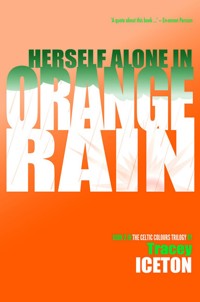
Kaylynne Ryan is a promising art student, used to fighting for her place in a world of men, but when a forgotten friend turns up she realises there is more than her own freedom at stake. Learning the truth about her Irish heritage, her grandfather who fought all his life for Ireland's independence, her parents who gave their lives for the same cause, she finds herself drawn into the dangerous world of the Provisional IRA with its bombing campaigns, bloody violence, hunger strikes and patriotic sacrifice. She didn't look for the Troubles, but they found her nonetheless, and now, whatever the cost, she must join the cause to help rid the Six Counties of the Brits. Herself Alone in Orange Rain tells the story of one young woman's fight for freedom and independence, for her homeland and for herself.
Sie lesen das E-Book in den Legimi-Apps auf:
Seitenzahl: 599
Veröffentlichungsjahr: 2017
Das E-Book (TTS) können Sie hören im Abo „Legimi Premium” in Legimi-Apps auf:
Ähnliche

















Contents
Title
Copyright
Acknowledgments
Author’s Note
Epigraph
Dublin—8th March, 1966
Plymouth—14th October, 1980
Dublin—15th October, 1980
Dublin—18th December, 1980
Belfast—26th December, 1980
Dublin—1st March, 1981
Belfast—7th May, 1981
Dublin—13th July, 1981
Dublin—19th July, 1981
Belfast—9th August, 1981
Belfast—3rd October, 1981
Belfast—23rd December, 1981
Belfast—9th January, 1982
London—27th April, 1982
London—20th July, 1982
Loughrea, Co. Galway—20th September, 1982
Loughrea, Co. Galway—23rd September, 1982
County Antrim—25th September, 1983
Coalisland, Co. Tyrone—4th December, 1983
London—13th December, 1983
London—17th December, 1983
Brighton—15th September, 1984
Belfast—12th October, 1984
Belfast—4th December, 1984
Castlereagh Interrogation Centre—12th December, 1984
London—14th December, 1984
Armagh Jail—25th December, 1984
Newcastle, Co. Down—26th December, 1984
Belfast—18th January, 1985
London—25th June, 1985
Armagh Jail—30th June, 1985
Armagh Jail—23rd September, 1986
Armagh Jail—29th September, 1986
Mourne House, Maghaberry Jail—30th September, 1986
Outside Maghaberry Jail—18th March, 1987
Galway City—27th April, 1987
Dublin—10th May, 1987
Ballygawley, Co. Tyrone—12th July, 1987
County Tyrone—25th July, 1987
Dublin—18th August, 1987
Ballygawley, Co. Tyrone—28th August, 1987
Enniskillen, Co. Fermanagh—9th November, 1987
Ballygawley—18th November, 1987
Madrid, Spain—1st March, 1988
London—7th March, 1988
Dublin—8th March, 1988
Belfast—17th March, 1988
London—20th March, 1988
Belfast—20th March, 1988
Monaghan—22nd March, 1988 (morning)
Ballygawley—22nd March, 1988 (evening)
Dublin—3rd April, 1988 (Easter Sunday)
Ballygawley—15th April, 1988
Ballygawley—14th October, 1988
Belfast—4th May, 1989
Killed by The Troubles
Further Reading
Notes
HERSELF ALONE IN
ORANGE RAIN
TRACEY ICETON
Published by Cinnamon Press
Meirion House,
Tanygrisiau,
Blaenau Ffestiniog
Gwynedd
LL41 3SU
www.cinnamonpress.com
The right of Tracey Iceton to be identified as author of this work has been asserted by her in accordance with the Copyright, Designs and Patent Act, 1988. © 2017 Tracey Iceton.
ISBN 978-1-78864-028-2
British Library Cataloguing in Publication Data. A CIP record for this book can be obtained from the British Library.
All rights reserved. No part of this publication may be reproduced, stored in a retrieval system, or transmitted in any form or by any means, electronic, mechanical, photocopying, recording or otherwise without the prior written permission of the publishers. This book may not be lent, hired out, resold or otherwise disposed of by way of trade in any form of binding or cover other than that in which it is published, without the prior consent of the publishers.
Designed and typeset in Garamond by Cinnamon Press. Cover design by Adam Craig © Adam Craig.
Cinnamon Press is represented by Inpress and by the Welsh Books Council in Wales.
The publisher gratefully acknowledges the support of the Welsh Books Council.
This book owes its existence to the following people:
Principally to Prof. Michael Green and Dr Fiona Shaw of Northumbria University without whose input this novel would be a pale shadow of the work it became under their expert guidance and insightful feedback. Jan Fortune at Cinnamon, who continues to keep faith with my Celtic Colours trilogy, and who unquestioningly embraced my blending of fact and fiction in this novel, enabling me to tell the story as I felt it had to be told. Danny Morrison who kindly took the time to discuss the premise of this novel with me and who offered suggestions that shaped the plot as well as continuing to support my writing. Jim McIlmurray for welcoming me in to view his unique collection of Troubles memorabilia, for recounting his experiences of the Troubles and for the useful contacts he helped me reach out to.
Maírtín Ó Meachair of Teach an Phiarsaigh (Pearse’s Cottage) in Rosmuc, Galway who was kind and generous enough to, again, correct my use of Irish throughout the novel. Hilary Bryans who worked as a journalist in Northern Ireland during the 1980s and kindly shared her memories of life there during that difficult period with me, adding many authentic details to the book.
Fellow PGRs at Northumbria who provided feedback, encouragement and alcohol when needed, in particular Rowan, Jo, Jane, David and Jen. Also, all the staff in the English and Creative Writing department at Northumbria who supported me, helping me make the most of my post grad research opportunity and giving me the chance to develop and share my creative practice for this novel. To all those writers of works creative, critical and socio-political from whose texts I drew both information and inspiration during the research and writing process of the doctorate from which this novel emerged. David Willock who both proof read the novel and generously praised it for its portrayal of the futility of war.
Pen Pearson, poet and author of Bloomsbury’s Late Rose, who, having read the final draft of the novel, offered what I take to be the highest praise one author can give another when she said it was a book she wished she had written. John Dean, noted crime writer, who found the time to read the novel and who so generously offered a glowing endorsement of my work. Clare Wren who, besides reading the novel, supporting my writing and sharing her memories of the period with me, also made a vital contribution to the accuracy of my depiction of Catholic mass and wedding services. Without her input those scenes would have been woefully erroneous and greatly lacking in significance. Natalie Scott, whose long standing friendship and writer’s expertise were both essential to me during the arduous process of writing, redrafting and critiquing this novel for my doctoral thesis.
My family, both Johnsons and Icetons, who continue to unfailingly support my dream of being a writer. Thanks to them I can continue to live the dream. My husband, John, to whom I owe the greatest debt of thanks. For the three years it took me to develop this book he maintained a steady course, encouraging me to do the same, even when it felt like the ship would sink. His unconditional support of my writing is deserving of so much more than I can offer in these lines. Thank you. Thank you. Thank you.
And finally, to all those women and men whose Troubles tragedies are retold in these pages.
Unlike Green Dawn at St Enda’s, which was born in the emotive setting of Kilmainham Gaol’s execution yard, Herself Alone materialised when fellow writer Natalie Scott suggested I devote part two of my Celtic Colours Trilogy to exploring the war from a female combatant’s perspective. I wondered if this was possible, plausible. Did women fight for the Republican cause? And if so what was it like to be a woman in the IRA?
Research answered the first question with an emphatic yes. There are twelve women on the IRA Roll of Honour; records of thirty-plus imprisoned for Republican activities. Official numbers are small but unconfirmed accounts report a 50-50 male/female attendance at IRA training camps,
And the second question? How would women volunteers think, act and feel while engaged in actions most cannot comprehend? What would bring them to the armed struggle? Were media portrayals of such women as the dupes of their male counterparts accurate? Some answers can be found in the few non-fiction books exploring the experiences of women freedom-fighters. I drew on these sources to create a character, but my protagonist is a fiction. This novel presents one possible account of what it might have been like to be a woman in the PIRA during the decade that encompassed the shooting of unarmed volunteer, Mairead Farrell, on Gibraltar.
In common with Green Dawn, Herself Alone also recounts real events, although far more recent, occurring between 1966-1988. Where facts were known I used them as accurately as possible within the scope of a fictional work. Where gaps existed I filled them with what I felt could have happened. Some events are entirely fictional. to greater or lesser degrees, from similar incidents, which did occur. Anything anachronistic is intentional and in response to the constraints of a fictional narrative. Real people feature here, but they are written as I imagined them from what I have learnt of their lives, transforming them into literary characters.
Unlike Green Dawn, Herself Alone is a telling, not a retelling, for the simple reason that, seemingly, no one has before dared to tell this story. That women do take up arms for their political ideologies is an undeniable truth. I hope in writing this novel I have gone some way towards communicating the lived experience of the women who gave up everything for their beliefs. They have too long been silenced by narratives content to portray them as victims or femme fatales. I offer such portrayals no quarter.
Tracey Iceton, 2017
‘Every woman gives her life for what she believes…
One life is all we have
and we live it as we believe in living it.
But to sacrifice what you are and to live without belief,
that is a fate more terrible than dying.’
Joan of Arc
Dublin—8th March, 1966
Explosion Destroys Nelson’s Pillar
Mixed Reaction as Imperial Monument Falls
An explosion on O’Connell Street has destroyed Nelson’s Pillar, causing minor damage to surrounding businesses. The incident, thought to be the work of Republicans, reduced the nineteenth century monument to rubble late last night.
No one was injured but falling masonry caused some damage, including crushing a parked taxi. The driver, Steve Maughan (19), escaped injury, having got out of the vehicle prior to the explosion. No group has yet claimed responsibility. The area has been cordoned off and will be inspected later by structural engineers.
The Pillar, erected in 1808 to commemorate the Battle of Trafalgar, has been the source of controversy, with many calling for its removal on practical, aesthetic and nationalist grounds. One local resident, Mr Patrick Finnighan (66), commented, ‘It was an insult to 1916.’
There is speculation that the IRA bombed the Pillar to mark the fiftieth anniversary of the Easter Rising, due to be commemorated next month.
The boys called to see me, making sure the ould fella was keeping well and letting me know the scéal.
‘Mr Finnighan, how are you?’
‘Grand. Yourself, Frank?’
‘Fine. How’s the wee ’un?’
A floorboard behind me creaked. It was herself, coming to investigate and wordlessly answer Frank’s question.
‘She’s such a fair thing,’ Frank crooned as she came to me, one soft fist clamped over the ould silver locket I let her wear, the other slipping into my leathery palm, sharp eyes seeing us and quick mind knowing us.
Caught in her gaze, Frank ruffled his hair in that frazzled gesture of his. Bursting to laugh, I watched the pair of ’em battle once again to get the measure of each other, certain Frank’d crack first, as always. And so he did, reaching into his pocket for the usual truce token, a lollipop.
She thanked him with the Irish I taught her, ‘Go raibh maith agat,’ put the lolly away for later and went to her room to play.
With her gone Frank set to telling me how they planned to commemorate the fiftieth. I thought it a grand idea. Decided I’d be there to watch and her wee self with me. See, I knew by then she was going soon. I had to pack her off with something more valuable than that useless silver trinket. Sure, she loved it, loathed to take it off, but it was worthless now, engraved with initials that had amounted to nothing. I needed a better bequest. Taking her to watch the boys at work was just the job, chance to show her that life’s a struggle, let her see the truth of what I’d been teaching her about fighting what’s not fair. I went to wet the tea. When I came back the tray shook in my dothery codger’s hands; the boys took it for ould age but ’twas the thrill of my secret plan, making me slop muddy pools onto the doily.
Three nights later I had her ready, muffled in winter boots and red duffle coat; the locket sat against the scarlet like a medal. As we stood in the hall, an odd pair, she clutched my hand, wondering, I bet, at the to-do. We shuffled out into the night as the hall clock chimed twelve.
She held my hand the whole way. As we closed in on the GPO I clung harder to her. I was afraid, in that darkness, of what was there, buried under a heap of time. I saw the bodies, heard the shots, felt the burning end of that unfair fight coming on me again. She musta sensed my fear, kept squeezing my twisted fingers with her mittened hand. I swallowed tears.
We tucked ourselves out of sight in Henry Street. Peering round the corner I saw Nelson, waiting on us, leering down. The eejit thought he’d seen us off in ’16. He should’ve known we’d be back. And so we were, me shivering in the shadows, the boys out there laying the charge. They knew what they were about sure enough but I didn’t much like the look of them in their Army clobber; heavy boots, blue jeans, dark jackets: balaclavas. I thought of what I’d worn: a kilt and a brat, pinned with a pierced sun brooch; a green uniform topped by a slouch hat; a fedora and trench coat, the length of it hiding a rifle. We’d no need of masks in my day.
The boys by the Pillar were set. I clocked Frank by that daft hair ruffling habit of his; even masked up he couldn’t stop hand from patting head. But then they got down to it, Frank pulling a sheet of paper from his pocket and reading it aloud. The night carried the words to me: the Proclamation. But it wasn’t the same as when I’d heard it read there before. The speech wasn’t his and your man’s words were too big for Frank’s mouth. Then they held a minute’s silence for fallen comrades, praying like the good wee Catholic boys they are. I bowed my head, thinking of poor Mick Collins, how we’d jigged in the street, ducking British bullets as we laid the charge, trying our damnedest to blow ould Nelson to hell. God and I never had any time for each other but Mick and me were solid, until the treaty.
At last one of them produced a lighter, sparked the flame. Rusted joints groaning, I crouched down to the wee ’un, pulling her in close.
‘Watch!’ I told her as he lit the fuse.
It burst like a star and fled into the blackness. We traced its flight, breath held. There was one almighty bang and one dazzling flash. I felt the sharp snap of shock fired through her, a gun’s recoil, but not a peep of fear passed her lips. The street lit up in furious orange; her green eyes shone, eager and alive. Down came the bollocks, in a rocky, rubbly rain. The boys cheered, punching their fists in the air. In our hidey-hole I murmured, ‘Éire go bráth!’ before turning us to the long walk home.
It was late when we got in. She’d said hardly a word. I put her to bed, tucking her in tight. One hand closed comfortingly over the locket, she stroked my crinkled cheek with the other.
‘Why did those men break that wee man, Daideo?’
‘Sure, it wasn’t fair, him being there, so they were doing something about it. Like I’ve always told you to, Caoilainn.’
‘Was he a bad man?’
‘He was.’
‘Silly Daideo, he wasn’t real.’
‘I know, love, but you mind what I say: if things aren’t fair you fight ’til you make ’em fair. Do you understand?’
She puzzled it out a moment then nodded.
‘Good girl. Now to sleep with you.’
She curled up. I reached the door but she wasn’t done with me.
‘Why was Aidie’s daddy wearing a mask tonight, Daideo?’
Jesus, thinks I, she’s a smart one, clocking Frank like that.
‘Sometimes it’s better if people don’t know it’s you doing the fighting, love.’
‘Why?’
‘So they don’t try to stop you.’
She nodded again. ‘Are there lots of bad people?’
‘Some, but they won’t hurt you as long as you don’t let ’em. Remember that.’
I’d said my piece, too much of it maybe, but I couldn’t let her go without being sure she understood.
‘OK., Daideo. Can we go to the park again tomorrow and see the ducks?’
‘We can, unless it’s raining, then we’ll get the colouring books out, eh?’
‘Can Aidie come?’
‘We’ll ask his da.’
‘Aidie says if you feed them too much bread they explode.’
I cursed myself for letting her play so often with Frank’s youngest, little bugger, filling her head with nonsense when I had important lessons for her.
‘Does he now?’
‘Why do the ducks eat bread if it’s bad for them?’
‘Because no one’s told them they shouldn’t.’
‘That’s not fair, is it, Daideo?’
‘I suppose not.’
‘Someone should tell them, like you tell me. That’s fairer. They’ll know not to be eating it. I’m going to tell them. I’ll tell the ducks they’re not to eat any more bread. I won’t let the ducks explode.’ She sat up, her wee angel’s face screwed down with the fight in her. I saw the past and the future in that look she gave off.
‘You do that, a chailín bhig.’ I kissed her goodnight. Left her lying in the darkness, planning a grand wee speech to the ducks. Aye, it was time she went.
Two days later the Free State army were in town to tidy up, demolishing what was left of the Pillar. That was the day the Ryans came to take what was left of me. It was best for her. She drove off with them, wrapped in her red coat, sucking the IRA lolly she’d saved for later.
Plymouth—14th October, 1980
I step back from the canvas, blinking eyes dry from straining over tiny brushstrokes, stretching shoulders cramped from fighting the whiteness of a painting in progress. Picking up my creased copy of the assignment brief I stare at the Plymouth School of Art and Design logo until it blurs then drag my eyes down to instructions I’ve read into memory but am still battling:
Family and Childhood
Explore the themes of family and childhood. The artwork may take any form/style but must be inspired by an artist you have studied on this course. The piece must include some representation (symbolic or literal) of yourself and at least three of the following:
Siblings, parents or grandparents
Family home
Childhood games/activities
Memorable childhood places
Childhood playmates
School
Birthdays or other family celebrations
This piece is 30% of your second year marks.
I stare at my name, written in spiky pencil letters top left: Kaylynn Ryan. I mouth the four syllables, kay-lin-rye-ann, that tell me who I am and wonder again if what I’m painting is fair, to them or me. I toss the paper down. Fourteen months and four hundred miles between us but I’m still not free of them. I glance around the studio. The others are cracking on; this is no big deal to them and they wouldn’t get why it is for me, which is why I haven’t bothered telling them.
Col and Rich are doing something with clay. Keith’s gone for a collage and Stu for some modern construction using bric-a-brac. Baz’s tapping a Warhol vein and Jeff’s being ironic with Hopper. Alex hasn’t even bothered showing up. Mr Simons wafts into the studio, mug in hand.
‘How are we all?’
There’s a muttered reply. I glance at him, at Alex’s empty place and back at Mr Simons.
‘Anyone seen Alex?’ he asks, looking at me.
‘He’s doing field research, for an installation,’ Col says.
‘In the Field Head,’ I correct, ‘for a pint.’
Mr Simons nods like he’ll do something about that later. He won’t. Not as long as Alex’s mummy and daddy keep coughing up generous donations to the art department. I shake my head, reminding myself to think tactical. It pisses me off that the system is so easily corrupted but their money buys us better paints, easels that don’t collapse, sable hair brushes. It can’t buy Alex any talent. Shame. Pity. Tragedy. I’m still smiling as Mr Simons starts his rounds, heading first to Barb, Sandy and Lisa’s knot of industry.
Sandy’s painting onto a tapestry canvas that she’ll embroider over later, her idea of empowerment she says, reclaiming the feminine arts. Yesterday Mr Simons praised her ‘modern feminist approach to liberating female expression’. Last night I overheard her telling the other two she’s worried her boyfriend’ll dump her because her boobs aren’t big enough. I considered piping up with the adage ‘anything more than a handful’s a waste’ but they don’t get stuff like that. Or people like me.
I pick up my fine brush and go back to the intricate tartan pattern adorning the ducks clustered around the pond in the canvas’s bottom left corner. Just because I’d rather not do this doesn’t mean I won’t.
Mr Simons clacks across the room on slippery brogues. I feel the heat from his body as he takes up position behind me, viewing my work.
Everything is outlined and bits of it painted. It’s going to be good, maybe even great, when it’s done. I’ve adopted Dali because surrealist symbolism is the only way to paint my childhood. My brushwork has the Catalan master’s accurate touch, the reality that battles hard against the weird in his work and, now, mine. The background is vague mountains that could be Catalonia or Scotland. The foreground’s rundown terraced street merges into a well-groomed city park. Half finished there’s enough for Mr Simons to see the whole, disapprove of the aesthetic but grudgingly admire the skill.
‘Very vivid. Talk me through this, Kaylynn.’
‘I thought art was ‘beyond explanation’,’ I remind him.
‘The external moderator will expect you to be able to discuss your work,’ he says. ‘This is your family home?’
He points to the row of cowering houses that falls off the right hand edge of the canvas. The red brick is soot-blackened, the windows are grey-grimed, the impression that of dereliction and imminent demolition. Only one house is a home, evidenced by an empty milk bottle on the step, the peeling-paint door ajar and three figures on the kerb in front of it.
‘Yes.’ One of them. The one that provokes the fewest questions about a childhood spent championing causes and fighting for freedoms. I should’ve let myself off, painted an easy lie, suburban and semi-detached. Or maybe I should’ve red-lined it and rendered resplendent the dented Transit van whose petrol-fumed interior gave me headaches; the caravan so cold icicles hung inside it, unfestive decorations; the fifteenth floor squat that wasn’t worth the climb or the castle commune that sheltered a dozen free-love couples, their placards and their children.
‘And these are your parents?’
Standing in front of the house are a man and woman, him in jeans, her in a floral smock. Where their faces should be there are protest posters, his of the Socialist Workers Party, hers of the Women’s Lib. movement. Both share the raised fist logo, hers inside the♀symbol and his on a red background.
‘Yes.’
‘Their faces…?’
‘Representative. Signifiers.’
‘They’re activists, are they?’ he asks. There’s no need for me to reply. He coughs. Continues. ‘And this?’
He waves his hand at the third figure, sandwiched between the mother and father. It’s constructed from slogans and symbols: a CND badge for a head; arms and legs made of words (free women’s bodies, capitalism is slavery, fur is murder, make love not war) and dressed in torn jeans and a T-shirt with the ying-yang Anti-apartheid movement logo on it. The parents have their arms stretched out as though holding the hands of the child that’s not a child. There aren’t any hands to hold; I’m not there. I’ve released myself back into captivity.
I loop my fingers through the chain around my neck, winding it up until I reach the locket, and stroke the shallow dent on the back with my thumb. ‘It’s symbolic.’
‘Of?’
‘Their child.’
Mr Simons scrats at his goatee and moves on, indicating the image’s central portion which shows the flesh-and-blood me, my fair hair cropped, my red duffle-coated back turned to the viewer. I’m three or four. Next to me is a boy not much older. Around us the flock of tartan ducks, waiting for my brush to fledge their check-and-line feathers, clap their wings. On the ground beside us is the stooping shadow of an old man I can’t paint any other way because I don’t remember him properly. But he was there, once.
‘Is this also symbolic?’
I won’t tell him it’s simpler than that: just a happy memory.
I trudge home to my digs through teatime twilight.
Around the corner a terrace of houses banks up like a cliff-face, four storey Georgian grandeur run down to twentieth century scruff. I stop at no. twenty-five and squint at my attic room. Grey light masks blistered paint, mould-coated rendering and cracked glass. I climb the steps and enter the draughty hallway. Breath held to keep out the familiar stench of boiled cabbage and piss, I traipse upstairs. On the top landing I wrestle my door open, stumble in, dump my rucksack, hang my jacket and flick on the light.
Blue-white fluorescence stabs my eyeballs. Crumb-covered plates and mucky mugs sneer at me from the table. I stride over and grab three cups. As I lift them a misplaced patch of darkness on the table snags my eye. I stare. The dark patch becomes two oblongs, joined at right-angles. My heart crams up against the bottom of my throat. The mugs slip from my pincered grip. I cast off for explanations. My brain dumps everything, smearing images, fusing sounds; colours become blackness and noise silence.
I extend a finger. When I touch it, it will burst and vanish. My finger presses down. Cold hard metal presses back. There is no pop. The gun is real.
Someone flushes my toilet. I spin round to face the bathroom door. A man emerges. His eyes leap to me, drop to the gun, my finger stroking the stubby barrel. The glance forbids, cautions, tempts, suggests: don’t walk on the grass; no smoking; don’t press that red button. Better in my hand than his. I coil my fingers around the gun. It resists, dragging its weight as I lift it, metal fighting a magnetic draw. I pull it out and point it at him. He raises his arms, hands open, palms facing me, cautioning me like you would a running child.
‘Whoa there, go steady. That thing’s loaded.’
His words lilt with an accent: ‘dat’ and ‘ting’.
Scanning him from toe to top I note the scuffed boots, raggy jeans, scuffed leather jacket, two days’ stubble, blue eyes ringed with tiredness, dark unbrushed hair, tall and thin, scar on his cheek, about twenty.
‘Ah, come on, now,’ he coaxes.
I can’t speak. I’m not breathing. I fight to keep my hand steady, the gun from shaking. It’s heavy, solid. Sweat slicks my palm making the handle slippery. We’ve been like this for seconds, minutes: hours. I’ve forgotten how it started. I don’t know how I’m meant to end it.
‘Who are you? What do you want?’
‘Do you not remember me?’
I’ve seen those eyes before, somewhere, somewhen. Mute, I sift back through days, weeks, months, trying to locate him. He blinks twice.
‘It’s me, Aiden, Aiden O’Neill. Jesus, I thought you’d remember wee Aidie.’
I keep sifting; years fall through my fingers. Two kids run towards a pond. Ducks quack and flap.
‘How are ya, Caoilainn?’
He says ‘Kee-lun!’, not ‘Kay-lin’. The syllables buffet me.
‘That’s not how you say it.’
‘Sure, it is. A-o-i is ‘ee’ in Irish.’ His words have a teacher’s firmness. It fades. His eyes dart about. ‘You used to…’
‘I don’t... I can’t…’ I do. I can. Don’t want to. Am afraid to. A sing-songy voice chants in my ear: c-a-o i-l-a i-n-n, Caoilainn fair and Caoilainn slender; that’s my name, so sweet and tender. Whose voice? Whose rhyme?
‘I’ve something for you. I’m just after reaching into my pocket.’ He inches a hand inside his jacket. I tighten my grip on the gun, arm straining against the weight. He withdraws a square of card, pinched between finger and thumb.
I step forward, snatch the card and retreat, keeping the gun pointed at him. Flipping the card over, I see a black and white image of an old man and a young girl. Behind them is the columned entrance of a grand building. To their left squats a mound of rubble topped with an oversized stone head. Fluttering panic settles in my throat. The man wears a shabby suit and macintosh. The girl is wrapped in a dark duffle coat, booties and mittens. I know the coat is crimson. The girl is me. So the man holding my hand must be my time-shadowed grandfather.
When I look up Aiden’s closed in on me, has his hand on the gun. He tugs gently; I let go. He pulls out a chair and nudges me onto it. I don’t see him put the gun away, it’s just gone and he’s ruffling his hair. He takes out cigarettes, lighting one and giving it to me because either I smoke or I’m about to start.
‘I’ll put the kettle on.’ He goes to the sink.
Fixed on the photograph, I hear water gushing, a click as he lights the stove. The kettle whistles. He sets down two mugs, fetches the milk. I smell old sweat and wonder when he last showered and changed, slept in a bed: put down his gun.
Why the hell does he have a gun?
He sits opposite. We stare at each other. I study the scar. It’s three inches long and curved like a smile. There’s a fresh redness to it. Guided by my stare, he rubs a finger along it.
‘Sorry for giving you a scare. I’d no business leaving that thing on your table.’
‘Why’d you even have it?’
‘Just in case.’
‘Of what?’
He doesn’t reply.
‘You should be more careful.’
‘Aye, me ma’s always saying what a slapdash bugger I am but I never thought you’d go pointing it at me. I thought you’d remember me.’ A cough rasps in his throat. ‘You shouldn’t go aiming guns at people unless you’re meaning to shoot them.’
‘What makes you think I wasn’t?’
He riffles fingers through his hair again. I return to the photo, calculating my age to about four, making it a fourteen year old snap.
‘We used to feed the ducks.’
‘On the Green.’ He grins.
‘In Glasgow.’
His grin shrinks. ‘Sure, it was Dublin. That’s O’Connell Street.’ He taps the man in the picture. ‘Your…’
At the mention of Dublin a lost word appears.
‘Daideo.’
‘Aye, your granddaddy.’
My memories aren’t where I left them. ‘I don’t understand.’ I tap ash off my cigarette with shaking fingers. ‘We lived in Scotland, moved to England when I was nearly four.’
‘That’s what they’ve had you thinking?’ Aiden asks. He drops his gaze, gulps his tea. ‘Do you not remember Ireland at all?’
‘I remember the duck pond.’ I look at his eyes. ‘You.’ I take up the photograph. ‘Rainy days colouring-in. My name, the way you said it. The rest is hazy, a dream I know I’ve had but can’t recall. Jesus Christ, this isn’t happening.’ I sit back, close my eyes, reach down through the blackness and see a single point of light, fizzing like a dying firework. It runs off into darkness; there’s a loud bang, a white flash. Black turns orange and a small man falls from a great height. A voice rasps, ‘If things aren’t fair, you fight ’em.’ His words. Daideo.
Stroking the photograph, I feel skin, warm, rough and crinkly. ‘He died after we moved.’
‘He didn’t, Caoilainn.’
‘Shit.’ I lean forward, sick and dizzy. ‘I don’t understand.’
Aiden takes my hand. ‘I’m sorry for bringing this to you but we had to. He’s not well, not well at all.’
‘So they fell out? And now he’s dying he wants to make it up?’
Aiden shakes his head. ‘He doesn’t know I’m here. He won’t have doctors so we don’t know how bad he is, but it’s plain he’s ill. We’ve been worrying about what to do.’ A frown creases his forehead.
‘We?’
‘Me and my ma and da, especially Da. He’s been frantic about it, so he has. Feared of your granddaddy being on his own when he...’ Aiden withdraws his hand and drags on his cigarette.
Coldness spreads through me. I swirl my mug. A picture develops in the darkroom of my memory, of a few more lads, dressed like Aiden but with balaclavas. I’m not sure it’s real. Then one of them moves a hand to his head, trying to ruffle hair covered by a woolly mask. My mouth fills with the sweet sharp tang of a strawberry lollipop.
‘Your dad…’
‘You remember him?’
‘He always had sweets for us.’
‘Aye, and you got the strawberry ones. Dead jealous of that, so I was.’
I pick over charred memories, shuffling and sorting until there’s something readable.
‘So you’ve taken up the family business.’
He fiddles with his cigarettes.
‘The IRA,’ I press.
‘Why would you be saying a thing like that?’
‘You’re Irish. You have a gun. It’s not the Times crossword.’ I jab at the photograph. ‘That’s why they moved, told me he died, isn’t it?’
I push the picture away and stand up, knocking over my chair. Aiden grabs my wrist.
‘He’s a hero, your granddaddy, and he should have his family around him now he’s…’ Aiden’s fingers squeeze.
I pull free. ‘How did you even find me?’
‘Your granddaddy gets letters, four a year, telling him what you’re up to. I swiped a look at the most recent, got your address.’
‘Letters? From my parents?’
Aiden shrugs.
‘This makes no bloody sense. Why would they write to him about me but have me think he’s dead?’ I demand.
‘Dunno.’ He scans the room as though he might find an answer among my clutter. ‘Look, I’m just after you coming home with me.’
‘No.’
‘Jesus, he’s your kin.’
‘So? I haven’t seen him since…’ I glance at the photo. ‘You’re mad to think I’m dropping everything and rushing off with you. Get Mum to go. He’s her dad, she can deal with it.’
‘Ah, shite.’ Aiden backs away from me, worries at his hair.
Fear coats my tongue, the bitter taste of orange pith. ‘What?’
He rights my up-tipped chair, drops a hand onto my shoulder and eases me down. ‘You don’t want to hear this from me.’
And now I have to. I stalemate him. ‘I’m doing nothing until you tell me what’s going on.’
‘Just come.’
‘Tell me first.’
‘Then you’ll come?’
Like hell. Maybe. Depends. I say nothing; the silence forces words from him.
‘Da wasn’t sure what you’d know, how much you’d remember…’ He reaches into his pocket again, pulling out a yellowed piece of paper. He sets it on the table but keeps a hand over it.
I tug at a corner, sliding it free.
It has been quartered, the creases bruised by repeated folding. I open it carefully. At the top is an official crest and the words ‘Teastas Beireatais’. Skimming down, I see the remembered Irish spelling of my first name followed by ‘Finnighan’ and ‘3rdMay, 1962’: my birthday. More foreign words follow; máthair, athair, Cathal, contae, Muineachán.
‘It’s your certificate of birth.’ Aiden trails a finger over ‘Teastas Beireatais’ and translates; mother, father, Charles, county, Monaghan.
I’m not Kaylynn Patty Ryan; I’m Caoilainn Patricia Finnighan. My parents’ names aren’t Susan and John Ryan; they’re Fiona and Cathal, Charles, Finnighan.
‘Why did they change their names? Are they… on the run?’
Aiden flinches. ‘They’re not.’
‘So what the hell’s going on, Aidie?’ I drawl his childhood nickname.
‘They didn’t change their names. The Ryans aren’t your parents.’
‘Caoilainn?’
I snap back into the room. ‘If they’re not my parents who the hell are they? Who are my parents? How can I not have known this?’ My voice pitches up with each word. ‘Jesus Christ!’ I’m too high. I let go. Laughter bubbles up. I hear madness in it. So does Aiden, he edges towards me. I’m scaring him. I stop laughing.
‘They’re not my parents?’
He nods.
So I’m finally free of them.
But cornered by something worse: the unknown.
I can’t fight it blind.
‘Tell me what you know.’ I rest my hand on Aiden’s arm, encouraging him with a be-my-hero squeeze. ‘I need the truth.’
He takes my hand in both of his. ‘The Ryans, they were friends of friends or something. Your granddaddy had them take you to live with them, ’cos your,’ he hugs my hand, ‘ma and da had died.’
‘How?’
‘Your da was a volunteer.’
‘A what?’
Aiden looks away. ‘He was in the IRA, killed in action I suppose.’
‘And my mum?’
‘Aye, she was involved too but I dunna what…’ He shrugs.
He can’t help. I pull my hand from his. ‘That’s all you know?’
‘I know this is who you are.’ He strokes the flimsy birth certificate. ‘This is your family.’ He retrieves the photograph. ‘What’s left of it.’
I stare at the old man. ‘And him?’
‘He was after doing the right thing,’ Aiden says.
‘Getting rid of me.’
‘Taking care of you.’
Our sentences criss-cross each other.
‘By getting rid of me.’
‘It wasn’t like that.’
‘How was it then?’
‘He’s old, sick.’
‘He didn’t want to be bothered with me so he sent me packing.’
‘He’s a hero.’
‘What kind of a hero does that?’
Aiden bangs a fist on the table. Our mugs leap up.
‘No! He fought in the GPO with Pearse in ’16. Survived the War of Independence and the Civil War. He was protecting you. You’ve no idea what he musta been through.’
‘Whose fault is that? I don’t know any of this. Who’s Pearse? What Civil War?’ Aiden opens his mouth, eager explanations on his tongue. I stop him before they surface. ‘Don’t. Bloody hell, you’ve just dropped an atomic bomb on me, I couldn’t give a toss about Irish history.’ I push up from the table and stagger to the door, the world brightly blurred.
‘Where’re you going?’
‘I need to walk.’ I bang out.
Scaly autumn leaves crackle under my boots. Burying numb hands in my pockets, I stride through the city to the sea front. Fading light turns the waves graphite grey. White foam curls up like pencil shavings. I stand at the seawall, watching the water blacken. The rhythm of roll and retreat grinds me to dust. The sea doesn’t care about what’s happened. Nor does the man who nods goodnight as he walks by. Nor does his Labrador who sniffs me and trots on. Nor do the parents who aren’t parents, who will care only about their exposed lie, not its victim. Nor does the old man in the photograph, the one who should care because he settled me on shale, left me to this landslide. I lean over the wall, straining towards rushing waves, wishing it was as simple as dropping into them, letting the tide scatter me into oblivion.
It’s not fair. My fucking life and I’m the one that didn’t fucking know.
What now? Hide? Walk away from it? Run towards it?
Child-me, gambolling through the painting in the college studio, what would she do?
The answer is easy for her. She knows what she’s running towards.
When I open the door Aiden rushes at me.
‘Jesus, I was worried. You’ve been gone ages.’
‘I was thinking.’
‘And?’
‘I still am.’
We sit at the table again. Aiden makes more tea.
‘I’m sorry it’s like this,’ he says, handing me a mug.
I finger the brittle yellow paper. ‘How’d you get this?’
‘Lifted it from your granddaddy’s. He’d kept it, and the photo. Sure, doesn’t that tell you all you need to know?’
‘It doesn’t tell me why he thought it was OK. to dump me on a couple of hippy crusaders who always had something more important than me to take care of.’
‘What?’
I shake my head. Explaining the past can’t justify it. I go to the bed-settee and curl up. Aiden stays at the table. The hum of the refrigerator and the clanging of water pipes masks our silence. Saggy springs creak as I shuffle into the cushions. There’s a metallic click from the table. I look over but he’s only lighting a cigarette. I lean back again, closing my eyes, letting myself drift. A car drones along the road. The picture of my past dissolves and reforms, the sliding coloured beads inside a kaleidoscope.
Still that question: what now?
Face it. Understand it. Fight it.
That’s what I was taught to do when something isn’t fair.
We catch the last train to Bristol and hitch across the channel in a lorry. The driver shoots curious glances at us. Aiden avoids speaking and keeps checking the wing-mirror. We’re dropped off in Cardiff to wait for the first train to Pembroke Dock. Aiden goes for tea. I sit on the platform, my coat buttoned against the cold, trying to light a cigarette.
‘Here.’ Aiden returns with two steaming polystyrene cups.
The tea trembles in my frozen grip. Aiden sits unflinching on the icy bench and when he lights my cigarette his hand is steady.
‘Aren’t you nithered?’
‘I’m used to it,’ he says. ‘Do you want my jacket?’
I think about what he’s been doing to acclimatise himself to long cold hours waiting, a gun in his pocket. I remember us running through the park, scattering ducks, giggling. ‘No, but thanks.’
He shuffles closer, his arm pressing mine. ‘I know it’s been a shock.’
‘Will he be glad to see me?’
‘Aye, course.’ Aiden clears his throat. ‘I’ll come with you, don’t worry.’
But I am worried. I’m not sure I’ll be glad to see him.
Dublin—15th October, 1980
The bus ride from Rosslare Harbour takes two hours. I sit by the window, reading bilingual road signs showing off their double-tongue. Aiden chain-smokes, says little. When a sign proclaims 5 miles to Dublin, he lights his last cigarette. His leg starts a jig and his hand goes to his hair half a dozen times. I keep still, afraid movement will splinter me.
Weeds grow through the broken slabs of a drive leading to a child-drawn bungalow.
Aiden calls out as we enter, ‘Mr Finnighan, it’s me.’
A voice croaks, ‘Away in, lad.’
We creep along a narrow passageway. Aiden inches open the door.
‘I’ve brought you a visitor.’
‘Who’s that, so?’
Aiden beckons to me.
In an armchair, wrapped in a grubby blanket, is a shrunken man. His face is thin and lined, chin speckled with grey stubble, eyes deep-set hollows, nose hooked and twisted, skin sallow. He stoops forward, his crown showing through sparse white hair. Eyes widen, blue glittering. A hand, knuckles gnarled and skin brown-speckled, appears from beneath the blanket, reaching out as though to touch me; I hang back. The hand drops.
‘You eejit, what the fuck’ve you done?’ He throws off the blanket, crossing the room on a younger man’s legs. ‘Ya bloody wee bollocks.’
He smacks Aiden in the mouth. I recoil. Aiden puts a hand to his split lip, drawing it away red-smeared.
‘You’ve no business, so you haven’t.’
‘We’ve been worried about you,’ Aiden murmurs.
‘Haven’t yous enough worries?’ He swings fierce eyes on me. ‘You’re leaving. Take her back. Now.’
‘Mr Finnighan, it’s for the best. Da said…’
He snorts, ‘What business is it of his?’ Raises his hand again.
I grab the sleeve of his raggy jumper. I want to hate him but the little girl from the photograph wants to hug him. It’s the smell; tobacco, talc and pencil shavings. ‘It’s not him you should be angry at; it’s yourself.’
His arm falls. He shakes his head. ‘Whatever’ve you done? Silly ould bastard.’ He returns to his chair, sinking down. His eyes settle on mine, searching me. ‘What’s he said to you?’
‘Enough.’
Daideo glowers at Aiden who shuffles on his feet.
‘Do you not think she’s a right to know, Mr Finnighan?’
‘Just ’cos someone’s a right to something doesn’t mean they deserve it thrown at them,’ Daideo bawls. He turns to me. ‘Go home.’
He’s as afraid of this as me but he doesn’t know it yet and I won’t tell him.
‘No.’ I plant myself on the sofa and meet his glare with a neutral expression.
‘I’ll put the kettle on,’ Aiden offers, hurrying from the room.
‘Aiden says you’re ill.’
‘I’m ould, that’s all.’
‘So you’re not ill?’
He doesn’t reply.
‘You think this is how I deserved to find out?’
‘Him and his interfering da. I’ll skin Frank, so I will,’ he mutters. ‘You weren’t supposed to know.’
‘Well I can’t unknow it now. You could at least be sorry.’
He scowls. ‘I’ve nothing to be sorry for.’ He unfolds himself, rounded shoulders straightening, and reaches across to the table at his elbow. On it is a sketchpad, three stubby pencils and a tobacco tin. He flips the pad shut and snatches the tin. ‘’Twas for your own good.’
‘Why?’
‘Wee ’uns need a proper family, ma and da, caring folks with decent values.’
‘Your idea of a proper family’s pretty fucked up.’ I slap him with the last two words. Wonder if he’ll slap back. He doesn’t.
‘I know they’ll’ve loved you, raised you right.’
I try foul truths instead of foul language. ‘I’ll tell you how they raised me. Instead of colouring books I had placards to paint. We had our picnics on picket lines. They didn’t send me to school because they didn’t want me indoctrinated so I did my lessons alone at home which was mostly in some rank doss-house because it didn’t matter to them where we lived as long as we were handy for whatever rally was next on the calendar. They didn’t care what I got up to because they thought I was a hell of a lot better off than any of the oppressed whose battles they were fighting.’
‘Weren’t you, so?’ he snaps. ‘Clothes, food, education, family, freedom: love.’ He starts rolling a spindly cigarette. ‘You should be glad you’d the chance to learn from them what this world’s like and how to set about making it better.’ He runs a pale tongue along the cigarette paper, seals it and strikes a match.
‘They were too busy marching and protesting to love me.’
‘Of course they loved you. Why else would they teach you to stand up and fight for yourself when something’s not fair?’
‘They didn’t want me…’
He interrupts. ‘I’d’ve never given you to them if I thought that.’
‘…and neither did you.’
His fierce face fractures. He fights the blow, batting it down, drawing himself together again. ‘I did what I thought best. I’m sorry if you’re not of the same mind but there’s nothing to be done about it now.’ He folds his arms.
I’m doing this all wrong.
Aiden returns with tea and biscuits. ‘OK. here?’
Neither of us answers. Daideo sinks into the cushions. I settle into the sagged sofa, my feet on the coffee table. He squints at me, studying each feature the way I study things I’m drawing. I wonder what’s on the pages of his sketchpad.
‘You’ve still the look of my mother about you,’ he says.
‘What?’
Aiden sits next to me and pours tea. As he passes my cup he leans in and whispers:
‘Give him chance.’
I take the cup, swallow tea and frustration. Wait for the old man in the corner to speak again.
‘What are you doing with yourself?’
I came for answers, not questions. At my elbow Aiden lets out a tiny cough. I glance over and he nods, encouraging, guiding me.
‘I’m at college.’
‘Studying what?’
‘Art.’
Daideo stubs out his roll-up. His eyes widen, the blue luminous in the shadows of his sockets.
‘I used to do a bit,’ he replies. ‘Still knock up the odd sketch.’ A hand strays towards the sketchpad. He snatches it back. ‘But oils were my thing when I was a lad.’
‘My favourite too.’
His cheeks flush. Pride? ‘A painter, eh? You get that from me.’ He shoves a digestive into his mouth. Splutters, ‘Are you good?’
‘I got a scholarship.’ I pause. ‘To them it was a sell out of all their years teaching me to denounce The Man, be a free spirit and lobby for liberty.’
‘But you went anyway?’ He spits biscuit crumbs down his shirtfront.
‘They’re too lefty for parental dictatorships.’
He peers at me over his teacup. ‘So?’
‘I packed and walked. That was last year. We’ve hardly spoken since.’ I set down my mug. ‘Now I don’t see there’s anything left between us except mutual disappointment.’
Daideo’s mouth quivers. ‘A fighter: you’ll get that from me, an’ all.’ He gulps his tea; some dribbles down his grizzled chin. ‘I broke with my father when I was sixteen on account of needing to make my own way in the world so I’ll say nothing against you on that.’
‘Good, because they’re nothing to me now.’
He sighs. ‘Aye, you’re like me, so you are.’ He shakes his head. ‘And I’m like my father, more than I’d wish to be.’ He pauses to snatch at some dark memory. ‘Reckon I owe you an answer, lass.’
I look at Aiden. He winks.
Daideo starts somewhere in the middle.
‘Your ma… Susan,’ he corrects, seeing my frown, ‘Aye, she’s Bethy’s daughter. Beth was Charlie’s youngest sister.’
‘Charlie?’
‘School pal of mine. Your da’s named after him. Charlie died when he was nothing but a lad.’ His sight turns inwards as he peers into the past. ‘So when your da was born I give him Charlie’s name. He was a grand lad and I kept in touch with his family after, off and on. When your folks…’ Daideo presses shaking fingers into his eye sockets, smearing tears. ‘I tried, so I did, but it wasn’t any good. I couldn’t cope. So when I heard Sue was away to England with this fella she’d married we fixed things up for you to go with them. You’d be almost four, young enough to forget. I only asked them to write once in a while, let me know how you got on, and to make sure that you did forget.’
‘That’s why they changed my name.’
‘Aye. They wanted to call you Katherine but you wouldn’t have it so they made do with scrubbing the Irish out of Caoilainn.’
His words are only the story’s ending.
‘What about my real parents?’
‘Sure, it was the Troubles killed ’em. A terrible time, so it was.’ He falls silent.
Is that it? I sit forward. ‘Is that it? What about how? By who? When?’
‘You’re best off not knowing.’
‘That’s not your decision.’
‘As long as there’s breath in me it is.’
‘Fine. Don’t tell me. I’ll find out myself.’
It’s a risky sidestep; maybe there’ll be no other way of finding out. His mouth twitches. I can’t read him so look to Aiden for a translation.
Daideo suddenly pounds his fist off the chair arm. ‘You want to hear about how they were killed by a war we’ve been doomed to fight and lose in every generation? You want to know about brutal enemy attacks; folks afeared to sleep in their beds; spending weeks, months, years, running for safety in our own country; cowering like criminals when all we’re after’s getting back what was robbed from us; watching our comrades jailed, killed and waiting for the same ourselves?’ Words explode from him, slamming me into my seat with a crushing pain. ‘You want me telling you ’bout your parents being shot, your ma’s chest ripped open by bullets, your da’s face such a mess we’d to have the coffin closed? You want me to say how it felt hearing I’d lost two more, my own two, and knowing I was as much to blame as them that fired the guns?’ His face throbs with anger. Spit clumps in the corners of his mouth. His breath comes in drowning gasps. His eyes scorch me. He falls back, hand clawing at his collar.
Aiden jumps up, snatches a bottle from the sideboard and tips whiskey into Daideo’s teacup, pressing it into dothery hands. Daideo gulps from it, his face cooling, sweat beading on his forehead. Aiden hovers at his side. Daideo pushes him away to stare at me. He gasps one more breath.
‘You want to know the agony I felt telling you your mammy and daddy were dead?’ He crumples, allowing himself to be swallowed by the chair cushions.
Silence smoothers us. I want to be sucked into a blinding, screaming vortex. I don’t, can’t, move.
Daideo hands Aiden the emptied cup and twists stiffly to the window. Outside darkness soaks the quiet street. ‘It’s late. You can stay tonight, then back to that college of yours tomorrow.’ He nods to Aiden. ‘Make up the spare bed, lad.’
In a voice half a toner higher than usual Aiden asks, ‘Shall I see about grub too?’
‘Can do,’ Daideo says.
Aiden ducks out.
A minute passes, and a second. Daideo doesn’t flinch. Sickening shame drains into my stomach. I stand and stagger from the room, following the clang of pans to the kitchen.
Aiden is at the sink.
I kick the door shut, press against it, panic piling on panic.
Aiden comes over, squeezes my shoulder. ‘There’s a pub round the corner. Fancy a drink?’
The Golden Harp is quiet and dim-lit. The landlord welcomes Aiden and starts pulling a pint of Guinness. Aiden calls him Jimmy and introduces me as Caoilainn Finnighan, because that’s who I was, am, to him.
When Jimmy learns my name he says, ‘Nothing to do with that cantankerous git up the road, are you?’
‘Christ, Jim, he’s her granddaddy,’ Aiden protests.
‘Sorry, love. I was kidding.’
A ladylike half of Guinness appear on the bar. Aiden collects the drinks and steers me through to the back room. We sit in a corner. He offers me his cigarettes and I take a tentative sip of Guinness. It’s bitter but smooth.
‘Sorry about Jimmy,’ Aiden says. ‘He’s had a few run-ins with your granddaddy.’
I shrug it off. Suffocating silence slides over me. I force myself to break the surface of it. ‘My parents… is that how they died?’
‘It’s how too many folk died.’ Aiden shakes his head. ‘He doesn’t talk about them. Hurts too much, I guess. Something we understand.’
‘We?’
‘Republicans.’
‘And me, how do I understand it?’
‘You wanting that Irish history lesson now?’ he asks.
I study his face, the curling scar. It looks raw, cruel. An accident? A fight? A war wound? I want to feel the pain of it, something to pierce the numbness in my chest. ‘How’d you get that scar?’
He glances around the empty room. In a low voice he says, ‘Couple of UVF lads jumped me. Gave me this too.’ He lifts his sweatshirt, exposing a red, two inch, star-shaped scar in his side. He twists round; the star is mirrored and magnified, wider and redder. I imagine the sharp stabbing of a stitch and know I’m not even close. Alex tried to impress me with a scar once, on his arm. ‘Chicks dig scars, don’t they?’ I rubbed my thumb over the carefully applied oil paint, smearing it. ‘Only if they’re real.’
Aiden’s is real.
‘UVF?’
‘Ulster Volunteer Force. Loyalists.’ He pulls his jumper down.
‘Loyalists?’
‘Aye, loyal to the Crown. Run everything, so they do. We’re after equalling things up but that’ll not happen while the Brits are backing them, so it’s Brits out then a free democratic, thirty-two county socialist republic for everyone.’
My cheek stings with an imagined slap when he says ‘Brits’. I fumble for another cigarette. ‘I thought it was about religion.’
‘They let on it is but God’s nothing to do with it.’
‘So what is it about?’
He sparks my cigarette. ‘It’s about who you are: Irish or British. We’re all Irish on this island but when the Brits bullied Collins into signing the Treaty in ’21 that meant they kept six of Ulster’s counties for themselves they were about saying the people there were British. The Prods kid on it’s true ’cos they think it gives them special status but they get called Paddy on the mainland just the same.’ He smiles at this. ‘Sometimes I wonder the Brits think the Six Counties are worth fighting for but I guess you go hardest over the last crumb, specially when it’s all you’ve left of the mighty British empire. And us, sure, it’s for our homeland we’re fighting: Ireland wholly Irish.’
A movie flashes onto the screen in my brain: a young woman crumpling to the ground, her chest bubbling with blood; a young man falling backwards, a bullet exploding his head.
‘And that’s worth dying for?’ The words burn my tongue. I rinse with Guinness and swallow.
His eyes are fierce. ‘Aye.’
‘And killing for?’
‘It’s not like the papers say. We’re at war.’
‘But innocent people get hurt.’
‘Wise up, that was happening long before we started fighting back. What would you have us do, put up with the discrimination, living in hovels, making do with handouts, being treated like shite? We didn’t start this. Sure, we do our best to keep civilians out of it but if the Brits fight dirty…’ He shakes his head. ‘We’ve got the worst of it.’
I see him in a ditch, lying in wait, gun in his hand. Crawling under a car, depositing a deadly package. Smashing down a door, dragging a stranger from his bed. But the image is reversible. Him in the ditch facedown, gun in someone else’s hand. Him in the car with someone else’s package ticking beneath. Him in the bed; someone else breaking in.
I can picture Aiden like that; he’s safe: alive. Images of him keep me from seeing the bullet-broken young woman, the skull-shattered young man who aren’t.
‘You joined because of your dad?’
‘I volunteered,’ he stresses the word, ‘because things aren’t right, they need fixing.’
‘But he’s involved?’
‘Everyone in the North’s involved, just some folks’re good at kidding on they aren’t. We’re not that daft.’ Aiden studies his Guinness. ‘We’re Republican in our bones. Da’s been in the ’Ra, the Officials, since he was sixteen, like his brothers and their da before. It’s through the ould man we know your granddaddy. We even had a great aunt in the Cumann na mBan, that’s the old women’s division. Alongside Pearse in the GPO for Easter week, so she was. When the Troubles kicked off again the Sticks split. The Provisional IRA came from that. They took over; Da went with them so we moved to Belfast.’
Hearing words familiar from newspapers, I nod.
‘Da slipped the first internment swoop in ’71, when they grabbed a load of poor buggers who’d nothing against them ’cept they were Catholic, but they got him in ’73. We didn’t see him for two years. Our house was raided dozens of times, everything wrecked by squaddies. Ma used to serve tea on newspaper ’cos it wasn’t worth scrounging new plates just for the Brits to break. We’ve been beaten up on the streets, hauled in by the peelers, attacked by Loyalists, all for wanting things fairer; the chance of a decent job, nice house, ya know.’
He doesn’t shout or bang his fists; these are the simple facts of his life. Cold reality ripples through me. They could have, should have, been the facts of my life too. Why the fuck should I’ve been spared it? What gave Daideo the right to excuse me?
‘D’ya mind my brother Connor?’ he continues.
I push down the soured truth, pull faded images towards me: a boy, taller, sharp features, same colouring as Aiden, kicking a football; kicking it towards a smaller boy, fairer, softer, not Aiden.
‘Dark hair, older than you?’




