



5,49 €
Mehr erfahren.
- Herausgeber: Allen & Unwin
- Kategorie: Gesellschafts- und Liebesromane
- Sprache: Englisch
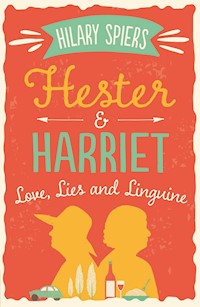
The gentle humour and relaxed pace make this an enjoyable read. - Daily Mail Sisters Hester and Harriet are reluctantly driving to visit relatives when they come across a young woman hiding with her baby in a bus shelter. Seeing the perfect excuse for returning to their own warm hearth, the pair insist on bringing Daria and Milo home with them. But with the arrival of a sinister stranger looking for a girl with a baby, followed quickly by their cousins' churlish fifteen-year-old son, Ben, who also appears to be seeking sanctuary, Hester and Harriet's carefully crafted peace and quiet quickly begins to fall apart. And, perhaps, that's exactly what they need...
Das E-Book können Sie in Legimi-Apps oder einer beliebigen App lesen, die das folgende Format unterstützen:
Veröffentlichungsjahr: 2017
Ähnliche



















For Ma and Pa
First published in 2015
Copyright © Hilary Spiers 2015
The moral right of Hilary Spiers to be identified as the author of this work has been asserted by her in accordance with the Copyright, Designs and Patents Act of 1988.
All rights reserved. No part of this book may be reproduced or transmitted in any form or by any means, electronic or mechanical, including photocopying, recording or by any information storage and retrieval system, without prior permission in writing from the publisher.
Allen & Unwin
c/o Atlantic Books
Ormond House
26-27 Boswell Street
London WC1N 3JZ
Phone: 020 7269 1610
Email: [email protected]
Web:www.allenandunwin.com/uk
A CIP catalogue record for this book is available from the British Library.
Paperback ISBN 978 1 92526 681 8
E-book ISBN 978 1 92526 862 1
Cover design: Christabella Designs
Cover illustrations: Christabella Designs & Shutterstock
Contents
CHAPTER 1
CHAPTER 2
CHAPTER 3
CHAPTER 4
CHAPTER 5
CHAPTER 6
CHAPTER 7
CHAPTER 8
CHAPTER 9
CHAPTER 10
CHAPTER 11
CHAPTER 12
CHAPTER 13
CHAPTER 14
CHAPTER 15
CHAPTER 16
CHAPTER 17
CHAPTER 18
CHAPTER 19
CHAPTER 20
CHAPTER 21
CHAPTER 22
CHAPTER 23
CHAPTER 24
CHAPTER 25
CHAPTER 26
CHAPTER 27
CHAPTER 28
CHAPTER 29
CHAPTER 30
CHAPTER 31
ACKNOWLEDGEMENTS
ABOUT THE AUTHOR
CHAPTER 1
1 NOVEMBER
The invitation reproached them from the mantelshelf.
‘We’ll have to go,’ said Harriet with a mixture of gloom and shame, hand creeping out to the Turkish delight beside her.
The gloom was in anticipation of the inevitable ghastliness of it all; the shame that she was unable to look upon the whole issue more benignly. She was a woman whose personal failings cut deep. Hester, less given to self-flagellation, grunted in agreement as she consulted her knitting pattern. Harriet returned to her jigsaw, painstakingly sifting through the pieces, myopic eyes inches from the box. Further words were unnecessary. The subject had been discussed to death over the years—this would be the fifth—and no permanent solution was ever forthcoming. One year they had pleaded Hester’s sprained ankle, but George had driven over to collect them. Another year the downstairs toilet had fortuitously blocked the night before; phoning to cry off so that they could await the emergency plumber, they thought they had the perfect excuse, only for George to appear within the hour armed with a plunger, a latter-day Galahad to the rescue. Just once—last year, when they had both succumbed to flu—George and Isabelle had failed to winkle them from their fastness; instead they had snuggled down in their hot, tangled beds, creeping downstairs intermittently for Bovril (Hester) and hot chocolate (Harriet). The sisters recalled that Christmas with unalloyed pleasure. Bliss.
‘Oh God, little nasties and gluhwein,’ said Harriet with a moue of disgust; they both shuddered. Last year Isabelle had surpassed herself with the little nasties: undercooked vol-auvents with a grey gloop that might have been mushroom but—horribly—transpired to be shrimps, shrivelled and veiny. Hester, who adored cooking, was convinced her cousin’s wife possessed a sort of perverse genius to be able to produce such monstrosities year after year. She wondered that Isabelle didn’t question the huge quantities of leftover food each time. Perhaps she really believed George’s hearty reassurances: ‘They’ll have had a big breakfast, my darling. And they won’t want to spoil their appetites for Christmas dinner.’ Isabelle seemed blithely unaware of the discarded food secreted in plant pots and behind Christmas cards by all but the hardiest of guests. Hester and Harriet, scraping barely nibbled canapés into the bin, would avoid catching one another’s eyes. Both would think of the wafer-thin smoked salmon and chilled champagne nestling intimately alongside each other in the fridge, the kitchen fragrant with the aroma of Hester’s seeded loaf, still warm from the oven. Each would, with some difficulty, suppress a groan. The horror that was Isabelle’s Christmas dinner still lay ahead. ‘Another gluhwein?’ George would invariably offer, detritus bobbing in the murky jug.
Hester poured them both a Tio Pepe. Sipping hers appreciatively, Harriet said, ‘You never know, perhaps it will snow.’ Their cottage, The Laurels, lay at the end of an unmade road, badly potholed, where ice formed at the slightest provocation and driving in the depths of winter was often excitingly hazardous. Hester snorted, and threw the newspaper at her sister in response. It slithered off Harriet’s lap to lie at her feet, the headline screaming UNSEASONABLY WARM CHRISTMAS IN STORE, SAY FORECASTERS.
They both knocked back their sherries.
Their apparent ingratitude was made all the worse, at least in Harriet’s slightly kindlier eyes, by the fact that George and Isabelle were such good people. Good people, kind people. Salt of the earth. Do anything for you. George, a loss adjuster, had clearly missed his vocation as a vicar. Isabelle taught children with behavioural difficulties, volunteered for the Samaritans once a week, mentored recovering drug addicts and was chair of their parish council. They were assiduous in helping elderly neighbours, doing their shopping or ferrying them to hospital appointments; they mowed the verges that rightly were the responsibility of the council because ‘it kept the village tidy’; they stepped up to every conceivable plate. The sisters had often mused that George and Isabelle might well be the blueprints for the Big Society, whatever that was. Generous and big-hearted, the couple were unfailingly solicitous of their widowed cousins; from the moment Hester and Harriet had so unwisely bought a cottage in the next village, George and Isabelle had decided that they need never want for company. They assumed that two sisters in late middle age (or so they liked to think of themselves), both released from the constraints of childless marriages within a few months of each other, must of necessity be prey to loneliness and isolation. So, benevolently but relentlessly, they tried to incorporate the pair into their chaotic household, issuing frequent invitations to Sunday lunch, to drinks parties and, of course, their Christmas Day gathering. Lovely, kind, thoughtful people. And so crushingly, toe-curlingly boring.
‘Why does everyone assume we need looking after?’ grumbled Hester. ‘All we need is a bit of peace and quiet.’ She saw Harriet’s hand hovering over the Turkish delight again, sighed inwardly, but for once forbore to comment.
‘All we need,’ muttered Harriet, easing the edge of a cloud into place in her jigsaw, ‘is a miracle.’
CHAPTER 2
25 DECEMBER
Christmas Day dawns mockingly bright. The sisters call greetings along the corridor to each other, then return to their favourite activities, Hester back into the thriller she had so unwillingly put aside last night, Harriet sinking again into her pillow for a celebratory snooze. By half past eleven, unable any longer to put off the inevitable, they are showered and standing in front of the long mirror in the hall.
‘How do I look?’ says Harriet.
‘Dowdy,’ says Hester.
‘Excellent,’ says her sister. This year, they have decided to see if they can appear so shabby and unkempt that their hosts will finally decide that—duty notwithstanding—they ought not to expose their friends and neighbours to their indigent and faintly repellent relations any longer.
‘You’ve a far worse cardigan than that,’ says Hester. ‘The one you do the gardening in?’
Harriet struggles into a mud-coloured cardigan belonging to her late husband, a garment now bereft of buttons and sporting a multitude of moth holes. The sisters regard it for some moments.
‘Trying too hard,’ says Hester, shaking her head.
Reluctantly, Harriet reverts to the bobbly cable knit. ‘Slippers?’ she suggests.
‘We’re going for eccentric, not doolally,’ snaps Hester.
She marches into the kitchen and flings open the fridge to gaze longingly at the Serrano ham, the Roquefort, the pressed partridge terrine. Her mouth floods with saliva. Grimly, she closes the door.
Harriet places a hand on her shoulder. ‘Five hours,’ she says. ‘We can last five hours, can’t we?’ This year, they have decided that in addition to the batty old women routine they will eschew any alcoholic fortification until the ordeal is over. ‘Pleasure delayed …’ says Harriet and reaches for the car keys. ‘Come on, let’s get it over with.’
The car rattles and jounces down the lane. ‘Your hair looks a bit tidy,’ says Hester, ruffling Harriet’s grey helmet. Harriet returns the compliment and the car weaves drunkenly from side to side as the sisters shriek with mock alarm. They are beginning to enjoy themselves in spite of what lies ahead. Harriet is secretly relieved that Hester has not repeated last year’s experiment: a sizeable glass—or two—of whisky before they set out. The stiffener coupled with the inescapable gluhwein on an empty stomach had exacerbated Hester’s customary acerbity so that within ten minutes she was berating some inoffensive tax inspector on the iniquities of double fuel duty. George had led her quietly away and deposited her in the spare bedroom, where she had promptly fallen asleep, leaving Harriet to spend the next few hours apologising for her and wrestling unaided with a mountainous portion of leathery turkey. A few days later, Isabelle had stuffed a leaflet through their door—Do You Have a Problem with Alcohol? We Can Help!!!—and crept away. The sisters had been offended less by the leaflet’s sentiments than by its use of multiple exclamation marks.
They turn on to the main road and start to make their way through Pellington village. The narrow street is bumper to bumper with parked cars on both sides, the numbers swelled by visitors and relations. The same thought strikes them: are these festively decorated houses filled with other mean-spirited, ungrateful people just like them, also dreading the enforced jollity, the badly-cooked food, the ill-chosen wines? The thoughts remain unvoiced. Instead, Harriet says, ‘Let’s hope Ben is through that phase of his.’
Hester nods. Interaction between them and the boy is virtually non-existent, given his tendency to hunch perpetually over his mobile, texting furiously, stopping only to refuel or complain about his parents’ latest transgression. Neither will easily forget their nephew’s (strictly their second cousin, they know) explosion of rage two years earlier when he was given the wrong Ex-Box or Wee-Wee or whatever it was called. The appalled silence that greeted his eruption was only broken when he threw the offending item to the floor and ran from the room, swearing. ‘Another Celebration?’ George had asked, holding out the box of sweets with a shaking hand, while Isabelle dabbed at her eyes. They don’t want a repeat of that.
By the village shop, they are forced to back up and reverse into a perilously small gap to allow a huge four-by-four to squeeze by. Reversing is not Harriet’s strong point and it takes her several attempts. The driver, grim-faced with holiday cheer, surges away without any acknowledgement. Harriet winds down the window and yells, ‘Not at all! Our pleasure! You moron!’, just as the verger hurries around the corner on his way to St Peter’s. The sisters, conscious that it has been many months since they have set foot in church, give a hurried wave, mouth ‘Happy Christmas’ and, as Harriet accelerates away, dissolve into snorts of mirth.
They are forced to a halt again on the edge of the village as a car careers out of an imposing or pretentious (depending on your taste) gateway, engine gunning, and roars up the hill.
‘Peace on earth at the Wilsons’ as per,’ says Hester, with a little frisson of excitement. She secretly finds Teddy Wilson strangely attractive, despite his rackety reputation. It affords Harriet no little private amusement that her otherwise rather forbidding sister should entertain such tendresse for so shameless a reprobate, especially as she herself is wholly immune to his louche charms. It has occurred to her before that the answer to the attraction may lie in Hester’s marriage to such a dull old stick as Gordon. Good old Gordon. Solid (if not stolid), utterly dependable and—oh goodness—so predictable. Harriet had marvelled at his patience and relentless good humour over the years, especially when his wife was at her most prickly. And, true to form, Gordon had died as he had lived: quickly and quietly of a particularly aggressive but mercifully mostly pain-free cancer that had carried him off in five short weeks. If only her poor Jim had been so lucky: his protracted battle with emphysema had been torture for him to endure and her to watch. Sitting opposite her as he fought for breath in those last few terrible days, Hester had said across his wasted body, pinioned by starchy hospital sheets, ‘They put animals down,’ and, hurt as Harriet had been by her sister’s bluntness, in her heart she had felt the same. Her grief, when he finally succumbed and slipped away, had been tempered with huge, guilty relief.
She comes back to the present to find Hester twisting around in her seat as the Wilsons’ house disappears from view, saying, ‘She’ll be at the Dubonnet before he’s changed into second. Should we …?’ She gestures vaguely back towards the house from where they almost imagine they can hear Molly Wilson sobbing.
‘Best not interfere,’ says Harriet, trying to find first gear, suspecting that Hester’s apparent concern owes more to schadenfreude than genuine compassion. ‘Don’t you just love Christmas?’
The car jumps forward and judders onwards. Fifty yards or so outside the village, they pass the disused bus shelter. Hester glances into the gloom, in case old Finbar the tramp is in there. We’ll pop down with some mince pies when we get back, she thinks. It’s become a Christmas tradition that goes a tiny way to assuage their joint if faint shame at their lack of neighbourliness. Besides, Finbar is always so appreciative. And a can or two, the old devil.
But Finbar isn’t in there. There’s just a bundle of …
‘For heaven’s sake, Harry!’ She is catapulted forward, the seatbelt biting into her bony shoulder.
The car stalls, shuddering. There is a faint scorched electrical smell.
‘Sorry, sorry,’ says Harriet irritably, turning the key and trying various gears. ‘I think it slipped into second somehow.’
Not for the first time, Hester regrets not learning to drive. Surely it can’t be that difficult? Harriet’s driving, always slightly unreliable, seems to be deteriorating. The car coughs into life, just as a faint noise erupts beside her: a cross between a cry and a whine. A cat? She peers into the darkness of the shelter as Harriet grinds the gearstick forward and starts to pull away. The noise recurs.
‘Hang on, Harriet,’ cries Hester. ‘Pull in a minute, would you?’
The car drifts to a halt. ‘What now?’
Hester reaches for the door handle. ‘I just thought I heard … there’s something in the shelter. I’ll nip back and—’
But—rather as Hester had hoped she would not—Harriet has thrown the car into reverse and is steering an erratic path back towards the bus stop. Two cars pass them, horns blaring. Harriet really ought to try turning around or, at the very least, use her mirrors when she reverses, Hester thinks. They draw level with the shelter; Hester clambers out and approaches the heap on the seat. It’s not big or smelly enough to be Finbar. She is nearly upon it and about to give it a poke when she hears the odd sound again. She’s certain now: it’s a cat mewing, or a kitten. And then the heap suddenly moves. A pale hand emerges from what she now sees to be a thin blanket, and yanks it higher over what she surmises is a head.
‘Hello?’ she says.
The body jerks even further back, cowering in the corner.
By now Harriet has joined her, oblivious to the irate drivers weaving around the car, abandoned a good yard from the kerb. Hester holds out both hands in a gesture of bewilderment and looks to her sister for guidance. Harriet reaches past her and, before Hester can stop her, gives the bundle a shake. ‘Hello? Everything all right?’
For a moment, nothing happens. The women stand irresolutely half in and half out of the shelter, staring at the heap. Then the hand creeps out again and this time slowly pulls down the blanket until two terrified eyes appear, then a trembling mouth. As the blanket slithers off the shoulders, another face, tiny and crumpled, emerges blinking into the chill December air.
‘Please,’ says the girl. ‘No trouble.’
The baby’s tongue peeps out cautiously.
‘Trouble?’ says Harriet, transfixed. ‘No … we thought … are you all right?’
‘All right, yes,’ says the girl, holding the baby to her chest and cradling its head tenderly. ‘Is permitted?’ She sweeps her free hand around the shelter.
‘What, to wait for a bus?’ says Hester.
‘Bus! Yes!’ says the girl hurriedly. ‘I wait for bus.’
‘Right …’ says Hester doubtfully. ‘But the actual bus stop is just up the hill.’ She looks across to Harriet and raises an enquiring eyebrow. Harriet shrugs and shakes her head, then says.
‘We could give you a lift to the next village.’
‘No, I … thank you. Bus is better. Thank you.’ The girl smiles weakly and looks away as if to signal there is no more to be said.
‘Well, if you’re sure …’ Harriet retreats towards the car and, reluctantly, Hester follows. They are about to climb back in when the same thought strikes them. As one, they return to the shelter, this time a united front that will not be gainsaid.
‘There are no buses on Christmas Day.’
The girl looks up at them, cornered, biting her lip; the baby picks up her anxiety and starts to grizzle feebly. There’s talk of taxis, of a friend who might give her a lift, but they can tell it’s all lies. She levers herself up and now they see how thin she is, how inadequate her clothing and the baby’s. They’re not leaving her here.
‘We could take them with us.’ Hester voices the possibility somewhat reluctantly. ‘They’d be right up George and Isabelle’s street.’
They look at the mother’s huge, haunted eyes, the sallow skin, the baby’s puzzled, muddled gaze and say in one voice: ‘Or we could take them home.’
And so here they are. Back home. Bustling around the warm kitchen, slicing thick hunks of bread, laying out chutneys, cold meats, fat olives that bring a wan smile to the girl’s face as she struggles to keep her eyes open. She reaches out a tentative hand to take the glass of rich red wine that Hester thrusts at her. The baby has fed on and off for the past half-hour while Hester has prepared the meal and Harriet has been busy making beds, fitting out a deep drawer as a cot. Now, sated, the baby sleeps on the girl’s lap until Harriet gently lifts him up and carries him to his own little bed. Few words have been spoken, except for Hester’s hurried apologetic phone call to George, in whose voice did she detect not only the expected concern but also the tiniest note of relief? Naturally he immediately offered to come over as soon as their guests have gone, but Hester is firm. Spoil your Christmas, George? After all the trouble Isabelle has gone to? We wouldn’t dream of it. No, no, we’ve plenty of food … So, sorry to be missing the party—and dinner … Yes, we’ve already found the number for Social Services, just in case; we’ll ring them if needs be … Well then, we’ll leave a message … Not to worry, we’ve plenty of room … You’d have done the same, wouldn’t you? Of course you would! Bye!
Harriet lays the tiny baby in the nest of blankets and tucks them carefully around him. He stirs and something—a memory? wind?—brings a smile to his lips and he flexes his starfish hands. Gingerly, she leans down and plants a kiss on his forehead, then creeps from the room, leaving only a sliver of light across the carpet from the hallway. Just in case he wakes.
CHAPTER 3
26 DECEMBER
It’s one thing to take in waifs and strays on Christmas Day, full of the bonhomie of that most atypical of days; quite another to wake the following morning to realise that you have guests in the house; guests who need sustenance, looking after; guests whose clothes are drying in the utility room, who are sitting bundled up in clean but shabby and ill-fitting castoffs in your kitchen, feeding their offspring. More to the point, guests whose names you don’t even yet know. Somehow it hadn’t seemed necessary, would almost have felt intrusive yesterday. The sisters had installed the exhausted girl in the spare bedroom with the drawer-cot, left a tray outside the door at supper-time but had heard nothing save a few murmurs and the running of the bath mid-evening, while they were ensconced in the sitting room, deep into a fine merlot, Stilton and crackers and Morse on DVD.
Hester creeps downstairs to make the morning tea and discovers the girl quietly nursing the baby in the armchair beside the Aga. She makes as if to rise, but Hester waves her down.
‘Sleep well?’ she asks, unused to company this early, the words thick on her tongue.
The girl smiles cautiously. ‘Yes, thank you. Bed is good. He does not wake you?’
The baby is suckling contentedly, little hands waving; Hester marvels at his tiny nails. She shakes her head. ‘Not a peep. Once I’m out, I’m dead to the world …’ Then, seeing the girl’s confusion, ‘I mean I sleep really deeply … Tea?’
A stricken look flashes across the girl’s face; she turns involuntarily to glance at a mug beside her. ‘I had thirst. I am sorry.’
‘No, no,’ says Hester, peering into the mug. ‘Didn’t you find the milk? In the fridge?’
A horrified expression. ‘Milk?’ says the girl, as though Hester has offered strychnine. ‘Milk?!’
‘Hester,’ says Hester, offering her hand.
The girl’s is rough, small, and very cold. ‘Daria,’ she says shyly. ‘And this is—’
The kitchen door bursts open in a blast of arctic air and Harriet bustles in, two bulging bin liners preceding her.
‘I thought you were in bed!’ exclaims Hester. ‘I was just about to take you up some tea.’
‘Woke early, couldn’t get back to sleep, had an idea,’ gasps Harriet. ‘Decided to strike while the iron et cetera. I’ll have one now though. Hello!’ This to the girl who is clutching the baby defensively and staring at the apparition in glasses, nightdress, boots and thick overcoat, topped with an ancient trilby.
‘This is Daria,’ says Hester, fishing a damp teabag out of the compost pot by the sink and dropping it into a mug for her sister. Hester rarely wastes a new teabag on Harriet, who likes her tea weak. Fortunately for Harriet the teabag is the only thing in the pot this early in the day. Shavings of vegetables are not uncommon accompaniments to her tea when Hester makes it. ‘Daria, this is my sister Harriet. And this little fellow is …?’
‘Milo,’ says Daria, and all three gaze at the tiny pink face with that peculiar blend of covetousness and tenderness women reserve for babies.
Milo. O’Shea, thinks Hester. Oh, I liked him: the twinkle in his eye and that lovely Irish accent—
‘The Phantom Tollbooth,’ says Harriet with delight. She’d always longed to have a child to whom she could read it, snuggled up in bed, sleepy head on her shoulder, as the puns unwound page by page. Not a fantasy she would ever have shared, of course; she blushes to remember it. But the sisters smile at one another. Daria looks at them blankly.
‘What on earth’s in those?’ says Hester, gesturing to the bin bags, which have been planted in the middle of the table.
Harriet takes the mug of tea and peers into its depths. She sips it cautiously.
‘Supplies.’ Harriet tears open the neck of one bag and pulls out a brown sheepskin coat, followed by three brightly coloured jumpers. She holds one up.
‘You’ll never get into that!’ cries Hester.
‘They’re not for me,’ retorts Harriet with scorn. ‘They’re for …’ She gestures to Daria and Milo.
‘Oh!’ Daria looks astonished, then dismayed. ‘But I have no—’
‘And,’ continues Harriet, delving into the other bag, ‘that’s not all. Just look at these!’ And she holds aloft a jumble of items in a riot of colours, then drops them on the table. On the top of the pile is a minute Fair Isle cardigan with wooden buttons; underneath it are assorted vests and Babygros. Hester and Daria both look to Harriet for enlightenment.
‘Brainwave!’ she crows. ‘I was lying there thinking that we need to get Daria’—she acknowledges the unfamiliar name—‘and little Milo here some warm clothes. Then I thought: I know, Oxfam! I nipped over to Stote first thing and bingo! Some good Samaritan had dropped these off overnight.’
‘Christmas night?’ says Hester. ‘Donating things to Oxfam on Christmas night? How extraordinary.’
‘Not at all,’ says Harriet. ‘I read it somewhere. You’d be surprised how many bags there were. Plus a footbath and four dog baskets. Four! People don’t know what to do with themselves—they’ve watched the Queen’s speech, had their turkey, rowed with their rellies, so they storm off upstairs and start weeding out their wardrobes. Luckily for us. Although, when I saw that coat, I thought—’
‘Oh God,’ says Hester, realisation dawning as she examines it more closely. ‘It does look familiar.’
‘’Fraid so,’ says Harriet. ‘Poor old Molly. Peggy says she chucks out all manner of things when she and Teddy have had a dingdong. Then he has to buy her a whole new wardrobe to make amends.’
‘Poor old Molly!’ scoffs Hester, siding automatically with Molly’s errant husband. Unfaithful he may be—indeed undoubtedly is—but by all accounts Molly is a perfect cow and, by Hester’s lights, deserves everything she gets. In this regard at least, Hester is far from sisterly. ‘By the time he slinks home, there’ll be nothing left in any of the wardrobes. Remember last Christmas?’
The sisters reflect on Molly’s frenzied assault on Teddy’s suits with the hedge trimmer the previous year, a variation on her usual response to his misdeeds, her frenzy exacerbated by (or so rumour, assiduously bruited far and wide by a gleeful Peggy Verndale, the village’s arch tattletale, had it) a bottle and a half of Dubonnet. Molly’s chosen tipple is a further reason for Hester’s disdain.
They both notice Daria and Milo staring at them wide-eyed.
‘Local gossip,’ says Harriet, slightly ashamed. She holds up the tiny cardigan. ‘For Milo?’ If she is hoping for some sign of pleasure or delight, she is to be disappointed. Daria looks, frankly, terrified.
‘No, thank you,’ she says. ‘You are kind but, please, I cannot pay.’
‘Pay?’ says Harriet. ‘Oh, my dear, no, you’re not paying for these. They are a gift.’ She says quietly to Hester, ‘I popped a twenty-pound note through the Oxfam letterbox.’
‘Well, I did wonder … Strictly speaking, though, I think this counts as theft.’
‘Stuff and nonsense. It was an emergency!’
‘A … gift?’ repeats Daria. Her eyes are swimming with tears.
‘Hey, hey,’ says Hester gruffly, ‘no need for that. Let’s sort ourselves some breakfast. I don’t suppose you thought to get some nappies, Harriet, did you?’
Harriet snorts. ‘What do you take me for? I stopped at the Shell garage by the motorway and bought some there. They’re in the car.’
‘Why didn’t you use the place in the village? They’re always open on Boxing Day.’
Harriet rolls her eyes.
‘Oh, right,’ says Hester, all at once remembering how impossible it is to keep anything private around here with Peggy Verndale within sniffing distance. Peggy has an unerring nose for anything out of the ordinary; as far as scandal is concerned, she is a bloodhound.
Hester makes for the fridge. It is only then that she notices the kitchen. It is tidy. And clean. Last night’s dirty plates and crockery have been washed, dried and laid out neatly on the work surface, like exhibits in a museum. The cooker gleams. She looks down. The lino, though worn, now shows a faint impression of its original pattern. The mat by the back door is straight. She knows Harriet would no more have crept down in the night to effect this transformation than dance a jig. It is not that the sisters are slovenly exactly—they do have a woman in once every few months to try to impose some order on the chaos—but they are firmly old school. A peck of dirt before you die isn’t going to kill you.
‘Daria …’ Hester begins.
The girl looks uncomfortable. ‘I … is wrong? I want to help. To thank you.’
Hester shakes her head. ‘No, no, it’s just … you really shouldn’t. Not with the baby and … well …’ She wants to say, how thin you are and tired and altogether looking as though a puff of wind would blow you away.
‘Thank you very much, Daria,’ cuts in Harriet. ‘That’s very kind. Very kind indeed. But you are our guest. No need to sing for your supper.’
‘Sing?’ says Daria with alarm, clearly fearing this must be some quaint English custom of which she is ignorant.
The sisters laugh. ‘Not literally,’ says Harriet. ‘It’s just an expression. What we mean is, we just want you to get your strength back so you can look after Milo before you …’ It seems impolite to be talking already of their departure, so she trails off. ‘You leave the rest to us. Now where’s that breakfast you were promising us, Hetty? I’m ravenous.’
They have not long finished eating but Hester is already busy in the kitchen, assembling something for their lunch. Harriet has gone through to the sitting room with Daria to spread a rug out in front of the hearth for Milo to lie on. The novelty of the situation has not yet worn off; they are in no hurry to see their guests leave.
The doorbell rings.
‘I’ll get it!’ shouts Hester from the kitchen.
Harriet, who has been dangling a pompom cut from an old hat over Milo’s uncoordinated hands, finds the baby suddenly snatched from under her as Daria hurtles out of the room and makes for the stairs.
She turns in the doorway. ‘Please! Please … do not tell!’ Her face is white with terror.
Harriet, disconcerted, nods and Daria sprints upstairs.
Harriet struggles up from the floor and, as Hester passes the doorway on her way down the hall, she grabs her sister’s arm and puts a finger to her lips, jerking her head upwards. ‘Not a word. I promised her.’
Hester’s eyes widen, then she nods. Together, the sisters head for the door.
George is standing on the porch, armed with a carrier bag and an anxious expression.
‘Hester! Harriet! Happy Christmas!’ Without waiting for an invitation, George steps into the hall en route for the sitting room. ‘I thought I ought to pop over and see that you were all right. After yesterday—’ George glances at the rug on the floor, frowns, then continues. ‘We missed you, of course. Isabelle sends her love. She would have come, but I’m afraid Ben is being … well, you know, these young people … anyway, I just wanted to check that everything was in order with the girl. You got her sorted?’
‘Coffee?’ says Harriet, before she can stop herself. Her natural hospitality has momentarily blinded her to the fact that they want to get their cousin out of the house as soon as possible, before Daria—or more likely Milo—makes their presence known. She suspects, indeed knows, that were George to be aware they were still here he would immediately take matters in hand.
Beside her, Hester inhales angrily and says, ‘Oh, Harry, I thought we were going …?’
‘Out! Yes,’ says Harriet eagerly. ‘Of course!’ Inspiration strikes. ‘The Wilsons. Drinkies,’ she explains to George, fingers tightly crossed behind her back.
George’s eyes fly to the clock on the mantelpiece. ‘Isn’t it a bit early?’
‘Oh, you don’t know the Wilsons!’ exclaims Harriet gaily, hoping fervently that he doesn’t. ‘Old Molly is rather fond of a drop, I’m afraid. She likes to start bang on the dot of eleven on Boxing Day. It’s a village tradition.’ She starts to usher George out. ‘So sorry, George … Oh, hang on’—she extracts a bag from beside an armchair—‘your presents. Just a little token. I’m afraid it’s money for Ben. Again. A bit dreary but—’
‘It’s more than he deserves,’ says George with uncharacteristic vehemence, then recovers himself. ‘Forgive me. Thank you, Hester. Harriet.’ He holds out his carrier. ‘Yours are in here. And a little extra something from Isabelle.’
They complete that very British ritual of exchanging presents that none of them wants but each feels obliged to provide. There are smiles, diffident kisses and the sisters have almost succeeded in shepherding George out of the front door when he turns and asks, ‘So what did you do with her? The girl? A hostel?’
Harriet and Hester freeze. A hostel? That sounds too dangerous; chances are, given George and Isabelle’s local connections, they’ll know every shelter and sanctuary within a fifty-mile radius. What if they check up?
‘No,’ says Hester swiftly. ‘Turns out she had friends In London. We gave her a bite to eat and ran her to the station. With the baby. Obviously.’
George hesitates. ‘Foreigner, did you say?’
Had she? ‘Er … yes. From Eastern Europe, I think. Wouldn’t you say?’ She appeals to her sister.
‘Oh, more than likely,’ agrees Harriet.
Their cousin’s frown deepens. ‘Well, lucky she ran into you. Other people might not have been so charitable, giving up their Christmas Day for them. Missing our party and all the fun. Not to mention Christmas dinner. I hope she was grateful. Only, young people today …’
They sense he isn’t thinking of their unexpected guest.
‘Well,’ he says with obvious reluctance when the sisters fail to pursue his theme, ‘I suppose I’d better get off. See how things are back at the ranch.’
‘And we must get going! Molly will be champing at the bit.’ Harriet goes to the coat stand and takes down two rather disreputable raincoats.
George regards her quizzically. ‘Are you off right away, then?’
‘Yes indeed,’ says Harriet enthusiastically. ‘Not a moment to lose.’
‘In your pyjamas?’ says George.
CHAPTER 4
‘That was close,’ says Hester as George’s car pulls away down the lane.
Harriet is still wiping her eyes, following their explosion of mirth in the aftermath of their cousin’s departure. ‘Poor old George. We are mean. He clearly wanted to talk. Oh well, best go and get dressed, I suppose. Let Daria know he’s gone. And then, I think, we need to sit her down and have a bit of a chat. Find out what the big mystery is. Decide what to do with her. And the baby.’
‘Absolutely. Give me a yell when the bathroom’s free.’ Hester goes off in the direction of the kitchen, calling over her shoulder, ‘I’ll get on with lunch; I thought I might rustle up a mousse with what’s left of the smoked salmon.’ Nothing settles Hester so much as a stint in the kitchen. ‘Might bake some bread too.’ She remembers George’s carrier, doubles back to the sitting room and returns to her kingdom to discover at the bottom of the bag, neatly layered in a Tupperware box beneath two Christmas presents in festive paper, a dozen or so slices of grey, desiccated turkey, burnt at the edges. She drops them in the bin.
Harriet knocks on the door of the guest bedroom. As Daria’s face, pinched and fearful, appears, Milo waves at her from his improvised cot. If this is how little trouble babies are, Harriet thinks, I wish I’d got one years ago. ‘Coast’s clear,’ she says.
‘Cost?’
‘Coast. What I mean is, it’s safe to come down. Downstairs. It was only our cousin, come to check up on us.’
‘Check up?’ Daria’s face, if it were possible, looks even whiter, panic in her eyes.
‘No, no,’ says Harriet reassuringly. ‘He wanted to check that we were okay. We didn’t mention you. No-one knows you’re here.’
Daria’s face lights up with a hesitant smile. ‘Thank you. Oh, thank you, Harriet.’ She makes Harriet’s name sound vaguely exotic. ‘I am sorry to be …’ She spreads her hands.
‘You aren’t. Really. Now, Hetty’s in the kitchen and I’m off for a shower,’ says Harriet. ‘Then we’ll sit down and have a chat.’
As she is heading to the bathroom, the doorbell rings once again.
‘What the—’
‘Harry!’ shouts Hester. ‘Can you get that? I’m—’ The rest is lost.
Bloody men, thinks Harriet as she plods downstairs. What does George want now?
She opens the door to find it is a man, but it isn’t George. Where George is tall and thin—not unlike Hester—the stranger is squat, weighty, feet planted firmly on the path, a combative look on his seamed face. A smoker’s face, but one with a faintly weaselly look. His eyes peer past Harriet, searching the dark hall. He tips an imaginary hat.
‘Morning. Sorry to bother you.’ He doesn’t look sorry. A smoker’s voice, too, gravelly and full of phlegm. ‘Christmas and that.’
Harriet looks past him to the lane. No car or van. A new neighbour?
‘Good morning. What can I do for you?’
A shifty smile flits across his face, exposing uneven, yellowed teeth; the smile a mixture of embarrassment and suspicion. Harriet stiffens and grips the door’s inner handle more tightly.
‘Thing is, I’m rather hoping you can help me.’ He moves a little closer, uncomfortably close.
‘Oh?’ Harriet folds her arms under her bosom, filling the doorway, all five foot four of her.
‘Yes. See, I’m looking for someone.’
‘Round here? Do you have an address?’
A laugh barks out.
He says almost to himself, as though Harriet has uttered a witticism, ‘Do I have an address? If only.’ Then his face goes hard, eyes like granite. ‘I’m looking for a girl, see.’
‘Girl?’ says Harriet, a catch in her voice. Her heart thumps. Has she taken her blood pressure tablet this morning? ‘What girl?’
‘A runaway.’
‘Goodness. Are you a policeman?’ says Harriet, knowing the answer.
‘Seen her, have you?’
He pulls a creased photograph from his pocket, holding it up in front of her so close that she has to pull back to see it clearly. It looks like a police mugshot (not that Harriet has ever seen one, except on TV) or a copy of a passport photo. Small, serious face, dark hair, smudged eyes. Unmistakably Daria.
‘And who is this?’
A thin smile. ‘You don’t know her then?’
Harriet hates to lie; not only does she hate to lie, she is also hopeless at it.
She says firmly, ‘I asked you who it was.’
‘If you don’t know her, her name won’t mean anything to you, will it?’
Harriet shrugs as carelessly as she can, given the knot in her shoulders. ‘I suppose not. I’m just curious. Seems an odd thing to be doing on Boxing Day, knocking on doors like this. This girl—is she your daughter or something?’
‘Something.’
‘And might I know your name?’
‘Can’t think why not, Mrs … er?’
‘Pearson. Harriet Pearson.’
She waits. He smirks, then, after a sudden explosive cough, hawks. A gob of mucus glistens on the step in the pale winter sunshine. Harriet inflates her chest; she’s not having this. The man’s eyes drop away under her steely gaze; he rubs the spot with a mud-caked shoe, little flakes of dirt sprinkling the stone. He taps his chest.
‘Beg pardon. Just can’t shift it.’
‘You always could try giving up smoking,’ she snaps, emboldened by indignation.
This time he gives a genuine laugh. ‘Touché.’ He hands her a business card. Seeing the state of his nails, she takes it by the corner furthest from his hand. ‘In case you do see her any time, there’s my number. Be grateful for a call.’ He starts to back down the path. ‘Happy Christmas, Mrs Pearson. Take care now.’
She looks down at the grubby card.
Archie Dick
Lightfoot Intelligence
Private Investigations & Intelligence Services
Discreet * Efficient * Effective
07998 453212
Archie Dick? She gives an involuntary snort.
He turns back with an embarrassed smile, spreads his hands. ‘I know. Bummer, eh?’ He stops at the gate, as if he’s just remembered something. Harriet isn’t fooled.
‘Oh, and there might be a kid. The girl, she might have a baby. Be about, what, three, four months? Maybe.’ He shrugs as if it’s of no significance, sketches a vague wave and shuts the gate behind him. ‘Be seeing you.’
‘Who are you working for, Mr Dick?’ she calls after him. Even saying the name sounds risible.
In answer, he just waves again without turning and carries on up the lane towards the main road, stumbling once on the uneven surface. She waits a moment or two, heart still a little jumpy, until he disappears round the bend in the lane. She shivers, quietly closes the front door and, turning, sees Daria crouched on the half-landing, sleeve to her mouth, dark eyes unreadable. As Harriet goes to speak, she unfurls her body and runs into her room. Harriet goes down the hall into the kitchen.
‘Who was that?’ Hester is kneading dough; its yeasty richness perfumes the warm air.
Harriet sits heavily, picking idly at the crust of a quiche just out of the oven. Hester reaches across and slaps her hand lightly, leaving a dusting of flour on her skin.
‘What’s the matter?’
‘Chap at the door,’ Harriet says.
‘Could you be more explicit?’ says her sister acidly.
‘Sorry. He was looking for Daria.’
‘Oh dear.’ Hester’s hand flies to her mouth, smearing it with flour. ‘Who was he? Father? Husband?’
‘No, private detective.’
‘Really?’ Hester is astonished. ‘Really and truly?’
Harriet hands her the business card. Hester pulls her glasses down from their perch in her hair and peers at it. ‘Golly.’ She peers again at the name. ‘This is a joke, right?’
‘I only wish it were,’ says Harriet. ‘I didn’t like him one bit. Something about his … I don’t know. Bit frightening.’
‘He frightened you?’ Hester is surprised. It’s a brave man who takes on her sister. ‘What did he say?’
Harriet is thinking. ‘Says she’s a runaway. Daria. He had a picture. He mentioned a baby. “She might have a baby,” he said.’
‘Interesting. So he knew she was pregnant—’
‘Or suspected. Which means she must have disappeared, done a bunk, whatever, before Milo was born. But how did he know that she was here?’
‘You didn’t tell him?! Harry, how could you?’
‘No, of course I didn’t tell him! Honestly!’
‘Then how did he—’
‘I don’t know! But someone must’ve told him. Perhaps they saw us at the bus stop?’
Hester is rattled. ‘I don’t like the sound of this. What have we got ourselves into?’
The doorbell rings a third time and they both jump.
‘Right,’ says Hester, already dusting down her hands. ‘I’ll deal with it.’
Harriet gives her an old-fashioned look. ‘I’m not scared of bullies,’ she says sharply. ‘I’m not in my dotage yet. I can manage!’
Nevertheless, Hester is drying her hands on a towel. ‘Strength in numbers,’ she says. She squints at the business card again. ‘We’ll sort out this Mr Dick between us. Besides, you’re such a terrible liar. Come on.’
But when they fling open the front door, it is to find a more familiar face: nephew Ben, pimpled face aflame, and bloodshot eyes that look as though they have recently been dried. He slouches in the doorway, all lanky frame, shaggy fringe and attitude.
‘Hi,’ he says, with a feeble attempt at nonchalance, failing to master the emotion in his voice. ‘I was out for a walk …’
Hester gives him a sceptical look—walking! He’s at least five miles from home. ‘Really? Your father’s just left. I’m surprised you didn’t see him.’
Ben shrugs. He won’t meet their eyes.
Hester tilts her head quizzically. ‘Is there …?’ A thought strikes her and she looks down for a carrier bag: perhaps Isabelle’s dispatched him with reinforcements of turkey? But no, his hands are empty. He looks defeated, lost, tearful.
‘Would you like to come in?’ she says.
He nods, a picture of misery tinged with relief. ‘Yeah. Been walking for, like, ages. I just wanna … you know.’
They don’t know but the sisters step aside to let in the third stray dog in twenty-four hours.
As he shoulders his way past them, a pungent scent of testosterone and sweat invades the hall.
‘Bath?’ Harriet signals with one eyebrow. Hester nods. Wordlessly, she steers Ben towards the stairs, gently forcing him upwards.
‘Oi! What you doing?’
‘You, young man, are going to have a bath.’ She eases him into the bathroom and hands him a towel from the airing cupboard.
‘Bath? What the—? I never have a bath!’
‘Evidently.’
‘No, you cheeky—I have a shower, don’t I?’
‘Then have a shower. Either way, wash,’ she says sternly. ‘Clothes on the landing. I’ll find you something to wear. And do your hair while you’re at it.’ Then she closes the door.
Five minutes later, she deposits a small pile of Gordon’s clothes outside the bathroom door, then goes downstairs to find Harriet.
‘That boy!’
‘He’s only fourteen.’
‘Fifteen,’ says Hester tartly. ‘Remember? We sent him money for his birthday in July. Twenty pounds. Which he still hasn’t thanked us for.’
Harriet fingers the two parcels on the dresser, peers at the labels. She goes to hand one to her sister. ‘Here,’ she says, then takes it back. ‘Guess.’
It’s a game they play every year: imagining the unimaginable, that George and Isabelle will have given them something unexpected for Christmas.
‘Ooh, goodness, I can’t think …’ says Hester, screwing up her face in pretend thought. ‘A book? Silk underwear? Or—I know!—toiletries!’
She tears off the wrapping: talc, soap and body cream. ‘Just what I wanted.’
Harriet, with genuine excitement, laughs sympathetically and opens hers, delighted that her cousins are so predictable, anticipating the box of dark chocolate brazils she receives every year. ‘Ta-dah! Just what I wanted.’ Hester frowns: Harry’s sweet tooth will be the death of her.
The gurgle of water from the shower reminds them of their more immediate concerns. Simultaneously, they glance up to the ceiling.
‘What about the other two?’
‘Neither hide nor hair. I assume Milo’s asleep.’
‘Well, that won’t last. What do we tell Ben when he comes down?’
‘That we’re running a hostel for waifs and strays?’
Soup is warming on the stove. A pile of freshly-made sandwiches, a salmon mousse and a hefty slice of still-warm quiche sit in the middle of the table. Hester hands Harriet a bottle and she pours them each a glass of chablis.
‘Bit early, aren’t we?’ says Harriet, knocking back a healthy swig. She can’t help thinking how wickedly they traduced Molly Wilson earlier.
‘Rules,’ says Hester, raising her glass in salute, ‘are only rules if they can be broken. Besides, I get the feeling that this is not going to be a normal Boxing Day, not by a long chalk.’
‘We ought to phone George,’ says Harriet, settling her broad bottom comfortably into the armchair. ‘Let him know we have his errant son in safe custody.’
Hester slides onto one of the kitchen chairs at the table and makes herself similarly at ease. She slips her apron over her head. ‘Of course we must,’ she says. ‘But let’s hear Ben’s side of the story first.’
‘And Daria’s.’
‘And Daria’s. Top up?’
‘They’re doing my head in.’
What is it, Hester wonders, that makes today’s youth so eager to be taken for the product of a deprived background? In my day, we strove incessantly to improve ourselves—and our diction—not to emulate guttersnipes.
Ben is washed, sweet-smelling and clad in corduroys that fit him in the leg but are held up by a belt cinched tightly around his skinny waist. His dead uncle’s Tattersall check shirt bags over his thighs. His wet hair is plastered to his head; and in the heat of the kitchen, little curls are starting to spring up. He looks sullen and vulnerable. But he has exchanged more words with his aunts in the last five minutes than in the whole of the preceding decade. He is on his fifth sandwich, the quiche and soup long since consumed.
‘You might like to try tasting the food instead of just wolfing it down,’ says Hester, as he reaches for further supplies.
‘You what? Taste?’ This sounds like a brand-new concept to him; given his parents’ cuisine, Hester has some sympathy.
‘Yes,’ she says. ‘Savour it. Experience it. It’s not just fuel, food.’
‘Yeah?’ says Ben.
‘Yeah,’ echoes his aunt.
Harriet suppresses a smile and indicates the mousse. ‘Have some of this. It’s delicious.’
Ben frowns and draws back.
‘Try it,’ says Hester.
‘What is it?’
‘Salmon mousse.’
‘Don’t like fish.’
‘Funny, you managed to force those tuna mayonnaise sandwiches down without too much trouble.’
‘Oh yeah, well, tuna … That’s not fish fish, is it?’
Harriet scoops a small portion of mousse onto a cracker. ‘Here.’
‘No, ta. Like I said—’
‘Eat it.’
Ben gingerly takes the cracker, looks at it closely, sniffs it and finally shoves it swiftly into his mouth with a grimace. He might have been dosing himself with some noxious medicine. The sisters watch his reaction. A moment of incredulity, swiftly erased.
‘There. Satisfied?’
‘Scrumptious, wasn’t it?’ says Harriet.
Ben shrugs, truth fighting with bravado. ‘It was all right. For fish.’ He licks his finger. ‘Why doesn’t it, you know …’
‘What?’ says Hester.
‘Collapse.’
‘Chemistry,’ says Hester.
Ben looks at her suspiciously. ‘Chemistry?’
‘That’s right. That’s what all cooking is: chemistry.’




