


49,99 €
Mehr erfahren.
- Herausgeber: John Wiley & Sons
- Kategorie: Wissenschaft und neue Technologien
- Sprache: Englisch
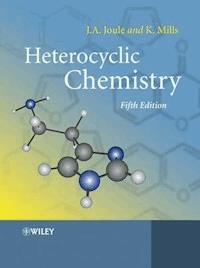
This book has so closely matched the requirements of its readership over the years that it has become the first choice for chemists worldwide.
Heterocyclic chemistry comprises at least half of all organic chemistry research worldwide. In particular, the vast majority of organic work done in the pharmaceutical and agrochemical industries is heterocyclic chemistry.
The fifth edition of Heterocyclic Chemistry maintains the principal objective of earlier editions – to teach the fundamentals of heterocyclic reactivity and synthesis in a way that is understandable to second- and third-year undergraduate chemistry students. The inclusion of more advanced and current material also makes the book a valuable reference text for postgraduate taught courses, postgraduate researchers, and chemists at all levels working with heterocyclic compounds in industry.
Fully updated and expanded to reflect important 21st century advances, the fifth edition of this classic text includes the following innovations:
- Extensive use of colour to highlight changes in structure and bonding during reactions
- Entirely new chapters on organometallic heterocyclic chemistry, heterocyclic natural products, especially in biochemical processes, and heterocycles in medicine
- New sections focusing on heterocyclic fluorine compounds, isotopically labeled heterocycles, and solid-phase chemistry, microwave heating and flow reactors in the heterocyclic context
Essential teaching material in the early chapters is followed by short chapters throughout the text which capture the essence of heterocyclic reactivity in concise resumés suitable as introductions or summaries, for example for examination preparation. Detailed, systematic discussions cover the reactivity and synthesis of all the important heterocyclic systems. Original references and references to reviews are given throughout the text, vital for postgraduate teaching and for research scientists. Problems, divided into straightforward revision exercises, and more challenging questions (with solutions available online), help the reader to understand and apply the principles of heterocyclic reactivity and synthesis.
Sie lesen das E-Book in den Legimi-Apps auf:
Seitenzahl: 1205
Veröffentlichungsjahr: 2013
Ähnliche


















Contents
Preface to the Fifth Edition
Biography
Definitions of Abbreviations
1 Heterocyclic Nomenclature
2 Structures and Spectroscopic Properties of Aromatic Heterocycles
2.1 Carbocyclic Aromatic Systems
2.2 Structure of Six-Membered Heteroaromatic Systems
2.3 Structure of Five-Membered Heteroaromatic Systems5
2.4 Structures of Bicyclic Heteroaromatic Compounds
2.5 Tautomerism in Heterocyclic Systems6,7
2.6 Mesoionic Systems8
2.7 Some Spectroscopic Properties of Some Heteroaromatic Systems
References
3 Substitutions of Aromatic Heterocycles
3.1 Electrophilic Addition at Nitrogen
3.2 Electrophilic Substitution at Carbon6
3.3 Nucleophilic Substitution at Carbon33
3.4 Radical Substitution at Carbon45
3.5 Deprotonation of N-Hydrogen59
3.6 Oxidation and Reduction60 of Heterocyclic Rings
3.7 ortho-Quinodimethanes in Heterocyclic Compound Synthesis61
References
4 Organometallic Heterocyclic Chemistry
4.1 Preparation and Reactions of Organometallic Compounds
4.2 Transition Metal-Catalysed Reactions108
References
5 Methods in Heterocyclic Chemistry
5.1 Solid-Phase Reactions1 and Related Methods
5.2 Microwave Heating23
5.3 Flow Reactors
5.4 Hazards: Explosions
References
6 Ring Synthesis of Aromatic Heterocycles
6.1 Reaction Types Most Frequently Used in Heterocyclic Ring Synthesis
6.2 Typical Reactant Combinations
6.3 Summary
6.4 Electrocyclic Processes in Heterocyclic Ring Synthesis
6.5 Nitrenes in Heterocyclic Ring Synthesis8
6.6 Palladium Catalysis in the Synthesis of Benzo-Fused Heterocycles
References
7 Typical Reactivity of Pyridines, Quinolines and Isoquinolines
8 Pyridines: Reactions and Synthesis
8.1 Reactions with Electrophilic Reagents
8.2 Reactions with Oxidising Agents
8.3 Reactions with Nucleophilic Reagents
8.4 Metallation and Reactions of C-Metallated-Pyridines
8.5 Reactions with Radicals; Reactions of Pyridyl Radicals
8.6 Reactions with Reducing Agents
8.7 Electrocyclic Reactions (Ground State)
8.8 Photochemical Reactions
8.9 Oxy- and Amino-Pyridines
8.10 Alkyl-Pyridines
8.11 Pyridine Aldehydes, Ketones, Carboxylic Acids and Esters
8.12 Quaternary Pyridinium Salts
8.13 Pyridine N-oxides245
8.14 Synthesis of Pyridines
Exercises
References
9 Quinolines and Isoquinolines: Reactions and Synthesis
9.1 Reactions with Electrophilic Reagents
9.2 Reactions with Oxidising Agents
9.3 Reactions with Nucleophilic Reagents
9.4 Metallation and Reactions of C-Metallated Quinolines and Isoquinolines
9.5 Reactions with Radicals
9.6 Reactions with Reducing Agents
9.7 Electrocyclic Reactions (Ground State)
9.8 Photochemical Reactions
9.9 Oxy-Quinolines and Oxy-Isoquinolines
9.10 Amino-Quinolines and Amino-Isoquinolines
9.11 Alkyl-Quinolines and Alkyl-Isoquinolines
9.12 Quinoline and Isoquinoline Carboxylic Acids and Esters
9.13 Quaternary Quinolinium and Isoquinolinium Salts
9.14 Quinoline and Isoquinoline N-Oxides
9.15 Synthesis of Quinolines and Isoquinolines
Exercises
References
10 Typical Reactivity of Pyrylium and Benzopyrylium Ions, Pyrones and Benzopyrones
11 Pyryliums, 2- and 4-Pyrones: Reactions and Synthesis
11.1 Reactions of Pyrylium Cations4,5
11.2 2-Pyrones and 4-Pyrones (2H-Pyran-2-ones and 4.H-Pyran-4-ones; α- and γ-Pyrones)
11.3 Synthesis of Pyryliums1,7a
11.4 Synthesis of 2-Pyrones
11.5 Synthesis of 4-Pyrones
Exercises
References
12 Benzopyryliums and Benzopyrones: Reactions and Synthesis
12.1 Reactions of Benzopyryliums
12.2 Benzopyrones (Chromones, Coumarins and Isocoumarins)
12.3 Synthesis of Benzopyryliums, Chromones, Coumarins and Isocoumarins
Exercises
References
13 Typical Reactivity of the Diazine: Pyridazine, Pyrimidine and Pyrazine
14 The Diazines: Pyridazine, Pyrimidine, and Pyrazine: Reactions and Synthesis
14.1 Reactions with Electrophilic Reagents
14.2 Reactions with Oxidising Agents
14.3 Reactions with Nucleophilic Reagents
14.4 Metallation and Reactions of C-Metallated Diazines50
14.5 Reactions with Reducing Agents
14.6 Reactions with Radicals
14.7 Electrocyclic Reactions
14.8 Diazine N-Oxides79
14.9 Oxy-Diazines
14.10 Amino-Diazines
14.11 Alkyl-Diazines
14.12 Quaternary Diazinium Salts
14.13 Synthesis of Diazines
14.14 Pteridines
Exercises
References
15 Typical Reactivity of Pyrroles, Furans and Thiophenes
16 Pyrroles: Reactions and Synthesis
16.1 Reactions with Electrophilic Reagents5
16.2 Reactions with Oxidising Agents65
16.3 Reactions with Nucleophilic Reagents
16.4 Reactions with Bases
16.5 C-Metallation and Reactions of C-Metallated Pyrroles
16.6 Reactions with Radicals
16.7 Reactions with Reducing Agents
16.8 Electrocyclic Reactions (Ground State)
16.9 Reactions with Carbenes and Carbenoids
16.10 Photochemical Reactions120
16.11 Pyrryl-C-X Compounds
16.12 Pyrrole Aldehydes and Ketones
16.13 Pyrrole Carboxylic Acids
16.14 Pyrrole Carboxylic Acid Esters
16.15 Oxy- and Amino-Pyrroles
16.16 Synthesis of Pyrroles5,140
Exercises
References
17 Thiophenes: Reactions and Synthesis
17.1 Reactions with Electrophilic Reagents
17.2 Reactions with Oxidising Agents
17.3 Reactions with Nucleophilic Reagents
17.4 Metallation and Reactions of C-Metallated Thiophenes
17.5 Reactions with Radicals
17.6 Reactions with Reducing Agents
17.7 Electrocyclic Reactions (Ground State)118
17.8 Photochemical Reactions
17.9 Thiophene-C–X Compounds: Thenyl Derivatives
17.10 Thiophene Aldehydes and Ketones, and Carboxylic Acids and Esters
17.11 Oxy- and Amino-Thiophenes
17.12 Synthesis of Thiophenes146
Exercises
References
18 Furans: Reactions and Synthesis
18.1 Reactions with Electrophilic Reagents
18.2 Reactions with Oxidising Agents
18.3 Reactions with Nucleophilic Reagents
18.4 Metallation and Reactions of C-Metallated Furans
18.5 Reactions with Radicals
18.6 Reactions with Reducing Agents
18.7 Electrocyclic Reactions (Ground State)
18.8 Reactions with Carbenes and Carbenoids
18.9 Photochemical Reactions
18.10 Furyl-C–X Compounds; Side-Chain Properties
18.11 Furan Carboxylic Acids and Esters and Aldehydes
18.12 Oxy- and Amino-Furans
18.13 Synthesis of Furans
Exercises
References
19 Typical Reactivity of Indoles, Benzo[b]thiophenes, Benzo[b]furans, Isoindoles, Benzo[c]thiophenes and Isobenzofurans
20 Indoles: Reactions and Synthesis
20.1 Reactions with Electrophilic Reagents
20.2 Reactions with Oxidising Agents
20.3 Reactions with Nucleophilic Reagents (see also 20.13.4)
20.4 Reactions with Bases
20.5 C-Metallation and Reactions of C-Metallated Indoles
20.6 Reactions with Radicals
20.7 Reactions with Reducing Agents
20.8 Reactions with Carbenes
20.9 Electrocyclic and Photochemical Reactions
20.10 Alkyl-Indoles
20.11 Reactions of Indolyl-C–X Compounds
20.12 Indole Carboxylic Acids
20.13 Oxy-Indoles
20.14 Amino-Indoles
20.15 Aza-Indoles273,274
20.16 Synthesis of Indoles282
Exercises
References
21 Benzo[b]thiophenes and Benzo[b]furans: Reactions and Synthesis
21.1 Reactions with Electrophilic Reagents
21.2 Reactions with Nucleophilic Reagents
21.3 Metallation and Reactions of C-Metallated Benzothiophenes and Benzofurans
21.4 Reactions with Radicals
21.5 Reactions with Oxidising and Reducing Agents
21.6 Electrocyclic Reactions
21.7 Oxy-58 and Amino-Benzothiophenes and -Benzofurans
21.8 Synthesis of Benzothiophenes and Benzofurans
Exercises
References
22 Isoindoles, Benzo[c]thiophenes and Isobenzofurans: Reactions and Synthesis
22.1 Reactions with Electrophilic Reagents
22.2 Electrocyclic Reactions
22.3 Phthalocyanines21
22.4 Synthesis of Isoindoles, Benzo[c]thiophenes and Isobenzofurans
Exercises
References
23 Typical Reactivity of 1,3- and 1,2-Azoles and Benzo-1,3- and-1,2-Azoles
24 1,3-Azoles: Imidazoles, Thiazoles and Oxazoles: Reactions and Synthesis
24.1 Reactions with Electrophilic Reagents
24.2 Reactions with Oxidising Agents
24.3 Reactions with Nucleophilic Reagents
24.4 Reactions with Bases
24.5 C-Metallation and Reactions of C-Metallated 1,3-Azoles57
24.6 Reactions with Radicals
24.7 Reactions with Reducing Agents
24.8 Electrocyclic Reactions
24.9 Alkyl-1,3-Azoles
24.10 Quaternary 1,3-Azolium Salts
24.11 Oxy-103,104 and Amino-1051,3-Azoles
24.12 1,3-Azole N-Oxides
24.13 Synthesis of 1,3-Azoles119,120,121
Exercises
References
25 1,2-Azoles: Pyrazoles, Isothiazoles, Isoxazoles: Reactions and Synthesis
25.1 Reactions with Electrophilic Reagents
25.2 Reactions with Oxidising Agents
25.3 Reactions with Nucleophilic Reagents
25.4 Reactions with Bases
25.5 C-Metallation and Reactions of C-Metallated 1,2-Azoles42
25.6 Reactions with Radicals
25.7 Reactions with Reducing Agents
25.8 Electrocyclic and Photochemical Reactions
25.9 Alkyl-1,2-Azoles
25.10 Quaternary 1,2-Azolium Salts
25.11 Oxy- and Amino-1,2-azoles
25.12 Synthesis of 1,2-Azoles98
Exercises
References
26 Benzanellated Azoles: Reactions and Synthesis
26.1 Reactions with Electrophilic Reagents
26.2 Reactions with Nucleophilic Reagents
26.3 Reactions with Bases
26.4 Ring Metallation and Reactions of C-Metallated Derivatives
26.5 Reactions with Reducing Agents
26.6 Electrocyclic Reactions
26.7 Quaternary Salts
26.8 Oxy- and Amino-Benzo-1,3-Azoles
26.9 Synthesis
References
27 Purines: Reactions and Synthesis
27.1 Reactions with Electrophilic Reagents
27.2 Reactions with Radicals
27.3 Reactions with Oxidising Agents
27.4 Reactions with Reducing Agents
27.5 Reactions with Nucleophilic Reagents
27.6 Reactions with Bases
27.7 C-Metallation and Reactions of C-Metallated Purines
27.8 Oxy-and Amino-Purines
27.9 Alkyl-Purines
27.10 Purine Carboxylic Acids
27.11 Synthesis of Purines
Exercises
References
28 Heterocycles Containing a Ring-Junction Nitrogen (Bridgehead Compounds)
28.1 Indolizines2
28.2 Aza-Indolizines
28.3 Quinolizinium86 and Related Systems
28.4 Pyrrolizine and Related Systems
28.5 Cyclazines
Exercises
References
29 Heterocycles Containing More Than Two Heteroatoms
29.1 Five-Membered Rings
29.2 Six-Membered Rings
29.3 Benzotriazoles
Exercises
References
30 Saturated and Partially Unsaturated Heterocyclic Compounds: Reactions and Synthesis
30.1 Five- and Six-Membered Rings
30.2 Three-Membered Rings
30.3 Four-Membered Rings
30.4 Metallation
30.5 Ring Synthesis
References
31 Special Topics
31.1 Synthesis of Ring-Fluorinated Heterocycles
31.2 Isotopically Labelled Heterocycles28
31.3 Bioprocesses in Heterocyclic Chemistry38
31.4 Green Chemistry
31.5 Ionic Liquids48
31.6 Applications and Occurrences of Heterocycles
References
32 Heterocycles in Biochemistry; Heterocyclic Natural Products
32.1 Heterocyclic Amino Acids and Related Substances
32.2 Enzyme Co-Factors; Heterocyclic Vitamins; Co-Enzymes1
32.3 Porphobilinogen and the ‘Pigments of Life’
32.4 Ribonucleic Acid (RNA) and Deoxyribonucleic Acid (DNA); Genetic Information; Purines and Pyrimidines
32.5 Heterocyclic Natural Products
References
33 Heterocycles in Medicine
33.1 Mechanisms of Drug Actions3
33.2 The Neurotransmitters
33.3 Drug Discovery and Development
33.4 Heterocyclic Drugs4,5
33.5 Drugs Acting on the CNS
33.6 Anti-Infective Agents
33.7 Anti-Cancer Drugs
33.8 Photochemotherapy
References
Index
This edition first published 2010
© 2010 Blackwell Publishing Ltd
Registered office
John Wiley & Sons Ltd, The Atrium, Southern Gate, Chichester, West Sussex, PO19 8SQ, United Kingdom
For details of our global editorial offices, for customer services and for information about how to apply for permission to reuse the copyright material in this book please see our website at www.wiley.com.
The right of the author to be identified as the author of this work has been asserted in accordance with the Copyright, Designs and Patents Act 1988.
All rights reserved. No part of this publication may be reproduced, stored in a retrieval system, or transmitted, in any form or by any means, electronic, mechanical, photocopying, recording or otherwise, except as permitted by the UK Copyright, Designs and Patents Act 1988, without the prior permission of the publisher.
Wiley also publishes its books in a variety of electronic formats. Some content that appears in print may not be available in electronic books.
Designations used by companies to distinguish their products are often claimed as trademarks. All brand names and product names used in this book are trade names, service marks, trademarks or registered trademarks of their respective owners. The publisher is not associated with any product or vendor mentioned in this book. This publication is designed to provide accurate and authoritative information in regard to the subject matter covered. It is sold on the understanding that the publisher is not engaged in rendering professional services. If professional advice or other expert assistance is required, the services of a competent professional should be sought.
The publisher and the author make no representations or warranties with respect to the accuracy or completeness of the contents of this work and specifically disclaim all warranties, including without limitation any implied warranties of fitness for a particular purpose. This work is sold with the understanding that the publisher is not engaged in rendering professional services. The advice and strategies contained herein may not be suitable for every situation. In view of ongoing research, equipment modifications, changes in governmental regulations, and the constant flow of information relating to the use of experimental reagents, equipment, and devices, the reader is urged to review and evaluate the information provided in the package insert or instructions for each chemical, piece of equipment, reagent, or device for, among other things, any changes in the instructions or indication of usage and for added warnings and precautions. The fact that an organization or Website is referred to in this work as a citation and/or a potential source of further information does not mean that the author or the publisher endorses the information the organization or Website may provide or recommendations it may make. Further, readers should be aware that Internet Websites listed in this work may have changed or disappeared between when this work was written and when it is read. No warranty may be created or extended by any promotional statements for this work. Neither the publisher nor the author shall be liable for any damages arising herefrom.
Library of Congress Cataloging-in-Publication Data
Joule, J. A. (John Arthur)
Heterocyclic chemistry / John A. Joule, Keith Mills. – 5th ed.
p. cm.
Includes bibliographical references and index.
ISBN 978-1-4051-9365-8 (pbk.)-ISBN 978-1-4051-3300-5 (pbk.) 1. Heterocyclic chemistry. I. Mills, K. (Keith) II. Title.
QD400.J59 2009
547′.59–dc22
2009028759
ISBN Cloth: 978-1-405-19365-8
ISBN Paper: 978-1-405-13300-5
Preface to the Fifth Edition
Heterocyclic compounds have a wide range of applications but are of particular interest in medicinal chemistry, and this has catalysed the discovery and development of much heterocyclic chemistry and methods. The preparation of a fifth edition has allowed us to review thoroughly the material included in the earlier editions, to make amendments in the light of new knowledge, and to include recent work. Within the restrictions that space dictates, we believe that all of the most significant heterocyclic chemistry of the 20th century and important more recent developments, has been covered or referenced.
We have maintained the principal aim of the earlier editions – to teach the fundamentals of heterocyclic reactivity and synthesis in a way that is understandable by undergraduate students. However, in recognition of the level at which much heterocyclic chemistry is now normally taught, we include more advanced and current material, which makes the book appropriate both for post-graduate level courses, and as a reference text for those involved in heterocyclic chemistry in the work place.
New in this edition is the use of colour in the schemes. We have highlighted in red those parts of products (or intermediates) where a change in structure or bonding has taken place. We hope that this both facilitates comprehension and understanding of the chemical changes that are occurring and, especially for the undergraduate student, quickly focuses attention on just those parts of the molecules where structural change has occurred. For example, in the first reaction below, only changes at the pyridine nitrogen are involved; in the second example, the introduced bromine resulting from the substitution and its new bond to the heterocycle, are highlighted. We also show all positive and negative charges in red.
In recognition of the enormous importance of organometallic chemistry in heterocyclic synthesis, we have introduced a new chapter dealing exclusively with this aspect. Chapter 4, ‘Organometallic Heterocyclic Chemistry’, has: (i) a general overview of heterocyclic organometallic chemistry, but most examples are to be found in the individual ring chapters, (ii) the use of transition metal-catalysed reactions that, as a consequence of a regularity and consistency that is to a substantial degree independent of the heterocyclic ring, is best treated as a whole, and therefore most examples are brought together here, with relatively few in the ring chapters.
Other innovations in this fifth edition are discussions in Chapter 5 of the modern techniques of: (i) solid-phase chemistry, (ii) microwave heating and (iii) flow reactors in the heterocyclic context. Reflecting the large part that heterocyclic chemistry plays in the pharmaceutical industry, there are entirely new chapters that deal with ‘Heterocycles in Medicine’ (Chapter 33) and ‘Heterocycles in Biochemistry; Heterocyclic Natural Products’ (Chapter 32).
We devote a new chapter (31) to some important topics: fluorinated heterocycles, isotopically labelled heterocycles, the use of bioprocesses in heterocyclic transformations, ‘green chemistry’ and the somewhat related topic of ionic liquids, and some the applications of heterocyclic compounds in every-day life.
P.1 Hazards
This book is designed, in large part, for the working chemist. All chemistry is hazardous to some degree and the reactions described in this book should only be carried out by persons with an appropriate degree of skill, and after consulting the original papers and carrying out a proper risk assessment. Some major hazards are highlighted (Explosive: general discussion (5.4), sodium azide (29.1.1.5.3), tetrazoles: diazonium salts and others (29.1.1.3), perchlorates (5.4; 11 (introductory paragraph)), tosyl azide (5.4). Toxicity: general (31.6.1), fluoroacetate (31.1.1.4), chloromethylation (e.g. 14.9.2.1)),12 but this should not be taken to mean that every possible hazard is specifically pointed out. Certain topics are included only as information and are not suitable for general chemistry laboratories – this applies particularly to explosive compounds.
P.2 How to Use This Textbook
As indicated above, by comparison with earlier editions, this fifth edition of Heterocyclic Chemistry contains more material, including more that is appropriate to study at a higher level, than that generally taught in a first degree course. Nevertheless we believe that undergraduates will find the book of value and offer the following modus operandi as a means for undergraduate use of this text.
The undergraduate student should first read Chapter 2, which will provide a structural basis for the chemistry that follows. We suggest that the material dealt with in Chapters 3 and 4 be left for study at later stages, and that the undergraduate student proceed next to those chapters (7, 10, 13, 15, 19 and 23) that explain heterocyclic principles in the simplest terms and which should be easily understandable by students who have a good grounding in elementary reaction chemistry, especially aromatic chemistry.
The student could then proceed to the main chapters, dealing with ‘Reactions and Synthesis of…’ in which will be found full discussions of the chemistry of particular systems-pyridines, quinolines, etc. These utilise many cross references that seek to capitalise on that important didactical strategy-comparison and analogy with reactivity already learnt and understood.
Chapters 3, 4 and 6 are advanced essays on heterocyclic chemistry. Sections can be sampled as required-‘Electrophilic Substitution’ could be read at the point at which the student was studying electrophilic substitutions of, say, thiophene-or Chapter 3 can be read as a whole. We have devoted considerable space in Chapter 3 to discussions of radical substitution, and Chapter 4, because of their great significance, is devoted entirely to metallation and the use of organometallic reagents, and to transition metal-catalysed reactions. These topics have grown enormously in importance since the earlier editions, and are of great relevance to heterocyclic chemistry.
Acknowledgements
We thank Richard Davies, Sarah Hall and Gemma Valler and their colleagues at Wiley, and earlier Paul Sayer at Blackwell, for their patience and support during the preparation of this fifth edition. We acknowledge many significant comments and corrections by Rob Young and Paul Beswick, and thank Mercedes Álvarez, Peter Quayle, Andrew Regan and Ian Watt for their views on the use of colour in schemes. We are greatly indebted to Jo Tyszka for her meticulous and constructive copy-editing. JAJ thanks his wife Stacy for her encouragement and patience during the writing of Heterocyclic Chemistry, Fifth Edition.
References
1 ‘The nomenclature of heterocycles’, McNaught, A. D., Adv. Heterocycl. Chem., 1976, 20, 175.
2 Katritzky, A. R. and Weeds, S. M., Adv. Heterocycl. Chem., 1966, 7, 225; Katritzky, A. R. and Jones, P. M., ibid., 1979, 25, 303; Belen’kii, L. I., ibid., 1988, 44, 269; Belen’kii, L. I. and Kruchkovskaya, N. D., ibid., 1992, 55, 31; idem, ibid., 1998, 71, 291; Belen’kii, L. I., Kruchkovskaya, N. D., and Gramenitskaya, V. N., ibid., 1999, 73, 295; idem, ibid., 2001, 79, 201; Belen’kii, L. I. and Gramenitskaya, V. N., ibid., 2005, 88, 231; Belen’kii, L. I., Gramenitskaya, V. N., and Evdokimenkova, Yu. B., ibid., 2004, 92, 146.
3Adv. Heterocycl. Chem., 1963–2007, 1–94.
4Progr. Heterocycl. Chem., 1989–2009, 1–21.
5http://euch6f.chem.emory.edu/ishc.html and the related Royal Society of Chemistry site: http://www.rsc.org/lap/rsccom/dab/perk003.htm
6 (a) ‘Comprehensive heterocyclic chemistry. The structure, reactions, synthesis, and uses of heterocyclic compounds’, Eds. Katritzky, A. R. and Rees, C. W., Vols 1–8, Pergamon Press, Oxford, 1984; (b) ‘Comprehensive heterocyclic chemistry II. A review of the literature 1982–1995’, Ed. Katritzky, A. R., Rees, C. W., and Scriven, E. F. V., Vols 1–11, Pergamon Press, 1996; (c) ‘Comprehensive heterocyclic chemistry III. A review of the literature 1995–2007’, Eds. Katritzky, A. R., Ramsden, C. A., and Scriven, E. F. V., and Taylor, R. J. K., Vols 1–15, Elsevier, 2008.
7 ‘Handbook of heterocyclic chemistry, 2nd edition 2000’, Katritzky, A. R. and Pozharskii, A. F., Pergamon Press, Oxford, 2000; ‘Handbook of heterocyclic chemistry. Third edition 2010’, Katritzky, A. R., Ramsden, C. A., Joule, J. A., and Zhdankin, V. V., Elsevier, 2010.
8 ‘Science of Synthesis’, Vols. 9–17, ‘Hetarenes’, Thieme, 2000–2008.
9 ‘Heterocyclic compounds’, Ed. Elderfield, R. C., Vols. 1–9, Wiley, 1950–1967.
10 ‘The chemistry of heterocyclic compounds’, Series Eds. Weissberger, A., Wipf, P., and Taylor, E. C., Vols. 1–64, Wiley-Inter science, 1950–2005.
11 ‘Rodd’s chemistry of carbon compounds’, Eds., Coffey, S. then Ansell, M. F., Vols IVa-IVl, and Supplements, 1973–1994, Elsevier, Amsterdam.
12 United States Department of Labor, Occupational Safety & Health Administration Reports: Chloromethyl Methyl Ether (CMME) and Bis-Chloromethyl Ether (BCME); see also: Berliner, M. and Belecki, K., Org. Synth., 2007, 84, 102 (discussion).
Web Site
Power Point slides of all figures from this book, along with the solution to the exercises, can be found at http://www.wiley.com/go/joul.
Biography
John Arthur Joule was born in Harrogate, Yorkshire, England, but grew up and attended school in Llandudno, North Wales, going on to study for BSc, MSc, and PhD (1961; with George F. Smith) degrees at The University of Manchester. Following post-doctoral periods in Princeton (Richard K. Hill) and Stanford (Carl Djerassi) he joined the academic staff of The University of Manchester where he served for 41 years, retiring and being appointed Professor Emeritus in 2004. Sabbatical periods were spent at the University of Ibadan, Nigeria, Johns Hopkins Medical School, Department of Pharmacology and Experimental Therapeutics, and the University of Maryland, Baltimore County. He was William Evans Visiting Fellow at Otago University, New Zealand.
Dr. Joule has taught many courses on heterocyclic chemistry to industry and academe in the UK and elsewhere. He is currently Associate Editor for Tetrahedron Letters, Scientific Editor for Arkivoc, and CoEditor of the annual Progress in Heterocyclic Chemistry.
Keith Mills was born in Barnsley, Yorkshire, England and attended Barnsley Grammar School, going on to study for BSc, MSc and PhD (1971; with John Joule) degrees at The University of Manchester.
Following post-doctoral periods at Columbia (Gilbert Stork) and Imperial College (Derek Barton/ Philip Magnus), he joined Allen and Hanburys (part of the Glaxo Group) at Ware and later Stevenage (finally as part of GSK), working in Medicinal Chemistry and Development Chemistry departments for a total of 25 years. During this time he spent a secondment at Glaxo, Verona. Since leaving GSK he has been an independent consultant to small pharmaceutical companies.
Dr. Mills has worked in several areas of medicine and many areas of organic chemistry, but with particular emphasis on heterocyclic chemistry and the applications of transition metal-catalysed reactions.
Heterocyclic Chemistry was first published in 1972, written by George Smith and John Joule, followed by a second edition in 1978. The third edition (Joule, Mills and Smith) was written in 1995 and, after the death of George Smith, a fourth edition (Joule and Mills) appeared in 2000; these authors also published Heterocyclic Chemistry at a Glance in 2007.
Definitions of Abbreviations
1
Heterocyclic Nomenclature
A selection of the structures, names and standard numbering of the more common heteroaromatic systems and some common non-aromatic heterocycles are given here as a necessary prelude to the discussions which follow in subsequent chapters. The aromatic heterocycles have been grouped into those with six-membered rings and those with five-membered rings. The names of six-membered aromatic heterocycles that contain nitrogen generally end in ‘ine’, though note that ‘purine’ is the name for a very important bicyclic system which has both a six- and a five-membered nitrogen-containing heterocycle. Five-membered heterocycles containing nitrogen general end with ‘ole’. Note the use of italic ‘H’ in a name such as ‘9H-purine’ to designate the location of an N-hydrogen in a system in which, by tautomerism, the hydrogen could reside on another nitrogen (e.g. N-7 in the case of purine). Names such ‘pyridine’, ‘pyrrole’, ‘thiophene’, originally trivial, are now the standard, systematic names for these heterocycles; names such as ‘1,2,4-riazine’ for a six-membered ring with three nitrogens located as indicated by the numbers, are more logically systematic.
A device that is useful, especially in discussions of reactivity, is the designation of positions as ‘α’, ‘β’, or ‘γ’. For example, the 2- and the 6-positions in pyridine are equivalent in reactivity terms, so to make discussion of such reactivity clearer, each of these positions is referred to as an ‘α-position’. Comparable use of α and β is made in describing reactivity in five-membered systems. These useful designations are shown on some of the structures. Note that carbons at angular positions do not have a separate number, but are designated using the number of the preceding atom followed by ‘a’-as illustrated (only) for quino-line. For historical reasons purine does not follow this rule.
A detailed discussion of the systematic rules for naming polycyclic systems in which several aromatic or heteroaromatic rings are fused together is beyond the scope of this book, however, a simple example will serve to illustrate the principle. In the name ‘pyrrolo[2,3-b]pyridine’, the numbers signify the positions of the first-named heterocycle, numbered as if it were a separate entity, which are the points of ring fusion; the italic letter, ‘b’ in this case, designates the side of the second-named heterocycle to which the other ring is fused, the lettering deriving from the numbering of that heterocycle as a separate entity, i.e. side a is between atoms 1 and 2, side b is between atoms 2 and 3, etc. Actually, this particular heterocycle is more often referred to as ‘7-azaindole’-note the use of the prefix ‘aza’ to denote the replacement of a ring carbon by nitrogen, i.e. of C-7-H of indole by N.
The main thrust of this book concerns the aromatic heterocycles, exemplified above, however Chapter 30 explores briefly the chemistry of saturated or partially unsaturated systems, including three- and four-membered heterocycles.
2
Structures and Spectroscopic Properties of Aromatic Heterocycles
This chapter describes the structures of aromatic heterocycles and gives a brief summary of some physical properties.1 The treatment we use is the valence-bond description, which we believe is appropriate for the understanding of all heterocyclic reactivity, perhaps save some very subtle effects, and is certainly sufficient for a general textbook on the subject. The more fundamental, molecular-orbital description of aromatic systems is less relevant to the day-to-day interpretation of heterocyclic reactivity, though it is necessary in some cases to utilise frontier orbital considerations,2 however such situations do not fall within the scope of this book.
2.1 Carbocyclic Aromatic Systems
2.1.1 Structures of Benzene and Naphthalene
The concept of aromaticity as represented by benzene is a familiar and relatively simple one. The difference between benzene on the one hand and alkenes on the other is well known: the latter react with electrophiles, such as bromine, easily by addition, whereas benzene reacts only under much more forcing conditions and then typically by substitution. The difference is due to the cyclic arrangement of six -electrons in benzene: this forms a conjugated molecular-orbital system which is thermodynamically much more stable than a corresponding non-cyclically conjugated system. The additional stabilisation results in a diminished tendency to react by addition and a greater tendency to react by substitution for, in the latter manner, survival of the original cyclic conjugated system of electrons is ensured in the product. A general rule proposed by Hückel in 1931 states that aromaticity is observed in cyclically conjugated systems of 4 + 2 electrons, that is with 2, 6, 10, 14, etc., π-electrons; by far the majority of monocyclic aromatic and heteroaromatic systems are those with six π-electrons.
Lesen Sie weiter in der vollständigen Ausgabe!
Lesen Sie weiter in der vollständigen Ausgabe!
Lesen Sie weiter in der vollständigen Ausgabe!
Lesen Sie weiter in der vollständigen Ausgabe!
Lesen Sie weiter in der vollständigen Ausgabe!
Lesen Sie weiter in der vollständigen Ausgabe!
Lesen Sie weiter in der vollständigen Ausgabe!
Lesen Sie weiter in der vollständigen Ausgabe!
Lesen Sie weiter in der vollständigen Ausgabe!
Lesen Sie weiter in der vollständigen Ausgabe!
Lesen Sie weiter in der vollständigen Ausgabe!
Lesen Sie weiter in der vollständigen Ausgabe!
Lesen Sie weiter in der vollständigen Ausgabe!
Lesen Sie weiter in der vollständigen Ausgabe!
Lesen Sie weiter in der vollständigen Ausgabe!
Lesen Sie weiter in der vollständigen Ausgabe!
Lesen Sie weiter in der vollständigen Ausgabe!
Lesen Sie weiter in der vollständigen Ausgabe!
Lesen Sie weiter in der vollständigen Ausgabe!
Lesen Sie weiter in der vollständigen Ausgabe!
Lesen Sie weiter in der vollständigen Ausgabe!
Lesen Sie weiter in der vollständigen Ausgabe!
Lesen Sie weiter in der vollständigen Ausgabe!
Lesen Sie weiter in der vollständigen Ausgabe!
Lesen Sie weiter in der vollständigen Ausgabe!
Lesen Sie weiter in der vollständigen Ausgabe!
Lesen Sie weiter in der vollständigen Ausgabe!
Lesen Sie weiter in der vollständigen Ausgabe!
Lesen Sie weiter in der vollständigen Ausgabe!
Lesen Sie weiter in der vollständigen Ausgabe!
Lesen Sie weiter in der vollständigen Ausgabe!
Lesen Sie weiter in der vollständigen Ausgabe!




