


Erhalten Sie Zugang zu diesem und mehr als 300000 Büchern ab EUR 5,99 monatlich.
- Herausgeber: Бомбора
- Kategorie: Geisteswissenschaft
- Sprache: Englisch
How to сombine 5 health сomponents and discover your personal healing algorithm for illnesses and life challenges? The provocative psychologist Irina Semizorova's new book explores one of the world's most sacred mysteries — the health of our body in its connection with the soul and spirit. This book will appeal to anyone ready for an engaging journey of self-discovery and eager to learn how to decode the signals our body sends us.
Sie lesen das E-Book in den Legimi-Apps auf:
Seitenzahl: 304
Veröffentlichungsjahr: 2025
Das E-Book (TTS) können Sie hören im Abo „Legimi Premium” in Legimi-Apps auf:
Ähnliche
















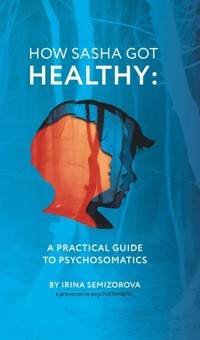
Irina Semizorova How Sasha Got Healthy A Practical Guide to Psychosomatics
© 2025 Irina Semizorova
I received a call. They said that the child had a special condition: torsion dystonia. I am not a doctor, so the diagnosis meant nothing to me. We arranged a meeting. A boy came in, accompanied by his dad – not by his mom, as is usually the case, but by his dad.
Outwardly, the child looked like a patient with cerebral palsy (CP). His name was Sasha. He moved with great difficulty; his body was bent in half, and his arms and legs twisted in different directions. He threw his body onto the couch in my office with a familiar motion. When he finally spoke, I quickly realized that it was not the dad who brought the child to therapy, but rather the other way around.
Later, it turned out that Sasha brought not only his dad; he “brought” everyone: his dad, mom, grandparents, and sister – everyone who had been before him and, most likely, everyone who would come after.
The first meeting was truly strange. I tried to understand who this child reminded me of, but in vain. After a conversation with the dad, it became clear that the family was ethnically German. The period of the war was understandably excluded from his story, so there was not much to clarify; only the surname revealed their German origin.
Sasha was much more talkative than his dad. He answered my questions by raising his hand and told me in detail about himself and his illness. Until the age of seven, he was a healthy kid, indistinguishable from other children, growing up in a full and loving family. When the time came to learn how to write, his attentive parents noticed that he held the pen in a peculiar way. “A lefty,” the parents assumed, and suggested he kept the pen in his left hand. But the left hand also began to twist. The doctor was unyielding: torsion dystonia. It is a spasming of the muscles that wanders throughout the body, as if someone was twisting, breaking, and pulling it in different directions.
The mother couldn't bear this torment. By the time the family sought my help, she had already given birth to another child. This often happens in families when the only child becomes ill. Without saying it to each other's faces, both parents think, “It's all because of you. This illness, came from you; you are the reason our son or daughter is unwell.” The second child is born as if to grant amnesty to the mother. With this second child, she can say, “Look, everything is fine with me; my child is healthy, and yours is not.” The conflict is silent, but these terrible thoughts affect reality and the relationship between the couple.
In Sasha's case, all of this came to light later. On that day, in my office, the boy and his dad simply settled on the couch. The burden on the child was obvious, so I suggested that the dad say, looking his son in the eyes: “I am big, and you are small.” I immediately asked Sasha what he heard while listening to his father's words. To my astonishment, the answer was: “Nothing.” Mind you, the child was sitting an arm's length away from his father. I asked the dad to repeat the same words: “I am big, and you are small; I will do everything myself.” After asking Sasha what he heard, I received the same answer again. We went through the same thing for the third time; the dad, a true Aryan, was barely holding back tears. When I asked Sasha what he heard this time, the boy smiled and said: “Dad said that I am free now.” In that moment, I realized whom this white-haired, thin, twisted boy resembled; he was a spitting imager of a concentration camp prisoner.
The theme of war is not uncommon in my work, but I had never encountered anything like THIS before. The work began with the aim at alleviation. I should note that I never set the goal of complete recovery for the client, even if they ask for it. I think of that year with delight and admiration because the whole family united and made colossal efforts to explore and heal the systemic context.
As it turned out later, not only the father's story with his German ancestors heavy; the mother's story was also a chronicle of great suffering. Sasha, with all his being and body, was trying to save both his parents. Most often, a child falls ill in the battle for the mother, but here the choice was impossible; the body chose both parents and could not cope. Then the parents, with equal intensity, unloaded “their wagons” through incredible resistance to free the child. The real concentration camp also existed, but that was the lesser of evils, however terrifying it may sound.
I remember the day I returned from another study session with Daan van Kampenhout. It was a workshop with incredible healing exercises. Sasha and his parents were present. For the duration of the workshop – eight full hours – this boy, who struggled even with such a simple task as sitting, performed all the exercises alongside the adults. Bert Hellinger says that when a person sits on a chair to do a constellation, it is not they who are ready for change, but their entire system. This simultaneity was particularly evident here.
My story has a happy ending. Each person moved along their own path of healing, and one fine day, everything came together as it should. Sasha lives in a small town, everyone knows him, and when one day he straightened up and became an ordinary child riding a bicycle, the town was surprised. But I was not. It could not have been any other way.
Part I Briefly on the Main Topics
Chapter 1 Why Now
Things happening in the world right now affect everyone. Our minds know how to protect themselves; that is a fact. The body also has its own ways of defense, but often they do not align with our consciousness. The body is currently experiencing nothing less than a collective trauma. Trauma can be not only individual but also systemic and even collective.
It is important to understand this now: we never exist in just one place and one time. If in one generation a woman died in childbirth or lost a child shortly after birth, in another generation, the fear of unfavorable births or the death of a newborn will persist in the body. Here and now, no one and nothing tells us about this, but the body seems to exist on both these levels simultaneously. Moreover, it resides in three points in time: in the past – where, when, and with whom this happened; in the present – where I do not start a relationship with a man to avoid getting pregnant; and in the future – where I have no children, and therefore no one can die. These thoughts do not come to mind in everyday life because they live in our bodies. The body knows; it exists in the specified spaces and time segments. The body is waiting for clarity and help from us – meaning we also need to learn something.
Let's return to the collective trauma in which we all find ourselves today. There are four levels at which we can experience discomfort, pain, stress, and illness.
Individual Level. This level concerns the relationship with oneself: me and myself, me and my feelings, me and my states, me and my sensations, me and my thoughts, me and my pain.
Systemic Level. This level involves me and others: we are members of a system (family, colleagues, hobby circle, schoolmates, religious communities). At this level, we are concerned about how we feel around others within the system and with the system as a whole.
Collective Level. This level pertains to the city, country, homeland, state, nationality, and humanity. At this level, we can also experience feelings: for example, fear for the homeland, shame for national identity, joy from living in a particular country, or pride in being human.
Meta-level. We find ourselves at this level rarely, and some of us may never reach it. Here, we enter into relationships with figures such as God or Conscience.
All four levels influence our state. In this book, we will give each level a place within us to become whole and not exclude what has simply never come to our attention.
“To go straight – to lose one's life, to go right – to be married, to go left – to be rich”
When the pandemic broke out, I suddenly realized that I had spent my whole life preparing for this very experience. All my adult life has been dedicated to helping people in extreme situations, involving serious illnesses, conditions, and traumatic experiences. I have been researching this for many years and continue to learn to this day. Unlike ordinary students, I have been practicing this help for many years. This time is my time.
I hope my book can be a useful tool for everyone during this critical period – and even more useful when the crisis is over. During the peak period of stress, the body goes through a stage of mobilization: we become focused, active, and healthy as if we have received an injection of clarity and energy; sensations and feelings are often pushed aside.
If you have ever lost a loved one, remember the first days after their passing. You may recall that there were almost no tears or thoughts; feelings were absent. Yet you managed to carry out an incredible number of necessary tasks. Only much later, when everything was over, did it feel as if the anesthesia or sedation was wearing off. The sensation of loss overwhelmed you; pain and tears came at the most seemingly inappropriate moment.
Right now, we are collected and mechanical. We look around without feeling much. Only when everything is over will our bodies suddenly reveal what they experienced during this time. We will be ready; I promise. I am writing this book, and you are reading it in preparation – to start a conversation with the body not when it screams but now, while it holds everything in to help you navigate through HELL.
There are periods that can be LIVED and those that can be SURVIVED. We often survive certain experiences, then time passes, and we RE-experience them without truly LIVING it. This occurs because we do not allow emotions and feelings to affect us in the moment they arise. We may not want to feel, or we may feel we cannot afford it; we have a multitude of reflexes and defense mechanisms that act ahead of awareness, controlling our consciousness and behavior. In this book, we will learn not just to RE-experience but also to LIVE through the processes we encounter. You will find this experience useful. It helps because, when life is tough, the most important thing is to have options. These options will not come from the past or previous experiences – such options no longer suit us. The answers we received once are not applicable today. What we are experiencing now is something we have NEVER experienced before. We try to find analogies or similarities, saying, “Oh yes, it's like back then!” But it's not the same as it was back then. You can learn to live this new experience; I promise you that.
Be attentive to yourself while living through these very difficult and very fragile times. The book will be your present – the realistic and relevant present. No matter how things change, I will include that in the context. We need to understand our bodies to support our children, loved ones, and ourselves.
Pay attention to what is happening inside you. Do not ignore anything. Notice everything. While working with symptoms, I have observed how they change, reflecting the nuances of the present moment. As I was writing the book, a war followed the pandemic, and I witnessed the human psyche desperately searching for a way to compress yet another significant stress within itself. I began to notice an increase in inquiries related to psychosomatic vision issues. “Doctors find nothing,” clients tell me, “But something is wrong with my vision; my eyes hurt, and I want to close them.” Or vision simply declines without a physiological reason.
“The war,” I reply to my clients, “I understand that you do not want to look at it. No one wants to.” I see children whose vision is significantly and rapidly deteriorating. Parents are puzzled as to how this can be happening. “They are terrified,” I tell them, “Our children are terrified. They hear and see everything that is happening, and they also perceive your fear – the prolonged, sticky state of terror that you experience in a way that is obvious to your children. Even if you think otherwise, your fear is noticeable; it is visible, palpable, tangible.” The variety of consequences stemming from this state is something we have yet to study.
The WHO has published data indicating that stress of such intensity and duration causes changes at the cellular level. It is important to know that we adapt; prolonged stress is not experienced with the same intensity day after day. It forces us to adapt. The brain and body desperately seek ways to do this, and they succeed – perhaps slowly, not in the way we would like, but they manage to adapt to the present circumstances. We are a collective, a system, a population – people. From our earliest days, we learn by imitating parents, adults, and elders. This remains relevant now: It is important for us to look at each other and see how we manage to survive, live, maintain our sanity, and preserve our life force. If others can do it, so can I. It is crucial for us to observe others within the context of collective traumatic experience. We must turn our gaze toward those who can endure or simply trust our wise bodies, which can behave in ways previously learned. This process is very simple; we don't even need to think about it. If a child experiences a tragedy, their brain will turn off all feelings, akin to turning off the light in a room. The child is unable to grieve, comprehend, or process the tragedy. They can only witness it and silently navigate the stress, as if walking through the woods, cautiously looking around.
The same thing is happening to us now. Many people's feelings have been automatically turned off because, at some point, reality became overwhelming. One day, the child will grow up and become aware enough to start grieving and to experience intense emotions because they are now developed enough to handle them. They will not go mad because of these feelings, nor will they die from grief, as they have matured enough to cope with them. Similarly, we will one day mature enough to process everything that is currently hidden, because it is unbearable. We are all maturing together now to experience the universal shame and fear of being alive and healthy, as well as to process the helplessness felt by people around the world during the pandemic. We are growing to confront the despair and powerlessness in the face of both virtual and real wars' in the 21st century.
For now, let's just hold each other close and acknowledge that we see all of this. We can help each other avoid closing our eyes or pretend that this is a dream. It is not a dream; it is our life. We have survived, and I will continue to write this book.
Illness, I Love You
“A person consists of five things: body, mind, feelings, spirit, and soul,” said Bert Hellinger. Medicine takes care of the body and addresses physical disorders that arise within the organism. A doctor does not need to consider what a person thinks or feels, or how these aspects are interconnected. However, there is also spirit and soul. As a therapist, I view a person from all five angles. We work with all five parts, and then we can discuss wholeness; we can examine the cause of the illness and address it in the context of the soul, body, mind, spirit, and feelings.
We are ALWAYS engaged psycho-emotionally! For example, gastrointestinal diseases are directly linked to emotions. The way we chew and digest food is exactly how we deal with emotions. We learn this in early childhood.
It is important to understand that we can retrain ourselves. When we talk about retraining, we are referring to the genome. Genetics is something that is inherited, and we all know this. Few understand that the genome is an inherited survival code – a flash drive that contains the complete experience of our ancestors. It is not just the experience daily life but the experience of survival in extreme situations – peak life-threatening moments in which one must run, hide, shoot, betray, freeze, fight, or die.
Thank you, body; thank you, illness, for helping me hold on to you when the winds of change knock me off my feet.
DNA tells us: if you don't change anything, I will offer you an option that I have in store. This option will not consider whether it is suitable for you here and now. It works like a reflex, it is spontaneous, impulsive, and momentary. For example, some women are afraid of men but have never thought about reasons for this fear. They simply live their lives, creating circumstances that prevent any man from being near them. No one considers that this might be a genetically determined survival strategy.
Another example: millions of children suffering from diabetes or thyroid dysfunction develop their illness just to keep their mother close. Their DNA knows that a healthy child does not stay with the mother for long. They will be handed over to relatives, sent to a special educational institution, or, as often happened in the past, sold to another family. While these practices are now considered outdated – no one sells children, and it is rare for a mother to raise 14 children – the story recorded in the DNA flash drive remains: “Get sick, or you will be given away.” This behavior will continue to reproduce until someone decides to rewrite the data.
What can be done to rewrite the existing file? In the following chapters, you will find answers to this question. But first, I would like to emphasize that our health is determined by genetic factors to the extent of 50%. The remaining 50% depend on how we live our lives.
If you realize that DNA information (i.e., the first 50%) can be adjusted, changed to your advantage, and rewritten, you will understand that you have almost hit a jackpot.
Try not to be deceived by the ease with which Jack obtained his magic beans. His path up the beanstalk and his search for treasure were thorny and difficult. Do not chase after the illusion of simple healing; the journey to healing that each of my clients has taken holds value because it requires effort. You hold this book in your hands now, which means you have already recognized that your old ways are not enough, and thus you have fled in search of novelty and adventure.
Life is an adventure. The energy of health and physical strength are crucial for understanding what life truly is.
Commitment to Disease
It is wise to adopt a comprehensive approach to therapy. If you are prescribed a diet, you must adhere to it. If medications are prescribed, you need to take them. If procedures are required, they must be completed. When you decide to help yourself, this process is psychosomatic and psycho-emotional because you are turning inward in hopes of healing. This is where progress originates. You tell your body, “Listen, I won't give up that easily!”
The sum of actions creates a positive effect. We go to the doctor, take pills, apply ointments, and add emotions to these steps. We either believe or we do not believe; we trust or we do not trust; we agree or we do not agree. There is a significant emotional context to healing. Perception and emotional background influence the outcome.
Thank you, body; thank you, illness, for giving me something to hold onto when the winds of change knock me off my feet.
There is a concept called “commitment to illness” in clinical psychology. What does this mean? ILLNESS DEVELOPS TO HELP. I will repeat this over and over until the idea becomes clear and obvious to you. There are benefits and meanings in illness. In the case of illness, ignorance makes recovery impossible. Commitment is the energy, connections, threads, and sometimes ropes that bind us to illness.
A person diagnosed with cancer exclaims in horror, “Why me? Why did I get sick?” It is not a punishment, and healing begins with the question “Why.” WHY DO I HAVE THIS ILLNESS? Every word in this sentence is significant. Say it out loud again: “Why do I have this illness?” Your brain will instinctively try to deceive you and respond, “No reason.” Just know that this is a fiction, a lie for salvation. Your mind lies to you to protect you from heavy emotions.
If you suddenly feel that “this is definitely not your case,” remember any of your medical appointments, the doctor's prescriptions, and how you implement them. Statistics show that 70% of patients do not take medications as prescribed and for as long as they should. This is commitment to illness: we want to heal, but we do not want to be treated. We want to lose weight, but we don't want to stick to a diet.
Any recommendations that require lifestyle changes “help” us make an instant choice in favor of illness. I believe that all patients with hypertension, insulin-dependent conditions, heart issues, and other chronic illnesses understand very well what I am talking about. We know what needs to be done, but few actually do it. We are all experts regarding our illness when it comes to others, but not for ourselves.
Right now, discover and recognize the full power of your devotion and loyalty to illness. Illness, I love you.
I Have
How are psychosomatic diseases structured from the perspective of psychology and psychosomatics? Understand this: children do not have problems or diseases of their own. If a child is born with an illness, a symptom, or some physical issue, this condition is related to their parents and sometimes to the entire system (the family as a whole).
Everyone asks, “How can this be? He is so small; he has just been born, he is an infant. What sins could he committed? What is the reason?” All this talk arises because parents do not want to be affected by a certain problem in their system; they do not want to see it. Yet if the systemic problem is not resolved, the youngest member of the system will carry the burden. This is a law, like other laws of the systemic world; we may not like it, but our attitude does not negate its existence. This is the first important thing to realize. When you think about your conditions, this will also apply.
Our body cannot be defined unambiguously. The body is simply the body. Each of us has a living body and a non-living body. The body is subjective, imaginary, somewhat fictional. Listen closely. Close your eyes. Knock on this door and find the part connected to the dead: mother, father, brothers, sisters, aborted siblings, unborn children. There is a part of you that you have rejected, killed, or simply do not feel. It cannot be perceived; there is an empty space with no sensations. This part of the body died with someone you loved – a dead body.
We may not feel our hands or the lower part of our body, starting from the lower back. We might even think that we are not present. Those who are dead know they are dead or at least suspect it. There is no desire, appetite, or energy in the body. You have settled into a coffin and did so long ago. You forgot to return from the funeral, and now you are unable to come back. The consciousness has returned, but the body? It is not there. Or has the soul gotten stuck?
Exercise
“I Have.” It is important to remember about the body, to be in contact with it, and to bring your consciousness back into it. Stand up or sit down. Discover yourself. Find your body with awareness. Yes, this is not something instinctive; it does not happen by itself. Start performing simple actions: I speak, I look, I feel. Say this out loud, as if you were talking to your body over the phone: I HAVE A BODY. Feel the weight of your body, its boundaries, notice your height. I HAVE LEGS. Direct all your attention to your feet, calves, and thighs. If you want to touch your legs – go ahead. I HAVE A LOWER BACK. Notice it. I HAVE A BACK. I HAVE SHOULDERS. List all parts of your body aloud, as if you were creating a guide or instruction manual. I HAVE A NECK. I often forget about you. I HAVE A HEAD. So much to explore! Hair, scalp, face, chin, teeth. How long has it been since we last saw each other!
Get to know your body through the practice of mindfulness; simply direct your attention there. This exercise will mark the beginning of your “new life in the body,” I promise. You can do it every day, whenever you want, for as long as you want. In this book, you will not find anything MANDATORY. We will do everything naturally.
Chapter 2 Psychosomatics.What's Inside
Health is not the absence of disease or suffering; it is energy, vitality, and strength. We will view health not as the absence of illness, pain, or symptoms but as a state of strength and connection to life that we can achieve.
Let's agree on some terms. In this book, we will revisit definitions several times to avoid confusion and ensure that when discussing psychosomatics, we are all on the same page.
First, let's define illness (diagnosis) or a persistent symptom (when pain exists as a condition, but there is no diagnosis). It is the pain, symptom, or symptomatology (a multitude of symptoms) that hinders us from living fully. In this book, I will discuss not only about healing (the absence of diagnosis and symptoms) but also about the quality of life – even in the presence of symptoms or a diagnosis.
The medical community only recognizes the following seven diseases as psychosomatic: peptic ulcer, myocardial infarction, hypertension, bronchial asthma, ulcerative colitis, skin diseases, and migraine. This does not mean that other diseases lack a psychosomatic component; rather, it indicates that in the aforementioned diseases, the psychosomatic aspect is prominent and evident. Avoiding psychotherapy means leaving the illness unchanged.
The term “psychosomatics” has recently been discredited by many scientists, clients, and therapists, as clients have often been blamed for their pain and suffering. For most people, psychosomatics implies that they have behaved poorly towards themselves. In addition to the anxiety caused by illness, individuals may feel responsible for their own sadness, mood swings, certain personality traits, chronic depression, or particular attitude toward various issues.
Today, there are two main fields concerned with people and their well-being: medicine and psychology. Each strive to make a patient healthy, each fight for its own truth, and considers its approach to be self-sufficient.
The point is that modern scientific concepts align with the fundamental ideas of evidence-based practice. Our medicine is evidence-based, where proof must follow a specific order (protocol). However, as Bert Hellinger said, “there is always something more”. I discovered this limitation in my collaboration with doctors. There is the exhaustibility of evidence – a clear deficiency. Thus, there is a necessity to acknowledge that there is something beyond the evidence.
Medically, a person is viewed as a body with a set of functions that have been studied and proven; however, this is only one part of the truth – one part of the whole. I believe in a more COMPREHENSIVE HUMAN – greater than just a sum of chemical reactions and physical processes. A person embodies time; they are an organism capable of containing the experiences of entire generations and the planet itself. They are part of the Earth's experience.
Everything we perceive, we perceive bodily. Our bodily existence is not skin-deep; it extends to everything around us, including our relationship with the world. In this regard, we can say that, being bodily, we exist outside our bodies. Bodily existence encompasses our relationship with the world; there is no emptiness between us and the world because there is a connection. Everything around is filled with this connectedness: it is what we feel as our bodily existence. The connection between our body and the world disappears only when the body ceases to live.
The concept of psychosomatics is quite extensive and irrational. We will embark on a journey to learn more about how our bodies are connected to the world.
Abracadabra, focus-pocus,
By my wish and by my word,
Let my will now be heard!
Bio. Psycho. Socio
BIO. Three fundamental factors influence health, the first being biological. This encompasses everything related to our physical condition, body, and the chemical and biological processes within. It is impossible to work on healing – or rather, with a person who is unwell – without considering all factors. The whole consists of parts, and only by engaging with all parts of self can we find the best solution. Biochemical and physical factors are of immense importance. It is crucial to be aware of what is happening inside you at this level. Regular check-ups, diagnostics, and tests help monitor health conditions. As a psychotherapist, I always ask clients who come to address the psycho-emotional aspects of their illness about what their doctor says and what their diagnosis entails.
Sometimes our emotions and feelings arise not just from stressful situations but also from an abnormal endocrine profile, which is a legitimate factor influencing our attitudes. Hormone levels must correspond to your age group and diagnosed conditions. Strangely enough, the desire to cry or sudden rage in some cases may be caused not by traumatic experiences but by hormonal imbalances. I am a psychotherapist, but genes and hormones are not just abstract concepts for me; they influence one's condition, and I cannot disregard them. Diagnosing is the doctor's job. However, there are instances when one experiences a condition, pain, or discomfort without a clear diagnosis. In such cases, I focus on the psychological aspect.
If there is a diagnosis, I will ensure that the client receives both medical and psychological assistance simultaneously. It is a mistake to think that with psychotherapy, we can safely ignore doctors and their prescriptions. If there is a diagnosis, physiological problems requiring medication support must be addressed.
PSYCHO. Our thoughts are always connected to feelings, regardless of whether the thought pertains to what is happening right now or to what has happened to us in the past. A remarkable property of memory is that as soon as we think of, remember, or reproduce a mental image of an event, all the feelings and emotions related to that event immediately manifest within us. We may not want to relive it; we may just want to remember, but it doesn't work that way – thought goes hand in hand with feelings. Consequently, we might prefer not to remember, believing it to be a good solution: no memory means no thought, and therefore no feelings.
By attempting to forget traumatic events and exclude traumatic feelings, we may suddenly realize that we have forgotten everything and feel nothing. There is no special sieve in the psyche that magically separates good memories from bad ones or traumatic feelings from pleasant ones. Some people forget just everything – both events and feelings, while others remember all the stresses, troubles, traumas, and the feelings associated with them.
Our experiences and reactions shape our psyche. A psycho-emotional reaction is a way of interacting with reality that has developed over thousands of years. The nature of reality determines how we respond. In the context of psychosomatics, we will consider not only the components that influence the emergence of a disease or symptom but also the established habitual and even automatic ways of interacting with reality that have developed over one's lifetime. These automatisms largely determine our responses. The psychological component of psychosomatics encompasses your entire personal history. The broader your view of yourself and the more pieces of your life you include in it, the better.
We often want to simplify, reduce, and break everything into smaller parts. For example, panic attacks begin after stress at work, one might want to blame the boss who yelled at them. However, this is not the case. Every day of your life, every stressor, and every reaction has led you to where you are now.
Psychosomatics does not occur suddenly; it consists of learned psychological reactions to life that develop over the years.
SOCIO. We learn about ourselves at the boundary of contact with other people. In general, life begins with the initial contact of “I and mother.” We are not born with the experience of separation; we acquire it over time. We learn it – successfully or unsuccessfully. We are born into a family; this can be a small unit – “I and mother” – or a large one – “I and numerous relatives: brothers, sisters, grandparents.” Even if your parents abandon you, you will still find yourself within a system. There will be different rules and relationships, but it is still about contact: doctors, social services, orphanages. We do not survive alone; we only do so with the help of others.
Whether we want it or not, we build relationships and social connections. The quality of these connections largely determines our behavior and quality of life. We are members of a system – or rather, multiple systems. The first and most important one is the family. Following that are kindergarten, school, religious or ethnic groups, and work teams – all of these are systems. Even humanity itself can be considered a system.
If you go right, you will lose the horse but save yourself; if you go left, you will lose yourself but save the horse; if you go straight, you will lose both yourself and the horse.
We are human beings and have the capacity to remain human. However, there are those who do not maintain their humanity, who violate the rules of the system and cease to be human. For these non-humans, there are penalties such as the death penalty, imprisonment, or death. In systemic therapy, there is a law of belonging: it is important for us to belong to a group, as this makes life easier, clearer, and safer. The fear of losing contact with the group – of being expelled, rejected, or cursed – lives within each of us. Many illnesses are associated with our connection to a group or the lack thereof. Anxiety, fear, shame, and worry are all of triggering mechanisms for various sensations within the body.
Intergroup and intersystem relationships determine our state and influence our health, as they help us in finding our identity: Who am I? Whose am I? Who am I with? Who am I against? Who am I for? For example, if a father and mother come from different nationalities and religions, the child must reconcile various religious and national components within themselves. Consequently, they often experience an internal conflict, asking themselves, “Who am I?”
The choice of religious beliefs is immensely important. There is often not enough space for these beliefs in the mind or body. I remember a client with a strange symptom called sleep paralysis. This phenomenon is often mystified; the dreamer typically sees bulky figures sitting or lying on them or even preventing them from moving. This unique experience occurs at the border of consciousness and the subconscious. The client wants to clarify something but cannot do so because the repression is so significant that it cannot fit anywhere. Such colossal repression can manifest as faith. A constructive solution in this situation would be a conscious choice of one's own beliefs.
Contact with others affects the psyche every day. When unpacking the causes of illnesses, it is essential to pay attention to how, when, and what kind of interactions you have learned.




