


8,39 €
Mehr erfahren.
- Herausgeber: Salt
- Kategorie: Gesellschafts- und Liebesromane
- Sprache: Englisch
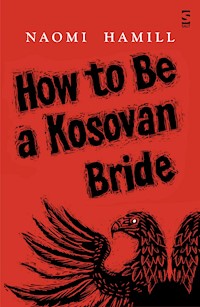
How to be a Kosovan Bride opens up something entirely new to the reader: the history, culture and stories of one of the newest countries in the world. It weaves together Albanian folktale, stories of Kosovan experience of the war in 1999 and a look into the lives of modern-day Kosovan women. The dark undercurrent of Albanian blood feuds underpins a story about the impact of war and the way that new life can emerge from darkness. It is characterised by striking imagery and daring form.
Das E-Book können Sie in Legimi-Apps oder einer beliebigen App lesen, die das folgende Format unterstützen:
Veröffentlichungsjahr: 2017
Ähnliche

















HOW TO BE A KOSOVAN BRIDE
NAOMI HAMILL
How to be a Kosovan Brideopens up something entirely new to the reader: the history, culture and stories of one of the newest countries in the world. It weaves together Albanian folktale, stories of Kosovan experience of the war in 1999 and a look into the lives of modern-day Kosovan women.
The dark undercurrent of Albanian blood feuds underpins a story about the impact of war and the way that new life can emerge from darkness.
It is characterised by striking imagery and daring form.
Praise for this book
‘At once forensic and elegiac, How To Be a Kosovan Bride tells its stories with exquisite subtlety and power.’ —LIVI MICHAEL
HOW TO BE A KOSOVAN BRIDE
NAOMI HAMILLwas born in Wales in 1979 and moved to Hampshire aged six.How to Be a Kosovan Brideis her first novel. A secondary school teacher living in Manchester, she visits Kosovo each summer with the charity Manchester Aid to Kosovo.
Published by Salt Publishing Ltd
12 Norwich Road, Cromer, Norfolk NR27 0AX United Kingdom
All rights reserved
Copyright © Naomi Hamill,2017
The right ofNaomi Hamillto be identified as the author of this work has been asserted by her in accordance with Section 77 of the Copyright, Designs and Patents Act 1988.
This book is in copyright. Subject to statutory exception and to provisions of relevant collective licensing agreements, no reproduction of any part may take place without the written permission of Salt Publishing.
Salt Publishing 2017
Created by Salt Publishing Ltd
This book is sold subject to the conditions that it shall not, by way of trade or otherwise, be lent, re-sold, hired out,or otherwise circulated without the publisher’s prior consent in any form of binding or cover other than that in which it is published and without a similar condition including this condition being imposed on the subsequent purchaser.
ISBN 978-1-78463-096-6 electronic
For Lebibe Rexhepi
HOW TO BE A KOSOVAN BRIDE
How to Be a Kosovan Bride
They went crazyfor weddings after the war. All weekend long, the shooting of impotent bullets into the air, the aggravating honking of horns and the incessant drone of the traditional Albanian music. As if they were so glad to be alive that they wanted everyone from Podujevo to Pristina to Tirana to know about it. We are alive, we exist, we are marrying, we are playing our choice of music, we are wrapping ourselves in the fierce red of the Albanian flag, we are driving expensive cars that we didn’t pay for and we are having babies and we are eating our turshi and carrying on our ways of living.Perendi ke meshire per ne.
Of course, it took a while before all this started. The confidence didn’t come at first. At first they were like spiders, scurrying from house to house, the grey grain silo towering over them. But when they could walk from house to charred house, only looking over their shoulders once to see if they were being followed, they began to feel better. When the schools started back and the hospital opened and UN tanks were seen only once in a while, then they trusted that they might be okay. The war is over, thank God, falenderoj zotin, they would say. Faleminderit Tony Blair, our hero. Faleminderit Bill Clinton, the greatest leader America has ever seen. We are free. We will live. We will marry. We will move on.
It must be traditional, the fathers would say. A traditional wedding. An Albanian wedding. A wedding we can be proud of. We are survivors and we will live our lives.
So, the girl, for she was only seventeen at the most, perhaps sixteen or maybe fifteen, would be made to look twenty-seven, with the dark painting of the eyes flicking with drama at the ends and the bejewelled dress that clung to every part of her miniature frame, showing that she was a woman, she was ready. She must look modern. She must look expensive. She must look American, British, Albanian. No, she must look Kosovan.
But she must not smile. She is sad to be leaving her esteemed family. She cannot bear to be parted from them. She is full of sorrow for the respectable father and the loving mother she is forsaking. That is, if the mother and father have been left for her. Otherwise it will be an aunt or an uncle, arranging this marriage in place of them.
Of course, she is moving to another esteemed family. But for now she is full of the bitterness of parting. She will not raise a smile or rejoice in her humanity, still intact, though jeopardised by fighting. Not that she can remember much of that anyway. The frozen nights in the hills are just a far-off memory, or does she only even remember them because of the recitation of the stories by every adult in her family? Not every adult, of course.
No, she will stay serious and she will not smile. She will set herself apart, the portrait of the distressed woman, and play the part of the dutiful daughter of Albania.
But inside she is so happy, of course. A suitable man from a suitable family. A traditional family. A family with honour and dignity. An Albanian family. A Kosovan family.
She is the first of her class at school to be married. Whilst learning English in the overcrowded classroom with the scowling teacher who wishes the class would pronounce ‘night’ properly, she whispers to her friends about her engagement, the elaborate plans for the wedding, the aunts and uncles travelling from Germany, the glamour of it all. She knows that amongst her friends she is seen as special. The first bride. Married before she finishes high school. She’ll have a husband and a lover. The girls giggle over the idea of a lover. She does not tell them that he has already begun to teach her what he wants from her. She cannot look at her hands as she remembers where he has asked her to put them. She supposes that this is part of the pathway to becoming a wife. And now she knows things that the other girls do not know, wifely things. Things never spoken of by anyone. And that is what every girl wants.
She chose him herself, of course. He is a friend of her older brother and he was at her school. He began to talk to her when he visited the house. Slowly, at first. Respectfully. And then he made her laugh and told her she was bukur, so beautiful. He sent teddies, dresses, sweets for her mother. He deals in the clichés of love. But she has been taught to expect these tokens, to expect these things and the new names: sweetheart, darling, zemer.
And his family, his father, come to talk to her family. Serious talk in the living room. She cannot be a part of this, but she knows that her father is defending her honour. She knows that he is making it clear that if this boy, this man in the making, does not honour his daughter and marry her now, now that he has shown a clear interest, that his family will find that boy and will hurt him so badly that his face will ache into the sweating summer and the unkind winter of the next year. That his hands will bear the scars of betrayal for the rest of his life. And that, although he has slim chances of employment anyway, he will never ever find a job in this town, should he let her down. Her father smiles but he is not really smiling. And he lectures for a while, of his daughter and his family’s honour. And he says that she is not to be left now. That they will marry, that he will not have his daughter rejected by other men, because she has been pursued by this one. This is all said in the loud and friendly tones of jovial conversation, over Russian tea and the stirring of the thick Turkish coffee. They are friends, their families know each other from old. This family rode in the tractor with his grandfather, deep into the precarious safety of the hills. But they both know that this all must be said. There will be no parts missing from the ritual, the contract, the tradition. And he means it, every word that’s uttered.
At school she is special, the first. The teachers congratulate her, smile. She is a good girl, she is learning well. Able to do mathematics, she can speak English proficiently and her portraits of her classmates are pleasing. A good girl who deserves this happiness. Of course, there is one teacher who looks at her but does not dare to speak. She teaches her geography and when the girl answers a question in class, instead of responding to tell her if she is correct or not, the teacher stares sadly into her face. The others laugh and say that the teacher was always a little strange, but the girl doesn’t join in the mocking. Inside, maybe she knows.
The wedding day is electric. All around her she sees women made to look like film stars, dresses clinging to every line of flesh, made with the most expensive, cheapest of fabrics. They are watermelon green and pink, the pale yellow of the abundant peppers in the market, the azure blue of the plastic buckets found outside every shop in the town. They are ready to go to the Oscars, ready to prove to the world that they are beautiful, elegant, modern women.
She sees an aunt with shoes that take her breath away. The hundreds of diamante pieces wink at her with excitement. The straight back of the heel. That heel is so proud and aloof. It is so glad to hold up this beautiful specimen of a woman, with her peroxide hair and the thick, theatrical arches over the eyes, revealing a daring that doesn’t really exist. The woman knows that her shoes will cause excitement amongst the other women. They were sent by her brother in London and she tells them so. She is proud. She hopes that she might visit him one day, she says, although she, and the other women, know that the visa would never be allowed.
Still, they smile and they greet each other. The men with their sincere handshakes followed by the placing of the hand on the heart. We love our people, this placing is saying. We mean what we say. We are a people once more. We are honourable men. Of course, we do not talk about the browser histories in the internet cafes, or what happens in the woods, unreported, some days. We are honourable men. We will live our lives.
And the women. The women are preened to perfection. Some can hardly walk, others can hardly breathe, but they look astounding. They have taken all week to prepare for this wedding and the twinkle of the plastic jewels and the shine of the surprising dresses and the Albanian red of the lips, ready to kiss each other in greeting, show that it has been worth it. It is a wedding. We will look glorious.
As the music begins, the women take to the floor. There is no need to think, as the one, two, three and back of the dancing that they learned when they were just girls comes as naturally to them as walking. Their faces hide any sense of excitement or embarrassment or joy or sadness. They will remain blank, their eyes staring, glazed, as their legs take over. The women hold their hands, linked, into the air, each forming a bridge that, unlike Gredelica, will not be broken. We are a nation, they are saying. This is how we dance and we can carry on all night. There is no need to think. This is part of who we are. The woman on the end waves a small handkerchief, but there is no energy lost in this action. It is as though the rhythmic movement of her arm is as much a part of her as the chopping up of the peppers, or the mixing together of the flour for the flija, or the steady weaving of the intricate yarns into jackets and tablecloths, or the carrying of her child into the mountains to some sort of nervous safety. The line of women travel the floor, each connected, each showing that she is now a proud mother of Kosovo, a sister, a daughter, a wife, a friend.
She has never seen anywhere as beautiful as this. It was paid for by the shacat, the sweetie pies, as they affectionately liked to call them. Those who got out during the war and now were so rich that they could send back money from Germany and could arrive for the summer in their Mercedes and drive them boastfully round the town. They must be so wonderfully happy, those shacat, she thought. And so kind. She was so grateful to her uncle for paying for her wedding without question. She did not know that this whole wedding was pitifully cheap by German standards.
This wedding must be spectacular. Of course, they all know that after the wedding, when she is a wife, there will be scrimping of euros and turning off the generator if the salary isn’t paid, and the grateful relief at the gift from Germany each month. But for now, they will shine.
The music fills the place. The enticing mix of Eastern and European sounds. It leads the dancers on, through the evening and around the room, entrancing them all. The men will join in later and will show their honour by their enthusiastic flinging and flicking. They will swivel their arms in defiance and scoop their legs from one side to the other in careless abandon. It will get noisier and the children will melt to the sides, sleeping on golden hotel chairs. The women will pick at crisps and drink Fanta. The men, outside, will smoke their cigarettes. The music will continue. They will dance for the entire evening. They will live their lives.
The Kosovan bride will remain in her chair. Although she is not smiling, they all know that this is the most glorious day of her life. Later, when they are ready to leave, they will pin notes to her and kiss her and wish her love and blessings from God. Her face will stay emotionless, of course. She is a good girl and she will show respect to her family.
The Kosovan bride will not be found by her older cousin in the toilets of the expensive hotel, so expensive that she has never seen such luxurious handwash before, locked away and stubbornly trying not to cry. She will not be afraid of what will come next. She will not insist that she cannot, will not, let this man, this disgusting boy, touch her again.
All this will not happen. You will not let it.
How to Pass a Virginity Test
When the weddingis over, when the aunts and uncles and neighbours and cousins have pinned more euros to her dress than she has ever seen, the men begin to pull up the cars and taxi these glamorous women back to their villages and their farms, back to their unfinished houses and their generators, back to their cleaning and their cooking and their own wedding videos, which they will watch over and over and over, remembering their day of greatness, their slim waists, their sombre faces, their last goodbyes, their peanuts and their Fanta and their turn to belong at the hotel for just one evening.
One car may break down by the side of the road and one woman will stand in the pitch black, at the edge of a road full of speeding cars and trundling tractors, tired but brightened by the excitement of the evening. In her finery and her carefully painted face, she will tell her husband how much she loves weddings and how much she wants him to hurry up so that she can upload all her photos to Facebook that very evening, so that her aunts in Hamburg and her sisters in Stockholm and Manchester can see the wedding and can comment on the pictures of the dresses and can feel at home, even though they are so far away. She wants her sisters to see that, although she is one who stayed, she can still sparkle and gleam and pout and impress, for one evening, at least.
The Kosovan bride did not sob until her mascara tears dripped onto your shirt. She will not have cried into your crisp, white shoulder and told you that she is scared and that she has changed her mind. She will not have bowed her head and looked at you with the most serious face you have even seen. She did not ask you so earnestly to fix it for her, like you have fixed everything so many times before. You will not have seen in her teenage face both the buoyant little girl she was ten years ago and the woman with a softening of jaw that she will become in another twenty. Your heart will not have fluttered at this sight and entertained her request for just one second. Your eyes will not have blinked back a whisper of water. Your voice will not have shaken in an undetectable way when you told her that it is a matter of honour and dignity and that she is a woman now and that all will be well. You will not have doubted yourself at all as you said these words and stroked her hands and told her that she made an oath. You will not have felt a little ashamed when you emphasised the dishonour a reversal would bring on the family and when you told her stories of women who did not choose their husbands, who were not treated to such luxury, such sophistication. You will not have looked away when you told her to remember how lucky she was to have such beautiful heeled shoes and reminded her of how excited she was when she first became engaged. You will not have told her to remember the teddies and the love notes and the secret little smiles. None of this has happened.
And you did not ask a cousin to wipe her face and re-apply her garish lipstick. You did not raise your voice when she gave a final little sob. You did not tell her to grow up and to do what is dutiful and right and honourable and correct. You did not walk away from her and give her five more minutes to do what she should. You did not tell her that if she did not go home with her husband’s family this very evening, then no desirable man would want her again, that she would never have any children. You did not say these things.
The Kosovan bride walks to the car that her husband’s family have borrowed from an uncle who is over for the summer from Germany. How respectful of her to retain that sorrowful look, even this late into the evening, her new mother-in-law thinks. How dutiful and honourable this girl is. What an excellent choice my son has made. She is a traditional girl and she respects the customs of our people. Still, it is late now and she does not need to look this way for long. The girl’s mother has gone home early with a headache and the girl can relax, smile, maybe even look a little pleased, her new mother-in law says to herself. There are no one’s feelings to protect now, she thinks.
The Kosovan bride sits in the back of the car with her husband. Outside, her father and her siblings wave at her, with shouts and laughter and gun shots flying into the air. She sees a lurid scene before her which looks like something from the television set in their front room. The stiff uncles with their buttons undone, her father, never emotional, giving a vigorous handshake to her new father-in-law. The men, smoking outside the building, the waiters going home for the night in their casual clothes, her new mother-in-law and sisters-in-law twinkling for the final time in the darkness and then slipping away into cars and taxis, back to their home, her husband’s home, her home from now on.
She is the only woman left at the wedding.
As a cousin drives them away she feels her husband’s hand move under the layer of her skirt and up between her shaking thighs. ‘Don’t be scared,’ he whispers in her ear, ‘this is what a husband does.’
She hears his smugness and the determination in his voice and she tries to tell him, ‘Not here, not now, just wait, just wait.’ There is a shrillness to her voice that irritates him and he stops trying to be tender, gentle.
‘Wait,’ she says, again. ‘Just wait. Please.’
But the Kosovan groom is tired of waiting. Three times he has tried this before and she has always spoken of honour and dignity and he has waited, because that is what his father expects and what his mother would want. He has put up with the occasional pleasures and the reservation of her body, because he understands how his people work and he wants to be able to expect the same from his own sons. Not that he hasn’t done this before, with a girl in the city at a rent-by-the-hour hotel and another from a bar, a few months ago, just for relief. Not that he’s waited for this. But he’s waited for her, his wife. And tonight he will wait no more.
By the time they reach the house he is holding her by the arm. ‘You’re hurting me,’ she says, as he takes her into the house. And he keeps a grip on her as he says goodnight to relative after relative and kisses his mother in the hallway. He keeps hold of her arm as his mother kisses her softly on the cheek and praises her for her respectful, honourable attitude. ‘What a wonderful girl, what a good girl, what a wonderful wife for our son, a true Kosovan bride,’ she is saying. ‘Not like these girls in bars or these cousins in London with their tattoos; a traditional girl, a respectful girl, that is what we wanted for our son, and that is exactly what we got,’ she is saying, tears in her eyes, pride in her fierce Albanian heart.
The Kosovan bride asks him to let go. ‘I’m sorry,’ he says, but there’s something in his voice that she didn’t detect nearly a year ago and she talks to him of the way he was, with the teddies and the messages. ‘I really wanted to marry you then,’ she says, and she tries to call him sweetheart, to make him remember, but he doesn’t even look her way and he is almost pulling her along the hallway now. Her face is red as his older brother laughs at his eagerness, out of earshot of the traditional parents, of course.
And she says she must go to the bathroom. And she locks herself in and she sits on the side of the bath whilst the tiles and the sink gleam at her and whilst the smell of disinfectant and shampoo fill her nose and whilst the hem of her wedding dress soaks up water from the floor and she notices the brown marks at the bottom of her very special, once-in-a-lifetime dress, the most expensive dress she will ever wear. She thinks of her mother sewing on the tiny little plastic pearls and of her father paying for it with money he has been saving. And she hears his calls to come out through the door and she does not answer. She does not even lift her head to look that way.
And then his mother is sent for and he explains to his mother that he is worried she is ill. The mother coaxes out this little creature and dries her tears and tells her that they were all scared once but that she will become a woman tonight and that she will be a proud Kosovan mother one day and that her dress will clean and that her son will look after her forever now. She makes him sound like a dove, a lamb, but the girl knows better, the girl knows better. I know better, she thinks but does not say. Cannot say. Will not say. Must not say.
She walks to the bedroom to join him and remembers that there is nothing to be done. She darkens her heart and keeps on breathing. You will survive, she tells herself. We are a strong nation, we will live our lives. There is nothing that does not make us stronger.
The Kosovan bride. A startled rabbit in a trap.
And you, you do not think of her, as you snore in your bed, full of food and full of family and full of doing your duty. You lie there, splayed out on your sheets, inert, snoring into the night.
The respected men of the house, his father, his uncles, a few cousins, his older brother from Germany, wait up into the night, long after the wedding is over, their cigarette smoke and their talk of their language twisting together into the air and dissipating like vapour into the night. They argue over words, which one fits the sentence better, which one is the correct one to use in such and such a context or such and such a poem. Sometimes the older brother Googles a word on his phone and finds something to back up what he says. ‘The internet cannot be trusted,’ says the father, ‘but our ancient texts, they are to be trusted.’ They all agree that this is true. ‘Words matter,’ they say. ‘Our words matter,’ they say. ‘Our words have survived,’ they say, ‘and we are sure that they matter.’
Then later, when all the women are in bed and just the father and an uncle and the brother still remain, the Kosovan groom joins them for a cigarette. ‘And of course she did,’ he says, in answer to their question. They shoot bullets into the air and the father lectures, long and powerfully, about the honour of this evening, this day, this marriage, and he says that it is right that it should be like this. ‘Just as our forefathers,’ he says. ‘Just as our tradition,’ he says. And he touches the domed white hat on his head and tells them a story from Albania. ‘For our people died for us,’ he says. ‘Our red hearts bled for this,’ he says. ‘Blood is necessary sometimes.’
How to Fail a Virginity Test
There is a knock at another father’s door at four in the morning. This father makes his way to the door and stands there, barefooted, whilst a man he has shared Russian tea and stories with just a few hours ago says that he must take his daughter back.
His pale little daughter, another little Kosovan bride, wrapped in a blanket cocoon, stands between him and this man, shivering.
‘There was no blood,’ he says. ‘No blood, no tradition, no honour,’ he says.
The long seats that line the walls of the house, just as they would have lined the walls of the kulla years ago, are now the setting for an hour-long conversation. The seats are velvet and green and swirl with pattern; too ornate for this kind of conversation, too ornate for this. And his wife fetches tea, and his wife fetches socks for her husband and the daughter. And his wife keeps breathing in and out, despite what she hears, despite what she wants to say, despite what she knows, deep in her heart.




