


0,49 €
Niedrigster Preis in 30 Tagen: 1,99 €
Niedrigster Preis in 30 Tagen: 1,99 €
Mehr erfahren.
- Herausgeber: Booksell-Verlag
- Kategorie: Lebensstil
- Sprache: Englisch
In "Humorous Verses," Henry Lawson employs a rich tapestry of language and vivid imagery to explore the Australian landscape's idiosyncrasies, infusing his poetry with a charm that captures both the absurdity and wit of everyday life. This collection reflects Lawson's distinct literary style, characterized by its colloquial tone and sharp social commentary, making it a pivotal work within the Australian literary canon. Contextually, these verses stand out amidst late 19th-century literature, revealing the unique blend of humor and realism that resonates with the distinct cultural identity of Australia during this era. Henry Lawson, often referred to as the father of Australian literature, drew from his personal experiences as an itinerant worker and his struggles with poverty to illuminate themes of resilience and camaraderie. His deep affinity for the Australian landscape and the human condition informed his work, leading him to create vivid portrayals of life in the outback. Lawson's perspective as a storyteller captures the spirit of his time and the essence of the individuals who inhabited it, thus enriching the reader's understanding of the socio-cultural fabric of Australia. I wholeheartedly recommend "Humorous Verses" to readers seeking both entertainment and incisive social insight. Lawson's masterful combination of humor and commentary invites readers to reflect on the complexities of the Australian experience while enjoying the author's clever wordplay. This collection is a testament to Lawson's enduring legacy and remains a delightful exploration of humor in literature.
Das E-Book können Sie in Legimi-Apps oder einer beliebigen App lesen, die das folgende Format unterstützen:
Veröffentlichungsjahr: 2021
Ähnliche

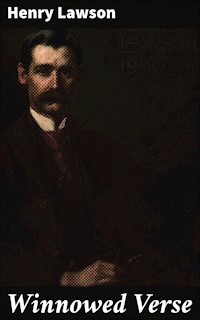


Humorous Verses
Table of Contents
My Literary Friend
OnceI wrote a little poem which I thought was very fine, And I showed the printer’s copy to a critic friend of mine, First he praised the thing a little, then he found a little fault; ‘The ideas are good,’ he muttered, ‘but the rhythm seems to halt.’
So I straighten’d up the rhythm where he marked it with his pen, And I copied it and showed it to my clever friend again. ‘You’ve improved the metre greatly, but the rhymes are bad,’ he said, As he read it slowly, scratching surplus wisdom from his head.
So I worked as he suggested (I believe in taking time), And I burnt the ‘midnight taper’ while I straightened up the rhyme. ‘It is better now,’ he muttered, ‘you go on and you’ll succeed, ‘It has got a ring about it—the ideas are what you need.’
So I worked for hours upon it (I go on when I commence), And I kept in view the rhythm and the jingle and the sense, And I copied it and took it to my solemn friend once more— It reminded him of something he had somewhere read before.
* * * * * * * * * * *
Now the people say I’d never put such horrors into print If I wasn’t too conceited to accept a friendly hint, And my dearest friends are certain that I’d profit in the end If I’d always show my copy to a literary friend.
Mary Called Him ‘Mister’
They’dparted but a year before—she never thought he’d come, She stammer’d, blushed, held out her hand, and called him ‘MisterGum.’ How could he know that all the while she longed to murmur ‘John.’ He called her ‘Miss le Brook,’ and asked how she was getting on.
They’d parted but a year before; they’d loved each other well, But he’d been to the city, and he came back such a swell. They longed to meet in fond embrace, they hungered for a kiss— But Mary called him ‘Mister,’ and the idiot called her ‘Miss.’
He stood and lean’d against the door—a stupid chap was he— And, when she asked if he’d come in and have a cup of tea, He looked to left, he looked to right, and then he glanced behind, And slowly doffed his cabbage-tree, and said he ‘didn’t mind.’
She made a shy apology because the meat was tough, And then she asked if he was sure his tea was sweet enough; He stirred the tea and sipped it twice, and answer’d ‘plenty, quite;’ And cut the smallest piece of beef and said that it was ‘right.’
She glanced at him at times and cough’d an awkward little cough; He stared at anything but her and said, ‘I must be off.’ That evening he went riding north—a sad and lonely ride— She locked herself inside her room, and there sat down and cried.
They’d parted but a year before, they loved each other well— But she was such a country girl and he was such a swell; They longed to meet in fond embrace, they hungered for a kiss— But Mary called him ‘Mister’ and the idiot called her ‘Miss.’
Rejected
Shesays she’s very sorry, as she sees you to the gate; You calmly say ‘Good-bye’ to her while standing off a yard, Then you lift your hat and leave her, walking mighty stiff and straight— But you’re hit, old man—hit hard.
In your brain the words are burning of the answer that she gave, As you turn the nearest corner and you stagger just a bit; But you pull yourself together, for a man’s strong heart is brave When it’s hit, old man—hard hit.
You might try to drown the sorrow, but the drink has no effect; You cannot stand the barmaid with her coarse and vulgar wit; And so you seek the street again, and start for home direct, When you’re hit, old man—hard hit.
You see the face of her you lost, the pity in her smile— Ah! she is to the barmaid as is snow to chimney grit; You’re a better man and nobler in your sorrow, for a while, When you’re hit, old man—hard hit.
And, arriving at your lodgings, with a face of deepest gloom, You shun the other boarders and your manly brow you knit; You take a light and go upstairs directly to your room— But the whole house knows you’re hit.
You clutch the scarf and collar, and you tear them from your throat, You rip your waistcoat open like a fellow in a fit; And you fling them in a corner with the made-to-order coat, When you’re hit, old man—hard hit.
You throw yourself, despairing, on your narrow little bed, Or pace the room till someone starts with ‘Skit! cat!—skit!’ And then lie blindly staring at the plaster overhead— You are hit, old man—hard hit.
It’s doubtful whether vanity or love has suffered worst, So neatly in our nature are those feelings interknit, Your heart keeps swelling up so bad, you wish that it would burst, When you’re hit, old man—hard hit.
You think and think, and think, and think, till you go mad almost; Across your sight the spectres of the bygone seem to flit; The very girl herself seems dead, and comes back as a ghost, When you’re hit, like this—hard hit.
You know that it’s all over—you’re an older man by years, In the future not a twinkle, in your black sky not a split. Ah! you’ll think it well that women have the privilege of tears, When you’re hit, old man—hard hit.
You long and hope for nothing but the rest that sleep can bring, And you find that in the morning things have brightened up a bit; But you’re dull for many evenings, with a cracked heart in a sling, When you’re hit, old man—hard hit.




