


0,49 €
Niedrigster Preis in 30 Tagen: 1,99 €
Niedrigster Preis in 30 Tagen: 1,99 €
Mehr erfahren.
- Herausgeber: Booksell-Verlag
- Kategorie: Gesellschafts- und Liebesromane
- Sprache: Englisch
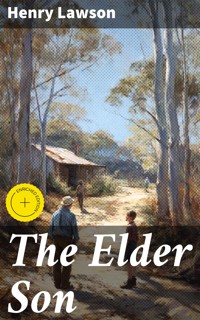
In "The Elder Son," Henry Lawson crafts an evocative narrative that delves into themes of family dynamics, social expectations, and the struggles inherent in the Australian bush. The novella is marked by Lawson's characteristic realism and rich character development, often reflecting the inner lives of his characters against the harsh yet beautiful landscapes of the outback. Through sharp dialogues and poignant descriptions, Lawson explores the tensions between tradition and modernity, encapsulating the challenges faced by individuals caught in the tug-of-war between personal desire and societal obligation. Henry Lawson, a prominent figure in Australian literature, is renowned for his compelling portrayals of the Australian working class and the bush. Born in 1867, Lawson's own experiences with poverty and familial strife profoundly influenced his writing. His stories, drawn from authentic experiences of Australian life, resonate with readers seeking depth and authenticity. "The Elder Son" serves as a lived reflection of his observations and critiques of societal norms, wrestling with issues that remain relevant today. This novella is highly recommended for readers interested in Australian literature and those who appreciate narratives that poignantly address the complexities of human relationships. Lawson's exploration of intergenerational conflict and the universal quest for autonomy makes "The Elder Son" not only a significant literary work but also an engaging read for anyone reflecting on the meaning of duty and desire. In this enriched edition, we have carefully created added value for your reading experience: - A comprehensive Introduction outlines these selected works' unifying features, themes, or stylistic evolutions. - A Historical Context section situates the works in their broader era—social currents, cultural trends, and key events that underpin their creation. - A concise Synopsis (Selection) offers an accessible overview of the included texts, helping readers navigate plotlines and main ideas without revealing critical twists. - A unified Analysis examines recurring motifs and stylistic hallmarks across the collection, tying the stories together while spotlighting the different work's strengths. - Reflection questions inspire deeper contemplation of the author's overarching message, inviting readers to draw connections among different texts and relate them to modern contexts. - Lastly, our hand‐picked Memorable Quotes distill pivotal lines and turning points, serving as touchstones for the collection's central themes.
Das E-Book können Sie in Legimi-Apps oder einer beliebigen App lesen, die das folgende Format unterstützen:
Veröffentlichungsjahr: 2021
Ähnliche



The Elder Son
Table of Contents
Introduction
This single-author collection, The Elder Son, gathers a substantial selection of Henry Lawson’s verse, presenting his voice in concentrated form. Its purpose is to bring together works that show the breadth of his concerns and the continuity of his craft across varied settings and moods. Rather than a survey of every genre he attempted, it focuses on his poetry, where narrative, song, and reflection converge. By placing companionable pieces side by side, the volume invites readers to hear the cadence of an Australian writer whose insights into work, belonging, and memory helped define a literary tradition and still speak with spare, humane force.
As to genres: the contents consist primarily of poems, including narrative ballads, lyrical addresses, occasional verses, and satirical or patriotic pieces. Many adopt the ballad’s forward motion, telling compact stories in stanzaic form; others turn inward, voicing entreaty, tribute, or misgiving. Some poems resemble toasts or epistles in their direct address, while others sketch scenes with the economy of a vignette. The variety here lies within the modes and tones of verse rather than between prose and poetry. Taken together, the collection demonstrates how Lawson used poetic forms to chronicle experience, channel public feeling, and shape intimate, conversational confidences.
Across the book, certain preoccupations recur with resilient clarity. City streets and outback tracks meet in his imagination, so that itinerant labour, seafaring hazards, rail and road, and the press of urban poverty converse across distances. Mateship and solidarity temper the loneliness of travel; stoicism stands beside flashes of humour; pride vies with remorse. The ordinary worker, the wanderer, the drinker seeking redemption, the nameless battler—figures like these anchor the poems’ social compass. History and civic memory surface not as grand abstractions but as felt inheritances carried by people at the margins. Beneath it all runs a call for fairness and dignity.
Lawson’s style is marked by plain diction, supple rhythms, and a close ear for everyday speech. He favors the ballad’s steady beat, yet he varies pace with clipped lines and strategic repetition that invite reading aloud. Narrative clarity and image-driven scenes keep the poems grounded, while irony and understatement let feeling accumulate without sentimentality. He can pivot from sardonic bite to tenderness within a stanza, and he trusts implication as much as assertion. The result is a poetry at once accessible and exacting: economical in means, generous in human sympathy, and memorable in the way a well-told story lodges.
Considered as a whole, the volume shows why Lawson’s verse has proved durable. It preserves textures of working life and unsettled movement that shaped a national imagination, yet it refuses easy mythmaking. The poems are portable—singable, recitable, and suited to communal memory—without sacrificing nuance. Their social conscience is inseparable from their craft: cadence, detail, and voice keep ethical claims close to lived experience. For readers now, these pieces illuminate how identity is negotiated between country and city, hardship and hope, private feeling and public duty. They reward both quick encounters and sustained attention, yielding new inflections at each return.
The collection’s cohesion arises from echoes that travel across its parts: departures and returns, direct addresses and public appeals, laments and rallying cries. Shifts in register feel like shifts in scene rather than in authorial temperament, because the same patient regard for people persists. Moments of celebration are shadowed by costs; moments of despair are held by companionship. Even when the subject is conflict or catastrophe, the poems resist spectacle, turning instead to the fates of individuals. Readers can move straight through or dip by theme or mood; either way, the sequence builds a composite portrait of a recognisable world.
The Elder Son thus serves as an invitation and a consolidation: an approachable gateway for new readers and a resonant gathering for those who know Lawson’s work. By foregrounding his poetry, it presents a unified view of his art at its most communal and direct, where story, song, and moral imagination intersect. The selection underscores how craft and compassion meet in his lines, and why that meeting matters beyond any single poem. It asks to be read aloud, shared, and argued with—the surest proof of continuing life on the page—and it reminds us how a clear voice can carry far.
Historical Context
Henry Lawson’s career unfolded across the transition from colonial Australia to Federation, shaping the texture of The Elder Son. Born in 1867 on the Grenfell goldfields of New South Wales and raised near Mudgee at Eurunderee (then Pipeclay), Lawson’s early deafness and bush schooling fostered an austere realism. His Norwegian-born father, Niels Hertzberg Larsen (Lawson), and his mother, Louisa Lawson—editor of The Dawn—located him in a milieu of migrant labour, radical journalism, and women’s activism. Beginning in the later 1880s, he wrote for The Bulletin in Sydney under J. F. Archibald and A. G. Stephens, anchoring his verse and prose in the nationalist “Bulletin school” that prized mateship and vernacular candour.
The long depression of the 1890s and the labour upheavals of the Maritime Strike (1890) and the Shearers’ Strikes (1891 and 1894) set the social horizon for Lawson’s bush and itinerant pieces. Economic collapse after the 1893 bank crashes forced thousands onto the roads, the “wallaby track,” and the droving routes that underpin poems about hardship, dawn musters, and mateship. The Federation Drought (c. 1895–1903) compounded insecurity, shaping stoic depictions of stock routes, dry creeks, and isolated camps. The move toward Australian Federation in 1901 infused this experience with political meaning: bush endurance became a founding myth, even as it recorded dispossession, precarity, and the fragile bonds of rural communities.
Lawson’s city poems arise from the same decades but turn to Sydney’s lanes and boarding houses, where rural migrants confronted urban poverty. Population growth pushed Sydney past 400,000 by 1891, and working-class districts such as The Rocks, Surry Hills, and Chippendale exposed slum alleys, casual labour, and street “pushes.” His urban voice registers the distance between imperial ceremony and daily hunger, attentive to the women, children, and casual hands negotiating overcrowded tenements and moral scrutiny. The Salvation Army (active in Australia from the 1880s), charitable refuges, and municipal crackdowns on vagrancy and sex work form the social background for city pieces that pair sympathy with an unvarnished view of survival.
Alcohol as solace, scourge, and social ritual threads through Lawson’s oeuvre. The temperance and rescue movements of the 1880s and 1890s—galvanised by the Woman’s Christian Temperance Union (established in Australia in 1891) and by Louisa Lawson’s The Dawn (1888–1905)—framed national debates about drink, masculinity, and domestic ruin. Long hours, itinerant labour, and seasonal unemployment made pubs both social hubs and financial traps, while colonial licensing laws and moral campaigns tightened regulation. Lawson’s own struggles fed a body of writing about cures, relapses, and remorse, situating private visions and confessions in a wider public argument over reform, respectability, and the limits of charity in an economy that offered few exits from hardship.
Lawson wrote amid surges of imperial pride and scepticism. The South African War (1899–1902) drew Australian contingents, including engineers and mounted rifle units, and furnished imagery of lines, bivouacs, and colonial soldiery under British command. The royal visit of the Duke and Duchess of York in 1901 to open the first Federal Parliament in Melbourne symbolised the new Commonwealth’s loyalty to Crown and Empire, even as republican feeling persisted. Overseas turmoil also entered his verse: the Russo‑Japanese War (1904–1905), culminating in Tsushima (27–28 May 1905), and the 1905 Russian Revolution made the “Little Czar” and the “Bear” potent emblems. Lawson used such figures to reflect on power, destiny, and the costs of martial glory.
Engineering and infrastructure—bridges, railheads, culverts, and telegraphs—were the sinews of a continent-length economy that Lawson watched come of age. The Hawkesbury River Railway Bridge (opened in 1889), built by the Union Bridge Company of New York, exemplified reliance on “foreign engineers” amid nationalist pride in local skill. Across the 1880s and 1890s, cable trams revolutionised Melbourne, artesian bores transformed inland Queensland, and the Overland Telegraph (completed in 1872) knit Australia to the world. Poems invoking survey pegs, blasting charges, and draught teams trace the dignity and danger of modernisation: the confidence of a new nation tempered by accidents, wage disputes, and the knowledge that progress often arrived with an imported accent.
The radical memory of the gold era and Eureka Stockade (Ballarat, 3 December 1854), led by Peter Lalor under the Southern Cross, gave Lawson an idiom of protest and egalitarianism that outlasted the diggings. His own birth on the Grenfell fields linked him to that lineage of tents, licences, and sudden wealth or ruin. The Bulletin’s republicanism and the emergence of Labor politics in the 1890s made Eureka a usable past for reflections on justice, mateship, and class solidarity. In this frame, acts of rescue in drought, the ethics of sharing a last waterbag, and the figure of the Good Samaritan carry political freight: a creed of mutual aid forged against scarcity and authority.
Lawson’s publishing life connected Sydney and London, provincial readers and imperial markets. Backed by Angus & Robertson and mentored at The Bulletin by J. F. Archibald and A. G. Stephens, he spent 1900–1902 in London, where he confronted metropolitan expectations and precarious earnings. Federation in 1901, the Immigration Restriction Act (1901), and the consolidation of a White Australia framed his ambivalence about foreignness, even as his own Norwegian ancestry surfaced in convivial toasts and maritime imagery. The Elder Son gathers these currents—bush endurance, city candour, martial unease, and migrant modernity—into a pre‑war Australian register, its afterglows and storms anticipating a century in which engineers, drovers, and soldiers would again stand on new firing lines.
Synopsis (Selection)
The Ballad of the Elder Son
A narrative ballad tracing the burdens and reckoning of an eldest son, where duty, estrangement, and hard-won understanding collide. It follows a return to roots that tests pride and kinship without spelling out the final outcome.
Written Out
A wry, self-reflective sketch about a writer’s exhaustion and the fear that the well of stories has run dry. It balances humor and unease as the speaker confronts creative limits.
Urban Lives and City Voices (A Voice from the City; The Alleys; The Women of the Town; The Scamps)
Sketches and ballads that bring the city’s lanes and working quarters into view, contrasting bush ideals with crowded hardship, quick wits, and survival. They follow streetwise figures and working women negotiating dignity amid pressure and poverty.
Bush Life, Home, and Mateship (Break o’ Day; The Drovers; And the Bairns Will Come; The Heart of Australia; The Good Samaritan; Will Yer Write It Down for Me?; Andy’s Return; Pigeon Toes; On the Wallaby; The Brass Well; Barta; The Pride That Comes After)
Bush and track pieces about droving, tramping, and homestead ties—dawn starts, mates’ yarns, small generosities, and the pull of children and country. They sketch characters and encounters that weigh pride against kindness and the demands of distance against the promise of home.
Personal Addresses and Intimate Lyrics (To-Morrow; New Life, New Love; To Hannah; To Jim; The Afterglow; The Water Lily; As Good as New; Skaal; THE END)
Direct-address and reflective lyrics marking partings, renewals, and private affections—letters in verse and quiet toasts to friendship. These pieces linger on hope, gratitude, and the closing notes of a journey without resolving every thread.
Sea and Storm Pieces (The Light on the Wreck; In the Storm That is to Come)
Maritime and weather poems that set beacons against wreck and warn of gathering tempests, balancing peril with endurance. They frame natural forces as tests of nerve and solidarity.
Drink and its Consequences (The Secret Whisky Cure; The Drunkard’s Vision)
Humorous and cautionary takes on alcohol—one a tongue-in-cheek ‘remedy,’ the other a stark glimpse of where excess leads. Together they weigh mateship’s merriment against the cost of misused courage.




