


225,99 €
Mehr erfahren.
- Herausgeber: John Wiley & Sons
- Kategorie: Wissenschaft und neue Technologien
- Sprache: Englisch
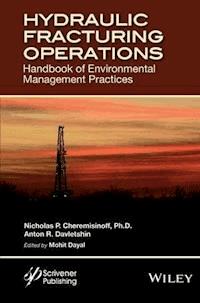
Hydraulic fracturing, commonly referred to as "fracking," is a technique used by the oil and gas industry to mine hydrocarbons trapped deep beneath the Earth's surface. The principles underlying the technology are not new. Fracking was first applied at the commercial level in the United States as early as 1947, and over the decades it has been applied in various countries including Canada, the UK, and Russia. The author worked with engineering teams as early as the mid-1970s in evaluating ways to improve oil recovery from this practice. By and large fracking was not an economically competitive process and had limited applications until the early 2000s. Several factors altered the importance of this technology, among them being significant technological innovations in drilling practices with impressive high tech tools for exploration, well construction and integrity, and recovery along with discoveries of massive natural gas reserves in the United States and other parts of the world. These factors have catapulted the application of the technology to what is best described as the gold rush of the 21st century, with exploration and natural gas plays proceeding at a pace that seemingly is unrivaled by any historical industrial endeavor. But this level of activity has invoked widespread criticism from concerned citizens and environmental groups in almost every nation across the Globe. This outstanding new volume offers the industry a handbook of environmental management practices that can mitigate risks to the environment and, through best practices and current technologies, to conform to the current standards and regulations that are in place to provide the world with the energy it needs while avoiding environmental damage. For the new hire, veteran engineer, and student alike, this is a one-of-a-kind volume, a must-have for anyone working in hydraulic fracturing.
Sie lesen das E-Book in den Legimi-Apps auf:
Seitenzahl: 1279
Veröffentlichungsjahr: 2015
Ähnliche
















Contents
Cover
Title page
Copyright page
Preface
Acknowledgements
Author and Editor Biographies
Chapter 1: Hydraulic Fracturing Overview
1.1 Technology Overview
1.2 Benefits, Environmental Deterents, Hurdles and Public Safety
1.3 U.S. Resources and Standing
1.4 Worldwide Levels of Activity
1.5 The Role of Water
Chapter 2: Oil and Gas Regulations
2.1 U.S. Environmental Regulations
2.2 Historical Evolution of Regulations Affecting Oil and Gas
2.3 RCRA Exemptions
2.4 Permitting Rules
Chapter 3: Management of Chemicals
3.1 Memorandum of Agreement Between the U.S. EPA and Industry
3.2 Chemicals Used
3.3 Safe Handling and Emergency Response to Spills and Fires
3.4 Storage Tanks
3.5 Risk Management
3.6 Establishing a Spill Prevention, Control and Countermeasures Plan
Chapter 4: Water Quality Standards and Wastewater
4.1 Overview
4.2 Water Quality Criteria, Standards, Parameters, and Limits
4.3 Wastewater Characterization
4.4 Wastewater Management Alternatives
4.5 Water Treatment Technologies
4.6 Deep Well Injection of Wastes
4.7 Overall Assessment of Wastewater Management Alternatives
Chapter 5: Water Utilization, Management, and Treatment
5.1 Introduction
5.2 Water Use by the Oil and Gas Energy Sector
5.3 Overview of Water Management Practices
5.4 Wastewater Treatment Technologies
5.5 Alternatives to Conventional Wastewater Treatment
5.6 Project Management
5.7 Economics of Wastewater Treatment
5.8 State-of-the-Art Water Management Project
5.9 Special Challenges in the Oil and Gas Energy-Sector
References
Chapter 6: Well Construction and Integrity
6.1 Overview
6.2 API Good Practices for Well Design and Construction
6.3 Integrity Failure
6.4 Abandonment and Closure
6.5 Best Practices for Site Operations
References
Chapter 7: Managing Air Pollution Discharges
7.1 The Problem
7.2 Methodology of Air Pollution Control
7.3 Remote Sensing and Monitoring
7.4 Leak Detection and Repair
7.5 Use of Flares
7.6 Fugitive Dust Discharges
7.7 Compressor Stations
7.8 Dehydrators
Chapter 8: Macro Considerations of Environmental and Public Health Risks
8.1 Overview
8.2 The Challenges of Managing Water Resources
8.3 The Challenges of Managing Air Quality
8.4 The Challenges of Managing Greenhouse Gas Emissions
8.5 The Challenges of Managing Man-Made Seismicity
Index
Hydraulic Fracturing Operations
Scrivener Publishing100 Cummings Center, Suite 541J Beverly, MA 01915-6106
Publishers at Scrivener Martin Scrivener([email protected]) Phillip Carmical ([email protected])
Copyright © 2015 by Scrivener Publishing LLC. All rights reserved.
Co-published by John Wiley & Sons, Inc. Hoboken, New Jersey, and Scrivener Publishing LLC, Salem, Massachusetts. Published simultaneously in Canada.
No part of this publication may be reproduced, stored in a retrieval system, or transmitted in any form or by any means, electronic, mechanical, photocopying, recording, scanning, or otherwise, except as permitted under Section 107 or 108 of the 1976 United States Copyright Act, without either the prior written permission of the Publisher, or authorization through payment of the appropriate per-copy fee to the Copyright Clearance Center, Inc., 222 Rosewood Drive, Danvers, MA 01923, (978) 750-8400, fax (978) 750-4470, or on the web at www.copyright.com. Requests to the Publisher for permission should be addressed to the Permissions Department, John Wiley & Sons, Inc., 111 River Street, Hoboken, NJ 07030, (201) 748-6011, fax (201) 748-6008, or online at http://www.wiley.com/go/permission.
Limit of Liability/Disclaimer of Warranty: While the publisher and author have used their best efforts in preparing this book, they make no representations or warranties with respect to the accuracy or completeness of the contents of this book and specifically disclaim any implied warranties of merchantability or fitness for a particular purpose. No warranty may be created or extended by sales representatives or written sales materials. The advice and strategies contained herein may not be suitable for your situation. You should consult with a professional where appropriate. Neither the publisher nor author shall be liable for any loss of profit or any other commercial damages, including but not limited to special, incidental, consequential, or other damages.
For general information on our other products and services or for technical support, please contact our Customer Care Department within the United States at (800) 762-2974, outside the United States at (317) 572-3993 or fax (317) 572-4002.
Wiley also publishes its books in a variety of electronic formats. Some content that appears in print may not be available in electronic formats. For more information about Wiley products, visit our web site at www.wiley.com.
For more information about Scrivener products please visit www.scrivenerpublishing.com.
Library of Congress Cataloging-in-Publication Data:
ISBN 978-1-118-94635-0
Preface
Hydraulic fracturing, commonly referred to as fracking, is a technique used by the oil and gas industry to mine hydrocarbons trapped deep beneath the Earth’s surface. The principles underlying the technology are not new. Fracking was first applied at the commercial level in the United States as early as 1947, and over the decades it has been applied in various countries including Canada, the United Kingdom, and Russia. The principle author worked with engineering teams up to 40 years ago in evaluating ways to improve oil and gas recovery from this practice. By and large fracking was not an economically competitive process and had limited applications until the last decade. Several factors altered the importance of this technology; among them significant technological innovations in drilling practices with impressive high tech tools for exploration, well construction and integrity, and gas recovery along with the discoveries of massive natural gas reserves in the United States and other parts of the world. These factors have catapulted the application of the technology to what is best described as the gold rush of the 21st century, with exploration and natural gas plays proceeding at a pace that seemingly is unrivaled by any recent historical industrial endeavor. This activity has invoked widespread criticism from concerned citizens and environmental groups in almost every nation across the globe.
Mass media education over environmental concerns for the application of the technology were touched off by and large by the documentary Gasland, a 2010 American film which focuses on communities in the United States impacted by natural gas drilling and, specifically, the method of horizontal drilling into shale formations. The film explores how communities are being negatively affected where a natural gas drilling boom has been underway over the past decade. But this documentary alone is but one media form that has raised a general public outcry against the oil and gas industry sector’s application of the technology. The National Oceanic and Atmospheric Administration (NOAA) has reported on high rates of methane leakage from natural gas fields and stated that if these are replicated, air discharges would vitiate the climate benefit of natural gas, even when used as an alternative to coal. Numerous studies have pointed to potential health risks to communities within close proximity of hydraulic fracturing operations due to air pollution, both from fugitive dust emissions resulting from the construction stages of well drilling sites and from discharges of volatile organic vapors from well production and large-scale flare gas practices. Other studies have raised concerns over the depletion and competition for groundwater resources, as the technology requires vast amounts of water. Concerns have also been raised over possible negative impacts to groundwater quality because of the reliance on a broad range of chemicals used for fracturing operations and the potential for well casing failures. While the chemicals used constitute a small percentage of the volume of total fracking fluid required for a well, high water demands containing toxic chemical ingredients present significant challenges in groundwater quality protection. Further concerns have been voiced concerning challenges in dealing with solid waste forms which include large quantities of salts, low-level radioactive wastes, and toxic heavy metals.
In the United States there seems to be almost hesitation on the part of the federal government to adequately address the risks of the technology. In March 2010, EPA announced its intention to conduct a study on the risks to groundwater in response to a request from the U.S. Congress. Since then, the Agency has held a series of public meetings aimed at receiving input from states, industry, environmental and public health groups, and individual citizens. EPA’s study was reviewed by the Science Advisory Board (SAB), an independent panel of scientists, to ensure the agency conducted the research using a scientifically sound approach. But it was not until 2011, that the EPA announced its final research plan on hydraulic fracturing. The EPA’s final study plan is intended to examine the full cycle of water in hydraulic fracturing, from the acquisition of the water, through the mixing of chemicals and actual fracturing, to the post-fracturing stage, including the management of flow-back and produced or used water as well as its ultimate treatment and disposal. The initial research results and study findings were released to the public in 2012, but these findings were inconclusive. It has been announced that the final report will be delivered in 2014, but as of the writing of this volume, no formal evaluation had been published. Since 2011, the EPA has been reviewing their study on the effects of hydraulic fracturing but only on possible groundwater contamination near drilling sites in Wyoming. Up to this point in time, the EPA still hasn’t been able to conclusively determine that the chemicals they are detecting in groundwater are the result of hydraulic fracturing — which may explain why the Agency announced plans to abandon the study and instead returned the regulatory responsibilities back to the state of Wyoming.
Further concerns lie with enforcement. Inspection and enforcement of state and federal rules aimed at groundwater protection and land use planning are seemingly not being uniformly applied in the United States. Some states, as noted in this handbook, lack the infrastructure and manpower resources to properly inspect well site operations needed to verify well integrity and to ensure that best practices are being applied to chemical and air pollution management. Such uneven and ambiguous enforcement actions on the part of state environmental regulators, leaves concerns and open-ended questions as to whether the accelerated pace of natural gas plays across North America are fully warranted. This raises further concerns for other countries where natural gas exploration is poised to expand. The U.S. has announced that as a matter of national policy fracking technologies will be shared with China, and clearly with the events in Ukraine and the geopolitical struggle that will draw that nation into the fold of NATO, fracking is likely have a sizable footprint in the future. These countries lack enforcement infrastructure and basic instruments that are required to protect both the environment and public health.
There is evidence to support that fracking practices are environmentally damaging and may pose significant health risks to the general public through multiple pathways; however, one may make the same observation for steelmaking, copper smelting, coal mining, coke-chemical plants, wood treating and many other industry sectors. There are both poor and good industry practices, the latter which can mitigate or reduce risks substantially; but they need to be practiced and there needs to be enforcement, and not simply voluntary adoption. There needs to be commitment on the part of the oil and gas industry to invest into and adopt best practices and leading technologies for pollution management. In other industry sectors that are mature, there are well-developed controls with many decades of experience. This does not appear to be the case for water pollution management; nor can it be said that air pollution is being managed aggressively with well-established practices and technologies that are applied in other industry sectors. This is not to say that technologies are not within reach and that the oil and gas industry is sitting idly. One would expect that advanced water treatment technologies, some already at semi-commercial stages, will play a more dominant role over the next several years. One may expect a combination of existing and newer technologies being applied to managing groundwater quality issues. But as noted in this volume, a more cohesive approach is needed to address air pollution.
More comprehensive consideration is needed by industry and regulators on the increased footprint of air pollution and its potential negative impacts on communities. In this regard, there are arguments on both sides of the fence concerning air quality management. It is widely recognized that the largest sources of air pollution and greenhouse gases are coal burning power plants. A typical (500 megawatt) coal plant burns about 1.4 million tons of coal each year. As of 2012, there are 572 operational coal plants in the U.S. with an average capacity of 547 megawatts. Coal-burning power plants constitute the greatest source of carbon dioxide (CO2) emissions, a primary cause of global warming. In 2011, utility coal plants in the United States emitted a total of 1.7 billion tons of CO2. A typical coal plant generates as much as 3.5 million tons of CO2 per year. Coal burning is a leading cause of smog, acid rain, and toxic air pollution. Pollutants that are released include:
Sulfur dioxide (SO
2
) -
Which takes a major toll on public health, including by contributing to the formation of small acid forming particulates that can penetrate into human lungs and be absorbed by the bloodstream. SO
2
is also the leading cause of acid rain, which damages crops, forests, and soils, and acidifies lakes and streams. A typical coal plant that is retrofitted with modern emissions controls, including flue gas desulfurization can emit as much as 7,000 tons of SO
2
per year.
Nitrogen oxides (NOx) -
Which is a leading cause ground level ozone, or smog, can burn lung tissue, exacerbate asthma, and make humans more susceptible to chronic respiratory diseases. A typical coal plant with emissions controls, including best available technology like selective catalytic reduction technology, emits 3,300 tons of NOx per year.
Particulate matter -
Sometimes referred to as soot or fly ash, causes chronic bronchitis, aggravated asthma, and premature death, as well as haze obstructing visibility. A typical uncontrolled plant can emit as much as 500 tons of small airborne particles each year.
Mercury -
For which coal plants are responsible for more than half of the U.S. emissions, is a toxic heavy metal that causes brain damage and heart problems. A typical uncontrolled coal plants emits approximately 170 pounds of mercury each year. Less than 10% of the coal burning plants in the US rely on the best available technologies to control mercury discharges to air.
Other harmful pollutants emitted annually from a typical, uncontrolled coal plant include lead, various toxic heavy metals, and trace amounts of uranium, carbon monoxide, volatile organic compounds (VOC).
In a recent article, Chinese scientists have warned that the “country’s toxic air pollution is now so bad that it resembles a nuclear winter, slowing photosynthesis in plants - and potentially wreaking havoc on the country’s food supply.” Beijing’s concentration of PM 2.5 particles - those small enough to penetrate deep into the lungs and enter the bloodstream - have been reported in the hundreds of micrograms per cubic meter, in contrast to the World Health Organization’s recommended safe level of 25 micrograms per cubic meter. The worsening air pollution of that country has already exacted a significant economic toll, grounding flights, closing highways and discouraging tourism. Much of China’s worsening air pollution may be linked to coal burning plants.
As a rough point of comparison, burning coal emits 206 pounds of carbon dioxide per million British thermal units compared with 117 pounds per million Btu for natural gas, with profound reductions and elimination of the many chemicals associated with the air pollution from coal burning power plants. These facts point towards the most profound reasons for supporting the fracking revolution - or do they? Clearly, over time, the shift to natural gas from coal and petroleum will reduce our environmental footprint on Mother Earth, but there are other considerations. Investments into infrastructure needed to transition to a natural gas energy source on a scale that would benefit global carbon footprint reduction are formidable. While U.S. energy experts point towards the U.S. as being posed to become a net energy exporter because of fracking, site is lost over the fact that there is limited infrastructure such as few LNG plants that can capitalize on world markets. LNG plants represent investments on the order of billions of dollars for a single facility and further raise additional concerns for public safety.
An accelerated transition to cleaner fuels seems unlikely in many parts of the world. While NATO has made bold statements on reducing dependency on Russian gas, a movement towards concrete commitment in major infrastructure investments has not been forthcoming. The large infrastructure investments that are needed for pipelines and LNG plants as well as transport fleets and unloading stations to reach global markets are in various stages of planning, but seem to fall short of committed financing for actual projects. These needed investments, their detailed plans and environmental impact statements have yet to be formulated and carefully vetted for both financial and human risks. This is exemplified by the fact that in some U.S. states where fracking operations are being conducted, more than 30% of the recovered gas has been reported to be flared (flaring is the practice of burning waste gases, subjecting communities to higher levels of air pollution).
Additional concerns addressed in this volume focus on the manner in which industry monitors and reports air pollution discharges. Air pollution discharges are quantified for reporting purposes based on calculation through the application of emission factors. Emission factors are ‘industry’ reported mass discharges expressed on a per unit value of production basis. Emission factors represent long-term averages of typical operations or pieces of equipment. These factors do not take into consideration the age of controls, the condition of pollution controls, the degree of preventive maintenance applied by the operator to its controls and many other factors which may impact on control efficiency. Furthermore, because emission factors are averages, they do not necessarily account for site-specific operations, nor do they take into consideration the effects of transient operating conditions such as start-ups, shutdowns, malfunctions, surges, and various operational abnormalities which may result in high pollution discharge episodes. It may be argued that a flawed methodology is relied on for quantifying air pollution discharges, whereby calculated aggregate estimates of pollution are accepted as being more precise than the application of real time measurements and control. These calculation practices when coupled with air pollution modeling tools that are first and foremost intended to meet statutory obligations for permits tend to lack formal protocols for performing human health risk evaluations. These represent areas of concern that should give lawmakers, industry and citizens impetus to take the time to step back to consider:
placing greater resources and emphasis on regional and local planning for gas plays,
investing into better pollution control technologies,
committing higher government allocations to support more aggressive inspections and monitoring,
assigning higher levels of accountability by industry,
incorporating risk assessment tools into the permit process, and
in closing loopholes in existing statutes in order to strengthen environmental standards.
To quote Albert Einstein - “Concern for man himself and his fate must always form the chief interest of all technical endeavor. Never forget this in the midst of your diagrams and equations.” Einstein’s remarks emphasize the need to look before leaping.
The reader should not walk away with the impression that fracking is a technology that should not be invested into. To the contrary, it offers the enormous potential for reducing the carbon footprint that is universally recognized by scientists around the world as causing harm to humans and Mother Earth. However, environmental management of this technology and practices employed need to be at the forefront.
This handbook was assembled for two reasons. First, it was felt that there are misunderstandings about the hydraulic fracturing technology among the general public. Part of this stems from disconnect between the language of engineers and that of laypersons. From that standpoint, there is attempt to explain the environmental issues and also to relay the fact that while the technology poses significant environmental threats, there are both controls and good industry practices that that can manage a number of the pollution concerns, but certainly not all. Without uniform and rigorous application of good industry practices coupled with the oversight of enforcement the public is placed at an indeterminate level of risk from the current gas play activities.
The second reason for assembling the handbook is to provide a roadmap to the best practices and emerging technologies for pollution management. To this end, many chapters are written with practicing engineers and industry specialists in mind.
There are eight chapters that span a range of topics addressing the basics of hydraulic fracturing operations, chemical management, U.S. environmental regulations, current and emerging technologies for water treatment, risk aversion, and air pollution control and management. Consideration has been given to the international scientific literature as well good industry practices promoted by authoritative bodies like the American Petroleum Institute, the American Institute of Chemical Engineers, and other recognized scientific and trade industry organizations. Although various companies and brand names are cited in this volume, the reader should not consider statements to reflect any form of endorsement. The information presented in this handbook should be considered as survey oriented and not suitable for scale-up, design and operational purposes.
In addition to the contributors and individuals that assisted in the preparation of this volume, a special thank you is extended to the Publisher for its fine production of this volume.
Nicholas P. Cheremisinoff, Ph.D. Charles Town, West Virginia
(see http://www.theguardian.com/world/2014/feb/25/china-toxic-air-pollution-nuclear-winter-scientists)
Acknowledgements
Randy D. Horsak is a contributing author to this volume. Mr. Horsak is a scientist and registered Professional Engineer and Founder of the Marcellus Shale Water Group, LLC, with more than 40 years of experience in environmental science and engineering, including water and wastewater treatment. He has managed and directed environmental projects in a variety of areas, including water and wastewater sampling and analysis, bench-scale and field pilot studies, engineering economic evaluations, conceptual design of water and wastewater treatment systems involving the treatment of raw sewage, industrial waste, chemical-contaminated water, and pathogen-contaminated water. He has evaluated a wide array of technologies: electro-coagulation, filtration, reverse osmosis, ultra-violet light purification, ozonation, chlorination, carbon block filtration, and other systems. Mr. Horsak has authored more than 50 professional publications and serves as an expert witness in environmental science, engineering, and forensics. (3TM Consulting, LLC, Marcellus Shale Water Group, LLC, PO Box 941735, Houston, Texas USA 77094; (281) 752-6700; [email protected]; [email protected]).
Gary Bush is the President of Western FracVac, located in Edmonton, Alberta, Canada. Western FracVap provided corporate descriptions and information on the company’s technology for fracking fluid water treatment applications.
Jay Radchenko is a Graphics and Research Specialist at No-Pollution Enterprises. He has contributed to this volume with the preparation of a number of the line drawings and various artwork.
Author and Editor Biographies
Nicholas P. Cheremisinoff is a chemical engineer with more than 40 years of industry, R&D and international business experience. He has worked extensively in the environmental management and pollution prevention fields, while also representing and consulting for private sector companies on new technologies for power generation, clean fuels and advanced water treatment technologies. He is a Principal of No Pollution Enterprises. He has led and implemented various technical assignments in parts of Russia, eastern Ukraine, the Balkans, Korea, in parts of the Middle East, and other regions of the world for such organizations as the U.S. Agency for International Development, the U.S. Trade & Development Agency, the World Bank Organization, and the private sector. Over his career he has served as a standard of care industry expert on a number of litigation matters. As a contributor to the industrial press, he has authored, co-authored or edited more than 160 technical reference books concerning chemical engineering technologies and industry practices aimed at sound environmental management, safe work practices and public protection from harmful chemicals. He is cited in U.S. Congressional records concerning emerging environmental legislations, and is a graduate of Clarkson University (formally Clarkson College of Technology) where all three of his degrees - BSc, MSc, and Ph.D. were conferred.
Anton R. Davletshin is Program Manager at No Pollution Enterprises, a firm specializing in standard of care assessments. Anton oversees sampling and research programs, and conducts historical environmental impact assessments that aid in forensic reconstruction of legacy pollution problems. His expertise also extends to application of air dispersion simulations using the EPA-approved AERMOD program used in the evaluation of community impacts from point and area sources of emissions from within industrial complexes. He is a FLIR certified infrared thermography scientist, and oversees teams performing inspection of industrial sites. A graduate of Virginia Polytechnic Institute, he holds a degree in Construction Management.
Mohit Dayal is a Senior Analyst and Project Manager for No Pollution Enterprises. Mr. Dayal is a 2008 graduate of Virginia Polytechnic Institute and holds a degree in Political Science focusing on Legal Studies. His expertise includes performing industrial data documentation and analysis, technical report analysis and data validation, as well as assisting scientific research and editing of publications.
Chapter 1
Hydraulic Fracturing Overview
1.1 Technology Overview
Oil and gas are naturally occurring hydrocarbons sought after by all of mankind because of their energy value and ability to manufacture an almost infinite number of chemically derived products. Two elements, hydrogen and carbon, make up a hydrocarbon. Because hydrogen and carbon have a strong attraction for each other, they form many compounds. The oil industry processes and refines crude hydrocarbons recovered from the Earth to create hydrocarbon products including: natural gas, liquefied petroleum gas (LPG, or hydrogas), gasoline, kerosene, diesel fuel, and a vast array of synthetic materials such as nylon, plastics and polymers. Crude oil and natural gas occur in tiny openings of buried layers of rock. Occasionally, the crude hydrocarbons literally ooze to the surface in the form of a seep, or spring; but more often, rock layers trap the hydrocarbons thousands of feet below the surface. To harvest the trapped hydrocarbons to the surface, mankind drills wells.
The simplest hydrocarbon is methane (CH4). It has one atom of carbon (C) and four atoms of hydrogen (H). Methane is a gas, under standard conditions of pressure and temperature. Standard pressure is the pressure the atmosphere exerts at sea level, about 14.7 psia (101 kPa). Standard temperature is 60°F (15.6°C). Methane is the primary component in natural gas. Natural gas occurs in buried rock layers usually mixed with other hydrocarbon gases and liquids. It may also contain non-hydrocarbon gases and liquids such as helium, carbon dioxide, nitrogen, water, and hydrogen sulfide. Hydrogen sulfide is toxic and corrosive − it has a detectible sour or rottenegg odor, even in low concentrations. Natural gas that contains hydrogen sulfide is called sour gas. After natural gas is produced or recovered, a gas processing facility removes impurities so consumers can use the gas.
Hydraulic fracturing is a technique used by the oil and gas industry to mine hydrocarbons trapped deep beneath the Earth’s surface. Hydraulic fracturing, also known as “fracking” or fracturing is an industry-wide practice that has received significant attention and increased scrutiny from the media and environmental community. Fracturing involves the injection of water, sand and chemicals under pressure into prospective rock formations to stimulate oil and natural gas production. In recent years there has been a dramatic rise in unconventional natural gas and oil production largely attributable to the application of fracturing technology. The basic technology is comprised of the following. Vertical well bores are drilled thousands of feet into the earth, through sediment layers, the water table, and shale rock formations with the objective of reaching oil and gas deposits. Drilling operations are then angled horizontally, where a cement casing is installed and is intended to serve as a conduit for the massive volume of water, fracking fluid, chemicals and sand needed to fracture the rock and shale. In some cases, prior to the injection of fluids, it is necessary to employ small explosives in order to open up the bedrock. The fractures allow the gas and oil to be removed from the formerly impervious rock formations.
Fracking has technically been in existence for many decades, however, the scale and type of drilling now taking place (i.e., deep fracking) is a new form of drilling and was first used in the Barnett shale of Texas in 1999. Figure 1.1 illustrates the basic principles of the technology.
Figure 1.1 Illustration of the basic fracking process.
The science and engineering behind the use of horizontal wells is very much an evolving technology. Horizontal wells are viewed by the oil and gas industry as offering benefits that improve the production performance for certain types of producing formations. Horizontal wells allow operators to develop resources with significantly fewer wells than may be required with vertical wells − operators can drill multiple horizontal wells from a single surface location, thereby, reducing the cumulative surface footprint and impact of the development operation. On the other hand, horizontal wells are significantly more expensive to drill and maintain. In some areas, the cost of a horizontal well may be 2−3 times the cost of a vertical well. Horizontal wells are typically drilled vertically to a “kick-off” point where the drill bit is gradually re-oriented from vertical to horizontal. Figure 1.2 is a schematic, which illustrates a vertical and horizontal well for comparison.
Figure 1.2 Illustrates horizontal and vertical wells.
In horizontal wells, an “open-hole” completion is an alternative to setting the casing through the producing formation to the total depth of the well. In this case, the bottom of the production casing is installed at the top of the productive formation or open-hole section of the well. In this alternative, the producing portion of the well is the horizontal portion of the hole and it is entirely in the producing formation. In some instances, a short section of steel casing that runs up into the production casing, but not back to the surface, may be installed. Alternatively, a slotted or pre-perforated steel casing may be installed in the open-hole portion. These alternatives are generally referred to by the industry as a “production liner,” and are typically not cemented into place. In the case of an open-hole completion, tail cement is extended above the top of the confining formation (the formation that limits the vertical growth of the fracture).
Lesen Sie weiter in der vollständigen Ausgabe!
Lesen Sie weiter in der vollständigen Ausgabe!
Lesen Sie weiter in der vollständigen Ausgabe!
Lesen Sie weiter in der vollständigen Ausgabe!
Lesen Sie weiter in der vollständigen Ausgabe!
Lesen Sie weiter in der vollständigen Ausgabe!
Lesen Sie weiter in der vollständigen Ausgabe!
Lesen Sie weiter in der vollständigen Ausgabe!
Lesen Sie weiter in der vollständigen Ausgabe!
Lesen Sie weiter in der vollständigen Ausgabe!
Lesen Sie weiter in der vollständigen Ausgabe!
Lesen Sie weiter in der vollständigen Ausgabe!
Lesen Sie weiter in der vollständigen Ausgabe!




