


183,99 €
Mehr erfahren.
- Herausgeber: John Wiley & Sons
- Kategorie: Fachliteratur
- Sprache: Englisch
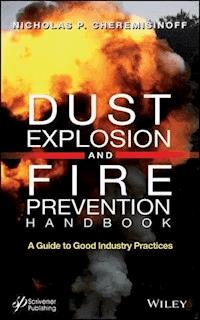
Up-to-date and thorough coverage of the causes, repercussions, and prevention of dust explosions and fires by one of the most well-respected environmental scientists and worker safety litigation specialists in the world This handy volume is a ready "go to" reference for the chemical engineer, plant manager, process engineer, or chemist working in industrial settings where dust explosions could be a concern, such as the process industries, coal industry, metal industry, and others. Though dust explosions have been around since the Earth first formed, and they have been studied and written about since the 1500s, they are still an ongoing concern and occur almost daily somewhere in the world, from bakeries to fertilizer plants. Dust explosions can have devastating consequences, and, recently, there have been new industrial standards and guidelines that reflect safer, more reasonable methods for dealing with materials to prevent dust explosions and resultant fires. This book not only presents these new developments for engineers and managers, it offers in-depth coverage of the subject, starting with a complete overview of dust--how it forms, when it is in danger of exploding, and how this risk can be mitigated--as well as a general overview of explosions and the environments that foster them. Dust Explosion and Fire Prevention Handbook covers individual industries, such as metal and coal; offers an appendix that outlines best practices for preventing dust explosions and fire and how these risks can be systematically mitigated by these implementations; and incorporates a handy glossary of terms for easy access, not only for the veteran engineer or chemist, but for the student or new hire. This ready reference is one of the most useful texts that an engineer or chemist could have at their side. With so many accidents still occurring in industry today, this must-have volume pinpoints the most common, sure-fire ways for engineers, scientists, and chemists working with these hazardous materials to go about their daily business safely, efficiently, and profitably, with no extraneous tables or theoretical treatises.
Sie lesen das E-Book in den Legimi-Apps auf:
Seitenzahl: 538
Veröffentlichungsjahr: 2014
Ähnliche













Contents
Cover
Half Title page
Title page
Copyright page
About the Author
Preface
Chapter 1: Combustible Dusts
1.1 Introduction
1.2 Metrics
1.3 Size and Shape
1.4 Size Distribution
1.5 Why Some Dusts are Combustible
1.6 Common Causes of Dust Explosions and Risk Mitigation
1.7 Closing Remarks and Definitions
Chapter 2: The Basics of Dust Explosions
2.1 Conditions for Dust Fires and Explosions
2.2 Primary and Secondary Dust Explosions
2.3 Explosions within Process Equipment
2.4 Other Examples of Catastrophic Incidents
2.5 Ignition Sensitivity
Recommended References
Chapter 3: Factors Influencing Dust Explosibility
3.1 Introduction
3.2 Particle Size and Dust Concentration
3.3 Particle Volatility
3.4 Heats of Combustion
3.5 Explosive Concentrations and Ignition Energy
3.6 Classification of Dusts
3.7 Oxidant Concentration
3.8 Turbulence
3.9 Maximum Rate of Pressure Rise
3.10 Presence of Volatile and Flammable Gases
3.11 Limiting Oxygen Concentration
3.12 Important Definitions and Concepts
Recommended References
Chapter 4: Explosion Prevention in Grain Dust Elevators
4.1 Introduction
4.2 Causes
4.3 Properties of Grain Dusts
4.4 Case Studies
4.5 Best Industry Practices
4.6 OSHA Grain Handling Standard Audit Questionnaire
Chapter 5: Coal Dust Explosibility and Coal Mining Operations
5.1 Introduction
5.2 Coal as a Fuel
5.3 Heat and Energy
5.4 Coal Dust Suspension, Confinement, Resuspension and Explosions
5.5 Processing Equipment Explosion Hazards
5.6 Coal Mining Operations and Safety
Recommended References
Chapter 6: Preventing Fires and Explosions Involving Metals
6.1 Introduction
6.2 Combustibility Properties of Metals
6.3 Explosion Temperatures
6.4 Dry Powder (Class D Fires)
6.5 Case Studies
6.6 Good Industry Practices for Prevention and Risk Mitigation
6.7 Risk Screening Guidelines and Resources
Recommended References
Chapter 7: Phlegmatization, Diluent Dusts, and the Use of Inert Gases
7.1 Introduction
7.2 Phlegmatization
7.3 Addition of Diluents
7.4 Application of Inert Gases
7.5 Case Study
Chapter 8: Augmenting Risk Mitigation with Leak Detection and Repair
8.1 Introduction
8.2 Why LDAR Programs are Needed
8.3 Sources of Fugitive Air Discharges
8.4 Good Industry Practices
Appendix A: General Guidelines on Safe Work Practice
Appendix A.1 – Glossary
Appendix A.2 – Hazard Classes and Categories
Appendix A.3 – Prohibited Carcinogens, Restricted Carcinogens and Restricted Hazardous Chemicals
Appendix A.4 – Requirements for Health Monitoring
Appendix A.5 – Risk Assessment Process Logic Diagram
Appendix A.6 – Risk Assessment Audit Checklist
Appendix A.7 – Examples of Common Fuel and Oxygen Sources
Appendix A.8 – Fire and Explosion Risks
Appendix A.9 – Practical Examples of Control Measures
Glossary of Terms
Index
Dust Explosion and Fire Prevention Handbook
Scrivener Publishing100 Cummings Center, Suite 541JBeverly, MA 01915-6106
Publishers at ScrivenerMartin Scrivener ([email protected])Phillip Carmical ([email protected])
Copyright © 2014 by Scrivener Publishing LLC. All rights reserved.
Co-published by John Wiley & Sons, Inc. Hoboken, New Jersey, and Scrivener Publishing LLC, Salem, Massachusetts.Published simultaneously in Canada.
No part of this publication may be reproduced, stored in a retrieval system, or transmitted in any form or by any means, electronic, mechanical, photocopying, recording, scanning, or otherwise, except as permitted under Section 107 or 108 of the 1976 United States Copyright Act, without either the prior written permission of the Publisher, or authorization through payment of the appropriate per-copy fee to the Copyright Clearance Center, Inc., 222 Rosewood Drive, Danvers, MA 01923, (978) 750-8400, fax (978) 750-4470, or on the web at www.copyright.com. Requests to the Publisher for permission should be addressed to the Permissions Department, John Wiley & Sons, Inc., 111 River Street, Hoboken, NJ 07030, (201) 748-6011, fax (201) 748-6008, or online at http://www.wiley.com/go/permission.
Limit of Liability/Disclaimer of Warranty: While the publisher and author have used their best efforts in preparing this book, they make no representations or warranties with respect to the accuracy or completeness of the contents of this book and specifically disclaim any implied warranties of merchantability or fitness for a particular purpose. No warranty may be created or extended by sales representatives or written sales materials. The advice and strategies contained herein may not be suitable for your situation. You should consult with a professional where appropriate. Neither the publisher nor author shall be liable for any loss of profit or any other commercial damages, including but not limited to special, incidental, consequential, or other damages.
For general information on our other products and services or for technical support, please contact our Customer Care Department within the United States at (800) 762-2974, outside the United States at (317) 572-3993 or fax (317) 572-4002.
Wiley also publishes its books in a variety of electronic formats. Some content that appears in print may not be available in electronic formats. For more information about Wiley products, visit our web site at www.wiley.com.
For more information about Scrivener products please visit www.scrivenerpublishing.com.
Library of Congress Cataloging-in-Publication Data:
ISBN 978-1-118-77350-5
About the Author
Nicholas P. Cheremisinoff is a graduate of Clarkson College of Technology, where he received his B.Sc., M.Sc. and Ph.D. degrees in chemical engineering. He has nearly 40 years of industry, applied research and international business experience, and is the author of numerous engineering reference textbooks concerning good industry practices in the management of dangerous and hazardous materials. He is the Principal of No Pollution Enterprises, which is a firm specializing in environmental and worker safety litigation support.
Preface
Airborne dust created by the handling of many industrial materials can combine in an air/dust mixture that could result in a violent, damaging explosion. A combustible dust is defined by the NFPA (Standards 68 and 654) as “any finely divided solid material 420 microns or smaller in diameter which presents a hazard when dispersed or ignited in air.” ISO is even more conservative and reports any finely divided solid material smaller in diameter 500 microns may present an explosion hazard. Most organic (carbon containing) and metallic dust will exhibit some combustibility characteristics. Therefore, if dust is present in any form within a working environment efforts should be taken to assess whether the potential for a hazard exists or not, and to devise appropriate practices and safeguards to mitigate the risks.
Preventing dust explosions has gained increased attention in recent years. In the United States the Chemical Safety Board has proposed new regulations to reduce the dangers of combustible dust. The European Community has already implemented two directives for that same purpose. Directive 94/9/EC, often referred to as ATEX-95 (Atmosphères Explosives), defines the safety requirements concerning equipment and protective systems intended for use in potentially explosive atmospheres. The other EC directive, 1999/92/EC (ATEX 137), outlines the minimum requirements for the protection and safety of workers at risk from explosive atmospheres.
Dust explosions can result when a flame propagates through combustible particles that have dispersed in the air and formed a flammable dust cloud. Whether an explosion happens or not depends on the supply of oxygen to the fire and the concentration of the fuel. If the concentration of the oxygen or the fuel is too high or low, then an explosion is very unlikely.
Consider the combustion engine in your car – there are three combustion components (fuel, air/oxygen and the ignition spark) which work together in a controlled manner to produce an explosion inside the enclosed cylinder. For the explosion to take place, the ratio of fuel to air must be in the proper proportion. If the fuel tank is empty, the air source is blocked or if the ignition does not work, then any one of these components is considered controlled, combustion cannot occur and the motor will not start.
Industrial dust explosions can be instigated by many sources, including static sparks, friction and glowing or smoldering materials. But before dust can explode, the following factors need to be present:
The dust must be combustible.
The dust must be capable of becoming airborne.
The dust must have a size distribution capable of flame propagation.
The dust concentration must be within the explosion limits.
An ignition source must be present.
The atmosphere must contain sufficient oxygen to support and sustain combustion.
When all of these factors are present, a dust explosion can occur. Eliminating just one of these requirements would make a dust explosion very unlikely. This then is the overall objective of the volume – to examine the causes of dust explosions and to provide readers with an overall understanding of good industry practices to prevent such events from occurring.
Explosions are defined as sudden reactions involving a rapid physical or chemical oxidation reaction, or decay generating an increase in temperature or pressure, or both simultaneously. When the flame speed exceeds the speed of sound, the event is referred to as a detonation. Otherwise, the explosion is known as a deflagration. Detonations are much more destructive than deflagrations. Typically, dust explosions are relatively slow combustion processes. If ignition occurs in a dust cloud in an open area, then little or no overpressure results and the primary hazard is a fireball. But if a deflagration occurs in a confined space such as a piece of equipment or constricted ductwork or tubes, the results may be devastating, causing substantial damage to operations, injury to operating personnel and even fatalities. The reader will find a number of case studies documented in this volume which testify to the devastating results of industrial dust explosions.
The volume begins with a glossary of terms that are commonly applied to the safe handling of dusts as they relate to fire and explosion issues. The reader may wish to spend a few moments familiarizing him or herself with some of the terms if this subject is relatively new to them.
Chapter 1 examines the physical and thermodynamic properties of particles which comprise dust. Properties such as size, shape, particle size distribution and the combustible nature of some materials are examined, thereby orienting the reader to more in-depth discussions to follow in later chapters.
Chapter 2 provides a general overview of the characteristics and parameters that can be the cause of dust explosions. The basic ingredients that are required for a dust explosion to occur are discussed and important terms and concepts relevant to dust instability are examined.
Chapter 3 provides discussions on the various factors that influence dust explosibility, including but not limited to particle size and particle size distribution, dust concentration, oxidant concentration, ignition temperature, turbulence of the dust cloud, maximum rate of pressure rise, admixed inert dust concentration and the presence of flammable gases.
Chapter 4 delves into the topics of explosions in grain dust elevators, the causes, and good industry practices for prevention. The first recorded incident of a dust explosion was in 1785, in a flour mill in Turin, Italy. A series of accidents during World War I led to a flurry of scientific activity culminating in the publication of numerous pamphlets and bulletins by the U.S. Department of Agriculture. This work identified grain dust as the specific ingredient common to all accidents, and recommended best practices were made in order to prevent the occurrence of these accidents. Despite early industry recognition and statements of good practices, there have continued to be numerous incidents over the decades leading to enormous human and financial losses.
Chapter 5 is titled Coal Dust Explosibility and Coal Mining Operations. This chapter provides an examination of coal dust explosions, safe handling operations, and coal mine safety practices. There are three necessary elements which must occur simultaneously to cause a fire: fuel, heat, and oxygen (known as the fire triangle). Removing any one of these elements eliminates the possibility of fire. But for an explosion to occur, there are five essential elements: fuel, heat, oxygen, suspension, and confinement. These form the five legs of the so-called explosion pentagon. Like the fire triangle, removing any one of these requirements would prevent an explosion from propagating. When a burning fuel is placed in suspension by a sudden blast of air, all five sides of the explosion pentagon are satisfied and an explosion would be imminent. The reader will find pertinent information in this chapter for both good practices for dust management in mining operations and for general processing operations.
Chapter 6 provides information on combustible metals, their properties and some common sense guidelines for safe handling of metal dusts. Most metals are combustible to a varying degree, depending on their physical conditions. Many will undergo dangerous reactions with water, acids, and certain other chemicals; and some metals are subject to spontaneous heating and ignition. The hazard of an individual metal or alloy varies depending on the particle size and shape that is present. The reader will find a wide variety of data and useful information on the safe handling of these materials, plus general guidelines for management of dusts for fire and explosion prevention that are relevant to all materials.
Chapter 7 covers phlegmatization, the use of diluents and the application of inert gases. Each of these practices can reduce the risks of explosible dusts.
Chapter 8 addresses Leak Detection and Repair (LDAR) programs. Because of the possibility of flammable vapors being present in many operations, LDAR should be considered a critical part of the dust management program.
Appendix A is an assembly of general guidelines on safe work practices. Dust explosion and fire safety management programs should be carefully integrated with the overall safe work practices and procedures of the facility. This appendix provides useful general information and good industry practices for safe work ethics and handling of dangerous chemicals.
The author wishes to thank the staff of No Pollution Enterprises for assisting in research, styling and proofreading the manuscript. A heartfelt thank you is also extended to the publisher for their fine production efforts.
Nicholas P. Cheremisinoff, Ph.D.
Chapter 1
Combustible Dusts
1.1 Introduction
According to the National Safety Council1, dust is defined as “solid particles generated by handling, crushing, grinding, rapid impact, detonation, and decrepitation of organic or inorganic materials, such as rock, ore, metal, coal, wood, and grain.” Dust is a by-product of different processes that include dry and powdery material conveying, solids crushing and screening, sanding, trimming of excess material, tank and bin feeding and storing of granular materials, and a number of other processes. The creation of dust during material handling and processing operations may pose the obvious problem of inhalation risks to workers, often characterized as chronic or long term worker exposures. However, when combustible dust is produced and allowed to accumulate, risks can create immediate danger to life and health from explosions. Combustible dust explosions have resulted in the loss of life, multiple injuries and substantial property and business damage. A few examples2 are:
In 2002, an explosion at Rouse Polymerics International, a rubber fabricating plant in Vicksburg, Miss., resulted in injuring eleven employees, five of whom later died of severe burns. The explosion occurred with the ignition of an accumulation of a highly combustible rubber.
In 2003 an explosion and fire occurred at the West Pharmaceutical Services plant in Kinston, N.C., resulting in the death of six workers, injuries to dozens of employees, and hundreds of job losses due to the destruction of the plant. The facility produced rubber stoppers and other products for medical use. The fuel for the explosion was a fine plastic powder that had accumulated unnoticed above a suspended ceiling over the manufacturing area.
In 2003 an explosion and fire damaged the CTA Acoustics manufacturing plant in Corbin, Ky., fatally injuring seven employees. The facility produced fiberglass insulation for the automotive industry. The combustible dust associated with the explosion was a phenolic resin binder used in producing fiberglass mats.
In 2003, a series of explosions severely burned three employees, one fatally, and caused property damage to the Hayes Lemmerz manufacturing plant in Huntington, Ind. The Hayes Lemmerz plant manufactured cast aluminum automotive wheels. The explosions were fueled by aluminum dust, a combustible by-product of the manufacturing process.
In 2008 combustible sugar dust was the fuel for a massive explosion and fire at the Imperial Sugar Co. plant in Port Wentworth, Ga., resulting in 13 deaths and the hospitalization of 40 more workers, some of whom received severe burns.
These are only a few examples of dust explosions in which there was loss of life and the substantial destruction of assets and properties.
Before we can understand the causes of dust explosions and ways to prevent them, we need to understand what dust is. The physical, chemical and thermodynamic properties of dust are important for a myriad of reasons ranging from the protection of workers from inhalation hazards, explosions and fire, and the overall safe and economic handling of materials that are prone to creating dust.
In this chapter we focus on the physical and thermodynamic properties of particles which comprise dust. Properties such as size, shape, particle size distribution and the combustible nature of some materials are discussed, orienting the reader to more in-depth discussions to follow in later chapters.
1.2 Metrics
Dusts are generated from solid or granular materials and can exist over a wide range of particle sizes depending on the material handling and processing operation. They may also form through the processes of sublimation and thermal oxidation as well as from combustion-related processes. Particles that are too large to remain airborne settle out due to gravity, while the smallest particles can remain suspended in air almost indefinitely as colloidal suspensions.
Lesen Sie weiter in der vollständigen Ausgabe!
Lesen Sie weiter in der vollständigen Ausgabe!
Lesen Sie weiter in der vollständigen Ausgabe!
Lesen Sie weiter in der vollständigen Ausgabe!
Lesen Sie weiter in der vollständigen Ausgabe!
Lesen Sie weiter in der vollständigen Ausgabe!
Lesen Sie weiter in der vollständigen Ausgabe!
Lesen Sie weiter in der vollständigen Ausgabe!
Lesen Sie weiter in der vollständigen Ausgabe!
Lesen Sie weiter in der vollständigen Ausgabe!
Lesen Sie weiter in der vollständigen Ausgabe!




